
This article contains affiliate links. If you make a purchase through these links, we may earn a small commission at no extra cost to you. This helps support our work in creating free travel guides.
Chengdu's idea of luxury isn't about marble lobbies and logos in a row — though the city has those too. It's about doing the slow life properly: a private early-morning hour with the pandas before the crowds arrive, a tasting menu that takes Sichuan cooking apart and rebuilds it, an afternoon in a 100-year-old teahouse with nowhere to be. This guide covers where to stay, eat, and spend your days if you want Chengdu at its most comfortable and well-organized. It assumes you've already read up on the city basics and want the high-end version, ideally over three to four days in spring or autumn when the weather cooperates.
Where to Stay: Chengdu's Best Luxury Hotels
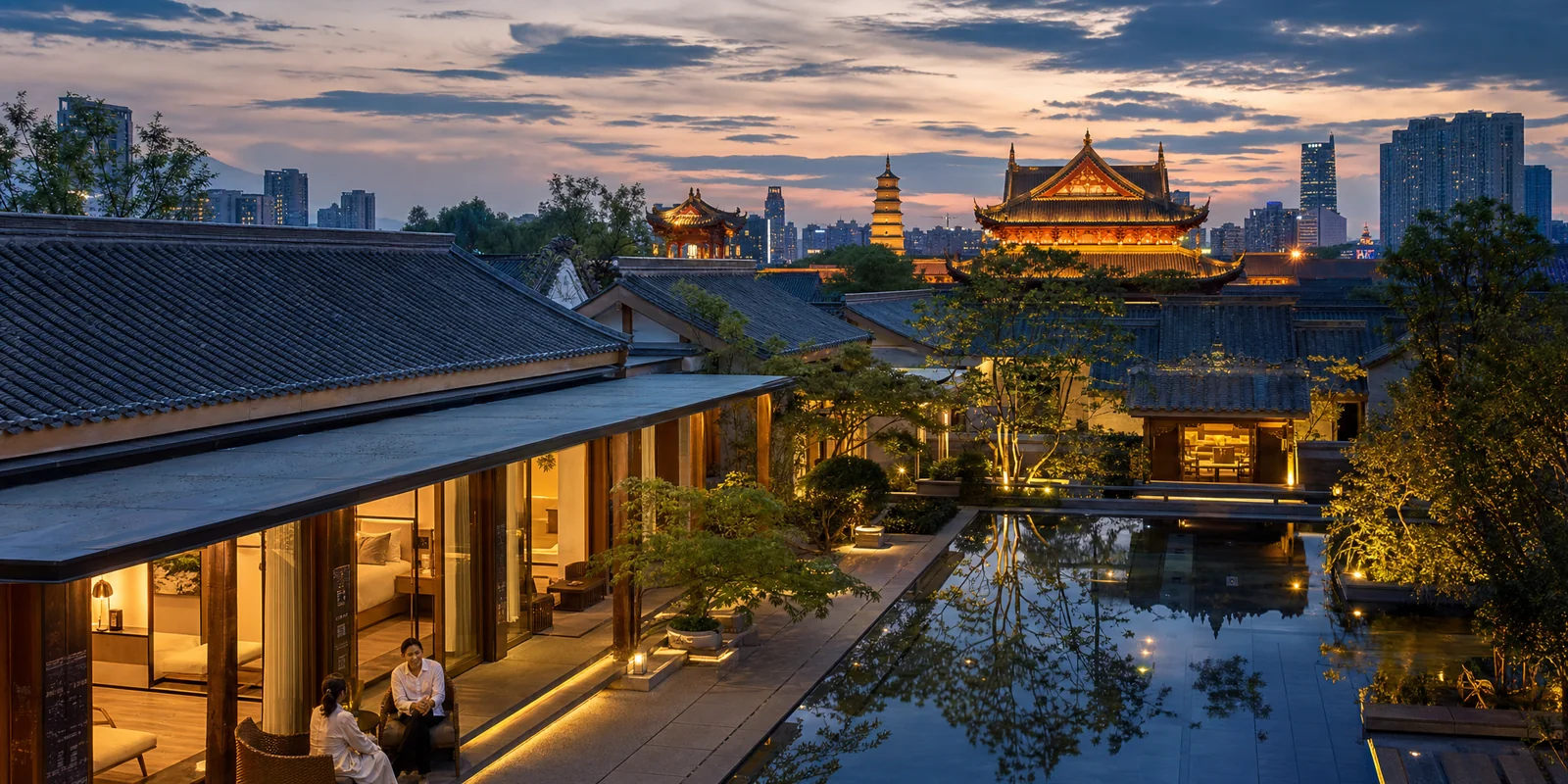
Chengdu has a genuinely strong luxury hotel scene, clustered mostly around the Taikoo Li / IFS district downtown — which is convenient, because that's also where the best dining and shopping are.
The Temple House
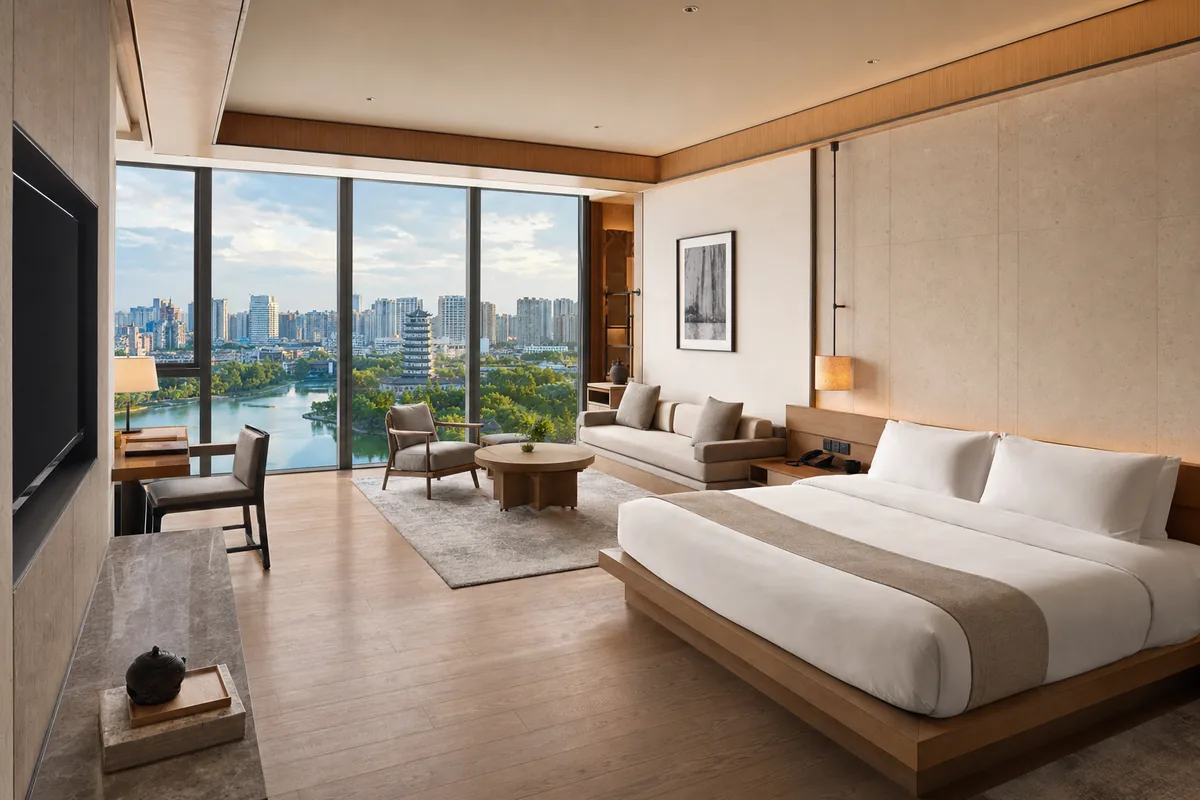
If you only consider one hotel, make it this one. The Temple House (博舍, Bóshè) is built around a restored Qing-dynasty courtyard and folds into the Taikoo Li complex, so you step out the door into the city's best shopping and a 1,000-year-old Buddhist temple within the same block. Rooms are large, quiet, and understated — natural materials, soft light, none of the gilded excess you might expect. The pool and spa are excellent, and the staff handle requests (private tours, hard restaurant bookings) without fuss. It's part of the same group as Hong Kong's Upper House, and it shows.
The St. Regis Chengdu
A more classic, formal kind of luxury. The St. Regis sits a short walk from Taikoo Li and delivers the signature butler service, a strong spa, and large rooms with city views. Good choice if you want polish and a more traditional five-star experience.
The Ritz-Carlton & InterContinental Century City
The Ritz-Carlton is centrally located near Tianfu Square with reliably excellent service. The InterContinental Century City sits further out near the New Century Global Center (the enormous building with an indoor beach), better suited if you have business in the south of the city than if you're here purely for leisure.
Rates for these properties typically run from around 1,500 RMB per night at the lower end up to 4,000+ RMB for suites, varying widely by season and demand. For comparing current rates and availability across these properties, Booking Com lists most of Chengdu's luxury hotels in one place.
The Giant Panda VIP Experience
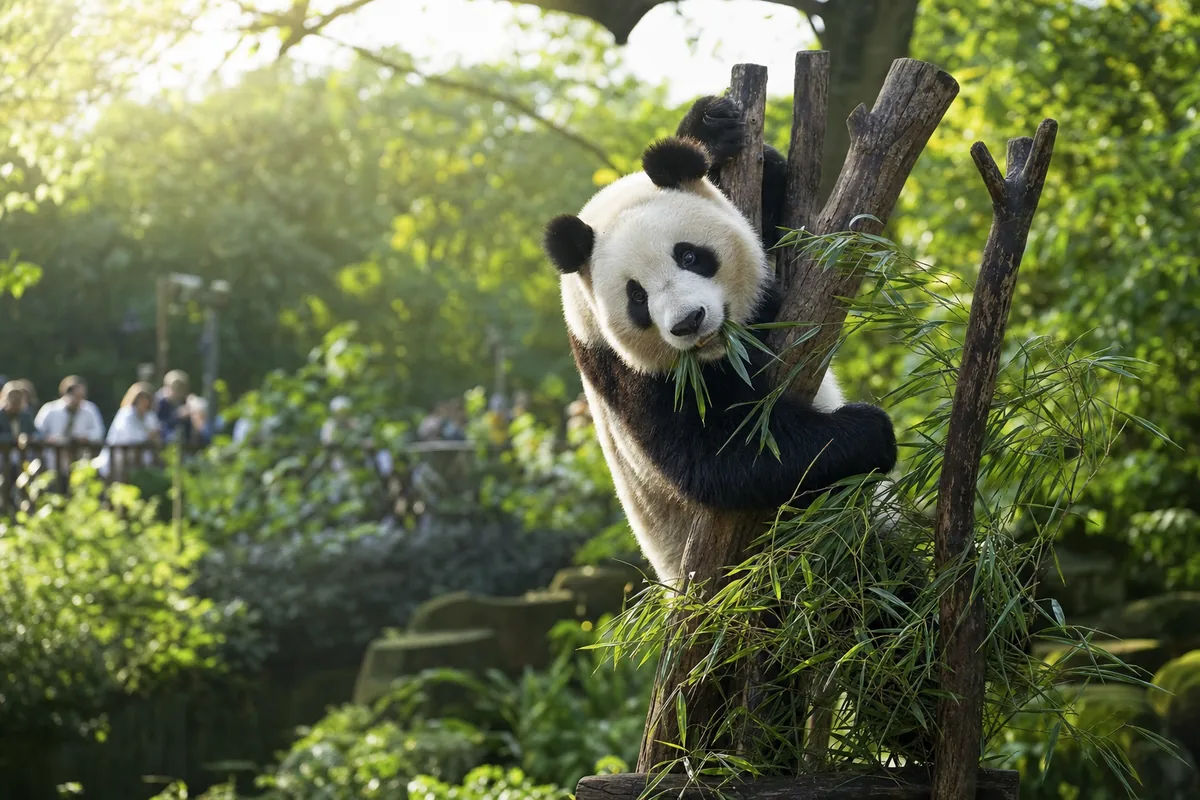
Seeing pandas is the one thing nearly everyone does in Chengdu, and it's worth doing — but the standard experience means arriving with thousands of other people by mid-morning, when the pandas have already eaten and gone to sleep. The luxury version solves both problems.
The Chengdu Research Base of Giant Panda Breeding (大熊猫繁育研究基地) is the main site, about 40 minutes north of downtown. Pandas are most active in the early morning, roughly 8:00–10:00, when they're fed and moving around. A private early-entry tour gets you to the base right as it opens, with a private guide and car, so you see active pandas with far fewer people in frame. Some premium tours can arrange access timed before the main gates open to general visitors.
If you want a deeper experience, the Dujiangyan Panda Base further out runs a paid volunteer program where you help prepare food and clean enclosures under staff supervision. It's a half-day commitment and books out in advance, but it's the most hands-on (and genuinely educational) panda experience available. A private driver makes the trip out painless.
Arranging the private guide, early entry, and transport is the kind of thing worth handing to a specialist operator. China Highlights runs private panda tours with early-access timing and English-speaking guides, which removes the logistics of coordinating it yourself.
Fine Dining: Sichuan Cuisine at Its Highest Level
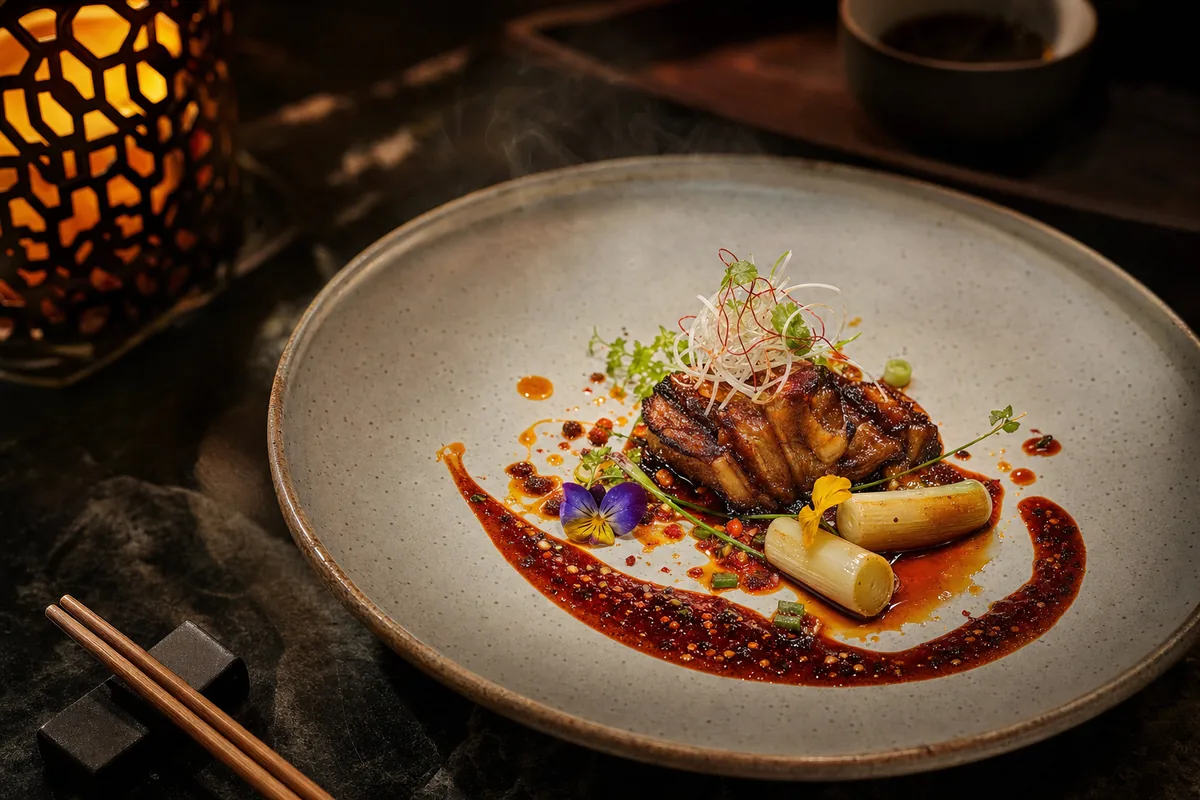
This is where Chengdu genuinely shines. The city earned UNESCO's "City of Gastronomy" designation, and its high-end restaurants treat Sichuan cooking as something to refine rather than just turn up the heat on. Not everything is fiery — a lot of the best dishes are subtle.
Yu Zhi Lan (玉芝兰)
The most celebrated fine-dining room in the city, and one of the hardest tables in China to get. Chef Lan Guijun runs a tiny private space serving a long set menu of refined Sichuan cooking — delicate, technical, and a world away from the mala (麻辣, málà, "numbing-spicy") street food most visitors associate with the region. Reservations need to be made well in advance, often through your hotel concierge, and dinner is a multi-hour, expensive commitment. If you care about food, it's the standout meal of the trip.
Silver Pot (银芭, Yín Bā)
More accessible than Yu Zhi Lan but still high-end and frequently recognized on regional fine-dining lists, including the Black Pearl guide (China's homegrown equivalent of Michelin). Modern, polished takes on Sichuan classics in a stylish setting. A good choice if you want serious cooking without the formality and difficulty of booking Yu Zhi Lan.
Beyond the tasting menus
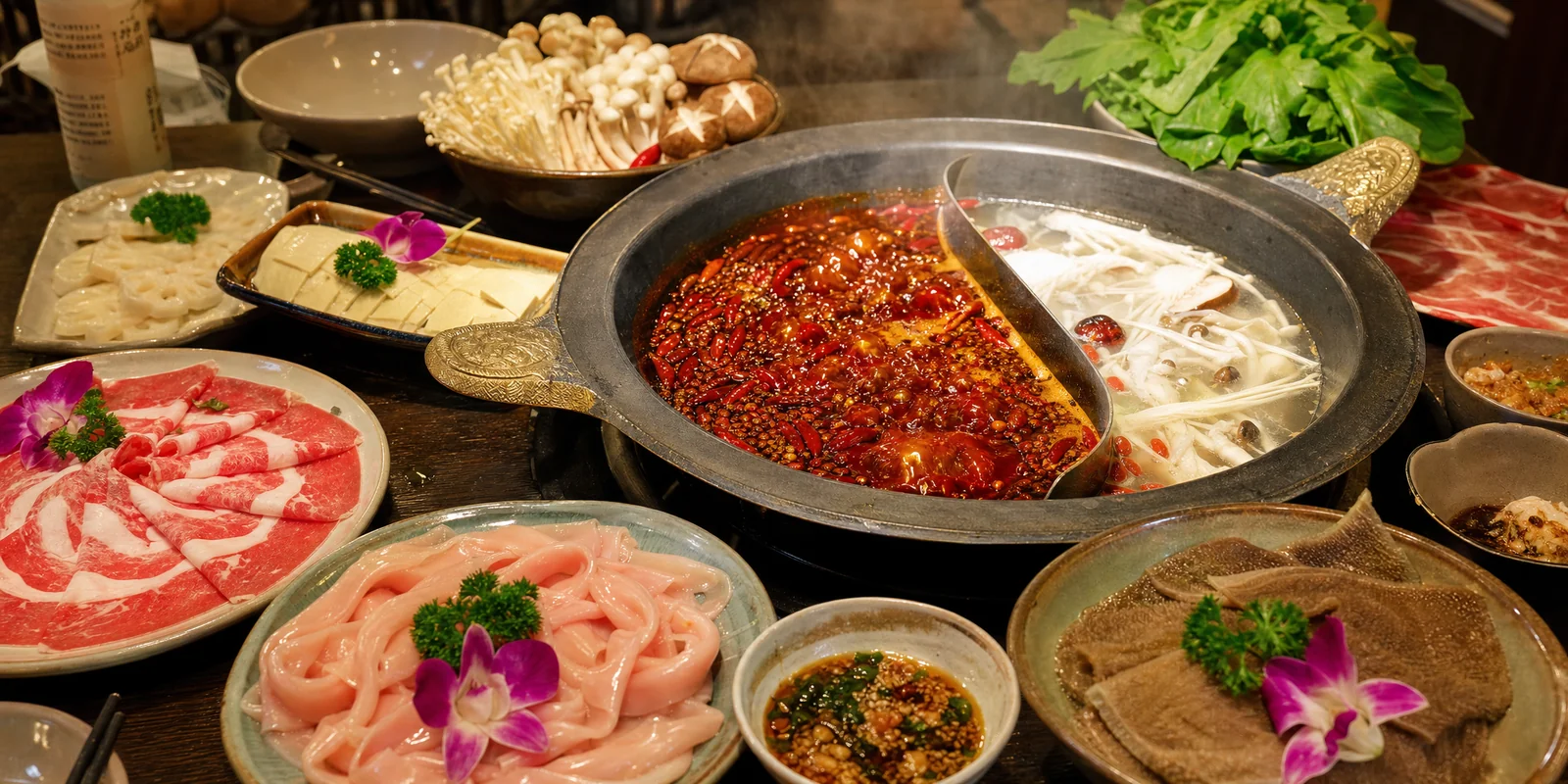
Don't spend every meal in a white-tablecloth room. Chengdu's hotpot (火锅, huǒguō) is part of the experience, and there are upscale, beautifully designed hotpot restaurants where the ingredients are premium and the spice level is your call. A good concierge can book you a table at one of the better ones and arrange a mild broth option if numbing heat isn't your thing.
The Teahouse Tradition
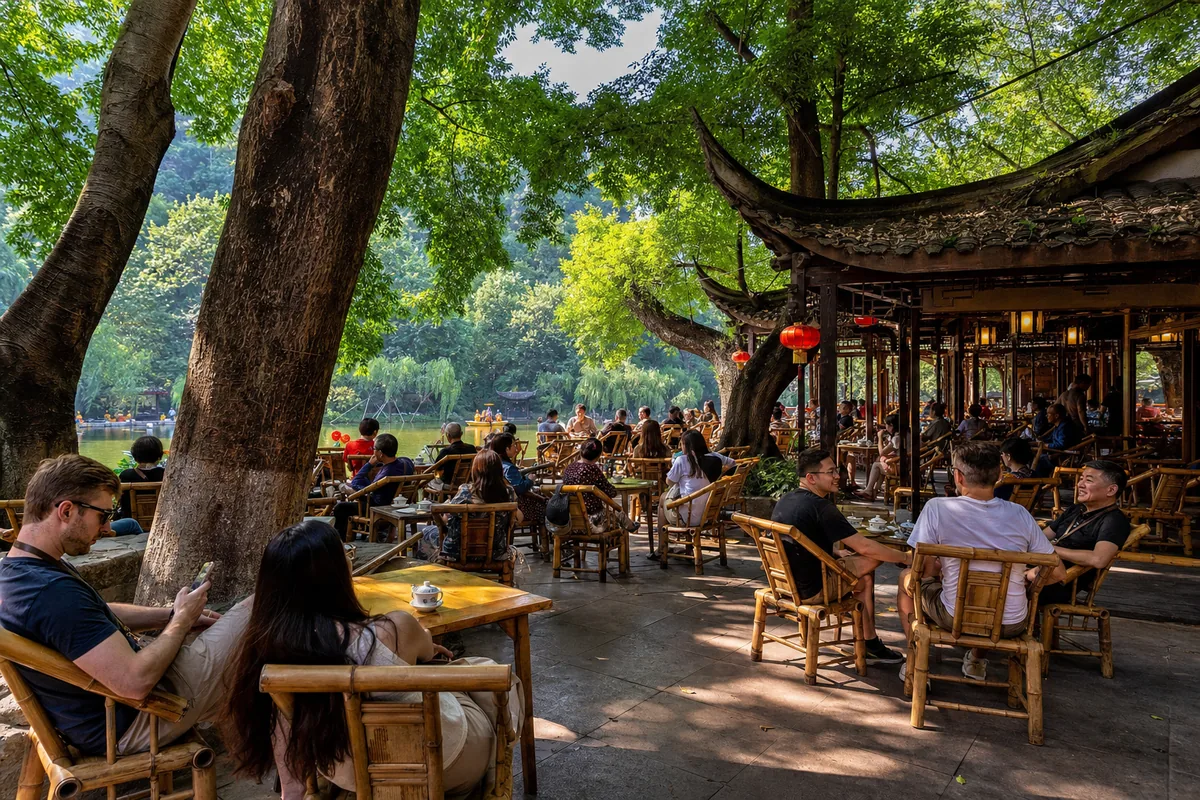
If hotpot is Chengdu's loud side, the teahouse is its quiet one — and it's the purest expression of the city's slow-living character. People come to sit for hours, drink endless refills of tea, play cards or mahjong, get their ears cleaned by roving specialists, and simply do nothing in particular.
The most famous is Heming Teahouse (鹤鸣茶社, Hèmíng Cháshè) in People's Park (人民公园, Rénmín Gōngyuán). It's open-air, set among trees by a lake, and it's been operating for over a century. You pay a few dozen RMB for a cup of tea and a bamboo chair, and you can stay as long as you like. It's not exclusive or expensive — and that's the point. The luxury here is the time and the atmosphere, not the price tag.
For a more curated version, several operators arrange private tea ceremony experiences in quieter, traditional settings, where a tea master walks you through the varieties and brewing methods. This pairs well with a guided cultural afternoon in the old lanes.
To understand the ritual itself in more depth before you go, our guide to the Chinese tea ceremony covers the etiquette and tea types you'll encounter.
Day Trips: Mount Qingcheng & Dujiangyan
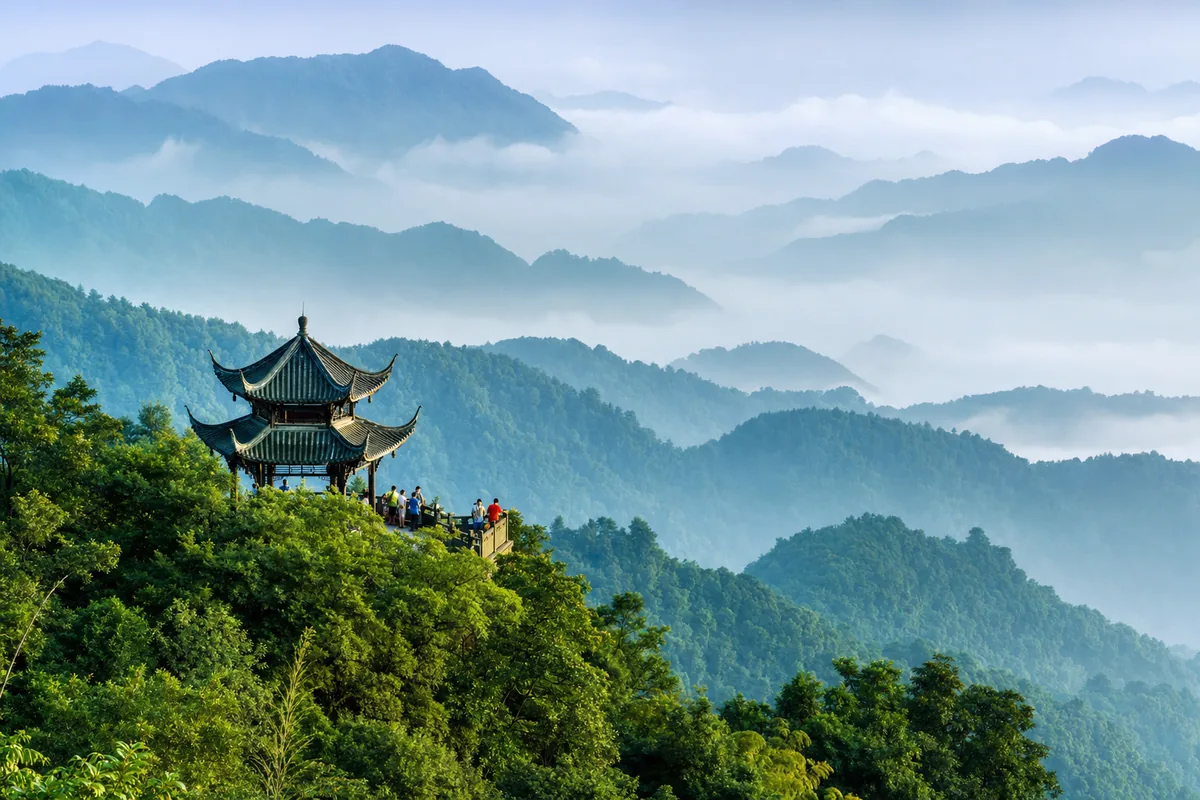
The single best day trip from Chengdu pairs two UNESCO World Heritage sites that sit close together, about 60–90 minutes west of the city. The comfortable way to do it is a private car and driver for the day, ideally with an English-speaking guide.
Mount Qingcheng (青城山)
One of the birthplaces of Taoism, Mount Qingcheng (Qīngchéng Shān) is a green, misty mountain covered in ancient temples, pavilions, and walking paths under dense forest. It's divided into a front mountain (front-loaded with temples and the most-visited route) and a quieter back mountain that's more about scenery and hiking. Cable cars and a small boat across a lake cut out the steepest climbs, so you can take it as gently as you like. On a clear day the layered ridgelines fading into haze are exactly the landscape Chinese ink painters spent centuries trying to capture.
Dujiangyan Irrigation System (都江堰)
Built over 2,200 years ago and still functioning, Dujiangyan (Dūjiāngyàn) is an ancient engineering project that divides and controls the Min River without a single dam. It sounds dry on paper; in person, standing on the bridges over the rushing channels, it's genuinely impressive that something this old still does its job. It pairs naturally with Qingcheng since the two are close, and the Dujiangyan Panda Base is right here too if you want to combine pandas with the day.
A private full-day tour covering both sites, with hotel pickup, is the path of least resistance. the WaysChina app can help you sketch out a day-by-day itinerary and check metro routes for the in-city portions of your trip.
Shopping: Taikoo Li & IFS
Chengdu's high-end shopping is concentrated and easy. Taikoo Li (太古里) is an open, low-rise district of restored lanes and contemporary architecture wrapped around the Daci Temple — international luxury houses, design boutiques, cafés, and good restaurants all in walkable blocks. It's a pleasant place to spend an afternoon even if you don't buy anything.
Next door, IFS (国际金融中心) is a more conventional vertical luxury mall, anchored by the giant climbing-panda sculpture on its corner that's become a city landmark and the most photographed spot in the district. Between the two you'll find essentially every major luxury brand represented.
Because the Temple House sits inside Taikoo Li, the whole shopping-dining-temple cluster becomes your front yard if you stay there — one of the strongest arguments for that hotel.
Spa & Wellness
Chengdu's pace makes it a natural place to slow down properly. The spas at the Temple House, St. Regis, and Ritz-Carlton are all strong, with full treatment menus and pools. Beyond the hotels, traditional Chinese wellness — massage and foot treatments rooted in Chinese medicine — is woven into local life, though for the high-end version you'll get the most consistent quality and English service at the hotel spas or by asking the concierge for a vetted recommendation.
Putting It Together: A 3–4 Day Frame
| Day | Focus |
|---|---|
| Day 1 | Arrive, settle into the hotel, explore Taikoo Li / IFS, dinner at a high-end Sichuan restaurant |
| Day 2 | Early private panda tour in the morning; afternoon in People's Park teahouse and the old lanes |
| Day 3 | Full-day private trip to Mount Qingcheng and Dujiangyan |
| Day 4 | Spa morning, leisurely lunch, optional tea ceremony or shopping before departure |
Practical Notes
- Payments: Set up Alipay (支付宝, Zhīfùbǎo) or WeChat Pay before you arrive — even luxury hotels and restaurants expect mobile payment, though high-end venues do still take international cards.
- Getting around: The metro is clean and efficient for the downtown core, and Didi (the ride-hailing app) works smoothly for everything else. For day trips and the panda base, a private car saves real time and hassle.
- Booking ahead: The two things that genuinely need advance planning are top restaurant tables and early-access panda tours. Everything else can be arranged on the ground or through your concierge.
- Language: English is limited outside hotels and major attractions. A translation app and a few survival phrases go a long way.
You can read more about the city's official tourism information through the Chengdu municipal government site, and Mount Qingcheng and Dujiangyan's heritage status is documented by UNESCO World Heritage.
The Bottom Line
Chengdu's luxury isn't loud. It's a quiet courtyard hotel inside the city's best shopping district, a private hour with the pandas before anyone else arrives, a Sichuan tasting menu that changes how you think about the cuisine, and an unhurried afternoon in a teahouse where the only agenda is more tea. Lock in your restaurant reservations and panda timing early, lean on your hotel concierge for the hard bookings, and give yourself at least three days so you're not rushing the parts that are meant to be slow. Spring or autumn, and you've got the city at its best.
Related Reading
- Chengdu Complete Guide — the full overview if you haven't read it yet
- Chengdu Food Guide — the wider eating scene beyond fine dining
- Chengdu Day Trips — more options beyond Qingcheng and Dujiangyan
- Luxury Travel in China — the high-end approach applied nationwide
- Chinese Tea Ceremony — understand the ritual before your teahouse afternoon
Last updated: June 2026
Read in other languages
Getting to the sights by metro
Chengdu Panda Base
World-renowned panda research base with daily morning feeding shows.
- Panda Avenue
Wuhou Shrine & Jinli
Memorial temple to Three Kingdoms hero Zhuge Liang, beside the Jinli folk street.
- Wohou Shrine
Kuanzhai Alleys
Three parallel Qing-era alleyways with teahouses, snacks and traditional shops.
- Kuanzhaixiangzi Alleys
Du Fu Thatched Cottage
Restored thatched cottage where the Tang poet Du Fu lived for 4 years.
- Du Fu Thatched Cottage
Chunxi Road & Taikoo Li
Premier shopping district pairing pedestrian street with Taikoo Li's modern complex.
- Chunxi Road
Tianfu Square
Central plaza with Mao statue and the Sichuan Science & Technology Museum.
- Tianfu Square
Jinsha Site Museum
3,000-year-old Shu kingdom archaeological site with the iconic Sun & Immortal Birds gold disc.
- Jinsha Site Museum
Wenshu Monastery
Active Tang-era Buddhist monastery with vegetarian dining and a teahouse courtyard.
- Wenshu Monastery
Qingyang Palace
Southwest China's largest Taoist temple, named for the bronze goats in its courtyard.
- Qingyang Taoist Temple
People's Park
Beloved local park with Heming Teahouse — best place to experience Chengdu lifestyle.
- People's Park
Yongling Mausoleum (Wang Jian Tomb)
Tomb of 10th-century Former Shu emperor Wang Jian, with rare stone tomb chamber.
- Wenshu Monastery
Dujiangyan Irrigation System
2,300-year-old UNESCO irrigation system still in use; reach via 30-min intercity rail.
- Chengdu West Railway
Chengdu East Railway Hub
Major high-speed rail hub linking Chengdu to all of southwestern China.
- Chengdu East Railway
Chengdu Tianfu International Airport
Chengdu's main international airport (TFU), opened 2021; western China's largest aviation hub.
- Terminal 1 & 2 of Tianfu International Airport
- Tianfu International Airport North
Chengdu Shuangliu International Airport
Chengdu's secondary airport (CTU), 16 km from city center; mostly domestic and short-haul international after Tianfu opened.
- Terminal 2 of Shuangliu International Airport
- Terminal 1 of Shuangliu International Airport
Chengdu metro: last train times by station
Every line and station, checked by hand — the same data behind our offline route planner.
Get the WaysChina App
Offline guides, currency converter, essential phrases, and more — all in your pocket.

Related Articles
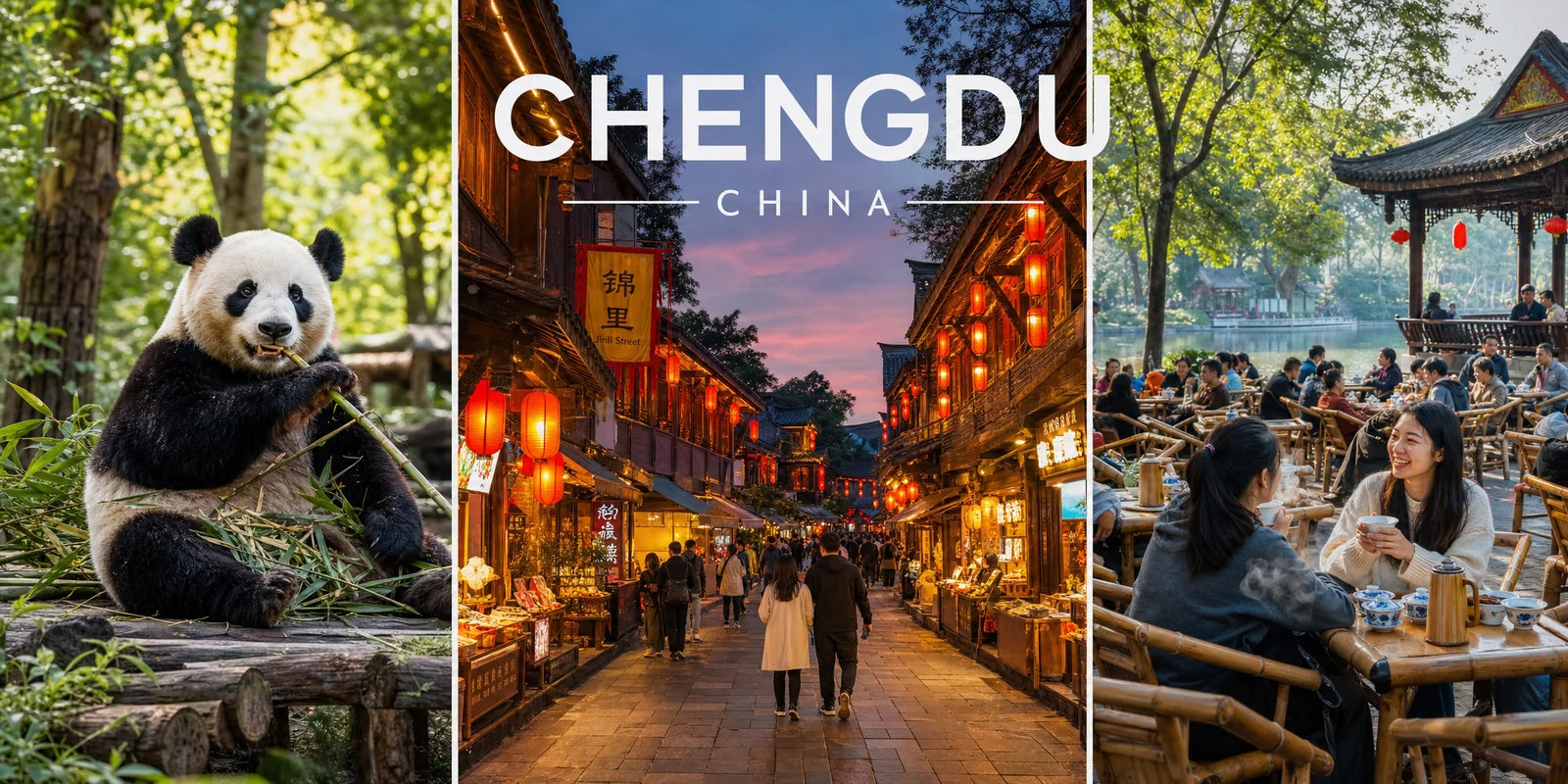
3-Day Chengdu Itinerary
A practical 3-day Chengdu plan covering the Panda Base, Wuhou Shrine, Jinli, People's Park, and a day trip to Leshan...
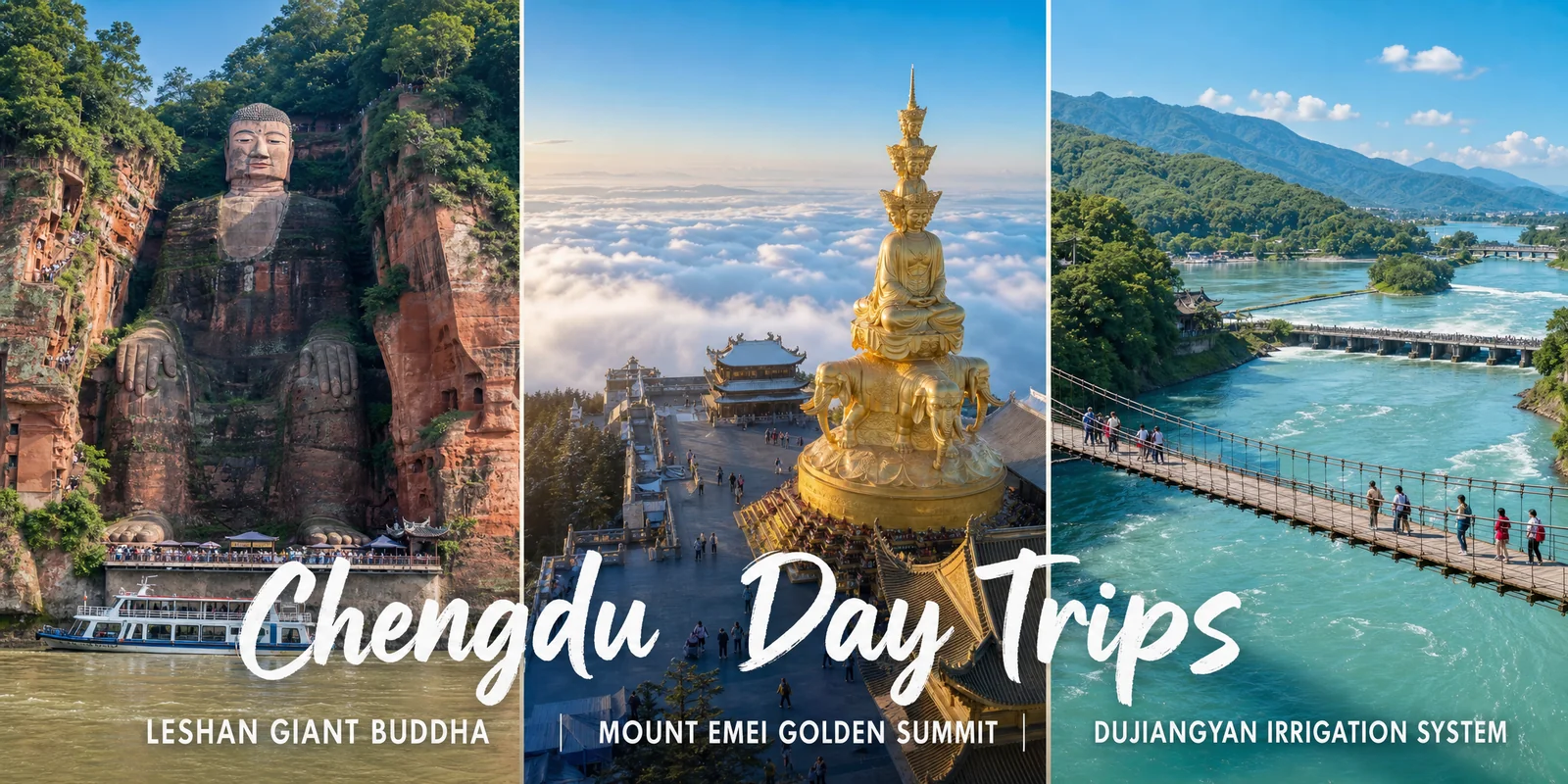
Chengdu Day Trips
The best day trips from Chengdu: the Leshan Giant Buddha, Mount Emei, Dujiangyan, and Qingcheng Mountain — plus...
Chengdu Food Guide
Chengdu is China's spice capital and a UNESCO City of Gastronomy. Here's what to eat, where to find it, and how to...
Dali & Lijiang Guide
A practical, in-depth guide to Dali and Lijiang in Yunnan — old towns, Erhai Lake, Jade Dragon Snow Mountain,...