
This article contains affiliate links. If you make a purchase through these links, we may earn a small commission at no extra cost to you. This helps support our work in creating free travel guides.
Chengdu earned its UNESCO City of Gastronomy designation for a reason: this is where Sichuan cuisine lives at full volume. The flavor everyone talks about is málà (麻辣, málà), the combination of chili heat and the tingling numbness of Sichuan peppercorn (花椒, huājiāo). It's not just "spicy" — the peppercorn makes your lips buzz in a way that's hard to describe until you've tried it. This guide covers the dishes worth seeking out, the neighborhoods where you'll find the best of them, and how to order without ending up in tears. If you can handle a little heat, Chengdu is one of the most rewarding eating cities in China.
Understanding Sichuan Flavor First
Before diving into specific dishes, it helps to know that Sichuan food isn't just about chili. Cooks here talk about a whole range of flavor profiles, and málà is only one of them. Plenty of classic dishes are savory, sour, or lightly sweet with barely any heat at all. So if you're worried about spice, don't write off the cuisine entirely — you just need to know what to order.
That said, the famous stuff is famous because it's bold. Sichuan peppercorn is the signature ingredient most visitors haven't encountered before. It produces a citrusy, numbing sensation (locals call it má) that's separate from chili heat (là). Together they create a flavor that's genuinely unique to this region. Give it a real try before deciding it's not for you.
Sichuan Hotpot: The Main Event
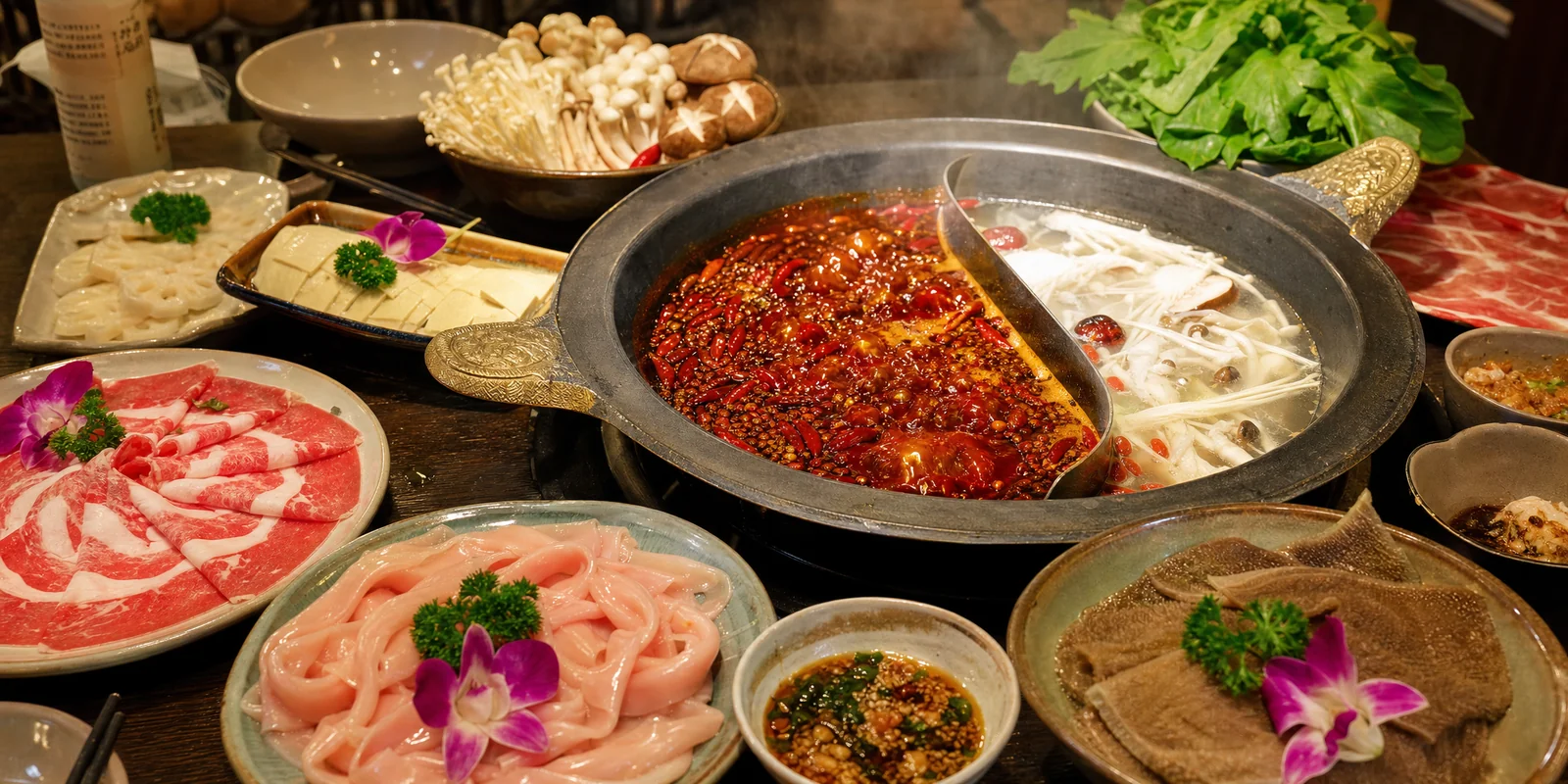
If you eat one thing in Chengdu, make it hotpot (火锅, huǒguō). A pot of simmering broth sits in the middle of your table, and you cook raw ingredients in it yourself — thin-sliced beef, tripe, lotus root, mushrooms, tofu, quail eggs, whatever you order. The classic Chengdu broth is a deep red, oily, peppercorn-loaded affair that looks intimidating and tastes incredible.
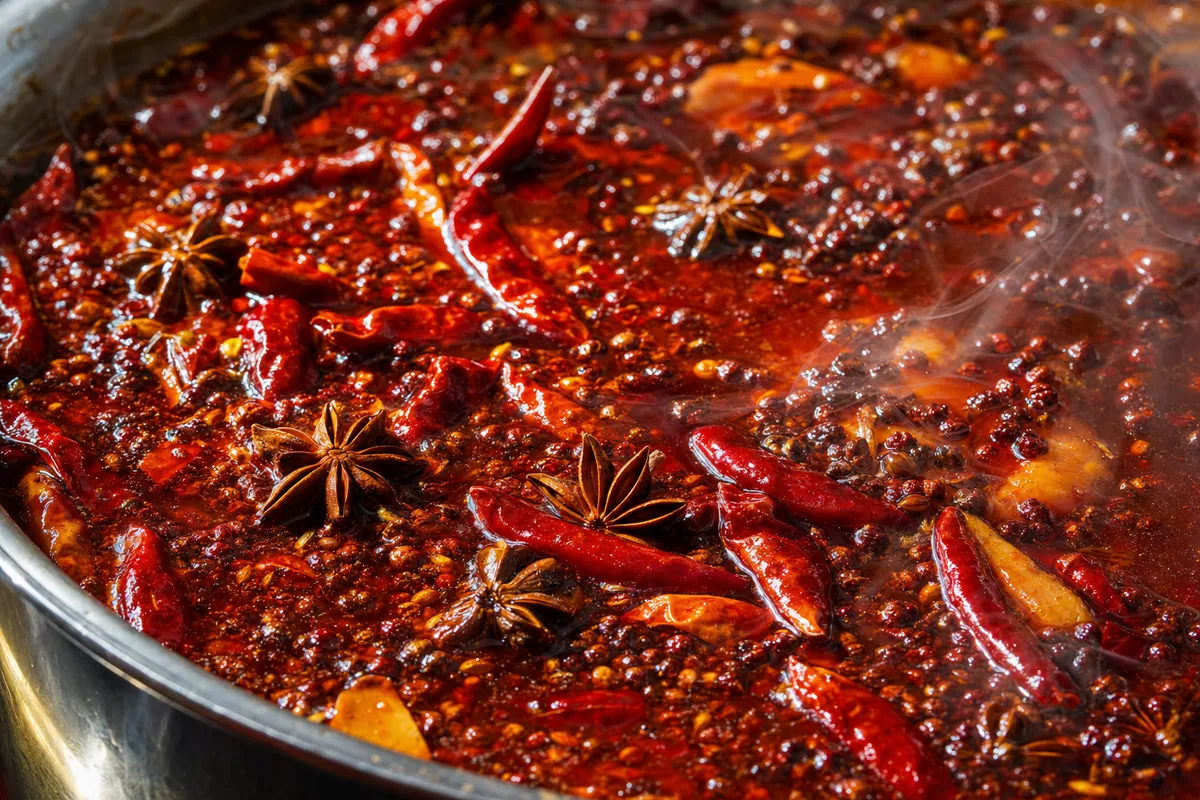
Two practical things to know. First, almost every hotpot place offers a split pot (鸳鸯锅, yuānyāng guō) — half spicy, half mild (usually a clear mushroom or tomato broth). Order this if your group has mixed spice tolerance. Second, you'll get a small bowl of sesame oil with garlic as a dipping sauce. Dunk cooked items in it; the oil cools the food and cuts the heat. It's not optional seasoning, it's a built-in fire extinguisher.
Chengdu hotpot tends to be slightly more oil-forward and aromatic, while neighboring Chongqing hotpot is brasher and hotter — worth knowing if you're traveling between the two. Both are excellent. Chain restaurants like Shu Da Xia and Xiaolongkan are reliable and have picture menus, which makes ordering far easier if your Chinese is limited.
Kuanzhai Alley: Snacks in a Historic Setting
Kuanzhai Alley (宽窄巷子, Kuānzhǎi Xiàngzi) is three parallel lanes of restored Qing-dynasty courtyard architecture, now packed with snack stalls, teahouses, and sit-down restaurants. Yes, it's touristy and prices run higher than a neighborhood joint. But it's also one of the easiest places to graze through a lot of Sichuan classics in one walk, and the setting is genuinely pleasant.
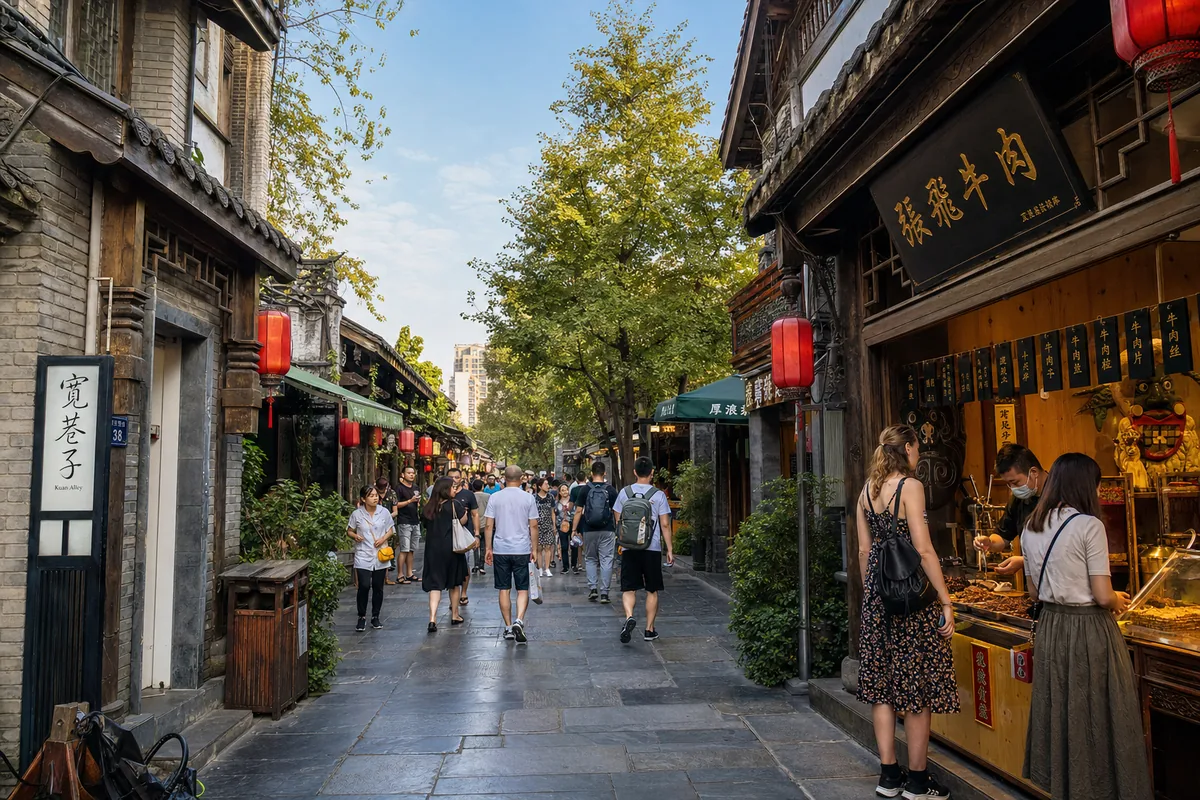
Come here to try things in small portions: three cannon (三大炮, sān dà pào), sticky rice balls slammed onto a drum-like surface and rolled in soybean flour, sweet and a little theatrical. Sample rabbit head (兔头, tùtóu) if you're feeling brave — it's a Sichuan delicacy, more about gnawing the spiced meat than a full meal. Grab a cup of tea at one of the courtyard teahouses and watch the ear-cleaning vendors (a real local tradition) work the crowd.
Jinli Street: Food Stalls by the Temple
Next to Wuhou Shrine, Jinli (锦里, Jǐnlǐ) is a reconstructed old-style street that comes alive at night with red lanterns and a dense run of food stalls. Like Kuanzhai, it's built for visitors, but the snacking is the point and the variety is the draw.
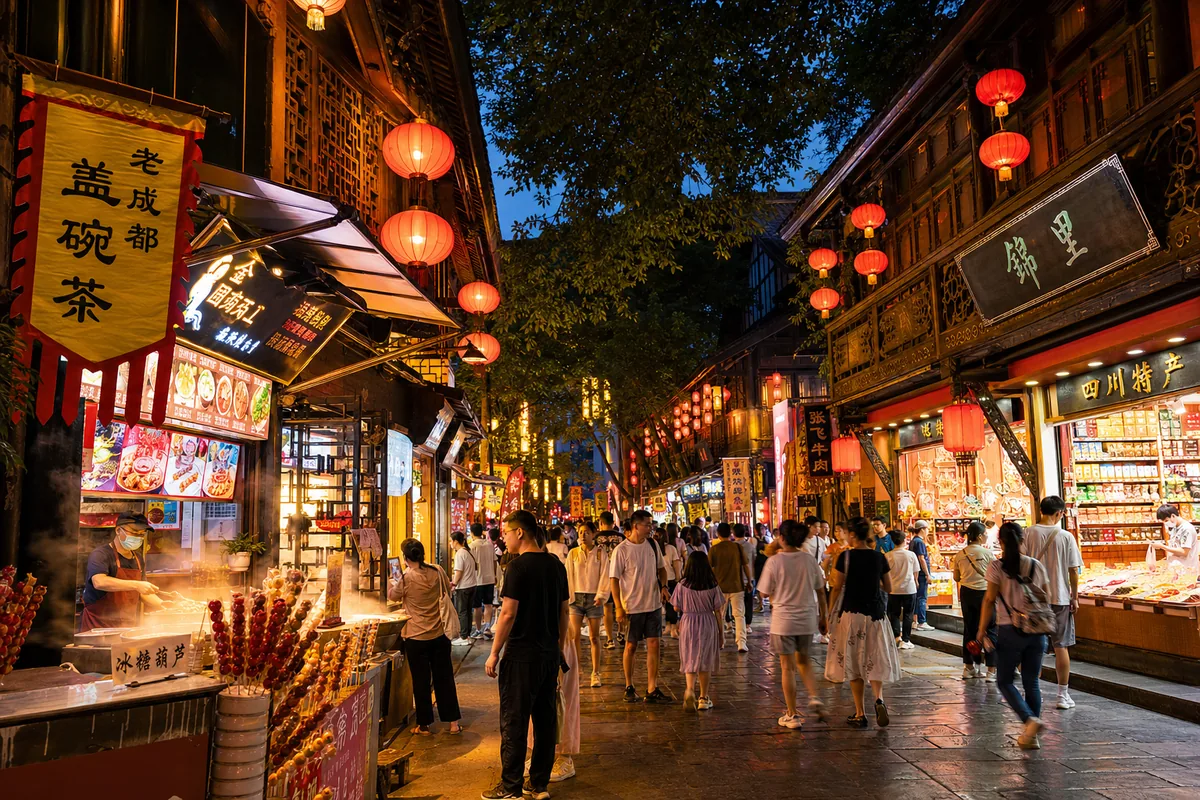
Look for sweet water noodles (甜水面, tiánshuǐmiàn), thick chewy noodles in a sweet-spicy sauce that balances the chili nicely. Try spicy beef lung slices (夫妻肺片, fūqī fèipiàn), a cold dish of thin-sliced beef and offal in chili oil that's far more delicious than the name suggests. There's grilled meat on skewers, glutinous rice cakes, and stinky tofu for those who want the full sensory range. Eat as you walk — that's how it's meant to be done.
Yulin Street: Where Locals Actually Eat
For a less touristy scene, head to Yulin (玉林路, Yùlín Lù), a residential district that turns into an eating-and-drinking hub after dark. This is where you'll find Chengdu's relaxed, slightly bohemian side — small restaurants, bars, and barbecue spots full of locals rather than tour groups. A famous folk song name-checked a bar here, which gave the area a romantic reputation among Chinese travelers, but for food purposes what matters is that the quality is high and the prices are real.
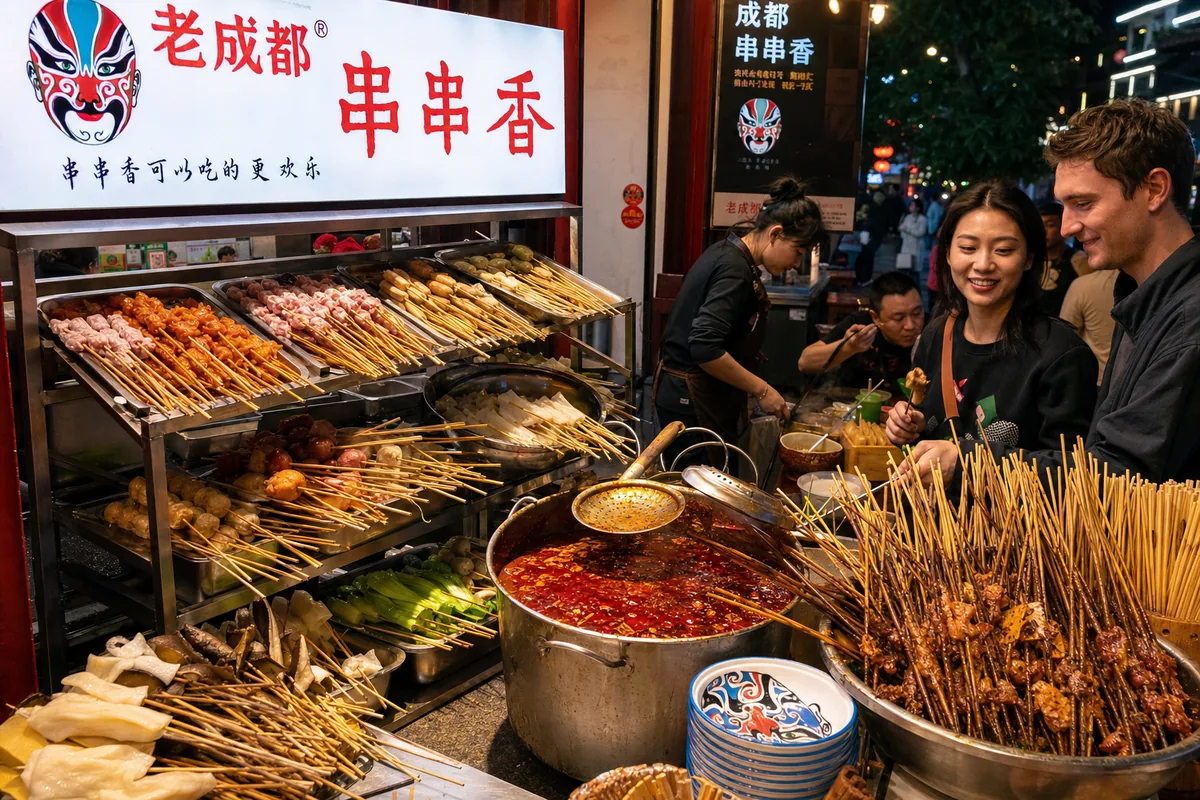
Yulin is the place to settle into a proper sit-down dinner of Sichuan home cooking, or to do chuanchuan xiang (串串香, chuànchuànxiāng) — skewered ingredients cooked in spicy broth, billed by the stick. You grab handfuls of skewers from a fridge, cook them yourself or hand them over, and the staff count your empty sticks at the end. It's casual, communal, and one of the most fun ways to eat in the city.
Five Dishes You Shouldn't Leave Without Trying
Beyond hotpot and street snacks, a handful of dishes define Chengdu's table. Here's what to look for on any menu.
| Dish | What it is | Spice level |
|---|---|---|
| Dandan noodles (担担面, dàndànmiàn) | Thin noodles in a chili-sesame-peppercorn sauce with minced pork; served in small portions | Medium |
| Zhong dumplings (钟水饺, Zhōng shuǐjiǎo) | Pork dumplings in a sweet, garlicky red-chili-oil sauce; a Chengdu institution | Mild–medium |
| Mapo tofu (麻婆豆腐, mápó dòufu) | Soft tofu in a spicy, numbing minced-meat sauce; the most famous Sichuan dish worldwide | Medium–hot |
| Twice-cooked pork (回锅肉, huíguōròu) | Pork belly boiled then stir-fried with leeks and bean paste; savory, not very spicy | Mild |
| Long wontons (龙抄手, lóng chāoshǒu) | Delicate pork wontons, available in clear or spicy broth | Adjustable |
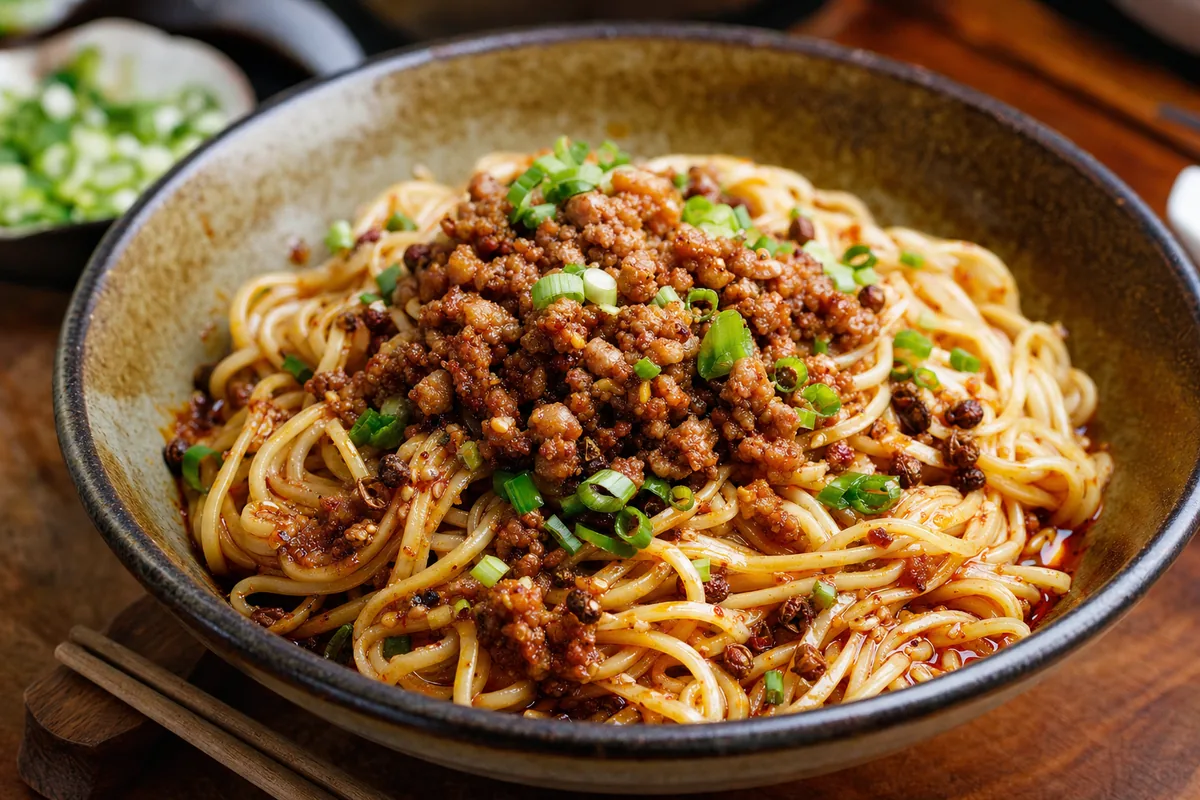
Dandan noodles deserve a special mention because they're often served in tiny bowls — that's traditional, not stingy. The name comes from the carrying poles (dàn) that vendors once used to sell them on the street. Zhong dumplings, meanwhile, are sweeter and less aggressively spicy than first-timers expect, which makes them a good entry point. You'll find both at dedicated snack restaurants all over the city, often grouped together so you can order a sampler of small plates.
Eating Well Without Speaking Chinese
Ordering is easier than you'd think. Many Chengdu restaurants have picture menus, and at hotpot and chuanchuan places you're often pointing at fridges and trays anyway. A translation app that handles photos of menus solves most problems. For the full rundown on navigating menus and payment, see our guide on how to order food with zero Chinese.
A few habits that help: tables are often shared and meals are communal, so order several dishes for the group rather than one each. Tea or warm soy milk is the standard drink with spicy food. And tipping isn't expected anywhere — the price you see is what you pay.
Want a Guided Introduction?
If you'd rather have someone walk you through the dishes, decode the menus, and take you to spots you wouldn't find alone, a food tour is a solid first-night move. Local guides handle ordering, explain what you're eating, and pace the meal so you don't overdo the spice. You can browse and book Chengdu food tours and hotpot experiences on Klook, which lists several small-group walking tours through the snack streets and hotpot dinners with English-speaking guides.
Putting It Together
Chengdu rewards a little planning and an open mind about spice. Build at least one hotpot dinner into your trip, graze through Kuanzhai Alley or Jinli for snacks, and save a relaxed evening for Yulin Road where locals eat. Try the peppercorn numbness before you judge it, keep the sesame dip handy, and order in small plates so you can taste widely. Start mild, drink warm, and you'll be fine. For fitting all this into a broader trip, see our 3-day Chengdu itinerary and the full Chengdu complete guide.
Last updated: June 2026
Read in other languages
Getting to the sights by metro
Chengdu Panda Base
World-renowned panda research base with daily morning feeding shows.
- Panda Avenue
Wuhou Shrine & Jinli
Memorial temple to Three Kingdoms hero Zhuge Liang, beside the Jinli folk street.
- Wohou Shrine
Kuanzhai Alleys
Three parallel Qing-era alleyways with teahouses, snacks and traditional shops.
- Kuanzhaixiangzi Alleys
Du Fu Thatched Cottage
Restored thatched cottage where the Tang poet Du Fu lived for 4 years.
- Du Fu Thatched Cottage
Chunxi Road & Taikoo Li
Premier shopping district pairing pedestrian street with Taikoo Li's modern complex.
- Chunxi Road
Tianfu Square
Central plaza with Mao statue and the Sichuan Science & Technology Museum.
- Tianfu Square
Jinsha Site Museum
3,000-year-old Shu kingdom archaeological site with the iconic Sun & Immortal Birds gold disc.
- Jinsha Site Museum
Wenshu Monastery
Active Tang-era Buddhist monastery with vegetarian dining and a teahouse courtyard.
- Wenshu Monastery
Qingyang Palace
Southwest China's largest Taoist temple, named for the bronze goats in its courtyard.
- Qingyang Taoist Temple
People's Park
Beloved local park with Heming Teahouse — best place to experience Chengdu lifestyle.
- People's Park
Yongling Mausoleum (Wang Jian Tomb)
Tomb of 10th-century Former Shu emperor Wang Jian, with rare stone tomb chamber.
- Wenshu Monastery
Dujiangyan Irrigation System
2,300-year-old UNESCO irrigation system still in use; reach via 30-min intercity rail.
- Chengdu West Railway
Chengdu East Railway Hub
Major high-speed rail hub linking Chengdu to all of southwestern China.
- Chengdu East Railway
Chengdu Tianfu International Airport
Chengdu's main international airport (TFU), opened 2021; western China's largest aviation hub.
- Terminal 1 & 2 of Tianfu International Airport
- Tianfu International Airport North
Chengdu Shuangliu International Airport
Chengdu's secondary airport (CTU), 16 km from city center; mostly domestic and short-haul international after Tianfu opened.
- Terminal 2 of Shuangliu International Airport
- Terminal 1 of Shuangliu International Airport
Chengdu metro: last train times by station
Every line and station, checked by hand — the same data behind our offline route planner.
Get the WaysChina App
Offline guides, currency converter, essential phrases, and more — all in your pocket.

Related Articles
3-Day Chengdu Itinerary
A practical 3-day Chengdu plan covering the Panda Base, Wuhou Shrine, Jinli, People's Park, and a day trip to Leshan...

Chengdu Day Trips
The best day trips from Chengdu: the Leshan Giant Buddha, Mount Emei, Dujiangyan, and Qingcheng Mountain — plus...

Dali & Lijiang Guide
A practical, in-depth guide to Dali and Lijiang in Yunnan — old towns, Erhai Lake, Jade Dragon Snow Mountain,...

Lhasa & Tibet Guide
Foreign tourists can visit Tibet, but only with a Tibet Travel Permit and a booked tour — no independent travel...