
This article contains affiliate links. If you make a purchase through these links, we may earn a small commission at no extra cost to you. This helps support our work in creating free travel guides.
Three days is enough to see the best of Chengdu without rushing: the giant pandas, a couple of the old streets that still feel alive, an afternoon of tea-drinking in the park, and one full day out of the city to either a giant carved Buddha or an ancient irrigation system. This itinerary is built around how the city actually moves — early mornings at the Panda Base, metro lines that get you across town in 20 minutes, and evenings that lean into Chengdu's slow, food-heavy rhythm. Each stop below includes the exact metro line or bus number to get there.
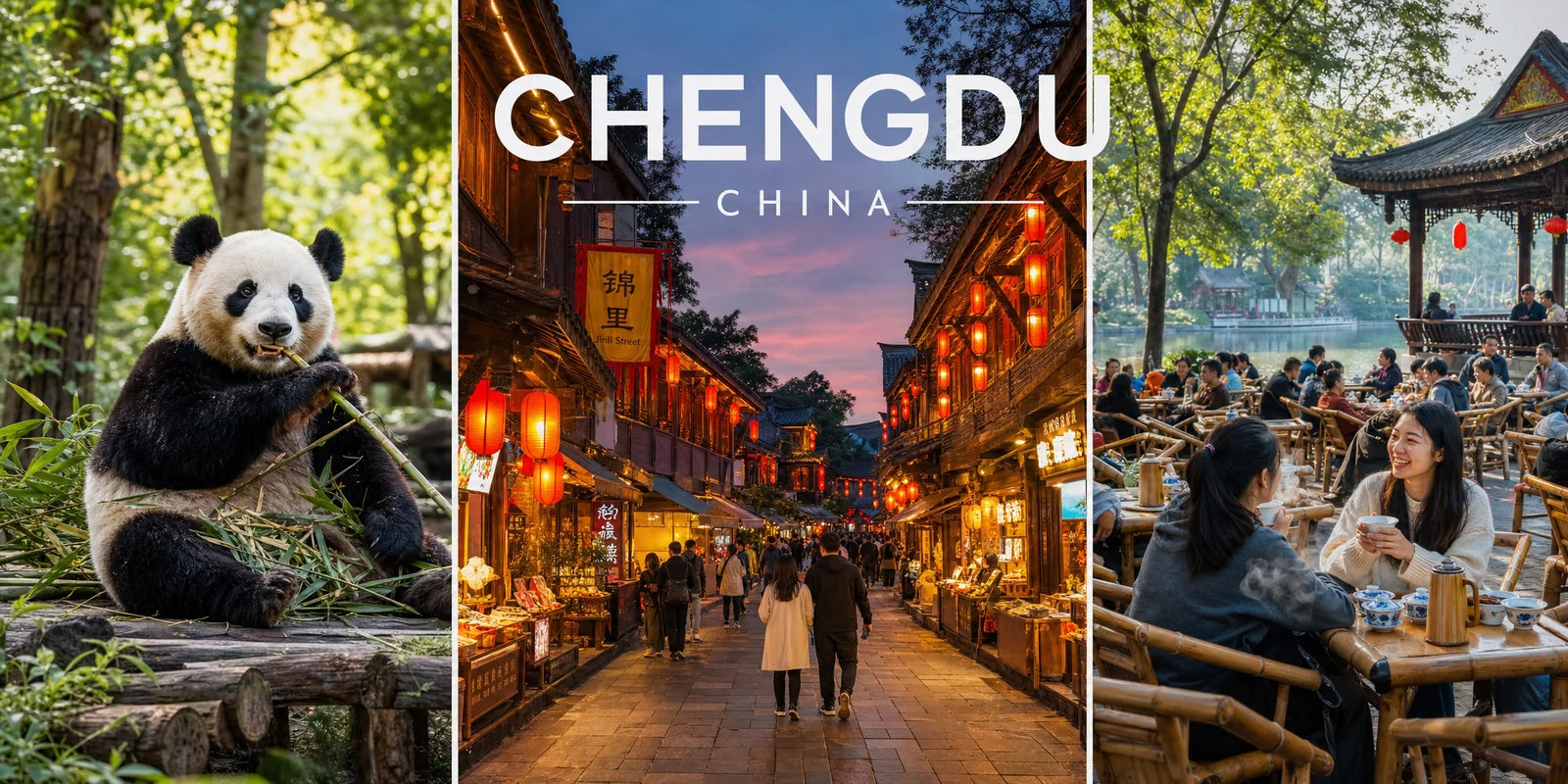
Chengdu is flat, walkable in its central districts, and has one of the easier metro systems in China to navigate in English. You can run this whole plan on public transport plus the occasional Didi (the Chinese equivalent of Uber). Spring (March–May) and autumn (September–November) are the most comfortable times to do it; summer is humid and the sky is often grey.
Day 1: Giant Panda Base + Kuanzhai Alley
Morning: Chengdu Research Base of Giant Panda Breeding
Pandas are most active in the early morning, roughly between 8:00 and 10:00, when they're fed. Go later and you'll mostly watch them sleep. The base (成都大熊猫繁育研究基地) opens at 7:30, so aim to be at the gate close to opening.
Getting there: Take Metro Line 3 to Panda Avenue (熊猫大道) station, then transfer to the free or low-cost shuttle / sightseeing bus to the base entrance, or grab a short Didi for the last stretch. From the city center, allow about 45–60 minutes door to door. A direct Didi from downtown costs roughly ¥40–60 depending on traffic.
Inside, the base is large and green — closer to a forested park than a zoo. The main viewing areas are the Sunshine Nursery and Moonlight Nursery (where the cubs are) and the adult enclosures. Walk the loop counterclockwise from the entrance to hit the nurseries first while the animals are awake. There's also a red panda area where the animals roam fairly close to the path.
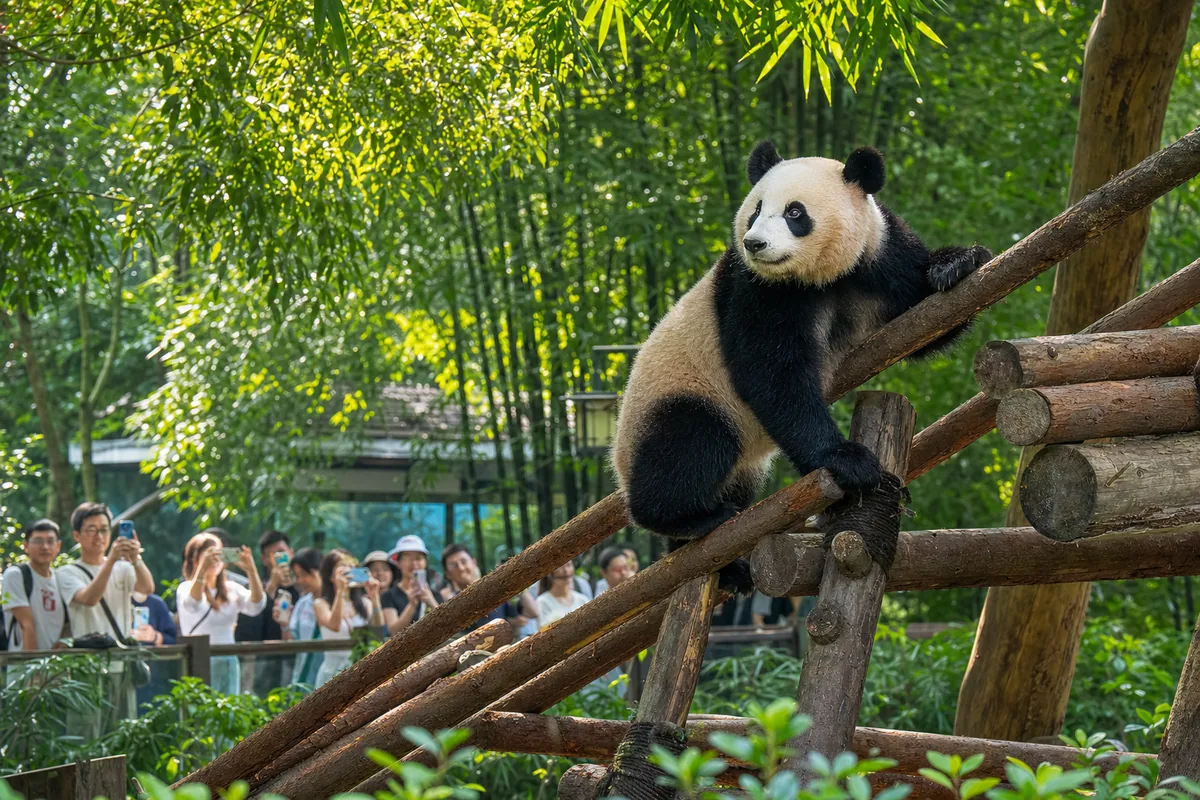
Tickets are inexpensive (around ¥55 for the base; the internal electric cart is extra and optional). You can buy at the gate, but on weekends and holidays the line is long — booking ahead saves you standing around. If you'd rather skip the queue or want a guided early-entry option, you can compare panda base tickets and tours on book through Klook.
Afternoon: Lunch + Kuanzhai Alley
Head back toward the center for lunch, then spend the afternoon at Kuanzhai Alley (宽窄巷子, Kuānzhǎi Xiàngzi) — three parallel restored Qing-dynasty lanes: Wide Alley, Narrow Alley, and Well Alley. It's touristy and busy, but it's a genuine slice of old Chengdu architecture, with courtyard teahouses, snack stalls, and a few quiet corners if you wander off the main lane.
Getting there: Metro Line 2 or Line 4 to Renmin Park (人民公园) station, then a 10-minute walk; or Metro Line 4 to Kuanzhai Alley's nearest exits. From the Panda Base area, a Didi takes 30–40 minutes.
Sit down for a cup of tea in one of the courtyard teahouses — this is where you'll first see Chengdu's tea culture and the ear-cleaning (掏耳朵) buskers who work the lanes. In the evening, the alleys light up and the snack stalls get going. Try the spicy rabbit, dan dan noodles, or a stick of bingfen (a chilled jelly dessert).
Day 2: Wuhou Shrine + Jinli + People's Park + Chunxi Road
Morning: Wuhou Shrine
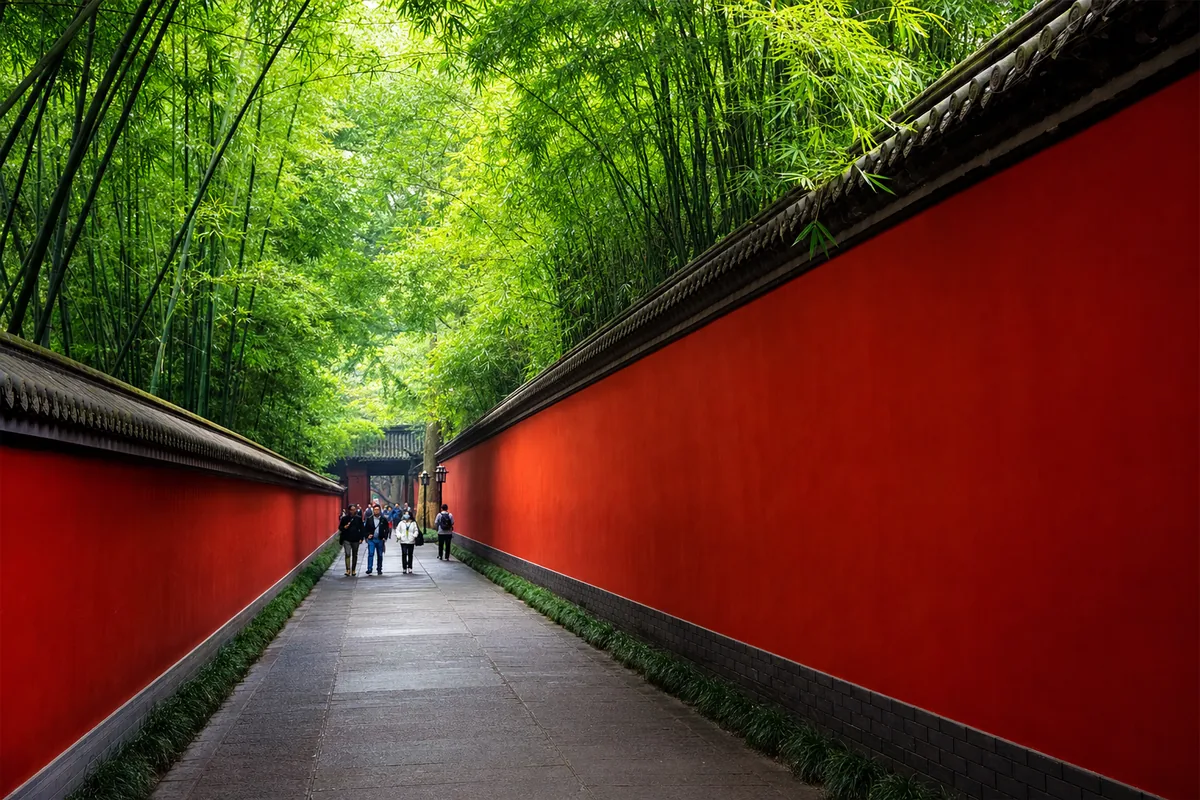
Wuhou Shrine (武侯祠, Wǔhóu Cí) is the main Three Kingdoms memorial in China, dedicated to Zhuge Liang and the Shu Han state. Even if you don't know the history, it's a calm, beautifully landscaped complex of red walls, old cypress trees, and statues of the era's generals and strategists. Plan on 1–1.5 hours. Tickets are around ¥50.
Getting there: Metro Line 3 to Gaoshengqiao (高升桥) station, then about a 10-minute walk; or Line 5 to Wuhouci Avenue (武侯祠大街).
Late morning: Jinli Ancient Street
Jinli (锦里, Jǐnlǐ) connects directly to Wuhou Shrine — you can walk out one and into the other. It's a recreated old commercial street with grey-tiled buildings, lanterns, and a dense run of snack stalls and craft shops. Like Kuanzhai, it's commercial, but the street food is the real draw: three-cannon rice balls (三大炮), spicy beef, candied fruit, and more. It's best eaten through slowly rather than sat down in a restaurant.
Afternoon: People's Park and Heming Teahouse
This is the heart of the itinerary if you want to understand why people love Chengdu. People's Park (人民公园, Rénmín Gōngyuán) is free, and the open-air Heming Teahouse (鹤鸣茶社) by the lake is where locals spend entire afternoons. You pay a few yuan for a cup with a lid and a thermos of hot water for endless refills, then just sit. You can get a traditional ear cleaning, watch the older crowd play cards and mahjong, and on weekends see the "marriage market" where parents post their kids' profiles hoping to match-make.
Getting there: Metro Line 2 to Renmin Park (人民公园) station. The park is right above the station.
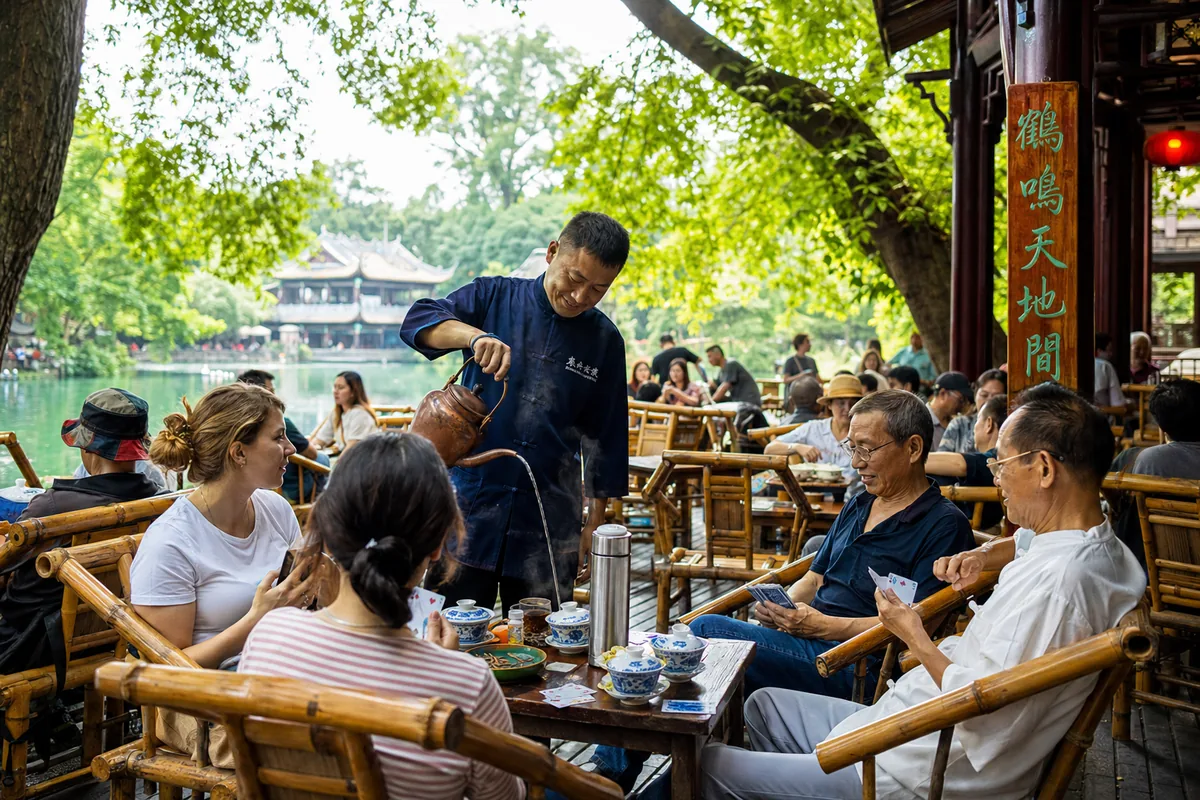
This is the slowest, most local part of the trip, and worth not rushing. Give it an hour or two with a cup of tea before moving on.
Evening: Chunxi Road and Taikoo Li
Chunxi Road (春熙路, Chūnxī Lù) is Chengdu's main shopping and people-watching district, and the adjacent Sino-Ocean Taikoo Li is the polished modern face of the city, built around the restored Daci Temple. Come for dinner and the lit-up evening atmosphere. This is also where you'll find the giant 3D LED panda climbing the corner of the IFS building — a popular photo spot.
Getting there: Metro Line 2 or Line 3 to Chunxi Road (春熙路) station. From People's Park it's two stops on Line 2.
For dinner, this is a good night to do a proper Sichuan hotpot (火锅, huǒguō). Order the yuanyang (split) pot if you can't take full spice — one side mild, one side numbing-hot.
Day 3: Day Trip — Leshan Giant Buddha or Dujiangyan
Day 3 is a full-day trip out of the city. Pick one of two options depending on what you're after.
Option A: Leshan Giant Buddha
The Leshan Giant Buddha (乐山大佛, Lèshān Dàfó) is a 71-meter Tang-dynasty Buddha carved into a cliff at the meeting point of three rivers — the largest stone Buddha in the world and a UNESCO World Heritage Site. You can see it from the top (a long staircase down the cliff face beside it, often with a slow queue) or from a river cruise boat that gives you the full scale from the water. The boat is faster and easier if the staircase line is long.
Getting there: Take a high-speed train (高铁, gāotiě) from Chengdu East (成都东) or Chengdu South to Leshan station — about 1 hour. From Leshan station, bus #3 or a short Didi takes you to the scenic area. Trains run frequently; book a day or two ahead during peak season. The official booking platform is China Railway 12306.
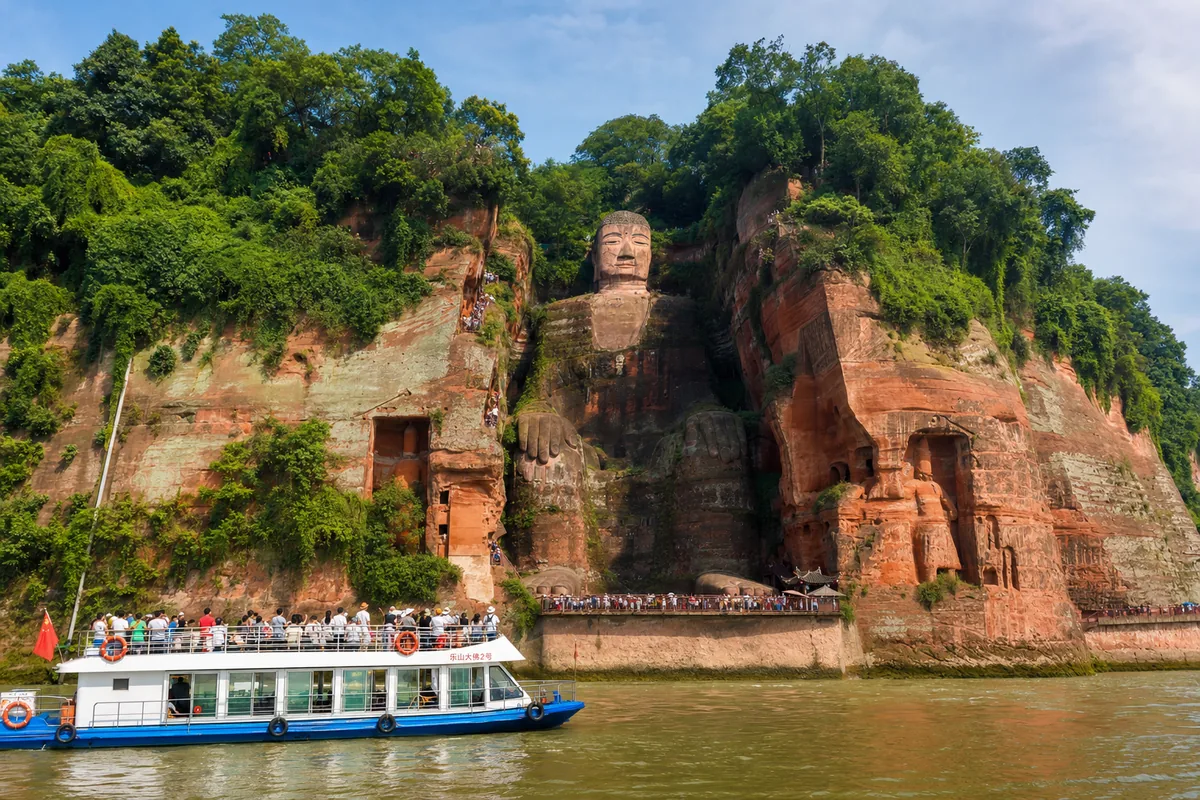
Option B: Dujiangyan Irrigation System
The Dujiangyan Irrigation System (都江堰, Dūjiāngyàn) is a 2,000-year-old engineering project that still controls the Min River today — also a UNESCO site. It's a gentler, less crowded day than Leshan, with riverside walks, suspension bridges, and the option to combine with Mount Qingcheng (青城山), a quiet Taoist mountain, if you want more.
Getting there: High-speed train from Chengdu (Xipu / North) to Dujiangyan — about 30–40 minutes. From the station it's a short walk or Didi to the scenic area entrance.
Evening: Sichuan Opera and the face-changing show
Whichever day trip you choose, get back to Chengdu in time for a Sichuan Opera (川剧, Chuānjù) performance, famous for bian lian (变脸) — "face-changing," where performers switch painted masks in a fraction of a second, seemingly with a flick of the head. A typical show also includes hand-puppetry, fire-spitting, and comedy. Shengtang Theater and the shows at Shufeng Yayun in Cultural Park are the well-known venues.
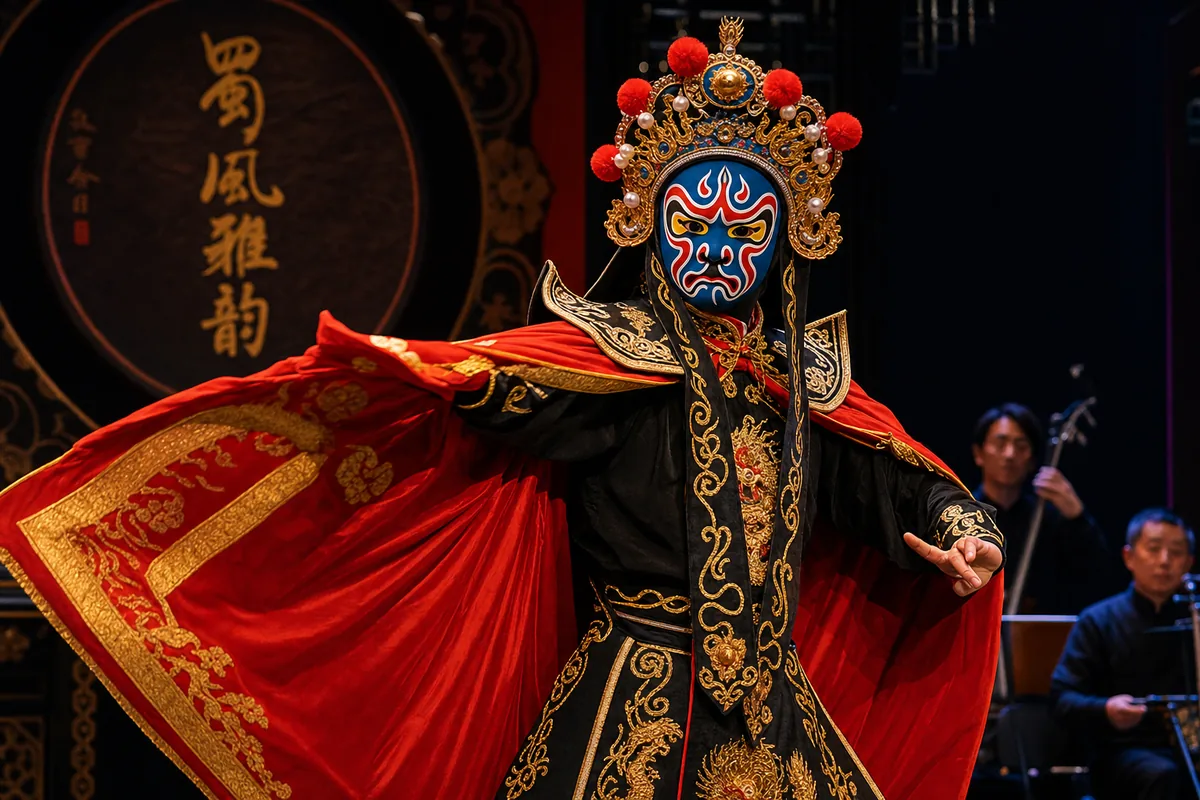
Getting there: Shufeng Yayun is near Culture Park (文化宫) on Metro Line 4. Most shows start around 20:00; book a seat earlier in the day, especially in high season.
Where to Stay
For three days on this plan, base yourself somewhere central and metro-connected. Two practical areas:
- Chunxi Road / Taikoo Li area — best for nightlife, shopping, and dining, with Metro Lines 2 and 3 running through it.
- Tianfu Square / People's Park area — central, slightly calmer, and a good hub for reaching almost everything on this itinerary.
Both areas have everything from hostels to international chains. You can compare neighborhoods and prices for central Chengdu hotels on compare options on Booking.com.
Getting Around: Quick Reference
| Stop | Metro / Transport | Notes |
|---|---|---|
| Giant Panda Base | Line 3 → Panda Avenue + shuttle/Didi | Go at opening (7:30) |
| Kuanzhai Alley | Line 4; or Line 2/4 to Renmin Park | 10-min walk |
| Wuhou Shrine | Line 3 → Gaoshengqiao | Connects to Jinli |
| Jinli | Walk from Wuhou Shrine | Street food |
| People's Park | Line 2 → Renmin Park | Free entry |
| Chunxi Road | Line 2/3 → Chunxi Road | Evening |
| Leshan | High-speed train, ~1 hr | Book ahead |
| Dujiangyan | High-speed train, ~30–40 min | Closer option |
Chengdu's metro is the backbone of this plan, and signs and announcements are in English. For the gaps — the Panda Base last mile, late-night returns — use Didi, which works in English and lets you pay through Alipay. the WaysChina app has offline Chengdu metro maps and a trip planner if you want to sketch out your day-by-day route before you go.
Final Notes
This plan front-loads the must-do (pandas in the early morning), balances the touristy old streets with a genuinely local afternoon in People's Park, and ends with a big day out and a show. If you only remember three things: go to the Panda Base at opening, don't over-plan the afternoons in Chengdu (the city rewards slowing down), and book your Day 3 train and opera tickets ahead in peak season. Prices and opening hours shift, so check the latest before you go. With the metro doing most of the heavy lifting, three days here is relaxed rather than rushed — which is exactly how Chengdu likes to be visited.
Want to keep planning? See our Chengdu Food Guide for where to eat between stops, the Chengdu Day Trips guide for more options beyond Leshan and Dujiangyan, and the full Chengdu Complete Guide for everything else. To get your phone trip-ready, read the Metro Systems Guide and Didi Guide.
Last updated: June 2026
Read in other languages
Getting to the sights by metro
Chengdu Panda Base
World-renowned panda research base with daily morning feeding shows.
- Panda Avenue
Wuhou Shrine & Jinli
Memorial temple to Three Kingdoms hero Zhuge Liang, beside the Jinli folk street.
- Wohou Shrine
Kuanzhai Alleys
Three parallel Qing-era alleyways with teahouses, snacks and traditional shops.
- Kuanzhaixiangzi Alleys
Du Fu Thatched Cottage
Restored thatched cottage where the Tang poet Du Fu lived for 4 years.
- Du Fu Thatched Cottage
Chunxi Road & Taikoo Li
Premier shopping district pairing pedestrian street with Taikoo Li's modern complex.
- Chunxi Road
Tianfu Square
Central plaza with Mao statue and the Sichuan Science & Technology Museum.
- Tianfu Square
Jinsha Site Museum
3,000-year-old Shu kingdom archaeological site with the iconic Sun & Immortal Birds gold disc.
- Jinsha Site Museum
Wenshu Monastery
Active Tang-era Buddhist monastery with vegetarian dining and a teahouse courtyard.
- Wenshu Monastery
Qingyang Palace
Southwest China's largest Taoist temple, named for the bronze goats in its courtyard.
- Qingyang Taoist Temple
People's Park
Beloved local park with Heming Teahouse — best place to experience Chengdu lifestyle.
- People's Park
Yongling Mausoleum (Wang Jian Tomb)
Tomb of 10th-century Former Shu emperor Wang Jian, with rare stone tomb chamber.
- Wenshu Monastery
Dujiangyan Irrigation System
2,300-year-old UNESCO irrigation system still in use; reach via 30-min intercity rail.
- Chengdu West Railway
Chengdu East Railway Hub
Major high-speed rail hub linking Chengdu to all of southwestern China.
- Chengdu East Railway
Chengdu Tianfu International Airport
Chengdu's main international airport (TFU), opened 2021; western China's largest aviation hub.
- Terminal 1 & 2 of Tianfu International Airport
- Tianfu International Airport North
Chengdu Shuangliu International Airport
Chengdu's secondary airport (CTU), 16 km from city center; mostly domestic and short-haul international after Tianfu opened.
- Terminal 2 of Shuangliu International Airport
- Terminal 1 of Shuangliu International Airport
Chengdu metro: last train times by station
Every line and station, checked by hand — the same data behind our offline route planner.
Get the WaysChina App
Offline guides, currency converter, essential phrases, and more — all in your pocket.

Related Articles
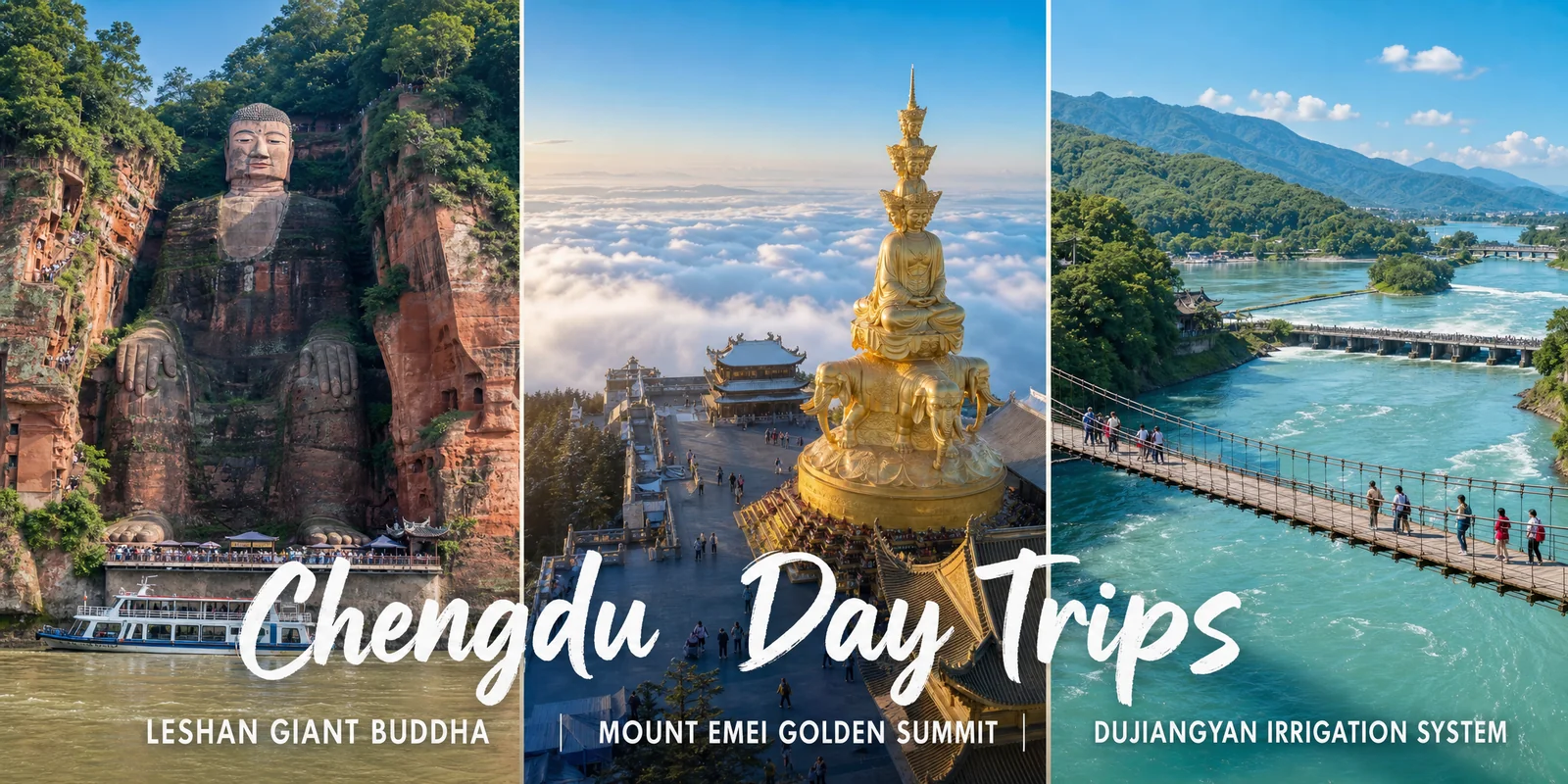
Chengdu Day Trips
The best day trips from Chengdu: the Leshan Giant Buddha, Mount Emei, Dujiangyan, and Qingcheng Mountain — plus...
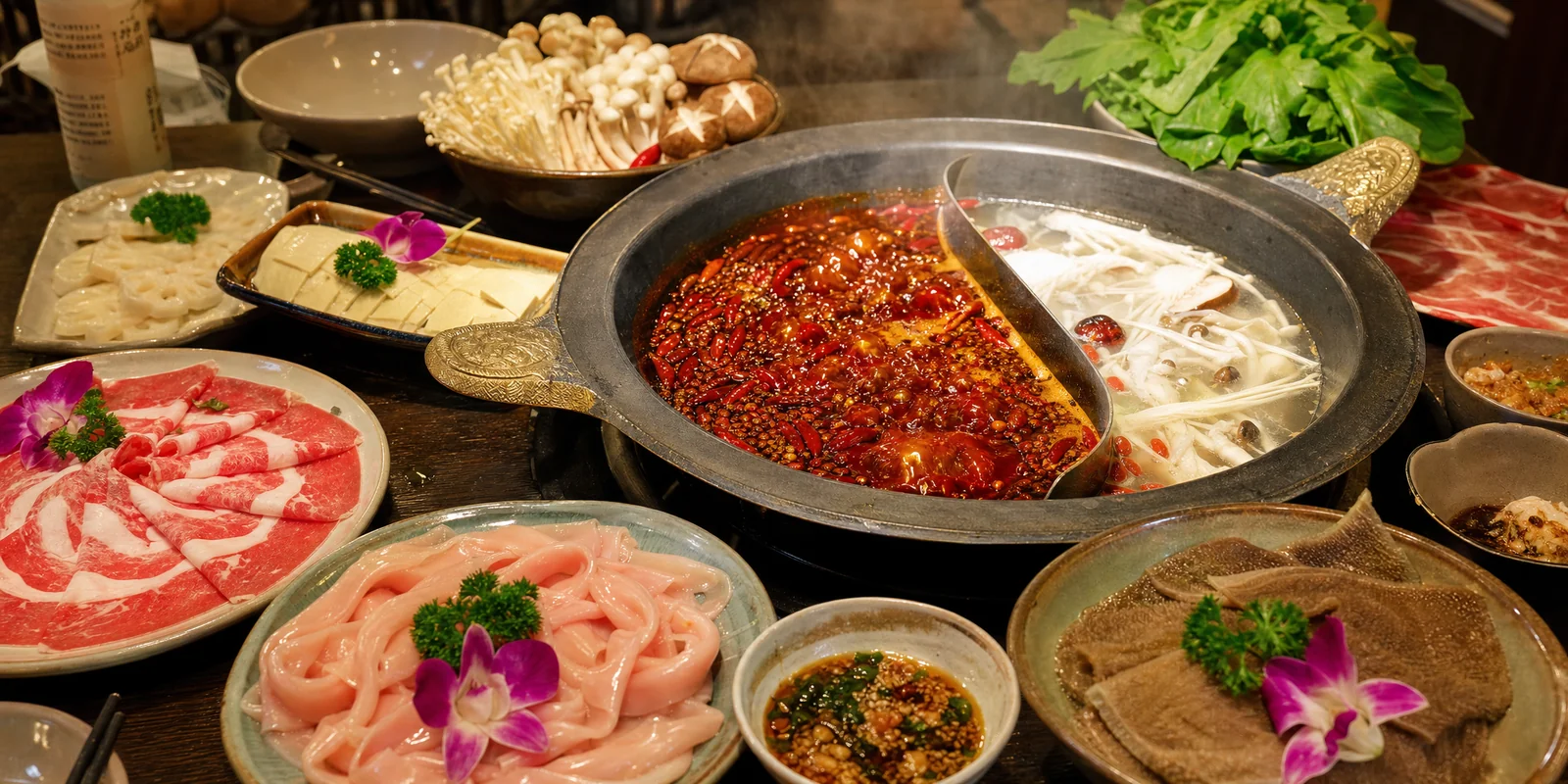
Chengdu Food Guide
Chengdu is China's spice capital and a UNESCO City of Gastronomy. Here's what to eat, where to find it, and how to...
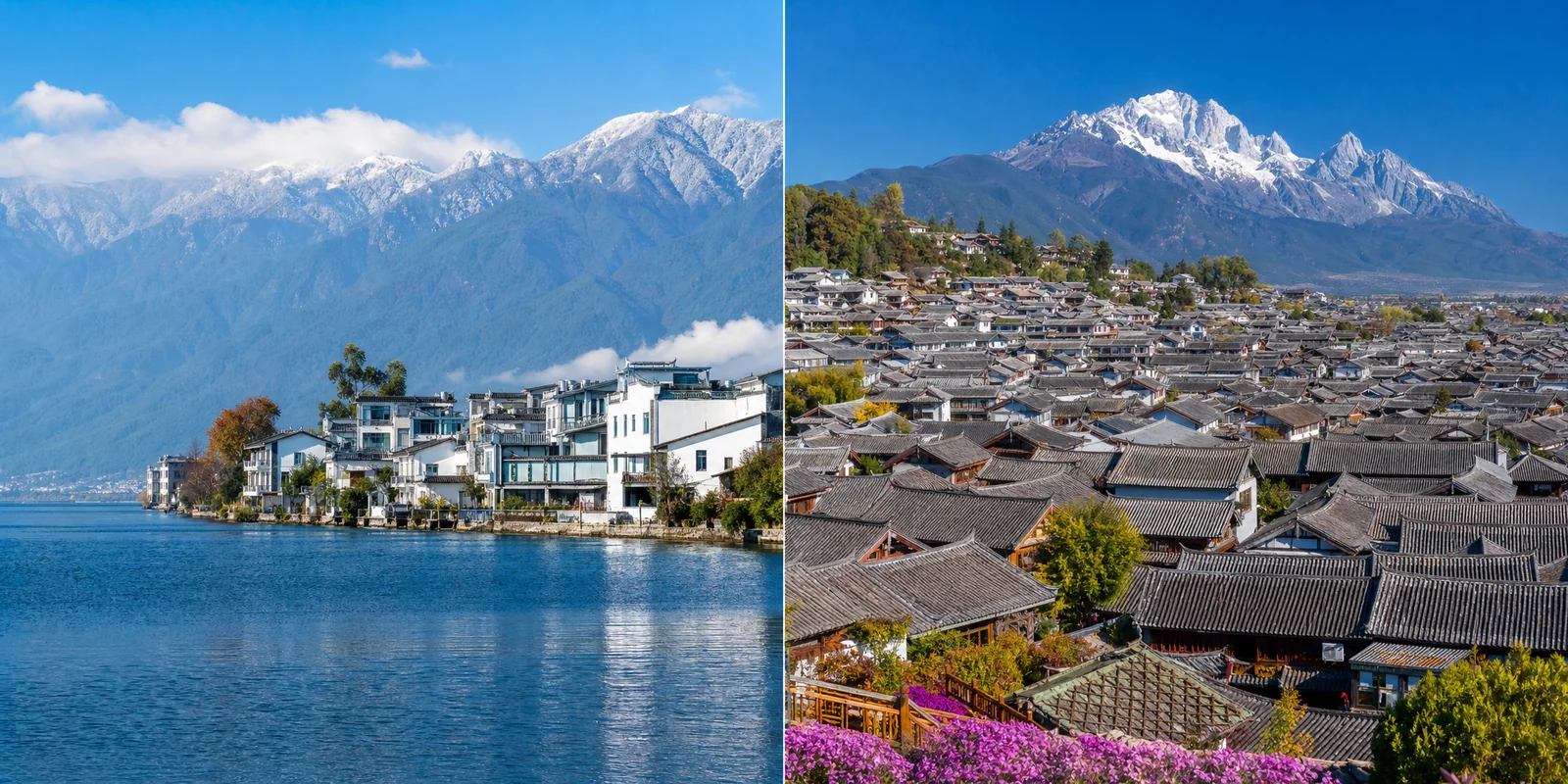
Dali & Lijiang Guide
A practical, in-depth guide to Dali and Lijiang in Yunnan — old towns, Erhai Lake, Jade Dragon Snow Mountain,...
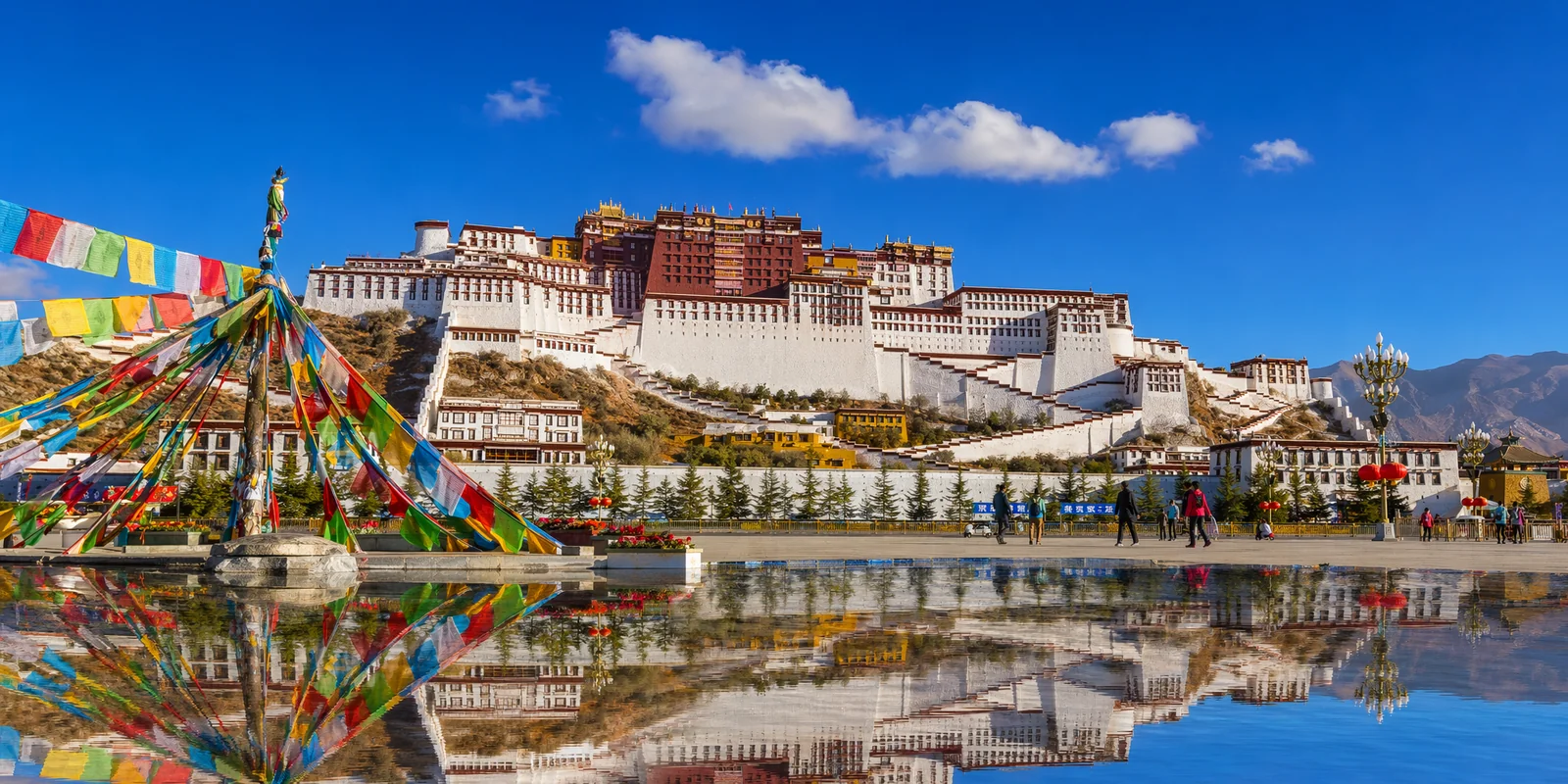
Lhasa & Tibet Guide
Foreign tourists can visit Tibet, but only with a Tibet Travel Permit and a booked tour — no independent travel...