
This article contains affiliate links. If you make a purchase through these links, we may earn a small commission at no extra cost to you. This helps support our work in creating free travel guides.
China's widest choice of luxury hotels is in Shanghai and Beijing, followed by Guangzhou, Shenzhen, Chengdu and Hangzhou, with a few resort-style retreats among the limestone peaks of Yangshuo near Guilin and in Lijiang. All the big international groups are here: Marriott (Ritz-Carlton, St. Regis, JW Marriott), Hilton (Waldorf Astoria, Conrad), IHG (InterContinental, Regent), Hyatt (Park Hyatt, Andaz), Accor (Fairmont, Raffles), plus Shangri-La, Peninsula, Four Seasons, Mandarin Oriental and Aman. For price, the best official benchmark is the government five-star average: in Shanghai it was 943 yuan a night in August 2026, and 994 yuan on average from January to August. Rooms at the famous brands on the Bund or beside West Lake usually cost well above that average, so check the live rate for your dates. Book on the hotel's own website if you collect points, or on a travel platform if you only want the lowest price. At the front desk, a Visa or Mastercard usually works: high-end hotels are one of the main places in China where foreign cards are accepted.
Below: what "five-star" means in China, one to three hotels per city with who each one suits, the hotels that live in historic buildings, what you will actually pay, and how to handle cards, deposits and loyalty programmes.
The short answer: brands, star ratings and what to expect
You do not need to learn new brands to stay well in China. The international groups you know at home run hundreds of hotels here, and their luxury lines are concentrated in the biggest cities and the main tourist spots.
- Hilton had more than 888 open hotels in Greater China and Mongolia as of October 2025; it opened its first mainland hotel in 1988. As of October 2025, its top brand, Waldorf Astoria, had five hotels in China — the Bund and Qiantan in Shanghai, plus Beijing, Chengdu and Xiamen.
- IHG (InterContinental, Regent and its other brands) had 882 open hotels in Greater China at the end of 2025.
- Shangri-La, the Hong Kong-based group, had 50 operating hotels in mainland China at the end of 2025 in which it holds a stake.
- Aman lists three China destinations on its website: Amandayan in Lijiang, Amanfayun in Hangzhou and Amanyangyun in Shanghai; the former Aman Summer Palace in Beijing is no longer on that list. Older guides still describe it as an Aman.
- Marriott and Hyatt are also present across the country with their luxury brands — Ritz-Carlton, St. Regis, JW Marriott, W, Bulgari and EDITION for Marriott; Park Hyatt and Andaz for Hyatt. Look them up city by city on their own apps.
- Single-brand luxury groups — Four Seasons, Mandarin Oriental, Peninsula, Banyan Tree and Swire's Upper House — have fewer hotels, but several of them are among the best-known addresses in their cities, as the city section below shows.
One thing to know when you read hotel company reports: "Greater China" in their figures includes Hong Kong, Macau and Taiwan, so the mainland number is lower.
"Five-star" is a government grade, not a brand tier
China has an official star rating for tourist hotels, from one to five stars; hotels apply for it voluntarily, and only after they have been open for at least a year. Stars can also be taken away: in 2019 the national rating committee removed the five-star status of eight hotels after inspections found serious hygiene and fire-safety problems. Beijing had 57 officially rated five-star hotels as of June 2026, a list that includes The Peninsula Beijing and the historic Beijing Hotel.
The practical point: because the rating is voluntary, many newer international luxury hotels never apply for one. A hotel booking site may show five stars for a hotel that has no official grade, and some officially rated five-star hotels are older state-run properties that feel more business-like than luxurious. Choose by brand and recent guest reviews, not by the star count. If you want to check whether a hotel holds the official grade, the Ministry of Culture and Tourism has a five-star hotel lookup (in Chinese) that you can filter by province.
What is the same as everywhere else, and what is different
At the international brands, the front desk and concierge speak English, rooms are large, and breakfast covers both Western and Chinese food. The concierge is more useful in China than at home: ask them to book restaurants, call a taxi for you, or reserve museum tickets that need a Chinese phone number. Three things are different:
- Your passport. Every hotel registers foreign guests with the police. You show your passport at check-in and the hotel does the rest. A national notice from seven ministries in 2024 told local authorities and booking platforms not to use "qualification" requirements to stop hotels from taking foreign guests. The full rules, including what changes if you stay with friends, are in our guide to booking hotels and registration rules.
- Toiletries. Chinese law tells hotels not to hand out disposable toiletries unless the guest asks. Shanghai's list of such items includes toothbrushes, combs and razors. Luxury hotels usually still have them; you may just need to call housekeeping. Our packing guide covers what to bring.
- Paying outside the hotel. Your card works at the front desk, but taxis, small restaurants and shops mostly take mobile payment. Set up Alipay or WeChat Pay before you leave the hotel (see the payment section below).
Pick by city: where to stay in each place
Choose the neighbourhood first, then the hotel. Each city also has other good luxury hotels from the big chains. The table has addresses and phone numbers; the text explains who each hotel suits.
| City | Hotel | Address & phone | Key facts |
|---|---|---|---|
| Shanghai | The Peninsula Shanghai | No. 32 The Bund (32 Zhongshan East 1st Road) Tel. +86 21 2327 2888 | opened 2009 · 235 rooms |
| Fairmont Peace Hotel | 20 East Nanjing Road Tel. +86 21 6138 6888 | 270 rooms incl. 39 suites · building opened in 1929 as the Cathay Hotel | |
| Waldorf Astoria Shanghai on the Bund | Shanghai Club building: 2 Zhongshan East 1st Road, on the Bund; new wing: 88 Sichuan Middle Road Tel. +86 21 6322 9988 | Shanghai Club building completed in 1911 | |
| Mandarin Oriental Pudong | 111 Pudong South Road, Pudong, on the Huangpu riverfront Tel. +86 21 2082 9888 | — | |
| Amanyangyun | 6161 Yuanjiang Road, Minhang District Tel. +86 21 8011 9999 | 140-hectare estate | |
| Beijing | The Peninsula Beijing | 8 Jinyu Hutong (Goldfish Lane), Wangfujing Tel. +86 10 8516 2888 | 230 rooms · owned by the Peninsula group since 1989 · on Beijing's official five-star list |
| Beijing Hotel | 33 East Chang'an Avenue; Wangfujing to the east, the Forbidden City and Tiananmen Square to the west Tel. +86 10 6513 7766 | founded 1900 · nearly 600 rooms and suites · on Beijing's official five-star list | |
| Mandarin Oriental Wangfujing | 269 Wangfujing Street; views over the Forbidden City, also from the MO Bar terrace Tel. +86 10 8509 8888 | — | |
| Guangzhou | Four Seasons Guangzhou | 5 Zhujiang West Road, Zhujiang New Town, Tianhe District; top floors of the IFC tower Tel. +86 20 8883 3888 | — |
| Shenzhen | Four Seasons Shenzhen | 138 Fuhua 3rd Road, Futian District Tel. +86 755 8826 8888 | — |
| Chengdu | Upper House Chengdu | 81 Bitieshi Street, Jinjiang District; in Sino-Ocean Taikoo Li, built around a preserved historic courtyard Tel. +86 28 6636 9999 | 100 rooms and 42 serviced apartments |
| Hangzhou | Four Seasons Hangzhou at West Lake | 5 Lingyin Road, Xihu District, by West Lake Tel. +86 571 8829 8888 | — |
| Guilin & Yangshuo | Banyan Tree Yangshuo | 168 Zhendong Street, Fuli Town, Yangshuo County; some villas look out over the Li River and the peaks Tel. +86 773 322 8888 | check-in 15:00, check-out 12:00 |
| Lijiang | Banyan Tree Lijiang | 34 Longquan Road, Shuhe, Gucheng District; at the foot of Jade Dragon Snow Mountain, near Shuhe old town and Baisha village Tel. +86 888 533 1111 | check-in 15:00, check-out 12:00 |
Shanghai: the Bund, Pudong, or the countryside
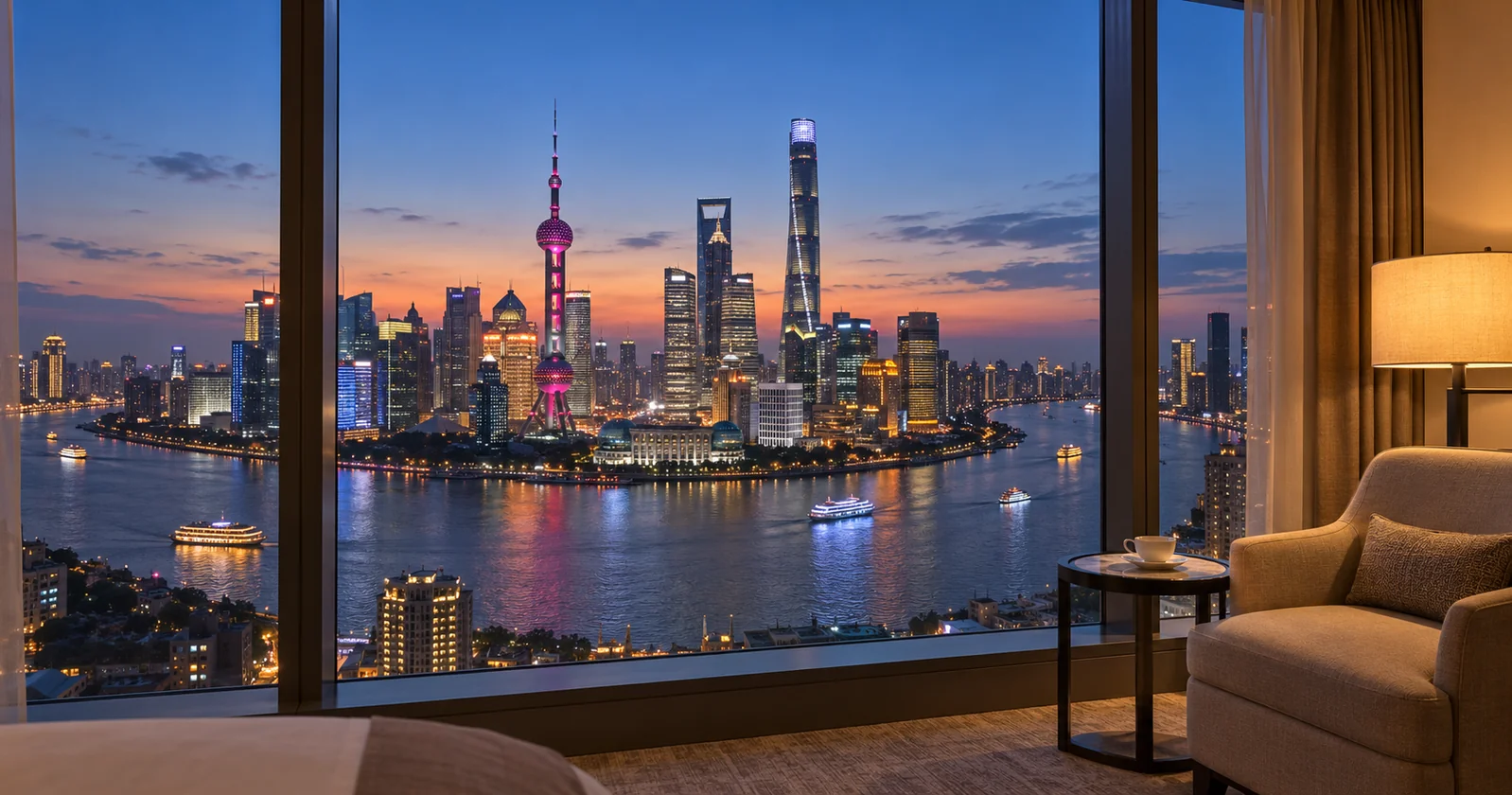
Shanghai has more luxury choice than any other mainland city, and the decision is mostly about which side of the Huangpu River you want. The Bund (外滩, Wàitān, the old riverfront on the west bank) puts you among the 1920s and 1930s buildings, walking distance from Nanjing Road and the old town. Pudong (浦东, the east bank) is the skyline of glass towers; staying there gives you the view of the Bund rather than a room inside it.
- The Peninsula Shanghai is at the north end of the Bund, at No. 32; it opened in 2009 and has 235 rooms. It is a new building in an old style, with river views. Choose it for classic service in the best position on the riverfront.
- Fairmont Peace Hotel sits where Nanjing Road meets the Bund, at 20 East Nanjing Road, with 270 rooms including 39 suites. It is the most famous historic hotel in Shanghai (more in the heritage section). Choose it for the building and the location.
- Waldorf Astoria Shanghai on the Bund uses the old Shanghai Club building at No. 2 on the Bund, plus a newer tower behind it on Sichuan Middle Road. The historic part has the character; the newer tower has larger rooms. Ask which building your room is in.
- Mandarin Oriental Pudong is on the east bank, beside the river at 111 Pudong South Road. Choose it if you want river and skyline views from your window.
- Amanyangyun is far out in Minhang district, on a 140-hectare estate with old camphor trees and stone-built antique villas. It is a retreat, not a sightseeing base: plan on a car for every trip into the city. It works well for the last two nights of a long trip.
For a first visit, stay on the Bund or near People's Square, which is close to the metro. Pudong is better for a second visit or for business in Lujiazui (陆家嘴), Pudong's financial district. What to do between hotel stays is in our Shanghai travel guide.
Beijing: Wangfujing, next to the Forbidden City
Beijing is a big, spread-out city, and the right area for a first visit is clear: Wangfujing (王府井), the shopping street just east of the Forbidden City. From there you can walk to the palace, Tiananmen Square and the old lanes. The business district further east (Guomao and Sanlitun) has many international luxury hotels too, but you will spend more time in taxis.
- The Peninsula Beijing is on Jinyu Hutong in Wangfujing, with 230 rooms; the Peninsula group has owned it since 1989. It is on the official five-star list and is a solid choice for families and anyone who wants the classic grand-hotel style.
- Beijing Hotel (北京饭店), founded in 1900 in the last years of the Qing dynasty, stands on East Chang'an Avenue, with Wangfujing on one side and the Forbidden City and Tiananmen Square to the west; it has nearly 600 rooms and suites. It is a large state-run hotel with a lot of history. Choose it for the location and the story, not for boutique polish.
- Mandarin Oriental Wangfujing is at 269 Wangfujing Street and looks out over the Forbidden City, as does the terrace of its MO Bar. Choose it for the view; ask for a palace-facing room when you book.
Plan your palace visit before you fix your dates: the Forbidden City has no same-day tickets, and foreign visitors reserve online in advance with their passport. Our Beijing travel guide covers the timing.
Guangzhou and Shenzhen: new towers and one historic island
Guangzhou gives you a clear choice between new and old. Four Seasons Guangzhou occupies the top floors of the IFC tower in Zhujiang New Town, the modern business district, with views across the Pearl River and the skyline. White Swan Hotel (白天鹅宾馆) stands on Shamian Island beside the river; it opened in 1983 and is often described as the first five-star hotel on the Chinese mainland. Shamian is a quiet island of old colonial buildings, good for walking; Zhujiang New Town is better if you are in town for business. Hotels across Guangzhou fill up and get more expensive during the Canton Fair trade show, so check the fair dates before you book.
In Shenzhen, Four Seasons Shenzhen is in Futian district, at 138 Fuhua 3rd Road. Futian is the city's business centre and close to one of the land crossings to Hong Kong, which suits travellers combining the two cities. Our Guangzhou and Shenzhen guide covers how the two fit together.
Chengdu: a courtyard hotel in Taikoo Li
Upper House Chengdu, which older guides call The Temple House, is in the Sino-Ocean Taikoo Li shopping district in the city centre, built around a preserved historic courtyard; it has 100 rooms and 42 serviced apartments. Taikoo Li is next to Daci Temple and a short walk from Chunxi Road, so you can walk to dinner and take the metro to most sights. The Waldorf Astoria brand also has a hotel in Chengdu. For panda base timing and getting around, see our Chengdu travel guide.
Hangzhou: beside West Lake or in the tea hills
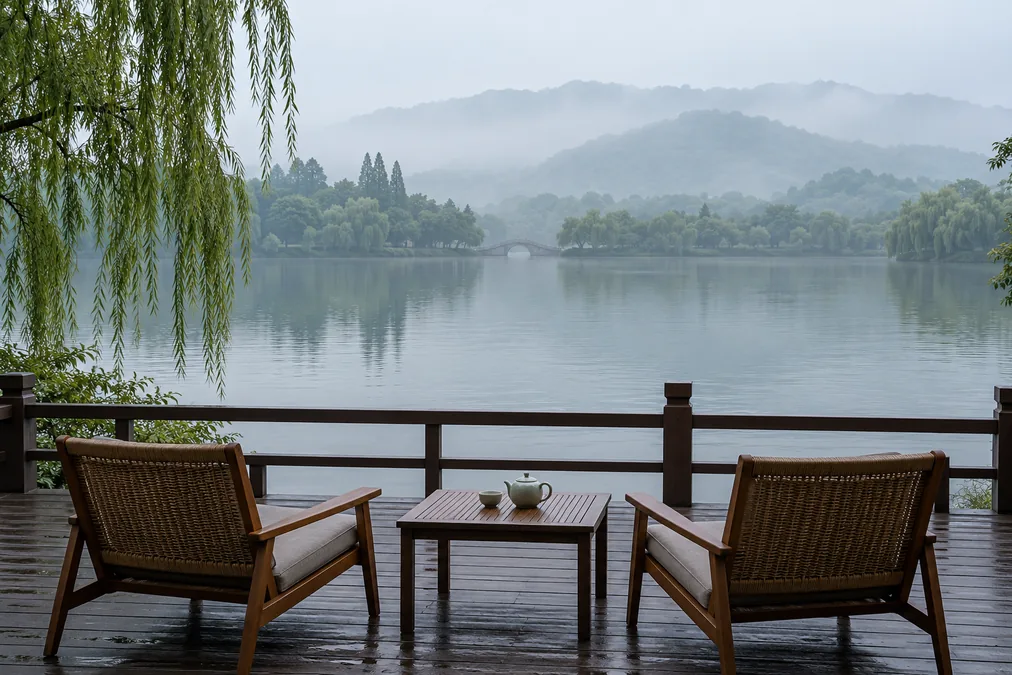
Hangzhou has two very different luxury stays. Four Seasons Hangzhou at West Lake is at 5 Lingyin Road, on the lake's western side. It is the easier choice for a first visit: you can walk out to the lake in the morning before the crowds arrive. Amanfayun is in a valley about 6 kilometres from West Lake, among tea fields, woods and a path that links seven old temples; it sits inside the World Heritage area and has 46 guest dwellings, some more than a century old. It is quiet and village-like, and it is close to Lingyin Temple. Choose it for two or three slow days, not for a quick visit.
On weekends and short holidays from 08:00 to 17:00, taxis and ride-hailing cars may not drive into the Lingyin area, and passengers have to change to a shuttle bus outside it. That matters if you stay at Amanfayun or on Lingyin Road; our Hangzhou travel guide explains how to get around them.
Xi'an: stay inside the city wall
Xi'an has fewer standout luxury hotels than the cities above, and the best plan is simply to stay inside or just outside the old city wall, near the Bell Tower, so you can walk to the Muslim Quarter in the evening. One historic option is the People's Mansion (人民大厦) on Dongxin Street, a 1958 building listed as a provincial-level protected site; after a restructuring in 2005 it became part of Sofitel, as Sofitel People's Mansion. The rest of the city is in our Xi'an travel guide.
Guilin and Yangshuo: limestone peaks from your terrace
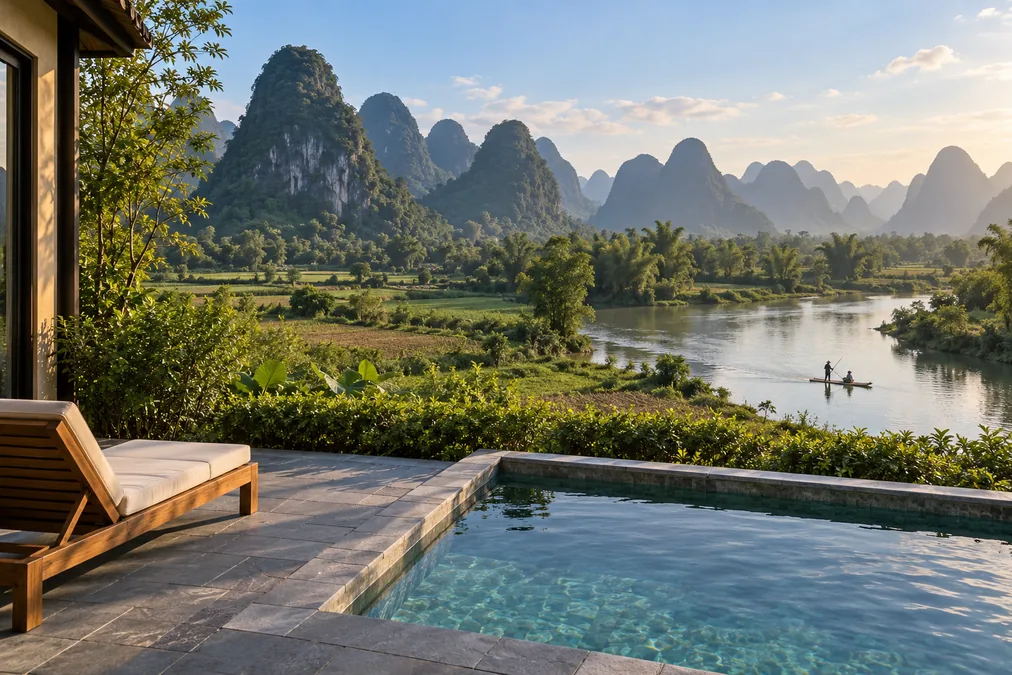
For the karst scenery (the steep limestone peaks the area is known for), stay in Yangshuo, not in Guilin city. Banyan Tree Yangshuo is in Fuli (福利镇), a small town in Yangshuo county, and some of its villas look out over the Li River and the peaks; check-in is at 15:00 and check-out at noon. Plan on at least two nights so you have one full day on the river and one on bikes in the countryside. Li River cruise tickets and timing are in our Guilin and Yangshuo guide.
Lijiang: above the old town or under the snow mountain
Lijiang has two good luxury choices, and they suit different trips. Amandayan stands on Lion Hill (狮子山) above Lijiang Old Town, a UNESCO World Heritage site; its rooms and spa are timber buildings in the local Naxi style, with views to Jade Dragon Snow Mountain. You can walk down into the old town's lanes. Banyan Tree Lijiang is in Shuhe (束河), at the foot of Jade Dragon Snow Mountain and close to the smaller Shuhe old town and Baisha village; check-in is at 15:00 and check-out at noon. Pick Amandayan for the old town, Banyan Tree for a quieter base near the mountain. Lijiang is high and nights are cold outside summer. For Jade Dragon tickets and the Dali connection, see our Dali and Lijiang guide.
Comparing rates once you have a shortlist
When you have chosen a city and one or two hotels, compare the price on the hotel's own website with a booking platform such as Booking.com or Agoda for the same room type and the same cancellation terms. The section on paying and loyalty below explains when booking direct is worth more than a lower price.
Heritage hotels: sleeping in a historic building
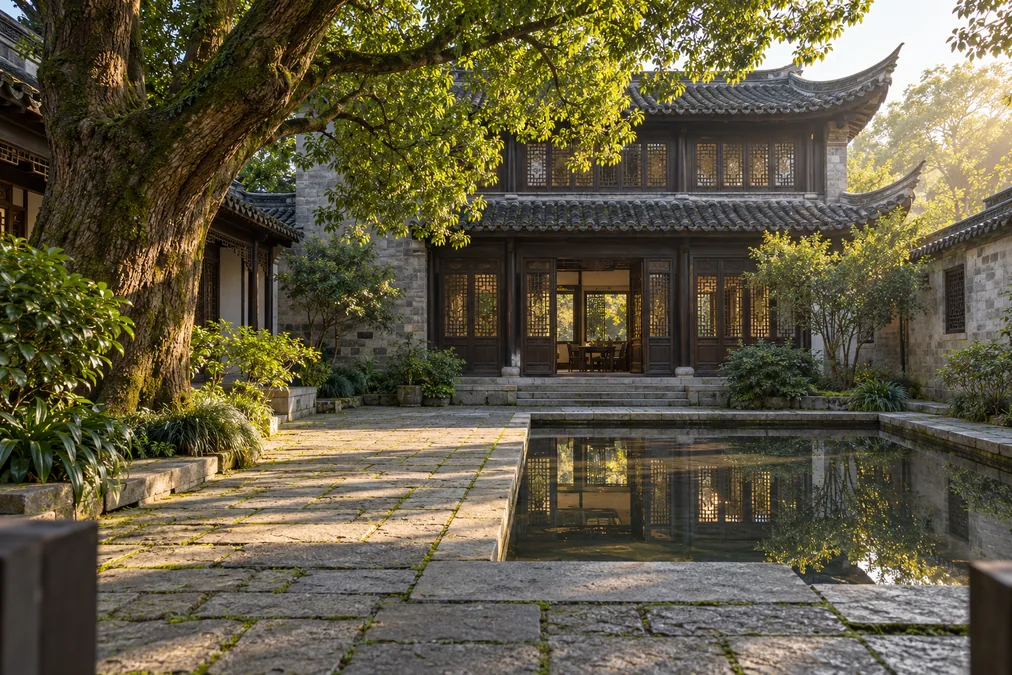
China's most interesting luxury stays are often in old buildings: a 1920s hotel on the Bund, a gentlemen's club, a hotel that has been taking guests since the last years of the Qing dynasty. The best-known:
- Fairmont Peace Hotel, Shanghai. The hotel's own museum tells the story of the Cathay Hotel (华懋饭店), which opened here in 1929; the 268-square-metre Sassoon Presidential Suite on the 10th floor was the home of the building's founder, Victor Sassoon. The north building, Sassoon House (沙逊大厦), is part of the Bund group of buildings that is a national-level protected heritage site.
- Waldorf Astoria Shanghai on the Bund. The bar in the historic building comes from the Shanghai Club, which opened here in 1911; its 34-metre counter was once famous as the top bar in the Far East. Even if you are not staying, a drink there is the easiest way to see the inside.
- Beijing Hotel. It dates back to 1900 and is still one of Beijing's officially rated five-star hotels. Expect a big, formal hotel rather than a restored boutique one.
- White Swan Hotel, Guangzhou. Opened in 1983 on Shamian Island, it is often described as the mainland's first five-star hotel, and it has a museum inside that covers that history.
- Upper House Chengdu. A modern hotel built around a preserved historic courtyard — history as a setting rather than as the building itself.
- Amanfayun, Hangzhou. Some of its village dwellings are more than a hundred years old.
- Dalian Hotel (大连宾馆), Dalian. The former Yamato Hotel on Zhongshan Square, begun in 1909 and finished in 1914, has been a national-level protected site since 2001.
- People's Mansion, Xi'an. The 1958 building is a provincial-level protected site.
A tip for heritage hotels: the historic wing usually has the character but smaller rooms, older bathrooms and thinner walls. If space matters more than history, book the newer wing and visit the old public rooms instead.
How much a luxury hotel costs in China
There is no official price for "a luxury hotel", but there are official averages for rated hotels, and they give you a useful baseline.
| What the figure covers | Average room price | Source period |
|---|---|---|
| Shanghai five-star hotels | 943 yuan per night in August; 994 yuan per night on average for January–August | 2026 |
| Beijing five-star hotels | 831 yuan per night | 2025 |
| Beijing four-star hotels | 502.2 yuan per night | 2025 |
| All star-rated hotels in China | 360.2 yuan per night | 2025 |
The Shanghai figures come from the Shanghai Statistics Bureau's monthly hotel report (in Chinese), and the Beijing ones from the city tourism bureau's annual statistics summary. How to read these numbers:
- They are averages across all officially rated five-star hotels, which can include older state-run hotels and business hotels outside the centre. Shanghai's five-star hotels were 76.5% full in August 2026, so the busy periods push prices higher.
- The famous international brands cost more. A riverfront room on the Bund, a palace-view room in Wangfujing or a villa at an Aman is usually priced well above the city's five-star average. Check the hotel's website for your dates; prices change a lot by season and day of the week.
- Other cities do not publish a five-star average. Luxury hotels in Chengdu, Guangzhou, Shenzhen and Xi'an are often cheaper than the same brand in Shanghai or Beijing, while resort villas in Hangzhou, Yangshuo and Lijiang can be as expensive as the big-city flagships. Compare a few dates before you decide.
When prices jump. Chinese public holidays, especially the Spring Festival and the National Day Golden Week in early October, push up rates at resorts and in the most visited cities. Hotels in China set their own room prices and can raise them for holidays, but they must show prices clearly and cannot add charges that were not shown; once a booking on a platform is confirmed, the hotel may not cancel it or raise the price. So booking early and getting a confirmation protects you. Trade fairs have the same effect on business hotels in cities like Guangzhou.
How a luxury stay fits into a whole-trip budget is in our China travel budget guide; if you want to save on some nights, see budget hotels and hostels in China.
Paying, deposits, loyalty programmes and booking direct
Foreign cards at the front desk
High-end hotels, large stores and airports are where foreign cards are most widely accepted in China; small shops mostly use QR code payments. Look for the card logos at the front desk; where Bank of China handles card payments, UnionPay, Visa, Mastercard, American Express, JCB and Diners Club are accepted, by tap (including Apple Pay), chip or swipe. China's commerce ministry tells foreign guests that hotels accept RMB cash, bank cards, Alipay and WeChat Pay, and recommends asking in advance whether the hotel takes international cards such as Mastercard and Visa; some hotels also accept Apple Pay or PayPal. At an international luxury brand the answer is almost always yes; if you plan to pay with American Express or Diners Club, confirm with the hotel before you arrive and bring a backup card.
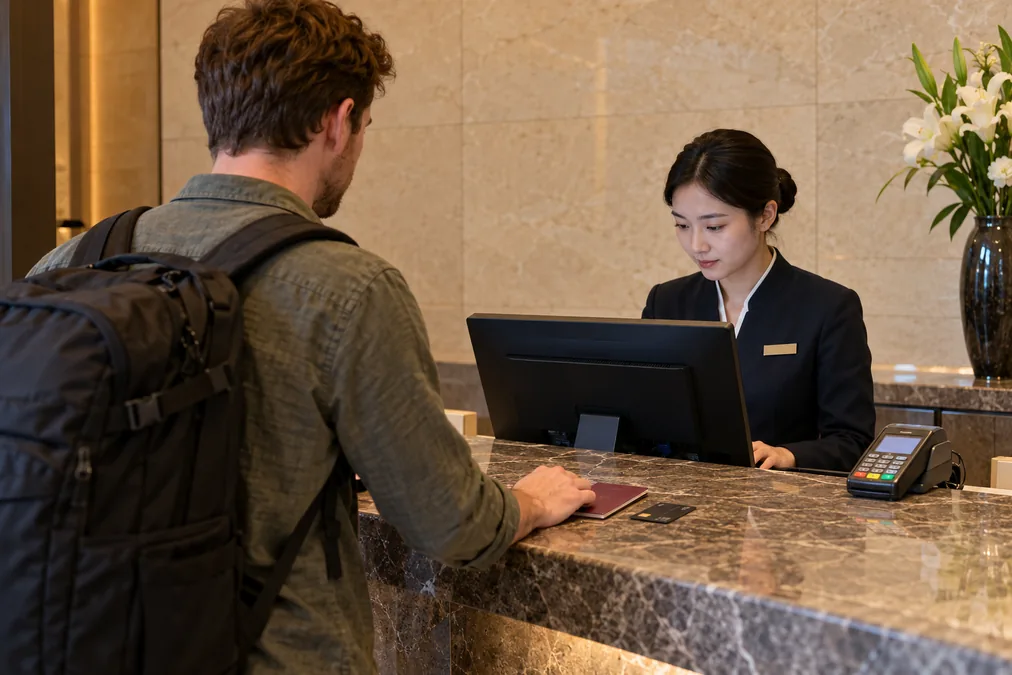
Deposits. Expect a deposit to be held on your card at check-in. As one example, Waldorf Astoria Shanghai on the Bund asks for a 1,500-yuan damage deposit, by credit card only, charged in RMB and refunded to the same card within 7 days after check-out. Other hotels set their own amounts; ask at check-in. A credit card is better than a debit card for this, because the hold does not take money out of your account.
Choose RMB when the card machine asks. Some card terminals offer to charge you in your home currency instead of yuan. Visa's rules say the merchant must show both amounts and the exchange rate and must let you choose; if you feel pushed or the details are not shown, Visa advises you to decline. Paying in yuan and letting your bank convert is usually the cheaper choice.
Cash and currency exchange at the hotel
Some hotel front desks exchange foreign cash into yuan, and they display an exchange sign when they do. Hotel desks and airport counters that act as authorised exchange agents have limits of 10,000 yuan a day and 50,000 yuan a year per person. The rate is clearly worse than at a bank or an ATM — often around 5–10% plus a fixed fee — so use it only for small amounts in an emergency. A bank ATM is the better way to get cash.
For everything outside the hotel, link a foreign card to Alipay or WeChat Pay before you arrive. Our guide to Chinese payment systems explains how cards, mobile payment and cash fit together.
Booking direct or through a platform
This is a judgement call, and it depends on whether you collect points:
- Book on the hotel brand's own website or app if you are a member of Marriott Bonvoy, Hilton Honors, IHG One Rewards, World of Hyatt or a similar programme. Most chains only give points, status nights and elite benefits (upgrades, late check-out, lounge access for higher tiers) on direct bookings. Join the free programme before you book; members often get a slightly better rate too.
- Book through a travel platform if you do not collect points and the platform price is lower for the same room and the same cancellation terms. Platforms also make it easier to compare several hotels in one city. Trip.com is named in China's official guide for foreign business visitors as a way to book hotels online and pay directly with an international bank card.
- Check what "breakfast included" means and whether the rate is refundable. Cheap non-refundable rates are common on platforms; read the terms before you pay.
Is the executive floor worth it? An executive or club room usually adds lounge access with breakfast, afternoon tea and evening drinks and snacks. It is worth it if you would otherwise pay for those meals in the hotel, or if you want a quiet place to work. It is less worth it in cities like Chengdu or Shanghai where you will want to eat out every evening. Look at the price difference per night and decide based on how much time you will spend in the hotel.
At check-in, have your passport ready; it is needed for registration even if you booked through a platform or a company.
Resort stays: Disney, Huangshan, Wuzhen and Sanya
A few resort-style stays are worth knowing about. At Shanghai Disney Resort, the two current hotels are the Shanghai Disneyland Hotel and the Toy Story Hotel; a third Disney-themed hotel, with 400 rooms, opens on 16 December 2026 and takes bookings from 6 November 2026. Registered guests of any resort hotel can enter the park up to an hour early, once per night from the day after check-in — see our Shanghai Disneyland guide. On Huangshan, a handful of hotels stand on the mountain itself, such as the Beihai and Xihai hotels, and you need to reserve a park ticket before you can stay at one; our Huangshan guide explains the summit night. Inside the Wuzhen water town, scenic-area hotels check in after 15:00 and check out before noon, bookings on the official ewuzhen.com site must be paid in full, and foreign guests check in with a passport. For beach resorts, Sanya on Hainan Island is China's main tropical resort area, with many international brands along its bays; our Sanya beach resort guide covers the bays and when to go.
Frequently asked questions
Which cities in China have the best luxury hotels?
Shanghai and Beijing have the most choice and the most famous historic hotels, such as the Fairmont Peace Hotel on the Bund and the Beijing Hotel near the Forbidden City. Guangzhou, Shenzhen, Chengdu and Hangzhou each have several international luxury brands. For a resort-style stay, Aman has hotels in Hangzhou, Lijiang and on the edge of Shanghai, and Banyan Tree has one in Yangshuo near Guilin. Which one is "best" depends on whether you want a city base or a quiet retreat.
How much does a five-star hotel in China cost per night?
The official averages are a good starting point: Shanghai's five-star hotels averaged 943 yuan a night in August 2026, and Beijing's averaged 831 yuan a night in 2025. These averages include older and business-district hotels; the best-known international luxury brands in prime locations usually charge more, so check the live rate for your dates.
Can I use a foreign credit card at luxury hotels in China?
Yes. High-end hotels are one of the main places in China where foreign cards are accepted, and Visa and Mastercard are the safest choices. Hotels can also take cash, Alipay and WeChat Pay, and the official advice is to confirm international card acceptance in advance. Use a credit card for the deposit and choose to pay in yuan if the terminal offers your home currency.
Which historic buildings in China are now hotels?
The best known are the Fairmont Peace Hotel in Shanghai, whose north building is part of the nationally protected Bund buildings; the Waldorf Astoria on the Bund in the former Shanghai Club of 1911; the Beijing Hotel, dating from 1900; and the White Swan Hotel on Shamian Island in Guangzhou, opened in 1983. Amanfayun in Hangzhou uses village dwellings that are more than a century old.
To sum up: pick the city and the neighbourhood first — the Bund or Wangfujing for a first trip, Hangzhou, Yangshuo or Lijiang for a slower stay. Use the government five-star average as a floor for your budget, not a ceiling. Book direct if you collect points, otherwise compare platform prices for the same room and cancellation terms. Bring your passport and a credit card for the deposit, and set up mobile payment for everything outside the hotel. For other kinds of places to stay, from guesthouses to hostels, see our guide to accommodation types in China.
Last updated: October 2026
Fact-checked sources
- Official Shanghai Municipal Government 3 pages
- Wise
- Official stories.hilton.com
- Official ihgplc.com
- Official www1.hkexnews.hk
- Official aman.com 4 pages
- jingdaily.com
- Official Fuzhou Municipal Government
Show 33 more sources
- Official openstd.samr.gov.cn
- Official mct.gov.cn
- Official Beijing Municipal Government 4 pages
- Official zwfw.mct.gov.cn
- Official Ministry of Commerce
- Official mee.gov.cn
- Official hkexnews.hk
- Official fairmont.com
- Official hilton.com.cn
- Official mandarinoriental.com 2 pages
- Official chinabeijinghotel.com.cn
- Official dpm.org.cn
- Official intl.dpm.org.cn
- Official young.dpm.org.cn
- Official fourseasons.com 3 pages
- Official gz.gov.cn
- Official thehousecollective.com
- Official Hangzhou Transport Bureau
- Official shaanxi.gov.cn
- Official xadfz.xa.gov.cn
- Official banyantree.com 2 pages
- Official Dalian Municipal Government 2 pages
- Official zwgk.mct.gov.cn
- Official linzi.gov.cn
- Official Bank of China
- Official myanmar.visa.com
- Official People's Bank of China 2 pages
- Trip.com
- Remitly
- Official Shanghai Disney Resort 5 pages
- Official CNINFO (listed-company disclosures)
- Official Guangming Online
- Official Wuzhen Tourism (official site) 2 pages
Last verified: 2026-10-30
Read in other languages
Last train times for 10 Chinese metro systems
Every line and station, checked by hand — the same data behind our offline route planner.
Get the WaysChina App
Offline guides, currency converter, essential phrases, and more — all in your pocket.

Related Articles
Types of Accommodation in China: Hotels, Chains, Hostels, Homestays and Sleeper Trains
The main places to stay in China and who each suits: star hotels and what stars mean, Chinese chains, hostels,...

Booking Hotels in China: Check-In and Registration Rules for Foreigners
Foreigners can stay in any licensed hotel in China. What to bring to check-in, when you must register with the...

English-Speaking Hospitals in China: Where to Go in Beijing, Shanghai and Beyond
Three ways to see a doctor in China, the English-speaking hospitals in Beijing, Shanghai, Guangzhou, Shenzhen and...
7-Day China Itinerary: Three Ways to Spend One Week in China
One week in China: Beijing, Xi'an and Shanghai, Beijing and Shanghai at an easier pace, or Shanghai with Suzhou and...