
This article contains affiliate links. If you make a purchase through these links, we may earn a small commission at no extra cost to you. This helps support our work in creating free travel guides.
Chengdu sits in the middle of one of the best collections of day trips in China. Within roughly two hours by high-speed train you can reach a UNESCO-listed giant Buddha carved into a cliff, a sacred Buddhist mountain, and a 2,000-year-old irrigation system that still works. Almost all of these run on fast, frequent trains, which means you can leave after breakfast and be back in time for hotpot. This guide covers the trips worth doing, how long each one actually takes, how to get there, and which famous spots are not realistic as a day trip — so you don't waste a day finding out the hard way.
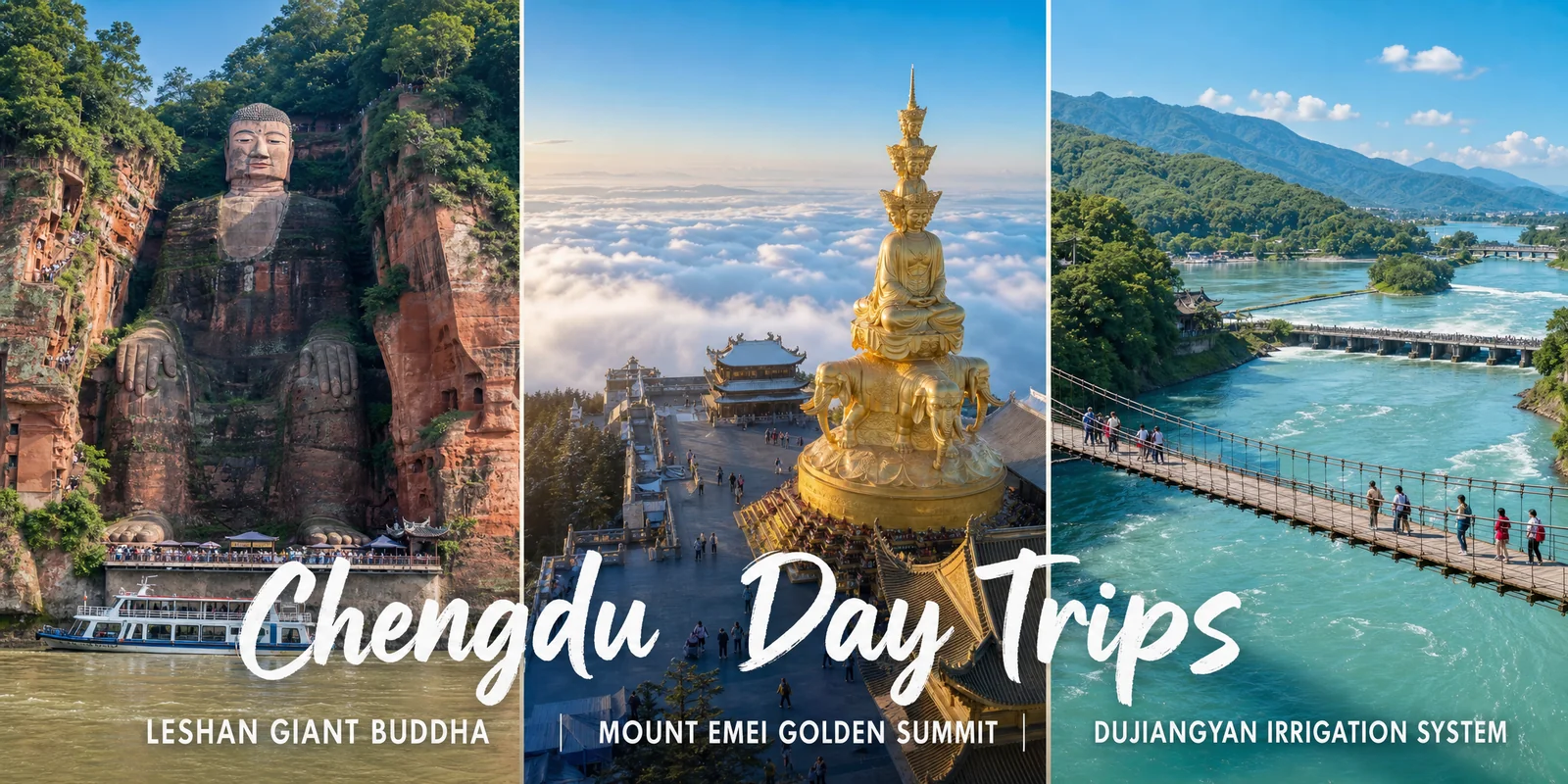
Quick comparison: which day trip suits you
If you only have time for one or two of these, here's the short version before the details.
| Destination | Travel time (one way) | Best for | Doable in a day? |
|---|---|---|---|
| Leshan Giant Buddha | ~1 hr by train + 15 min taxi | History, UNESCO sites, easy walking | Yes, comfortably |
| Mount Emei | ~1.5 hrs by train + bus/cable car | Hiking, temples, mountain scenery | Partial — see below |
| Dujiangyan + Panda Valley | ~30–40 min by train | Engineering history, pandas, families | Yes, easily |
| Qingcheng Mountain | ~40 min by train | Taoism, forest walks, quiet temples | Yes |
| Jiuzhaigou | ~1 hr flight or 8+ hrs by road | Lakes, waterfalls, valley scenery | No — needs 2–3 days |
The good news: Leshan and Emei are on the same rail line, and Dujiangyan and Qingcheng Mountain are also a natural pair. So even if you only have two days for excursions, you can cover four of the region's highlights.
Leshan Giant Buddha: the easiest big win
The Leshan Giant Buddha (乐山大佛, Lèshān Dàfó) is a 71-meter seated Buddha carved directly into a sandstone cliff at the meeting point of three rivers. It was started in the 8th century and took about 90 years to finish. It's a UNESCO World Heritage site, and standing at the Buddha's feet looking up — or seeing it from the river below — gives you a real sense of the scale. The ears alone are around seven meters long.
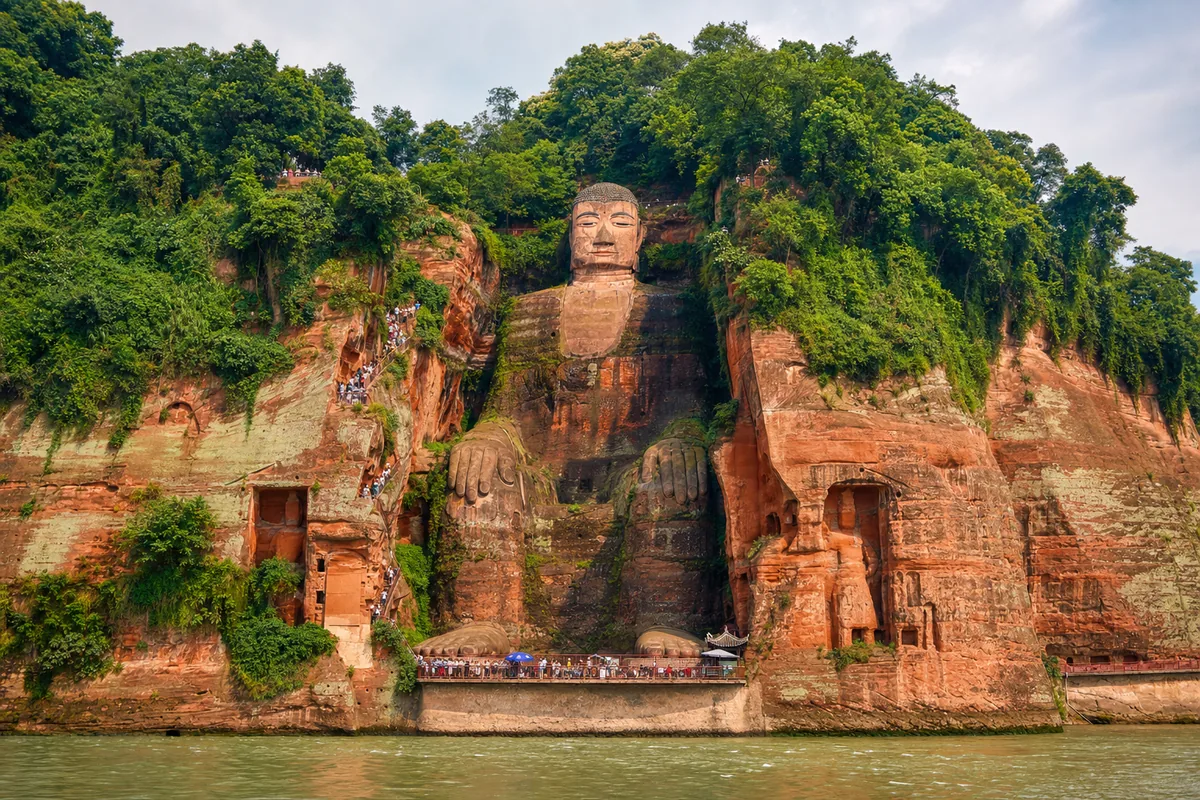
There are two main ways to see it. You can walk down the cliffside staircase (the "Nine-Bend Plank Road") that runs alongside the Buddha from head to feet — this is the classic experience but involves narrow steps and queues, especially in peak season. Or you can take a sightseeing boat that gives you the full front-on view from the water in about 20–30 minutes, with no stairs. Many visitors do the boat first for the photo, then walk the site.
Getting there
Take a high-speed train (高铁, gāotiě) from Chengdu South or Chengdu East to Leshan Station — about an hour. From Leshan Station, it's a 15–20 minute taxi or Didi ride to the scenic area entrance. The whole round trip, including 3–4 hours at the site, fits comfortably into a day.
For booking trains, our guide to booking train tickets walks through the process, or you can book through Trip Com Train if you'd rather use an English-language interface with passport-friendly checkout.
Mount Emei: beautiful, but pace yourself
Mount Emei (峨眉山, Éméi Shān) is one of China's four sacred Buddhist mountains, rising to 3,099 meters at the Golden Summit. It's a different kind of trip from Leshan — this is a mountain, with temples scattered across it, cloud-sea views from the top, and wild macaque monkeys that have learned tourists carry snacks.
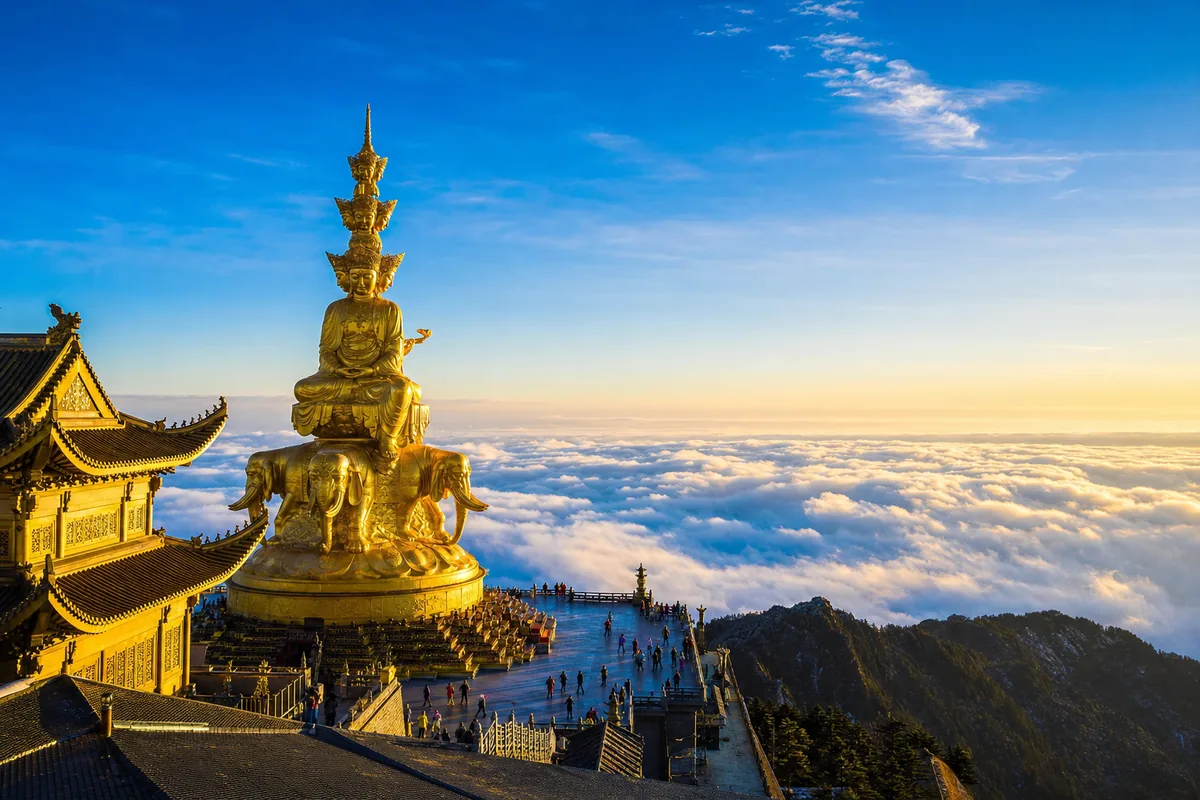
The honest truth about Emei as a day trip: you cannot see the whole mountain in a day, and you shouldn't try. The full pilgrimage hike from base to summit takes two days. What you can do in a day is take the tourist bus partway up, then the cable car to the Golden Summit (金顶, Jīndǐng) to see the giant Samantabodhisattva statue and, on a clear day, the cloud sea below. That's a satisfying trip on its own.
Getting there and getting around
Trains from Chengdu reach Emeishan Station in about 1.5 hours. From there it's a short ride to the mountain's main gate, where you buy an entrance ticket plus a separate eco-bus ticket (the bus is the only way up the lower mountain — private cars aren't allowed). The bus to Leidongping takes around two hours of winding road, then the cable car covers the final stretch to the summit.
If you'd rather not juggle the bus and cable car tickets yourself, organized day tours from Chengdu handle the logistics and entrance bundles. You can compare options on Klook, which lists both Leshan-only and Leshan-plus-Emei trips.
Dujiangyan and Panda Valley: history plus pandas in one day
Dujiangyan (都江堰, Dūjiāngyàn) is a 2,000-year-old irrigation system built around 256 BC under engineer Li Bing. What makes it remarkable is that it's still in use today, watering the Chengdu Plain without a single dam blocking the river. It works by splitting the Min River with a clever levee and using natural water flow to control flooding and irrigation. It's a UNESCO World Heritage site, and even if waterworks sound dry on paper, the site itself is a pleasant riverside walk with a famous swaying suspension bridge and temple views.
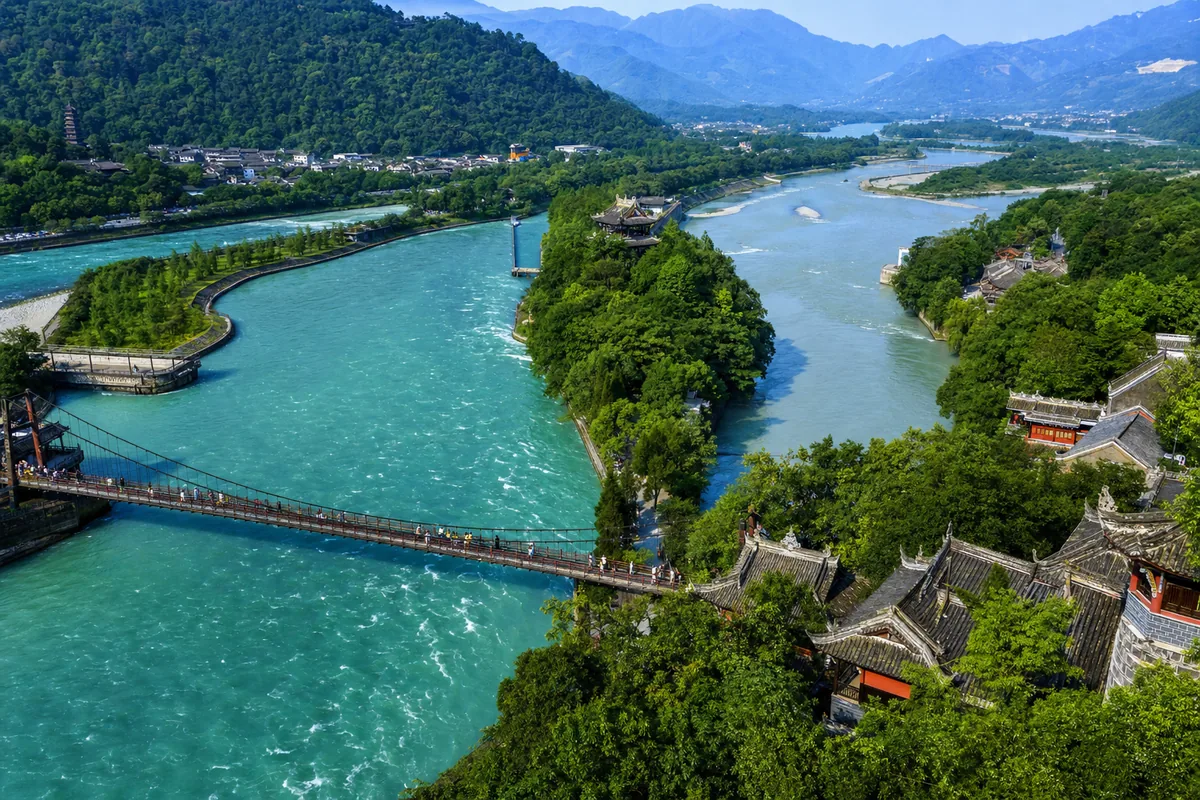
Dujiangyan is the closest of these trips to Chengdu — only about 30–40 minutes by high-speed train. That's what makes it a great pairing with the Dujiangyan Panda Base (often called Panda Valley), home to giant pandas in a more spacious, forested setting than the busier Chengdu base in the city. Some bases here also run a paid "panda keeper" volunteer program if you book ahead.
Getting there
Trains run frequently from Chengdu to Dujiangyan and Qingchengshan stations. From Dujiangyan Station, the irrigation site and the panda base are short taxi or Didi rides apart. Because the train is so quick, you can fit both the panda base and the irrigation system into one relaxed day.
Qingcheng Mountain: the quiet one
Qingcheng Mountain (青城山, Qīngchéng Shān) is one of the birthplaces of Taoism and sits right next to Dujiangyan — same rail line, same general area. Compared to Emei it's far gentler and far quieter, with shaded forest paths, old wooden temples, and a small lake you cross by boat partway up. The name means "green city mountain," and the dense tree cover keeps it cool and green most of the year.
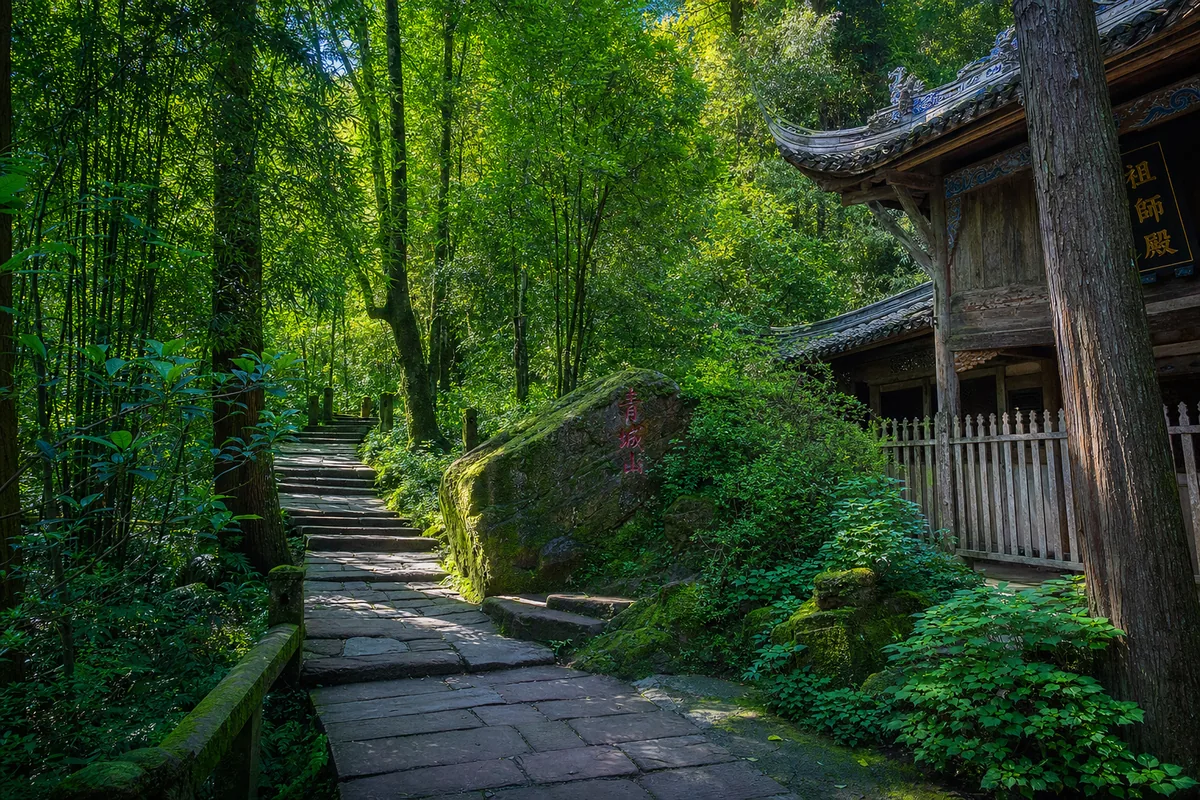
The front mountain (前山, qián shān) has the main temples and is the standard visit, with a cable car option if you don't want to walk the full ascent. It's the kind of place where the appeal is the walk itself, not a single big monument. Because it's so close to Dujiangyan, energetic travelers sometimes combine the two, but doing both well in one day is a stretch — pick one as your main focus.
Jiuzhaigou: why it's not a day trip
Jiuzhaigou (九寨沟, Jiǔzhàigōu) shows up on a lot of "Chengdu day trip" searches, and it's worth being clear: it isn't one. The valley of turquoise lakes, terraced waterfalls, and forested peaks is genuinely one of the most striking landscapes in China — but it's roughly a one-hour flight or eight-plus hours by road from Chengdu, sitting high in the mountains of northern Sichuan.
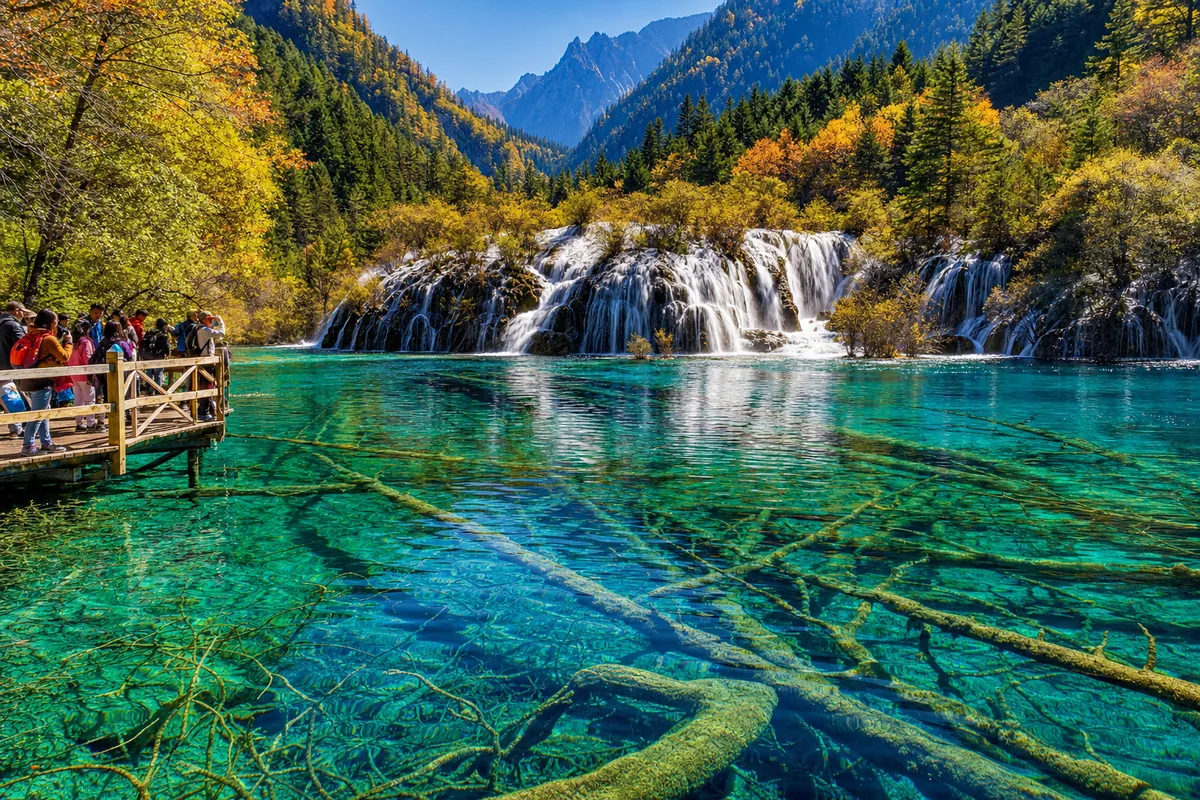
To do it properly you need at least two to three days: a day to travel in (usually a flight to Jiuzhai Huanglong Airport, which is at high altitude), a full day in the park, and a day to return. Many travelers add nearby Huanglong's calcite pools to the same trip. Treat it as a separate multi-day excursion, not a day trip — and budget for altitude adjustment, since the airport and park sit well above 3,000 meters.
Practical tips for any Chengdu excursion
- Carry your passport. You need it to enter stations, collect tickets, and buy entrance tickets at many scenic areas.
- Set up mobile payment first. Tickets, taxis, snacks, and even temple donations often run on QR codes. Link a card to Alipay (支付宝, Zhīfùbǎo) or WeChat Pay before you go.
- Use Didi for the last mile. Train stations sit outside town, and the scenic entrances are a short ride away. Didi (China's main ride-hailing app) is usually easier than finding a metered taxi.
- Go early. Catch one of the first trains. Sites get crowded by late morning, and an early start means you're back in Chengdu with the evening free.
- Mind the season. Spring and autumn are ideal. Summer is hot and humid in the lowlands but pleasant on the mountains; winter brings cold and possible snow to the summits.
For mapping out which day trips to slot into your stay and how to sequence them, the WaysChina app has a built-in trip planner and offline metro maps for getting across Chengdu to the right departure station.
The bottom line
If you have one day, the Leshan Giant Buddha is the most rewarding and least complicated trip — UNESCO-level history, an hour each way, minimal logistics. With a second day, pair Dujiangyan with its panda base for a mix of engineering history and giant pandas, or pick Mount Emei if you want a real mountain and don't mind an earlier start. Qingcheng Mountain is the calm alternative for anyone who's seen enough crowds. And Jiuzhaigou, stunning as it is, deserves its own multi-day trip rather than a rushed attempt. Check train times and park status before you go, set up mobile payments, and most of these become simple, well-paced days out.
Related reading
- Chengdu Complete Guide — the full city overview if you're still planning your base.
- 3-Day Chengdu Itinerary — how to fit these day trips around the city itself.
- How to Book Train Tickets — the step-by-step for the trains these trips rely on.
- Chengdu Food Guide — what to eat when you're back in the city each evening.
- Didi Guide — for the short rides between stations and scenic entrances.
Last updated: June 2026
Read in other languages
Getting to the sights by metro
Chengdu Panda Base
World-renowned panda research base with daily morning feeding shows.
- Panda Avenue
Wuhou Shrine & Jinli
Memorial temple to Three Kingdoms hero Zhuge Liang, beside the Jinli folk street.
- Wohou Shrine
Kuanzhai Alleys
Three parallel Qing-era alleyways with teahouses, snacks and traditional shops.
- Kuanzhaixiangzi Alleys
Du Fu Thatched Cottage
Restored thatched cottage where the Tang poet Du Fu lived for 4 years.
- Du Fu Thatched Cottage
Chunxi Road & Taikoo Li
Premier shopping district pairing pedestrian street with Taikoo Li's modern complex.
- Chunxi Road
Tianfu Square
Central plaza with Mao statue and the Sichuan Science & Technology Museum.
- Tianfu Square
Jinsha Site Museum
3,000-year-old Shu kingdom archaeological site with the iconic Sun & Immortal Birds gold disc.
- Jinsha Site Museum
Wenshu Monastery
Active Tang-era Buddhist monastery with vegetarian dining and a teahouse courtyard.
- Wenshu Monastery
Qingyang Palace
Southwest China's largest Taoist temple, named for the bronze goats in its courtyard.
- Qingyang Taoist Temple
People's Park
Beloved local park with Heming Teahouse — best place to experience Chengdu lifestyle.
- People's Park
Yongling Mausoleum (Wang Jian Tomb)
Tomb of 10th-century Former Shu emperor Wang Jian, with rare stone tomb chamber.
- Wenshu Monastery
Dujiangyan Irrigation System
2,300-year-old UNESCO irrigation system still in use; reach via 30-min intercity rail.
- Chengdu West Railway
Chengdu East Railway Hub
Major high-speed rail hub linking Chengdu to all of southwestern China.
- Chengdu East Railway
Chengdu Tianfu International Airport
Chengdu's main international airport (TFU), opened 2021; western China's largest aviation hub.
- Terminal 1 & 2 of Tianfu International Airport
- Tianfu International Airport North
Chengdu Shuangliu International Airport
Chengdu's secondary airport (CTU), 16 km from city center; mostly domestic and short-haul international after Tianfu opened.
- Terminal 2 of Shuangliu International Airport
- Terminal 1 of Shuangliu International Airport
Chengdu metro: last train times by station
Every line and station, checked by hand — the same data behind our offline route planner.
Get the WaysChina App
Offline guides, currency converter, essential phrases, and more — all in your pocket.

Related Articles
3-Day Chengdu Itinerary
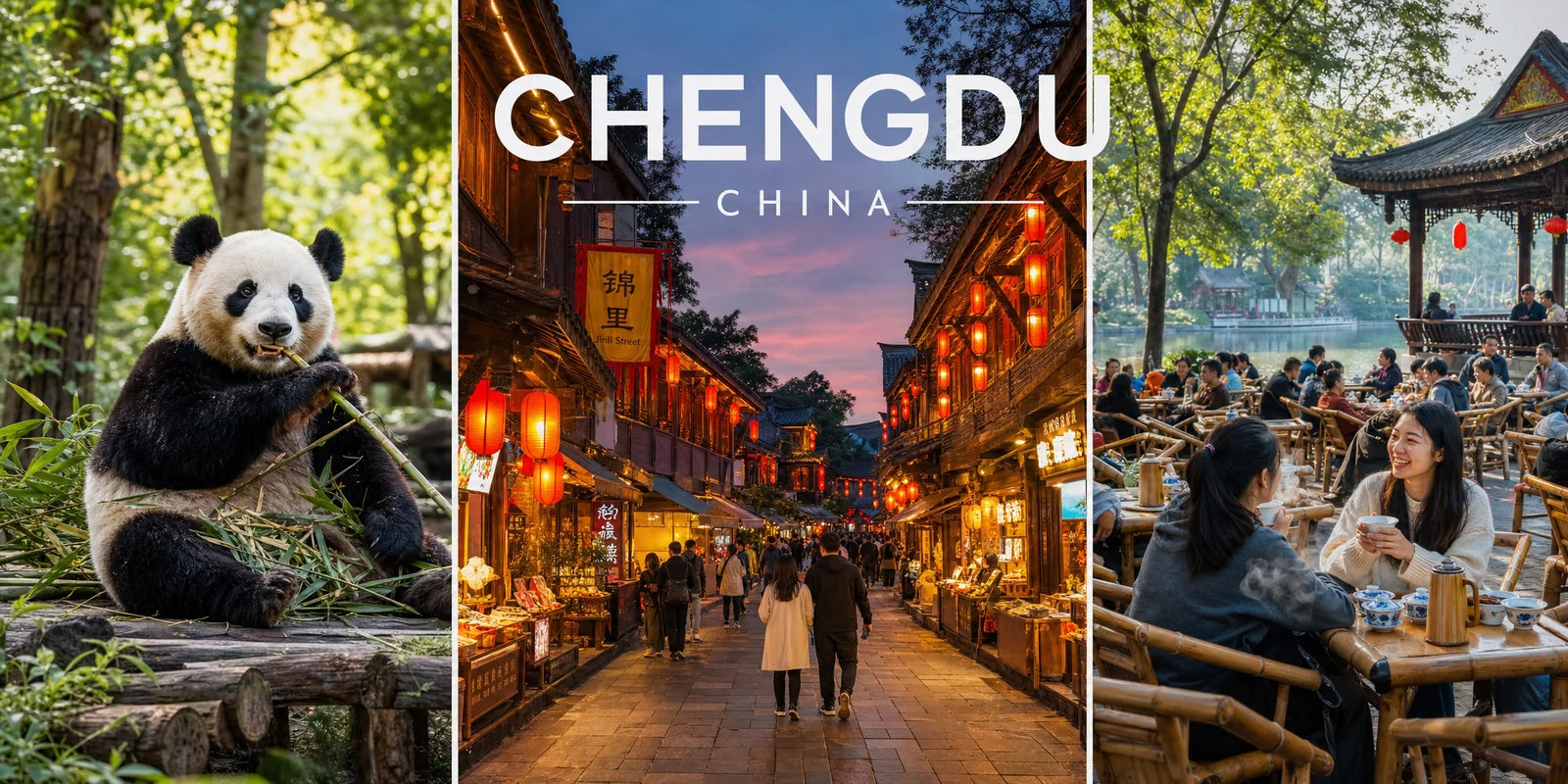
A practical 3-day Chengdu plan covering the Panda Base, Wuhou Shrine, Jinli, People's Park, and a day trip to Leshan...
Chengdu Food Guide
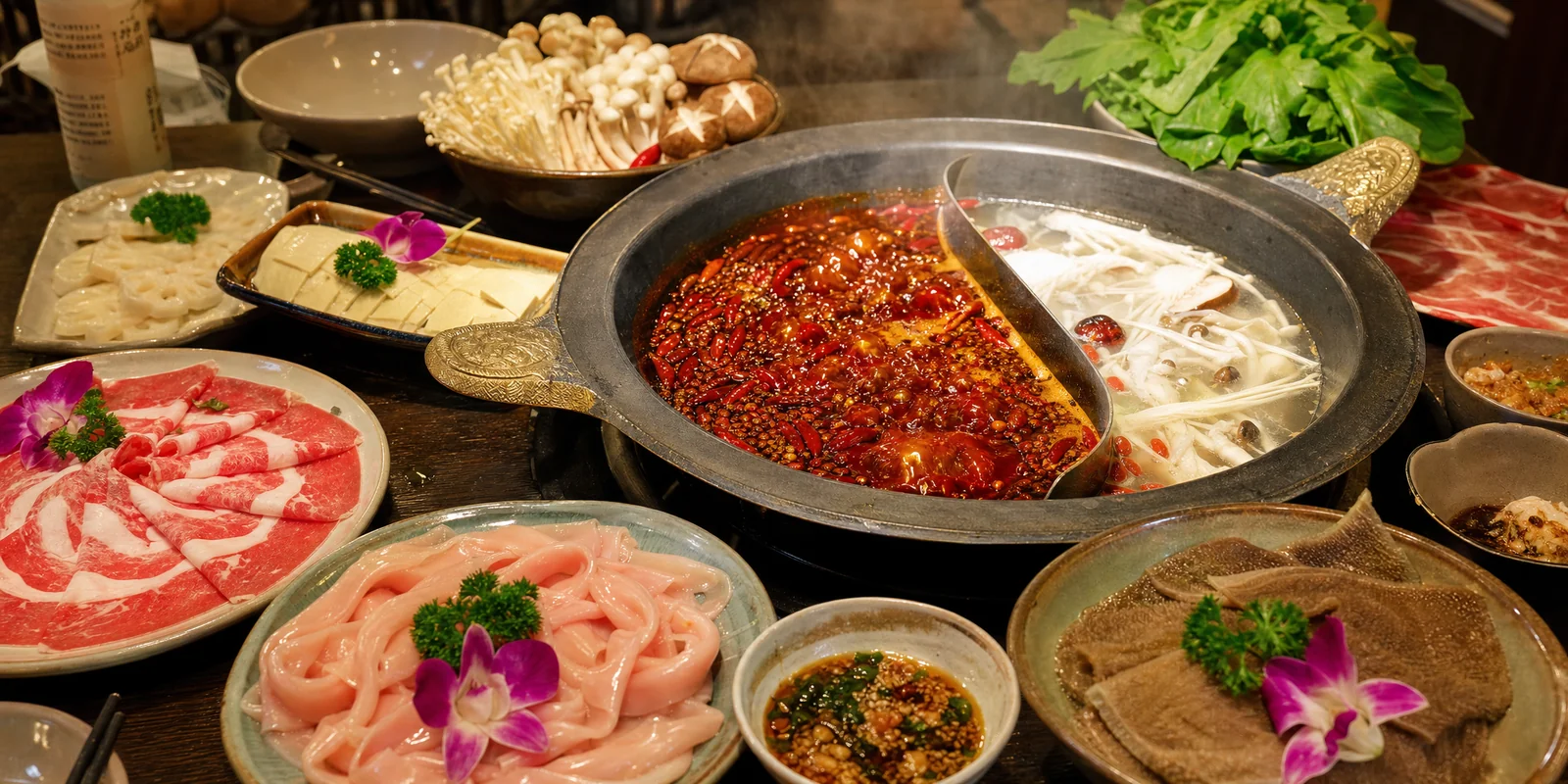
Chengdu is China's spice capital and a UNESCO City of Gastronomy. Here's what to eat, where to find it, and how to...
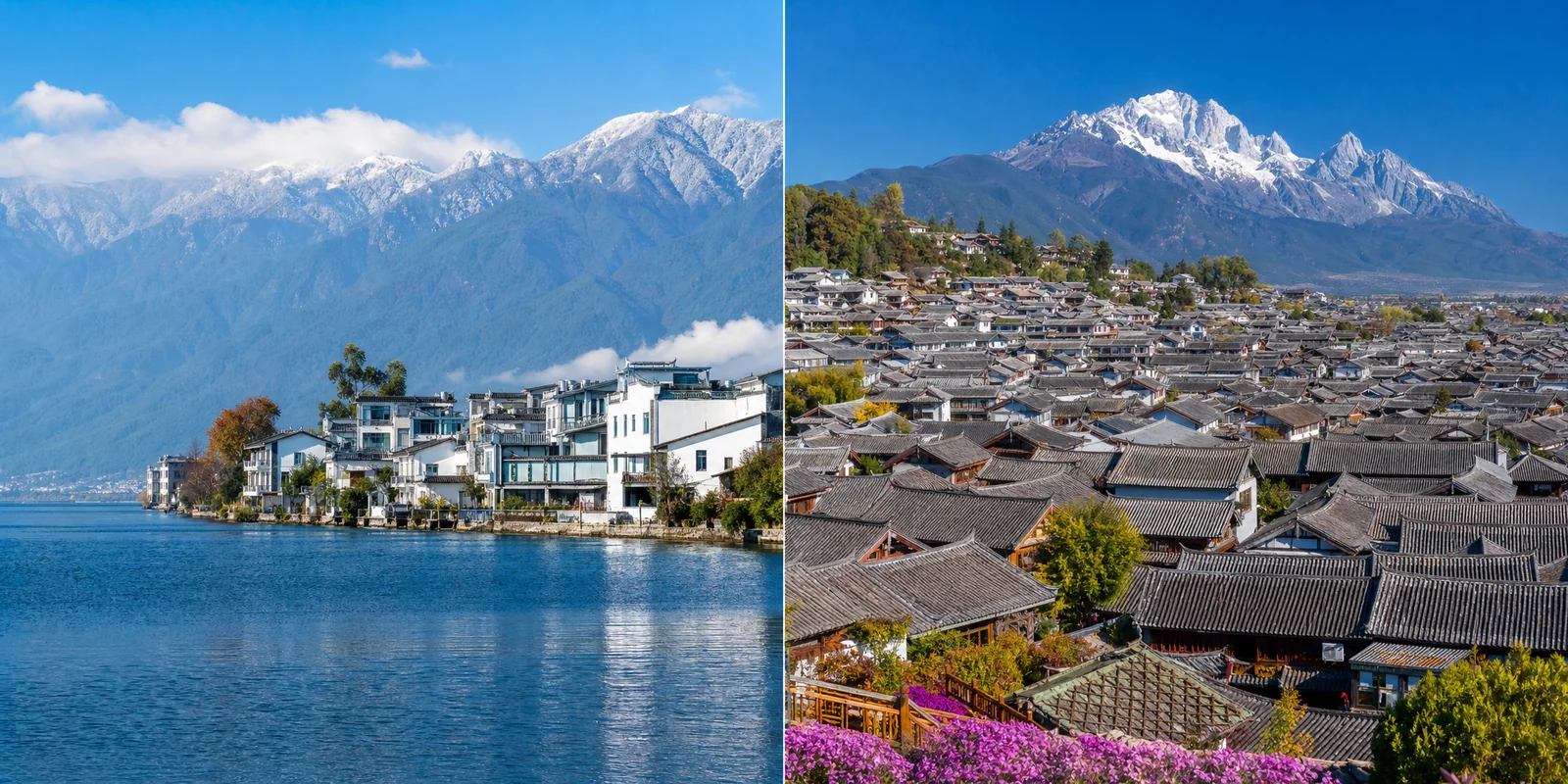
Dali & Lijiang Guide
A practical, in-depth guide to Dali and Lijiang in Yunnan — old towns, Erhai Lake, Jade Dragon Snow Mountain,...
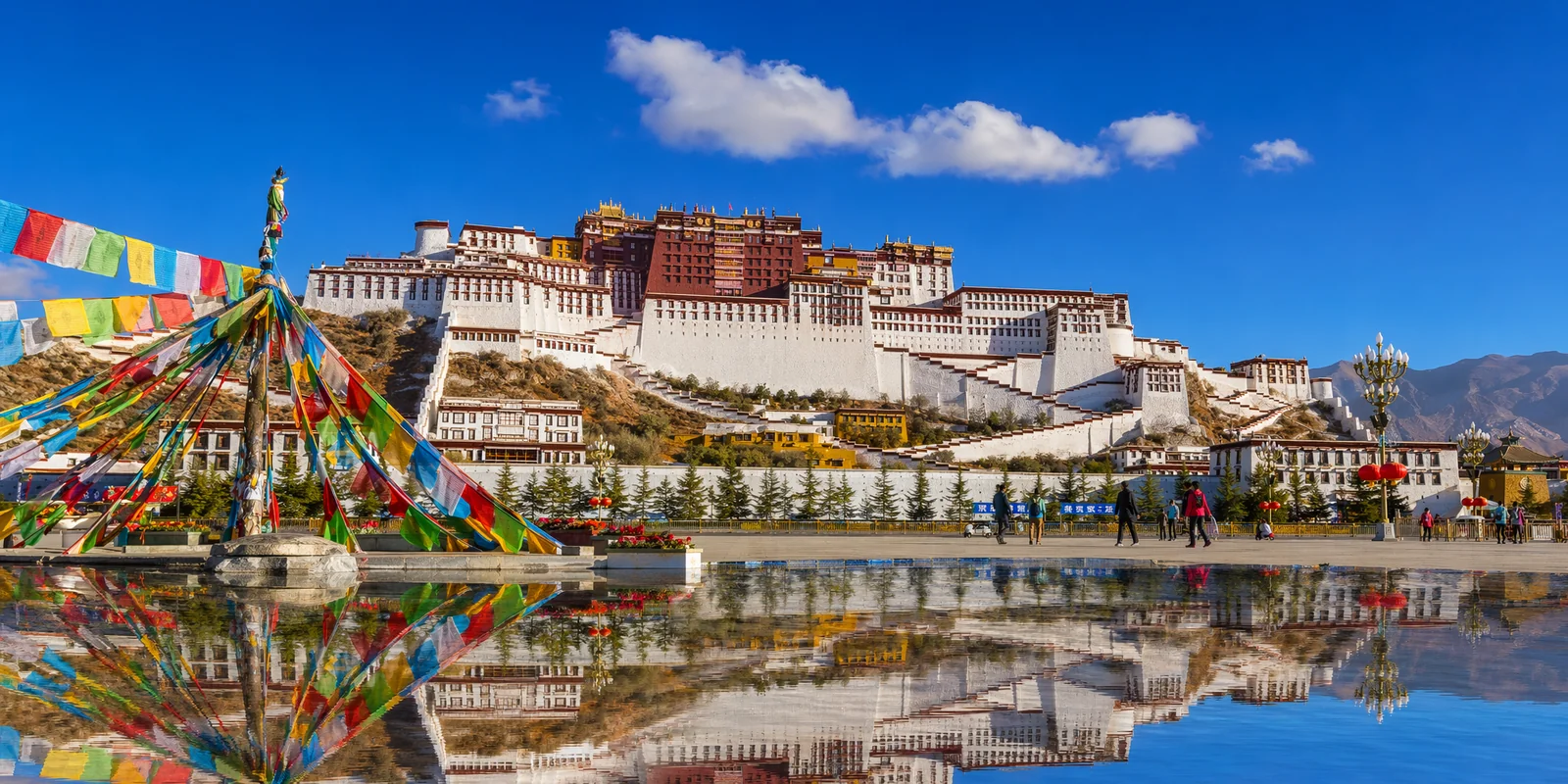
Lhasa & Tibet Guide
Foreign tourists can visit Tibet, but only with a Tibet Travel Permit and a booked tour — no independent travel...