

If you need your embassy in China, you need it for one of a short list of reasons: a lost or stolen passport, an arrest or detention, a hospital stay, a death in the family, or a large-scale emergency. The table below gives, for nine countries, the Beijing embassy switchboard, the emergency or consular line (24-hour where the embassy runs one), the address and the website, all taken from the embassies' own sites. Below it: what an embassy will and won't do for you, which consulate covers the province you're in, and how to find a country that isn't listed. One thing first, because it saves the most time: if someone is in danger right now, call 110 or 120 before you call anyone's embassy.
Embassy contacts in Beijing
| Country | Switchboard | Emergency line | Address |
|---|---|---|---|
| United States | +86 10 8531 3000 | +86 10 8531 4000 | No. 55 An Jia Lou Lu, Chaoyang District, Beijing 100600 北京市朝阳区安家楼路55号 |
| United Kingdom | +86 10 5192 4000 | +86 10 5192 4000 | 11 Guang Hua Lu, Jian Guo Men Wai, Beijing 100600 北京市朝阳区建国门外光华路11号 |
| Canada | +86 10 5139 4000 | +86 10 5139 4000 24h | 19 Dongzhimenwai Dajie, Chaoyang District, Beijing 100600 北京市朝阳区东直门外大街19号 |
| Australia | +86 10 5140 4111 | +61 2 6261 3305 via Canberra, 24h | 21 Dongzhimenwai Street, Chaoyang District, Beijing 100600 北京市朝阳区东直门外大街21号 |
| South Korea | +86 10 8531 0700 | +86 10 8532 0404 consular office line | No. 20 Dongfang Dong Lu, Chaoyang District, Beijing 100600 北京市朝阳区第三使馆区东方东路20号 |
| Japan | +86 10 8531 9800 | +86 10 6532 5964 consular section, office hours | 1 Liangmaqiao East Street, Chaoyang District, Beijing 100600 北京市朝阳区亮马桥东街1号 |
| France | +86 10 8531 2000 | +86 137 0107 8733 after-hours, serious emergencies only | 60 Tianze Lu, Chaoyang District, Beijing 100600 北京市朝阳区天泽路60号 |
| Germany | +86 10 8532 9000 | +86 10 8532 9202 after-hours only | 17 Dongzhimenwai Dajie, Chaoyang District, Beijing 100600 北京市朝阳区东直门外大街17号 |
| Spain | +86 10 6532 3629 | +86 139 1146 1886 24h, serious emergencies | 9 Sanlitun Lu, Chaoyang District, Beijing 100600 北京市朝阳区三里屯路9号 |
How to use the table. During office hours, the switchboard gets you to the consular section, which handles passports and citizens in trouble. Outside office hours, the "emergency line" column is what matters, and countries handle it differently:
- Canada: the consular emergency line on the embassy number is staffed around the clock.
- United States: the American Citizen Services number in office hours, the main switchboard after hours.
- Australia: after hours, follow the switchboard prompts, or call the 24-hour consular emergency centre in Canberra directly.
- Germany: a separate after-hours number for emergencies only — no visa questions.
- France: an evening-and-weekend mobile number reserved for serious cases — major accidents, deaths, arrests — involving French citizens.
- Spain: 24-hour consular mobiles in Beijing, Shanghai, Guangzhou and Hong Kong, for Spaniards in a serious emergency only, not for questions or visas.
- United Kingdom: the embassy asks you to use its online contact form; the number on the UK's China travel advice page is the one to call for help in China.
- Japan: the consular section keeps daytime hours and lists a Japanese-citizen assistance line; the embassy's own emergency page says what to do when it's closed.
- Korea: the consular section has its own number inside the embassy, with no separate after-hours line published.
Numbers and hours change, so if a call doesn't connect, the embassy website's contact page is the current version.

What your embassy can do — and what it can't
Most foreign ministries publish their own list, and they read alike because consular help is the same job everywhere. What they can do: issue you a new passport or an emergency travel document; visit you if you're detained and make sure you're being treated according to Chinese law; contact your family or friends at home on your behalf; give you lists of local English-speaking lawyers, doctors and hospitals, and of translators; and in a large-scale crisis, tell citizens what to do and where to go. Some countries also offer a small repayable emergency loan when there is truly no other way to get money to you — that varies by country, so ask.
What they can't do, and it's better to know now than in the moment: they can't get you out of jail or intervene in a Chinese court case, only check that you're being treated according to the law and raise it if you're not; they can't pay your hospital bill, your hotel or your flight; they can't act as your lawyer, your travel agent or your interpreter; and they can't make a Chinese official ignore a Chinese law. That last one matters for the everyday problems visitors bring them — a fine, a visa overstay, a dispute with a landlord — where the embassy's honest answer is that you have to resolve it under local rules.
Call 110 first, the embassy second
The order is simple. Anything involving danger to a person, a crime in progress or an accident goes to the Chinese emergency numbers — 110 for police, 120 for an ambulance — because they are the ones who can send help; the government's own rule is that 110 handles crime, threats to life or property and urgent calls for help, while 12345 takes non-urgent complaints. Once the immediate situation is under control, call your embassy if it's a passport, a detention, a serious injury or a death. A stolen wallet is a police matter, not an embassy one: call 110 or go to the nearest police station and ask for the written case acceptance receipt, which the police must issue and which your insurer will want. A hotel argument or a tour that went wrong isn't for the embassy either; those go to the 12345 hotline, which in Beijing runs in ten foreign languages including English. Our guide to emergency numbers in China lays out who handles what. And don't dial 12308 expecting help: it's the Chinese Foreign Ministry's hotline for Chinese citizens abroad.
Not in Beijing? Find your consulate
Embassies sit in Beijing, but most countries also keep consulates-general in other cities, and each consulate is responsible for a fixed set of provinces called a consular district. If you're in Shanghai, Guangzhou or Chengdu and your country has a consulate there, it is usually closer and faster than the embassy, and for a lost passport you'll normally be told to go there. A few examples from the embassies' own pages:
- United States: Beijing covers Beijing, Tianjin, Chongqing, Sichuan, Shaanxi, Shandong, Gansu, Hebei, Henan, Jiangxi, Ningxia, Qinghai, Shanxi, Tibet and Xinjiang; Shanghai covers Shanghai, Anhui, Jiangsu and Zhejiang; Guangzhou covers Guangdong, Guangxi, Fujian, Guizhou, Hainan and Yunnan; Shenyang covers the northeast and Inner Mongolia; Wuhan covers Hubei, Hunan, Henan and Jiangxi — the embassy's page lists Henan and Jiangxi under both Beijing and Wuhan, so either post will take the call.
- United Kingdom: Chongqing covers Chongqing, Sichuan, Yunnan and Guizhou; Guangzhou covers Guangdong, Guangxi, Fujian, Hainan, Hunan and Jiangxi; Wuhan covers Hubei and Henan; the Shanghai consulate's page doesn't spell out its provinces, so call and ask.
- Canada: the Beijing embassy itself serves the north and west — Beijing, Tianjin, Hebei, Henan, Shandong, Shanxi, Shaanxi, Gansu, Qinghai, Ningxia, Xinjiang, Tibet, Inner Mongolia and the three northeastern provinces — with consulates elsewhere.
- Germany: Beijing covers 16 provinces and regions including Tianjin, Hebei, Henan, Hubei, Hunan, Jiangxi, Shandong, Shanxi, Shaanxi and the far west; Shanghai, Chengdu, Shenyang, Guangzhou and Hong Kong cover the rest.
- Korea: ten posts — Beijing, Shanghai, Guangzhou, Chengdu, Qingdao, Shenyang, Xi'an, Wuhan, Hong Kong and a Dalian office — each with its own district; Shanghai's, for example, covers Shanghai, Anhui, Jiangsu and Zhejiang.
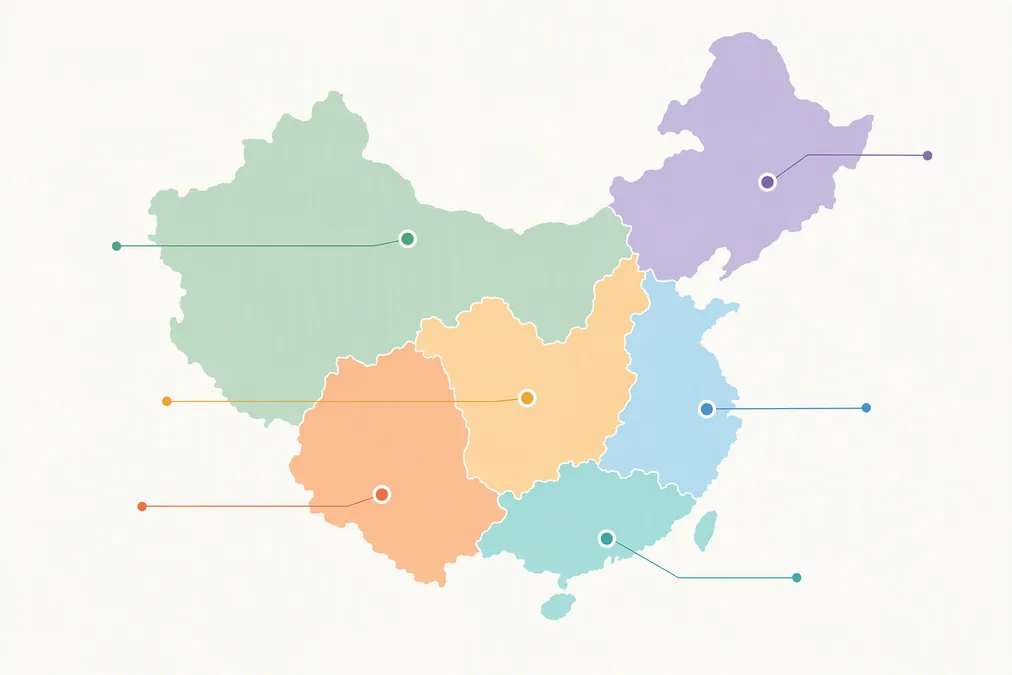
The pattern is what to remember: Shanghai consulates usually cover Jiangsu, Zhejiang and Anhui; Guangzhou covers the south; Chengdu or Chongqing covers the southwest; Shenyang covers the northeast; Wuhan covers central China. Your embassy's website lists its consulates with the exact provinces, and it's worth checking for your own country before you travel outside Beijing and Shanghai.
If your country isn't in the table
Two official directories list the embassies in Beijing. The Beijing municipal government's English site keeps an alphabetical listing of foreign embassies with each embassy's address and telephone number, last updated in 2020, so treat its number as a starting point and confirm it on the embassy's own site; start at its Foreign Embassies in Beijing index. The Chinese Foreign Ministry also publishes a directory of foreign missions in China. Between the two you'll get a switchboard number; from there, your own foreign ministry's website will have the consular section's direct line and after-hours arrangements, which the Chinese directories don't carry. Search "[your country] embassy Beijing consular emergency" and stay on your own government's official site — the address usually ends in a government domain such as .gov, .gov.uk or .gc.ca.
Before you dial any embassy, have these ready: your full name as it appears in your passport, your passport number if you know it (a photo of the ID page is enough), your date of birth, where you are right now, a phone number they can call back, and in one sentence what has happened and what you need. If you're calling about someone else, have their details instead. Consular officers deal with a lot of calls; the ones with the facts lined up get helped fastest.
Frequently asked questions
If I'm detained in China, what can my embassy do?
Once it's notified, it can visit you, check that you're being treated according to Chinese law and the consular agreement between your country and China, help you find a local lawyer and contact your family. It can't get the charges dropped, arrange bail or argue your case; that is a Chinese legal process and the lawyer's job. Ask the police to inform your embassy as early as you can, and keep asking until they confirm it's done.
I'm in trouble in Shanghai or Guangzhou — do I call the Beijing embassy or the local consulate?
The consulate that covers your province, if your country has one there. For Americans, Shanghai's consulate covers Shanghai, Jiangsu, Zhejiang and Anhui and Guangzhou's covers Guangdong and the surrounding southern provinces; British citizens in Guangdong or Sichuan go to the Guangzhou or Chongqing consulate. If you're not sure, call the embassy — they'll redirect you — but in a passport emergency the consulate is where you'll be sent anyway.
Can I reach my embassy after it closes?
For most of the nine, yes, through different routes. Canada's consular emergency line is 24/7; the US switchboard takes after-hours emergency calls; Australia's after-hours calls go via the switchboard or its Canberra consular emergency centre; Germany has a separate after-hours emergency number; Spain's 24-hour mobiles are for serious cases only. Japan's consular section lists daytime hours and a citizen-assistance line, and Korea publishes its consular section's number without a separate after-hours line, so for those two check the embassy's own emergency page. These lines are for a passport you need tonight, an arrest, a hospital admission — not for a visa question, which will wait until morning.
My country isn't listed. How do I find its embassy?
Use the Beijing government's alphabetical directory of foreign embassies for the address and switchboard, or the Foreign Ministry's list of foreign missions, then go to your own foreign ministry's website for the consular emergency line. Save both numbers in your phone before you need them.
Before you go: register, and save the numbers
Most foreign ministries run a free traveller registration service — the US has the Smart Traveler Enrollment Program (STEP), Australia has Smartraveller, Canada has Registration of Canadians Abroad, and the UK sends travel-advice alerts by email. Registering takes five minutes and means that in an earthquake, a flood or a political emergency your embassy knows you're in the country and can reach you. Then put the embassy switchboard, the after-hours line and the local consulate into your phone under names you'll find in a hurry, alongside 110 and 120. Our safety tips for travellers in China has the rest of the pre-departure list, and if the reason you're reading this is a missing passport, go straight to our step-by-step guide to a lost passport in China. For a hospital stay, the embassy can suggest names, but the practical list is in English-speaking hospitals in China.
Last updated: September 2026
Read in other languages
Last train times for 10 Chinese metro systems
Every line and station, checked by hand — the same data behind our offline route planner.
Get the WaysChina App
Offline guides, currency converter, essential phrases, and more — all in your pocket.

Related Articles

Emergency Numbers in China: 110, 120, 119 and Who Speaks English
China has no 911. Dial 110 for police, 120 for an ambulance, 119 for fire, 122 for accidents. Which lines speak...

English-Speaking Hospitals in China: Where to Go in Beijing, Shanghai and Beyond
Three ways to see a doctor in China, the English-speaking hospitals in Beijing, Shanghai, Guangzhou, Shenzhen and...

Lost Passport in China: The Four Steps to Get Home
Lost or stolen passport in China? Report to the police, get a Loss Certificate, replace the passport at your...