

This article contains affiliate links. If you make a purchase through these links, we may earn a small commission at no extra cost to you. This helps support our work in creating free travel guides.
If you get sick or hurt in China and it isn't life-threatening, you have three kinds of place to go: a public hospital's ordinary outpatient clinic, a public hospital's international department, or a private international hospital. They differ in language, price and how you pay, and choosing the right one is most of the battle. This guide gives you the decision in one table, then the actual hospitals — with 24-hour emergency lines where they exist — in Beijing, Shanghai, Guangzhou, Shenzhen and Chengdu, and how to find one anywhere else. If it is life-threatening — chest pain, heavy bleeding, trouble breathing, a bad head injury — stop reading and call 120, the national ambulance number, which runs 24 hours and is free to call; our emergency numbers guide covers what to say.
Three ways to see a doctor: which one is yours
| Route | English? | Price | Best for |
|---|---|---|---|
| Public hospital, ordinary clinic (普通门诊) | Rarely; bring a translation app or a Chinese speaker | Lowest — the visit fee is set by the city | Simple problems when you have a helper; anywhere without an international option |
| Public hospital, international department (国际医疗部) | Yes, English and often other languages | Middle — higher than the ordinary clinic, well below private | Most travellers: real hospital behind it, English at the desk, foreign cards usually accepted |
| Private international hospital | Yes, throughout | Highest — check the hospital's published fee schedule | Insurance with direct billing, children, anything where comfort and time matter more than cost |
A good rule of thumb: for a cold that won't go, a sprained ankle, a stomach bug that's lasted three days, or a prescription you left at home, the international department of a big public hospital is the sweet spot. It's a "三甲" (sān jiǎ, top-grade) hospital with a front desk that speaks your language. Private hospitals are excellent and easy, and if your insurer has a direct-billing agreement with one you may never see a bill; without insurance, know the prices before you walk in.
When to call 120, when to walk into emergency, when to book
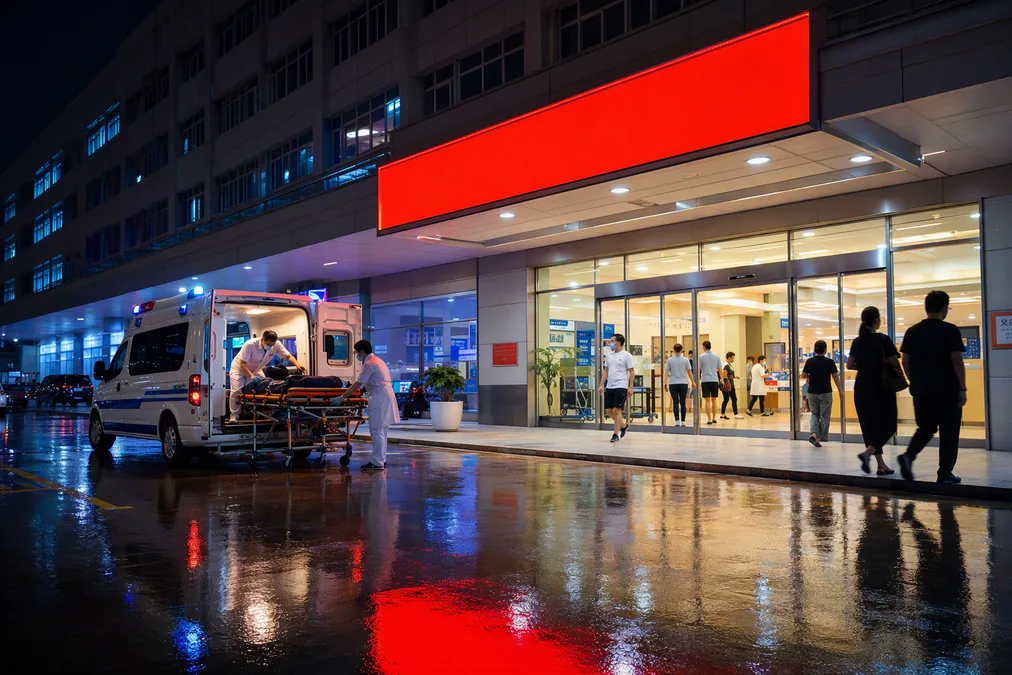
Call 120 when someone can't safely be moved or you can't get them to a hospital fast: crushing chest pain, a stroke sign, severe breathing trouble, a bad fall, uncontrolled bleeding — the call is free, the ambulance itself is charged, and you'll usually be asked which hospital to go to. Walk into an emergency department (急诊, jízhěn) for things that need a doctor tonight but not an ambulance — a deep cut, a broken finger, a high fever in a child. Everything else can wait for a daytime appointment at an international department, which will be calmer and cheaper. Emergency rooms don't work first-come-first-served: Beijing's, for example, triage into four levels, from level 1 (immediate resuscitation) to level 4 (non-urgent, seen in turn), so a minor problem in a busy emergency department waits behind the serious cases, not in arrival order. That's the strongest argument for booking a daytime visit when you can.
Beijing
The table covers all five cities; Beijing is where the choice is widest.
| City | Hospital | Phone | 24h emergency |
|---|---|---|---|
| Beijing | International Medical Services (IMS), Peking Union Medical College Hospital 北京协和医院国际医疗部 | +86 10 6915 6699 | +86 10 6915 5288 |
| Beijing | Beijing United Family Hospital and Clinics 北京和睦家医院 | +86 10 5927 7000 | +86 10 5927 7120 |
| Beijing | International Medical Center Beijing (IMC) 北京国际医疗中心 | +86 10 6465 1561 | no |
| Shanghai | Shanghai United Family Hospital (Puxi / Changning) 上海和睦家医院 | +86 21 2216 3900 | +86 21 2216 3999 |
| Shanghai | Huashan Hospital, Fudan University — International Medical Center (Worldwide Medical Center) 复旦大学附属华山医院国际医疗中心 | +86 21 5288 9999 | 24h |
| Shanghai | Shanghai East International Medical Center (SEIMC) 上海东方联合医院 | +86 21 5879 9999 | +86 21 5879 9999 |
| Guangzhou | Guangzhou United Family Hospital 广州和睦家医院 | 4008-919191 (24h service center) | +86 20 3610 2333 |
| Shenzhen | The University of Hong Kong–Shenzhen Hospital — International Medical Centre 香港大学深圳医院国际医疗中心 | +86 755 8691 3388 | 24h |
| Chengdu | West China Hospital, Sichuan University — VIP / International Medical Center 四川大学华西医院特需医疗中心(国际医疗) | 24h |
For most visitors in Beijing the first call is Peking Union Medical College Hospital's International Medical Services (协和国际医疗部) at the Dongdan campus: a public flagship hospital with a 24-hour emergency line, service in English, Japanese, French, Korean, Russian and German, weekday clinics with evening hours Monday to Thursday and weekend mornings, and direct-billing agreements with commercial insurers. Note that the emergency service is at Dongdan, not the Xidan campus. The private alternative is Beijing United Family Hospital in Chaoyang, fully English-speaking with a 24-hour emergency department. The Beijing government's own guide for foreigners lists three institutions with 24-hour emergency phone lines — PUMCH's international department, United Family and Raffles Hospital Beijing — so for a night-time problem, those are your three. For daytime clinic visits with heavy insurance use, the International Medical Center at the Lufthansa Center has direct-billing agreements with more than 50 insurers and English, Japanese, Russian and Korean staff, but no 24-hour emergency service.
Shanghai
Shanghai's public option is Huashan Hospital's Worldwide Medical Center on Wulumuqi Middle Road, which sees around 40,000 outpatients a year, half of them foreign, treats more foreign inpatients than any other institution in the city, and has cashless direct-billing contracts with more than 30 insurers and third-party administrators. It's the right first call for anything that might need admission. For a 24-hour emergency room with English throughout, Shanghai United Family Hospital in Changning has one, along with direct billing to more than 40 global insurers. In Pudong, the private Shanghai East International Medical Center runs a 24-hour emergency line; its published fee schedule puts a consultation at 1,000–1,500 yuan and an emergency visit at 1,500–2,200 yuan — one Shanghai example, and other private hospitals publish their own schedules, but expect a private consultation anywhere to cost many times the public fee. Ruijin Hospital's international department is another public choice; confirm language and emergency hours with them directly before you go.
Guangzhou, Shenzhen, Chengdu — and everywhere else
Guangzhou: United Family's hospital is on Pazhou Avenue in Haizhu and offers 24-hour emergency care. Shenzhen: the International Medical Centre at the University of Hong Kong–Shenzhen Hospital in Futian takes bookings in English on weekdays and weekends; the international centre keeps clinic hours, so for night-time problems use the hospital's main emergency department. Chengdu: West China Hospital's VIP and international centre is the Sichuan government's designated point of care for foreign patients, with foreign-language staff, cashless billing for patients of its 20-plus partner insurers, and weekday clinic hours.
In any other city, three searches find you the equivalent. First, the biggest public hospital's international or VIP department: search the city name plus "国际医疗部" (guójì yīliáo bù, international medical department) or "特需" (tèxū, the VIP clinic) in your map app, or ask your hotel which hospital foreigners use — the biggest hospital in most provincial capitals has one. Second, your embassy's list of local doctors and hospitals; consulates keep these for exactly this purpose, and our embassy contacts guide has the numbers. Third, your insurer's assistance line, which can tell you which local hospital it has a billing relationship with and sometimes book you in. If none of that works, any 三甲 hospital's emergency department will treat you; bring a Chinese-speaking friend or a good translation app — see our translation apps comparison — and be patient.
What it costs and how you pay
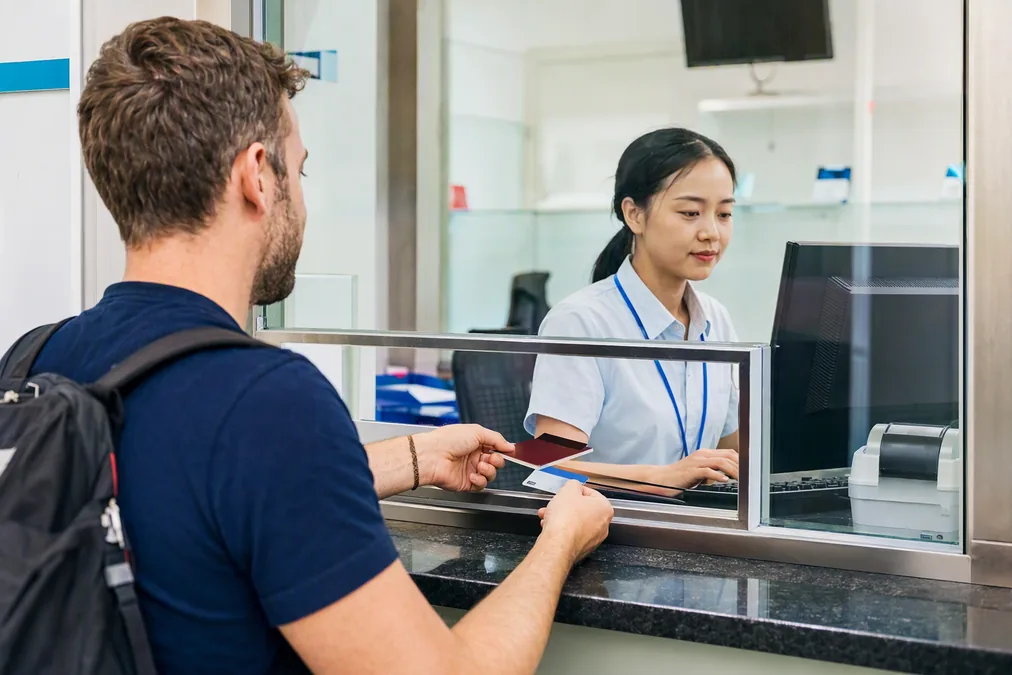
The pattern in public hospitals is simple: you pay the same as a Chinese resident, you pay before treatment or at each step, and you claim it back from your insurer afterwards using the receipts, unless your insurer has a direct-billing agreement with that hospital — in which case you show the insurance card and your passport and the hospital settles with the insurer.
Public prices are set by the city and are low by Western standards: in Beijing's third-level hospitals the visit fee is 50 yuan for a standard outpatient visit, 80 yuan for a chief physician and 70 yuan for emergency, and a 100 yuan per-bed-day doctor's service fee for inpatients — the bed itself, nursing, tests and medicines are billed separately. Shanghai's public hospitals have applied new ceilings since April 2026, with an ordinary outpatient consultation capped at 25 yuan in a third-level hospital and an emergency consultation at 30 yuan. International departments charge more than the ordinary clinic in the same building, and private hospitals more again — the Shanghai private example above is a fair guide, but each hospital publishes its own schedule, so check it.
For anything involving admission, expect to be asked for a deposit up front; the US embassy's medical page notes that Chinese hospitals commonly require one and that medical evacuation to the US can cost well over 50,000 US dollars, which is the case for insurance in one sentence.
Beijing's official medical guide for foreigners lists cash, Visa, Mastercard, American Express, Discover, Diners Club and JCB credit cards, UnionPay debit cards and WeChat Pay or Alipay as the ways international patients can pay — count on the full list at international departments and private hospitals, and confirm before relying on a foreign card anywhere else; smaller cities may be cash-and-mobile-payment only, so keep some cash. Keep every receipt (发票, fāpiào) and ask for a printed diagnosis and treatment summary in English if the department can produce one; your insurer will want both. If you haven't bought cover yet, SafetyWing is one provider whose plans are built for exactly this pay-first situation, and our guide to travel insurance for China explains direct billing and the clauses that matter.
What to bring
Your passport — registration needs it, and direct billing requires it alongside the insurance card; your insurance card or policy number and the insurer's 24-hour assistance line; a list of your regular medicines with generic names; a translation app; and a card or cash to pay with. If the visit is the result of an assault or a road accident, the police report receipt helps the insurance claim later. For how the wider system works — hospital grades, registration, pharmacies, bringing your own medication in — see our guide to health and medical care in China.
Frequently asked questions
Are there English-speaking hospitals in China?
Yes, in every city on a typical first-trip itinerary. Big public hospitals run international departments with English-speaking staff — PUMCH's in Beijing lists English, Japanese, French, Korean, Russian and German — and private groups such as United Family run fully English hospitals in Beijing, Shanghai and Guangzhou. Outside the big cities, look for the main public hospital's international or VIP department.
How much does a doctor's visit cost for a foreigner in China?
The same as for a resident in public hospitals. Beijing's third-level hospitals charge a visit fee of 50 yuan for a standard outpatient visit and 70 yuan for emergency, before tests or medicines; Shanghai's ordinary outpatient consultation is capped at 25 yuan in a third-level hospital. International departments cost more, and private hospitals charge far more — one Shanghai clinic, Shanghai East International Medical Center, lists 1,000–1,500 yuan for a consultation. Always check the specific hospital's price list.
Can Chinese hospitals bill my travel insurance directly?
Only where your insurer and that hospital have a direct-billing agreement — then you show the card and your passport and the hospital settles with the insurer; otherwise you pay and claim afterwards. Direct billing is common at private international hospitals and the big international departments; ordinary public clinics almost never do it. Call your insurer's assistance line before you go and ask which hospital in the city it bills directly.
Which hospitals in Beijing and Shanghai have 24-hour English-speaking emergency care?
Beijing: PUMCH International Medical Services at the Dongdan campus, Beijing United Family Hospital and Raffles Hospital Beijing, the three the city government lists with 24-hour emergency lines. Shanghai: Shanghai United Family Hospital's emergency room and Shanghai East International Medical Center's 24-hour line.
In short
Minor problem in daytime: the international department of the big public hospital, booked ahead if you can. Serious but stable: a private international hospital if your insurer bills it directly, otherwise the public international department. Night-time or frightening: the 24-hour emergency rooms named above, or 120 if you can't get there yourself. Whatever you choose, take your passport and your insurance details, expect to pay first, and keep every piece of paper.
Last updated: September 2026
Read in other languages
Last train times for 10 Chinese metro systems
Every line and station, checked by hand — the same data behind our offline route planner.
Get the WaysChina App
Offline guides, currency converter, essential phrases, and more — all in your pocket.

Related Articles

Embassies in China: Emergency Numbers, Consular Districts and What They Can Do
Embassy switchboards, after-hours emergency lines and addresses for nine countries, which consulate covers your...

Emergency Numbers in China: 110, 120, 119 and Who Speaks English
China has no 911. Dial 110 for police, 120 for an ambulance, 119 for fire, 122 for accidents. Which lines speak...

Lost Passport in China: The Four Steps to Get Home
Lost or stolen passport in China? Report to the police, get a Loss Certificate, replace the passport at your...