

This article contains affiliate links. If you make a purchase through these links, we may earn a small commission at no extra cost to you. This helps support our work in creating free travel guides.
China is a safe country to travel in, and that includes for women on their own and for people out late. Violent crime against visitors is rare; the Ministry of Public Security reported that recorded criminal cases fell 12.8% in 2025 to their lowest level this century, with theft, robbery and fraud cases down 21.2%, and you'll feel that on the street — busy, well-lit, cameras everywhere, people out with families at eleven at night. What you actually need to watch is a short list: pickpockets and phone snatchers in crowds, scams aimed at foreigners, traffic (especially silent electric scooters), and a handful of laws that are stricter than at home and easy to break by accident. This page goes through each, then the numbers to call, then a pre-departure checklist.
How safe is China, really?
Safer than most places you've travelled, for the things travellers usually fear. Being mugged on the walk back from dinner is not a realistic worry; you're unlikely to be pestered on the metro; a lost wallet handed in at a station has a real chance of coming back. The risks that remain are the low-drama kind. Petty theft happens where it happens everywhere — packed metro cars, night markets, the queue at a famous attraction — and the target is your phone, which is worth more than your cash. Scams aimed at foreigners are the most likely bad experience you'll have, and almost all of them start with a friendly stranger. Traffic is the risk people underrate: cars turn right on red, scooters ride on the pavement, and a green man doesn't mean the road is clear. The rest of this guide is about those three things and about not breaking the law by mistake.
Scams: the short version
The classic scams — the "tea ceremony" invitation, the "art student" exhibition, the unlicensed taxi at the station, the fake refund via QR code — all depend on you following a stranger somewhere or scanning something you didn't ask for. Don't, and you've avoided nearly all of it. If you're already caught — say you've been pushed into paying a transfer — 96110 is the police anti-fraud line (the incoming call may show with an area code in front, like 0597-96110), and if it rings you, answer it, because it means the police think a scam involving you is under way; for a scam happening in person, in front of you, the number is 110. The full list with the tell-tale signs and what to say is in our guide to tourist scams in China.
Solo travel, women travellers and nights out
Solo travel in China is easy in the ways that matter: transport is safe at all hours, hotels are used to lone guests, and the culture is not one where a woman alone is approached or followed. Most of what makes a solo trip go wrong here is logistical — phone dead, no data, can't read the sign — rather than dangerous. Some judgment calls that help:
- Where to stay. Pick hotels on a metro line rather than the cheapest place, and check the last train time for your line the day you arrive; late arrival by metro is safer and simpler than a taxi negotiation at midnight.
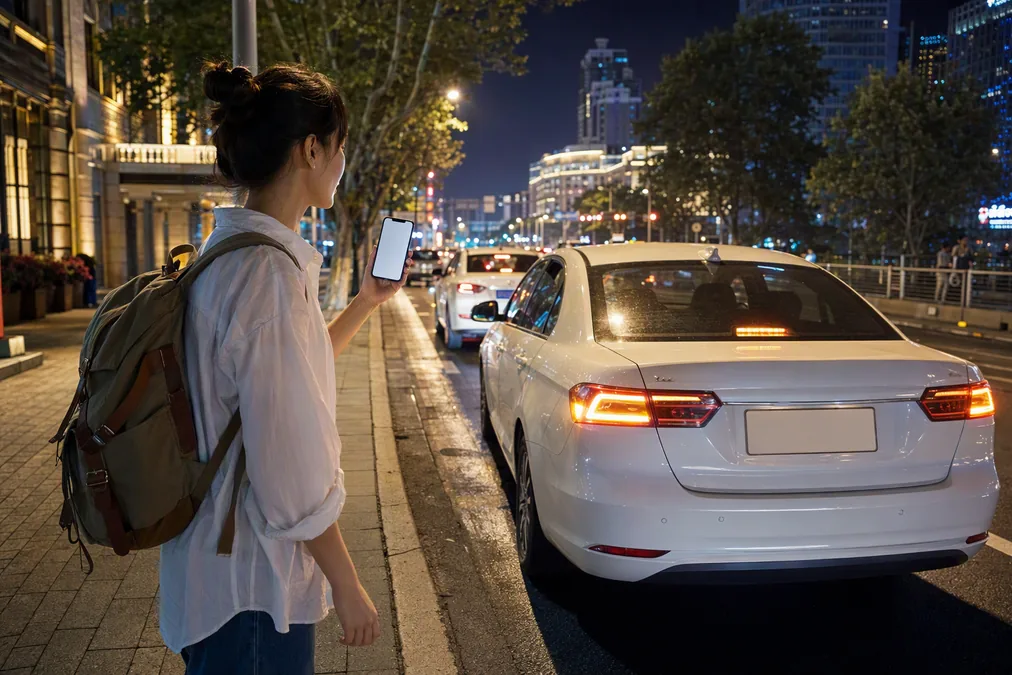
- Getting home at night. Use a ride-hailing app rather than flagging a car. DiDi's app shows the driver's plate and lets you share the trip in real time; match the plate before you get in, sit in the back, and keep the trip page open. Our DiDi guide walks through the set-up. If you take a street taxi, it must be a marked cab that runs the meter and gives a receipt — that's the national rule for licensed taxis, and refusing to pay is your right when the meter isn't used.
- Drinks. The same rules as anywhere: watch it poured, don't leave it, don't accept one from a stranger who then suggests moving on somewhere. The "bar bill" scam is a version of this — a new friend, a venue they choose, a bill you can't argue with.
- Bars and clubs. Indoor smoking is banned in Beijing's bars and restaurants and Shanghai's, where the rule includes e-cigarettes; a venue that ignores it is telling you something about how it treats other rules too.
- Crowds. Festival nights and famous pedestrian streets get very dense; keep your phone in a front pocket or a zipped bag, not in your hand at your side.
- Share your plans. A daily message home with where you're sleeping costs nothing. Location sharing works on a roaming eSIM; on a local Chinese SIM, Western apps' live-location features may not connect, so use your phone maker's own sharing or just send the hotel name.
Women travelling alone will find China one of the less stressful countries in Asia in this respect; our guide to female solo travel in China has the detail, from hotel choice to what to wear where.
Streets, traffic and crowds
Treat every crossing as if nobody will stop, because a turning car often won't, and a green walk signal doesn't mean the road is clear. Look both ways on one-way streets too — scooters go the wrong way. On the sidewalk (pavement), the danger is behind you: electric scooters are near-silent and use it freely, so keep to one side and don't step sideways without looking. On the metro, rush hour is a physical event: stand aside from the doors, hold the rail, and expect to be pushed a little without anyone meaning anything by it. At big attractions on holidays, crowd control is strict for good reason; if a crowd stops moving and starts compressing, move sideways to the edge early rather than waiting, and keep children in front of you. Licensed taxis are regulated — drivers must take a reasonable route, run the meter and give a receipt, and can be fined for refusing a fare or overcharging — and ride-hailing prices the trip in the app before you get in, so most "taxi problems" are unlicensed cars, which is why you use the official rank or an app. Our guide to taxis and ride-hailing in China covers the rest.
The laws visitors break by accident
Most guides skip this. None of these are traps — they're published law — but several are stricter than at home, and "I didn't know" doesn't help.
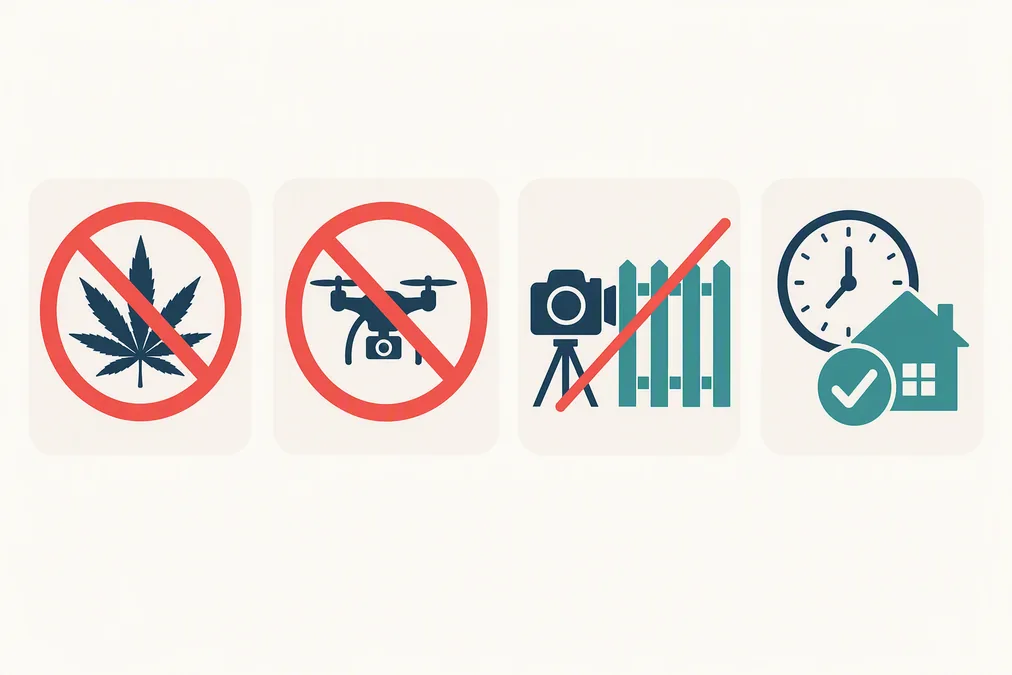
- Drugs, including cannabis. Cannabis is legally a narcotic in China. Under the Public Security Administration Punishments Law — the police-penalties law, in force since 1 January 2026 — using drugs or holding a small amount means 10 to 15 days' detention, which can come with a fine of up to 3,000 yuan (less for minor cases), and foreigners can additionally be ordered to leave the country or be deported. Larger quantities are criminal; trafficking is prosecuted regardless of amount. This includes edibles from places where they're legal, and it includes the days after use — police can require a urine test, and cannabis shows for days. Treat CBD products the same way. Leave all of it at home. Some prescription medicines are controlled too; see the medicines section of our health and medical care guide.
- Drones. Under China's national drone regulation, every civil drone must be registered in its owner's name, whatever its weight — the "under 250 grams needs no registration" line you'll read online is wrong for China — and flying unregistered can be fined by the police. Large areas are controlled airspace where you need air-traffic approval: above 120 metres, around airports, near military zones, prisons and other secure facilities, over public infrastructure such as railways and power stations, and around major heritage sites, which in practice rules out most of the places a tourist would want to film. Foreigners are also barred from using drones for surveying-type flights. If you bring one, register it, learn the local no-fly map, and when in doubt keep it in the bag.
- Photography of military and sensitive sites. Photographing or filming military restricted zones without permission and not stopping when told is an offence under the military facilities law. The practical rule: if a fence, a uniformed guard or a sign suggests a military or government facility, put the camera down, and if someone tells you to stop, stop and delete. Airports, ports and border areas deserve the same caution.
- Registration. Hotels register foreign guests with the police automatically; if you stay in a private home or a rental, you or your host must register you at the local police station within 24 hours of moving in. Hosts often don't know this; the rules and how to do it are in our guide to hotel booking and registration in China.
- Carrying your passport. Legally you're expected to be able to show your passport when the police ask. Many tourists carry a photocopy plus a phone photo and leave the original in the hotel safe, accepting that a spot check may mean a walk back to the hotel; our advice is to carry it, in an inside pocket or a neck pouch, and keep the copies separately — you'll need the original for hotel check-ins, train tickets and many ticketed sights anyway.
- Protests and politics. Don't join a demonstration, don't organise one, and keep political opinions for conversations with people you know. That's not a comment on the politics; it's a practical instruction for a visitor whose legal position is weaker than a resident's. The same goes for online: post your photos, skip the commentary until you're home.
- False alarms. Reporting a fake emergency — calling 110 about a theft that didn't happen, say — is itself an offence: 5 to 10 days' detention, possibly with a fine of up to 1,000 yuan. Serious hoaxes, like a bomb joke at an airport, are treated as crimes; jokes about security get treated as statements here.
Water, food and air
Drink boiled or bottled water — China's disease control centre advises boiling tap water before drinking because the pipes, not the treatment plant, are the weak point — and eat where the queue is long and the wok is hot. Restaurants display a smiley-face hygiene rating from the food safety inspector at the door; the happier the face, the better the last inspection. On days when the air-quality index in your weather app is high, a mask helps and a long outdoor day doesn't. In July and August, heat and humidity are a bigger health risk than anything you eat — carry water and plan indoor hours. For allergies, halal, vegetarian food and what to do if you're ill, see our guide to food safety in China.
If something goes wrong: who to call
There's no 911. Police: 110, ambulance 120, fire 119, traffic accident 122, and in Shanghai the 110 line answers in English and seven other foreign languages. For anything that isn't an emergency — a dispute, a complaint, a question — the 12345 city hotline is the channel, and in the big cities it has foreign-language staff: Beijing's runs in ten foreign languages, and its own guidance says to use 110, 119, 120 or 122 for emergencies instead. Your embassy is for passports, detention and serious injury, after the immediate problem is handled. What to say when you call, what an ambulance costs and how to get a police report are in our emergency numbers guide; embassy numbers and after-hours lines are in embassy contacts in China.
Frequently asked questions
Is China safe for a woman travelling alone?
Yes, and in day-to-day terms it's one of the easier countries in Asia for it: street harassment is uncommon, public transport is safe at night, and hotels are used to solo guests. The precautions are the standard ones — ride-hailing over street taxis after dark, watch your drink, keep your phone out of your hand in crowds — plus the logistical ones that matter more here, like having data and a charged phone.
Is it safe for Western tourists to visit China right now?
For personal safety, yes; the everyday risks are theft, scams and traffic, and the country's own crime figures are falling. Politics is a separate question: read your own government's travel advice before you go, follow the legal points on this page — drugs, drones, photography of sensitive sites, protests — and you'll be treated as what you are, a tourist. The people you meet will be curious and mostly delighted you came.
Is it safe to walk around Chinese cities at night?
In the central districts of the big cities, yes: streets are lit, busy late, and heavily covered by cameras. Use normal judgment about empty areas, and treat traffic as the real night-time hazard — scooters without lights on the pavement, cars turning without stopping. For the trip home, a ride-hailing app with the plate matched is the safe default.
Which laws do tourists most often break without meaning to?
Drugs, including cannabis and edibles brought from home; flying an unregistered drone, or flying one near anything sensitive; photographing military or government facilities; and failing to register with the police within 24 hours when staying somewhere other than a hotel. All four are in the card above with the penalties.
Before you go: the ten-minute checklist
- Photograph your passport's ID page and your visa or entry record; keep a paper photocopy separately, and several spare passport photos in the Chinese two-inch size (3.5 × 4.9 cm, white background) — Beijing's report-loss step alone asks for three.
- Buy travel insurance with medical and evacuation cover; SafetyWing is one option, and our travel insurance guide explains what to check.
- Save 110, 120, 119, 122 and 12345 in your phone, plus your embassy's switchboard and after-hours line.
- Register with your foreign ministry's traveller service so your embassy can reach you in an emergency.
- Sort out data before you land — an eSIM from Airalo or a local SIM — because maps, translation, ride-hailing and payments all run on it.
- Set up Alipay or WeChat Pay with your card, and carry a little cash as backup.
- Install a translation app and a map app that works in China, and download the offline maps for your cities.
- Leave the cannabis products, the CBD oil and the unregistered drone at home.
- Write down your hotel's name and address in Chinese and keep it on your lock screen.
- Tell someone at home your route, and agree a check-in rhythm.
Last updated: September 2026
Read in other languages
Last train times for 10 Chinese metro systems
Every line and station, checked by hand — the same data behind our offline route planner.
Get the WaysChina App
Offline guides, currency converter, essential phrases, and more — all in your pocket.

Related Articles

Food Safety in China: Tap Water, Street Food, Allergies, Halal and Vegetarian
Eating safely in China: why the official advice is to boil tap water, how to pick a street food stall, what the...

Health and Medical Care in China: Vaccines, Hospitals, Pharmacies and Paying
How health care works for a visitor to China: no entry vaccines for most, which medicines you can bring, how...

Tourist Scams in China: How to Spot Them and What to Do If You're Caught
The scams aimed at visitors to China — tea ceremony, art student, fake taxis, "broken" meters, swapped QR codes,...