
This article contains affiliate links. If you make a purchase through these links, we may earn a small commission at no extra cost to you. This helps support our work in creating free travel guides.
Beijing rewards a bit of money spent in the right places. The crowds at the Forbidden City, the queues at the Great Wall, the language gap at top restaurants — these are exactly the friction points that the right hotel, a good private guide, or a VIP entry can smooth out. This guide covers the high end of a Beijing trip: where to stay, where to eat well, how to see the major sights without the scrum, and how to arrange it all. Spring (March–May) and autumn (September–November) are the best windows — clear skies, mild temperatures, and the city at its most photogenic. Plan on four to five days to do this comfortably.
This is a focused deep-dive, not a full city overview. If you want the broader picture first, start with the Beijing Complete Guide.
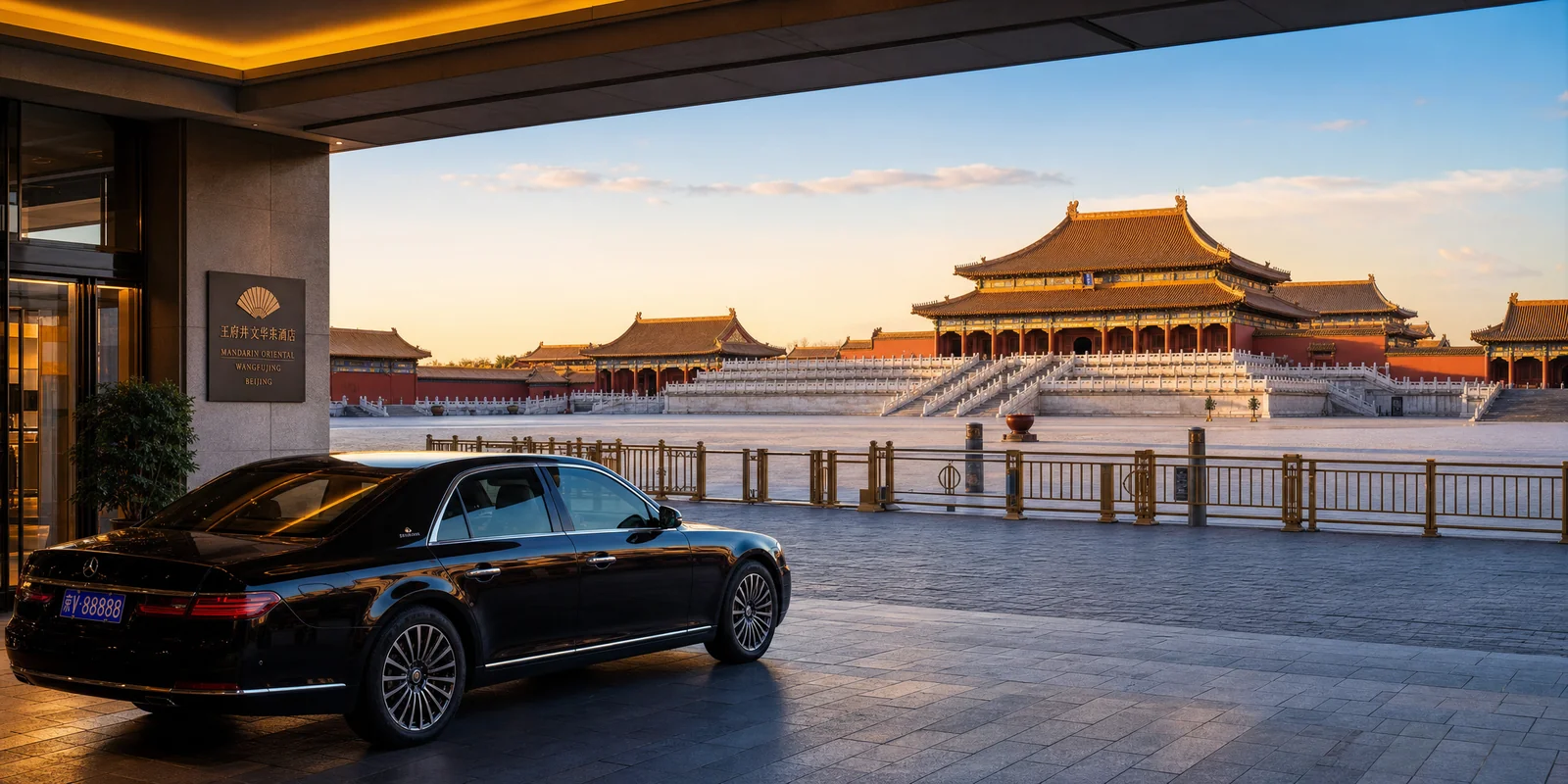
Where to Stay: Beijing's Best Hotels
Beijing's luxury hotel scene splits roughly into two camps: the polished international flagships clustered around Wangfujing and the CBD (Central Business District), and a smaller group of design-led and heritage properties that trade some convenience for atmosphere. Both are worth knowing.
The Peninsula Beijing (王府半岛, Wángfǔ Bàndǎo)
A few minutes' walk from Wangfujing and the Forbidden City, The Peninsula reopened after a full renovation with some of the largest standard rooms in the city — most start around 60 square meters, with in-room tablets controlling everything and a fleet of BMW and Rolls-Royce cars for guests. Expect rates from roughly ¥3,500–5,500 per night for an entry-level room, climbing well past ¥10,000 for suites. The location is the real selling point: you can walk to the Forbidden City's east gate.
Mandarin Oriental Wangfujing
Sitting atop the WF Central mall, the Mandarin Oriental puts you directly above a cluster of luxury boutiques and a short stroll from the palace. Rooms are quieter and more residential in feel than the address suggests. Rates typically run ¥3,000–4,500 for base rooms. The rooftop garden and the spa are standouts.
Waldorf Astoria Beijing
Tucked into a hutong-adjacent lane near Wangfujing, the Waldorf Astoria pairs a modern tower with a row of restored courtyard suites (the "Waldorf Astoria Hutong Villas") — a genuinely unusual option if you want a private walled courtyard within walking distance of the city center. Tower rooms start around ¥2,800–4,000; the courtyard villas are a serious step up in price and need to be booked well ahead.
PuXuan Hotel and Spa (璞瑄)
Part of the same group behind PuLi in Shanghai, PuXuan sits beside the Guardian Art Center near the National Art Museum. It's the most contemporary-minimalist of the bunch — quiet, art-focused, with an excellent spa — and tends to attract design-conscious travelers over the see-and-be-seen crowd. Rates from around ¥2,500–4,000.
Aman Summer Palace (颐和安缦, Yíhé Ānmàn)
This one deserves its own paragraph. Aman occupies a set of restored courtyard buildings immediately outside a private gate into the Summer Palace (颐和园, Yíhéyuán), the Qing imperial garden retreat in the city's northwest. Guests can enter the grounds through that gate before the public crowds arrive — a rare perk. It's about 40 minutes from the center, so it suits travelers who prioritize calm and space over walk-to-everything convenience. Rooms start around ¥5,000 and rise sharply. Even if you don't stay, the afternoon tea here (more on that below) is one of the city's nicer indulgences.
All of these can be booked through the hotels directly or through major platforms. If you're comparing rates and want flexible cancellation, Booking.com lists most of them with member pricing. For a fuller rundown of the category across China, see our Luxury Hotels guide.
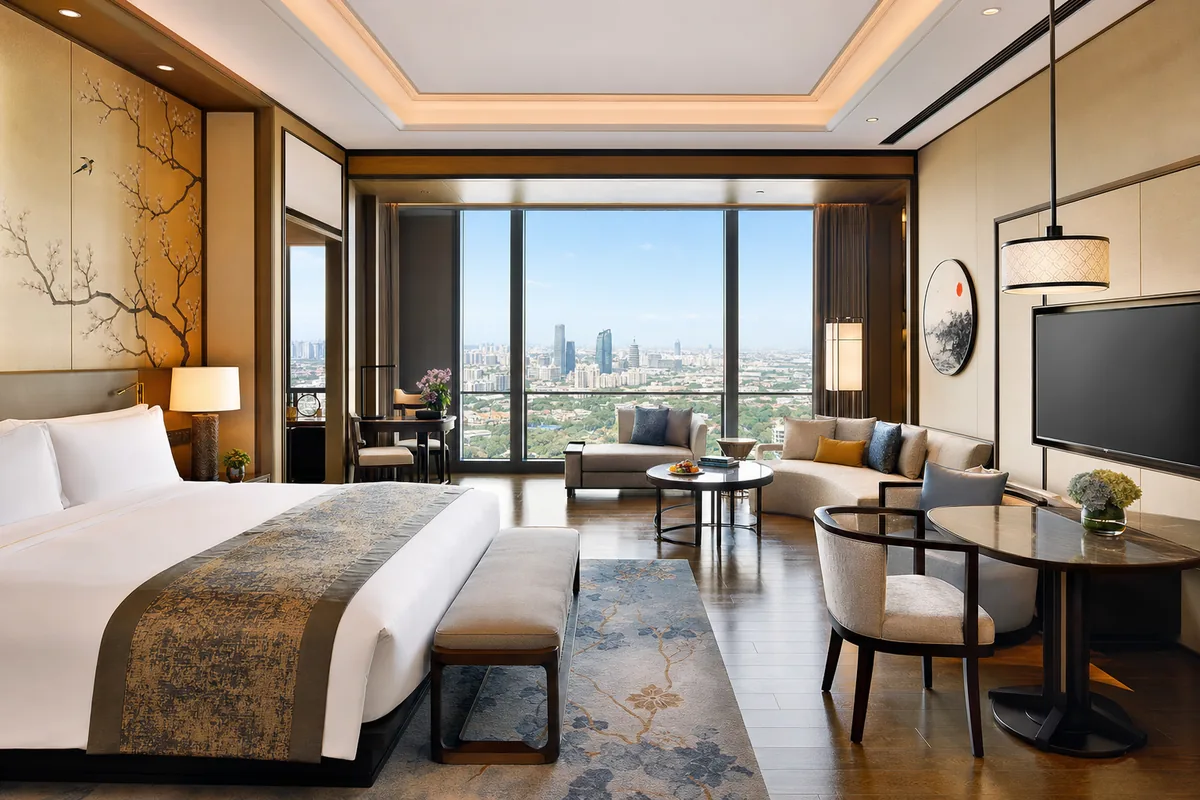
The Forbidden City, Without the Crush
The Forbidden City (故宫, Gùgōng) is the single most visited sight in Beijing, capped at 40,000 tickets a day and often selling out a week ahead in peak season. The standard experience involves a packed entry at Meridian Gate and a slow shuffle along the central axis. There are two ways to make it far better.
Private guided access
The most reliable upgrade is a licensed private guide who pre-books your timed entry, meets you at the gate, and walks you through the side halls and courtyards most groups skip — the clock gallery, the treasure rooms in the northeast, the consorts' palaces. A good guide turns a confusing 9,000-room complex into a coherent story. Private half-day tours of the Forbidden City run roughly ¥800–2,000 depending on the operator and group size, usually plus the ¥60 entry ticket.
Early-access and "VIP" arrangements
You'll see "Forbidden City VIP tour" marketed by high-end operators. Be clear on what this actually means: the palace doesn't sell a public skip-the-line ticket, so "VIP" usually refers to a top-tier guide, pre-secured early-slot tickets (entering right at opening, before the bulk of group tours), and sometimes paired access to less-crowded sites like the Palace Museum's special exhibitions. It's a real improvement in experience, not a separate entrance. Premium private operators charge from around ¥2,500–6,000 for a full curated day including the Forbidden City plus a second site.
For the broader list of imperial-era sites worth your time, our Historical Sites guide puts the Forbidden City in context with the Temple of Heaven and others.
The Great Wall: Private Days at Mutianyu and Beyond
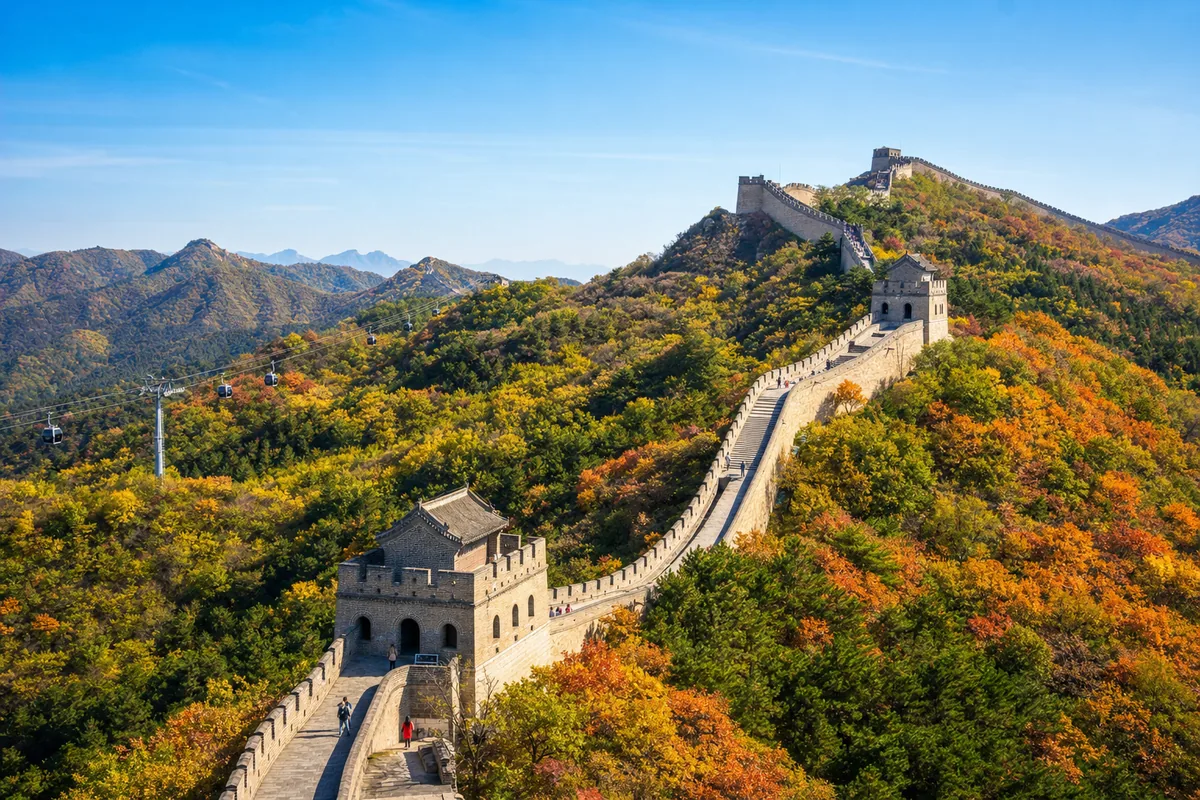
The Wall is the other unmissable day, and how you do it matters more than people expect. Badaling is the closest restored section and by far the most crowded. For a luxury-leaning trip, the two better choices are Mutianyu (慕田峪) — restored, scenic, with a cable car and a toboggan run, about 1.5 hours from the center — and the wilder Jiankou-to-Mutianyu hike for those who want some unrestored wall under their boots.
The chauffeured day
The standard high-end format is a private car with an English-speaking driver-guide for the full day. This typically includes round-trip transfer, the guide, entry and cable-car tickets, and lunch at a countryside restaurant. Expect ¥1,500–3,500 for a sedan with up to three guests; SUVs and larger vehicles cost more. The advantage over a group bus is obvious — you leave when you want, skip the souvenir-stop detours, and can be back in the city by mid-afternoon.
The Mutianyu VIP cable car
At Mutianyu you can ride the enclosed cable car up to the wall (around ¥120 one way, ¥150 round trip) and take the toboggan or chairlift down. Some private operators bundle a faster boarding arrangement, but honestly the cable car rarely has long lines on weekdays — the bigger time-saver is simply going early. From the top of Mutianyu you can see the wall snake along the ridgeline in both directions, with watchtowers every few hundred meters.
A well-run private Great Wall day is one of the easiest things to outsource. Operators like China Highlights build customizable private tours that combine the Wall with a city site or a courtyard lunch, which is worth it if you'd rather not coordinate drivers and tickets yourself. For ideas on combining the Wall with other day options, see Beijing Day Trips.
Fine Dining and Michelin Tables
Beijing's high-end dining runs from imperial-style Chinese banquets to internationally recognized contemporary kitchens. The Michelin Guide covers Beijing, so a number of these have stars, but some of the best meals are at places that don't chase them.
TRB (Temple Restaurant Beijing)
TRB's original location sits inside a restored 600-year-old temple complex (the Temple Restaurant, hence the name), with tables looking onto a quiet courtyard — one of the most atmospheric dining rooms in the city. The cooking is modern European, served as multi-course tasting menus. Expect roughly ¥800–1,500 per person for dinner before wine; the set lunch is a more accessible way in at a lower price. Reserve at least a few days ahead, longer for a courtyard table. There are now several TRB outlets around the city, but the temple location is the one to book.
Peking duck, done properly
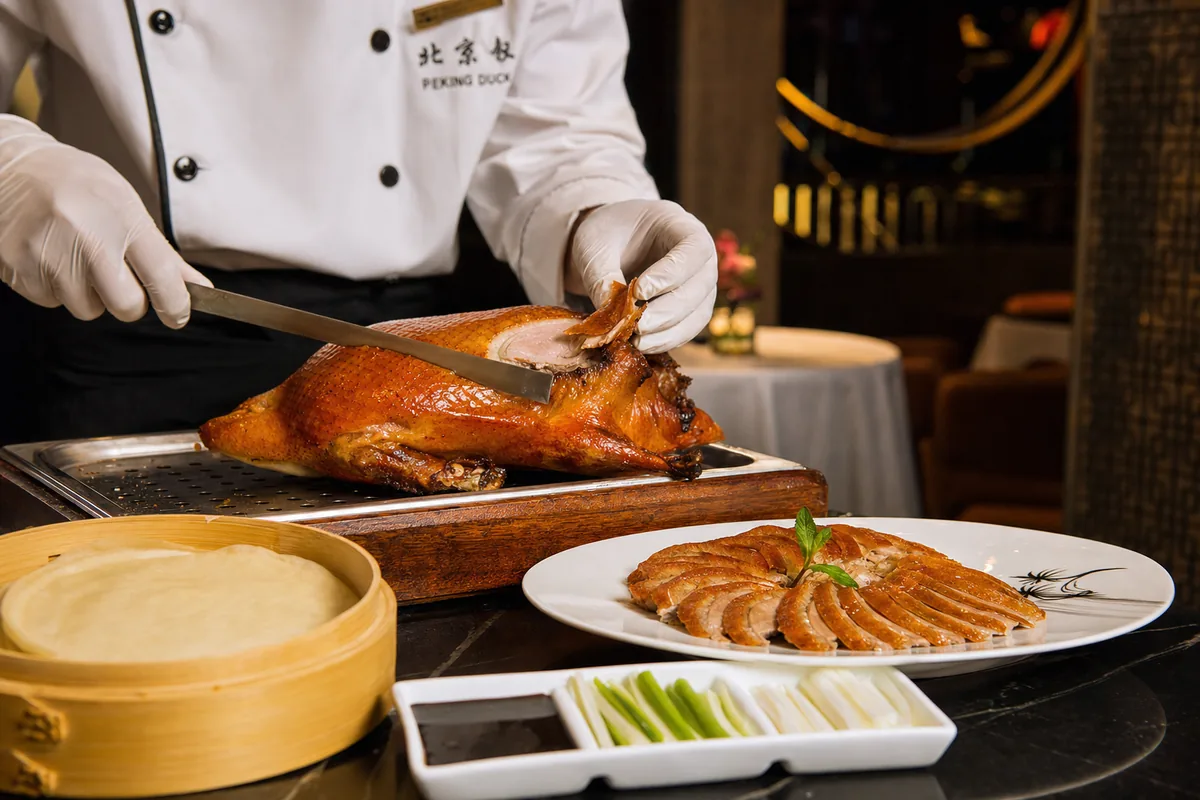
You shouldn't leave without a serious Peking duck (北京烤鸭, Běijīng kǎoyā) meal. For an upscale version, Da Dong is known for its lean, crisp-skinned "super lean" duck and theatrical plating across several elegant branches. Siji Minfu is a local favorite with consistently excellent duck at gentler prices (and long queues — have your hotel book). For the refined end, several hotel Chinese restaurants carve duck tableside in a quieter setting. A full duck with sides runs anywhere from ¥300 to ¥800 per person depending on the venue.
Contemporary Chinese and hotel kitchens
Beyond duck, look at the Michelin-recognized contemporary Chinese restaurants and the flagship dining rooms inside the luxury hotels — many of the hotels listed above run kitchens that hold stars or strong reputations in their own right. These are also your most reliable option for English menus, wine pairings, and dietary requests handled smoothly.
Culture at a Slower Pace: Tea, Tea, and Afternoon Tea
Private tea ceremony at Prince Gong's Mansion
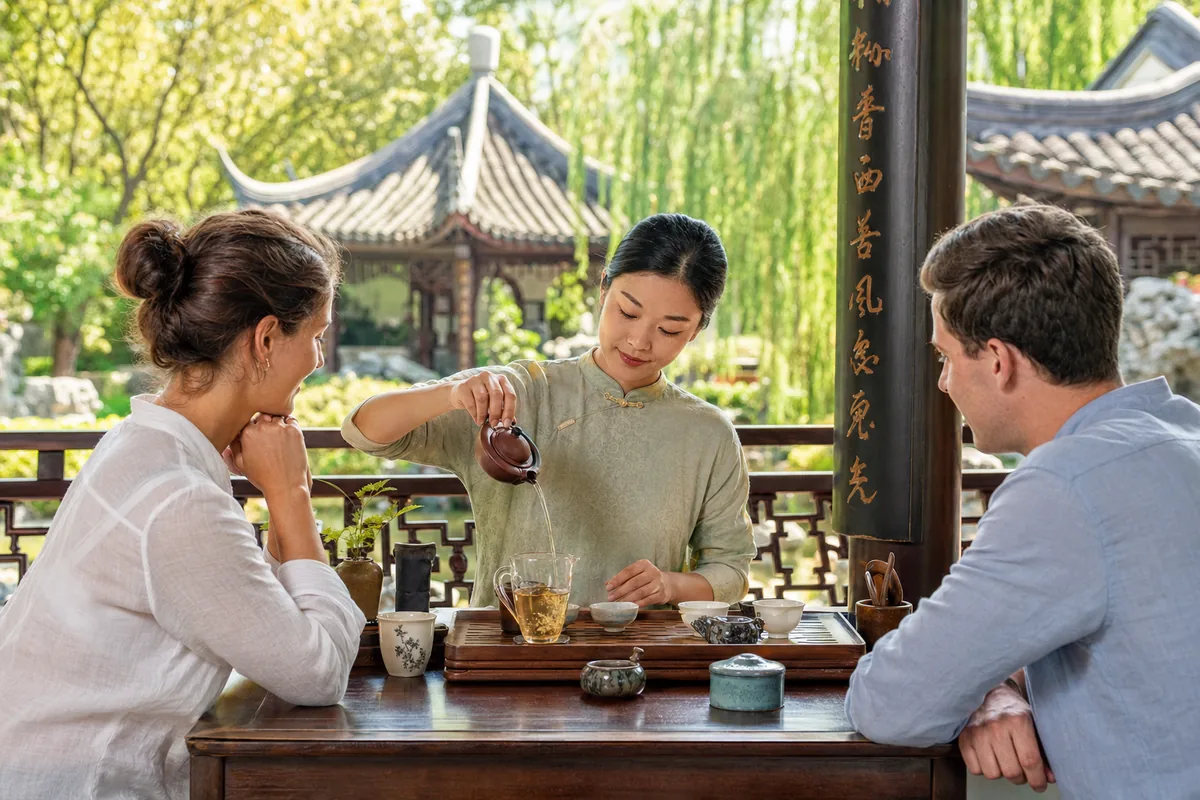
Prince Gong's Mansion (恭王府, Gōng Wáng Fǔ) is the best-preserved Qing princely residence in Beijing, a sprawl of halls, gardens, and a famous theater pavilion northwest of the lakes. Several operators arrange private tea ceremony (茶道, chádào) experiences here — a guided walk through the mansion followed by a sit-down tea session in a garden pavilion, with a tea master explaining the leaves, the brewing, and the etiquette. It's a calm, hands-on counterpoint to the big sights. Private arrangements typically run ¥600–1,500 per person depending on group size and whether a meal is included.
Afternoon tea at Aman Summer Palace
Even non-guests can book afternoon tea at the Aman Summer Palace, served in its courtyard lounge near the imperial garden gate. It pairs a tiered stand of Western and Chinese bites with proper loose-leaf tea, in one of the quietest luxury settings in the city. Reservations are essential; budget around ¥400–600 per person. Pair it with a morning at the Summer Palace and you have an unhurried, genuinely Beijing afternoon.
Hutong by private rickshaw
The lanes around Shichahai (什刹海) — the chain of lakes north of the Forbidden City — are the classic hutong (胡同, alley) district. A private rickshaw (人力车, rénlìchē) tour with an English-speaking guide takes you through the lanes, often with a stop at a courtyard home or a local family for tea. It's touristy but pleasant when arranged privately rather than grabbed off the street; private tours run roughly ¥300–600 per person. Avoid the freelance rickshaw drivers who quote a low price and then demand far more — book through your hotel or a vetted operator.
Spa and wellness
The spas at the luxury hotels are where most travelers end up for wellness, and they're genuinely good — the Peninsula, Mandarin Oriental, PuXuan, and Aman all run full spas with treatments from ¥1,000 upward. For something more rooted in local tradition, many of these spas offer treatments drawing on traditional Chinese medicine. If you want to understand that side better before booking, our guide to Chinese Medicine & Massage is a useful primer.
High-End Shopping
Beijing's luxury retail concentrates in a few places, and they're distinct enough to choose between.
- SKP (in the CBD on the East Third Ring) is the city's premier luxury department store — the full roster of European houses, a celebrated basement food hall, and the adjacent SKP-S concept space with its theatrical art installations. This is where Beijing's serious luxury shopping happens.
- China World Mall (国贸, Guómào), also in the CBD, is a polished mall attached to the China World Hotel and Summit Wing — convenient, comprehensive, and easy to combine with a CBD hotel stay.
- WF Central at Wangfujing, beneath the Mandarin Oriental, is the central-area option, walkable from the Forbidden City.
For Chinese specialties to take home — silk, tea, cloisonné, art — the hotel concierge can point you to reputable specialist shops rather than the tourist-trap markets. For the wider picture on tax refunds and what's worth buying, see the Shopping in China Guide.
Getting Around in Style
For a luxury trip, the easiest setup is a combination of hotel cars and pre-booked private drivers for full-day excursions, with ride-hailing for everything else. Didi (China's Uber equivalent) has a premium tier and works well once you've set up payment. Beijing traffic is heavy, so build in buffer time for cross-city trips, especially to the CBD at rush hour.
That said, the metro is fast, clean, and often beats a car across the center — worth using for short central hops even on a high-end trip. For planning metro routes and laying out your days, the WaysChina app has offline metro maps and a built-in trip planner. For payment and ride-hailing setup, our guides to Didi and using Alipay with foreign cards cover the practical steps.
A Suggested 4-Day Luxury Framework
| Day | Morning | Afternoon / Evening |
|---|---|---|
| 1 | Arrive, settle into a central hotel (Peninsula / Mandarin Oriental) | Wangfujing stroll, dinner at TRB |
| 2 | Forbidden City with private guide (early entry) | Jingshan Park viewpoint, Peking duck dinner |
| 3 | Chauffeured Great Wall day (Mutianyu) | Return, hotel spa, quiet dinner |
| 4 | Summer Palace + Aman afternoon tea (or move to Aman) | Prince Gong tea ceremony or Shichahai rickshaw, SKP shopping |
Add a fifth day if you want a slower pace, a second Wall section, or a museum morning at the National Museum of China on Tiananmen Square.
Booking and Practical Notes
- Book sight tickets and top restaurants early — the Forbidden City and the best tables both sell out in peak season.
- Use your hotel concierge. At this level it's the single most useful resource — reservations, drivers, guides, and problem-solving in your language.
- Set up mobile payment before you arrive. Even luxury venues run on Alipay and WeChat Pay; cards work at hotels but less reliably elsewhere.
- Prices shift. The ranges here reflect typical recent pricing; always confirm current rates when you book, as hotel and tour pricing varies with season and demand.
The Short Version
A luxury Beijing trip is mostly about buying back time and access: a central hotel within walking distance of the Forbidden City, a private guide to skip the confusion and the crush, a chauffeured day at Mutianyu, and a few standout meals booked ahead. Pace it over four to five days, mix a central base with a night or two of calm at the Summer Palace, and lean on your concierge to handle the logistics. Get the bookings in early — for the marquee sights and tables, that's the difference between an easy trip and a frustrating one. From here, the Luxury Travel in China guide extends the same approach to the rest of the country.
Last updated: June 2026
Read in other languages
Getting to the sights by metro
Forbidden City
World's largest imperial palace, home to 24 Ming and Qing emperors.
- Tian'anmen East
- Tian'anmen West
- Beihai North
Tiananmen Square
World's largest public square. Arrive before sunrise for flag ceremony.
- Tian'anmen East
- Tian'anmen West
- Qianmen
Temple of Heaven
Ming-era imperial complex where emperors prayed for good harvests.
- East Gate of Temple of Heaven
- Tianqiao
- Qiaowan
Summer Palace
Imperial garden with Kunming Lake, Long Corridor, and Marble Boat.
- Beigongmen
- Xiyuan
Lama Temple (Yonghe Temple)
Tibetan Buddhist monastery with an 18m Maitreya statue.
- Yonghegong Lama Temple
- Beixinqiao
Bird's Nest (National Stadium)
2008 Olympic main stadium, lit up at night.
- Olympic Park
- Olympic Sports Center
Water Cube (National Aquatics Center)
2008 Olympic swimming venue, blue bubble facade.
- Olympic Park
- Olympic Sports Center
Olympic Forest Park
Largest urban park in Beijing; great for jogging.
- South Gate of Forest Park
- Olympic Park
798 Art Zone
Contemporary art district in converted Bauhaus factories.
- Gaojiayuan
- Jiangtai
Wangfujing
Beijing's most famous shopping street and night market.
- Wangfujing
- Dengshikou
- Dongdan
Nanluoguxiang
Historic hutong lanes lined with boutique shops and cafes.
- South Luogu Alley
- Shichahai
Houhai (Shichahai)
Lake-side hutong district with bars, rickshaws, and Prince Gong's Mansion.
- Shichahai
- Beihai North
Beihai Park
1000-year-old imperial garden with a lake and White Pagoda.
- Beihai North
- Shichahai
- Tian'anmen West
Jingshan Park
Hilltop park directly north of the Forbidden City — best panoramic view.
- Beihai North
- Shichahai
- South Luogu Alley
Qianmen Street
Restored imperial-era pedestrian street with traditional shops.
- Qianmen
- Zhushikou
- Qiaowan
Sanlitun
Trendy nightlife and shopping district; embassies nearby.
- Tuanjiehu
- Agricultural Exhibition Center
- Dongsi Shitiao
Temple of Confucius & Imperial College
Imperial Confucian temple and academy; quiet alternative to Lama Temple.
- Yonghegong Lama Temple
- Andingmen
Beijing Capital International Airport
Beijing's main international airport (PEK), Terminal 3 designed by Norman Foster.
- Capital Airport Terminal 3
- Capital Airport Terminal 2
Beijing Daxing International Airport
Beijing's second international airport (PKX), Zaha Hadid's six-pier starfish terminal.
- Daxing Airport
Beijing South Railway Station
Major high-speed rail terminus for Beijing–Shanghai and Beijing–Tianjin lines.
- Beijing South Railway
Beijing West Railway Station
Major terminus for Beijing–Guangzhou and Beijing–Kunming high-speed lines.
- Beijing West Railway
Beijing metro: last train times by station
Every line and station, checked by hand — the same data behind our offline route planner.
Get the WaysChina App
Offline guides, currency converter, essential phrases, and more — all in your pocket.

Related Articles
3 Days in Beijing: A Day-by-Day Itinerary Built Around the Bookings
A three-day Beijing route in metro order — imperial axis, Great Wall, Temple of Heaven and hutongs — with the...

Day Trips from Beijing: Which Great Wall Section, Plus the Ming Tombs, Tianjin and Chengde
Which Great Wall section fits you — Mutianyu, Badaling, Jinshanling or Simatai with Gubei — plus the Ming Tombs,...
Beijing Food Guide: What to Eat, Where to Eat It, and What to Skip
Peking duck the right way, zhajiangmian, copper-pot lamb hotpot and which old-Beijing snacks are worth it, plus...
Datong Complete Guide
Datong was the first capital of the Northern Wei dynasty and home to the UNESCO-listed Yungang Grottoes. Here's how...