

This article contains affiliate links. If you make a purchase through these links, we may earn a small commission at no extra cost to you. This helps support our work in creating free travel guides.
If you have one spare day in Beijing, spend it on the Great Wall, and for most first-time visitors that means Mutianyu. If you have two, take a second, different trip — Tianjin by intercity train for a change of city, or Chengde for an imperial garden that is better as an overnight. The Ming Tombs are not a day of their own: fold them into a Badaling day. Below is the comparison of the four Wall sections most visitors choose between — Badaling, Mutianyu, Jinshanling, and Simatai with Gubei Water Town — then the tombs, Tianjin and Chengde: how to get to each on your own, what tickets cost, what has to be booked ahead, and whether a same-day return is realistic.
How to choose
Pick by what you want from the day, not by which name you have heard most. First visit, easy day, cable car up and toboggan down: Mutianyu. Simplest logistics and crowds you can live with: Badaling, the only section with a high-speed train to its door. A real hike on wall that has not been rebuilt: Jinshanling. The Wall at night and a hotel at the foot of it: Simatai and Gubei Water Town, as an overnight. The Ming Tombs are an add-on to a Badaling day, Tianjin needs nothing beyond a train ticket, and Chengde is the biggest single trip here and rewards a night away.
| Trip | Best for | On your own | Booking | Realistic as |
|---|---|---|---|---|
| Mutianyu | First visit, families | Tourist bus from the city | Reserve online, real-name | Full day |
| Badaling | Train access, short on time | High-speed train or public bus | Buy on the day | Half to full day |
| Jinshanling | Hikers, photographers | Hardest; tour or car is easier | Buy at the gate | Long full day |
| Simatai + Gubei | Night Wall, canal-town stay | Official shuttle bus | Gate or online (online cheaper) | Overnight |
| Ming Tombs | History without the climb | Metro + shuttle, or bus | Window on the day | Half day, paired with Badaling |
| Tianjin | A different city, zero planning | Intercity train | Train ticket only | Easy day trip |
| Chengde | Imperial garden and temples | High-speed train | Train ticket; sights on the day | Long day or overnight |
The Great Wall, section by section
All four are Ming-dynasty wall within reach of the city. What differs is how much has been rebuilt, how many people you share it with, and how hard it is to reach without a tour. The ticket and reservation rules for Badaling, Mutianyu and Gubei are also in the table in our Beijing guide.
Mutianyu (慕田峪, Mùtiányù): the first-timer's section
Mutianyu sits in forested hills about 73 km northeast of the city, in Huairou district. The wall is restored, with a cable car up, and a chairlift up with a toboggan run down — a metal slide you steer yourself. Crowds are real on weekends but nothing like Badaling.
Tickets are real-name (tied to your passport number) and reserved online: you can book up to 30 days ahead, each passport gets one ticket per day, and passport holders skip the exchange counter and go straight to the entrance for the ride they booked — the north gate for cable-car tickets, the slide gate for chairlift and toboggan tickets — with the passport they booked with; unused tickets can be refunded or changed on the booking platform until midnight on the visit day. Book on the official Mutianyu site. Entry is 45 yuan for adults and 25 for children aged 6 to 18, students and over-60s, and it does not cover the shuttle bus from the parking area, the cable car, or the chairlift and toboggan — and because the cable car and the chairlift-toboggan are run by two different companies, their tickets are not interchangeable. Ride prices are on the booking page; check there when you reserve. Main-season hours (16 March to 15 November) are 07:30 to 18:00 on weekdays and to 18:30 on weekends, winter 08:00 to 17:30, and ticket sales stop an hour before closing.
There is no train. The Dongzhimen tourist line leaves from the Dongzhimen bus stops (metro Lines 2 and 13) at 08:30 every day and returns at 16:00, with tickets sold on the bus from half an hour before departure until it is full, and the Qianmen tourist line (Qianmen, Lines 2 and 8) runs morning departures and afternoon returns. Skip the public 916 bus, which needs a transfer in Huairou. Allow three to four hours on site.
Badaling (八达岭, Bādálǐng): the one with the train
Badaling is the famous, fully rebuilt section about 60 km northwest of the city. It is also the busiest by a wide margin, so go on a weekday and start early. Entry is 40 yuan in the main season (1 April to 31 October) and 35 in winter, and visitors under 18 or aged 60 and over get in free with ID. No reservation is required: tickets are real-name, but you can buy on the day, either through the official "Great Wall Inside and Out" (长城内外, Chángchéng Nèiwài) WeChat platform, which accepts passports, or at the ticket window, which takes cash, mobile payment and foreign cards and has a Chinese-English service counter. Opening hours are 06:30 to 16:30 in the main season and 07:30 to 16:00 in winter; the city government's Badaling page is the English reference. Cable car and slide tickets are extra; check the price at the window.
Getting there: the Beijing–Zhangjiakou high-speed line runs from Beijing North station (at Xizhimen metro, Lines 2, 4 and 13) to Badaling Great Wall station in a little over half an hour, with Qinghe station (Line 13) as the closer alternative, and the Wall station is deep underground, so allow time for the escalators; the alternative is bus 877 from Deshengmen (a bus terminal a short walk from Jishuitan metro, Lines 2 and 19), nonstop on the expressway in about 70 minutes for 12 yuan. Do not plan around the S2 suburban train in older guides: since 25 October 2025 its city terminus at Huangtudian is closed, so it no longer reaches the city and now runs only between Nankou and Yanqing/Shacheng. Avoid the October and May holiday weeks; see our Golden Week guide.
Jinshanling (金山岭, Jīnshānlǐng): for the hike
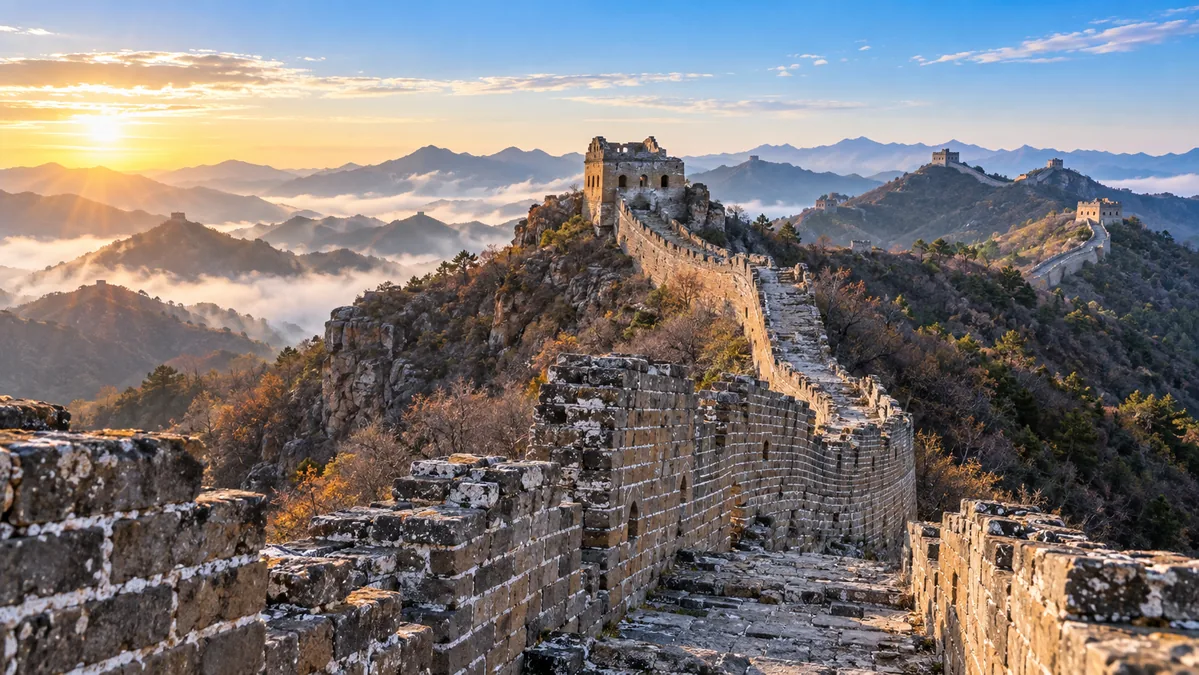
Jinshanling is across the provincial border in Luanping county, Hebei, about 130 km from Beijing, and its eastern end joins Simatai. It mixes restored stretches with long runs of original, crumbling wall, and you can walk for an hour and meet a handful of people. The steps are steep and uneven, so it is not the section for young children or bad knees. Entry is 65 yuan in the main season (16 March to 15 November) and 55 in winter. There is a cable car, but it does not run all year; check with the scenic area before you count on it.
This is the section where a tour or a hired car earns its price. The public options: a seasonal weekend tourist bus from Dongzhimen bus station (metro Lines 2 and 13), roughly April to November — call the scenic area's Beijing office on +86 10 8402 4628 for the current departure time and fare; or a bus to Miyun, then the Mi 51 to Simatai village and a taxi for around 50 yuan per car. Allow four to five hours on the wall.
Simatai and Gubei Water Town (司马台 / 古北水镇): the overnight
Simatai is a steep, only partly restored section; Gubei Water Town (Gǔběi Shuǐzhèn) is a rebuilt canal town at its foot with hotels and a lit Wall walk after dark. They are two separate scenic areas with separate tickets, and staying in a hotel inside the town does not include entry. On the official online shop the town is 120 yuan for adults and 70 for children 1.2 to 1.5 m tall, students and 60- to 69-year-olds, Simatai by day is 40, the day combo is 150, and the night package with a round-trip cable car ride is 260. The daytime cable car is a separate ticket. The town stays open until late evening; daytime Simatai runs 9:00 to 17:00, with last entry at 15:00 if you enter from outside the town and 16:10 from inside it; the night walk runs 18:00 to 21:40 from May to October and starts at 17:30 in winter. No reservation is needed. The official site sells the cheapest tickets, but the form asks for an ID number, and you enter by scanning a QR code with no ID check at the gate; if it will not take your passport, buy at the ticket window on arrival — the gate price is higher (about 160 yuan for the town), so try online first.
The official shuttle from Wangjing West transport hub (metro Lines 13, 15 and 17; bus mezzanine, gate 5) leaves at 09:00 and 13:00 and returns at 12:00 and 17:00, takes about two hours, and costs 48 yuan, paid with a Beijing transit card, the transit app, a phone NFC transit card or exact cash — Alipay and WeChat are not accepted on this bus. That last point catches foreign visitors, so carry the cash; other routes and the current timetable are on the Gubei transport page. As a day trip from the city you get either the town or the wall; stay a night and you get the lit Wall in the evening and Simatai in the morning before anyone else.
If you would rather not run any of this yourself — especially for Jinshanling or a Simatai night visit — guided day trips and private transfers are listed on Klook, most with hotel pickup.
The Ming Tombs: an add-on, not a day
The Ming Tombs (明十三陵, Míng Shísānlíng) are the burial valley of 13 Ming emperors, about 50 km north of the city; the open parts are Changling, Dingling, Zhaoling and the Sacred Way, the stone-lined avenue of animals and officials that leads into the valley. Walk the Sacred Way and see one tomb — Dingling for the excavated underground chambers, Changling for the biggest halls above ground. That is two to three hours, calm and uncrowded.
Each site is ticketed separately: in the main season (1 April to 31 October) Dingling is 60 yuan, Changling 45 and the Sacred Way 30, dropping to 40, 30 and 20 in winter; visitors aged 60 and over and children under six are free, and the tickets do not cover the shuttle inside the park. A combined ticket is also sold; ask its price at the window. Hours are 8:00 to 17:30 in the main season and 8:30 to 17:00 in winter. To get there, take the Changping metro line to Changping Xishankou, walk about 2 km to the scenic-area shuttle, and ride it between the sites; or take bus 872 direct from Deshengmen. The tombs pair naturally with Badaling, which is the same direction, and badly with Mutianyu, which is not.
Tianjin: half an hour to a different city
Tianjin is the day trip that needs the least thought. The Beijing–Tianjin intercity line from Beijing South (metro Lines 4 and 14) puts the two cities about half an hour apart, with up to 128 trains each way a day and departures as close as three minutes apart, most to Tianjin Station and some to Tianjin West. Choose a train to Tianjin Station: the Hai River is right outside, with the old Italian concession across the bridge.
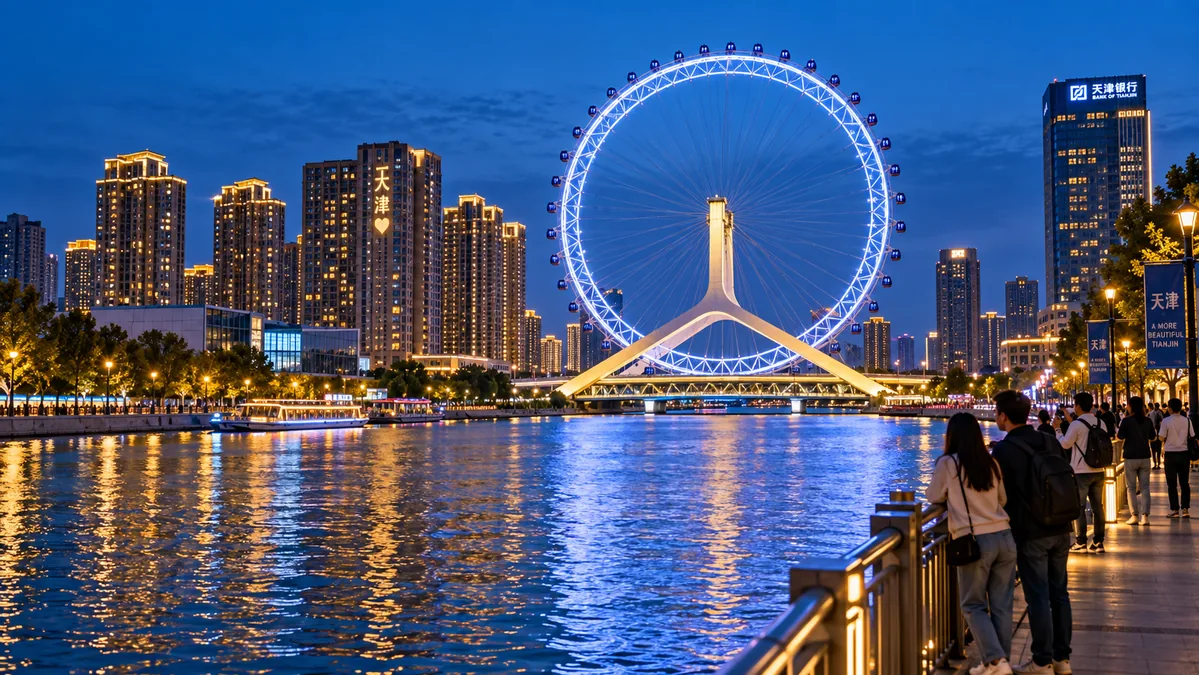
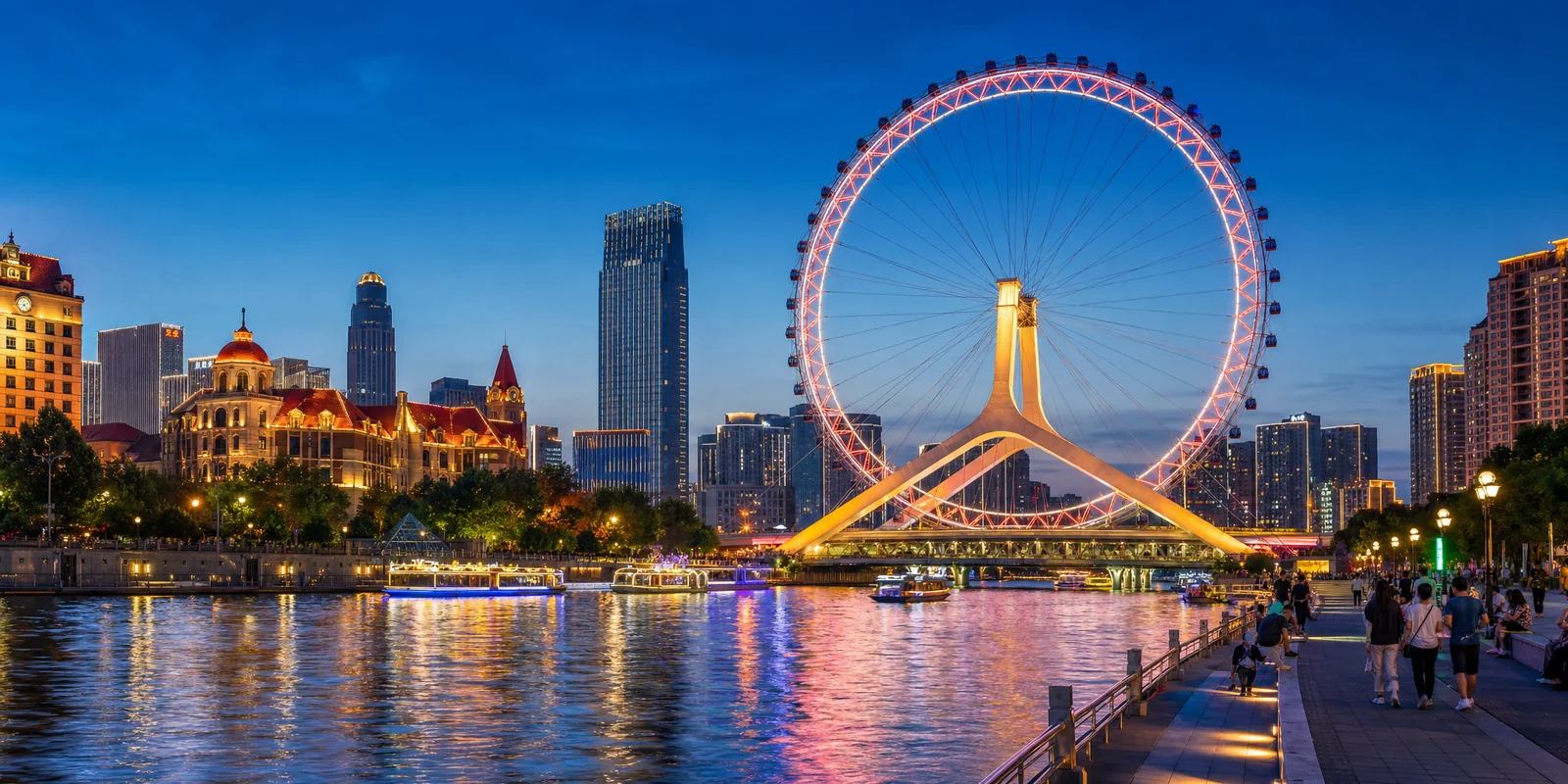
A day that works: start in the Italian Style Town (意式风情区), the former Italian concession around Marco Polo Square; follow the river to Ancient Culture Street (古文化街), a pedestrian street of shops around the Tianhou Temple; then take a taxi to the Five Great Avenues (五大道, Wǔdàdào), a grid of 1920s and 1930s villas. All three are open streets with no entry ticket, though individual houses and museums inside them may charge. The Tianjin Eye, the Ferris wheel built onto a bridge over the river, takes about 30 minutes for one turn and is listed at 70 yuan a ride; check the current price at the wheel. Eat goubuli baozi (steamed stuffed buns) and mahua (fried dough twists); both are Tianjin's own.
Time budget: a 9:00 train out and a 20:00 train back gives you a full, unhurried day and dinner in Tianjin. Book the return when you buy the outbound, and check the last metro from Beijing South on our Beijing last-train page before you pick a late one. Our Tianjin guide covers the city in depth.
Chengde: the imperial garden that wants a night
Chengde is the Qing emperors' summer escape: the walled Mountain Resort (避暑山庄, Bìshǔ Shānzhuāng), a huge park of lakes and hills, and the Outer Temples around it, including the Putuo Zongcheng Temple built to look like the Potala Palace in Lhasa. The train is what makes a day trip possible: since July 2025 the fastest service from Beijing Chaoyang station to Chengde South takes 49 minutes (train G907, 106 yuan in second class). Note the station — Beijing Chaoyang, in the northeast of the city, not Beijing Station or Beijing North — and check the timetable, because not every train is the fast one. Chengde South station is outside the centre; take a taxi to the resort's main gate.
The Mountain Resort is 130 yuan from 1 April to 31 October and 90 yuan from November to March. It opens 07:00 to 18:00 from 1 May to 9 October and closes at 16:40 from 10 October to 31 March, which is what decides a winter day trip; the Outer Temples open a little later and close a little earlier, each on its own schedule. Each temple sells its own ticket; check the price at its ticket office. The resort alone needs three to four hours and the temples are spread around the town, so a long day means the resort in the morning and one temple after lunch; for the resort and two or three temples at a walking pace, stay the night and come back on a morning train.
Trains: the short version
Every train ticket is real-name. China Railway's official 12306 app and website accept foreign passports, with your name typed exactly as on the passport, spaces included. Tickets are electronic and your passport is what you show, so there is nothing to print. At the station, passport holders use the staffed channel rather than the automatic gates; allow 30 to 40 minutes at Beijing South on a weekend. Sales open 15 days ahead, counting the travel day. For Tianjin you can usually buy on the day because there are so many trains, but for Chengde and any evening return, book the round trip together. To reach the stations, tap a foreign Visa or Mastercard contactless card at the metro gates, no app or ticket needed; our Beijing metro page has the map. The full walkthrough is in our train booking guide and high-speed train guide, or book in English on Trip.com.
Frequently asked questions
Which section of the Great Wall should a first-time visitor choose?
Mutianyu: restored enough to be comfortable, a cable car up and a toboggan down, and far fewer people than Badaling. Pick Badaling instead if you want to go by train and keep the day short, Jinshanling for a real hike on unrestored wall, and Simatai with Gubei Water Town for the Wall lit at night and a bed nearby.
Can you visit the Great Wall on your own, without a tour?
Yes, for three of the four. Badaling has a high-speed train from Beijing North and bus 877 from Deshengmen; Mutianyu has the Dongzhimen and Qianmen tourist lines; Gubei and Simatai have an official shuttle from Wangjing West that takes transit cards or cash but not Alipay or WeChat. Jinshanling is the one where public transport is slow and seasonal, so book a tour or a car for it.
Do you need to reserve Great Wall tickets in advance?
Mutianyu: yes, real-name tickets booked online up to 30 days ahead, one per passport per day. Badaling: no, tickets are real-name but you buy them on the day at the window or on the official WeChat platform. Gubei and Simatai: no. Tickets are sold at the gate; the official site is cheaper if its form accepts your passport. Jinshanling: buy at the gate, and check its official channels for any new rule before a holiday weekend.
Can you do Tianjin as a day trip from Beijing?
Easily. The intercity trains from Beijing South run up to 128 times each way a day and the ride is about half an hour. Leave around 9:00, come back around 20:00 with the return seat booked before you go, and you have a full day for the river, the old concessions and the Five Great Avenues.
Last updated: September 2026
Read in other languages
Getting to the sights by metro
Forbidden City
World's largest imperial palace, home to 24 Ming and Qing emperors.
- Tian'anmen East
- Tian'anmen West
- Beihai North
Tiananmen Square
World's largest public square. Arrive before sunrise for flag ceremony.
- Tian'anmen East
- Tian'anmen West
- Qianmen
Temple of Heaven
Ming-era imperial complex where emperors prayed for good harvests.
- East Gate of Temple of Heaven
- Tianqiao
- Qiaowan
Summer Palace
Imperial garden with Kunming Lake, Long Corridor, and Marble Boat.
- Beigongmen
- Xiyuan
Lama Temple (Yonghe Temple)
Tibetan Buddhist monastery with an 18m Maitreya statue.
- Yonghegong Lama Temple
- Beixinqiao
Bird's Nest (National Stadium)
2008 Olympic main stadium, lit up at night.
- Olympic Park
- Olympic Sports Center
Water Cube (National Aquatics Center)
2008 Olympic swimming venue, blue bubble facade.
- Olympic Park
- Olympic Sports Center
Olympic Forest Park
Largest urban park in Beijing; great for jogging.
- South Gate of Forest Park
- Olympic Park
798 Art Zone
Contemporary art district in converted Bauhaus factories.
- Gaojiayuan
- Jiangtai
Wangfujing
Beijing's most famous shopping street and night market.
- Wangfujing
- Dengshikou
- Dongdan
Nanluoguxiang
Historic hutong lanes lined with boutique shops and cafes.
- South Luogu Alley
- Shichahai
Houhai (Shichahai)
Lake-side hutong district with bars, rickshaws, and Prince Gong's Mansion.
- Shichahai
- Beihai North
Beihai Park
1000-year-old imperial garden with a lake and White Pagoda.
- Beihai North
- Shichahai
- Tian'anmen West
Jingshan Park
Hilltop park directly north of the Forbidden City — best panoramic view.
- Beihai North
- Shichahai
- South Luogu Alley
Qianmen Street
Restored imperial-era pedestrian street with traditional shops.
- Qianmen
- Zhushikou
- Qiaowan
Sanlitun
Trendy nightlife and shopping district; embassies nearby.
- Tuanjiehu
- Agricultural Exhibition Center
- Dongsi Shitiao
Temple of Confucius & Imperial College
Imperial Confucian temple and academy; quiet alternative to Lama Temple.
- Yonghegong Lama Temple
- Andingmen
Beijing Capital International Airport
Beijing's main international airport (PEK), Terminal 3 designed by Norman Foster.
- Capital Airport Terminal 3
- Capital Airport Terminal 2
Beijing Daxing International Airport
Beijing's second international airport (PKX), Zaha Hadid's six-pier starfish terminal.
- Daxing Airport
Beijing South Railway Station
Major high-speed rail terminus for Beijing–Shanghai and Beijing–Tianjin lines.
- Beijing South Railway
Beijing West Railway Station
Major terminus for Beijing–Guangzhou and Beijing–Kunming high-speed lines.
- Beijing West Railway
Beijing metro: last train times by station
Every line and station, checked by hand — the same data behind our offline route planner.
Get the WaysChina App
Offline guides, currency converter, essential phrases, and more — all in your pocket.

Related Articles
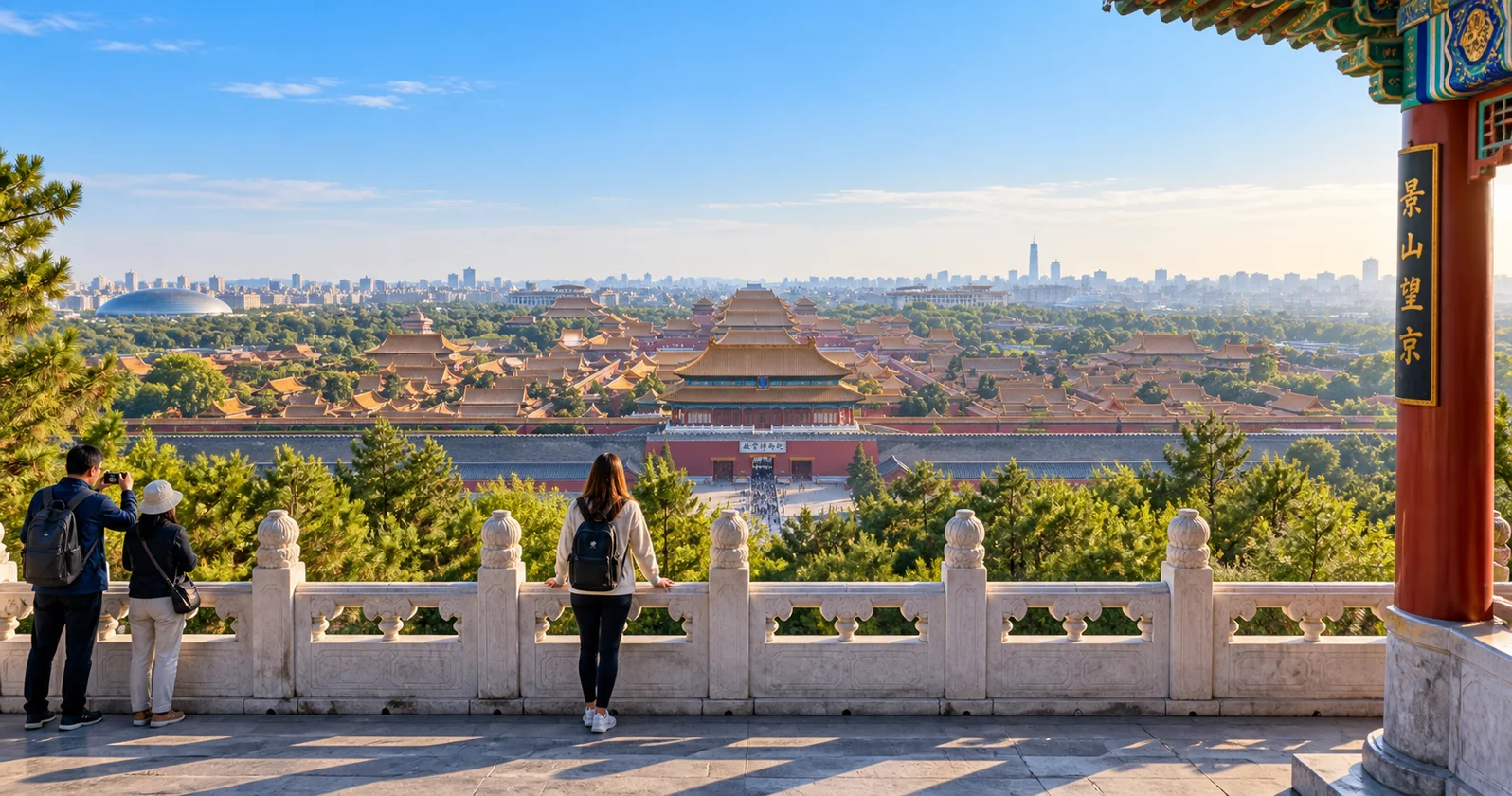
3 Days in Beijing: A Day-by-Day Itinerary Built Around the Bookings
A three-day Beijing route in metro order — imperial axis, Great Wall, Temple of Heaven and hutongs — with the...
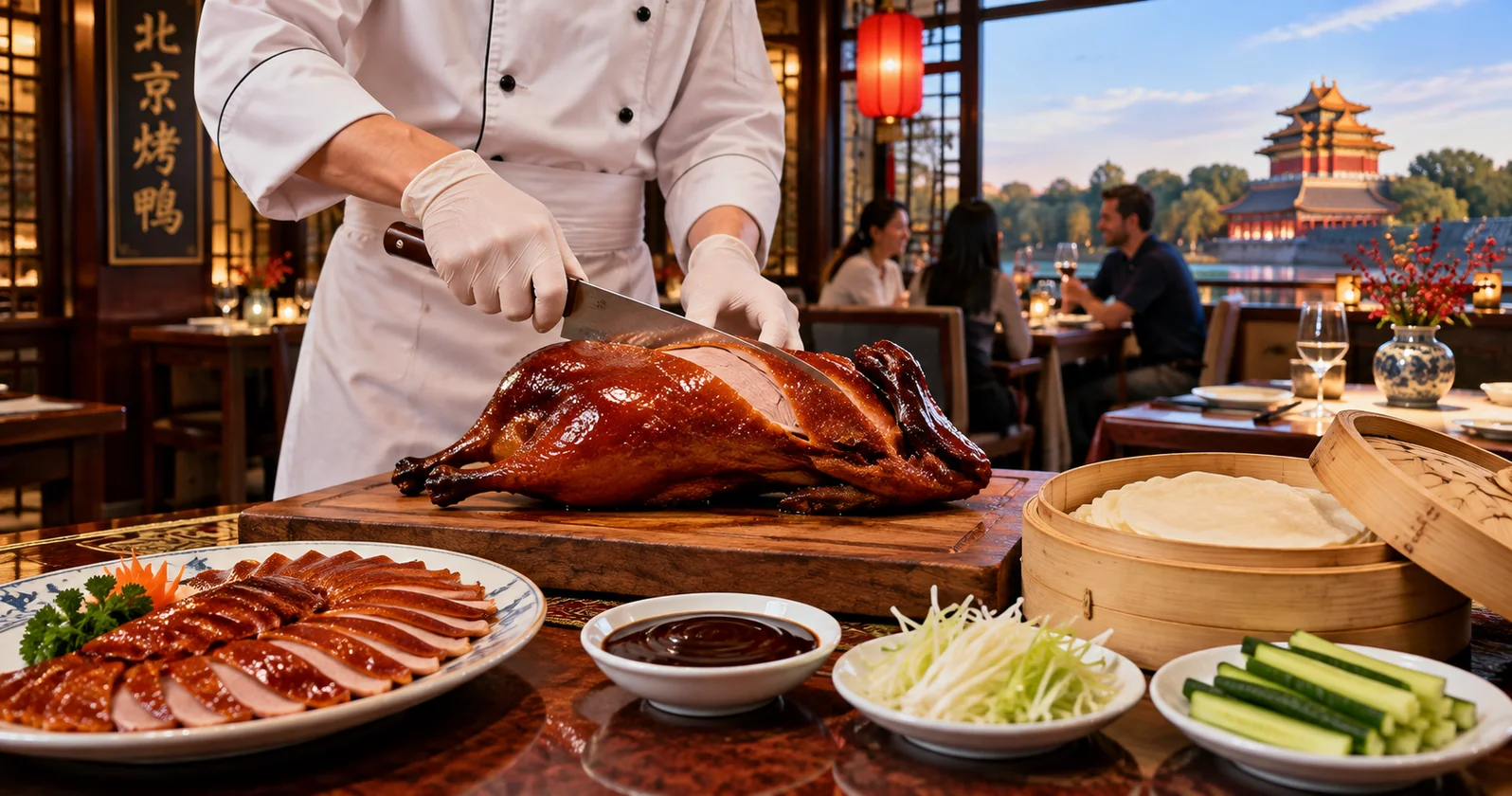
Beijing Food Guide: What to Eat, Where to Eat It, and What to Skip
Peking duck the right way, zhajiangmian, copper-pot lamb hotpot and which old-Beijing snacks are worth it, plus...
Datong Complete Guide
Datong was the first capital of the Northern Wei dynasty and home to the UNESCO-listed Yungang Grottoes. Here's how...
Tianjin Complete Guide
Tianjin sits 30 minutes from Beijing by high-speed rail, with European architecture, a giant Ferris wheel over the...