
This article contains affiliate links. If you make a purchase through these links, we may earn a small commission at no extra cost to you. This helps support our work in creating free travel guides.
Three days in Beijing splits into three days of walking: the imperial axis (Tiananmen Square, the Forbidden City, Jingshan), a day at the Great Wall, and a gentler day of the Temple of Heaven, the Lama Temple and the hutongs (胡同, hútòng — the old alley neighbourhoods). Each day stays in one part of the city. What makes or breaks the plan is two things you sort out before you arrive: the Forbidden City sells no same-day tickets and opens booking exactly seven days ahead, and it is closed on Mondays, along with several other big sights. Everything below is arranged around those two facts.
How the plan works, and what to book before you fly
Beijing dropped mandatory reservations at most sights in 2024, so most places on this route sell tickets at the gate. The exceptions are the ones everyone wants. Work backwards from your dates:
- 30 days ahead — the Great Wall at Mutianyu. Tickets are real-name, one per passport per day, bookable 30 days out on the official site; you go straight to the gate with the passport, no exchange needed. Badaling, the other main section, needs no reservation — tickets are sold on site.
- 10 days ahead at 20:00 — Prince Gong's Mansion, if you add it: real-name, passport accepted, swapped for an entry voucher at the service desk on the day.
- 7 days ahead at 20:00 Beijing time — the Forbidden City. Set an alarm. Tickets for a date go on sale at 20:00 seven days before, one per passport, in a morning or an afternoon slot, and there are no same-day sales. Book on the Palace Museum's English ticketing page with your passport number, or e-mail each visitor's name, passport number and date to [email protected] at least one calendar day ahead; the English hotline is +86 400 950 1925. Peak-season dates can sell out soon after release, so be logged in before 20:00.
- 7 days ahead at 17:00 — the National Museum, a good rain option: free, real-name, three entry slots a day, closed Mondays. Book through the museum's English booking page and bring the ID you booked with.
- 1–7 days ahead — Tiananmen Square. The square itself needs a free real-name reservation, made 1–7 days ahead through the official mini-program or the area administration's booking site; passports are accepted, and a Forbidden City, National Museum or Mausoleum booking also gets you in. Book the square anyway for the morning slot — it is free, and the reservation is what the checkpoint staff ask for. The mini-program is in Chinese; keep a translation app open.
- Nothing to book: the Temple of Heaven, Jingshan, Beihai and the Summer Palace sell tickets at the gate; their online platform needs a mainland Chinese phone number, so the window with your passport is the normal route.
Then the Monday rule. The Forbidden City closes on Mondays except public holidays, as do the National Museum, Prince Gong's Mansion, the Confucius Temple and the Mausoleum; the Temple of Heaven's ticketed halls close too, though the park stays open. The Great Wall does not: neither Mutianyu nor Badaling has a closing day. So whichever of your three days is a Monday, make it the Wall day and slide the other two around it. The full ticket-and-reservation table is in our Beijing guide; this article gives you the sequence.
Day 1: Tiananmen Square, the Forbidden City, Jingshan and Beihai
Take Line 1 to Tian'anmen East and allow time for security: bags are scanned and your passport is matched to your square reservation. The square needs 30–45 minutes. If you want the flag-raising, reserve the "flag-raising" slot rather than "morning"; the time shifts daily, and the yearly schedule is published by the Tiananmen area administration. It is a real spectacle, but it puts you up before dawn on the day you walk the whole palace; most visitors are better off sleeping.
Walk north under Tiananmen Gate (the one with the portrait) to the Meridian Gate (午门, Wǔmén), the palace's only entrance; foreign passport holders use the staffed lane, with the passport they booked with. The route is one-way from south to north, and you leave by the Gate of Divine Prowess (神武门, Shénwǔmén) on the north side or the East Prosperity Gate. Morning tickets must be scanned by 12:00; afternoon tickets are admitted from 11:00. Peak-season hours are 8:30–17:00 with last entry at 16:00; in winter it closes at 16:30 with last entry at 15:30. Plan on three to four hours. Admission is 60 yuan in peak season (40 in winter), and the Treasure Gallery and the Clock Gallery are 10 yuan each on top — take the Treasure Gallery; its side courtyards are where the crowds thin out.
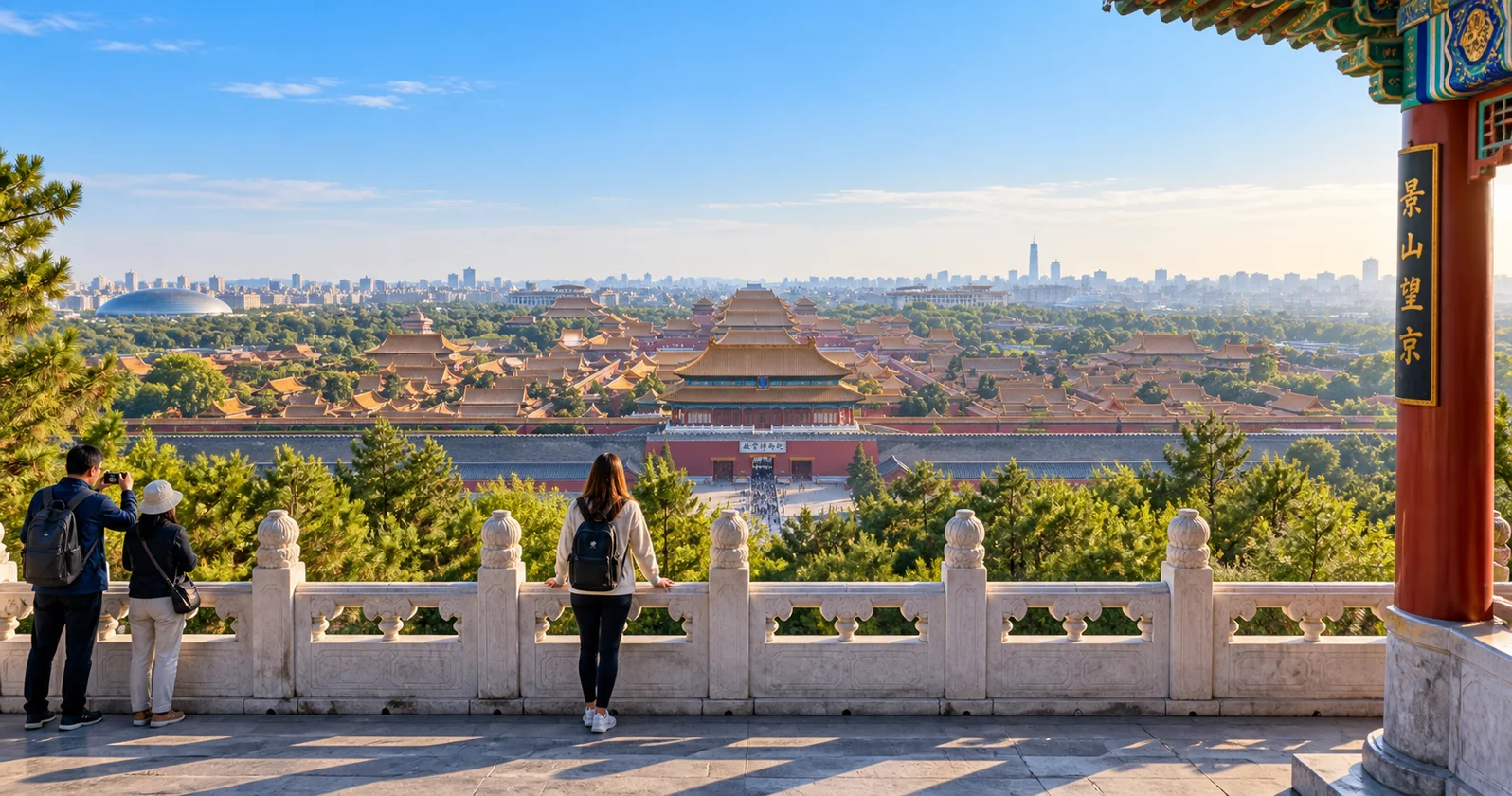
Out of the north gate, cross the road into Jingshan Park (景山公园, Jǐngshān Gōngyuán): 2 yuan, a fifteen-minute climb, and the best view in the city — the whole palace in rows of yellow roofs. Walk west to Beihai Park (北海公园), 10 yuan in peak season, for the lake and the white dagoba (a Tibetan-style stupa); the metro from here is Line 6 at Beihai North, exit B. For dinner ride Line 6 one stop to Nanluoguxiang (South Luogu Alley on our metro map) and change to Line 8 south to Qianmen, where the restored pedestrian street is free and open all day; our Beijing food guide has the Peking duck decision.
Day 2: the Great Wall — Mutianyu by default, Badaling by train
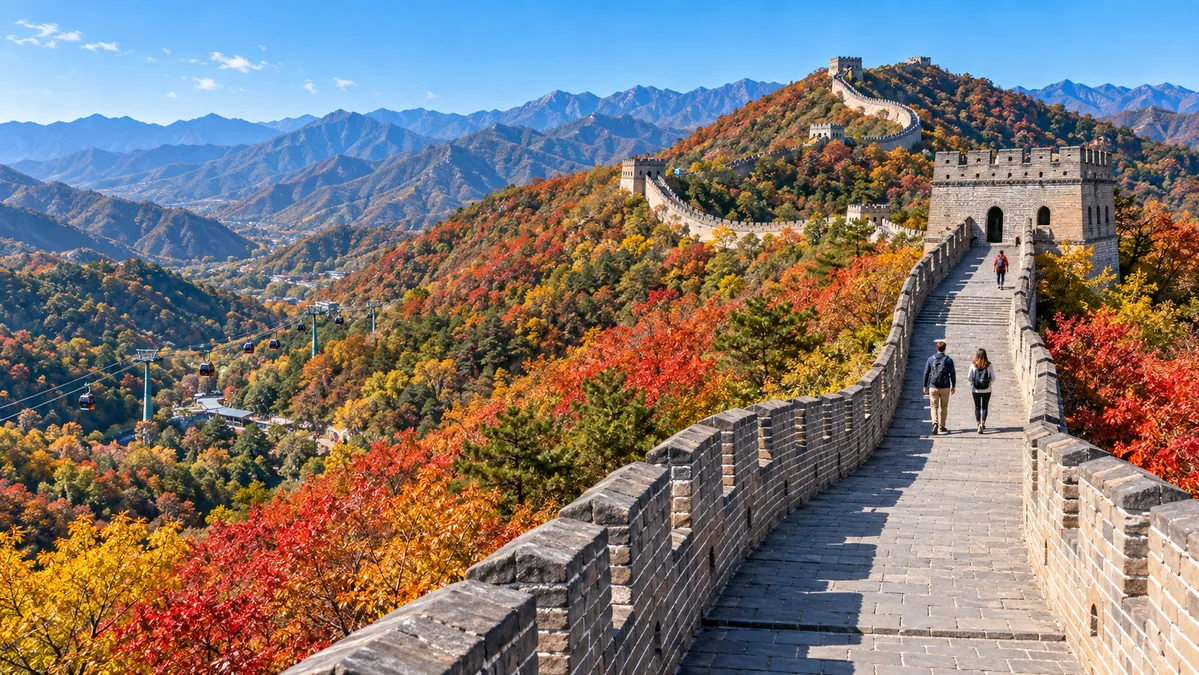
Mutianyu (慕田峪) is our default for a first visit: restored and safe underfoot, far less crowded than Badaling, with a cable car up and a toboggan down. It is about 73 km from the city, open 7:30–18:00 on weekdays and until 18:30 at weekends from 16 March to 15 November, and 8:00–17:30 from 16 November to 15 March, with ticket sales stopping an hour before closing. Admission is 45 yuan; the shuttle bus for the last 3 km to the ticket gate, the cable car, and the chairlift-and-toboggan are all paid separately — and the cable car and the chairlift/toboggan belong to two different companies, so their tickets are not interchangeable. Cable car both ways is the easy choice; chairlift up and toboggan down is the fun one.
Getting there is the real question. By public transport it is bus 916 from Dongzhimen (Lines 2, 13 and the Airport Express) to Huairou and a local bus onward — slow — or a tourist line: the Dongzhimen line leaves at 08:30 and returns at 16:00, the Qianmen line departs between 07:30 and 10:30 and returns between 14:30 and 16:30, with tickets sold on the bus or at the Qianmen centre until the seats are gone. The official Mutianyu transport page lists current departures. Easier for most people is a booked transfer or a small-group Mutianyu day trip on Klook — choose one with round-trip transport and no shopping stops. A DiDi ride out is the fallback; the return is the hard leg, because cars are scarce at the car park late in the day, so arrange a pickup or catch the last tourist bus.
Badaling (八达岭) is the choice if you want the train and no advance booking. Tickets are sold on site with a passport, the windows take foreign bank cards, and you can buy ahead on the official Changcheng Neiwai (长城内外, "Great Wall Inside and Out") WeChat platform. Admission is 40 yuan in peak season and 35 in winter; hours are 6:30–16:30 (7:30–16:00 in winter), about 60 km out, as listed on the city's official Badaling page. High-speed trains run from Beijing North station (Xizhimen, Lines 2, 4 and 13) or Qinghe (Line 13) to Badaling Great Wall station in a little over half an hour; bus 877 from Deshengmen takes about 70 minutes for 12 yuan. The old S2 suburban train no longer reaches the city — its Huangtudian terminus closed in October 2025. Train tickets are real-name, bookable on 12306 with a foreign passport up to 15 days ahead; check 12306 for times and fares (see how to book train tickets for the passport step). The trade-off is crowds: Badaling is the busiest section in the country.
If you are back by early afternoon, 798 Art Zone is the natural add-on — except on a Monday, when most of its galleries close: the zone itself is free to walk, the galleries set their own hours and a few charge. It sits on the northeast side on the way back from Mutianyu (Line 14 to Jiangtai, then a fifteen-minute walk). The Ming Tombs pair with Badaling (bus 872 leaves from the same Deshengmen stop as the 877), but most first-timers should skip them and rest; Day 3 starts early. For Jinshanling, Simatai and the section-by-section comparison, see Beijing day trips.
Day 3: the Temple of Heaven, the Lama Temple and the hutongs
Take Line 5 to Tiantan Dongmen (East Gate of Temple of Heaven on our metro map), exit A, and go early: the park opens at 6:00 in peak season (6:30 in winter), the first hours belong to locals doing tai chi and choir practice, and the halls open at 8:00. Buy the combined ticket, 34 yuan in peak season (28 in winter), which adds the Hall of Prayer for Good Harvests, the Echo Wall and the Circular Mound Altar; the plain park ticket does not include them. It is sold at the gate window with your passport. Two hours is enough. On Mondays the halls are closed although the park is open.
Stay on Line 5 straight north to Yonghegong Lama Temple station, no transfer. Temples first, lanes after: the temples shut by five, and the lanes are at their best at dusk. The Lama Temple (雍和宫, Yōnghégōng), Beijing's big Tibetan Buddhist monastery, costs 25 yuan and is open 9:00–17:00 with last entry at 16:30 from April to October, closing at 16:30 with last entry at 16:00 in winter. Tickets are real-name through the temple's WeChat official account, passport accepted, one per ID per day; without WeChat, ask your hotel to book it, or check at the ticket office on arrival. The Confucius Temple and Imperial College across the lane is the quiet counterpart: 30 yuan, open 9:00–17:00 with last entry at 16:30, closed Mondays. Lunch is easy: Guijie (簋街), the restaurant street, starts one stop south at Beixinqiao.
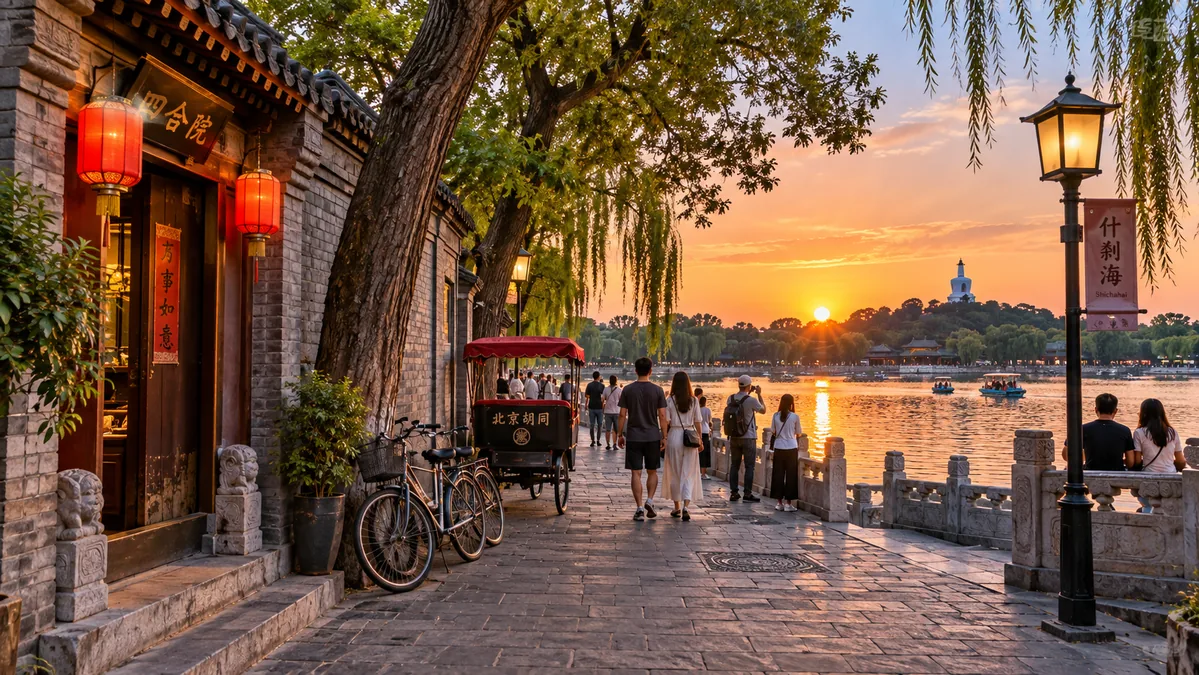
Then the hutongs. Take Line 2 two stops to Gulou Dajie (Gulou Street on our metro map) and Line 8 one stop to Shichahai, which puts you between the Drum and Bell Towers and the lakes; both are a few minutes' walk. Nanluoguxiang is a ten-minute walk south-east: a 786-metre commercial lane, free and open all day like the rest of the district, with quieter side alleys off it. Prince Gong's Mansion is on the west side of the lakes if you booked it: 40 yuan, last entry 16:10. End back on the Houhai lakeshore at dusk; it is the right ending for the trip. Pedicab drivers here quote one price and demand another; agree the total, typed on your phone, before you sit down.
Getting around: lines, fares, last trains and how to pay
The plan sits on five metro lines: Line 1 for Tiananmen; Line 8 for Shichahai, Nanluoguxiang, Wangfujing and Qianmen; Line 6 for Beihai North; Line 5 for the Temple of Heaven and the Lama Temple; and Line 2 for Dongzhimen, Xizhimen and Gulou Dajie. The network with a route planner is on our Beijing metro page. Fares are by distance — 3 yuan for the first 6 km, then 4, 5 or 6 yuan out to 32 km — and children up to 1.3 m ride free with an adult.
The simplest way to pay is to tap a contactless foreign bank card at the gate — Visa and Mastercard since September 2024, JCB and American Express since mid-2025 — using the same card to enter and exit. No app, no registration. On a phone, Alipay issues a Beijing metro code under Transport → Metro once your account is verified and a card is linked; WeChat Pay's own transit code is not accepted here, so WeChat users go through the DiDi or Chengshitong (城市通, "City Pass") mini-programs instead. If you prefer a physical card, BEIJING PASS is sold to foreign passport holders at the airports and major stations — 20 yuan for the card, not refundable, though the balance is; the full payment rundown is in the Beijing guide.
Trains run from roughly 5:00 to 23:00, but each line and station has its own last train, and gates stop selling five minutes before it. Line 1 through Tiananmen finishes on the early side; look up your line on Beijing last-train times before a late dinner. Around public holidays some lines run late, and during state events the Tiananmen-area stations close entirely, announced a few days ahead on the city's official channels. Every station has a bag scanner, and the Tiananmen-area stations run a stricter check, so leave an extra ten minutes there. When the metro doesn't fit — the Wall, a late night in the hutongs — DiDi has an English app that takes international cards. For all of this offline, the WaysChina app carries the Beijing map, last-train times and a simple trip planner.
Variations and timing: 48 hours, kids, rain, winter, crowds
48 hours: keep Day 1 through Jingshan, skip Beihai, walk to Nanluoguxiang station and ride Line 8 south to Tianqiao, exit C, for the last two hours at the Temple of Heaven — in peak season the halls admit until 17:30. Day 2 is Mutianyu with the earliest departure you can manage, then the hutongs at dusk. Drop the Lama Temple.
With kids: one square reservation covers up to 7 people with at most 4 adults, and children of 6 and under or below 1.2 m are entered as a headcount. Children up to 1.3 m ride the metro free. At Mutianyu the shuttle and the cable car are free up to 1.2 m and full price above that; the toboggan is the part they will remember. Shorten the Forbidden City to the central axis and swap the Lama Temple for a boat on Beihai. More in traveling with kids in China.
Rain: the palace is your ticketed day, so go anyway with an umbrella — the courtyards empty out and the galleries are indoors. Move the Wall instead: Mutianyu closes in severe weather, so check the official notices that morning, and an unused Mutianyu ticket can be refunded or changed on the booking platform until midnight on the visit date. Indoor stand-ins are the National Museum (7 days ahead), Prince Gong's Mansion (10 days ahead) and the 798 galleries; none of the museum options works on a Monday. On a wet Monday, the Lama Temple has no closing day and the Temple of Heaven park stays open.
Winter: hours shrink. The Forbidden City closes at 16:30 with last entry at 15:30 from November to March, and Badaling runs 7:30–16:00 in the same months; Mutianyu runs 8:00–17:30 from mid-November to mid-March; and it is dark not long after five. Put the Wall in the morning and expect wind on the ridge that makes it feel far colder than the city; the compensation is fewer people and off-season prices — the palace drops to 40 yuan.
Crowds: for the Forbidden City, take the morning slot and be at the Meridian Gate for the 8:30 opening, or take the afternoon slot and arrive after 14:00 when the groups have left — afternoon tickets are valid from 11:00. At Mutianyu, with a car or a booked transfer, be there for the 7:30 peak-season opening (8:00 from mid-November); on the first Qianmen tourist bus you still arrive ahead of the tour groups. Weekends roughly double the queues, and Chinese public holidays multiply them; during Golden Week this route stops working — see the Golden Week survival guide for the dates and what still runs.
Frequently asked questions
Is 3 days enough for Beijing?
For the imperial axis, one Wall section, and the Temple of Heaven with the hutongs, yes, with an evening to spare. Adding the Summer Palace or 798 makes it tight; each is a half day, and the Summer Palace sits at the far end of Line 4. Four days is comfortable. For a fifth, see Beijing day trips.
The Forbidden City is closed on Monday and that's my Day 1 — what now?
Make Monday your Wall day: neither Mutianyu nor Badaling has a closing day. Run Day 1 on Tuesday and Day 3 on Wednesday, and book the palace for the Tuesday when the window opens seven days ahead. If a public holiday falls on the Monday, the palace opens as normal. The Temple of Heaven's halls, the Confucius Temple and Prince Gong's Mansion follow the same Monday rule, so the swap fixes all of them at once.
Which Great Wall section should I choose, and can I go without a tour?
Mutianyu for the best balance of scenery, restoration and manageable crowds, booked up to 30 days out; Badaling for the train and no advance booking; Jinshanling or Simatai if you want to hike and can give it a full day. Mutianyu and Badaling are doable without a tour — the tourist lines from Dongzhimen and Qianmen go to Mutianyu, and the high-speed train and bus 877 go to Badaling. A tour earns its price when you are three or more, want a hotel pickup, or want two sections in one day. The comparison is in Beijing day trips.
Can I follow this route without speaking Chinese?
Yes. The metro is signed in English, buses announce stops in English, a contactless foreign card pays at the gates, and the Forbidden City has an English booking site and hotline; Badaling runs a Chinese-English service window. The weak spots are the Chinese-only mini-programs for Tiananmen Square and the Lama Temple, and the park platform that needs a mainland phone number — use the ticket windows with your passport, a translation app, or your hotel desk. The setup checklist is in the Beijing guide.
Last updated: September 2026
Read in other languages
Getting to the sights by metro
Forbidden City
World's largest imperial palace, home to 24 Ming and Qing emperors.
- Tian'anmen East
- Tian'anmen West
- Beihai North
Tiananmen Square
World's largest public square. Arrive before sunrise for flag ceremony.
- Tian'anmen East
- Tian'anmen West
- Qianmen
Temple of Heaven
Ming-era imperial complex where emperors prayed for good harvests.
- East Gate of Temple of Heaven
- Tianqiao
- Qiaowan
Summer Palace
Imperial garden with Kunming Lake, Long Corridor, and Marble Boat.
- Beigongmen
- Xiyuan
Lama Temple (Yonghe Temple)
Tibetan Buddhist monastery with an 18m Maitreya statue.
- Yonghegong Lama Temple
- Beixinqiao
Bird's Nest (National Stadium)
2008 Olympic main stadium, lit up at night.
- Olympic Park
- Olympic Sports Center
Water Cube (National Aquatics Center)
2008 Olympic swimming venue, blue bubble facade.
- Olympic Park
- Olympic Sports Center
Olympic Forest Park
Largest urban park in Beijing; great for jogging.
- South Gate of Forest Park
- Olympic Park
798 Art Zone
Contemporary art district in converted Bauhaus factories.
- Gaojiayuan
- Jiangtai
Wangfujing
Beijing's most famous shopping street and night market.
- Wangfujing
- Dengshikou
- Dongdan
Nanluoguxiang
Historic hutong lanes lined with boutique shops and cafes.
- South Luogu Alley
- Shichahai
Houhai (Shichahai)
Lake-side hutong district with bars, rickshaws, and Prince Gong's Mansion.
- Shichahai
- Beihai North
Beihai Park
1000-year-old imperial garden with a lake and White Pagoda.
- Beihai North
- Shichahai
- Tian'anmen West
Jingshan Park
Hilltop park directly north of the Forbidden City — best panoramic view.
- Beihai North
- Shichahai
- South Luogu Alley
Qianmen Street
Restored imperial-era pedestrian street with traditional shops.
- Qianmen
- Zhushikou
- Qiaowan
Sanlitun
Trendy nightlife and shopping district; embassies nearby.
- Tuanjiehu
- Agricultural Exhibition Center
- Dongsi Shitiao
Temple of Confucius & Imperial College
Imperial Confucian temple and academy; quiet alternative to Lama Temple.
- Yonghegong Lama Temple
- Andingmen
Beijing Capital International Airport
Beijing's main international airport (PEK), Terminal 3 designed by Norman Foster.
- Capital Airport Terminal 3
- Capital Airport Terminal 2
Beijing Daxing International Airport
Beijing's second international airport (PKX), Zaha Hadid's six-pier starfish terminal.
- Daxing Airport
Beijing South Railway Station
Major high-speed rail terminus for Beijing–Shanghai and Beijing–Tianjin lines.
- Beijing South Railway
Beijing West Railway Station
Major terminus for Beijing–Guangzhou and Beijing–Kunming high-speed lines.
- Beijing West Railway
Beijing metro: last train times by station
Every line and station, checked by hand — the same data behind our offline route planner.
Get the WaysChina App
Offline guides, currency converter, essential phrases, and more — all in your pocket.

Related Articles

Day Trips from Beijing: Which Great Wall Section, Plus the Ming Tombs, Tianjin and Chengde
Which Great Wall section fits you — Mutianyu, Badaling, Jinshanling or Simatai with Gubei — plus the Ming Tombs,...
Beijing Food Guide: What to Eat, Where to Eat It, and What to Skip
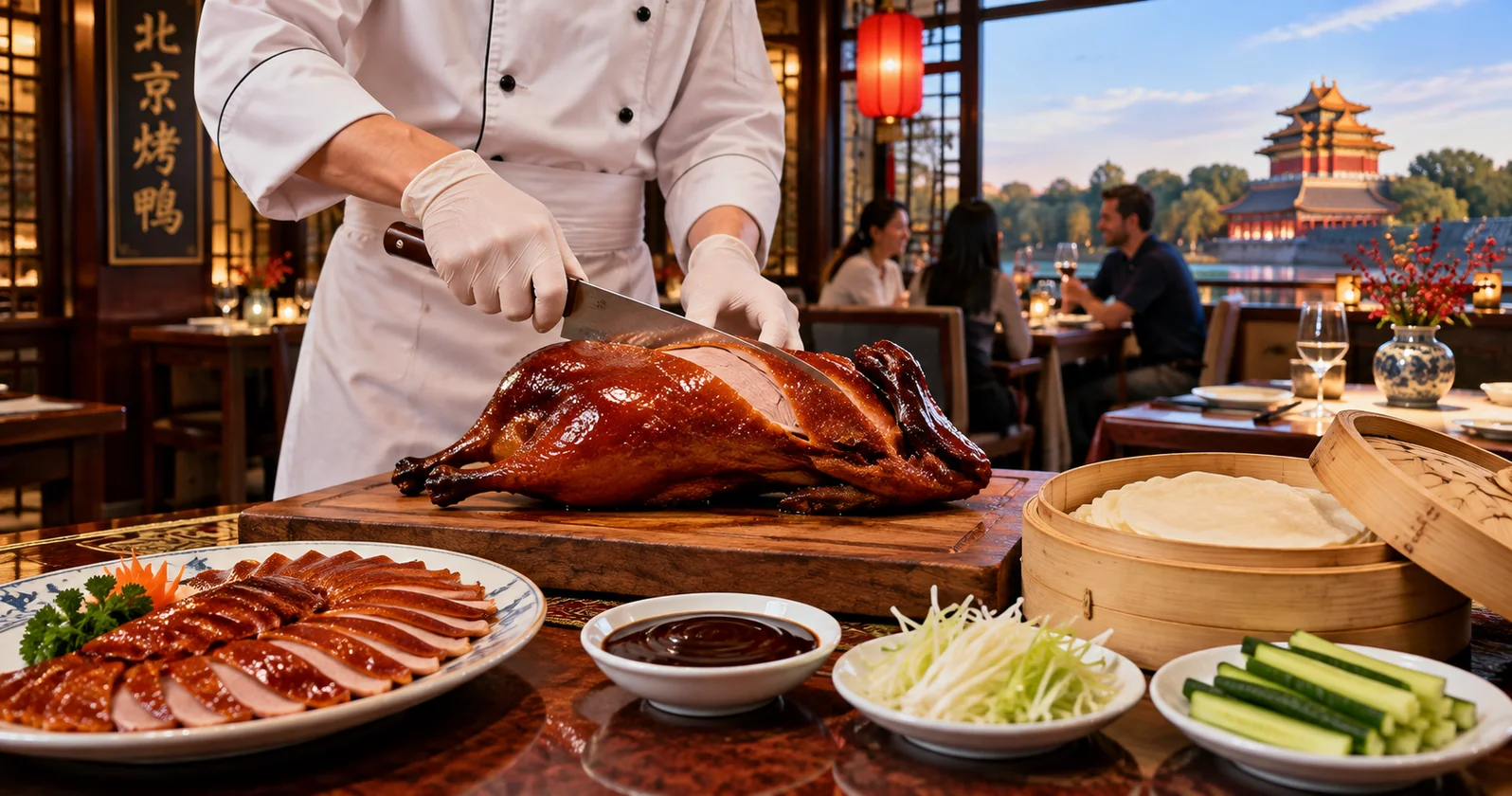
Peking duck the right way, zhajiangmian, copper-pot lamb hotpot and which old-Beijing snacks are worth it, plus...
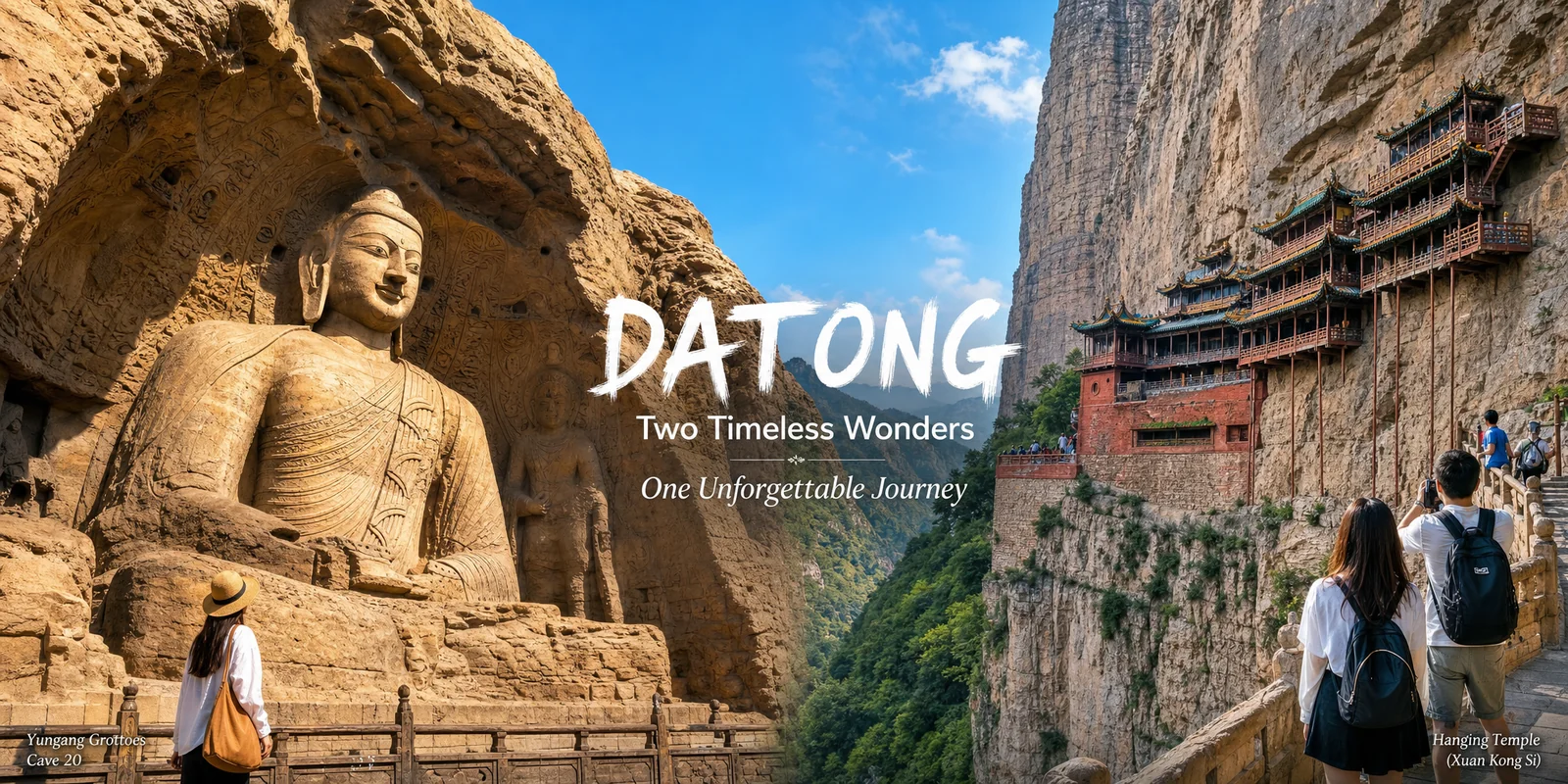
Datong Complete Guide
Datong was the first capital of the Northern Wei dynasty and home to the UNESCO-listed Yungang Grottoes. Here's how...
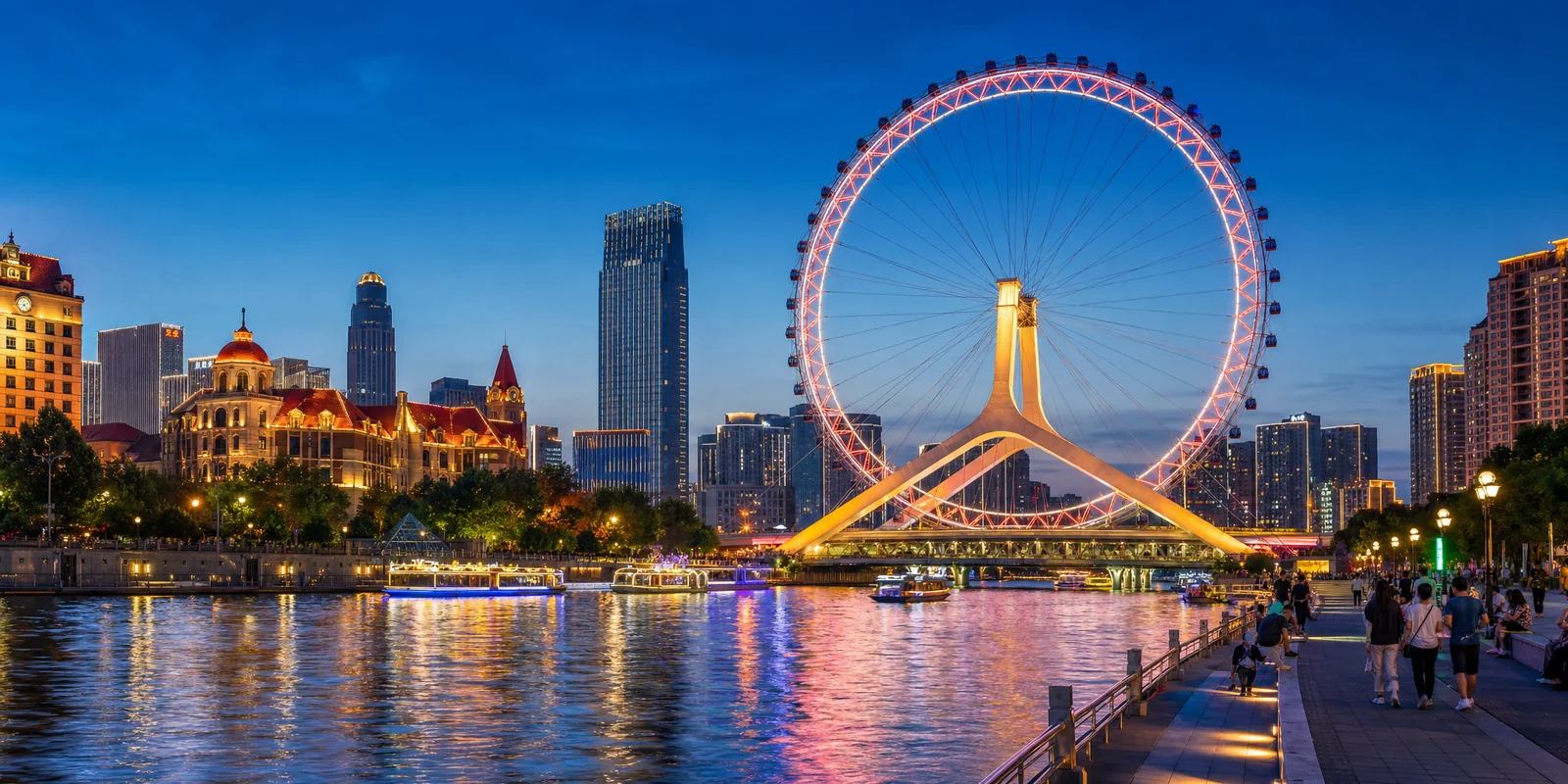
Tianjin Complete Guide
Tianjin sits 30 minutes from Beijing by high-speed rail, with European architecture, a giant Ferris wheel over the...