
This article contains affiliate links. If you make a purchase through these links, we may earn a small commission at no extra cost to you. This helps support our work in creating free travel guides.
Beijing needs more days than most first-time visitors give it, and more planning than other Chinese cities: the Forbidden City sells no same-day tickets, Tiananmen Square itself takes a reservation, and the Great Wall is a full day out of town. The good news is that the hard parts got easier in the last two years — a foreign bank card now taps you straight through the subway gates, most museums have dropped mandatory reservations, and the Forbidden City, the one that matters most, takes a passport on an English page. Here are the decisions in the order you'll make them.
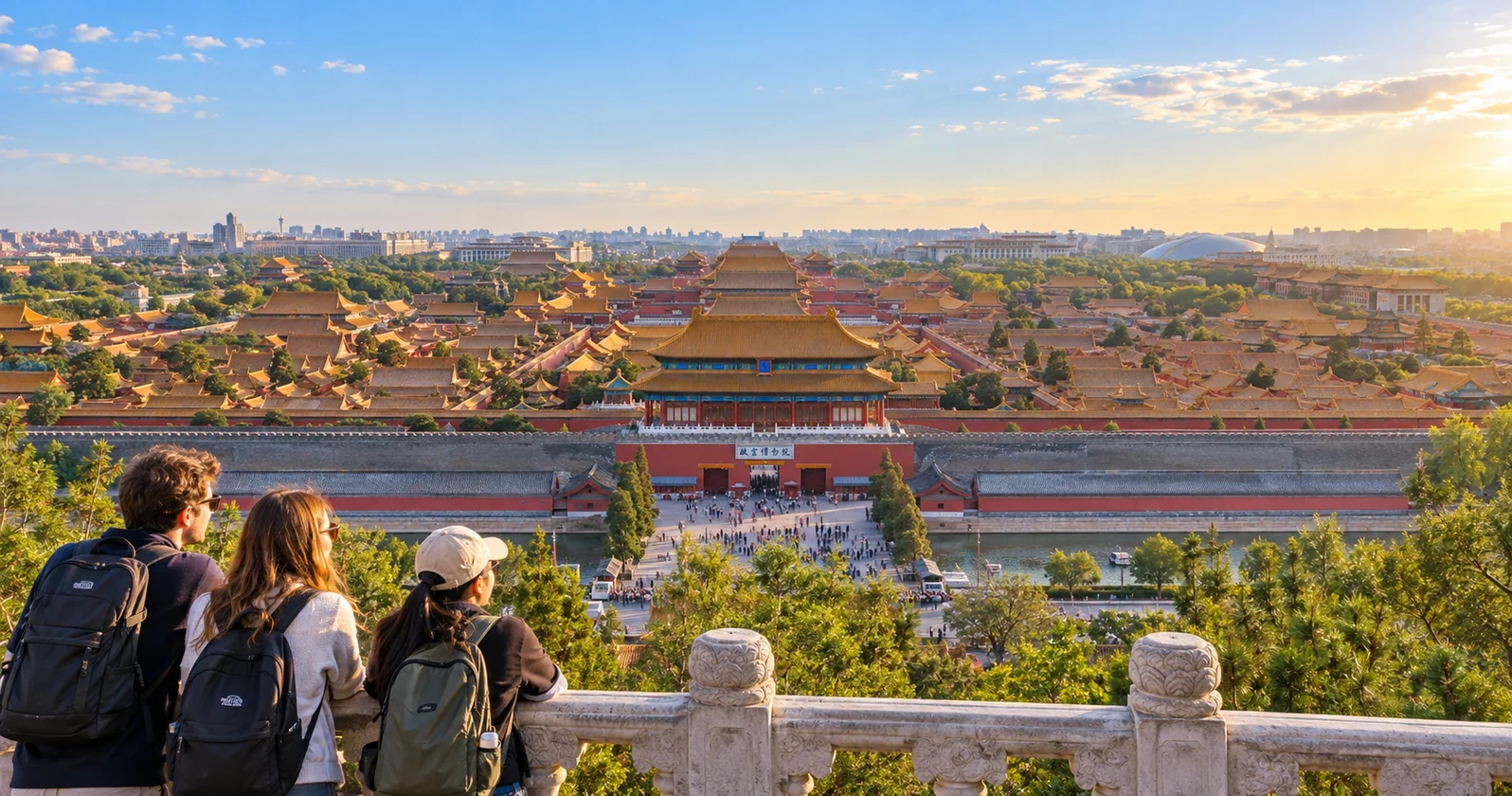
How many days, when to come, and how the city is laid out
Plan four days if you can, three at a minimum, five for a slower pace. The Great Wall takes one of those days by itself — an hour and a half or more each way — so a three-day trip really means two days in the city. Four days lets you add the Summer Palace and a proper hutong afternoon; five adds a museum morning or a second trip out.
Season matters more here than in most of China. Autumn, September to early November, is the best time: dry, clear and comfortable. Spring, April to May, is the other good window, with the occasional dust day when the sky turns yellow-brown for an afternoon. Summer is hot and humid with heavy showers; winter is cold and very dry but usually sunny, with quiet sights and cheaper hotels. In any season, avoid the first week of October and Chinese New Year, when every big sight is at its most crowded — our Golden Week survival guide explains what that looks like.
The city is easy to read once you see the pattern. Everything sits on a north–south central axis with the Forbidden City in the middle and Tiananmen Square directly south of it, and the numbered ring roads run around that core. Inside the 2nd Ring Road is the old walled city: the palace, the temples, the lakes and the hutongs (胡同, hútòng — the old alleyways of courtyard houses). East of it, Chaoyang district (朝阳, Cháoyáng) holds the business district, the embassies and the Sanlitun bar-and-shopping area. To the northwest, Haidian (海淀, Hǎidiàn) is the university district and the way to the Summer Palace.
On getting in: Beijing's two airports, Capital and Daxing, are both among the 65 ports where China's 240-hour visa-free transit applies, so eligible nationalities can fly in without a visa when continuing to a third country. Separately, ordinary-passport holders from 50 countries — including most of Europe, Australia, Japan and South Korea — currently get 30 days visa-free for tourism. Which one covers you is in our visa-free entry and transit guide.
Getting in from the airports
Capital Airport (PEK), northeast of the city, handles most long-haul flights. The Airport Express train is a flat 25 yuan; the last train into town leaves T3 at 22:52 and T2 at 23:10, and the first around 06:20 to 06:40. It stops at Sanyuanqiao (Lines 10 and 12), Dongzhimen (Lines 2 and 13) and Beixinqiao (Line 5). Taxis from the official ranks are metered — 13 yuan for the first 3 km, then 2.3 yuan per km — and you should budget about an hour to the centre, more at rush hour. Late at night the taxi is the sensible choice; at rush hour the train is.
Daxing Airport (PKX) is far to the south. Its Daxing Airport Express is priced by distance — 10, 25 or 35 yuan, the full run to Caoqiao being 35 — and Caoqiao connects to Lines 10 and 19. A taxi from Daxing is a long metered ride into the centre, so take the train unless you land after its 23:00 last departure. Both airport lines take a tapped foreign bank card at the gate, like the rest of the network. Buses, luggage and late arrivals are covered in the Beijing airport guide.
Getting around the city
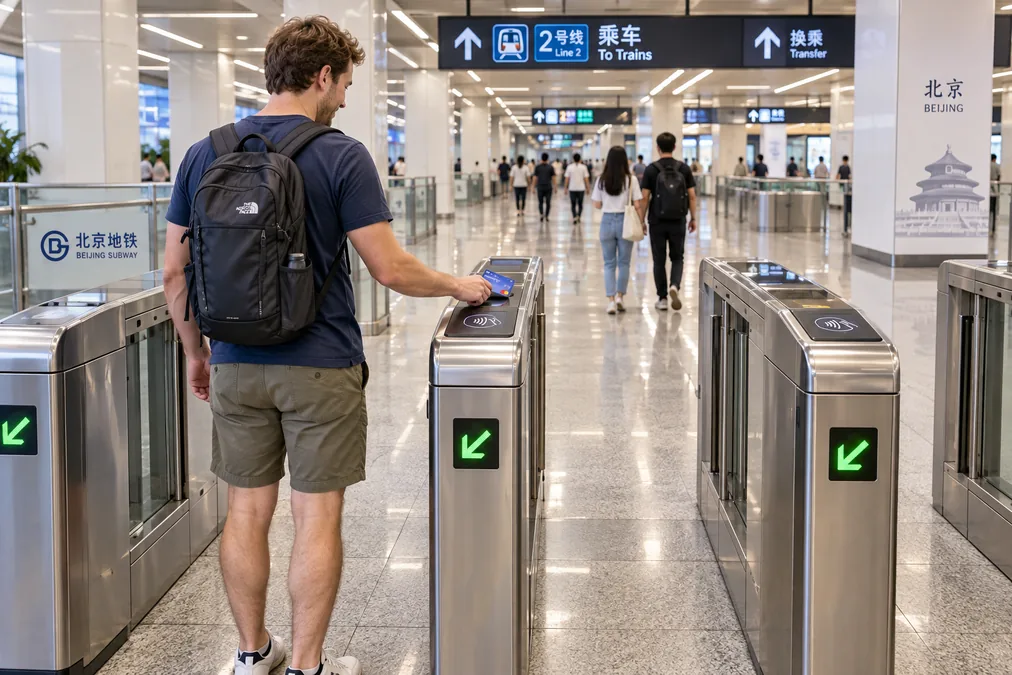
The subway does almost all the work: it reaches every sight in this guide except the Great Wall, it is signed and announced in English, and the payment problem that used to trip up visitors is gone. Since September 2024 you can tap a contactless Visa or Mastercard — physical card or phone wallet — directly on the gate, and since June 2025 JCB and American Express too, at every station on all 29 lines including both airport lines. No app, no ticket; just tap the same card in and out. Fares start at 3 yuan for the first 6 km and rise with distance, so most rides inside the city cost 3 to 6 yuan. The city's English FAQ on subway payment spells out the foreign-card rule.
If your card isn't contactless, the machines and staffed windows at every station sell paper single tickets and take foreign cards as well as cash. If you'd rather scan a code, use Alipay: once registered with a card linked, its Transport → Metro section issues a free Beijing subway code. WeChat Pay's own transit code does not work on the Beijing subway — inside WeChat you'd need the DiDi mini-app, a small app that runs inside WeChat.
Beijing's day passes (1-, 2-, 3-, 5- and 7-day) live only inside the official Yitongxing (亿通行, Yìtōngxíng) app, whose promised international version hasn't launched — for a short visit, skip them and tap your card. The BEIJING PASS, a 20-yuan physical card sold to foreign passport holders at both airports and a few big stations, is worth it only if your card won't tap or you want to ride buses too.
Every station has a security check at the entrance — bags through an X-ray, and knives and large aerosols (over 120 ml) are banned; it takes a minute or two, more around Tiananmen. Last trains are earlier than a city this size suggests: most lines run roughly 05:00 to 23:00, every line and station differs, and ticket sales stop five minutes before the last train. Check your home station before a late dinner — our Beijing last-train page lists every line, and the Beijing metro map and planner works out routes and changes. Around major state events the stations near Tiananmen can close at short notice, always with an official announcement first. the WaysChina app
For door-to-door trips, DiDi is the backup: the English app takes international credit cards, and you type the destination instead of explaining it — setup is in our DiDi guide. Buses cost 2 yuan for the first 10 km, you tap both on and off, and an app ride code gets the same discount as a card. Every route now announces stops in English, but the foreign-card tap is officially confirmed only for rail, so on a bus use a BEIJING PASS. Shared bikes (Meituan, Hello, Qingju) unlock by scanning the code on the bike and register with a phone number and country code; Meituan charges 1.5 yuan per half hour. The apps may also ask for passport verification, so try one near your hotel before you count on bikes for a hutong day.
Where to stay
Choose by subway line and walking distance, not by hotel brand. For a first visit, the Wangfujing–Dongsi area in Dongcheng is the balanced choice: you can walk to the Forbidden City (entry is at the Meridian Gate on the south side), Lines 1, 5, 6 and 8 are all close, and the Wangfujing pedestrian street is open around the clock. Qianmen–Dashilan, just south of Tiananmen Square, is the old-city option with an early start on the square. The hutongs around Shichahai and the Drum Tower are where the courtyard hotels are — the most atmospheric stay in Beijing, with the trade-off that taxis can't reach many doors and you'll walk to Line 8 or 6.
Sanlitun and the central business district (CBD) around Guomao, both in Chaoyang, are for nightlife, restaurants and business; the international chains and most embassies are here, but you'll ride the subway to every historic sight. Haidian only makes sense if the Summer Palace and the universities are your focus. Wherever you land, the hotel registers you with the police at check-in using your passport; if you book a private rental instead, you must register yourself at the local police station within 24 hours — our hotel booking and registration guide explains the rule. Hotels in all these areas are easy to compare on Booking.com.
What to see, and what has to be booked ahead
The half that needs real planning is the imperial center. The Forbidden City sells no same-day tickets: tickets for a given day are released seven days ahead at 20:00, entry is capped at 40,000 a day, each ticket is tied to one ID, and it closes on Mondays. Foreign visitors book on the museum's English ticketing page with a passport number, or e-mail each visitor's name, passport number and date to [email protected] at least one day ahead. You choose a morning or afternoon session, enter only through the Meridian Gate on the south side and leave by the north or east gate; the ticket is 60 yuan from April to October and 40 yuan from November to March. Tiananmen Square is free but also needs a reservation, made 1 to 7 days ahead with a passport in one of four time slots including the dawn flag-raising; the booking runs through Chinese-language mini-programs and the square's own portal, so keep a translation app handy. A Forbidden City or National Museum booking for that day gets you onto the square on its own. The National Museum on the square's east side is free but reservation-only, up to seven days ahead with tickets released at 17:00, and closed on Mondays.
The other half got easier. In June 2024 Beijing dropped mandatory reservations at almost every other sight and museum — you turn up and buy a ticket. The one wrinkle for foreigners is that the online ticket system for the city parks needs a mainland Chinese phone number, so at the Temple of Heaven, the Summer Palace, Beihai and Jingshan you buy at the gate with your passport — the city's 12345 hotline points foreign visitors to that window, and its English park-ticket guide covers the online route. Watch the Monday rule inside those parks: the Temple of Heaven grounds open every day, but the Hall of Prayer, the Echo Wall and the Circular Mound close on Mondays, and at the Summer Palace the Tower of Buddhist Incense, Suzhou Street and the other inner sights do the same. The Lama Temple (雍和宫, Yōnghégōng) is booked with a passport on its official account inside the WeChat app — you need WeChat itself, not just WeChat Pay — so book it before the day rather than counting on a ticket window; it has no closing day. The 798 Art Zone, Nanluoguxiang, the Houhai lakes and Qianmen street are free and open all day.
So: book the Forbidden City at 20:00 seven days before — that ticket also gets you onto the square that day; reserve the square separately only for the dawn flag-raising or a day without a palace ticket. Give Monday to the Great Wall or the hutongs, because that is the day the palace, the National Museum and the inner sights of both big parks are shut. The table below has the current rules and prices for each sight.
| Sight | Ticket | Reservation | Hours & closing day |
|---|---|---|---|
| Forbidden City (Palace Museum) | ¥60 peak / ¥40 off-season | Required, real-name, no walk-up sales: released 20:00 7 days ahead. Foreigners book with a passport on the English site intl.dpm.org.cn or by email; one ticket per ID per day | 08:30–17:00 (Apr–Oct) / 08:30–16:30 (Nov–Mar) · last entry 16:00 / 15:30 · closed Mon (open on public holidays) |
| Tiananmen Square | Free | Required (free): 1–7 days ahead on the official platform, passport accepted. A same-day Forbidden City or National Museum booking also gets you in | 4 booking slots: flag-raising, morning, afternoon, flag-lowering |
| National Museum of China | Free | Required (free): up to 7 days ahead, released 17:00. The notice only says “valid ID” — passport booking unconfirmed | 09:00–17:00 (Nov–May) / 09:00–17:30 (Jun–Oct) · last entry 16:00 / 16:30 · closed Mon (open on public holidays) |
| Temple of Heaven | ¥15 admission / ¥34 combo (peak); ¥10 / ¥28 off-season | Not required: buy at the gate with your passport (online sales need a mainland Chinese mobile number) | 06:00–22:00 (Apr–Oct) / 06:30–22:00 (Nov–Mar) · last entry 21:00 · inner sights 08:00–18:00 / 08:00–17:00 · inner sights closed Mon, park open |
| Summer Palace | ¥30 admission / ¥60 combo (peak); ¥20 / ¥50 off-season | Not required: buy at the gate with your passport (online sales need a mainland Chinese mobile number) | 06:00–20:00 (Apr–Oct) / 06:30–19:00 (Nov–Mar) · last entry 19:00 / 18:00 · inner sights 08:00–18:00 / 08:30–17:00 · inner sights closed Mon, park open |
| Lama Temple (Yonghegong) | adult ¥25 | Required, real-name, on the temple’s WeChat account (passport accepted); one ticket per ID per day | 09:00–17:00 (Apr–Oct) / 09:00–16:30 (Nov–Mar) · last entry 16:30 / 16:00 · no closing day |
| Prince Gong’s Mansion | adult ¥40 | Required, real-name, online from 20:00 10 days ahead (passport accepted); swap for an entry pass at the service desk on the day | 08:30–17:00 · last entry 16:10 · closed Mon (open on public holidays) |
| Chairman Mao Memorial Hall | Free | Required (free): 1–6 days ahead on its WeChat account; passport booking unconfirmed | 08:00–12:00 · closed Mon (open on public holidays) |
| Badaling Great Wall | ¥40 peak / ¥35 off-season | Not required: real-name tickets at the gate (foreign-card POS) or on the official WeChat platform with a passport | 06:30–16:30 (Apr–Oct) / 07:30–16:00 (Nov–Mar) · no closing day |
| Mutianyu Great Wall | adult ¥45; shuttle, cable car and toboggan extra | Required, real-name, up to 30 days ahead on the official site (passport accepted, no ticket swap); one ticket per ID per day | 07:30–18:00 weekdays / 07:30–18:30 weekends (Mar 16–Nov 15); 08:00–17:30 (Nov 16–Mar 15) · last entry 30 min before closing · no closing day |
| Gubei Water Town & Simatai Great Wall | water town ¥120 · Simatai ¥40 · combo ¥150 | Not required: online purchase asks for an ID number (passport unconfirmed); entry by QR scan. Water town and Simatai are ticketed separately | 09:00–22:30 Sun–Thu / 09:00–23:00 Fri–Sat · last entry 22:00 · Simatai day tour 09:00–17:00 |
On the Wall, the answer for most first-time visitors is Mutianyu: restored, less crowded than Badaling, with a cable car up. It runs on tickets tied to the passport you book with (what China calls "real-name" tickets), bookable up to 30 days ahead, and you go straight to the gate with that passport; entry is 45 yuan, with the shuttle bus, cable car and toboggan charged separately. Badaling needs no reservation — real-name tickets are sold on the day at the gate, where the windows take foreign cards — and it is the one section with a proper train: the high-speed line from Beijing North or Qinghe station reaches Badaling Great Wall station in a little over half an hour, or bus 877 from Deshengmen takes about 70 minutes for 12 yuan. The old S2 train from Huangtudian no longer serves the city — that station closed in October 2025. Mutianyu has no train and the bus route needs a change in Huairou, so most visitors take a shuttle or a small-group tour — Klook lists Mutianyu transfers and day tours you can book in English. The section-by-section comparison, including the quieter Jinshanling and Simatai, is in Beijing day trips.
A three-to-four-day shape
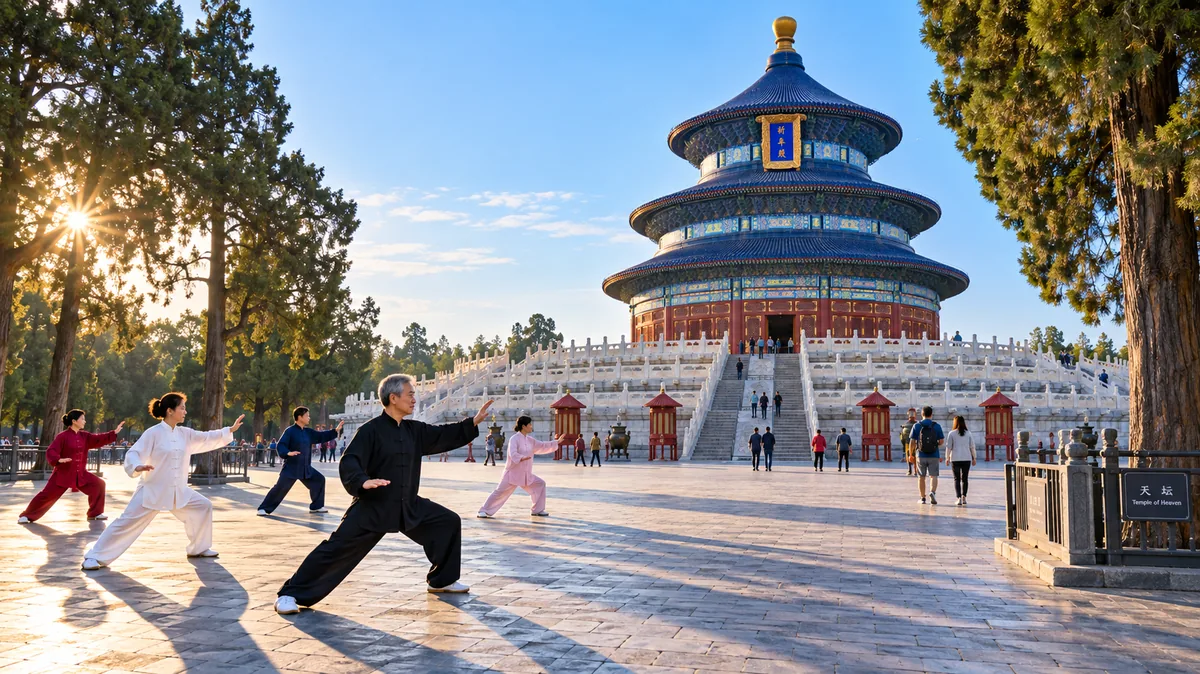
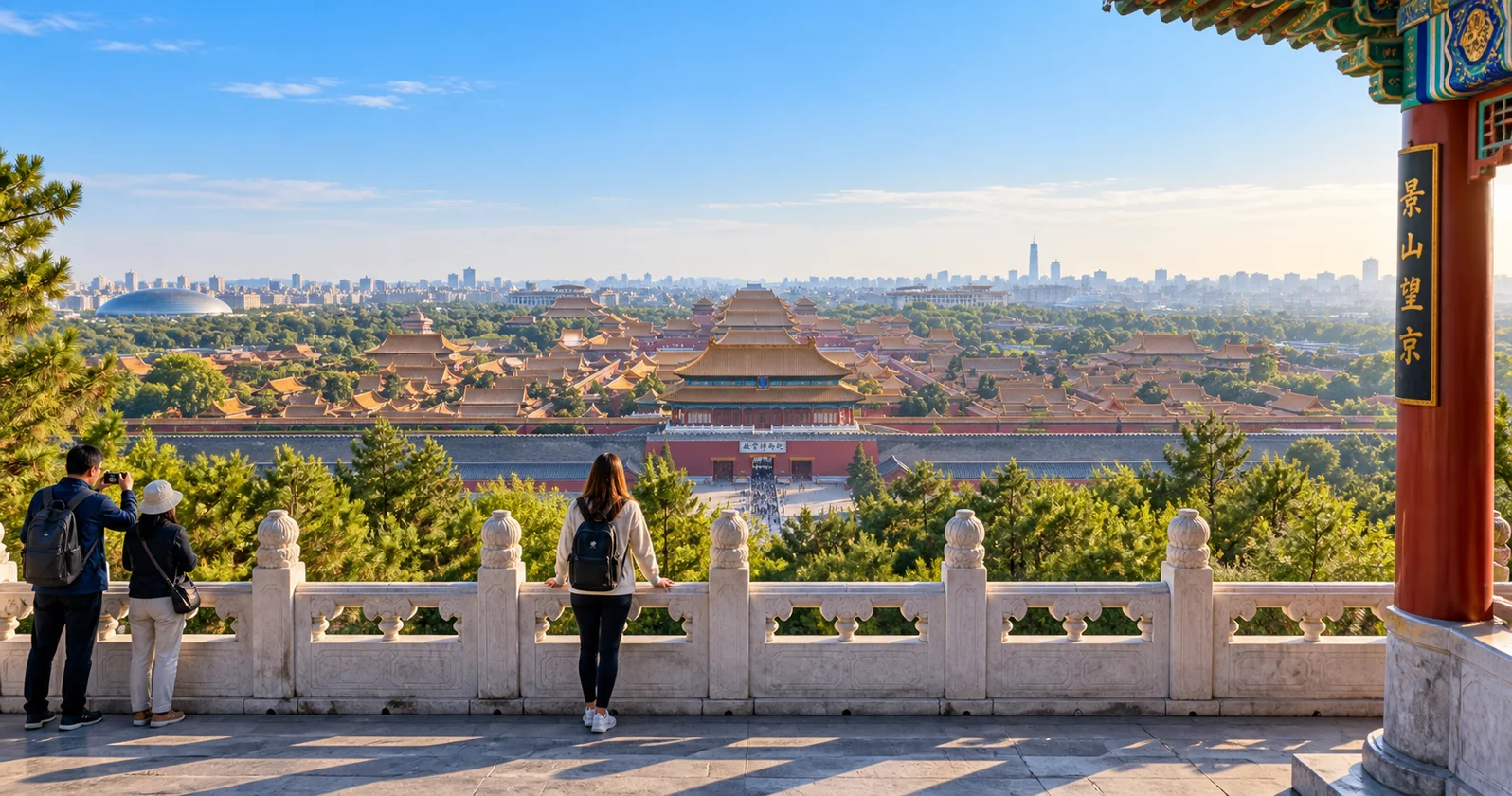
Day one is the imperial axis: Tiananmen Square at opening, the Forbidden City on a morning ticket, Jingshan Park for the view over the roofs, then the hutongs and Houhai for the evening. Day two is the Great Wall. Day three starts early at the Temple of Heaven, when locals are doing tai chi in the park — any day but Monday if you want inside the Hall of Prayer — then Qianmen for lunch and the Lama Temple in the afternoon. Day four is the flexible one: the Summer Palace in the morning and 798 in the afternoon, or a museum and a duck dinner. The hour-by-hour version is our 3-day Beijing itinerary.
What to eat
Peking duck (北京烤鸭, Běijīng kǎoyā) is the dinner to book: the skin and meat come sliced to the table and you wrap them in a thin pancake with cucumber, scallion and sweet bean sauce — reserve, the well-known places fill up. Everyday Beijing food is wheat and lamb: zhajiangmian (炸酱面, noodles with a salty fermented soybean-and-pork sauce), shuan yangrou (涮羊肉, thin-sliced lamb swished in a copper hot pot and dipped in sesame sauce) and jianbing (煎饼, the breakfast crêpe from street carts). One warning on old-Beijing snacks: douzhi (豆汁, a fermented mung-bean drink) is sour and smells strong, and most visitors stop after one sip. Where to eat each of these, and how to order without Chinese, is in the Beijing food guide.
Money and internet
Set up payment before you land. Nearly everything in Beijing is paid by scanning a QR code with Alipay or WeChat Pay, and both link foreign cards, Visa and Mastercard among them — check the supported-card list shown in the app when you add yours, since that list is the current one. Both register with a passport and your own phone number; our Alipay setup guide walks through it. Keep a little cash for the odd stall — how much, and where to get it, is in do you need cash in China.
For data, an eSIM bought before you fly (for example via Airalo) means you land connected, and many travelers find a roaming eSIM also keeps their usual apps working — the comparison with a local SIM is in our China SIM and eSIM guide. If you'll rely on hotel Wi-Fi, sort out a VPN before departure; see the internet and VPN guide.
Out of the city
The Wall choice is covered above. The Ming Tombs lie in the same direction as Badaling and combine well with it: take the Changping Line to Changping Xishankou, then a walk of about 2 km and the park shuttle, or bus 872 from Deshengmen. Tianjin, with its European-era streets and riverfront, is about 30 minutes from Beijing South on intercity trains that run almost like a metro. Chengde's imperial summer resort is now a day trip: from Beijing Chaoyang station the fastest trains to Chengde South take 49 minutes. Train booking with a foreign passport is in how to book train tickets, and every option is ranked in Beijing day trips.
Frequently asked questions
How many days should a first-time visitor spend in Beijing?
Four is the comfortable number. Three works if you accept that the Great Wall takes a whole day and leaves two for the city; five lets you add the Summer Palace at leisure and a museum. Split them as: the imperial center, the Wall, temples and hutongs, then a flexible day.
How far in advance do I need to book the Forbidden City, and how do foreigners do it?
Tickets go on sale seven days before the visit date at 20:00 Beijing time, there are no same-day tickets, and each passport gets one ticket per day. Use the museum's English site with your passport number, or e-mail the names, passport numbers and date to [email protected] at least one calendar day ahead, and bring the same passport to the Meridian Gate. In busy periods tickets go quickly, so set a reminder for 20:00 seven days before. It's closed on Mondays.
What is the best season to visit Beijing?
Autumn — September through early November — with clear skies and mild days. Late April to May is second, with the risk of a dust day or two. Summer is hot, humid and stormy; winter is cold and dry with the fewest crowds and the cheapest hotels. Skip the first week of October and Chinese New Year unless crowds don't bother you.
Can I get around Beijing without speaking Chinese?
Yes, with a little preparation. The subway is fully bilingual — signs, maps, announcements and ticket machines — and every bus route now announces stops in English. The big sights have English signage, and the Forbidden City has an English booking page. Restaurants are the weak spot: away from hotels and the tourist streets expect photo menus and pointing, and a translation app closes the gap. For anything that isn't an emergency, the 12345 hotline answers in English. A few phrases go a long way — see our survival Chinese phrases.
If something goes wrong
Dial 110 for police, 120 for an ambulance and 122 after a traffic accident; the calls are free, though the ambulance ride is not. For anything that isn't an emergency, Beijing's 12345 hotline answers in ten foreign languages, including English, French, German, Spanish, Japanese and Korean. Three hospitals with 24-hour emergency lines for international patients are Peking Union Medical College Hospital's International Medical Services, Beijing United Family and Raffles Hospital Beijing. And because this is the capital, your embassy is here rather than a consulate in another city; addresses and out-of-hours numbers are in our embassy contacts guide, with the full list of numbers in emergency numbers in China.
Last updated: September 2026
Read in other languages
Getting to the sights by metro
Forbidden City
World's largest imperial palace, home to 24 Ming and Qing emperors.
- Tian'anmen East
- Tian'anmen West
- Beihai North
Tiananmen Square
World's largest public square. Arrive before sunrise for flag ceremony.
- Tian'anmen East
- Tian'anmen West
- Qianmen
Temple of Heaven
Ming-era imperial complex where emperors prayed for good harvests.
- East Gate of Temple of Heaven
- Tianqiao
- Qiaowan
Summer Palace
Imperial garden with Kunming Lake, Long Corridor, and Marble Boat.
- Beigongmen
- Xiyuan
Lama Temple (Yonghe Temple)
Tibetan Buddhist monastery with an 18m Maitreya statue.
- Yonghegong Lama Temple
- Beixinqiao
Bird's Nest (National Stadium)
2008 Olympic main stadium, lit up at night.
- Olympic Park
- Olympic Sports Center
Water Cube (National Aquatics Center)
2008 Olympic swimming venue, blue bubble facade.
- Olympic Park
- Olympic Sports Center
Olympic Forest Park
Largest urban park in Beijing; great for jogging.
- South Gate of Forest Park
- Olympic Park
798 Art Zone
Contemporary art district in converted Bauhaus factories.
- Gaojiayuan
- Jiangtai
Wangfujing
Beijing's most famous shopping street and night market.
- Wangfujing
- Dengshikou
- Dongdan
Nanluoguxiang
Historic hutong lanes lined with boutique shops and cafes.
- South Luogu Alley
- Shichahai
Houhai (Shichahai)
Lake-side hutong district with bars, rickshaws, and Prince Gong's Mansion.
- Shichahai
- Beihai North
Beihai Park
1000-year-old imperial garden with a lake and White Pagoda.
- Beihai North
- Shichahai
- Tian'anmen West
Jingshan Park
Hilltop park directly north of the Forbidden City — best panoramic view.
- Beihai North
- Shichahai
- South Luogu Alley
Qianmen Street
Restored imperial-era pedestrian street with traditional shops.
- Qianmen
- Zhushikou
- Qiaowan
Sanlitun
Trendy nightlife and shopping district; embassies nearby.
- Tuanjiehu
- Agricultural Exhibition Center
- Dongsi Shitiao
Temple of Confucius & Imperial College
Imperial Confucian temple and academy; quiet alternative to Lama Temple.
- Yonghegong Lama Temple
- Andingmen
Beijing Capital International Airport
Beijing's main international airport (PEK), Terminal 3 designed by Norman Foster.
- Capital Airport Terminal 3
- Capital Airport Terminal 2
Beijing Daxing International Airport
Beijing's second international airport (PKX), Zaha Hadid's six-pier starfish terminal.
- Daxing Airport
Beijing South Railway Station
Major high-speed rail terminus for Beijing–Shanghai and Beijing–Tianjin lines.
- Beijing South Railway
Beijing West Railway Station
Major terminus for Beijing–Guangzhou and Beijing–Kunming high-speed lines.
- Beijing West Railway
Beijing metro: last train times by station
Every line and station, checked by hand — the same data behind our offline route planner.
Get the WaysChina App
Offline guides, currency converter, essential phrases, and more — all in your pocket.

Related Articles
3 Days in Beijing: A Day-by-Day Itinerary Built Around the Bookings
A three-day Beijing route in metro order — imperial axis, Great Wall, Temple of Heaven and hutongs — with the...

Day Trips from Beijing: Which Great Wall Section, Plus the Ming Tombs, Tianjin and Chengde
Which Great Wall section fits you — Mutianyu, Badaling, Jinshanling or Simatai with Gubei — plus the Ming Tombs,...
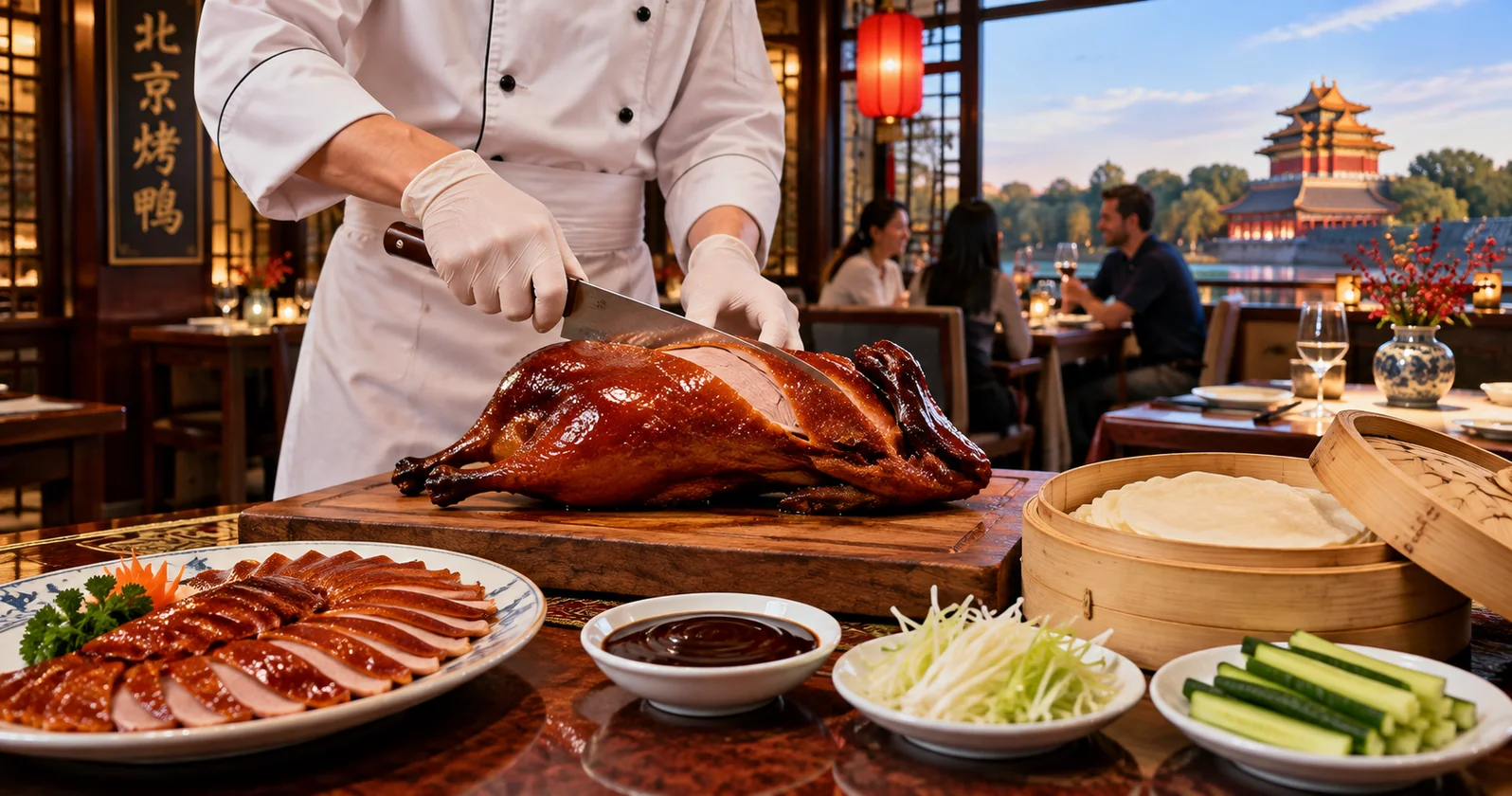
Beijing Food Guide: What to Eat, Where to Eat It, and What to Skip
Peking duck the right way, zhajiangmian, copper-pot lamb hotpot and which old-Beijing snacks are worth it, plus...
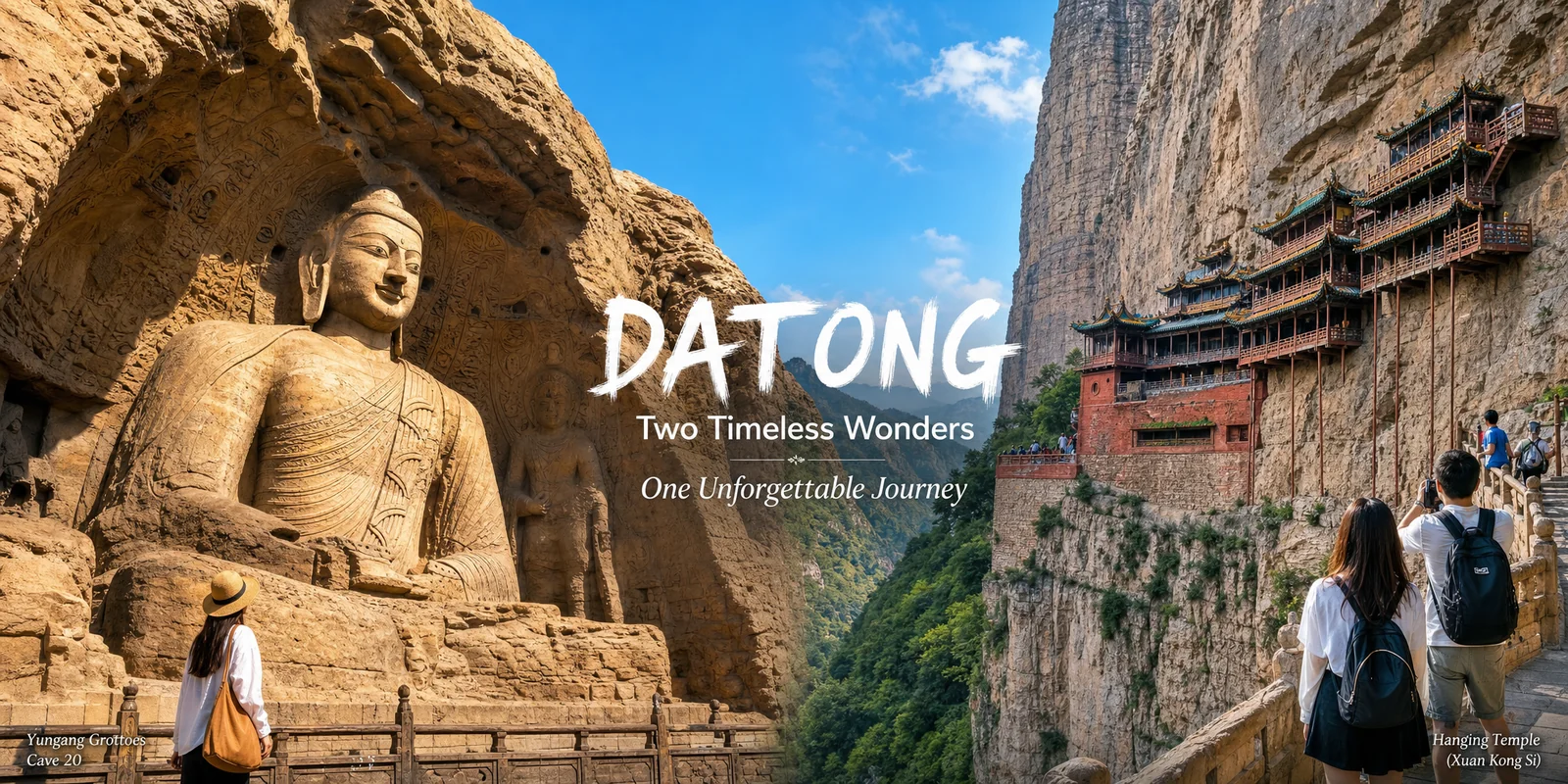
Datong Complete Guide
Datong was the first capital of the Northern Wei dynasty and home to the UNESCO-listed Yungang Grottoes. Here's how...