
This article contains affiliate links. If you make a purchase through these links, we may earn a small commission at no extra cost to you. This helps support our work in creating free travel guides.
China has quietly become one of the best places in the world for luxury travel. The hotel scene rivals anything in Tokyo or Dubai, the high-speed rail network is faster and more comfortable than first-class flying in most countries, and you can book private guides who get you into the Forbidden City before it opens to the public. The catch is that the very best of it isn't always easy to find or book from abroad, and prices vary wildly depending on how you arrange things.
This guide covers what high-end travel in China actually looks like—where to stay, how to move around in comfort, the private experiences worth paying for, and where the money is well spent versus where you're paying for a label.
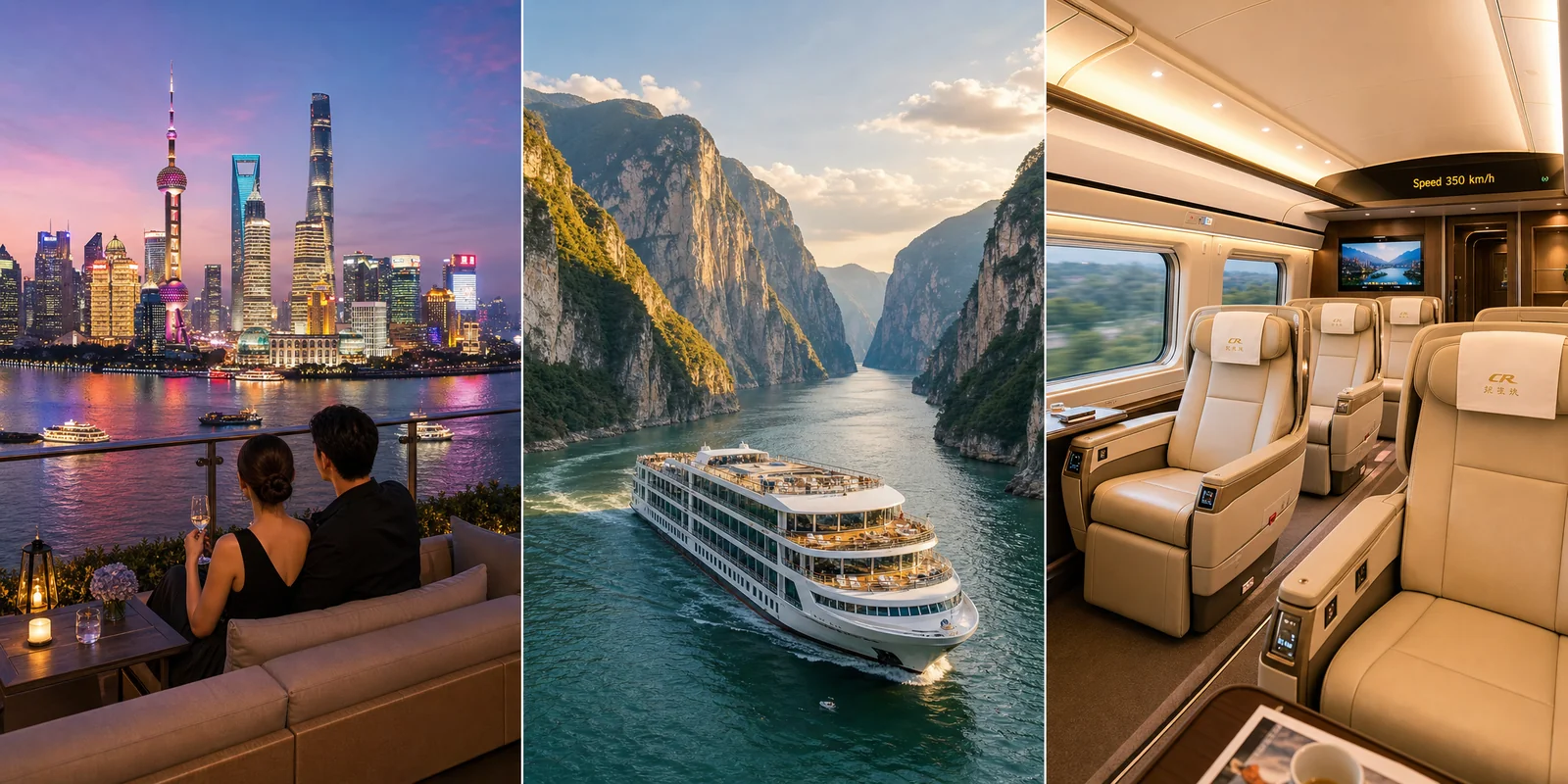
What "Luxury" Means in China
A few things are worth knowing up front, because they shape how you plan.
First, your money goes further here than in most luxury destinations. A suite at a top international hotel in a second-tier city can cost half what the same brand charges in Hong Kong or Singapore. Fine dining, even at Michelin level, is often a fraction of Western prices. The exception is the absolute top tier in Beijing and Shanghai, where rates are comparable to global gateway cities.
Second, the domestic luxury infrastructure—five-star service, private cars, English-speaking guides—is excellent but built around mobile payments and Chinese-language apps. A good travel agency or hotel concierge bridges that gap. If you try to DIY everything, you'll spend a lot of energy on logistics that a fixer would handle in minutes.
Third, "luxury" in the Chinese sense leans toward space, privacy, and service rather than ostentation. The best experiences are often private and quiet: a tea ceremony in a courtyard with no other tourists, a guide who tailors the day to your pace, a chef's table that doesn't appear on any public menu.
Luxury Hotels in China
This is where China genuinely shines. Almost every major international group has flagship properties here, and several have their most ambitious buildings anywhere in the world located in Shanghai or Beijing.
The top tier in Beijing and Shanghai
In Shanghai, the headline properties cluster along the Bund and in Pudong. The Peninsula Shanghai sits on the historic Bund with Art Deco interiors and a fleet of house cars. Across the river, hotels occupying the upper floors of supertall towers—the Park Hyatt and others in the Lujiazui district—give you city views from above the smog line, sometimes literally above the clouds. Bund-facing rooms with a view of the Pudong skyline command a premium and are worth it for at least one night.
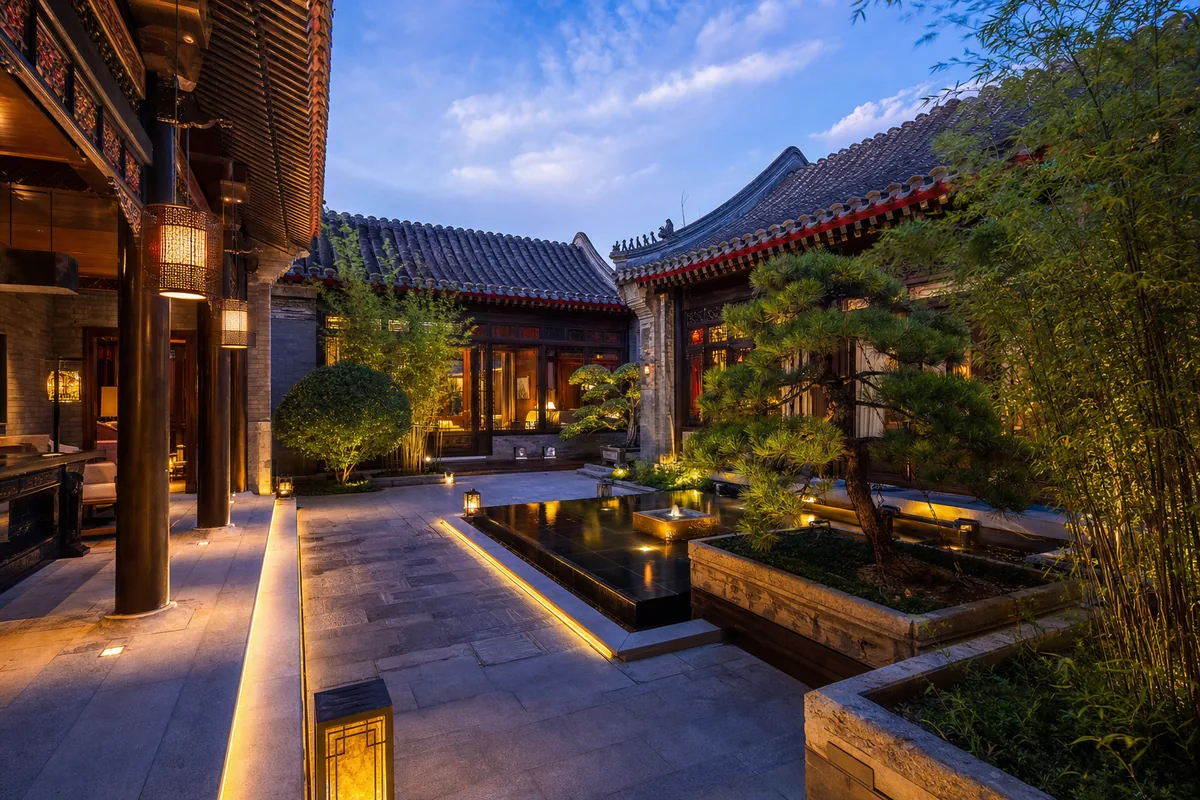
In Beijing, you'll find quieter, more residential luxury. Several properties combine international service with genuine Chinese design—courtyard layouts, traditional materials, and locations close to the Forbidden City and the embassy district. For a deeper look at the city specifically, see our luxury travel guide to Beijing.
Destination resorts
Beyond the big cities, the resort scene has exploded. Aman, Banyan Tree, Six Senses, and Alila all operate properties in places chosen for scenery and seclusion:
- Hangzhou and the West Lake area — resorts built around tea plantations and classical gardens, an easy 45-minute train from Shanghai.
- Lijiang and Shangri-La (Yunnan) — mountain lodges with Naxi and Tibetan design, often at altitude.
- Sanya (Hainan) — China's tropical beach destination, with a dense cluster of beachfront five-stars along Haitang Bay.
- Guilin and Yangshuo — riverside resorts among the karst peaks.
For booking, the major international platforms cover most of these properties and often have better cancellation terms than booking direct from abroad. You can compare and reserve luxury hotels across China through Booking Com Hotel, which lists most of the international flagships and resorts mentioned here.
For a curated list of standout properties nationwide, our luxury hotels guide goes into more detail by city and region.
Private Tours and Guides
This is the single best upgrade for a high-end China trip, and the one most travelers underestimate.
A private guide does far more than recite history. A good one handles ticketing (many top sites now require advance online booking through Chinese platforms that are awkward for foreigners), arranges timed entry to skip the worst crowds, translates at restaurants and shops, and adapts the day on the fly. At major sites like the Forbidden City, the Terracotta Army, or the Great Wall, the difference between going alone and going with a sharp private guide is enormous.
What private touring typically includes
- A licensed English-speaking guide for the day
- A private car with driver (you're not herded onto a bus)
- Pre-arranged tickets and timed entry
- Flexibility on pace, lunch spots, and how long you linger
- Optional add-ons: early access, after-hours visits, specialist guides (art, food, architecture)
For multi-city luxury itineraries with private guiding throughout, established operators like China Highlights build custom trips that handle hotels, trains, guides, and transfers as one package. This is the path of least resistance if you want a seamless high-end trip without managing a dozen separate bookings.
First-Class Train Travel
China's high-speed rail (高铁, gāotiě) is one of the great pleasures of traveling here, and the premium classes make long journeys genuinely enjoyable. On most routes, the train beats flying once you account for airport transfers and security—and it's far more comfortable.
There are three classes on most high-speed trains, and the names can be confusing:
| Class | What you get | Best for |
|---|---|---|
| Second Class (二等座) | 3+2 seating, perfectly comfortable, the standard everyone uses | Short hops, value |
| First Class (一等座) | 2+2 seating, wider seats, more legroom, quieter car | Most travelers wanting extra comfort |
| Business Class (商务座) | Lie-flat or reclining seats, 2+1 layout, lounge access at some stations, meal service, the most space | Long journeys, the genuine premium experience |
Despite the name, Business Class is the top tier—it's the equivalent of international business or first class on a plane, with seats that recline nearly flat on the newest trains. On a route like Beijing to Shanghai (about 4.5 hours), Business Class is a wonderful way to travel: you board minutes before departure, settle into a wide seat, and watch the country roll past at 350 km/h.
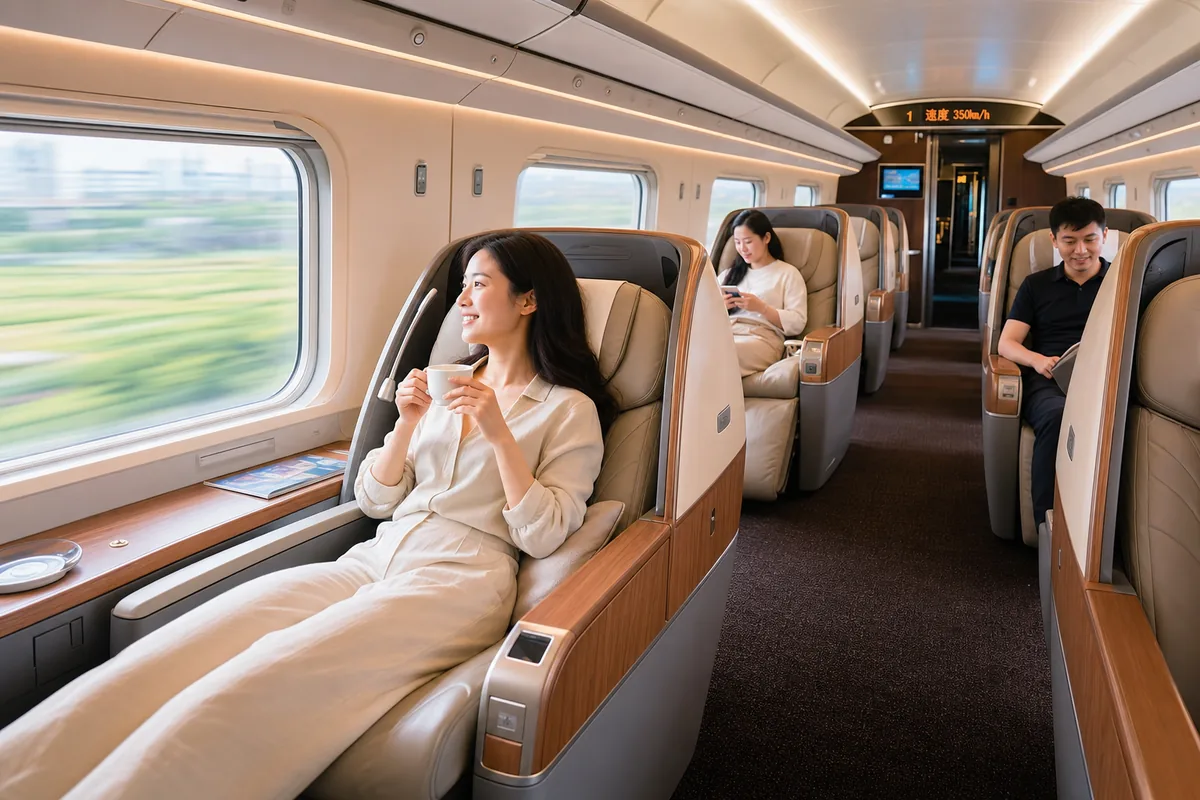
Booking is easy through international platforms that handle the payment and language for you. You can reserve high-speed train tickets, including Business Class seats, through Trip Com Train with an English interface and your home credit card. For the mechanics of seat classes and the official system, see our guides on seat classes explained and how to book train tickets.
Yangtze River Luxury Cruises
A Yangtze cruise is the classic slow-luxury experience in China, and the top ships are genuinely excellent. The standard route runs between Chongqing and Yichang, passing through the Three Gorges—dramatic cliff scenery where the river narrows between mountains. Most cruises last three to four nights.
The premium operators—Century Cruises and Victoria Cruises among them—run ships with all-balcony suites, multiple restaurants, spas, and small enough passenger counts that service stays personal. Downstream (Chongqing to Yichang) is faster and slightly cheaper; upstream takes longer because you're sailing against the current.
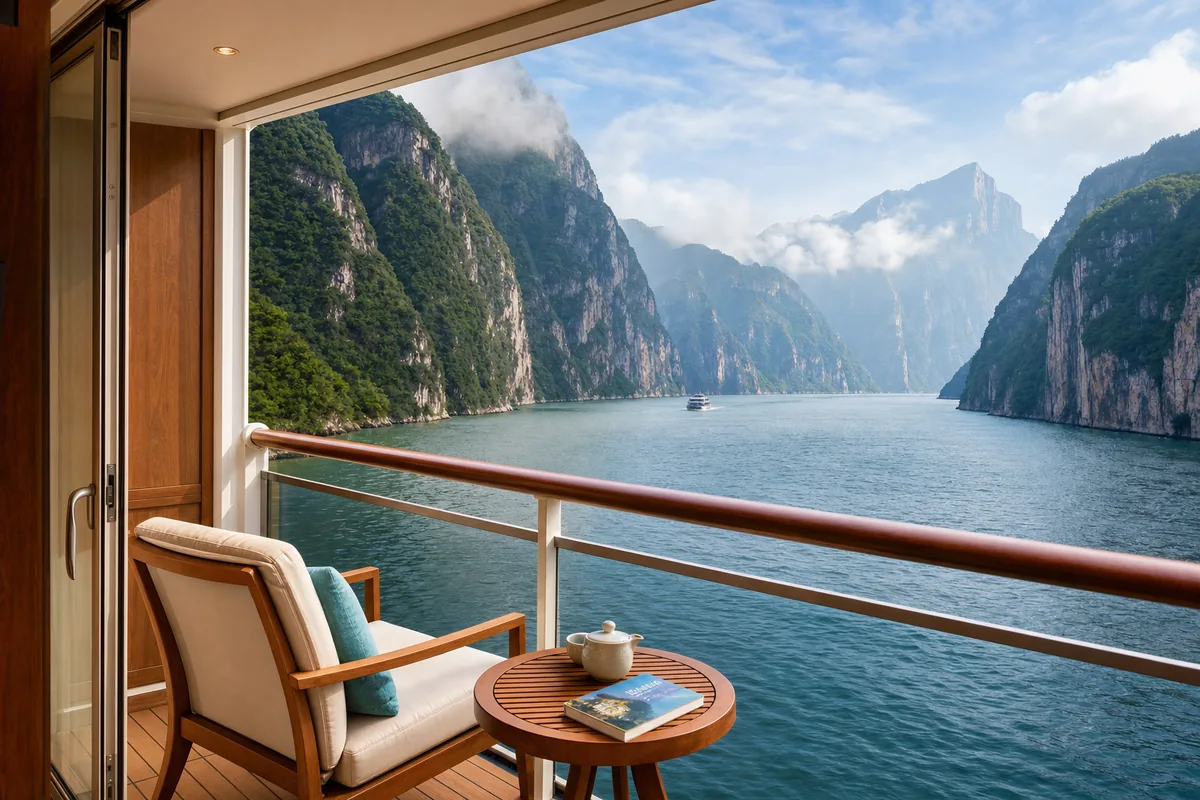
What makes the luxury versions worth it: larger suites with private balconies facing the gorges, English-speaking guides for shore excursions to sites like the Shibaozhai temple and the smaller Three Gorges tributaries, and far better food than the budget ships. The scenery is the same from any deck, but the comfort difference is significant over four days.
Michelin and Fine Dining
China's fine-dining scene has matured fast. The Michelin Guide now covers Shanghai, Beijing, Guangzhou, Chengdu, and a handful of other cities, and the range runs from temples of classical Cantonese cooking to ambitious modern Chinese tasting menus.
A few things to know:
- Book ahead. The best tables—especially chef's tables and tasting-menu restaurants—fill up days or weeks in advance. Your hotel concierge can usually secure reservations that are hard to get yourself.
- Value is remarkable. A multi-course tasting menu at a one- or two-star restaurant often costs far less than the equivalent in Europe or the US.
- Regional depth. Don't fixate only on the starred lists. Some of the best meals are at high-end specialists in a single regional cuisine—Huaiyang, Cantonese dim sum, Sichuan banquet cooking.
If you have dietary needs, fine-dining kitchens accommodate them better than most places, but communicate clearly in advance. Our guides on vegetarian and vegan dining and halal food in China cover the practical phrases and considerations.
VIP Experiences Worth Booking
Beyond hotels and dining, a handful of private experiences are where luxury travel in China gets memorable:
- After-hours or early-access site visits — some museums and palaces can be arranged privately through high-end operators.
- Private tea ceremonies and calligraphy sessions with masters, in proper settings rather than tourist shops. See our Chinese tea ceremony guide.
- Private boat on West Lake or the Li River at dawn, before the day boats launch.
- Helicopter or private car transfers in cities where traffic eats your time.
- Personal shopping with a guide who knows the legitimate antique and silk dealers from the tourist traps.
Sample high-end itinerary
A classic two-week luxury circuit might look like this:
| Days | Destination | Highlights |
|---|---|---|
| 1–3 | Beijing | Private Forbidden City and Great Wall, courtyard hotel |
| 4–5 | Xi'an | Business Class train, private Terracotta Army visit |
| 6–9 | Yangtze cruise | Chongqing to Yichang, all-suite ship |
| 10–11 | Shanghai | Bund-view hotel, Michelin dining |
| 12–14 | Hangzhou or Guilin | Resort stay, private scenery tours |
For more route ideas you can adapt to a luxury budget, see the 2-week China adventure and the Beijing–Xi'an–Shanghai classic route.
Where the Money Is Well Spent
After arranging a lot of these trips, here's our honest take on priorities:
- Worth it: Private guides (transforms every day), Business Class on long train routes, one or two genuinely special hotels rather than five-star everywhere, a good Yangtze suite if you're cruising.
- Optional: Helicopter transfers, the absolute top suite category at every hotel, branded luxury that costs the same as it would anywhere.
- Often unnecessary: Paying a premium for English-only "international" tour packages when a quality private operator costs similar and delivers more.
Practical Notes for High-End Travelers
A few things that catch even seasoned luxury travelers off guard:
- Payments: Set up mobile payment even if your hotels take cards. Concierges can help, but it's smoother to arrive ready.
- Connectivity: Many global apps and sites are blocked. Sort out a VPN and a local SIM or eSIM before arrival—see our internet and VPN guide.
- Tipping: Not customary in China, even at the high end. Some international hotels and tour operators have adjusted to it, but you're not obligated. See tipping culture in China.
- Visas: Confirm your entry route early; some travelers qualify for visa-free transit. Check the latest rules well before booking.
According to the National Immigration Administration, entry policies including transit visa-free arrangements are updated periodically, so verify current requirements before you travel. For information on UNESCO-listed sites that anchor many luxury itineraries, the UNESCO World Heritage Centre maintains official listings.
Common Questions
Is luxury travel in China expensive?
Relative to luxury elsewhere, often less than you'd expect. Hotels and dining offer strong value outside the very top tier in Beijing and Shanghai. Private guiding and Business Class rail are reasonably priced for what you get. The biggest variable is how you book—DIY can be cheaper but more work; a full-service operator costs more but removes all friction.
Do I need a private guide for the whole trip?
Not necessarily. Many travelers use private guides for the major sites (Great Wall, Terracotta Army, Forbidden City) and explore cities independently in between. This balances cost and convenience well.
What's the best time of year for a luxury trip?
Spring (April–May) and autumn (September–October) have the best weather and clearest skies, but also the highest demand and rates. Avoid the Golden Week and Chinese New Year holidays for crowds. See best time to visit China.
Can luxury hotels and restaurants handle English?
Yes—five-star hotels and Michelin-level restaurants have English-speaking staff. The gap is in transport, ticketing, and smaller venues, which is exactly where a guide or concierge earns their keep.
Summary
A high-end trip through China rewards good planning more than a big budget. The hotels are world-class and often better value than their global counterparts. A private guide is the single best upgrade you can make. Business Class on the high-speed train and a suite on a Yangtze cruise turn travel days into highlights rather than chores. And the dining—from Michelin tasting menus to private banquets—is one of the country's quiet luxuries.
Start by deciding your cities and the one or two experiences you most want, then build the trip around those. Set up mobile payments and connectivity before you fly, confirm current visa and booking rules, and consider a full-service operator if you'd rather not manage the logistics. For planning metro routes and day-by-day itineraries across major cities, the WaysChina app has offline metro maps and a built-in trip planner.
Last updated: June 2026
Read in other languages
Last train times for 10 Chinese metro systems
Every line and station, checked by hand — the same data behind our offline route planner.
Get the WaysChina App
Offline guides, currency converter, essential phrases, and more — all in your pocket.

Related Articles
Accessible Travel in China
An honest look at wheelchair travel in China: what works, what doesn't, and how to plan around the gaps. Covers...
Business Travel in China
A practical guide to business travel in China: visas, etiquette for meetings and dinners, business card customs,...
Couples & Honeymoon Travel in China
A practical guide to romantic travel in China — where to go for couples and honeymoons, how to plan the route, and...
Digital Nomad Guide to China
Working remotely from China is very doable once you sort out three things: your visa, your internet setup, and your...