
This article contains affiliate links. If you make a purchase through these links, we may earn a small commission at no extra cost to you. This helps support our work in creating free travel guides.
Chinese martial arts (武术, wǔshù — often called kung fu in English) cover hundreds of styles, but for most travelers the experience comes down to three things: watching a high-energy performance, taking a short hands-on class, or making the trip to Shaolin Temple where the legend started. All three are easy to arrange, and you don't need any prior training. This guide covers where to go, what it costs, how to get there, and what to expect — whether you have one evening in Beijing or a few days to spend near Henan's Song Mountain.
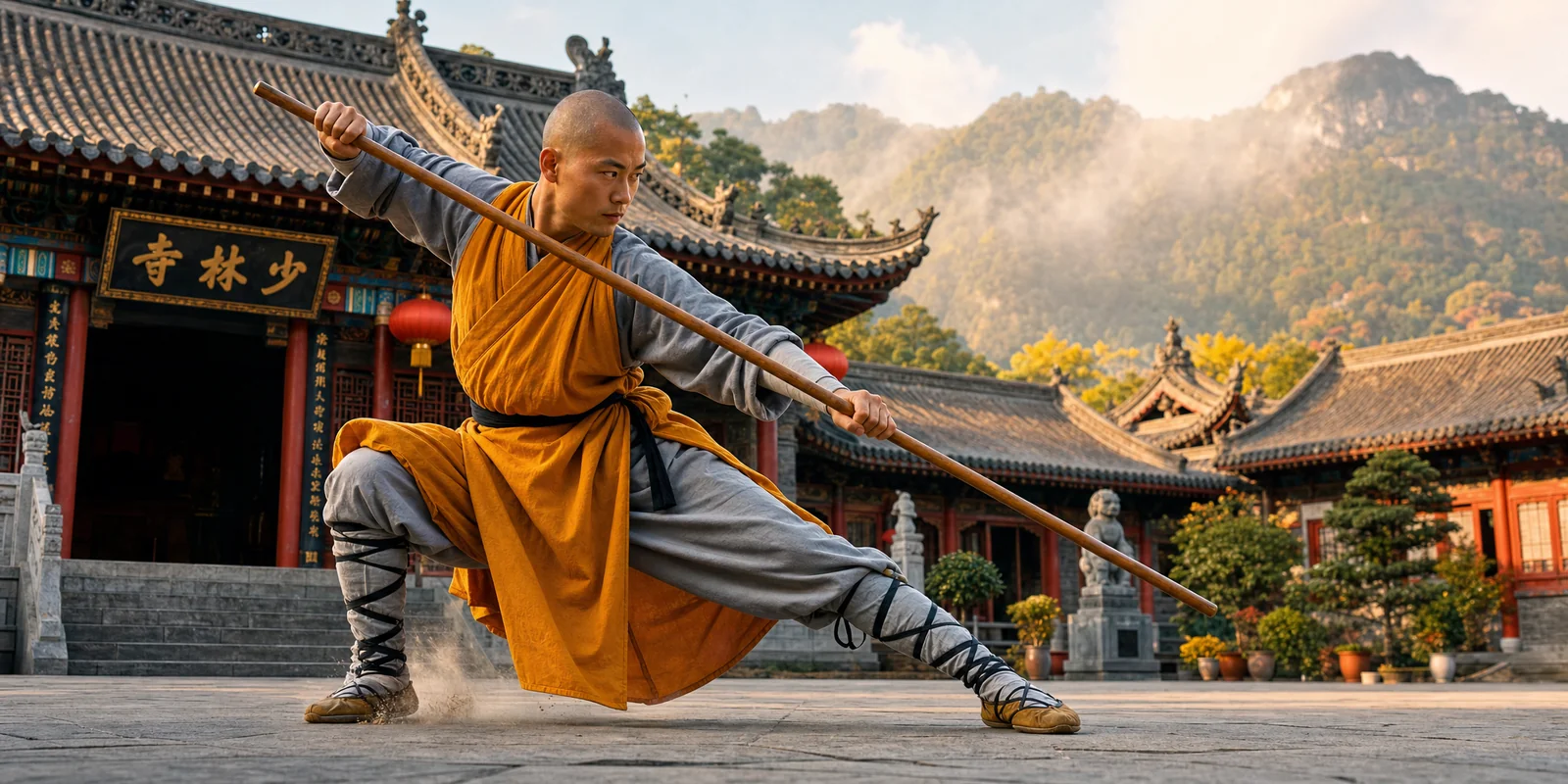
A Quick Background: What "Kung Fu" Actually Means
The word most foreigners use — kung fu (功夫, gōngfu) — literally refers to skill achieved through hard work over time, not just fighting. In China the broader term is wǔshù. Within that umbrella sit very different traditions:
- Shaolin kung fu — the fast, powerful, acrobatic style associated with the Buddhist monks of Shaolin Temple in Henan. It was added to China's first national list of intangible cultural heritage in 2006.
- Tai chi (太极拳, tàijíquán) — slow, flowing movements practiced for health and balance. It originated in Chenjiagou village in Henan in the mid-17th century and was inscribed on UNESCO's Representative List of the Intangible Cultural Heritage of Humanity in 2020.
- Wudang martial arts — the Daoist internal styles from Wudang Mountain in Hubei, also on China's national heritage list since 2006.
You can confirm tai chi's UNESCO status directly on the UNESCO intangible heritage list for China. Knowing the difference helps you pick the right experience: Shaolin and Wudang for the dramatic stuff, tai chi if you want something gentle you can actually do.
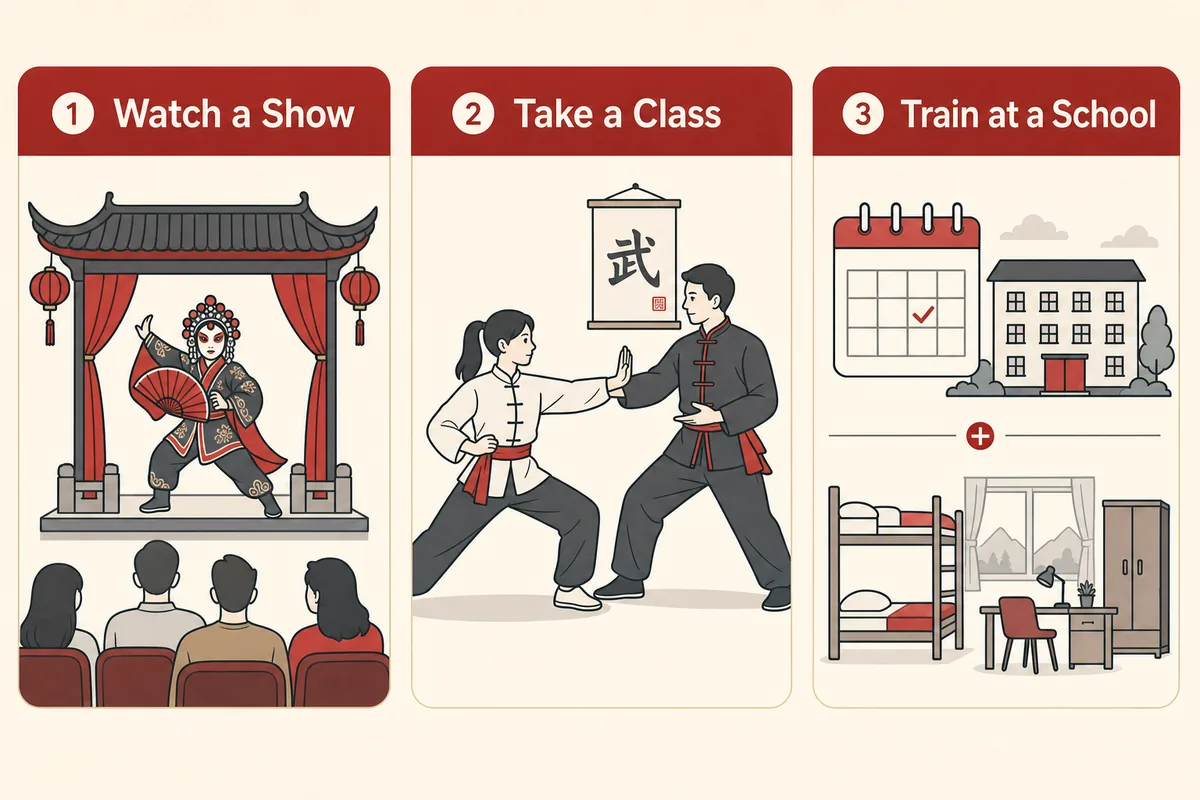
Three Ways to Experience Kung Fu
1. Watch a Show
The easiest option, and the one most short-stay visitors choose. Professional troupes perform choreographed routines — flips, weapons, board-breaking, comedic monk-training storylines — in proper theaters. No participation required, English-friendly, and great for kids.
2. Take a Class
Many parks, studios, and tourist sites offer short sessions (30 minutes to a couple of hours) where an instructor walks you through basic stances or a simplified tai chi form. These are designed for complete beginners and tourists, not serious students.
3. Train at a School
For travelers with weeks or months to spare, full-time martial arts schools near Shaolin and on Wudang Mountain accept foreigners for immersive training that includes lodging and meals. This is a real commitment — typically several hours of training a day.
Shaolin Temple: The Source
Shaolin Temple (少林寺, Shàolínsì) sits in the Songshan Shaolin Scenic Area in Dengfeng, Henan Province — about 66km from Zhengzhou, 49km from Luoyang, and 13km from Dengfeng town. This is the birthplace of Shaolin kung fu and Chan (Zen) Buddhism, and it's still a working monastery as well as a major tourist site.
Tickets and Opening Hours
The full adult ticket for the scenic area has been 80 RMB per person (reduced from 100 RMB back in 2018). Discounts apply: visitors over 60 enter free with ID; full-time students up to undergraduate level and under-18s get roughly half price (around 40 RMB). In the low season (December to February) the ticket has been discounted to around 60 RMB.
Opening hours run roughly 7:30–17:30/18:00 in peak season (March–November) and 8:00–17:00/17:30 in low season (December–February). Note that the active monastery area often closes to visitors after around 16:00, so don't arrive too late in the day.
The Kung Fu Performance
The performance at the Shaolin Wushu Hall is included in your ticket — you don't pay extra. Shows run several times a day; commonly listed times are 10:00, 11:00, 14:30, and 15:30, with each show lasting about 30 minutes. Times shift with the season and different sources list slightly different schedules, so check the day's posted times when you arrive. The hall is where you'll see the famous feats: spear-balancing on the throat, fingertip handstands, kids running through forms.
Getting There
| From | How | Cost & Time |
|---|---|---|
| Zhengzhou | Tourist bus from the long-distance station opposite Zhengzhou Railway Station | ~25–35 RMB, 1.5–2 hours; roughly hourly, 07:00–17:00 |
| Luoyang | Direct tourist bus from the station east of Luoyang Railway Station | ~18–30 RMB, ~2 hours; roughly every 30 min, 06:30–18:00 |
| High-speed rail | Train to Songshan Station, then taxi ~15 min | Taxi ~20 RMB |

The Evening Show: Zen Shaolin Music Ritual
If you stay overnight near Dengfeng, the large outdoor spectacle Zen Shaolin Music Ritual (《禅宗少林·音乐大典》) is staged in the Daixian Valley using the mountainside as a natural backdrop. Tickets have ranged from 239 RMB (B zone) to 279 RMB (A zone), with VIP options higher. Performances usually start around 20:00–20:15 and last about 65 minutes, with seating from 19:45. The show is seasonal — roughly March to November — and cancels in bad weather, so confirm dates and book ahead. The ticket hotline (+86-371-62809111 / +86-371-62809222) handles foreign-language inquiries.
Kung Fu Shows in Beijing and Shanghai
If you're not heading to Henan, the big cities have you covered. In Beijing, the long-running Legend of Kung Fu show plays at the Red Theatre (红剧场) at 44 Xingfu Street, Dongcheng District — a short walk from Tiantan Dongmen station (Exit B) on Metro Line 5. Evening performances are usually at 19:30 (some at 19:00), with extra afternoon shows in peak season. Tickets have started around 140 RMB and run up to several hundred depending on your seat. As these are third-party booking figures, verify the current schedule and prices when you book.
Shanghai has acrobatics and martial-arts performances too, though there's no single iconic kung fu theater equivalent to Beijing's Red Theatre — your best bet is to check what's currently running through a booking platform before you go.
For shows in either city, booking platforms like platforms like Klook list current performances with English-language ticketing and instant confirmation, which saves the hassle of navigating a Chinese-only box office.
Tai Chi Classes for Travelers
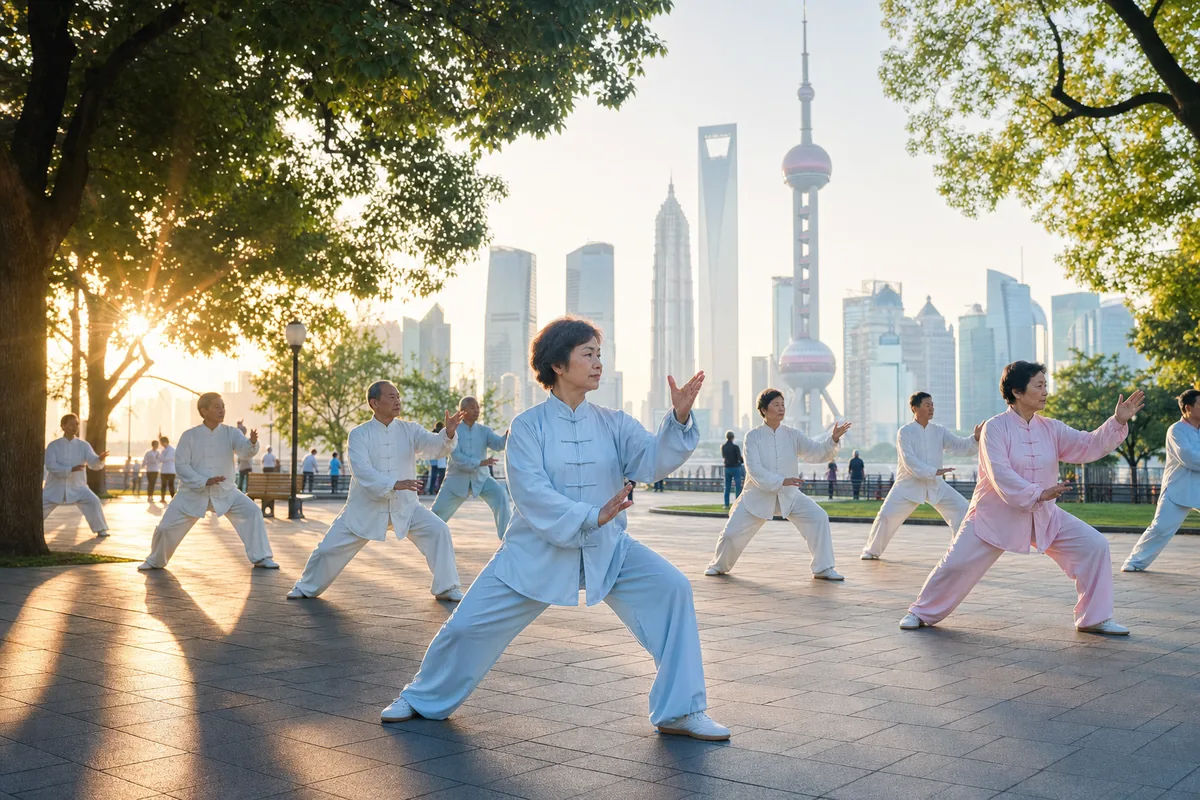
Tai chi is the most accessible martial art for visitors — no fitness level required, and you'll often see locals practicing it in parks at dawn. In Beijing, the Temple of Heaven Park (天坛公园, Tiāntán Gōngyuán) hosts tai chi sessions aimed at tourists. A typical class runs 30–40 minutes and covers a short introduction to tai chi culture plus a few simplified movements. Groups gather near the East Gate (Metro Line 5, Tiantan Dongmen). Private sessions have started around US$58.
For the real source, serious enthusiasts head to Chenjiagou (陈家沟) in Wenxian County, Henan — the recognized birthplace of tai chi and a national 4A scenic area with a tai chi ancestral hall, a museum, and dozens of schools in the village itself. Specific tourist class prices and schedules there aren't well documented in English, so contact a school directly or arrange through a local operator.
Training Full-Time: Schools That Accept Foreigners
This is for travelers who want to actually train rather than watch. Several schools welcome international students for stays of weeks to a year, with lodging and meals included.
| School type | Location | Sample pricing |
|---|---|---|
| Shaolin-area kung fu school | Near Shaolin, Henan | ~US$2,850 / 3 months, US$5,340 / 6 months, US$7,800 / 12 months (incl. ~6 hrs/day training, shared room, three meals, WiFi); plus US$200 registration |
| Wudang Daoist kung fu academy | Wudang Mountain, Hubei | Short custom courses ~280–380 RMB/day (incl. three meals); monthly wellness programs ~9,500–10,900 RMB/month |
These figures are examples from school websites and shift over time. Crucially, long stays affect your visa — a tourist entry usually isn't appropriate for months of enrolled training. Confirm directly with the school what documentation they provide and what visa you need, and read up on the rules first. See our Visa Types Overview and How to Apply for China Visa before committing.
Can You Fit This Into a Short Trip?
Yes, and the visa-free situation makes it easier than it used to be. Under China's 240-hour (10-day) visa-free transit policy introduced in late 2024, eligible citizens of 54–55 countries — including the US, UK, Germany, France, Japan, Korea, Australia, and Canada — can transit visa-free through 60 ports of entry while traveling to a third country, and move between 24 provinces and municipalities. That covers Beijing, Shanghai, Henan (Shaolin, Chenjiagou), and Hubei (Wudang). The exact eligible activity zones vary by entry port, so check the official guidance before relying on it. The full FAQ is on the China Visa Application Service Center site, and you can read our breakdown in Visa-Free & Transit Policies.
Etiquette and Practical Notes
Shaolin and Wudang are active religious sites, not just attractions. A few things worth knowing:
- Dress reasonably. You don't need to cover up head to toe, but skip the beachwear inside temple halls.
- Ask before photographing monks or people at prayer. Performances are fine to photograph; meditation and worship are not always.
- Don't touch weapons or props on display, and follow the staff's directions in the Wushu Hall.
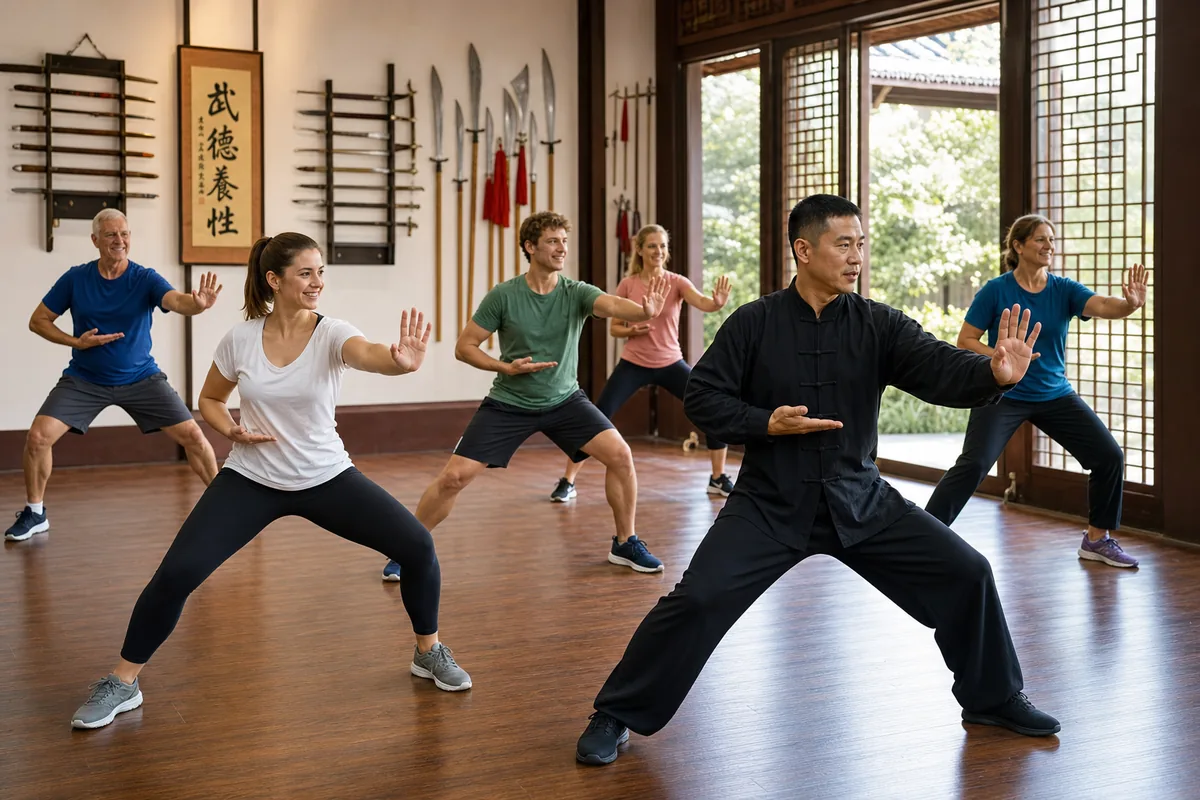
- In class, bow when greeted. A slight bow with a fist-over-palm gesture is the traditional martial arts salute. Instructors appreciate the effort even if you get it slightly wrong.
- Pace yourself. Even a beginner tai chi class can leave your legs sore — the low stances are deceptively demanding.
Summary
For a single evening, a kung fu show in Beijing or near Shaolin is the simplest, most reliable choice. For something hands-on, a morning tai chi class in a park costs little and asks nothing of your fitness. To go to the source, Shaolin Temple is a doable day trip from Zhengzhou or Luoyang, with the performance included in the 80 RMB ticket. And if you genuinely want to train, schools near Shaolin and on Wudang Mountain take international students by the week or month — just sort out the right visa first. Prices, show times, and ticket rules all shift, so confirm the current details before you lock in plans, then enjoy it.
Pair this with a Chinese Tea Ceremony or a deeper dive into tai chi to round out a cultural day.
Last updated: June 2026
Read in other languages
Last train times for 10 Chinese metro systems
Every line and station, checked by hand — the same data behind our offline route planner.
Get the WaysChina App
Offline guides, currency converter, essential phrases, and more — all in your pocket.

Related Articles

Acrobatic Shows in China: Where to Watch and How to Book
Chinese acrobatics combines contortion, balance, and motorcycle stunts into a fast-paced live show. Here's where to...
Chinese Calligraphy Classes: A Beginner's Guide for Travelers
How to take a Chinese calligraphy class as a tourist: what to expect, where to book in Beijing and Shanghai, typical...

Chinese Medicine & Massage
From foot massage parlors to acupuncture clinics and TCM museums, here's how travelers can experience traditional...
Chinese Tea Ceremony: Culture, Types, and Where to Experience It
What the Chinese tea ceremony actually involves, the main tea types you'll taste, and where to book a real session...