
This article contains affiliate links. If you make a purchase through these links, we may earn a small commission at no extra cost to you. This helps support our work in creating free travel guides.
Chinese acrobatics is one of the easiest cultural experiences to fit into a trip. Shows run about an hour, no language skills are needed, and the major theaters are easy to reach by metro. What you'll see ranges from contortionists folding into impossible shapes to a steel globe with eight motorcycles racing inside it. The tradition goes back more than 2,000 years, but the performances you can buy tickets for tonight are slick, modern productions built for audiences.
This guide covers the best-known shows in Beijing, Shanghai, and Guangzhou — what each one offers, where it is, roughly what tickets cost, and how to book when you're paying with a foreign card or carrying only a passport.
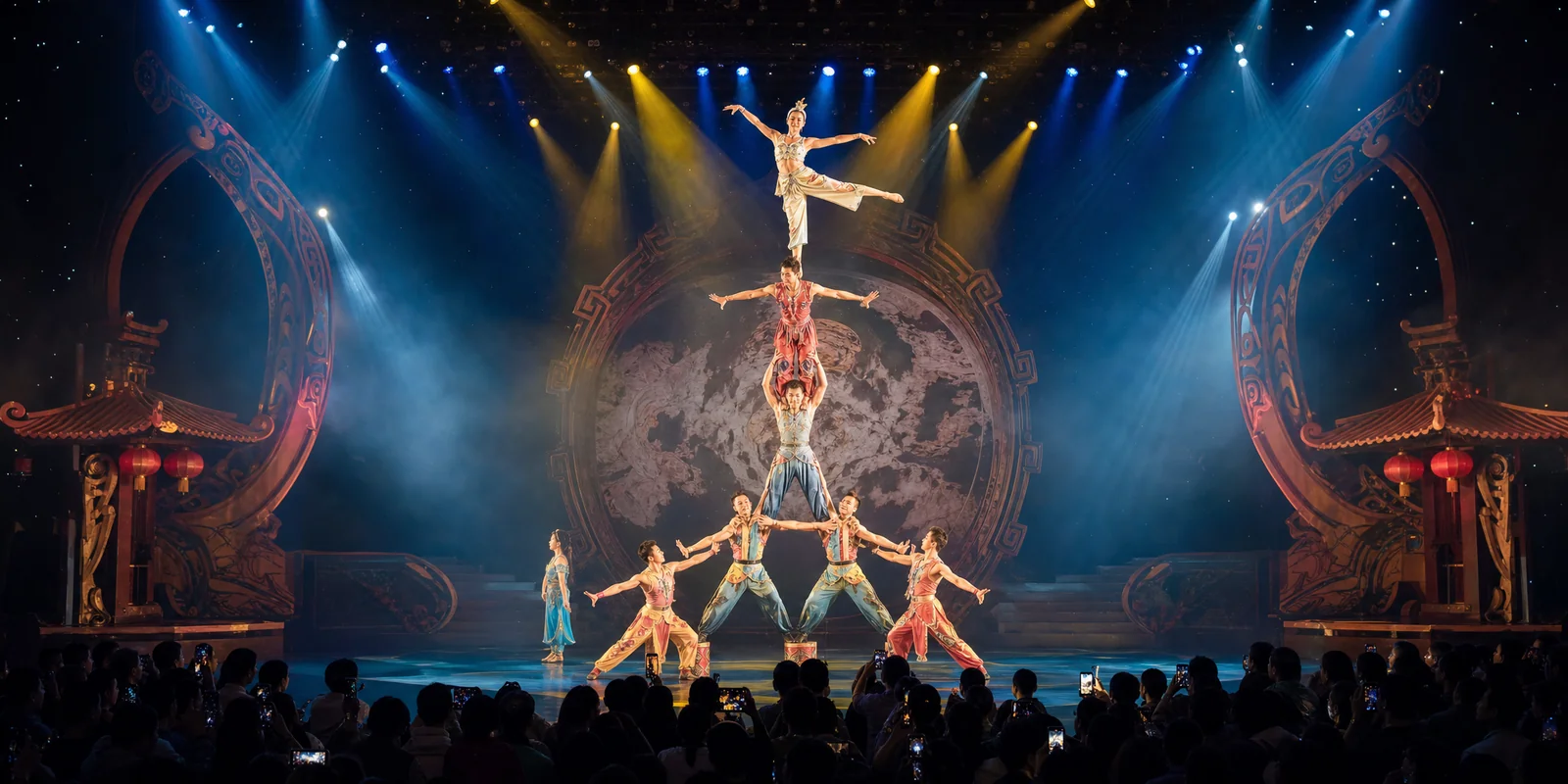
A Quick Note on Chinese Acrobatics
Acrobatics (杂技, zájì) in China isn't a circus in the Western sense — there are no animals as the main draw, and the focus is on human skill: balance, flexibility, strength, and precision. Many performers train from childhood in dedicated troupes, and several signature acts have won international awards. A typical show strings together 8 to 12 acts with music, lighting, and stage design, so even if one act doesn't grab you, the next one usually does.
The shows aimed at tourists are deliberately accessible. You don't need to understand any narration, performances are loud and visual, and the run time is short enough for kids and tired travelers alike. That makes an acrobatic show a good evening activity after a long day of sightseeing.
Shanghai: ERA – Intersection of Time
If you only see one acrobatic show in China, this is the one most people recommend. ERA – Intersection of Time (时空之旅) has run at the Shanghai Circus World since 2005 — about two decades of continuous performances — and it's known for high production values that blend traditional acrobatics with multimedia staging.
The headline acts are worth knowing about:
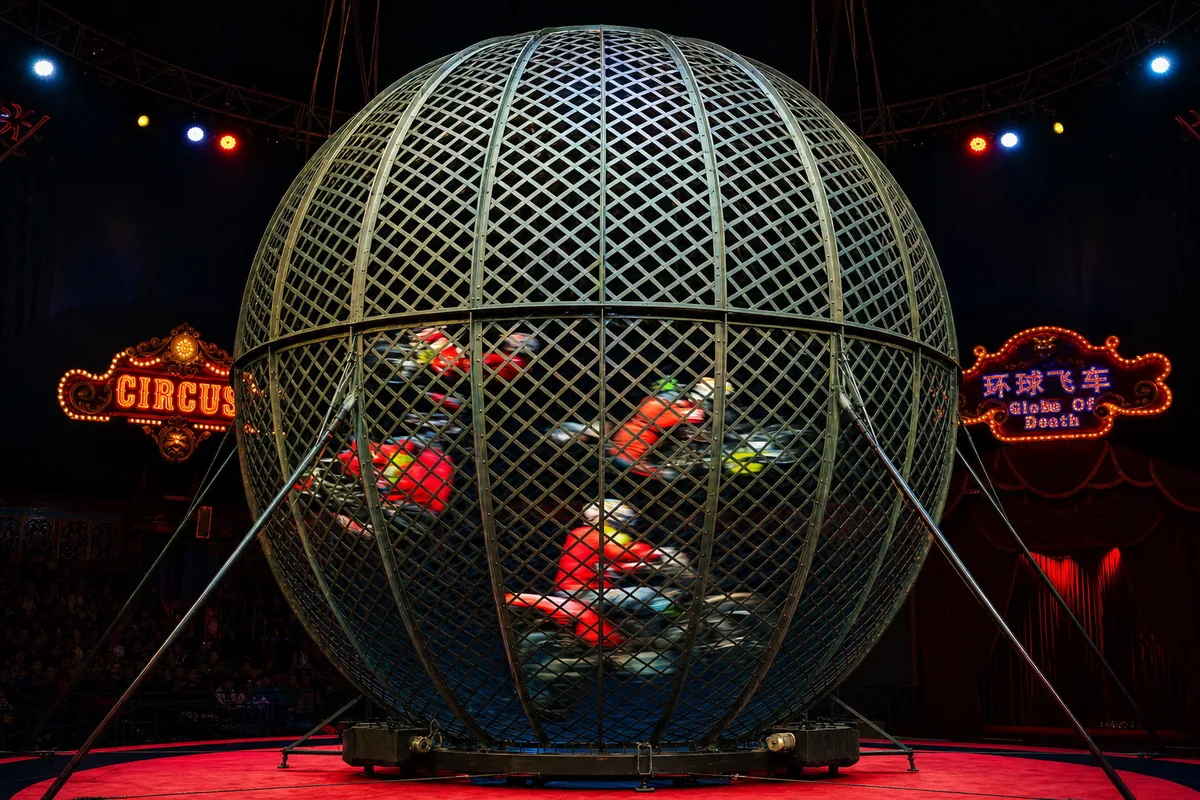
- The Globe of Death — up to eight motorcycles racing simultaneously inside a spherical steel mesh cage. This act has appeared on China's CCTV Spring Festival Gala.
- The Pole Act (抖杠), a Golden Clown Award winner.
- Messengers of Peace, where a performer dances at height alongside up to seven white doves — an act billed as a world first.
There are two versions: a 100-minute full version (usually weekends and holidays) and a 60-minute tourist version (weekdays). Both cost the same, and on weekends you get the extra 40 minutes at no additional charge.
Tickets, location, and getting there
Face-value tickets are priced at RMB 280, 380, 480, 580, and 880 (VIP), per the official Shanghai Circus World ticket page. Online you'll often see a discount, roughly RMB 339–880 depending on the tier and date.
| Detail | Information |
|---|---|
| Venue | Shanghai Circus World (上海马戏城), No. 2266 Gonghexin Road, Jing'an District |
| Metro | Line 1 to Shanghai Circus World Station; Exit 3, just south of the exit |
| Run time | 60 min (weekdays) or 100 min (weekends/holidays) |
| Price range | RMB 280–880 (face value) |
A few practical points: most platforms issue an e-ticket with a QR code that you scan to enter, so you don't need a paper ticket. Note that ERA tickets are final sale — no refunds, and there are no discounted tickets for children or seniors; everyone needs a ticket. If you want to confirm anything directly, the venue's customer service line is 021-66525468.
Beijing: Chaoyang Theatre and the Red Theatre
Beijing's best-known acrobatics venue is the Chaoyang Theatre (朝阳剧场), on the East Third Ring Road. It runs acrobatic shows daily, with performances lasting about an hour. Listed time slots include 4:00–5:00 PM and 5:30–6:30 PM, and during peak season some sources list additional evening shows. Getting there is straightforward: take Metro Line 10 or Line 6 to Hujialou Station (呼家楼), Exit C1.
Ticket prices vary a lot by seller. Window face value runs in tiers of roughly RMB 380–980 by seating zone, while some discount resale sites list a lower RMB 220–540 range. Because the prices and exact show times differ between sources, confirm both directly with the venue or your booking platform before you commit.
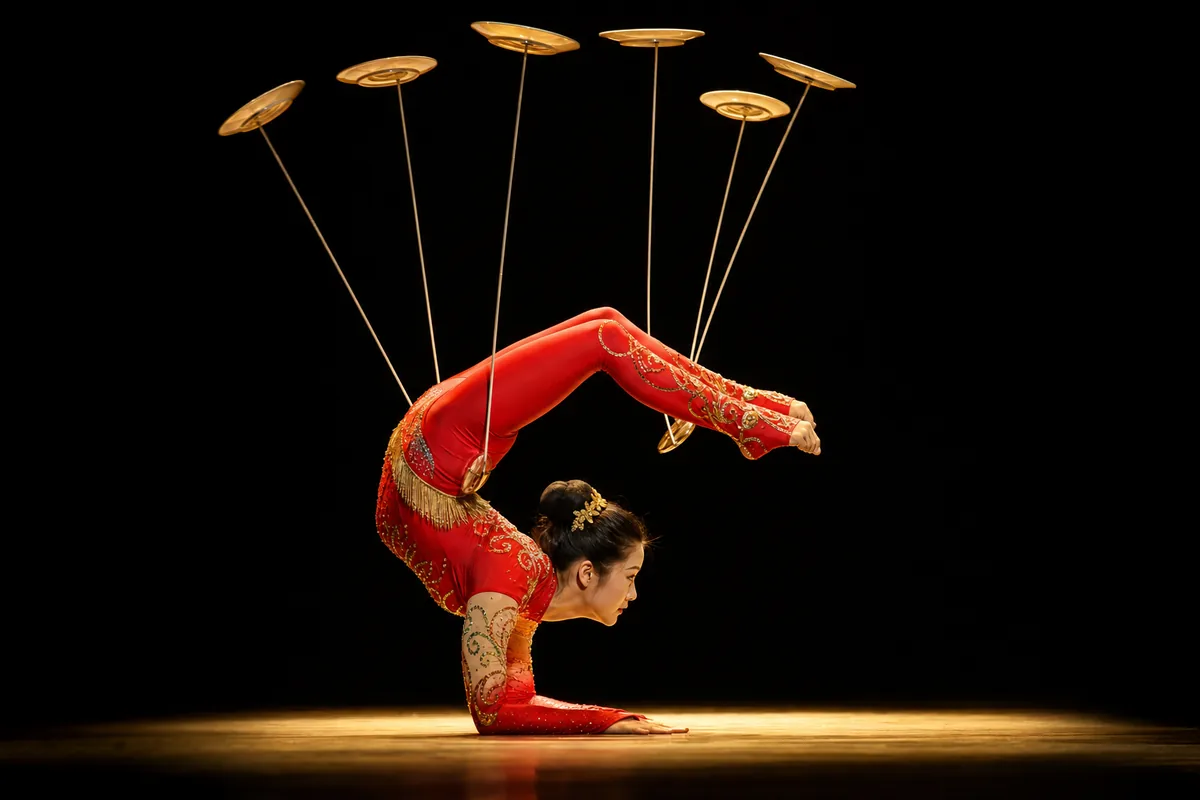
The other Beijing option is the Red Theatre (红剧场), which stages The Legend of Kung Fu — a martial-arts-themed show that mixes acrobatics, dance, and storytelling rather than pure acrobatics. It seats around 1,300 and sits in Dongcheng District at 44 Xingfu Street. Take Metro Line 5 to Tiantan Dongmen Station (天坛东门, Temple of Heaven East Gate), Exit B. Window prices are tiered around RMB 200–880, with shows typically starting in the late afternoon, around 4:20 PM. Schedules can shift in high season, so verify the current start time when you book.
Guangzhou: Chimelong International Circus
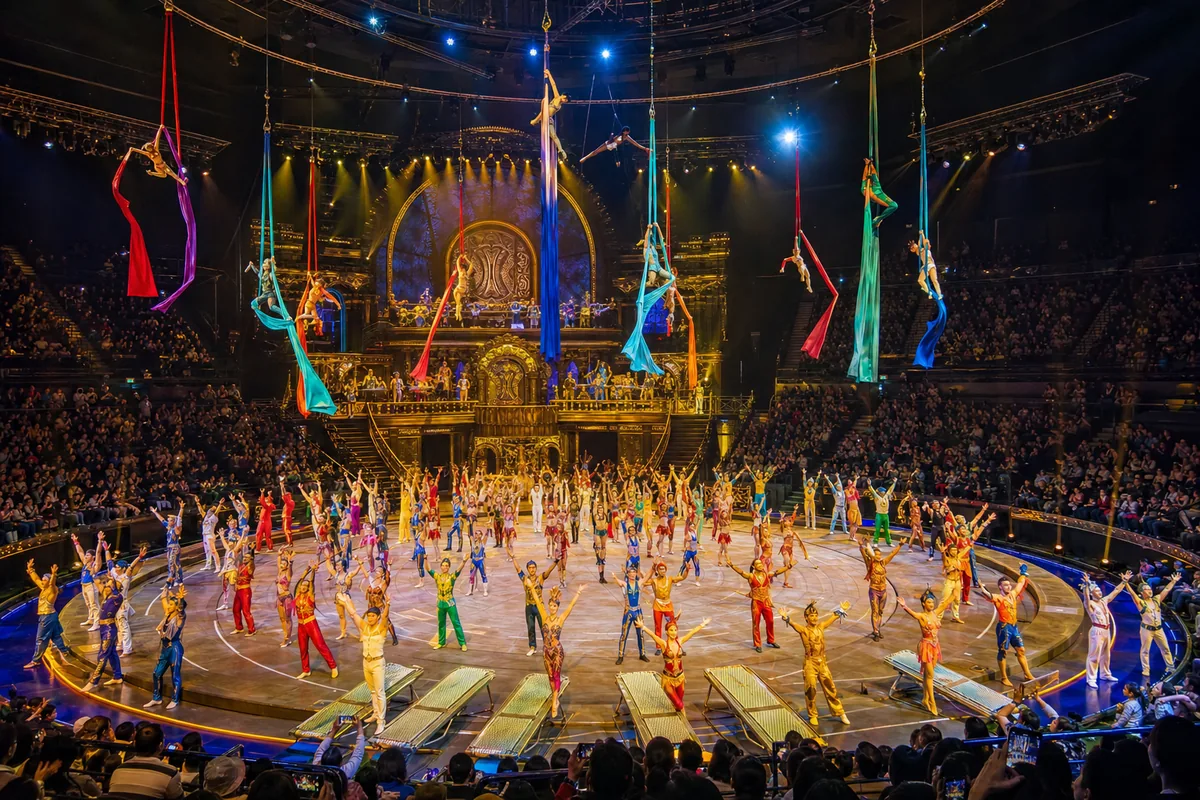
If you're in southern China, the Chimelong International Circus (长隆国际大马戏) in Guangzhou is a much bigger, more spectacle-driven production than the theater shows up north. The current program, Magic Legend III (魔幻传奇III), brings together around 300 circus performers from more than 20 countries, and the venue has hosted over 50 million visitors over the years. This is closer to what most Westerners picture as a "china circus show" — large-scale, international, and held in a purpose-built arena inside the Chimelong resort complex.
Performances usually start at 7:30 PM, with the gates opening at 5:00 PM (some dates vary, so check the official notice). Sample prices from the official Chimelong site: a value package runs about RMB 450, a standard seat for peak performances around RMB 360, and a youth standard seat around RMB 315. Children's and concession tickets are priced separately. The customer hotline is 400-883-0083 (9:00 AM–6:00 PM).
How to Book Tickets as a Foreign Visitor
Booking an acrobatic show is genuinely simple once you understand two things: how China's real-name ticketing works, and how to pay.
Real-name ticketing and your passport
For larger venues, China runs a real-name (实名, shímíng) ticketing system. Under a 2023 rule from the Ministry of Culture and Tourism and the Ministry of Public Security, any event for more than 5,000 spectators requires real-name purchase and real-name entry: one ID can buy one ticket per show, and the buyer's identity must match the attendee's. Most acrobatic theaters are smaller than that threshold, so the strict one-ticket rule may not apply — but the trend across China is toward ID-linked tickets either way.
The good news for foreign visitors: your passport counts as valid ID. On platforms like Damai (大麦), you can register with an overseas phone number, enter passport details for each attendee, and book up to four named attendees per account. Carry the same passport you booked with when you go.
Paying with a foreign card
You'll almost always pay through Alipay (支付宝, Zhīfùbǎo) or WeChat Pay (微信支付). Both let you link an international card. According to UnionPay International, since November 2024 overseas-issued UnionPay cards are fully supported for binding to both apps, and you can also link cards carrying Mastercard, Visa, JCB, Diners Club, or Discover logos.
One detail worth knowing: transactions up to RMB 200 are usually fee-free, while amounts above that carry around a 3% fee. There are also annual and per-transaction caps on foreign-card spending. Set this up before your trip — see our guides on using Alipay with foreign cards and using WeChat Pay with foreign cards for the step-by-step.
Where to buy
- Official venue sites — best for confirming real prices and schedules (Shanghai Circus World, Chimelong).
- International platforms (Trip.com, Klook, etc.) — English interface, pay in your own currency, QR e-tickets. Prices are agency prices, not official face value.
- Chinese apps (Damai) — widest selection, but a steeper learning curve and a Chinese interface.
What to Know Before You Go
- Arrive early. Theaters fill up fast for popular slots, and you'll want time to scan your QR ticket and find your seat.
- Photography rules vary. Some venues allow no-flash photos; others ban photography during the show entirely. Watch for signs or staff instructions.
- Seating matters less than you'd think. Acrobatics is a full-stage spectacle. Mid-tier seats with a clear view of the whole stage often beat front-row seats where you crane your neck.
- Dress is casual. No dress code at any of these venues.
- Shows are short. Plan dinner before or after — most run about an hour.
Quick Comparison
| Show | City | Style | Run time | Price (approx.) |
|---|---|---|---|---|
| ERA – Intersection of Time | Shanghai | Acrobatics + multimedia | 60–100 min | RMB 280–880 |
| Chaoyang Theatre | Beijing | Classic acrobatics | ~60 min | RMB 220–980 |
| Red Theatre (Legend of Kung Fu) | Beijing | Kung fu + acrobatics | ~75 min | RMB 200–880 |
| Chimelong International Circus | Guangzhou | Large-scale circus | ~90 min | RMB 315–450+ |
The Bottom Line
An acrobatic show is one of the most reliable evening activities in China — short, visual, no language barrier, and easy to reach by metro. In Shanghai, ERA is the standout for production quality; in Beijing, the Chaoyang Theatre delivers classic acrobatics; in Guangzhou, Chimelong is the big international spectacle. Book through the official site or an international platform, carry the passport you booked with, and set up a payment app before you arrive. Prices and showtimes shift, so confirm the latest details before you travel, especially for the Beijing venues where most listings come from third-party resellers.
Last updated: June 2026
Read in other languages
Last train times for 10 Chinese metro systems
Every line and station, checked by hand — the same data behind our offline route planner.
Get the WaysChina App
Offline guides, currency converter, essential phrases, and more — all in your pocket.

Related Articles
Chinese Calligraphy Classes: A Beginner's Guide for Travelers
How to take a Chinese calligraphy class as a tourist: what to expect, where to book in Beijing and Shanghai, typical...

Chinese Medicine & Massage
From foot massage parlors to acupuncture clinics and TCM museums, here's how travelers can experience traditional...
Chinese Tea Ceremony: Culture, Types, and Where to Experience It
What the Chinese tea ceremony actually involves, the main tea types you'll taste, and where to book a real session...
Chinese Cooking Classes: Where to Learn in China
A practical guide to Chinese cooking classes for travelers — what a class actually involves, real prices, and...