
This article contains affiliate links. If you make a purchase through these links, we may earn a small commission at no extra cost to you. This helps support our work in creating free travel guides.
A Chinese calligraphy class is one of the easier hands-on culture experiences to slot into a trip. Most introductory workshops in cities like Beijing and Shanghai run about one to two hours, require zero Chinese and zero prior experience, and many are taught in English. You hold a brush, learn a few strokes, write a character or two, and usually take home a finished piece. Prices for short group sessions typically start around US$20–25, with longer or private classes costing more. This guide covers what the art actually is, how a session usually goes, where to book, and a few things worth knowing before you sit down at the table.
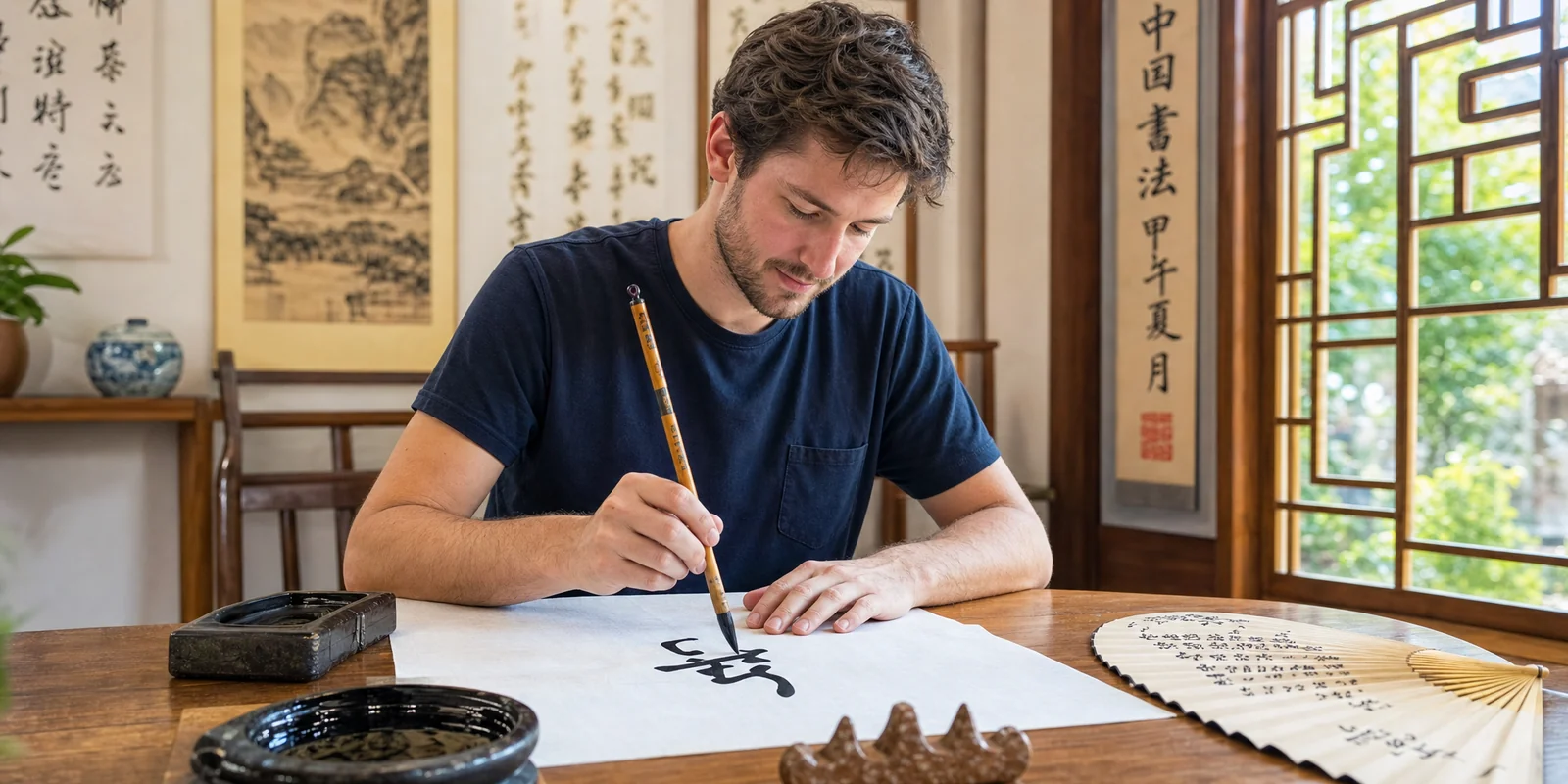
Why Calligraphy Matters in China
In Chinese culture, calligraphy (书法, shūfǎ) is not just neat handwriting — it's considered one of the highest art forms, ranked alongside painting and poetry. For centuries a person's brushwork was read as a window into their character and education. That weight is still there today, which is part of why a 90-minute workshop can feel more meaningful than "a craft activity."
The art is recognized internationally too. According to China.org.cn, Chinese calligraphy was inscribed on the UNESCO Representative List of the Intangible Cultural Heritage of Humanity in 2009. It is one of 44 Chinese entries on the UNESCO intangible cultural heritage list — more than any other country holds.
The Five Script Styles
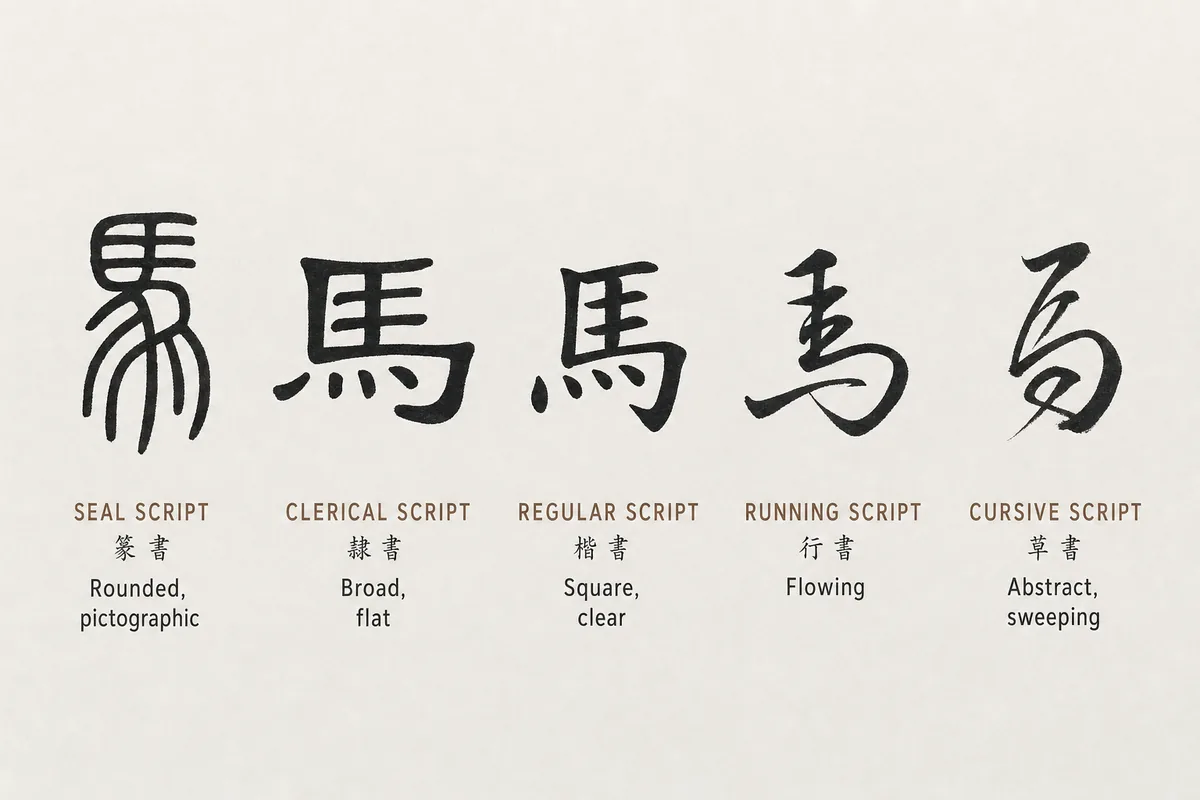
Calligraphy isn't one single look. Over two thousand years it developed five main scripts, which UNESCO describes as seal, official, cursive, running, and regular:
- Seal script (篆书, zhuànshū) — the oldest, rounded and pictographic, still used on name stamps today.
- Clerical / official script (隶书, lìshū) — flatter and broader, a transitional style from the Han dynasty.
- Regular / standard script (楷书, kǎishū) — clear, square, and balanced; this is what beginners almost always start with.
- Running / semi-cursive script (行书, xíngshū) — flowing and connected, faster to write.
- Cursive script (草书, cǎoshū) — highly abstract and expressive, often hard even for native readers to decipher.
The most famous work in Chinese history is the Lantingji Xu (兰亭集序, the Orchid Pavilion Preface), written in running script by Wang Xizhi (王羲之) in 353 AD at a literati gathering in Shaoxing. Wang is honored as the "Sage of Calligraphy," and his preface — 28 lines, 324 characters — is called the "foremost running-script work under heaven." You can see a Tang-dynasty copy in the Palace Museum collection.
The Four Treasures of the Study
Before you write anything, you'll meet the tools. They're known collectively as the Four Treasures of the Study (文房四宝, wénfáng sìbǎo), a term that dates back to the Northern and Southern Dynasties:
- The brush (笔, bǐ) — soft animal-hair tip, held vertically. The pressure and angle do all the work.
- The ink (墨, mò) — traditionally an inkstick ground by hand, though most classes hand you ready-mixed liquid ink to save time.
- The paper (纸, zhǐ) — absorbent rice or Xuan paper that grabs ink instantly, so you can't erase or hesitate.
- The inkstone (砚, yàn) — a flat stone you grind the inkstick against with a little water.
The most prized varieties have been famous since the Song dynasty: Hu brushes from Huzhou, Hui ink from Anhui, Xuan paper from Jing County in Anhui, and Duan inkstones from Zhaoqing in Guangdong. Your workshop won't use museum-grade tools, but a good instructor will explain why each one matters.
What a Class Actually Looks Like
Introductory workshops follow a fairly predictable arc, which is reassuring if you've never picked up a brush. A typical two-hour session goes something like this:
- A short history overview — the five scripts, the famous masters, why calligraphy matters. Usually 10–15 minutes.
- Meet the tools — how to hold the brush, load it with ink, and sit.
- Warm-up strokes — you'll practice the basic building blocks. Mastery is traditionally framed around eight fundamental strokes, which combine into thousands of characters. Beginners drill a few lines, dots, and hooks before touching a real character.
- Writing a character — usually a simple, meaningful one (永 "eternity," 福 "fortune," 爱 "love") in regular script.
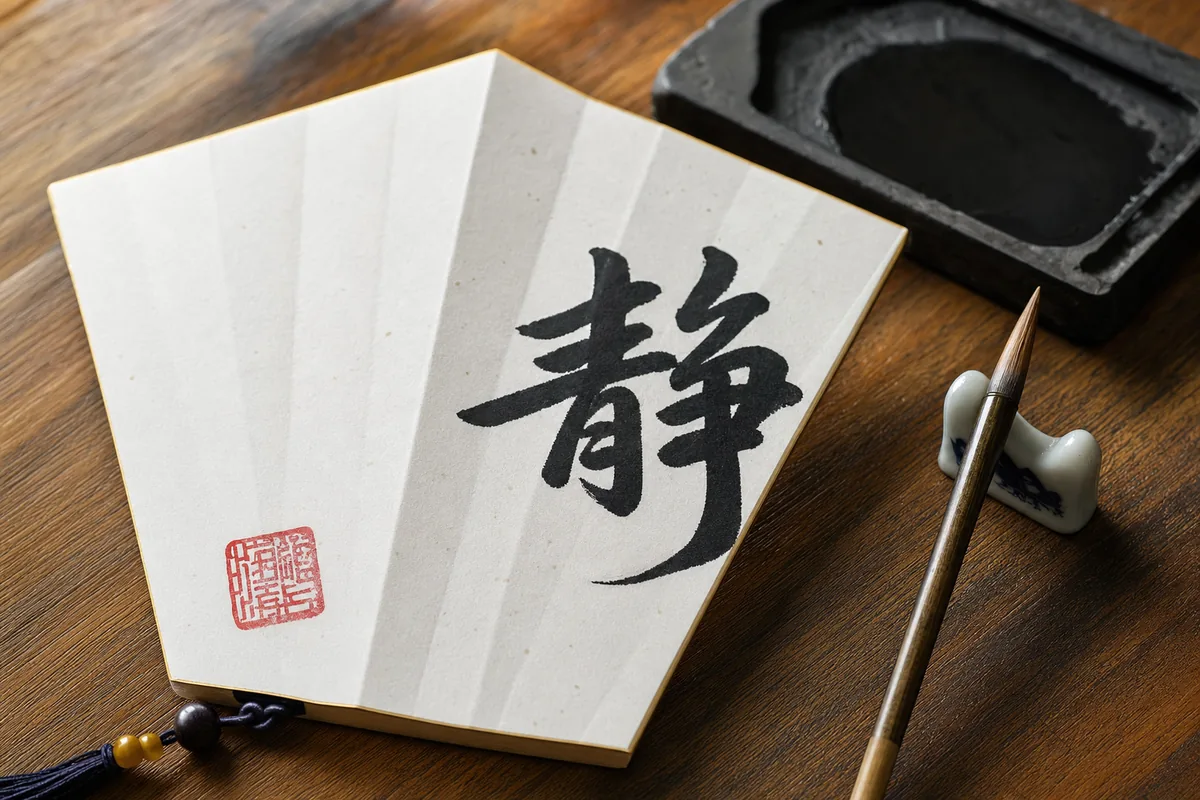
- Your finished piece — many studios let you write on a scroll, fan, or sheet to take home, sometimes stamped with a red seal.
Regular script (kǎishū) is the standard starting point because its clear, separate strokes teach control before you attempt anything flowing. The four great masters of regular script — Yan Zhenqing, Liu Gongquan, Ouyang Xun, and Zhao Mengfu — are the names you'll hear if your teacher goes deeper.
Where to Take a Class
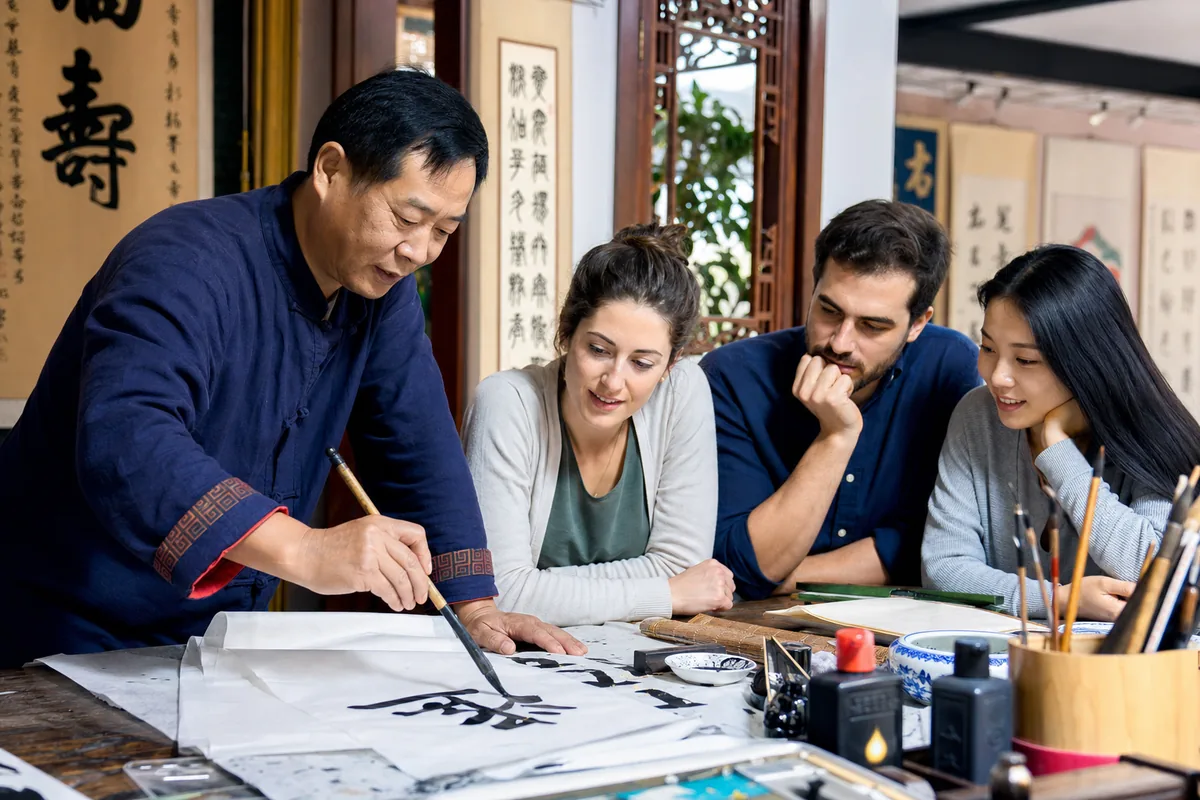
Calligraphy and brush-writing workshops are easy to find in Beijing, Shanghai, Xi'an, Chengdu, and Guilin, among others. Durations range from about 45 minutes to 3.5 hours, most are small-group with English available, and some bundle calligraphy with a tea ceremony or ink painting. Here are a few concrete options to anchor your expectations — confirm current prices and schedules on the booking page before you commit, since they shift with the date.
Shanghai
- InkMoon Workshop — A roughly two-hour intro workshop at US$55 per person, including all materials and one artwork to take home. Groups of six or fewer, a five-minute walk from Jing'an Temple, taught in English and Chinese. It was founded in 2016 by a Shanghai-born instructor with a master's in calligraphy and seal engraving. See the InkMoon course page for details.
- EASYBOX STUDIO — A two-hour English-language workshop covering history, tools, a warm-up, and a final artwork: a folding fan painted with the Chinese character you choose. The meeting point is about 500 m from Jing'an Temple subway station, Exit 1.
- Budget group sessions — Bilingual experiences are listed on OTA platforms from around US$24–25 per person, suitable for ages 5–80, with small groups of up to about 10 people.
Beijing
- Small-group classes — Listed from around US$20 per adult, with 30- and 45-minute options for a quick introduction. Private or luxury formats run much higher (US$158+).
- The Hutong — Runs a calligraphy class in the Wangfujing area of downtown Beijing, at No.8 Wangfujing Dongjie, Dongcheng District. It's reachable via Subway Line 8, Jin Hutong (Jinyu Hutong) Exit B.
- Longer private courses — Some studios offer roughly four-hour sessions for about US$68 or more, if you want more than a taster.
For convenience, small-group calligraphy and brush-writing workshops across these cities are bookable on major platforms — you can browse Getyourguide to compare durations, prices, and whether a session pairs calligraphy with tea or ink painting. Many offer free cancellation, which is handy when your itinerary is still loose.
Etiquette and Practical Notes
Calligraphy is low-pressure compared to most cultural performances, but a few things make the experience smoother and more respectful.
- Wear something you don't mind staining. Ink is permanent and splatters. Many studios provide a smock, but don't count on it.
- Don't rush your strokes. Rice paper absorbs instantly, so a slow, deliberate stroke looks far better than a quick correction — there are no corrections.
- Handle a teacher's demonstration piece with respect. Calligraphy carries cultural weight; treat finished works as art, not scrap paper.
- Ask before photographing the instructor up close, especially during a demonstration. Most are happy to be filmed, but it's polite to check.
- Take your character seriously. If you're writing 福 (fortune) or someone's name, ask what it means — instructors love this and it makes the piece feel earned.
Booking and payment
Popular small-group classes can fill up, so booking a day or two ahead is sensible, especially in peak season. Some studios take walk-ins; many prefer reservations. Payment in China runs heavily on mobile apps, so it's worth setting up Alipay or WeChat Pay before you arrive in case a studio doesn't take cards — see our guide on using Alipay with foreign cards.
Pairing Calligraphy With Other Experiences
Calligraphy sits naturally beside the other quiet, skill-based traditions, and many studios pair them in a single afternoon. If you enjoy the meditative pace, a Chinese tea ceremony is an obvious companion, and ink painting uses the same brush and ink you've just learned to handle. Travelers who like the hands-on, slower side of Chinese culture often build a half-day around two of these together.
The Bottom Line
A calligraphy class is one of the most accessible cultural experiences in China: short, beginner-friendly, widely available in English, and inexpensive at the entry level — often around US$20–25 for a group session, more for private or longer formats. You don't need to read a word of Chinese to get something out of it, and you'll usually leave with a piece you actually made. To do it well: book a small-group intro class a day or two ahead, wear something you don't mind staining, start with regular script, and sort out mobile payment before you go. Confirm price, language, and cancellation terms on the booking page, since these change.
Last updated: June 2026
Read in other languages
Last train times for 10 Chinese metro systems
Every line and station, checked by hand — the same data behind our offline route planner.
Get the WaysChina App
Offline guides, currency converter, essential phrases, and more — all in your pocket.

Related Articles
Acrobatic Shows in China: Where to Watch and How to Book
Chinese acrobatics combines contortion, balance, and motorcycle stunts into a fast-paced live show. Here's where to...
Chinese Medicine & Massage
From foot massage parlors to acupuncture clinics and TCM museums, here's how travelers can experience traditional...
Chinese Tea Ceremony: Culture, Types, and Where to Experience It
What the Chinese tea ceremony actually involves, the main tea types you'll taste, and where to book a real session...
Chinese Cooking Classes: Where to Learn in China
A practical guide to Chinese cooking classes for travelers — what a class actually involves, real prices, and...