
This article contains affiliate links. If you make a purchase through these links, we may earn a small commission at no extra cost to you. This helps support our work in creating free travel guides.
A good Chinese cooking class does two things at once: it teaches you a few dishes you can actually recreate at home, and it gives you a couple of hours inside a side of Chinese food culture that menus and restaurants never show. Most classes for travelers run two to five hours, are taught in English (often alongside Mandarin), and end with you eating what you made. Prices range widely — from around 100 RMB for a casual session in Yangshuo to several hundred RMB for a hands-on workshop in Beijing or Chengdu that includes a market visit. This guide covers what to expect, how much it costs, and where to book in the cities most visitors pass through.
Why take a cooking class in China
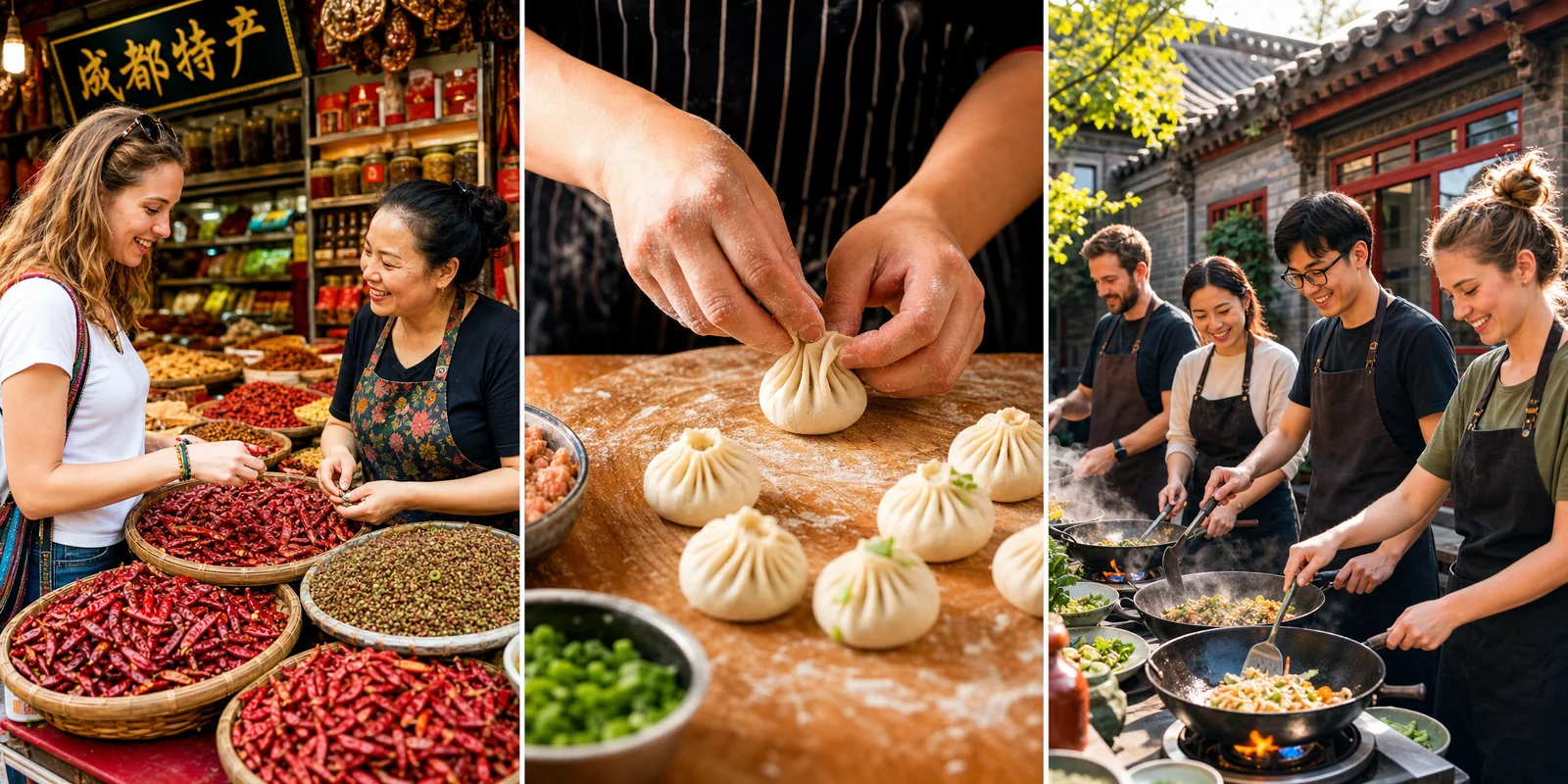
Chinese regional cuisines differ more than most first-time visitors expect. The mouth-numbing heat of Sichuan food, the delicate folded skins of Shanghai soup dumplings, the hand-pulled noodles of the northwest — these aren't variations on one cuisine, they're separate culinary traditions with their own techniques and pantries. A class is the fastest way to understand why a dish tastes the way it does, not just how to copy it.
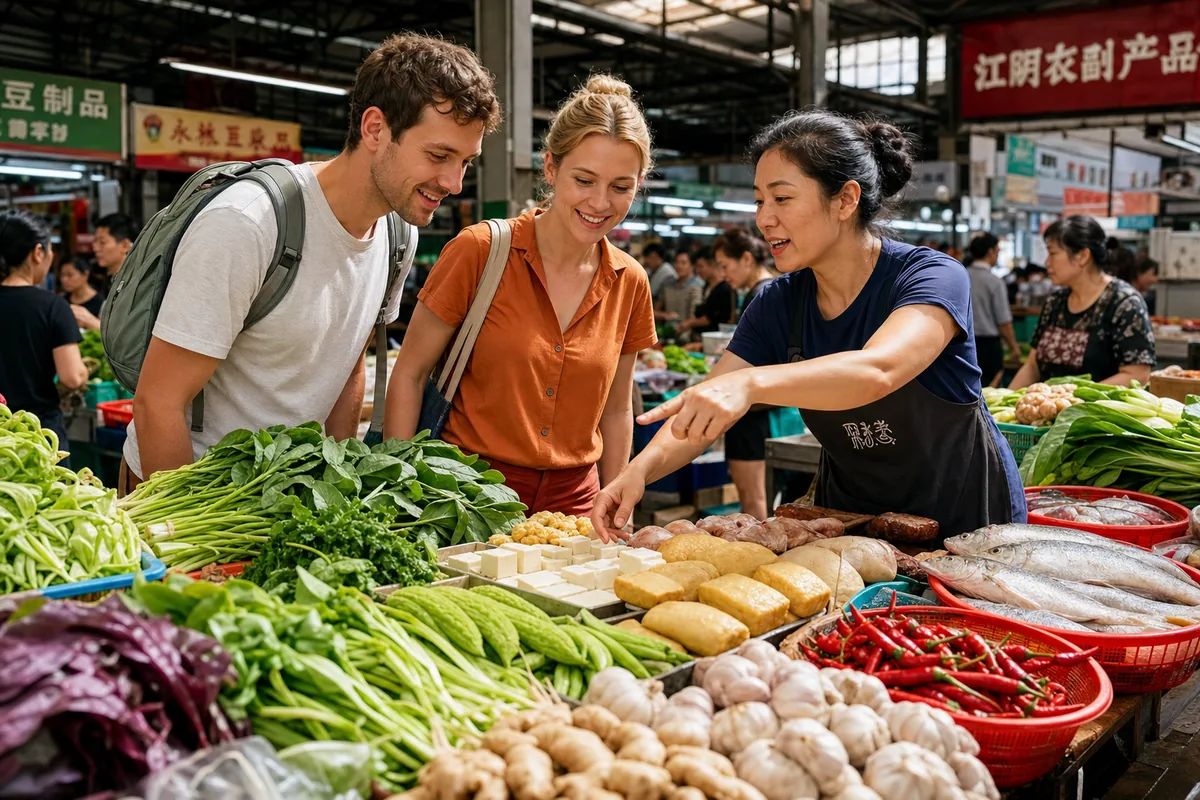
The good ones also build in context. Many start with a trip to a local wet market (菜市场, càishìchǎng), where the teacher walks you through ingredients you'd never recognize on a Western shelf — fresh Sichuan peppercorns, doubanjiang (a fermented chili-bean paste), live river fish, a dozen kinds of tofu. That market walk is often the most memorable part, and it's something you genuinely can't do alone if you don't read Chinese or speak the language.
If you want to understand the regional landscape before you book a class, our Guide to Chinese Cuisine by Region is a useful primer on which dishes belong where.
What a class usually includes
Formats vary, but most tourist-friendly classes follow a similar shape:
- Length: 2 to 5 hours. Dumpling or noodle workshops tend to be shorter; classes with a market tour and a sit-down meal run longer.
- Dishes: Usually 3 dishes, sometimes more for noodle or dim sum sessions.
- Hands-on time: You do the chopping, wokking, and folding yourself — these are not demonstrations you watch.
- Recipes: Many schools send you home with printed recipes (worth confirming when you book).
- The meal: You eat what you cooked at the end, often with tea or a soft drink included.
- Group size: Public classes typically cap at 8–12 people; private classes are arranged on request.
Most schools teach in English. If you have dietary needs — vegetarian, vegan, halal, or allergies — ask before booking. Many schools can adapt, but it's worth confirming directly rather than assuming, especially for halal or strict vegan requirements.
Beijing
Beijing has some of the most established English-language cooking schools in the country.
The Hutong
The Hutong runs public classes in a restored courtyard in the Beixinqiao area. A standard public class is 2.5 hours, you learn to make 3 dishes, and you take the recipes home and eat the meal at the end with free-flow non-alcoholic drinks. Pricing is 350 RMB (300 RMB for members). Their class themes rotate through several regional cuisines: Sichuan staples like mapo dofu and gongbao chicken, Shanghai soup dumplings (xiaolongbao), Shanxi noodles, hand-pulled noodles, and a dedicated knife skills session — most priced at the same 350 RMB / 300 RMB member rate.
They also offer private classes at 380 RMB per person with a minimum spend of 1,520 RMB, where you can set your own time and menu. You'll find the full schedule and booking on the official The Hutong cooking classes page. They're located at 1 Jiudaowan Zhongxiang, Beixinqiao, Dongcheng District.
Beijing Cooking School (Hutong Cuisine)
This school leans more toward serious home cooks. Its daily wok class runs roughly 10:30am–2:00pm at 480 RMB, where you make about 3 home-style dishes, with optional add-ons like a condiments class (70 RMB) and a market tour (150 RMB). For travelers who want to go deeper, it has also offered multi-day intensive courses. Because the published schedule may not always be current, confirm the latest dates and availability directly before you plan around them.
Shanghai
Shanghai is the place to learn the city's signature dumplings.
UnTour Shanghai — Hands-On Dumpling Delights
This is a combined food tour and cooking class, which makes it a good pick if you want to eat your way through a neighborhood and cook in the same outing. The experience runs 3 hours starting at 10am, and includes 8–9 tastings, drinks (Chinese beer, soft drinks, or bottled water), a 1-hour cooking class with a local chef, and a bilingual guide. Groups cap at 10 plus a guide, you walk about 2km, and you learn to make shengjianbao — Shanghai's pan-fried soup dumplings. Pricing is US$90 / 595 RMB for adults, US$70 / 450 RMB for children 6–12, and free for kids 0–5 (when they're not eating their own tastings). Details and booking are on the UnTour Shanghai dumpling experience page. The meeting point is near Jiashan Road metro station.
If you'd rather just learn dim sum cheaply, smaller private classes exist around the city — some travelers report sessions of roughly 2 hours for around 150 RMB per person including ingredients. Quality and format vary, so read recent reviews before booking one of these.
Chengdu
If there's one city where a cooking class pays off, it's Chengdu. Sichuan cuisine is built on ingredients and techniques you won't easily figure out on your own — the balance of málà (numbing-spicy), the right way to handle doubanjiang, how to layer flavors so a dish isn't just hot.
Chilli Cool
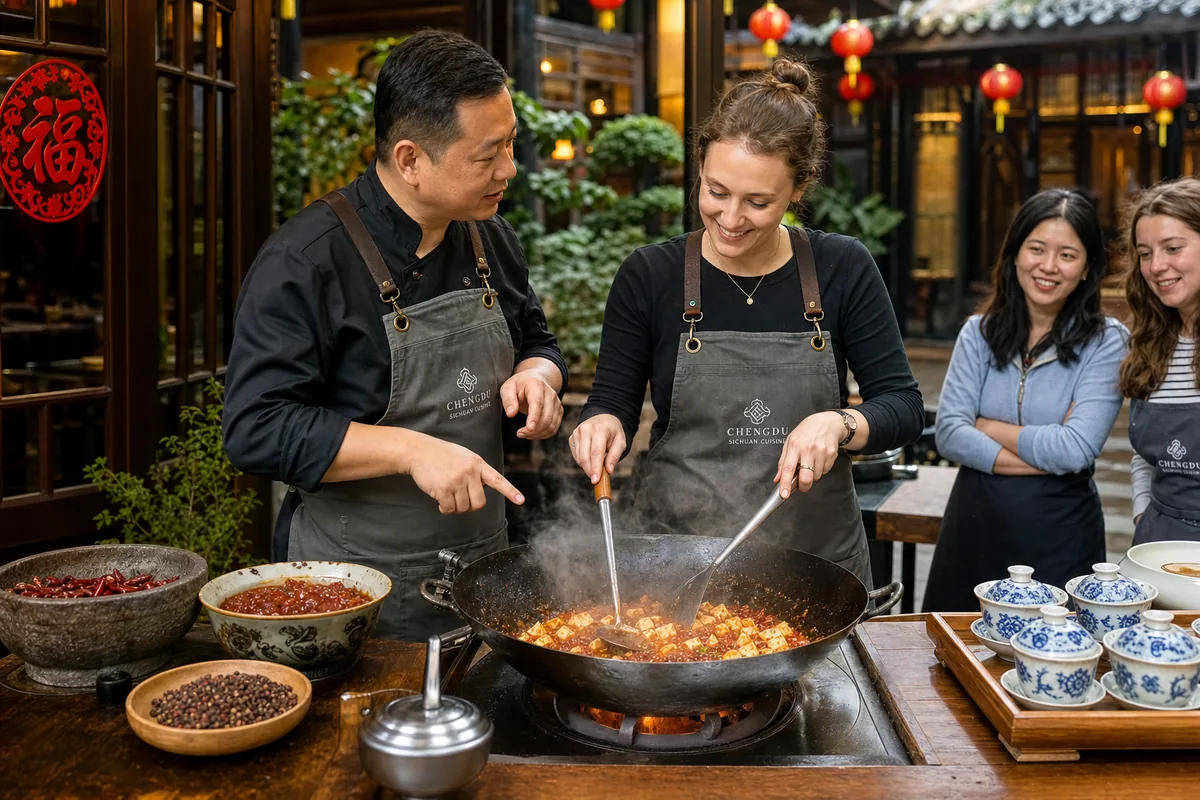
Chilli Cool runs a Sichuan cooking workshop that's 4–5 hours and includes a local spice market visit (with a fun challenge built in), a traditional Sichuan courtyard setting, local gaiwan tea, professional chef instruction, and your own cooked dishes at the end. The top price sits around ¥700. They also run shorter classes focused on baozi (steamed buns) and dandan noodles, each capped around ¥600 and including the spice market visit. Booking is on the Chilli Cool booking page.
WildChina
WildChina's Chengdu cooking class runs about 3–4 hours by appointment and includes a local guide, a market tour, ingredients, tea plus one extra drink or beer, a tasting or full meal, printed recipes to take home, and a gaiwan tea culture component. It's a good option if you want a more curated, private-feeling experience.
Going deeper: Sichuan Tourism University
For travelers genuinely serious about Sichuan cooking, Sichuan Tourism University offers a 5-day short experience program. Pricing is 1,380 RMB per person without accommodation, or 2,280 RMB with accommodation for 6 nights. Teaching is in small groups of 4–5, and the program includes visits to the Sichuan Cuisine Museum, Luodai Ancient Town, and the Chengdu panda breeding base. It's run through their International Cooperation and Exchanges Office — you can find contact details on the university's English program page.
There's also the Sichuan Cuisine Museum's own cooking class, where you tour the collection, learn about ingredients, make 3 Sichuan dishes under a master chef's eye, and receive a "Sichuan cuisine master" certificate. Class menus are fixed — one features panda-shaped steamed dumplings, gongbao chicken, and mapo dofu. Check current pricing and times directly, as these can change.
Planning more time in the city? Pair a class with our Chengdu Food Guide and 3-Day Chengdu Itinerary to build out the rest of your eating.
Xi'an
Xi'an's food is wheat-based and northwestern — noodles, breads, and steamed buns rather than rice and stir-fries. Classes here typically run 3–5 hours in groups of 8–12, taught in Mandarin and English (sometimes French or German), and many schools offer vegetarian or halal options, which matters in a city with strong Muslim Quarter food traditions.
Two formats stand out for visitors. A biang biang noodle class usually starts with a local spice market visit, then moves to an old neighborhood home near the city wall where you have green tea before pulling the wide, belt-like noodles by hand — about 3 hours, and you'll typically need to book at least 24 hours ahead. A baozi (steamed bun) workshop runs 3–4 hours, includes a market visit, a traditional courtyard, and local tea, and walks you through making Chinese dough from scratch.
Yangshuo (Guilin)
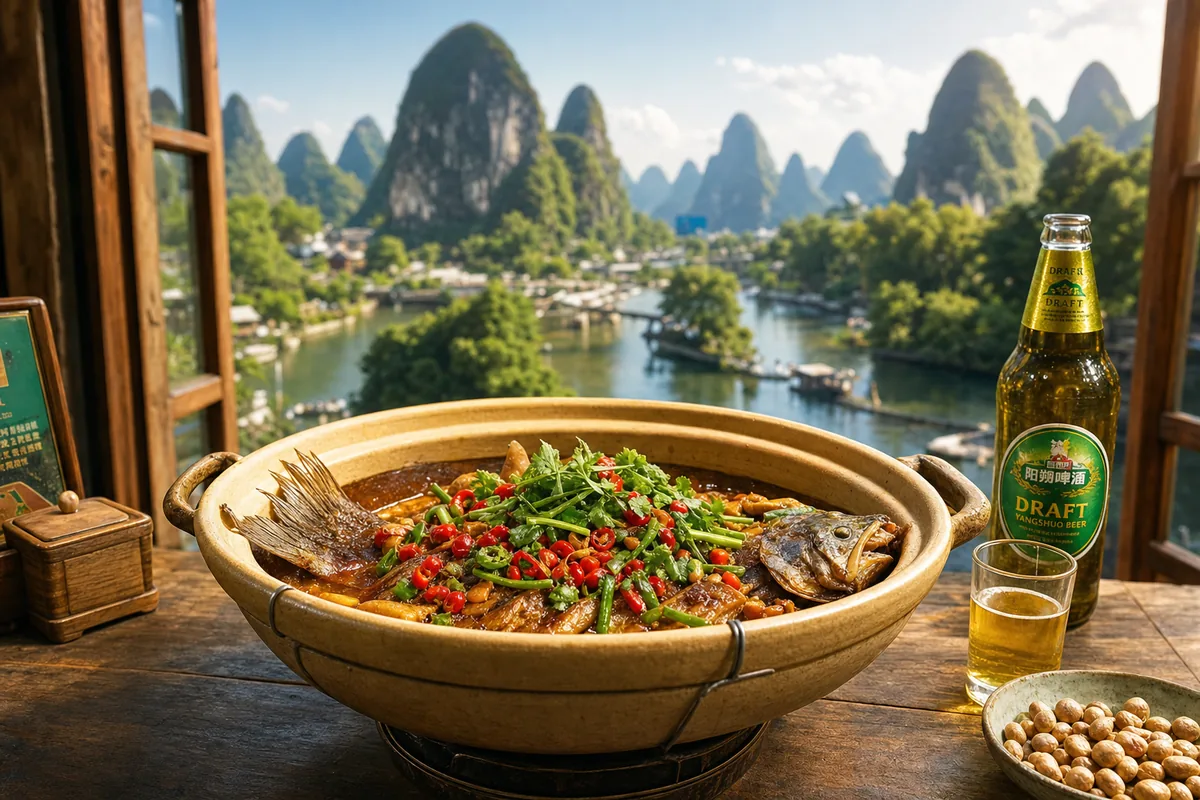
Yangshuo, in the karst landscape near Guilin, has a long-running cooking class scene aimed at travelers, and it's the budget-friendly end of the spectrum. Schools like Cloud 9 typically run two sessions a day (around 9:30am–12:30pm and 3:30pm–6:30pm), usually about 100 RMB per person, where you make 3–4 dishes including the local specialty, Yangshuo beer fish. Classes start with a trip to a traditional market near Yangshuo Park to buy ingredients, and the whole thing takes about 3 hours.
Prices and operators shift here more than in the big cities, and many are listed through third-party platforms rather than official websites, so confirm the current rate and what's included before you commit.
Price comparison at a glance
| City | Class type | Approx. price | Length |
|---|---|---|---|
| Beijing | The Hutong public class (3 dishes) | 350 RMB | 2.5 hrs |
| Beijing | Beijing Cooking School wok class | 480 RMB | ~3.5 hrs |
| Shanghai | UnTour food tour + dumpling class | 595 RMB / US$90 | 3 hrs |
| Chengdu | Chilli Cool Sichuan workshop + market | up to ~¥700 | 4–5 hrs |
| Chengdu | Sichuan Tourism University (5-day) | 1,380 RMB (no lodging) | 5 days |
| Xi'an | Biang biang noodle / baozi class | varies (book 24h ahead) | 3–4 hrs |
| Yangshuo | Beer fish + market class | ~100 RMB | ~3 hrs |
Prices float with season, exchange rate, and platform. Always treat the figures above as a guide and check the live rate on the school's official page or booking platform before you travel.
You can browse and compare many of these classes — plus options in cities not covered here — on aggregator platforms. Klook lists cooking experiences across Beijing, Shanghai, Chengdu, and beyond, which is handy for checking availability on your travel dates.
Booking, payment, and practical notes
A few things worth knowing before you book:
- Book ahead. Smaller and private classes can fill up, and some (like Xi'an's) require 24 hours' notice. Booking a day or two out is usually safe; for popular classes in peak season, more.
- Cancellation policies vary. Some schools offer full refunds with 24 hours' notice; others don't. Confirm the policy when you book rather than assuming.
- Payment. Most classes can be paid online through their booking platform with an international card. On the ground, you'll find it easier to pay for incidentals with mobile payments. Since 2024, foreign visitors can link an overseas Visa, Mastercard, Amex, JCB, and several other cards to Alipay and Weixin Pay (WeChat Pay) using a foreign phone number. See this China Briefing explainer for how it works. Set this up before you arrive — our guides on using Alipay with foreign cards and WeChat Pay with foreign cards walk through the steps.
- Getting there. Most schools sit in older neighborhoods or near markets, sometimes down lanes that taxis can't reach precisely. Save the address in Chinese and use it with a ride-hailing app — see our Taxis & Ride-Hailing guide.
A note on etiquette
Cooking classes are relaxed, but a few small habits go over well. When the teacher offers you the first taste or pours your tea, accept it — refusing repeatedly reads as standoffish rather than polite. At markets, ask before photographing vendors and their stalls; most are happy to oblige, but it's courteous to ask. And if you finish a dish you're proud of, offer some to the people next to you — sharing food is the whole point, and it's how the room warms up.
The bottom line
A cooking class is one of the better-value cultural experiences in China: a few hours, a real skill, a market you couldn't navigate alone, and a meal at the end. For most travelers, the sweet spot is a 2.5–5 hour hands-on class with a market visit — Beijing's The Hutong, Chengdu's Chilli Cool, and Shanghai's UnTour dumpling experience are all reliable choices in their respective cities. Decide which cuisine you most want to learn, book a day or two ahead, set up mobile payments before you arrive, and confirm prices and cancellation terms on the official page. Then show up hungry.
Related reading
- Guide to Chinese Cuisine by Region
- Chinese Tea Ceremony
- Best Street Food Cities
- How to Use Alipay with Foreign Cards
- Vegetarian/Vegan Guide
Last updated: June 2026
Read in other languages
Last train times for 10 Chinese metro systems
Every line and station, checked by hand — the same data behind our offline route planner.
Get the WaysChina App
Offline guides, currency converter, essential phrases, and more — all in your pocket.

Related Articles

Acrobatic Shows in China: Where to Watch and How to Book
Chinese acrobatics combines contortion, balance, and motorcycle stunts into a fast-paced live show. Here's where to...
Chinese Calligraphy Classes: A Beginner's Guide for Travelers
How to take a Chinese calligraphy class as a tourist: what to expect, where to book in Beijing and Shanghai, typical...
Chinese Medicine & Massage
From foot massage parlors to acupuncture clinics and TCM museums, here's how travelers can experience traditional...
Chinese Tea Ceremony: Culture, Types, and Where to Experience It
What the Chinese tea ceremony actually involves, the main tea types you'll taste, and where to book a real session...