
This article contains affiliate links. If you make a purchase through these links, we may earn a small commission at no extra cost to you. This helps support our work in creating free travel guides.
Shanghai is one of the few cities in the world where you can sleep in a 1920s Art Deco suite overlooking the river one night and dine inside a 10-seat avant-garde restaurant the next. The city splits its high-end experiences into two clear lanes: Old Shanghai glamour—the Bund, jazz bars, colonial-era hotels—and modern metropolitan luxury—Michelin tasting menus, rooftop bars in glass towers, flagship boutiques. This guide covers both, with specific recommendations for where to stay, eat, shop, and how to spend three to four days at the top end without wasting time figuring it out yourself.
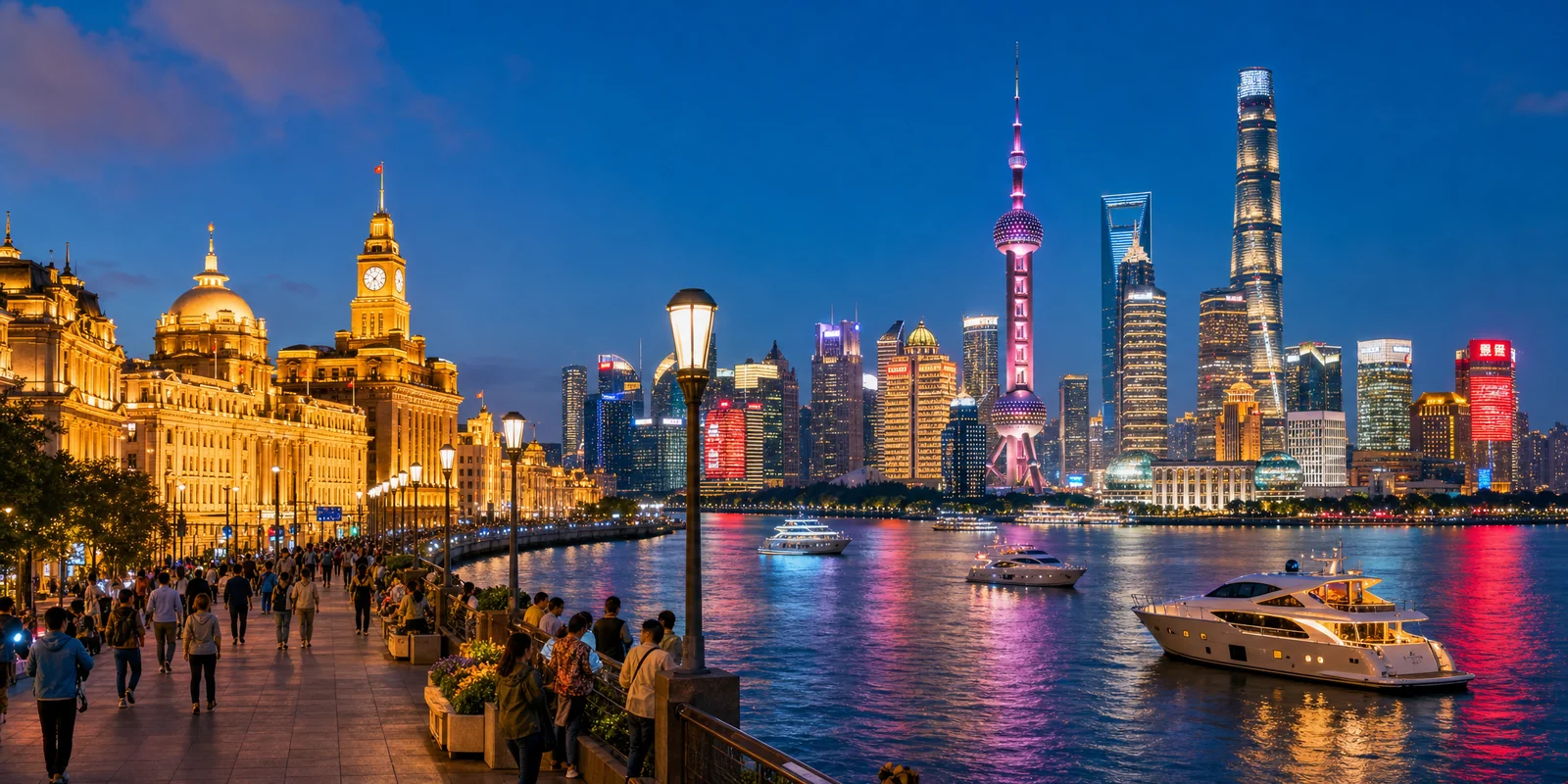
A few practical notes before the recommendations. The best times to visit are spring (March–May) and autumn (September–November), when the weather is mild and the humidity drops. Most luxury hotels and restaurants here handle English fluently, and nearly all of them accept international cards—though you'll still want Alipay (支付宝, Zhīfùbǎo) or WeChat Pay set up for taxis, smaller boutiques, and day-to-day spending. If you haven't sorted that out yet, do it before you arrive; it takes about ten minutes.
Where to Stay: Heritage vs. Modern
Your hotel choice in Shanghai is really a choice between two atmospheres. Both are excellent—it comes down to whether you want history or contemporary calm.
The Heritage Lane
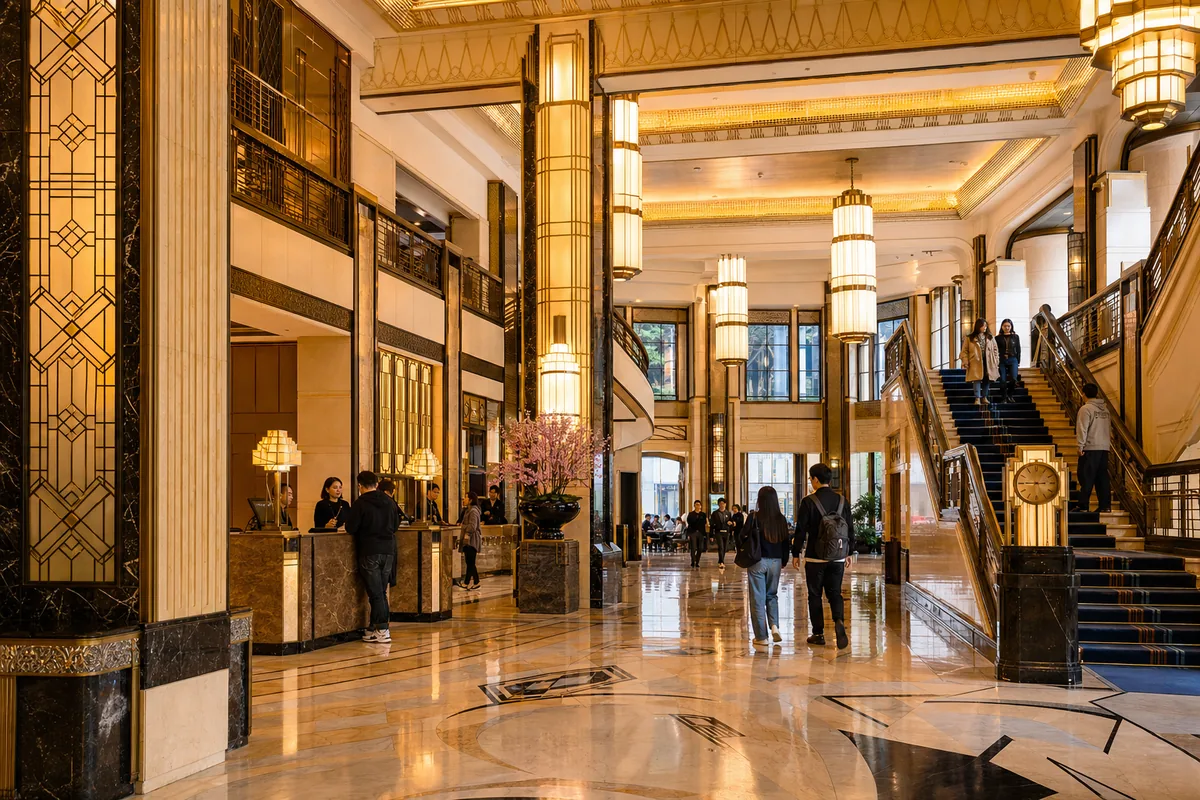
Fairmont Peace Hotel (和平饭店, Hépíng Fàndiàn) sits at the corner of the Bund and Nanjing Road, and it's the most famous building on the waterfront for a reason. Opened in 1929 as the Cathay Hotel, it kept its green pyramid roof, marble lobby, and original Art Deco detailing through a full restoration. The Jazz Bar downstairs has been running with an octogenarian house band for decades—worth a drink even if you stay elsewhere. Rooms facing the river are the ones to book.
Waldorf Astoria on the Bund occupies the former Shanghai Club, home to the legendary "Long Bar" where 1910s traders drank by social rank. The restored Long Bar is now one of the most atmospheric spots in the city for a martini. The hotel blends the historic club building with a modern tower behind it, so you can choose period rooms or contemporary ones.
The Modern Lane
Aman Yangyun (养云安缦, Yǎngyún Ānmàn) is the most unusual luxury property in the Shanghai area, and worth the trip even though it sits about 45 minutes southwest of the city center near Sheshan. The entire resort was built around 50 relocated Ming and Qing dynasty buildings and thousands of ancient camphor trees—both were moved here from Jiangxi province, over 700 km away, to save them from a reservoir project. The result is a serene, walled retreat of antique courtyard houses converted into suites and a spa. This is where you go to disconnect, not where you base yourself for Bund sightseeing.
For modern luxury in the heart of things, the Bulgari Hotel Shanghai (on Suzhou Creek, with views of the historic Shanghai General Chamber of Commerce building) and the Bvlgari, Four Seasons, or Ritz-Carlton in Pudong all deliver sleek rooms, strong service, and skyline views. The Ritz-Carlton in the IFC tower puts you directly above luxury shopping in Lujiazui.
Rates at these properties typically run from around ¥2,500 per night at the entry end to well over ¥8,000 for suites and the Aman, so it pays to compare dates and room categories. You can check current availability and rates for most of these through Booking Com Hotel, which lists the major Bund and Pudong properties side by side.
Fine Dining: Shanghai's Michelin Scene
Shanghai has a serious fine-dining scene, and reservations at the top tables need to be made weeks ahead—sometimes months for the hardest ones.
Ultraviolet by Paul Pairet
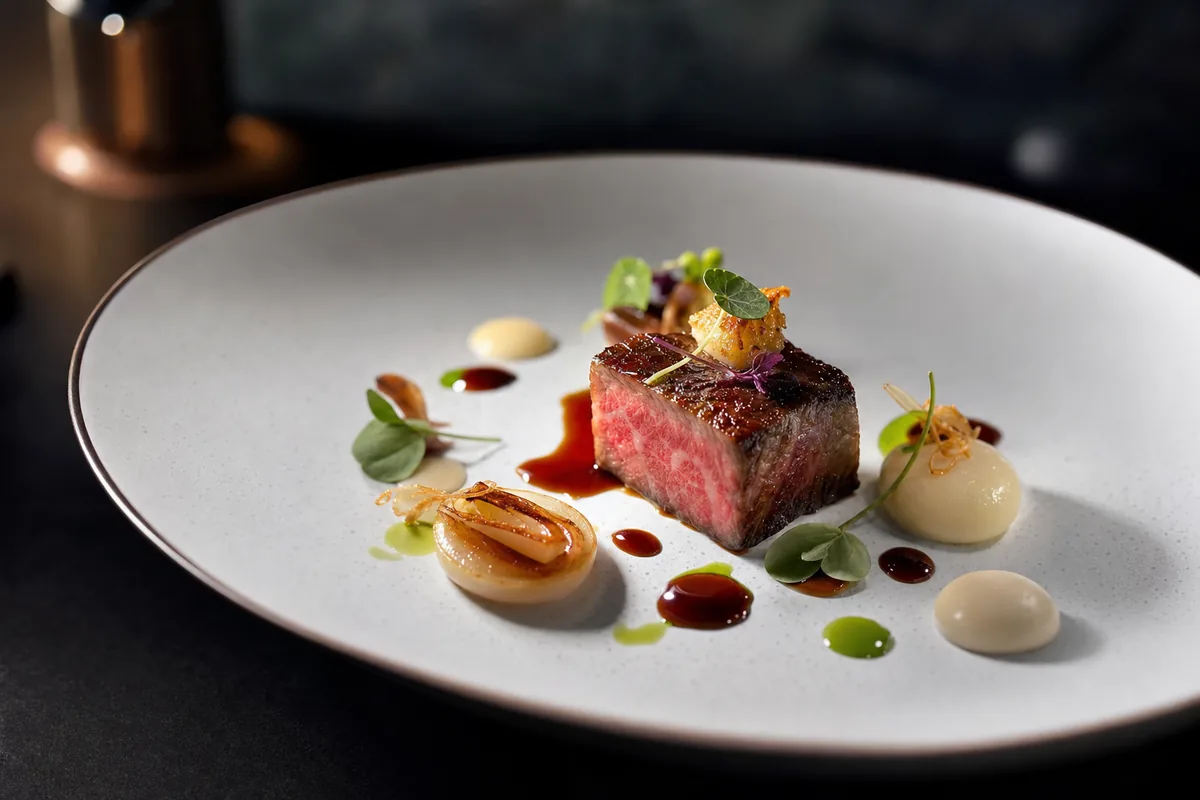
Ultraviolet is the headline act—a three-Michelin-star restaurant with a single table seating just 10 guests per night. You don't get an address when you book; you meet at a separate location and are driven to a hidden room where each of the roughly 20 courses is paired with synchronized lighting, projected visuals, scent, and sound. It's theatrical and polarizing, but nothing else in China is like it. Expect to spend several hours and a price per head in the four figures (RMB). Book through their official site well in advance.
8½ Otto e Mezzo Bombana
8½ Otto e Mezzo Bombana is the more conventional choice if you want extraordinary food without the multimedia performance—refined Italian cooking from chef Umberto Bombana, with white truffles in season and an excellent wine list. It holds multiple Michelin stars and sits in a polished dining room. Easier to book than Ultraviolet, but still reserve ahead.
Beyond these two, the city's Michelin guide is deep: French, Cantonese, modern Chinese, and Jiangnan cuisine are all well represented. For a more local take on high-end Shanghainese food, look at the upscale dining rooms along the Bund and in the former French Concession.
Rooftop Bars and the Bund at Night
The Bund (外滩, Wàitān) is the colonial-era waterfront promenade, and the view across the river to the Pudong skyline is the single most recognizable scene in Shanghai. The smart way to experience it at the high end is from a rooftop bar with a drink in hand.
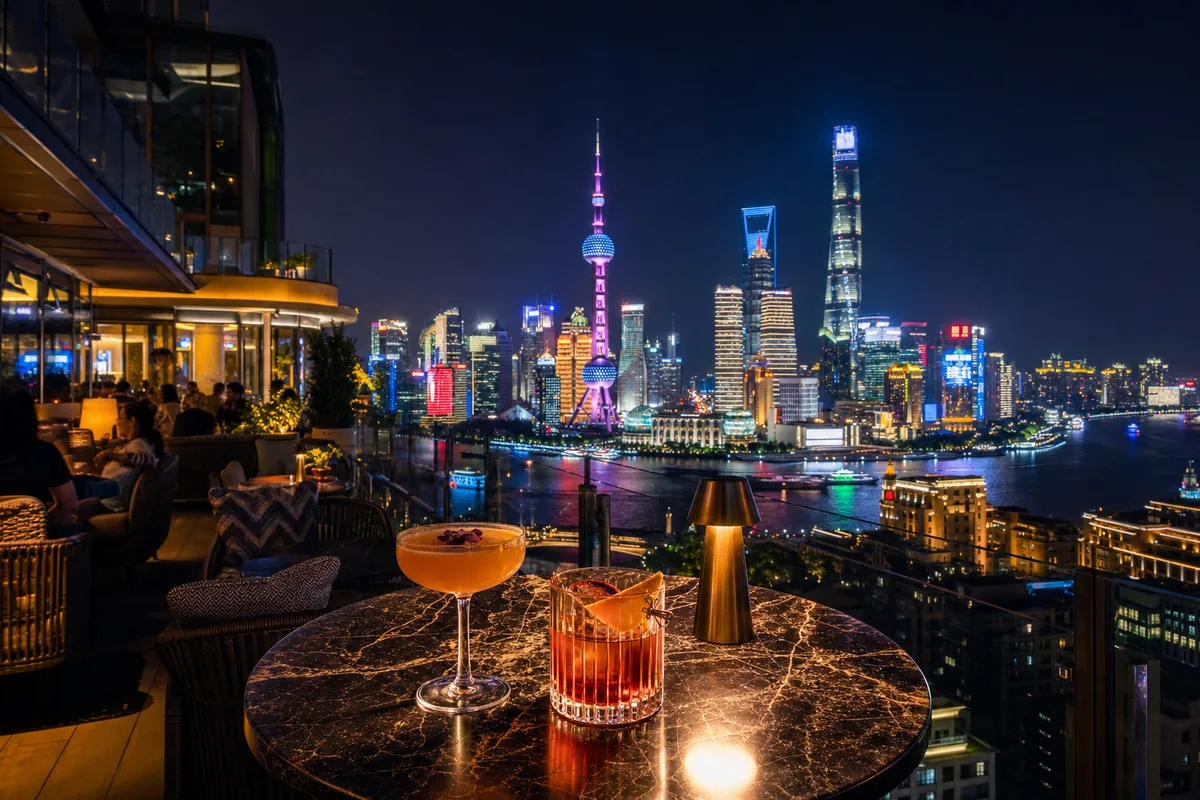
- Flair (Ritz-Carlton Pudong, 58th floor) looks back across the river toward the Bund and puts you nearly level with the Shanghai Tower. Get there before sunset for a table on the open terrace.
- Bar Rouge (Bund 18) is the long-running glamorous option directly on the Bund, with a terrace facing Pudong. More party energy later in the night; arrive early for the calmer view.
- Sir Elly's Terrace (The Peninsula) sits right on the Bund itself with one of the best uninterrupted skyline views in the city.
Most of these have a dress code (no shorts or flip-flops) and a minimum spend or table reservation for terrace seating on weekends. Worth booking ahead if you have a specific night in mind.
A Private Evening on the Huangpu River
The standard tourist river cruise is a packed public boat. The luxury version is a private yacht charter with dinner on board—you and your group cruise the Huangpu past the illuminated Bund and Pudong towers while a chef serves dinner. Several operators run these out of the Bund and North Bund piers; a two-to-three-hour evening charter with catering is the sweet spot. Book through a licensed operator or your hotel concierge, who can arrange the boat, menu, and timing around the nightly skyline light show.
Shopping: Boutiques and Flagships
Shanghai shopping also splits along the two-lane theme—independent designer boutiques in the leafy former French Concession, and international flagships in the malls.
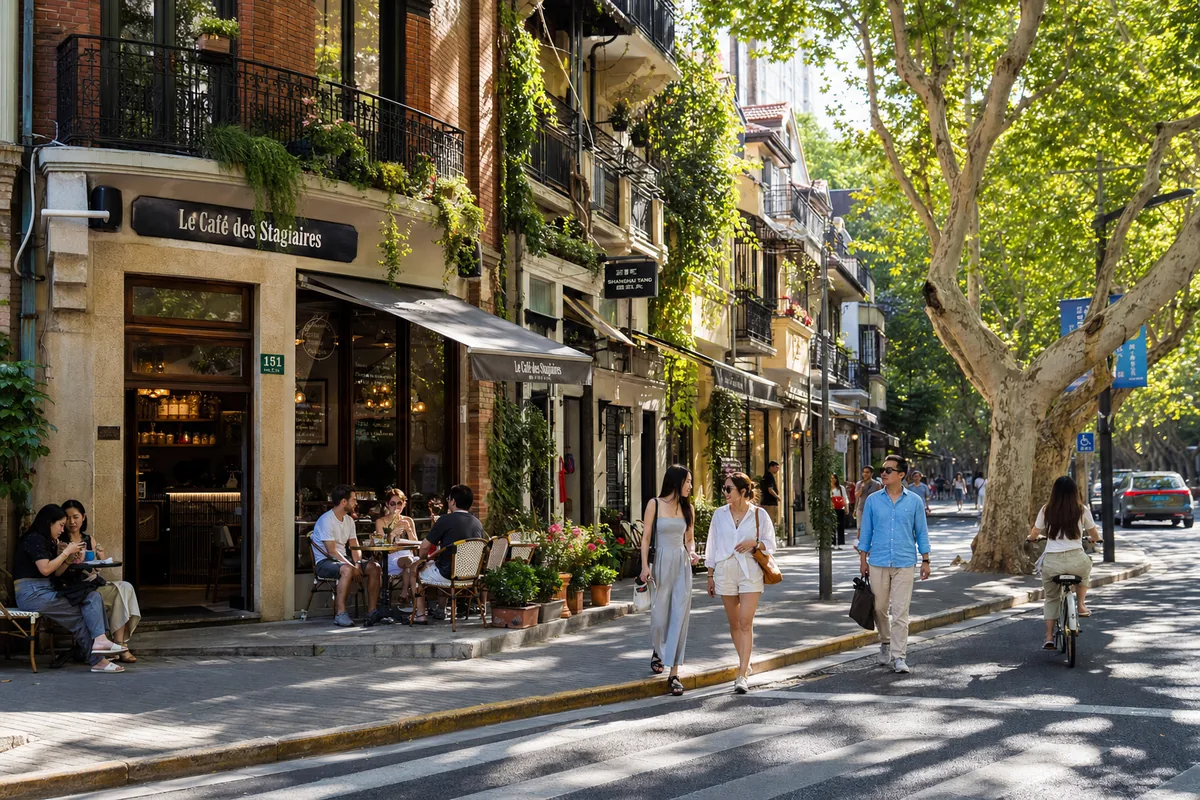
The French Concession: Anfu Road and Wukang Road
The former French Concession (法租界, Fǎ Zūjiè) is the city's most charming neighborhood—plane-tree-lined streets, low colonial villas, and independent shops. Anfu Road (安福路) and Wukang Road (武康路) are the streets to walk for concept stores, local designer labels, specialty coffee, and small galleries. This is where Shanghai's contemporary creative scene lives, and it's best explored slowly on foot. No tour bus reaches the good parts—just wander.
Luxury Malls: Plaza 66 and IFC
For the full international roster—Hermès, Chanel, Louis Vuitton, and the rest—head to Plaza 66 (恒隆广场, Hénglóng Guǎngchǎng) on Nanjing West Road, the city's flagship luxury mall, or Shanghai IFC Mall (国金中心) in Lujiazui, Pudong. Both have the major maisons under one roof with full English-speaking service.
Culture at the Top End
Two experiences stand out for travelers who want depth beyond shopping and dining.
The Shanghai Museum—both the original People's Square building and the newer Shanghai Museum East in Pudong—holds one of China's finest collections of bronzes, ceramics, calligraphy, and painting. A private guided tour with an art historian transforms it from a long walk past glass cases into a focused two hours on the pieces that matter. Arrange through a specialist tour operator in advance.
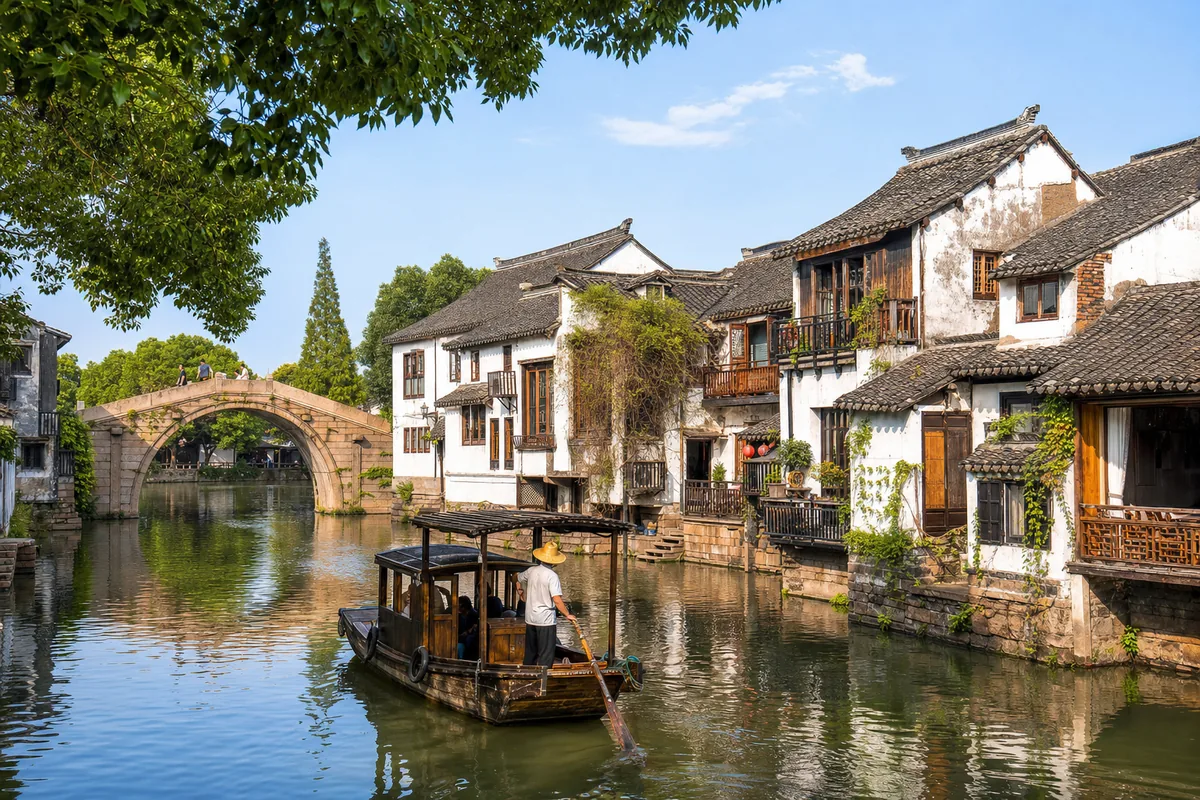
For a half-day escape into Old Jiangnan, Zhujiajiao (朱家角) is a 1,700-year-old canal town about an hour from the city. The public areas get crowded, so the luxury approach is a private chartered boat that takes you down the quieter back canals, away from the main tourist drag, past stone bridges and waterside houses. Pair it with a private car and driver from the city for a relaxed day.
If you'd rather have someone build and run the whole itinerary—reservations, drivers, guides, and timing—a private custom tour is the easiest way to do Shanghai at this level. Operators like Viator list private Shanghai tours and Zhujiajiao day trips you can compare and book in advance.
Suggested 3–4 Day Luxury Itinerary
| Day | Old Shanghai | Modern Shanghai |
|---|---|---|
| Day 1 | Check into a Bund heritage hotel; walk the Bund; jazz at the Peace Hotel | Sunset at a Pudong rooftop bar (Flair) |
| Day 2 | Shanghai Museum private tour; lunch in the French Concession | Boutique shopping on Anfu/Wukang Road; dinner at 8½ Otto e Mezzo |
| Day 3 | Private boat at Zhujiajiao water town | Private yacht dinner on the Huangpu, or Ultraviolet (if booked) |
| Day 4 | Transfer to Aman Yangyun for a spa day and one quiet night before departure | |
Practical Tips for a Luxury Trip
- Payments: International cards work at hotels, malls, and fine-dining restaurants. Set up Alipay or WeChat Pay anyway for taxis and smaller spots.
- Getting around: Most luxury hotels offer car service; Didi (the local ride-hailing app) is reliable and cheap for everything else. The metro is fast but not the luxury experience.
- Reservations: Book Ultraviolet and Aman Yangyun the moment your dates are fixed. They sell out.
- Concierge: Use your hotel concierge aggressively—they can secure tables, yacht charters, and museum guides that are hard to arrange yourself from abroad.
- Best season: Spring and autumn. Summer is hot and humid; winter is grey but the indoor experiences hold up.
For planning your days and getting around the city, the WaysChina app has offline metro maps and a built-in trip planner if you want to map out routes between the Bund, the French Concession, and Pudong before you go.
Final Word
Shanghai rewards travelers who pick a lane and commit—or better yet, split their trip between the two. Spend your first nights soaking up the Art Deco glamour of the Bund, then decompress at Aman Yangyun before you fly home. Lock in the hard reservations (Ultraviolet, the Aman, top tables) as early as you can, lean on your concierge for the rest, and you'll have a trip that very few visitors ever pull off. Start with your hotel and your two or three anchor dinners; everything else can flex around them.
For more on the city beyond the luxury angle, see our complete Shanghai guide and our 3-day Shanghai itinerary.
Prices, opening hours, and reservation policies change—confirm the latest details directly with each hotel, restaurant, or operator before you travel.
Last updated: June 2026
Read in other languages
Getting to the sights by metro
The Bund
Iconic waterfront promenade facing the Lujiazui skyline.
- East Nanjing Road
- Tiantong Road
- Yuyuan Garden
Oriental Pearl Tower
468m TV tower with glass-floor observation deck.
- Lujiazui
Shanghai Tower
China's tallest building (632m), 118F observation deck.
- Lujiazui
Yu Garden
Ming-era classical garden next to the City God Temple market.
- Yuyuan Garden
- Lujiabang Road
Shanghai Disneyland
Mainland China's first Disney resort. Take Line 11 to Disney Resort.
- Disney Resort
Nanjing Road Pedestrian Street
1km pedestrian shopping street connecting Bund and People's Square.
- East Nanjing Road
- People's Square
People's Square
Central plaza and museum hub (Shanghai Museum, Urban Planning Exhibit).
- People's Square
- Dashijie
Xintiandi
Restored shikumen block, now a wine-and-dine hotspot.
- Site of the First CPC National Congress·Xintiandi
- Site of the First CPC National Congress·South Huangpi Road
- Madang Road
Tianzifang
Shikumen alley arts district with cafes, boutiques, and galleries.
- Dapuqiao
- Madang Road
Jing'an Temple
Gold-roofed Buddhist temple in the heart of West Nanjing Rd.
- Jing'an Temple
- Changshu Road
Lujiazui
Pudong's financial district — Shanghai Tower, SWFC, Jin Mao.
- Lujiazui
Shanghai Museum
Top bronze, ceramics, and calligraphy collection. Free entry.
- People's Square
- Dashijie
Longhua Temple
Shanghai's oldest temple (242 AD); famous spring peach blossoms.
- Longhua
- Middle Longhua Road
Zhujiajiao Water Town
1700-year-old water town; take Line 17 to Zhujiajiao.
- Zhujiajiao
Shanghai Pudong International Airport
Shanghai's main international airport (PVG); also served by the 430 km/h Maglev to central Pudong.
- Pudong Airport Terminal 1&2
Shanghai Hongqiao International Airport
Shanghai's secondary airport (SHA) for domestic and short-haul international; integrated with Hongqiao Railway in one mega-hub.
- Hongqiao Airport Terminal 2
- Hongqiao Airport Terminal 1
Shanghai Hongqiao Railway Station
China's busiest high-speed rail station; integrated with Hongqiao Airport in one mega-hub.
- Hongqiao Railway
Shanghai Railway Station
Shanghai's historic main rail station (the 'New North Station'); conventional and selected high-speed services.
- Shanghai Railway
Shanghai metro: last train times by station
Every line and station, checked by hand — the same data behind our offline route planner.
Get the WaysChina App
Offline guides, currency converter, essential phrases, and more — all in your pocket.

Related Articles
3 Days in Shanghai: An Itinerary You Can Follow As Written
A day-by-day Shanghai route built on metro logic: museum and Bund on day one, towers and old town on day two, a flex...
Day Trips from Shanghai: Water Towns, Suzhou and Hangzhou, Honestly Compared
Which Shanghai day trip fits you: metro-reach Zhujiajiao, Suzhou's real-name garden tickets, free West Lake, or an...
Shanghai Food Guide: What to Eat, Where to Eat It, and How to Order
Beyond soup dumplings: how to eat xiaolongbao without scalding yourself, where locals actually eat, halal and...
Huangshan Guide
How to plan a trip to Mount Huangshan: choosing your route up and down, catching the sunrise, where to sleep on the...