
This article contains affiliate links. If you make a purchase through these links, we may earn a small commission at no extra cost to you. This helps support our work in creating free travel guides.
Shanghai sits in the middle of the best day-trip country in China: classical gardens, a famous lake, and half a dozen canal towns, all reachable by high-speed rail or even the metro. The problem isn't finding options — it's choosing. Here's the honest decision framework, then the practical details for each trip: how to get there, what needs a reservation, and whether a same-day return actually works.
How to choose
Match the trip to what you're missing, not to a ranking. If you want classical gardens and old streets, that's Suzhou. If you want the famous lake-and-hills scenery, that's Hangzhou. If you want a canal town with the least logistics, Zhujiajiao is a metro ride away; if you want the postcard canal town at night, Wuzhen is better but really wants an overnight stay. And Disneyland isn't a day trip — it's inside the city, covered in our 3-day itinerary.
| Trip | Best for | Getting there | Tickets |
|---|---|---|---|
| Zhujiajiao | Easiest water town | Metro Line 17 | Free to enter |
| Suzhou | Gardens, old streets | High-speed rail | Paid gardens, real-name tickets |
| Hangzhou | West Lake scenery | High-speed rail | Lake is free |
| Wuzhen / Xitang | Canal-town atmosphere | Rail + bus or car | Paid entry; overnight pays off |
| Qibao | An hour's taste, not a trip | Metro (in-city) | Open streets |
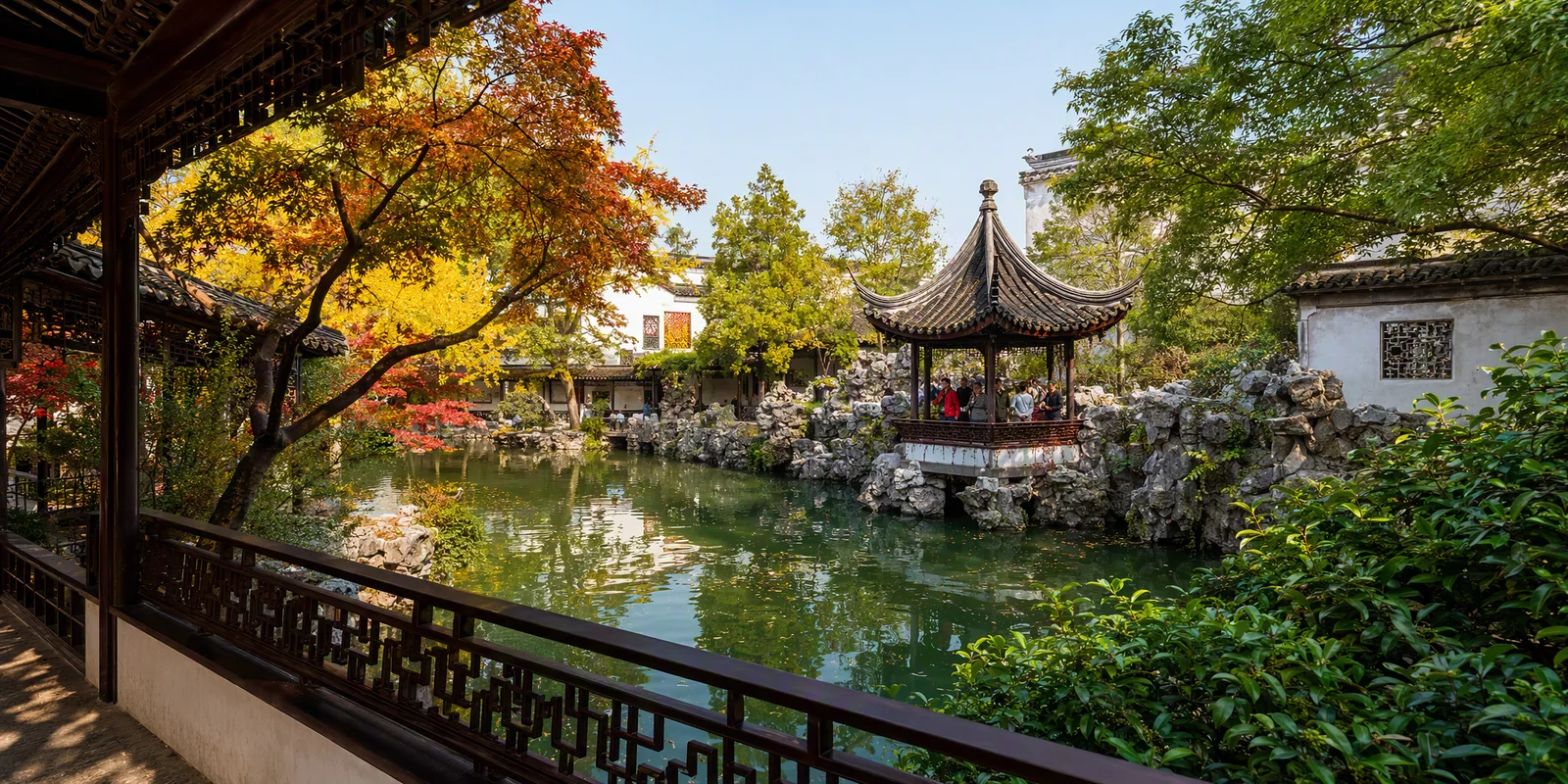
Zhujiajiao: the water town without logistics
Zhujiajiao is the only major water town you can reach on the Shanghai metro — ride Line 17 to Zhujiajiao station and walk in; the town itself is free to enter. Ming and Qing stone bridges, narrow canals, and enough lanes to fill a slow half day. Rowing-boat rides are sold on site — prices are posted at the piers, so check there rather than trusting any list you read online. Go in the morning: by midday the day-tour buses arrive and the main bridge becomes a photo queue. Half a day is genuinely enough, which is exactly what makes it the best value trip on this list — you're back in the city for dinner.
Suzhou: gardens and old streets, with one booking rule
Suzhou is the classic day trip and the one where a rule catches visitors: the top gardens sell real-name tickets. The Humble Administrator's Garden — the biggest and most famous — requires real-name purchase, and for foreign visitors that currently means booking with your passport; you can buy on the day at the gate, and online bookings are only valid for the exact day you choose. Entry runs 80 yuan in peak months (April, May and July through October — note June counts as off season) and 70 the rest of the year, and the garden authority's official price page is the reference if anything changes. The Suzhou Museum next door is a different story: reservation-only, bookable up to seven days ahead through its official channels, and closed Mondays.
A workable day: Humble Administrator's Garden at opening, the museum after (if you reserved), then Pingjiang Road's canal-side old street, and — if you still have legs — the Lingering Garden at 55/45 yuan or Tiger Hill at 70/60 before the train back. Deep-dive coverage is in our Suzhou guide.
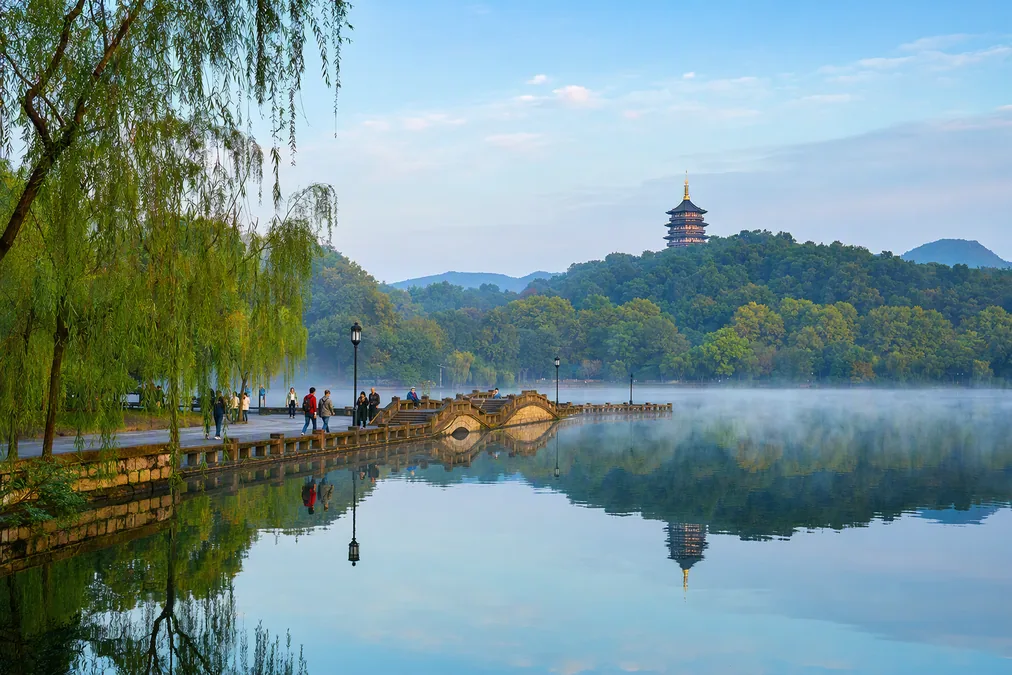
Hangzhou: West Lake in a day
Hangzhou's headline is free: West Lake has had no entry ticket since 2002 — the whole shoreline is an open park. A good single day is the east-shore loop in the morning (Broken Bridge, the causeways, the viewing pavilions), then one inland choice in the afternoon: Lingyin Temple and Feilai Peak, or the Longjing tea terraces.
One recent change most guides haven't caught: since December 2025, the Lingyin–Feilai Peak area dropped its entry tickets entirely and switched to free, real-name, timed-slot reservations — book at least a day ahead in the official "杭州灵隐飞来峰" mini-program inside Alipay or WeChat, passports accepted. So the temple now costs nothing but requires the one piece of advance planning on this trip: reserve your slot the night before, or earlier on weekends.
Wuzhen, Xitang and Qibao: the atmosphere tier
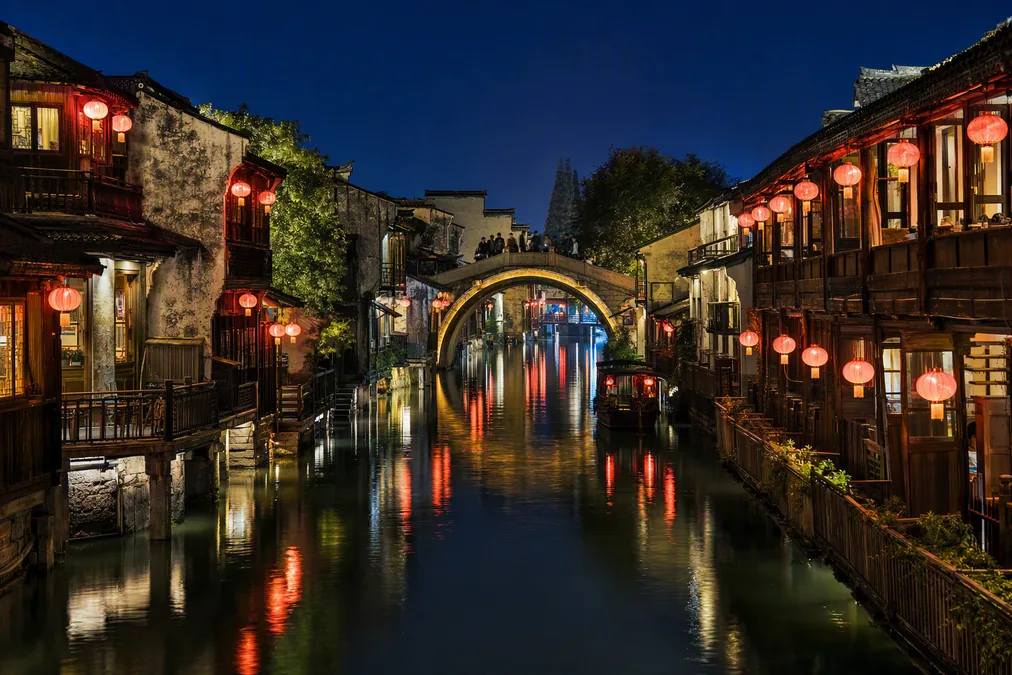
Wuzhen is the most polished canal town in the region and the one that rewards staying over. Tickets are 110 yuan for the East Zone, 150 for the West Zone, or 190 combined; the West Zone runs 9:00 to 22:00 and is the evening show — lantern-lit canals after the day crowds leave. Entry is single-use per day for day visitors, but guests at hotels inside the West Zone get a re-entry pass, and since March 2025 booked West Zone hotel guests get the West Zone ticket included — the East Zone stays separate. That's why the overnight math works. As a pure day trip from Shanghai it's doable but long: rail to the nearest station, then a local bus or taxi onward — check the connection in your map app and allow extra time each way.
Xitang is Wuzhen's scrappier neighbor — similar canals, less restoration, and an entry fee; check the current price on its official channels when you plan. Qibao, inside Shanghai and reachable on the metro (look for Qibao station in your map app), isn't a day trip at all — it's an hour of old-street snacking that works as an add-on to a light afternoon.
The rail part, briefly
All the rail trips here leave from Shanghai's main stations, most conveniently Hongqiao. Three things smooth the day. First, tickets are real-name: book with your passport on the 12306 app or site, which accepts foreign passports directly. Second, at the station, passport holders use the staffed channel rather than the automatic gates — arrive 30–40 minutes early on weekends. Third, trains on these corridors run all day, but book your return leg when you book the outbound: presale opens 15 days ahead, and evening returns on popular days sell out first. The full walkthrough — accounts, waitlists, changes — is in our train booking guide, or book in English via Trip.com.
If you'd rather not run the logistics at all, guided day tours to the water towns and Hangzhou leave from Shanghai daily — GetYourGuide lists the options with hotel pickup.
Frequently asked questions
Can you do Suzhou or Hangzhou as a day trip from Shanghai?
Yes, comfortably — from Hongqiao it's well under an hour to Suzhou and around an hour to Hangzhou on the faster trains; check 12306 for your exact departure, since trains run all day. The practical limits are your feet, not the trains: plan one anchor sight plus one neighborhood, book the return train in advance, and you'll be back in Shanghai for a late dinner.
Suzhou or Hangzhou — which one if you can only do one?
Gardens, canals and walkable old streets: Suzhou. Big lake scenery, temple-and-tea landscapes: Hangzhou. If it helps: Suzhou is the denser day with more to see per kilometer; Hangzhou is the more beautiful single view. First-timers who love architecture pick Suzhou; photographers pick Hangzhou.
Does Zhujiajiao have an entrance fee?
No — the town is free to walk into, straight off Metro Line 17. You pay only for optional extras like the rowing-boat rides, priced at the piers on site.
Do Suzhou's gardens require advance reservations?
The big three — Humble Administrator's Garden, Lingering Garden and Lion Grove — sell real-name tickets, but you can buy same-day at the gate with your passport; most of Suzhou's other gardens have dropped reservations entirely. The strict advance bookings in the region are the Suzhou Museum — up to seven days ahead, closed Mondays except public holidays — and Lingyin in Hangzhou, at least a day ahead (see above).
Last updated: September 2026
Read in other languages
Getting to the sights by metro
The Bund
Iconic waterfront promenade facing the Lujiazui skyline.
- East Nanjing Road
- Tiantong Road
- Yuyuan Garden
Oriental Pearl Tower
468m TV tower with glass-floor observation deck.
- Lujiazui
Shanghai Tower
China's tallest building (632m), 118F observation deck.
- Lujiazui
Yu Garden
Ming-era classical garden next to the City God Temple market.
- Yuyuan Garden
- Lujiabang Road
Shanghai Disneyland
Mainland China's first Disney resort. Take Line 11 to Disney Resort.
- Disney Resort
Nanjing Road Pedestrian Street
1km pedestrian shopping street connecting Bund and People's Square.
- East Nanjing Road
- People's Square
People's Square
Central plaza and museum hub (Shanghai Museum, Urban Planning Exhibit).
- People's Square
- Dashijie
Xintiandi
Restored shikumen block, now a wine-and-dine hotspot.
- Site of the First CPC National Congress·Xintiandi
- Site of the First CPC National Congress·South Huangpi Road
- Madang Road
Tianzifang
Shikumen alley arts district with cafes, boutiques, and galleries.
- Dapuqiao
- Madang Road
Jing'an Temple
Gold-roofed Buddhist temple in the heart of West Nanjing Rd.
- Jing'an Temple
- Changshu Road
Lujiazui
Pudong's financial district — Shanghai Tower, SWFC, Jin Mao.
- Lujiazui
Shanghai Museum
Top bronze, ceramics, and calligraphy collection. Free entry.
- People's Square
- Dashijie
Longhua Temple
Shanghai's oldest temple (242 AD); famous spring peach blossoms.
- Longhua
- Middle Longhua Road
Zhujiajiao Water Town
1700-year-old water town; take Line 17 to Zhujiajiao.
- Zhujiajiao
Shanghai Pudong International Airport
Shanghai's main international airport (PVG); also served by the 430 km/h Maglev to central Pudong.
- Pudong Airport Terminal 1&2
Shanghai Hongqiao International Airport
Shanghai's secondary airport (SHA) for domestic and short-haul international; integrated with Hongqiao Railway in one mega-hub.
- Hongqiao Airport Terminal 2
- Hongqiao Airport Terminal 1
Shanghai Hongqiao Railway Station
China's busiest high-speed rail station; integrated with Hongqiao Airport in one mega-hub.
- Hongqiao Railway
Shanghai Railway Station
Shanghai's historic main rail station (the 'New North Station'); conventional and selected high-speed services.
- Shanghai Railway
Shanghai metro: last train times by station
Every line and station, checked by hand — the same data behind our offline route planner.
Get the WaysChina App
Offline guides, currency converter, essential phrases, and more — all in your pocket.

Related Articles
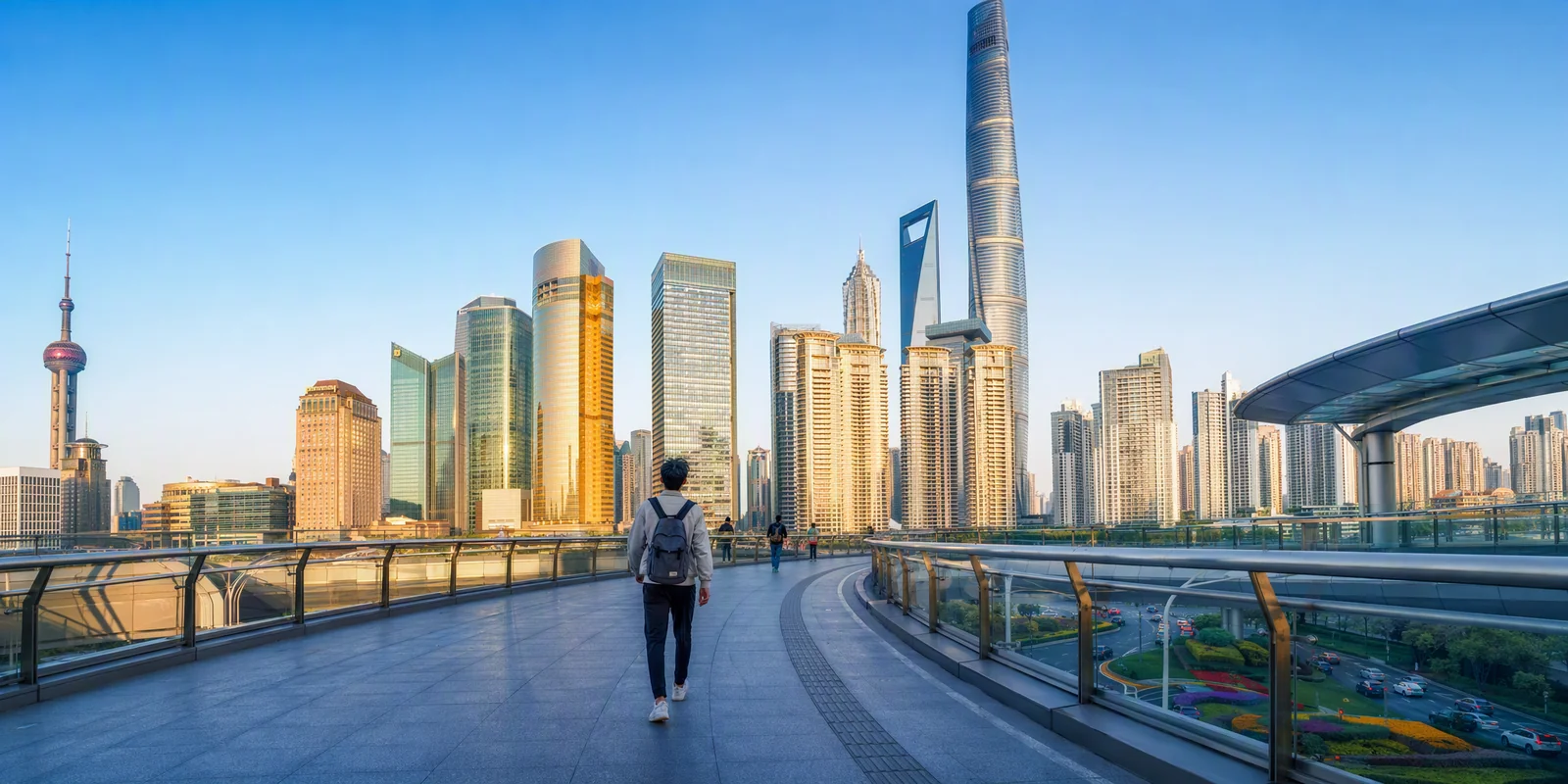
3 Days in Shanghai: An Itinerary You Can Follow As Written
A day-by-day Shanghai route built on metro logic: museum and Bund on day one, towers and old town on day two, a flex...
Shanghai Food Guide: What to Eat, Where to Eat It, and How to Order
Beyond soup dumplings: how to eat xiaolongbao without scalding yourself, where locals actually eat, halal and...
Huangshan Guide
How to plan a trip to Mount Huangshan: choosing your route up and down, catching the sunrise, where to sleep on the...
Hangzhou Travel Guide: How Many Days, What's Free at West Lake, and How to Book Lingyin
Two days in Hangzhou: which of the three railway stations to book, how to get around a lake district that limits...