
This article contains affiliate links. If you make a purchase through these links, we may earn a small commission at no extra cost to you. This helps support our work in creating free travel guides.
Shanghai is the easiest big city in mainland China for a first-time visitor: English signage is everywhere on the metro, the airports are well connected, and you can pay for almost everything with your home cards — tapped directly on transit gates, or linked to Alipay and WeChat Pay for everything else. This guide answers the questions that actually decide your trip — how many days you need, what has to be booked before you fly, where to stay, and how to move around — with the current rules, which have changed a lot since most guides were written.
How many days, when to come, and how the city fits together
Two full days cover the classic Shanghai: the Bund and the old town on one day, the Pudong skyline and a museum on the other. Three days is the comfortable version most visitors should plan for. Four or more days makes sense if you want Disneyland or a day trip to Suzhou or Hangzhou — both are easy by high-speed rail.
Weather-wise, spring (roughly April to early June) and autumn (late September to November) are the pleasant windows. Summer is hot and humid with a rainy stretch, and January and February are damp-cold. None of this should cancel a trip — Shanghai is very much an indoor-plus-outdoor city — but if you can pick, pick spring or autumn, and avoid Chinese public holidays, when every major sight is at its most crowded.
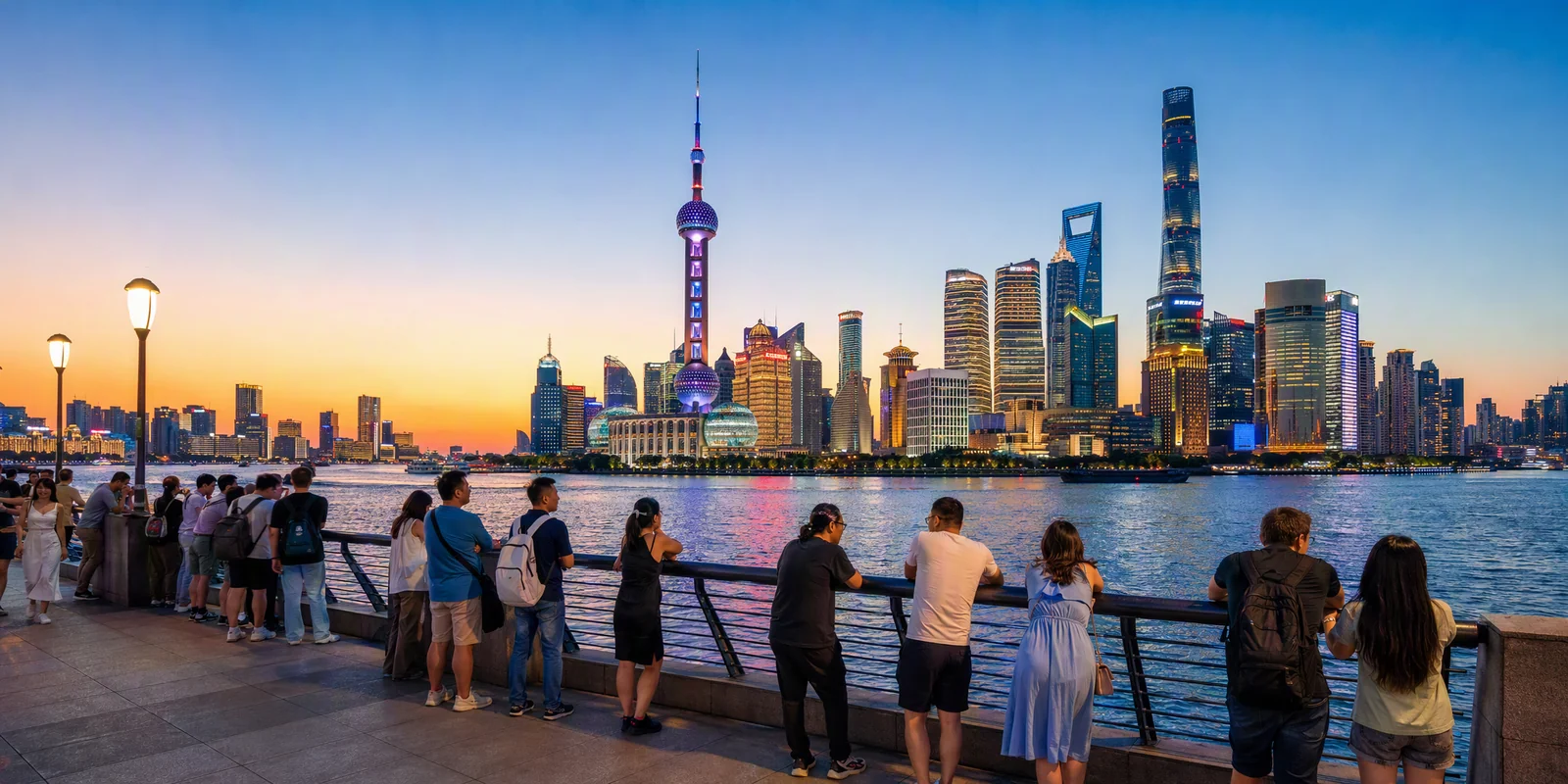
The geography is simple once you know the river. The Huangpu River splits the city into Puxi (浦西, west bank — the historic side, with the Bund, the old town, and the former French Concession) and Pudong (浦东, east bank — the skyscraper skyline you know from photos). Almost everything you came to see sits within a few metro stops of this river axis.
One more thing worth knowing before you book flights: Shanghai is covered by China's 240-hour visa-free transit policy — its airports and port are among the 65 entry points where eligible nationalities can enter without a visa when transiting to a third country. If that applies to you, ten days is far more than enough for Shanghai plus a side trip. Details and eligibility are in our 240-hour visa-free transit guide.
Getting in from the airports
Shanghai has two airports. Pudong (PVG) handles most international flights and sits far east of the city; Hongqiao (SHA) is close to downtown and mostly domestic. From Pudong you have three sensible options: the Maglev train to Longyang Road at 50 yuan single, or 40 yuan if you show your same-day flight ticket, then metro onward; Metro Line 2 all the way downtown (cheap, slow, no luggage limits that matter); or a taxi from the official ranks outside arrivals, which run 24 hours. From Hongqiao, Metro Line 2 or 10 takes you straight into the center — Line 10 also serves Terminal 1.
The full comparison — including night buses after the metro closes and which option wins with heavy luggage — is in our Shanghai airport guide.
Getting around the city
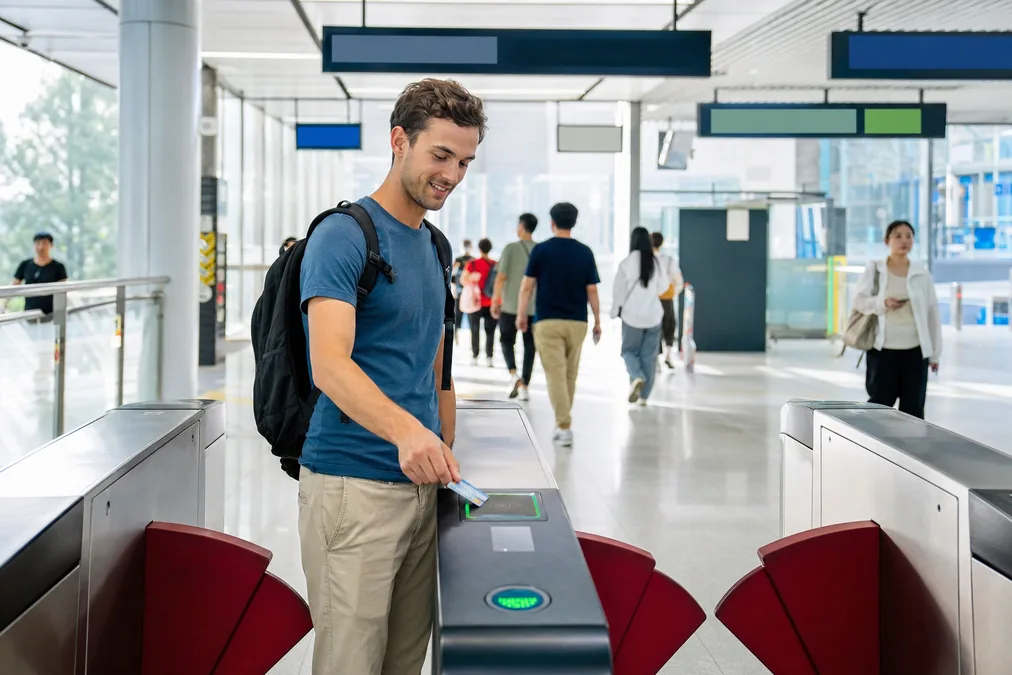
The metro is how you'll move. It's clean, signed in English, and reaches every sight in this guide. What most visitors don't know is how low the barrier has become: you can tap a foreign contactless Visa, Mastercard, American Express, JCB or UnionPay card directly on the fare gates — no app, no ticket machine, no Chinese phone number. If your card isn't contactless, every station's service counter sells tickets on a POS machine that accepts foreign cards.
If you'd rather set things up once: the official Metro 大都会 (Daduhui) app registers with a passport and charges you after each ride, and the city's own SH MaaS app (随申行, English version, registers with an overseas phone number) gives you one QR code that works on the metro, buses and the river ferries. Heavy metro users can consider the day passes — 18 yuan for 24 hours or 45 yuan for 72 hours of unlimited rides. The Shanghai government's English-language metro guide keeps the full list of ticket types and payment options current.
Two practical warnings. First, last trains are earlier than you'd expect from a city this size — lines differ station by station, so check the timetable in the app (or our Shanghai last-train lookup) before a late dinner; on Fridays and Saturdays six lines run extended hours. Second, fares are under review — a fare-reform hearing was held in September 2026 — so treat the current 3-yuan starting fare as subject to change and trust what the gate or app charges you.
Taxis are the backup, not the default: metered cabs start at 14 yuan for the first 3 kilometers, and ride-hailing through DiDi works with foreign cards — our DiDi guide covers setup. For crossing between the Bund and Lujiazui, there's also a plain commuter ferry — 2 yuan per person, daytime only on the Dongjin line between Jinling Road East pier and Dongchang Road pier — which locals use as the cheap version of a river cruise. the WaysChina app
Where to stay
Pick your base by metro logic, not by hotel brand. Around People's Square and East Nanjing Road several metro lines cross — including Lines 2 and 10 right at East Nanjing Road station — and you can walk to both the Bund and the pedestrian street; it's the best all-round choice for a first visit. The Bund itself means river views at a premium. Jing'an and the former French Concession trade a few metro stops for leafy streets, cafés and better everyday food. Lujiazui puts the skyline outside your window but feels corporate and quiet at street level after office hours. Near Hongqiao makes sense only if you have an early train or flight. Hotels in all these areas are easy to compare and book on Booking.com; note that hotels in China must register foreign guests with the local authorities, so budget places that can't handle passports won't take your booking — stick to listed hotels.
What to see — and what needs booking ahead
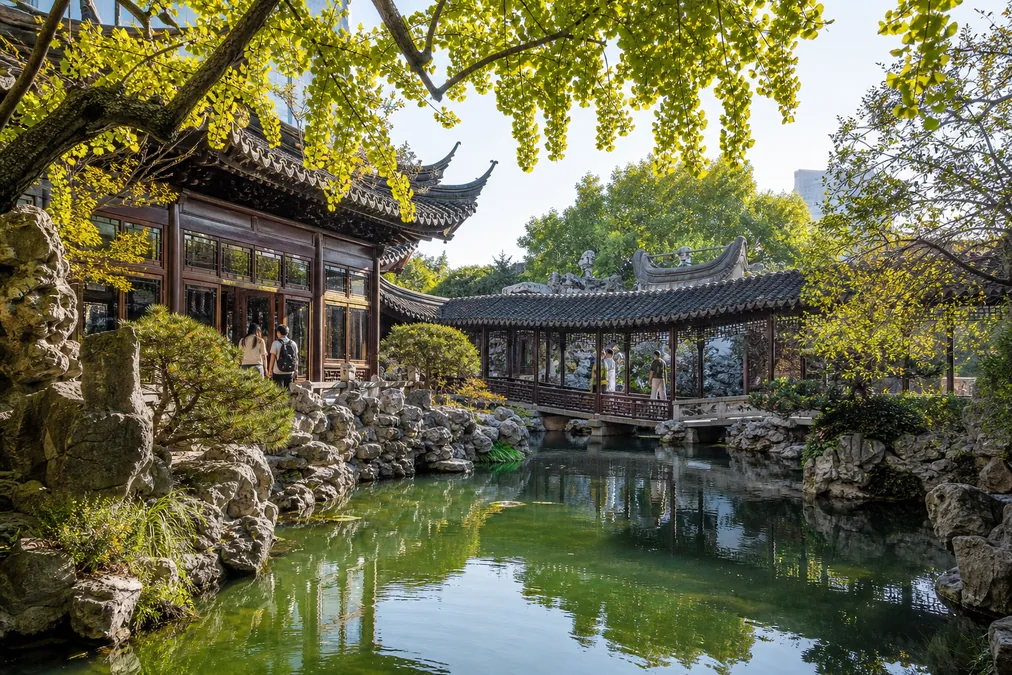
Here's the honest hierarchy. The single best thing in Shanghai is free: walk the Bund promenade at dusk and watch the Lujiazui towers light up across the river — it's open around the clock. The old town around Yu Garden, the former French Concession streets, Tianzifang's lanes and the Nanjing Road pedestrian street are also free to wander.
The paid decisions are fewer than you'd think. The Shanghai Museum East in Pudong — one of the country's best museum collections — is free, and since September 2024 individual visitors no longer need a reservation: bring your physical passport, go through security at the B1 east entrance, and walk in. It closes on Tuesdays, not Mondays like most Chinese museums — a detail that has wrecked many day plans. Yu Garden, the classical garden (separate from the free bazaar around it), charges 40 yuan in peak season and closes Mondays.
For the skyline-from-above experience, pick one tower, not three. Jinmao Tower's 88th-floor deck is the cheapest at 120 yuan; the Oriental Pearl is the retro icon, with combo packages at 259–279 yuan and standalone deck admission priced on its official channels; Top of Shanghai in Shanghai Tower is the highest at 180 yuan. Tickets are also sold on platforms like Klook if you prefer booking in English before you go.
Disneyland is the one sight where planning is mandatory: tickets are date-specific with tiered pricing published on a 30-day calendar, and since December 2024 it's one ticket per ID per day — you buy with your ID details and show the same document at the gate. Buy through the official app or site once your dates are fixed.
| Sight | Ticket | Reservation | Hours & closing day |
|---|---|---|---|
| Shanghai Museum East Wing | Free | Not needed for individuals — passport at the door | 10:00-18:00 · last entry 17:00 · closed Tue (open on public holidays) |
| Shanghai Disneyland | — | Real-name: one ticket per ID per day; bring the original ID to enter | — |
| Oriental Pearl Tower | combos ¥259–279 | Not needed; buy at the gate or online | 08:00-22:00 · last entry 21:00 · no closing day |
| Shanghai Tower (Top of Shanghai) | adult ¥180 | Not needed; buy at the gate or online | — |
| Jinmao Tower 88F | adult ¥120 | Not needed; buy at the gate or online | — |
| Yu Garden | ¥40 peak / ¥30 off-season | Not needed; buy at the gate or online | 09:00-16:30 · last entry 16:00 · closed Mon (open on public holidays) |
A two-to-three-day shape
Day one: the Shanghai Museum East (a short Line 2 ride into Pudong; open 10:00–18:00, last entry 17:00), then back to walk East Nanjing Road and end at the Bund for sunset. Day two: Lujiazui and one observation deck in the morning, Yu Garden and the old town after lunch, Xintiandi or Tianzifang in the evening. Day three is your flex day — Zhujiajiao water town, a slow morning in the French Concession, or Disneyland. The hour-by-hour version with metro lines and booking lead times is in our 3-day Shanghai itinerary.
What to eat
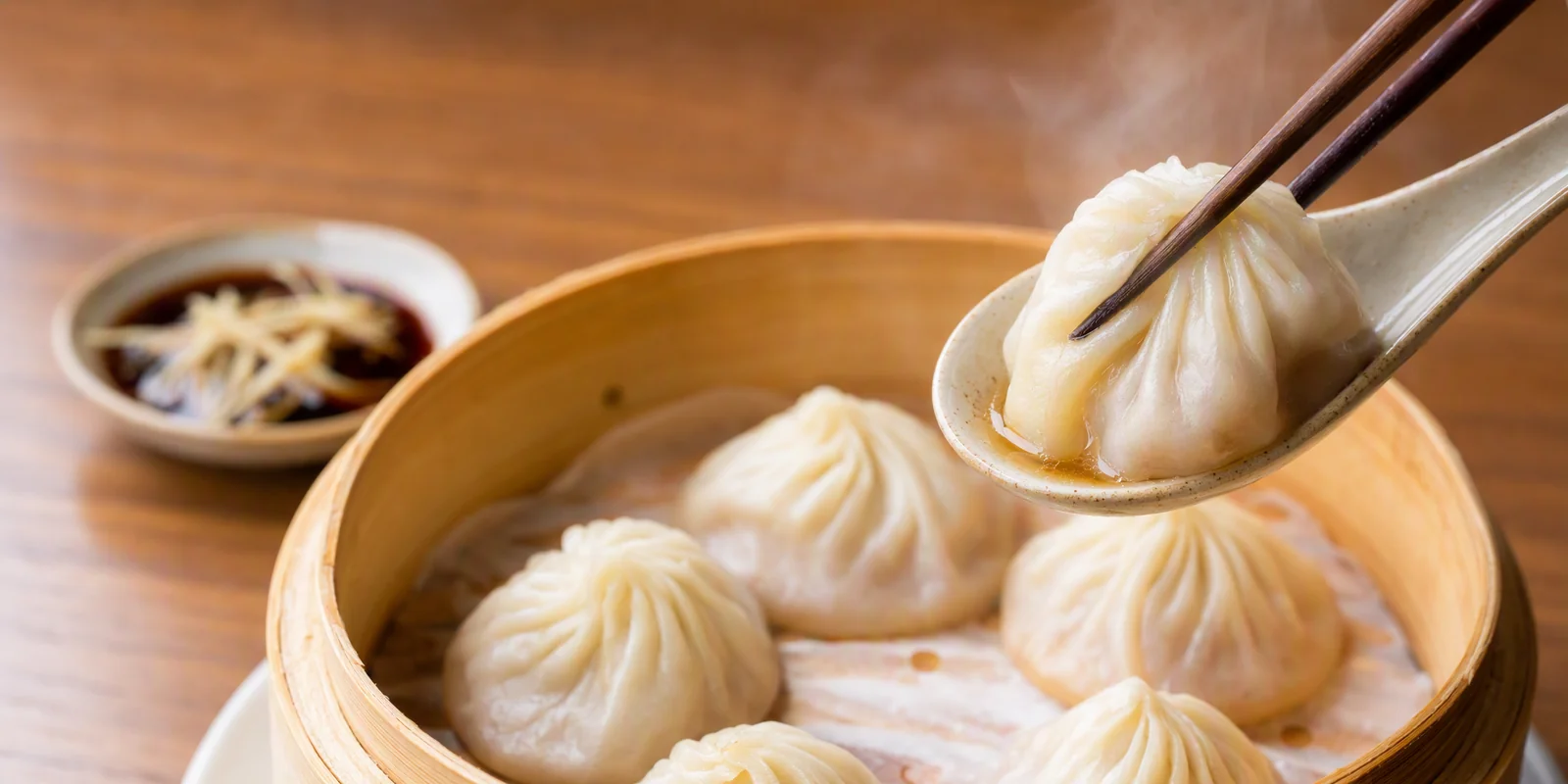
Shanghai's signatures are xiaolongbao (小笼包, soup dumplings), shengjianbao (生煎, pan-fried pork buns with a crackly bottom) and benbang (本帮) home-style dishes — sweeter and darker than most Chinese food you've had, built on soy and sugar. Restaurants display a government hygiene grade as a smiley face at the door — a large smile means the best rating. Where to find the real versions, how to order without Chinese, and what the old-town queues are actually worth is all in the Shanghai food guide.
Money and internet
Payment is the thing to set up before you land. Visitors can pay by mobile app, bank card or cash, but mobile payment is the one that works everywhere: Alipay and WeChat Pay both link foreign cards, Visa and Mastercard included — check the supported-card list shown in the app when you add yours, as it's the up-to-date version. Once linked, you scan QR codes like a local; see our Alipay setup guide. Keep a little cash for the odd market stall. For data, an eSIM bought before the trip (for example via Airalo) saves you the airport SIM counter; if you need Google, Instagram or WhatsApp, sort your connection strategy before you fly — our internet and VPN guide explains the options.
Out of the city
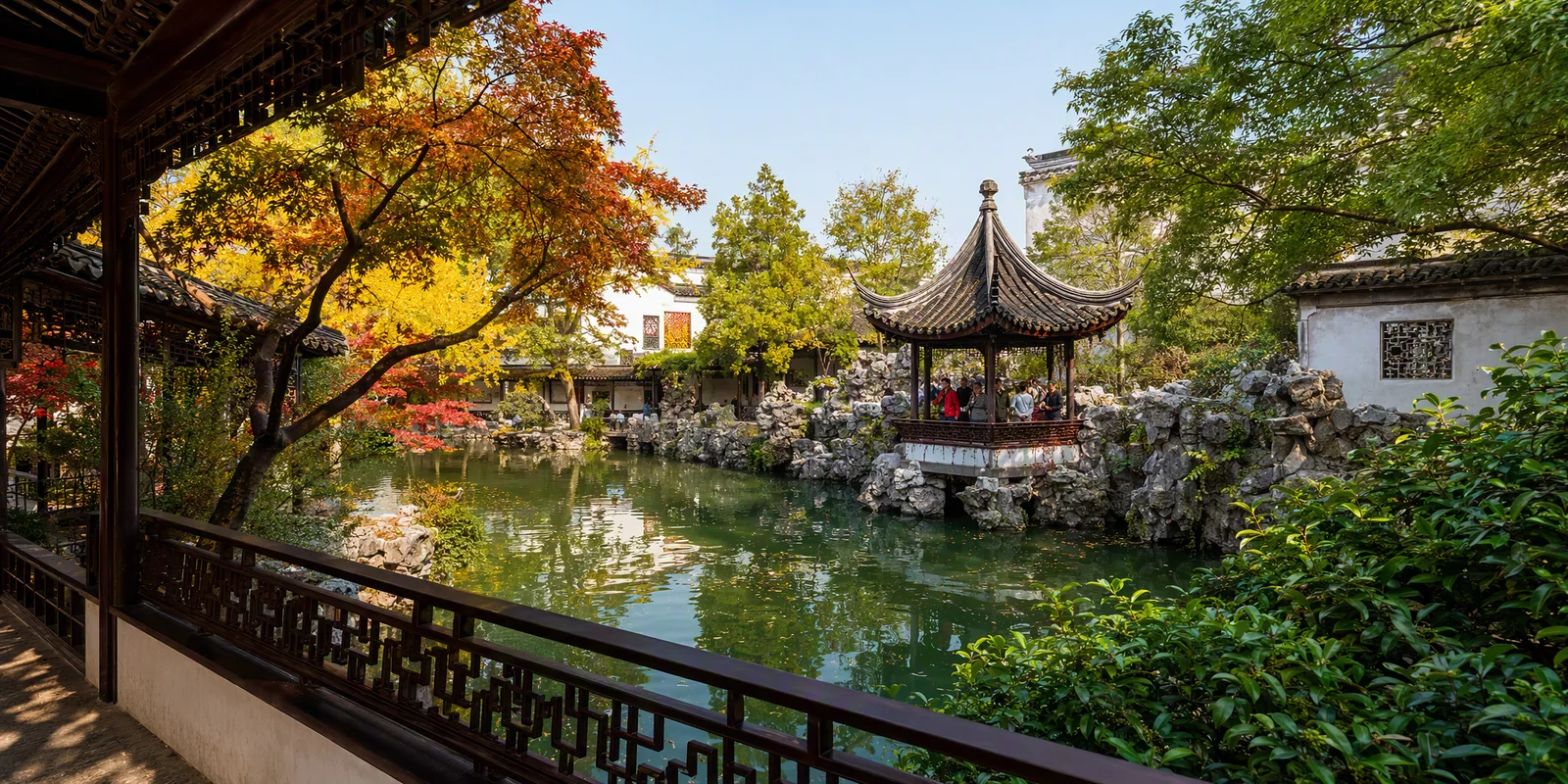
Shanghai is the best-positioned city in China for day trips. Zhujiajiao, a canal town of stone bridges and narrow waterways, is free to enter and sits on Metro Line 17 — no train ticket needed. Suzhou's classical gardens and Hangzhou's West Lake — free to visit since 2002 — are both short high-speed rail rides away, with one catch: Suzhou's top gardens sell real-name tickets, so read the booking notes first. All the options, ranked, in Shanghai day trips.
Frequently asked questions
How many days do you need in Shanghai?
Two days for the essentials, three for comfort. Add a day for Disneyland and a day per side trip (Suzhou, Hangzhou, or a water town). A week in Shanghai without day trips is too long for most visitors — the city's sights cluster tightly along the river.
Which Shanghai attractions need to be booked in advance?
Fewer than the internet claims. Disneyland genuinely does — date-specific, real-name, one ticket per ID per day. The Shanghai Museum East no longer does for individuals — walk in with your passport. Observation decks usually sell same-day tickets; on public holidays, check before you go. The table above has the current rules; when in doubt, check the sight's official WeChat account on the day.
Can you visit Shanghai without speaking Chinese?
Yes — more easily than anywhere else in mainland China. Metro signs, announcements and ticket machines are bilingual, major sights have English signage, and translation apps cover restaurants. Even the emergency line has you covered: Shanghai's 110 police line offers service in English, Japanese, Korean, French, Spanish and other languages.
Is Shanghai expensive?
By Chinese standards yes, by Western big-city standards no. Transport is cheap, museum-going is largely free, and eating well costs a fraction of what it does at home unless you choose skyline restaurants. The two real budget lines are hotels and Disneyland; everything in between — metro rides, museums, everyday meals — is where the trip stays cheap. A mid-range trip generally costs less than the same trip in Tokyo or Paris.
If something goes wrong
Dial 110 for police — in Shanghai the line is staffed with eight foreign languages including English — and 120 for an ambulance, free to call from any phone. Numbers, hospitals with English-speaking staff and consulate contacts are collected in our emergency numbers guide.
Last updated: September 2026
Read in other languages
Getting to the sights by metro
The Bund
Iconic waterfront promenade facing the Lujiazui skyline.
- East Nanjing Road
- Tiantong Road
- Yuyuan Garden
Oriental Pearl Tower
468m TV tower with glass-floor observation deck.
- Lujiazui
Shanghai Tower
China's tallest building (632m), 118F observation deck.
- Lujiazui
Yu Garden
Ming-era classical garden next to the City God Temple market.
- Yuyuan Garden
- Lujiabang Road
Shanghai Disneyland
Mainland China's first Disney resort. Take Line 11 to Disney Resort.
- Disney Resort
Nanjing Road Pedestrian Street
1km pedestrian shopping street connecting Bund and People's Square.
- East Nanjing Road
- People's Square
People's Square
Central plaza and museum hub (Shanghai Museum, Urban Planning Exhibit).
- People's Square
- Dashijie
Xintiandi
Restored shikumen block, now a wine-and-dine hotspot.
- Site of the First CPC National Congress·Xintiandi
- Site of the First CPC National Congress·South Huangpi Road
- Madang Road
Tianzifang
Shikumen alley arts district with cafes, boutiques, and galleries.
- Dapuqiao
- Madang Road
Jing'an Temple
Gold-roofed Buddhist temple in the heart of West Nanjing Rd.
- Jing'an Temple
- Changshu Road
Lujiazui
Pudong's financial district — Shanghai Tower, SWFC, Jin Mao.
- Lujiazui
Shanghai Museum
Top bronze, ceramics, and calligraphy collection. Free entry.
- People's Square
- Dashijie
Longhua Temple
Shanghai's oldest temple (242 AD); famous spring peach blossoms.
- Longhua
- Middle Longhua Road
Zhujiajiao Water Town
1700-year-old water town; take Line 17 to Zhujiajiao.
- Zhujiajiao
Shanghai Pudong International Airport
Shanghai's main international airport (PVG); also served by the 430 km/h Maglev to central Pudong.
- Pudong Airport Terminal 1&2
Shanghai Hongqiao International Airport
Shanghai's secondary airport (SHA) for domestic and short-haul international; integrated with Hongqiao Railway in one mega-hub.
- Hongqiao Airport Terminal 2
- Hongqiao Airport Terminal 1
Shanghai Hongqiao Railway Station
China's busiest high-speed rail station; integrated with Hongqiao Airport in one mega-hub.
- Hongqiao Railway
Shanghai Railway Station
Shanghai's historic main rail station (the 'New North Station'); conventional and selected high-speed services.
- Shanghai Railway
Shanghai metro: last train times by station
Every line and station, checked by hand — the same data behind our offline route planner.
Get the WaysChina App
Offline guides, currency converter, essential phrases, and more — all in your pocket.

Related Articles
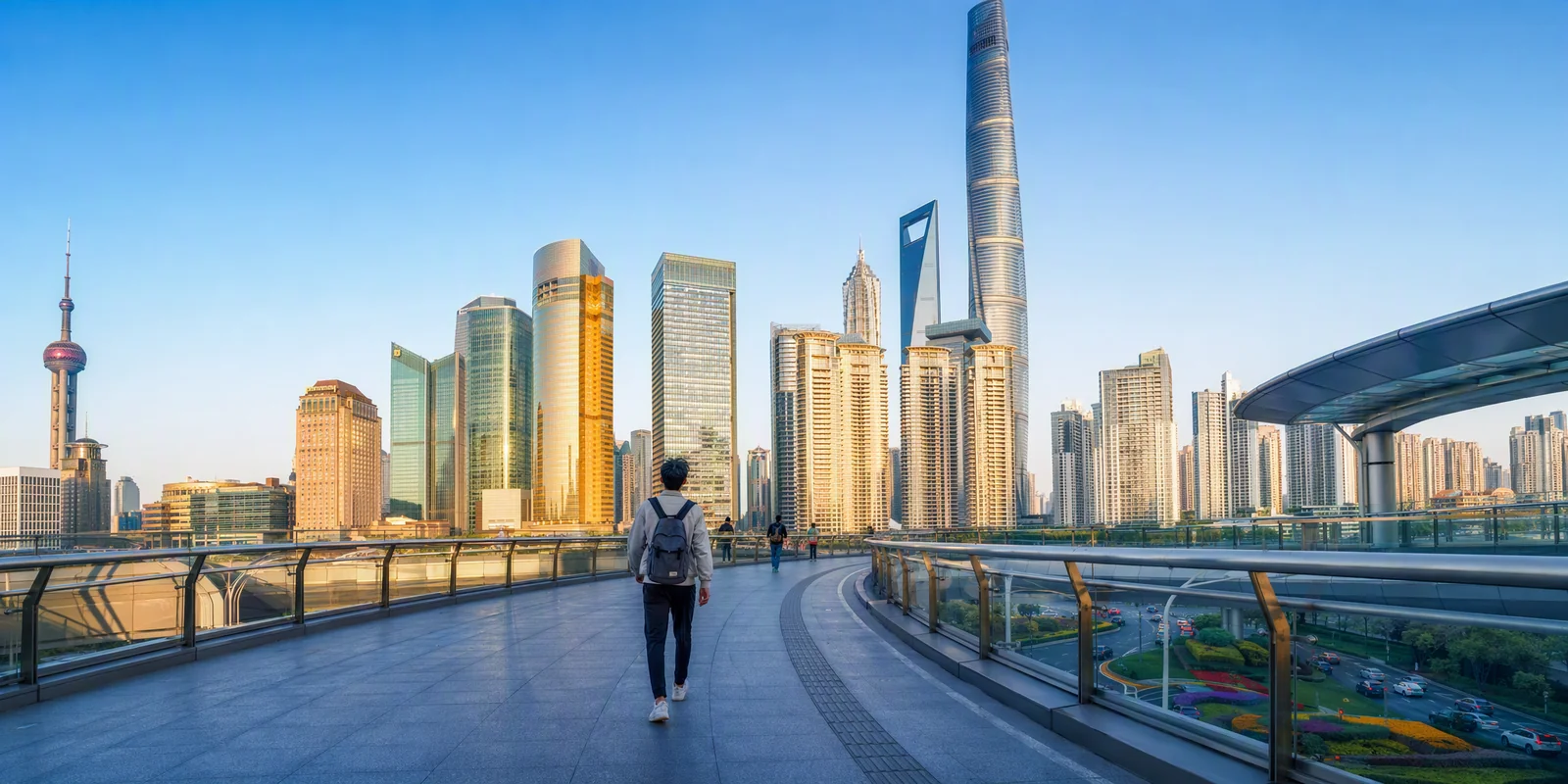
3 Days in Shanghai: An Itinerary You Can Follow As Written
A day-by-day Shanghai route built on metro logic: museum and Bund on day one, towers and old town on day two, a flex...
Day Trips from Shanghai: Water Towns, Suzhou and Hangzhou, Honestly Compared
Which Shanghai day trip fits you: metro-reach Zhujiajiao, Suzhou's real-name garden tickets, free West Lake, or an...
Shanghai Food Guide: What to Eat, Where to Eat It, and How to Order
Beyond soup dumplings: how to eat xiaolongbao without scalding yourself, where locals actually eat, halal and...

Huangshan Guide
How to plan a trip to Mount Huangshan: choosing your route up and down, catching the sunrise, where to sleep on the...