
This article contains affiliate links. If you make a purchase through these links, we may earn a small commission at no extra cost to you. This helps support our work in creating free travel guides.
China is more family-friendly than many parents expect. High-speed trains make long distances painless, big cities are clean and safe, and Chinese culture genuinely welcomes children — strangers will smile at your toddler, restaurant staff will fuss over your kids, and you'll rarely feel like an inconvenience. The real challenges are practical: stroller-unfriendly crowds at major sights, squat toilets, language gaps with caregivers, and finding familiar baby supplies. None of these are dealbreakers. This guide covers what to pack, how to get around, where to take kids, how food and medical care work, and the small logistics that make a family trip smoother.
Is China Good for a Family Vacation?
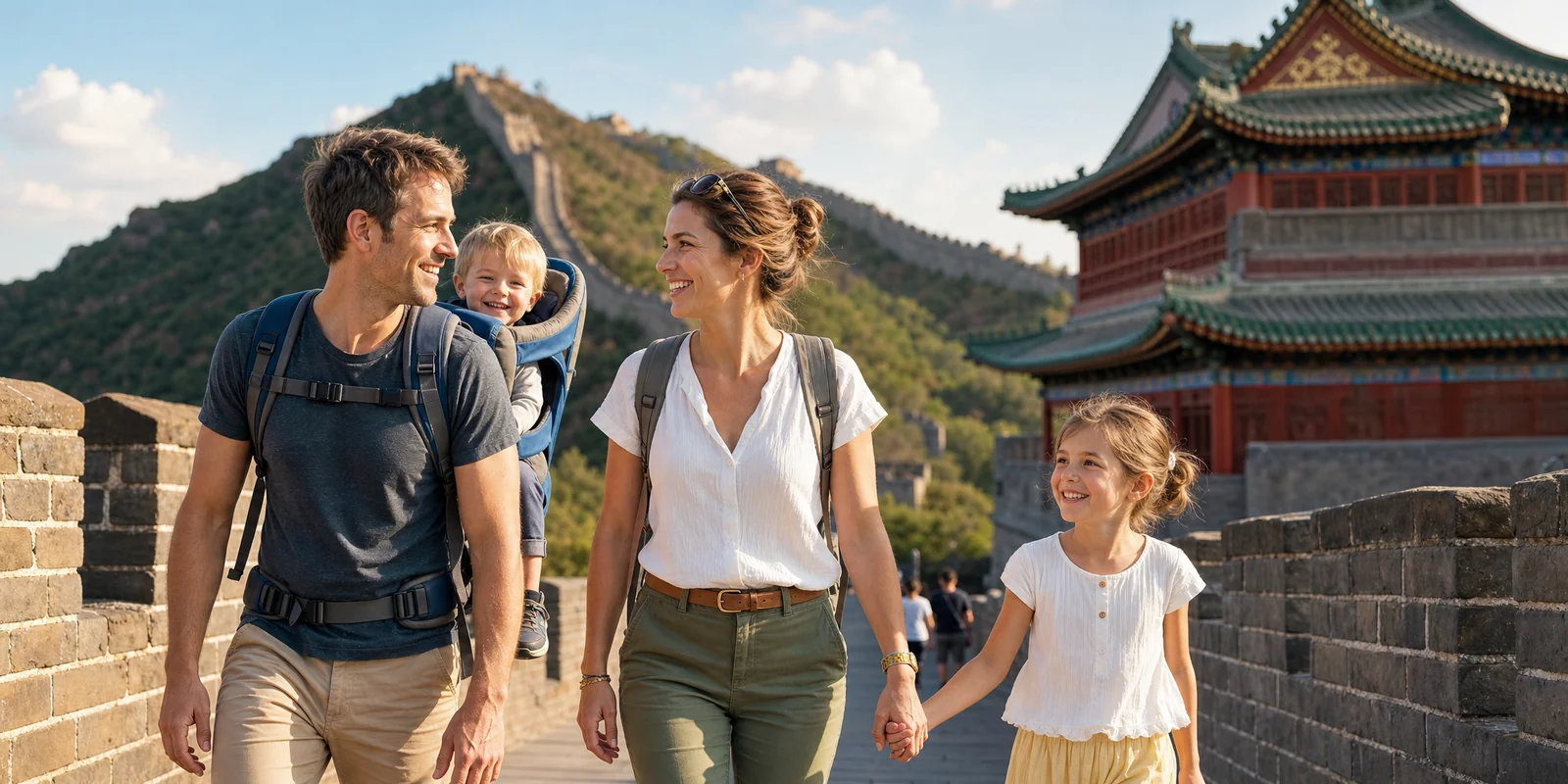
Yes, with realistic expectations. The infrastructure is excellent — modern airports, fast trains, ride-hailing apps, and a low crime rate mean you can focus on your kids rather than constant logistics. Major attractions like the Great Wall, pandas in Chengdu, and the Terracotta Warriors are genuinely engaging for children, not just adults dragging them along.
The friction points are real but manageable. Crowds at popular sites can be overwhelming with a stroller, especially during Chinese holidays. Many older attractions and public toilets use squat toilets. English is limited outside top-tier hotels and tourist zones. And while baby supplies exist everywhere, your preferred brand of formula or diapers may not.
In our experience, families who plan around nap schedules, avoid peak holiday weeks, and pick two or three cities rather than racing across the country have the best trips.
Best Time to Visit with Children
Spring (April–May) and autumn (September–October, outside Golden Week) are the most comfortable for kids. Temperatures are mild, walking is pleasant, and you avoid both the summer heat and winter cold that can wear young children out.
Summer is hot and humid in most of the country, but it's also school-holiday season for many families and works fine if you build in pool time and indoor museums during the midday heat. Winter suits older kids who'd enjoy Harbin's ice festival or want to ski, but it's tough on toddlers in northern cities. For a deeper breakdown, see our guide on the best time to visit China.
Getting Around with Kids
High-Speed Trains
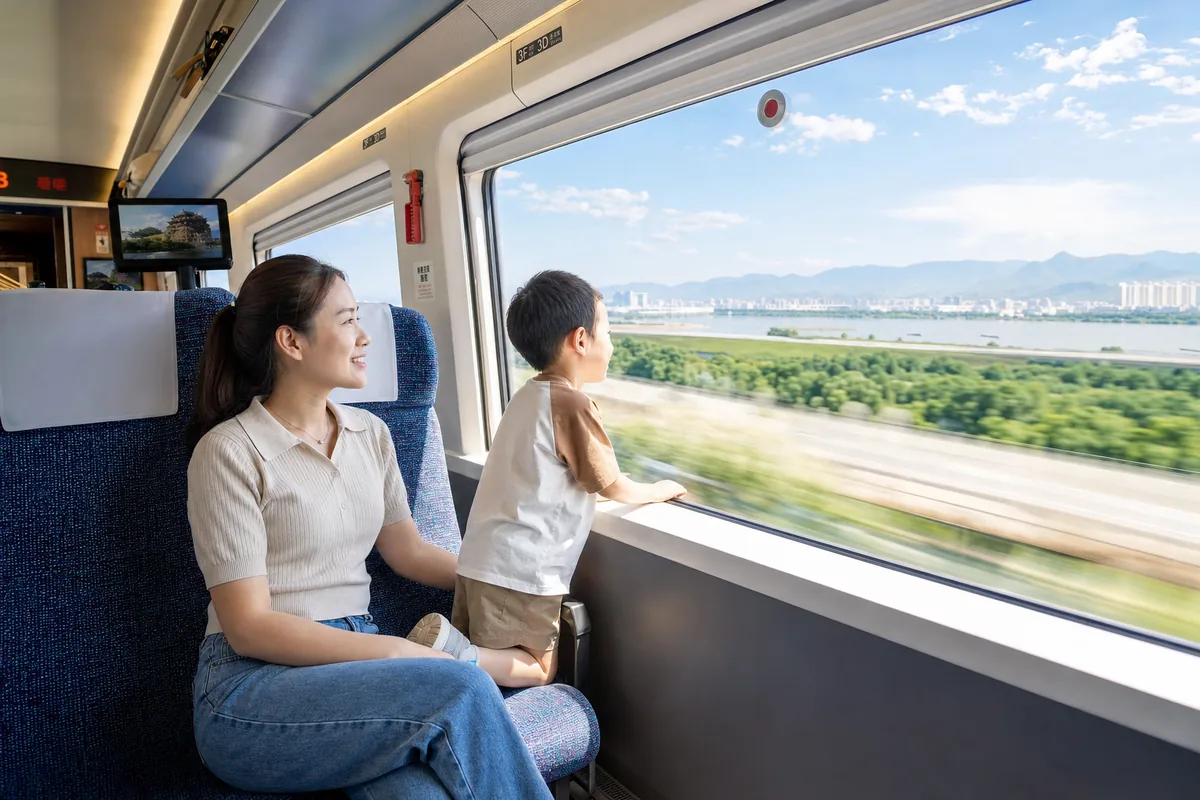
The high-speed rail (高铁, gāotiě) network is the single best thing about traveling China with children. Trains are smooth, spacious, have clean toilets (usually with at least one Western-style toilet per car), and you can walk around with a restless toddler. A Beijing-to-Xi'an trip takes about 4.5 hours instead of a full day's drive.
Children under 1.2m tall generally travel free if they don't need their own seat (one free child per paying adult); taller or older kids need a child or adult ticket. You'll book using passport details — learn how in our guide to booking train tickets.
Taxis, Ride-Hailing, and Car Seats
This is the one genuine gap: car seats are rare. Taxis don't provide them, and most Didi (China's Uber) rides won't either. If car seat safety is non-negotiable for you, bring a lightweight travel seat or a portable booster — you can install it in most sedans. Some premium Didi tiers and pre-booked private transfers can supply a seat if you request it in advance, but don't count on it. Learn how the app works in our Didi guide.
Metro and City Transport
Subway systems in Beijing, Shanghai, Guangzhou, Chengdu and other big cities are cheap, fast, and air-conditioned. The catch: many stations have stairs, and elevators aren't always obvious or working. A baby carrier often beats a stroller underground. Security checks at every station entrance mean you'll fold strollers and put bags through scanners — budget a few extra minutes.
Best Places in China for Kids
Chengdu — Giant Pandas
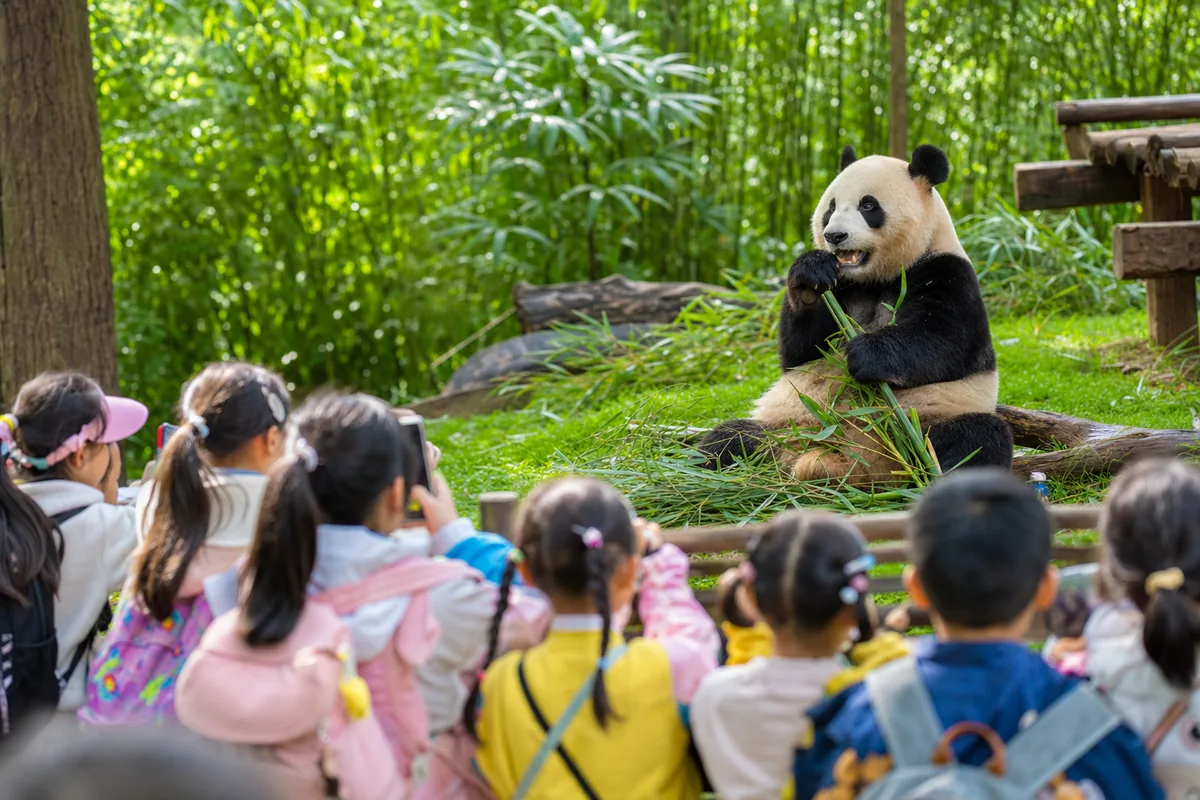
If your kids like animals, Chengdu is the highlight of most family trips. The Chengdu Research Base of Giant Panda Breeding lets you see pandas (and red pandas) up close, especially in the morning when they're active and feeding. The city is also relaxed, walkable, and full of easy food. See our Chengdu complete guide.
Beijing — The Great Wall and More
The Great Wall is a genuine thrill for kids, and the Mutianyu section has a cable car up and a toboggan ride down — a hit with children old enough to ride. Beijing also has the Summer Palace (boats and open space), a strong zoo, and plenty of dumpling stops. Our 3-day Beijing itinerary can be adapted to a slower family pace.
Shanghai — Easy City for Families
Shanghai is the most internationally legible city in China: Disneyland, a world-class aquarium, the Science and Technology Museum, riverside parks, and the easiest access to Western food and supplies. It's a soft landing for first-time visitors with young kids. See our Shanghai complete guide.
Guilin and Yangshuo — Outdoors and Space
For families who'd rather be outdoors than in museums, the karst landscape around Yangshuo offers easy bamboo-raft rides, bike paths through rice fields, and room for kids to run. It's calmer than the big cities. See our Guilin and Yangshuo guide.
Food and Eating Out
Chinese restaurants are relaxed and noisy — nobody minds a loud child. Most dishes are served family-style, so kids can graze. Plain options are everywhere: steamed rice, plain noodles, dumplings (饺子, jiǎozi), steamed buns (包子, bāozi), scrambled egg and tomato, and congee for breakfast. You can ask for dishes to be made less spicy.
The phrase to learn is bù yào là (不要辣, "no spice") — important in Sichuan and Hunan regions. For more on ordering without Chinese, see our guide to ordering food with zero Chinese.
Baby Supplies: What to Buy There vs. Bring
Supermarkets, pharmacies, and chains like Watsons stock diapers, wipes, and formula in major cities. Imported brands (Pampers, Huggies, and international formula) are widely available but pricier than at home. Smaller towns have less choice.
| Item | Buy in China? | Notes |
|---|---|---|
| Diapers / nappies | Yes, easily | Major brands in cities; bring a day's supply for arrival |
| Wipes | Yes, easily | Widely available |
| Formula | Yes, but pricey | Bring enough for the first few days; buy your brand at big stores |
| Baby food / purees | Limited | Bring favorites; fresh fruit and congee work well as substitutes |
| Specific medications | Bring from home | Pack children's fever/pain meds; brands and dosing differ in China |
| Sunscreen for kids | Limited choice | Bring your trusted brand |
Health and Medical Care
Routine childhood illnesses are easy to manage. Pharmacies (药店, yàodiàn) are everywhere for minor needs, though staff rarely speak English — a translation app helps. For anything more serious, major cities have international clinics and hospitals with English-speaking pediatricians (such as international wings of hospitals in Beijing, Shanghai, and other big cities), though these can be expensive without the right insurance.
Bring a basic kit: children's fever reducer, rehydration salts, band-aids, any prescription meds (in original packaging with the prescription), and a thermometer. Carry your child's medical and vaccination records. For finding care, see our guides on finding English-speaking hospitals and health and medical care in China.
Where to Stay
International hotel chains in major cities reliably offer cribs (request in advance), larger family rooms or connecting rooms, and English-speaking front desks. Apartment-style hotels and serviced apartments are excellent for families — kitchenettes let you prepare simple meals and store snacks and milk.
One thing to know: all guests, including children, must be registered at check-in, and your hotel must accept foreign passports (not all budget guesthouses do). See our guide on booking hotels and registration rules.
For family rooms with cribs and connecting options, Booking.com lets you filter by "family rooms" and confirm crib availability in the property details before booking.
Toilets and Diaper Changes
This trips up a lot of first-time families. Public toilets at older sites and rural areas are often squat-style and may lack toilet paper and soap — carry your own. Newer malls, airports, train stations, and chain restaurants have Western-style seats and increasingly have baby-changing tables and family rooms. Shopping malls are your reliable bet for clean facilities and a place to change a diaper.
A handy local detail: many Chinese toddlers wear split-crotch pants (开裆裤, kāidāngkù) and are held over a curb or potty rather than wearing diapers full-time, so don't be surprised by impromptu street toilet stops. It's normal and not aimed at you.
Connectivity and Useful Apps
Get a SIM or eSIM that works on arrival so you can use maps and translation immediately — essential when you're navigating with kids and can't waste time lost. Many Western apps (Google Maps, WhatsApp, Instagram) are blocked without a VPN, so set up alternatives before you go. See our SIM and eSIM guide and must-have apps roundup.
A translation app is invaluable for pharmacies, asking about ingredients/allergies, and explaining your child's needs. Set up mobile payment too — almost everything runs on QR codes.
Practical Tips That Make a Difference
- Slow down. Two or three cities over two weeks beats six cities in a blur. Build in downtime.
- Carry a card with your hotel's name and address in Chinese for taxis and in case anyone gets separated.
- Bring a lightweight, foldable stroller or a carrier — crowds and stairs make bulky strollers a burden.
- Photograph your child each morning so you have a current image and outfit if you're ever separated in a crowd.
- Snacks and a water bottle save many meltdowns; boiled water to refill is everywhere.
- Time popular sights early to beat crowds and midday heat.
Frequently Asked Questions
Is China safe for families?
Yes. Violent crime is rare, cities are well-lit and policed, and locals are generally warm toward children. Normal precautions against pickpockets in crowds apply. The bigger risks are traffic and getting separated in dense crowds, so hold hands and agree on a meeting plan.
Do I need to bring a stroller?
For toddlers, a compact umbrella stroller is useful for flat city walks and airports, but a baby carrier handles crowds, subway stairs, and uneven historic sites better. Many families bring both or rely on a carrier alone.
What if my child only eats Western food?
Big cities have plenty of familiar options — Western chains, bakeries, supermarkets with bread, fruit, yogurt, and pasta. Plain rice, noodles, eggs, and dumplings bridge most gaps. It gets harder in small towns, so stock snacks before heading off the beaten path.
Can I drink the tap water?
No. Use bottled or boiled water for drinking, brushing teeth for very young kids, and mixing formula.
Are there enough kid-friendly activities?
Plenty — pandas in Chengdu, the Great Wall toboggan, Shanghai Disneyland and aquariums, science museums, bamboo rafts in Yangshuo, and parks in every city. China is more kid-friendly than its reputation suggests.
The Bottom Line
Traveling China with children works best when you slow the pace, pick a few destinations, and prepare for a handful of specific gaps — car seats, squat toilets, your preferred baby brands, and the language barrier with caregivers. Trains make distances easy, food is flexible and welcoming, and the country is safe and genuinely fond of kids. Start by choosing the right season, book family rooms and train tickets early, sort out connectivity and payments before you fly, and pack a day-one supply kit. Do that, and the logistics fade into the background — leaving your family free to enjoy pandas, the Great Wall, and a culture that will happily make a fuss over your children.
Related Reading
- First Time China Itinerary — a solid base to adapt for a family pace
- Health & Medical Care — pharmacies, hospitals, and what to pack
- Chengdu Complete Guide — the panda capital and an easy family city
- Travel Insurance for China — coverage that includes your kids
- Best Time to Visit China — picking the right season for young travelers
Last updated: June 2026
Read in other languages
Last train times for 10 Chinese metro systems
Every line and station, checked by hand — the same data behind our offline route planner.
Get the WaysChina App
Offline guides, currency converter, essential phrases, and more — all in your pocket.

Related Articles
Accessible Travel in China
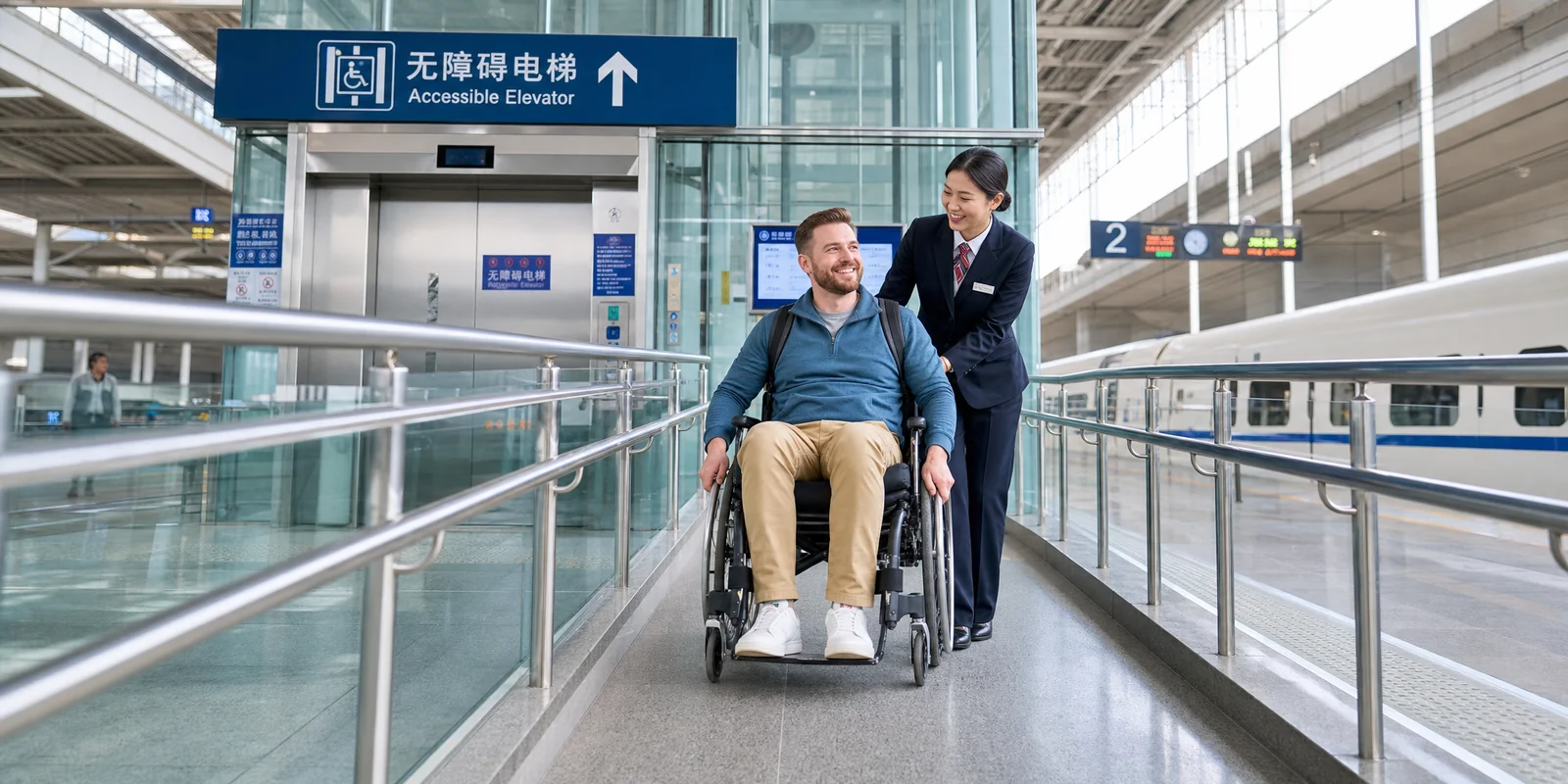
An honest look at wheelchair travel in China: what works, what doesn't, and how to plan around the gaps. Covers...
Business Travel in China
A practical guide to business travel in China: visas, etiquette for meetings and dinners, business card customs,...

Couples & Honeymoon Travel in China
A practical guide to romantic travel in China — where to go for couples and honeymoons, how to plan the route, and...
Digital Nomad Guide to China
Working remotely from China is very doable once you sort out three things: your visa, your internet setup, and your...