
This article contains affiliate links. If you make a purchase through these links, we may earn a small commission at no extra cost to you. This helps support our work in creating free travel guides.
China is one of the easier countries in the world to travel alone. Violent crime against tourists is rare, the high-speed rail network connects almost everywhere you'd want to go, and you can navigate most of a trip from your phone. The real challenges are different from what most people expect: the language barrier, the fact that almost nothing runs on foreign credit cards, and a few apps you need set up before you arrive. Get those sorted and solo travel here is smooth, affordable, and genuinely fun. This guide covers the practical setup, how to stay safe and meet people, and which destinations work best when you're on your own.

Is China Safe for Solo Travel?
Yes, by most measures it's very safe. Petty theft exists in crowded tourist areas, and there are a handful of well-known scams (more on those below), but you can walk around major cities late at night without much worry. Public transport, train stations, and tourist sites are heavily monitored with cameras and security checks. Solo female travelers consistently report feeling safe here, though there are specific considerations worth reading up on separately.
The bigger risks for a solo traveler are practical, not criminal: getting stuck without working mobile payments, not being able to communicate in a medical situation, or losing access to your maps and translation apps because you didn't set up internet access. Those are all solvable before you leave home.
Set This Up Before You Arrive
This is the part that trips up first-timers. Spend an hour on these and the rest of your trip gets far easier.
1. Mobile payments
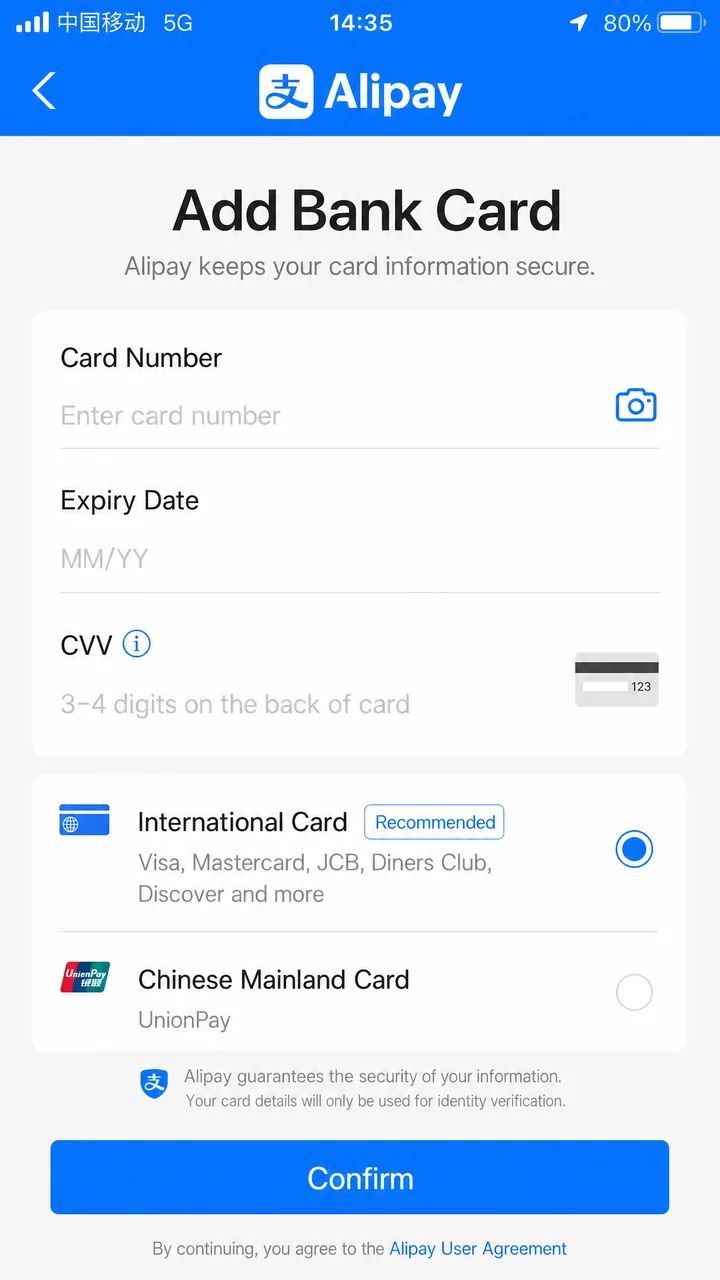
Almost everything in China runs on QR code payments — street food, taxis, metro tickets, convenience stores. Both Alipay (支付宝, Zhīfùbǎo) and WeChat Pay (微信支付, Wēixìn Zhīfù) now let foreign visitors link an international Visa or Mastercard. Set up at least one before you fly. Cash still works at hotels and larger stores, and you should carry a few hundred yuan as backup, but you'll rely on your phone for day-to-day spending.
2. Internet and a VPN
Google, WhatsApp, Instagram, and most Western apps are blocked on Chinese networks. If you depend on Gmail or Google Maps, set up a reputable VPN before you arrive — you can't easily download one once you're inside the country. An eSIM or international roaming plan from your home carrier often routes around the blocks automatically, which is the simplest fix for short trips.
3. Maps and translation
Google Maps is unreliable in mainland China. Apple Maps works reasonably well, and many travelers use Amap or Baidu Maps (Chinese interface, but accurate). For language, download an offline translation pack — pointing your camera at a menu or sign and getting an instant translation is one of the single most useful things you can do as a solo traveler.
4. A few survival phrases
You don't need to speak Mandarin, but knowing how to say hello, thank you, "how much," and "I don't eat [X]" smooths a lot of interactions and earns goodwill.
Getting Around on Your Own
Solo travel in China leans heavily on the high-speed rail network (高铁, gāotiě), which is fast, clean, and connects nearly every major city. Booking is straightforward through the official 12306 platform or third-party apps, and you travel on your passport — no paper ticket needed. Trains are a comfortable, safe way to cover long distances alone, and there's no single-traveler penalty the way there sometimes is with tours.
Within cities, the metro is cheap, signed in English, and easy to use solo. For door-to-door trips, ride-hailing through Didi (China's Uber equivalent) lets you input your destination in advance, avoids cash, and gives you a record of the ride. Taxis are fine too, but having the address in Chinese matters.

Best Destinations for Solo Travelers
Some places are simply easier to navigate alone than others. If it's your first solo trip to China, start with cities that have good English signage, strong public transport, and an established traveler scene.
| Destination | Why it works solo | Good for |
|---|---|---|
| Beijing | Excellent metro, English signage, huge hostel scene | History, first-timers |
| Shanghai | Most international city, easy to get around, very safe | City life, easing in |
| Chengdu | Relaxed pace, famous for friendly hostels and pandas | Meeting other travelers |
| Xi'an | Compact center, Terracotta Army, walkable city walls | History, short stays |
| Yangshuo / Guilin | Backpacker hub, outdoor activities, easy day tours | Nature, socializing |
| Yunnan (Dali, Lijiang) | Laid-back towns built around independent travelers | Slow travel, hiking |
If you want to string several of these together, the classic Beijing–Xi'an–Shanghai route is the most beginner-friendly long-distance trip in the country, all connected by high-speed rail. For something more outdoorsy and social, the Yunnan circuit is a longtime backpacker favorite.

Solo Backpacking and Budget Travel
China rewards independent budget travelers. Dorm beds in good hostels run roughly ¥60–120 a night, a filling bowl of noodles is ¥15–30, and city metro rides are a couple of yuan. You can travel comfortably on a modest budget if you eat where locals eat and use the rail network instead of flying.
Hostels are the backbone of solo backpacking here — not just for the price, but because they're where you meet people, get reliable English-language advice, and find others to share day trips with. Many run their own walking tours, hotpot nights, and excursions. Booking platforms like Hostelworld list most of the social, traveler-focused hostels in the cities above, with reviews that tell you which ones actually have a common-room scene versus which are just cheap beds.
How to Make Friends While Traveling Alone
Solo doesn't have to mean lonely. China makes it fairly easy to meet people if you put yourself in the right places.
- Stay in social hostels. The single biggest factor. Common rooms, bar areas, and organized activities do the work for you.
- Join group activities. Cooking classes, hiking day trips, calligraphy sessions, and food tours are natural ways to meet both travelers and locals. Platforms like GetYourGuide let you book small-group experiences in most major cities, which beats wandering a city alone all day.
- Talk to other foreign travelers. The traveler community in China is smaller than in, say, Thailand, which oddly makes people more open to striking up conversations.
- Be open to curious locals. Especially outside the biggest cities, people may want to practice English or take a photo with you. Most of these interactions are completely genuine and friendly.

Practical Tips for Eating and Dining Alone
Dining solo is normal and easy in China — nobody bats an eye at a single diner. Street food, noodle shops, and food courts are made for quick solo meals. The one format that's harder alone is the big shared hotpot or banquet-style restaurant, where dishes are meant for groups. For those, go with people you've met at your hostel, or stick to places with smaller portions and single-serve options. Many menus now have pictures or QR-code ordering, and your translation app handles the rest.
Frequently Asked Questions
Do I need to speak Chinese to travel solo in China?
No. With a translation app and a bit of patience, you can manage the whole trip without Mandarin. Learning a few basic phrases makes things smoother and friendlier, but it's not a requirement.
Is it safe for women to travel alone in China?
Generally yes — China ranks well for personal safety. There are some specific considerations worth reading about in our dedicated female solo travel guide.
What's the hardest part of solo travel in China?
For most people it's the digital setup — payments, VPN, and maps. Sort those before you arrive and the rest is straightforward. The language barrier is real but manageable with technology.
Will I get lonely traveling alone?
Only if you isolate yourself. Social hostels and group activities make it easy to find company when you want it, and easy to have time alone when you don't — which is the whole appeal of solo travel.
The Bottom Line
Solo travel in China is safer and more practical than most first-timers expect, with the main hurdles being digital rather than personal. Set up mobile payments, internet access, and a maps-and-translation kit before you fly, carry a little cash as backup, and start with traveler-friendly cities like Beijing, Chengdu, or Yangshuo. Stay in social hostels if you want to meet people, keep the common tourist scams in mind, and lean on the high-speed rail to get between cities cheaply and comfortably. Your next step: lock in your apps and payments now, then pick a route that matches your pace.
Related Reading
- Female Solo Travel in China
- Safety Tips for Travelers
- Tourist Scams in China
- Must-Have Apps Before You Go
- China Travel Budget Guide
Last updated: June 2026
Read in other languages
Last train times for 10 Chinese metro systems
Every line and station, checked by hand — the same data behind our offline route planner.
Get the WaysChina App
Offline guides, currency converter, essential phrases, and more — all in your pocket.

Related Articles

Accessible Travel in China
An honest look at wheelchair travel in China: what works, what doesn't, and how to plan around the gaps. Covers...

Business Travel in China
A practical guide to business travel in China: visas, etiquette for meetings and dinners, business card customs,...

Couples & Honeymoon Travel in China
A practical guide to romantic travel in China — where to go for couples and honeymoons, how to plan the route, and...

Digital Nomad Guide to China
Working remotely from China is very doable once you sort out three things: your visa, your internet setup, and your...