
This article contains affiliate links. If you make a purchase through these links, we may earn a small commission at no extra cost to you. This helps support our work in creating free travel guides.
China is more comfortable for older travelers than many people expect. High-speed trains are smooth and easy to board, major attractions have wheelchair access and rest areas, and most cities run on mobile payments that, once set up, are genuinely simpler than fumbling with cash. The challenges are real but manageable: long distances between sights, crowds at famous landmarks, language barriers at hospitals, and the need to set up a few apps before you arrive.
This guide covers what matters most if you're traveling in your 60s, 70s, or beyond, or planning a trip for a parent or relative: how to pace a realistic itinerary, prepare medications, handle medical care, and use the accessibility infrastructure that already exists.

Pacing: Why Slow Travel Wins in China
The single biggest mistake older travelers make is trying to see too much. China is huge, and the classic "Beijing–Xi'an–Shanghai" loop covers more than 1,500km. You can do it, but cramming it into a week means early starts, long transfers, and exhaustion that catches up by day four.
A better approach is to slow down and build in rest. Plan one major activity per day, not three. Block out an afternoon to do nothing. Choose hotels near metro stations or attraction clusters so you're not spending an hour in traffic each way.
Consider focusing on fewer regions per trip. A two-week trip split between Beijing and the Jiangnan water towns (Shanghai, Suzhou, Hangzhou) is far more relaxing than trying to add Chengdu or Guilin on top. If this is a return visit, you can always cover other regions next time.
Best Times to Go
Spring (April–May) and autumn (September–October) offer the most comfortable temperatures and are easiest on the body. Summer is hot and humid across most of the country, which is harder on older travelers, and winter in the north is cold and dry. Avoid the first week of October (a national holiday) and Chinese New Year, when domestic crowds and transport demand spike dramatically.
Medical Preparation Before You Go
This is the part to get right before departure. Doing it properly takes an afternoon and removes most of the stress.
Medications
- Bring more than you need. Pack enough for your whole trip plus about a week extra, in case of delays. Don't count on buying your specific brand in China.
- Keep medications in original packaging with the pharmacy label. Carry them in your hand luggage, not checked bags.
- Carry a doctor's letter listing your conditions, medications (with generic/chemical names, not just brand names), and dosages. A copy translated into Chinese is very helpful at customs and clinics. Generic names matter because Chinese pharmacies recognize the chemical compound, not Western brand names.
- Check restricted substances. Some medications common abroad, including certain strong painkillers and sleep aids, are controlled or banned in China. If you take anything containing codeine, opioids, or psychotropic ingredients, verify the rules through your embassy before flying.
Travel Insurance
Get comprehensive travel insurance that explicitly covers your age group, pre-existing conditions, and medical evacuation. Many standard policies cap coverage or exclude travelers over a certain age, so read the fine print. Medical evacuation from China to your home country can cost tens of thousands of dollars without coverage. Providers like World Nomads and Allianz offer plans designed for international travel; compare what each covers for seniors and existing conditions before buying.

Vaccinations and a Check-Up
See your doctor 4–6 weeks before departure for a general fitness-to-travel check and to confirm routine vaccinations are current. No special vaccines are required for standard tourist routes, but your doctor may have advice based on your health and where you're going.
Getting Around: Trains, Flights, and Cities
High-Speed Rail Is Your Friend
China's high-speed trains (高铁, gāotiě) are the best way for older travelers to cover distance. They're smooth, punctual, have clean toilets and spacious seats, and stations have elevators and escalators. First class and business class offer wider, more reclined seats well worth the extra cost on longer journeys.
Key things to know:
- Stations are large and require security screening, so arrive at least 45–60 minutes early to avoid rushing.
- Request wheelchair assistance in advance if needed (see below). Major stations have staff and barrier-free routes.
- Book tickets through the official 12306 system or a trusted agent. Seats are assigned, so you won't be standing.
Flights for Long Distances
For very long routes (for example Beijing to Yunnan or the far west), flying saves a full day of travel. Airports offer wheelchair and mobility assistance if you request it when booking. Allow extra time, as Chinese airports are large and security can be slow.
City Transport
Metro systems in Beijing, Shanghai, Guangzhou, and other major cities are modern, cheap, and almost all stations have elevators, though finding the elevator entrance sometimes takes a moment. Taxis and ride-hailing through Didi are the most door-to-door comfortable option for older travelers, and you can book them through an app without speaking Chinese.
Accessibility: What to Expect
China has invested heavily in accessibility, especially in big cities and at major attractions, but it's uneven. Newer infrastructure is excellent; older neighborhoods and smaller towns can be difficult, with high curbs, stairs, and uneven pavement.
| Setting | Accessibility Level | Notes |
|---|---|---|
| High-speed rail stations | Good | Elevators, ramps, staff assistance on request |
| Major city metros | Good | Most stations have elevators; ask staff for the accessible entrance |
| Major attractions | Moderate–Good | Wheelchair rental and ramps common; some historic sites have stairs |
| Older streets / hutongs | Limited | Uneven surfaces, high curbs, narrow lanes |
| Public toilets | Variable | Accessible stalls in newer buildings; squat toilets common elsewhere |
Many famous sites, including the Forbidden City and the Terracotta Warriors, offer wheelchair loans (often free with a deposit) and have step-free routes. The Great Wall is harder: most sections involve steep stairs, but Mutianyu has a cable car that brings you most of the way up, making it the most senior-friendly option near Beijing.
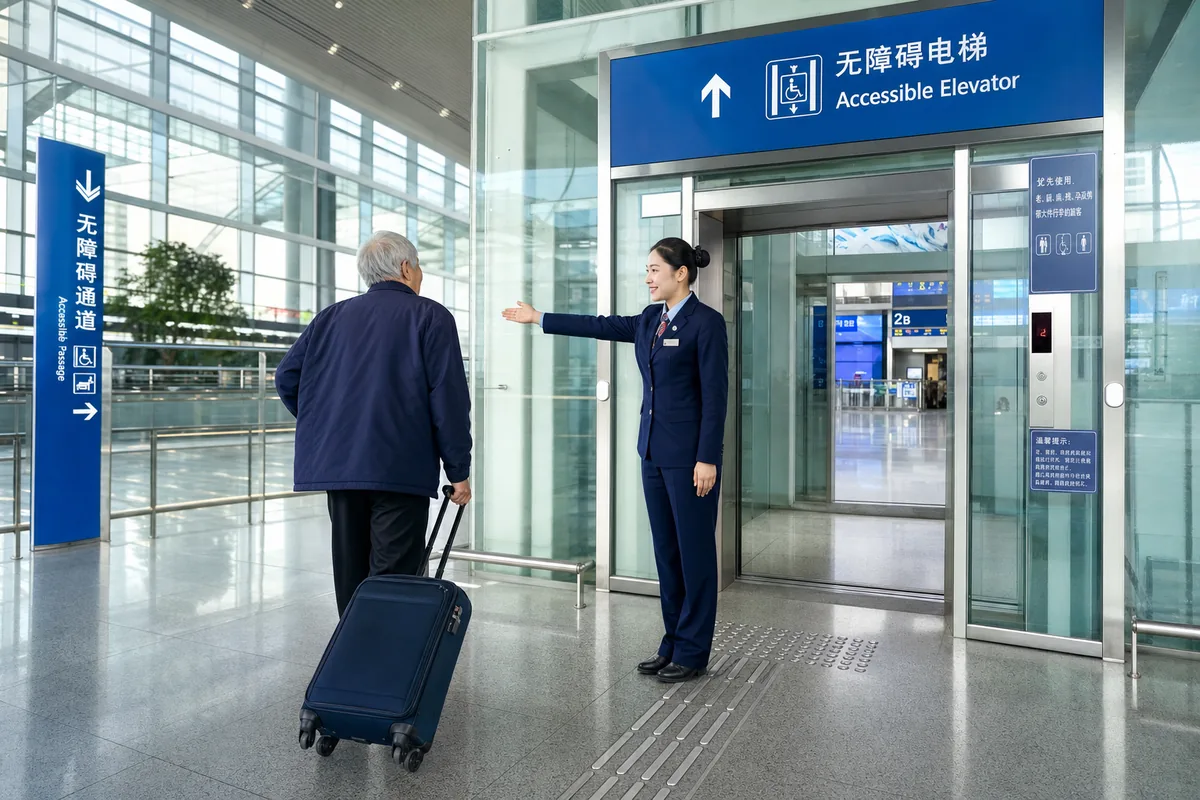
If you or your travel companion uses a wheelchair or has significant mobility needs, our dedicated guide goes into far more detail on what's accessible city by city.
Mobile Payments and Phones
China runs on QR-code mobile payments through Alipay (支付宝, Zhīfùbǎo) and WeChat Pay (微信支付, Wēixìn Zhīfù). Cash still works at hotels and larger shops, but small restaurants, markets, taxis, and ticket machines often expect mobile payment. The good news is both apps now let foreign visitors link an overseas credit card, and setup takes about 10–15 minutes.
For older travelers who find the apps fiddly, here's the simplest path:
- Download Alipay before you arrive (you'll need a working data connection).
- Register with your passport and phone number.
- Add your Visa or Mastercard in the "Bank Card" section.
- Use the "Scan" button to pay, or show your payment QR code for the cashier to scan.
According to the official Alipay site, foreign cards are now supported for most everyday transactions, with small per-transaction fees on some payments. Have a family member help you set this up before the trip if you're not comfortable with apps.
Health and Medical Care During Your Trip
Standard public hospitals are cheap and competent but crowded, bureaucratic, and rarely English-speaking. For non-emergencies, the better option is an international clinic or a hospital's "VIP" or "international" department, which costs more but has English-speaking staff and shorter waits. Major cities like Beijing, Shanghai, Guangzhou, and Chengdu all have well-regarded international clinics.
For emergencies, dial 120 for an ambulance. Response times and equipment vary by city. In a serious situation, a taxi to the nearest major hospital is sometimes faster than waiting for an ambulance.
It's worth identifying English-speaking hospitals near where you'll be staying before you need them, and saving the addresses in Chinese on your phone to show a taxi driver.
Food and Comfort
Chinese food is varied and generally healthy, but a few things help older travelers stay comfortable:
- Stomach adjustment. Oilier or spicier regional food (Sichuan, Hunan) can upset unaccustomed stomachs. Ease in, and carry basic remedies for indigestion and diarrhea.
- Hot water everywhere. Chinese custom favors hot or warm water over cold. Hotels and trains provide hot water dispensers, which is convenient for tea, instant soups, or just staying hydrated.
- Dietary needs. If you have restrictions (low salt, diabetic, vegetarian), use a translation app to show your needs, since explaining them verbally is hard.
Where to Stay
Choose international-brand or well-reviewed hotels rather than budget guesthouses. They're more likely to have elevators, English-speaking front desks, reliable heating and air conditioning, and they handle the mandatory police registration (住宿登记, zhùsù dēngjì) automatically. Location matters more than luxury: a mid-range hotel near a metro station or your main sights will save you energy every day.
When booking, filter for elevator access and read recent reviews from other older guests. Platforms like Booking.com let you filter by facilities and read reviews that often mention accessibility and room comfort.

Should You Join a Tour?
For many older first-time visitors, a well-organized small-group or private tour removes most of the friction: someone else handles tickets, transport, language, and pacing, and you have a guide if something goes wrong. The trade-off is less flexibility and higher cost.
A middle path that works well is to travel independently between cities (high-speed rail is easy) but book private guides or day tours within each city. This gives you door-to-door comfort at attractions without locking your whole trip into a fixed group schedule.
Common Questions
Is China safe for older travelers?
Yes. Violent crime against tourists is rare, and walking around at night in cities is generally safe. The main risks are pickpocketing in crowds, traffic (look carefully, as scooters come from all directions), and overexertion. Stay aware and pace yourself.
Do I need to speak Chinese?
No, but very few older Chinese people speak English, and English signage thins out away from major tourist areas. A translation app with offline capability and the ability to show written Chinese is essential. Learning a few basic phrases helps and is appreciated.
What if I have a chronic condition?
Travel is usually fine with preparation. Carry a translated doctor's letter and enough medication, get insurance that covers your condition, know where the nearest international hospital is, and don't over-schedule. Consult your own doctor before booking if you have any concerns.
Are Western toilets available?
In hotels, yes. In public, it's mixed, with squat toilets common. Accessible stalls usually have a Western seat. Hotels and shopping malls are reliable places to find a comfortable toilet.
Final Thoughts
China rewards older travelers who plan for comfort over coverage. Slow your itinerary down, prepare your medications and insurance properly, lean on the high-speed rail and ride-hailing for easy transport, and set up mobile payments before you arrive. The infrastructure in major cities is genuinely good, and the warmth toward older guests in China is real, with respect for elders being a deep cultural value.
Start by choosing two or three regions rather than trying to see everything, then build a relaxed day-by-day plan around them. Sort out insurance and a translated medication list next, and you'll have removed most of the stress before you even pack.
Policies, prices, and accessibility details change. Check the latest requirements and confirm specifics with your hotel, insurer, and doctor before traveling.
Last updated: June 2026
Read in other languages
Last train times for 10 Chinese metro systems
Every line and station, checked by hand — the same data behind our offline route planner.
Get the WaysChina App
Offline guides, currency converter, essential phrases, and more — all in your pocket.

Related Articles
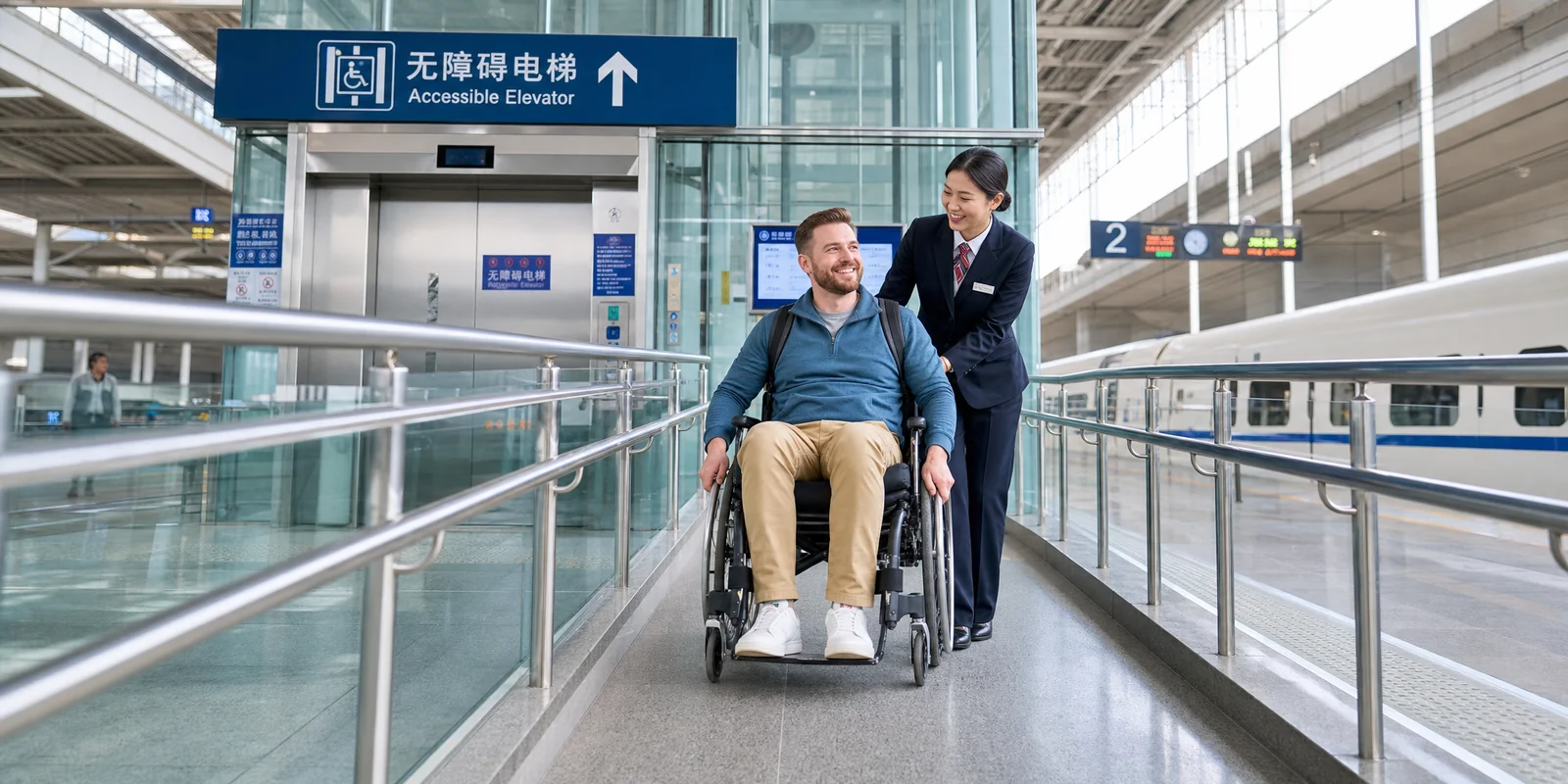
Accessible Travel in China
An honest look at wheelchair travel in China: what works, what doesn't, and how to plan around the gaps. Covers...

Business Travel in China
A practical guide to business travel in China: visas, etiquette for meetings and dinners, business card customs,...

Couples & Honeymoon Travel in China
A practical guide to romantic travel in China — where to go for couples and honeymoons, how to plan the route, and...

Digital Nomad Guide to China
Working remotely from China is very doable once you sort out three things: your visa, your internet setup, and your...