

To visit Tibet as a tourist, a foreigner needs prior approval from the Tibet tourism authority, on top of a Chinese visa or visa-free entry. In practice you get it by booking a tour with an authorised Chinese travel agency, which applies for you; the UK government says you need a permit through a specialist agency and an organised tour, Canada says unaccompanied private travel is prohibited and you go through an accredited agency, and Japan says foreigners must obtain an entry permit. Some places need more than that: areas closed to foreigners need an Aliens' Travel Permit, and Shigatse's official notice says everyone travelling the Everest road needs a border permit, checked at checkpoints — national rules mention both the border pass and the Aliens' Travel Permit for foreigners, so check with your agency which one your route needs. One thing is on hold right now: since 28 August 2026, China's immigration authority has stopped issuing electronic border permits for Shigatse, the prefecture that contains Everest, and the restart will be set by an official notice.
What You Need to Visit Tibet: The Short Answer
Most foreign visitors deal with up to three separate approvals. Which ones you need depends on where in Tibet you go.
- Tibet entry approval — usually called the Tibet Travel Permit (TTP) in English and 入藏函 (rùzàng hán, "Tibet entry letter") in Chinese. Every foreign tourist needs it, even for a trip that only covers Lhasa. China's official texts describe it as a prior application by foreign tourists to the regional tourism bureau, which is now the Tibet Department of Culture and Tourism. You do not apply for it yourself: your agency does.
- Aliens' Travel Permit (外国人旅行证, wàiguórén lǚxíngzhèng) — for places that are not open to foreigners. It is issued by the exit-entry office of the police (the Public Security Bureau, PSB) at city level or above.
- Border permit — officially the Frontier Area Pass (边境管理区通行证, biānjìng guǎnlǐqū tōngxíngzhèng), often called 边防证 (biānfángzhèng). It covers border management areas, and since 15 April 2026 it has been electronic.
Two more points belong in the short answer. None of these approvals is a visa: you still need a valid way into China first. And the 240-hour visa-free transit scheme does not let you go to Tibet at all, because Tibet is not one of the provinces where transit passengers may stay.
The practical result is simple. If you want to see Tibet, you will be booking a tour with an agency that is licensed to take foreigners, and the agency will collect your documents, apply for the approvals your route needs and tell you when they come through.
What the Official Rules Actually Say
The rules come from a handful of texts. Here is what each one says, in plain words.
The Tibet entry approval
China's Ministry of Foreign Affairs keeps a 2001 diplomatic note on its website that repeats a Tibet government rule: foreigners going to Lhasa and other open cities and counties in Tibet must apply in advance, with foreign tourists applying to the regional tourism bureau, diplomats and journalists to the regional foreign affairs office, and business visitors to the regional commerce department. The note says these rules "remain valid". You can read it on the Ministry of Foreign Affairs website (in Chinese).
One Chinese consulate's visa guidance says much the same. China's Consulate-General in Cebu (Philippines), in its 2023 visa notes, says people planning to tour Tibet can join a group run by an authorised local travel agency, and that anyone going as an individual traveller must contact the regional tourism bureau first and provide a written notice from it. You can see that guidance on the consulate's notice page (in Chinese).
For context, a Foreign Ministry spokesperson said in April 2025 that Tibet has never made rules restricting foreigners from entering, that Tibet received 320,000 foreign tourist visits in 2024, and that China applies certain management and protection measures to foreigners entering Tibet because of its geography and climate. The approvals on this page are the part travellers deal with.
Areas closed to foreigners
China's Exit and Entry Administration Law, in force since 1 July 2013, says in Article 44 that foreigners may not enter areas restricted to foreigners without approval. Article 77 sets the penalty: a foreigner who enters such an area without approval is ordered to leave at once, can be detained for five to ten days in serious cases, and any illegally obtained recordings and data can be confiscated or destroyed, and the equipment used confiscated.
The approval for those areas is the Aliens' Travel Permit. The National Immigration Administration's service guide says foreigners going to places not open to foreigners can be issued one for a set period, and that a qualifying travel agency can apply on a group's behalf to the provincial exit-entry office.
Border areas
The rules on border area passes (Ministry of Public Security Order No. 42, Article 7) say that foreigners going into a border management area that is not open to foreigners must hold an Aliens' Travel Permit, while people crossing the national border through a border area travel on their passport or other entry-exit document. Since 15 April 2026 border passes have been electronic, and foreigners, overseas Chinese and residents of Hong Kong, Macao and Taiwan must apply in person at a county-level or higher exit-entry office or a designated police station.
Which Permit for Which Part of Tibet
The official texts above say what each permit is for, but no Chinese authority publishes a list of which places in Tibet are closed to foreigners or count as border management areas. Agencies work out the permits for each route themselves. So the place-by-place picture below gives the official rule where there is one, and tells you what to ask your agency where there is not.
- Lhasa and the sights around it (Potala Palace, Jokhang, Namtso, Yamdrok Lake): the Tibet entry approval covers Lhasa and Tibet's other open cities and counties. Official sources do not say whether day trips to Namtso or Yamdrok need anything more, so let your agency list exactly what your itinerary requires.
- Shigatse and Everest: Shigatse's official travel notice says anyone passing through the Everest area or other border areas must carry a border permit and cooperate with checkpoint inspections, though it does not say whether the rule is different for foreigners; national rules mention both the border pass and the Aliens' Travel Permit for foreigners, so confirm with your agency which one your route needs. The Everest eco-bus also asks passengers to carry ID and a border permit. Electronic border permits for Shigatse are currently suspended (see the next section).
- Ngari (Mount Kailash), Nyingchi and other outer regions: there is no official place-by-place list. Which approvals a route needs, and whether it is open to foreigners at the time you travel, is something your agency has to confirm for your exact itinerary.
The table below puts the official facts on all the permits side by side: who issues each one, what it covers, the processing time and fee where they are published, and the current Shigatse suspension.
| Document | Issued by | Who needs it | Key points |
|---|---|---|---|
| Tibet entry approval (Tibet Travel Permit, 入藏函) | Tibet Autonomous Region tourism bureau (now the Department of Culture and Tourism) | Foreign tourists going to Lhasa and Tibet's other open cities and counties. Diplomats and journalists apply to the regional foreign affairs office, business visitors to the regional commerce department | Must be applied for in advance. A 2001 Foreign Ministry diplomatic note says this rule remains valid. China's Consulate-General in Cebu (Philippines), 2023 visa notes: tourists can join a tour run by an authorised local travel agency; individual travellers must contact the regional tourism bureau first and provide its written notice. China's embassy in Austria (2004 page, may be out of date): all foreigners going to Tibet for tourism, family visits, study or business need an entry confirmation letter; for organised tour groups, the agency handles it. |
| Aliens' Travel Permit (外国人旅行证) | Police exit-entry office at city level or above (county-level offices with National Immigration Administration approval) | Foreigners going to places not open to foreigners, including border management areas not open to foreigners (Ministry of Public Security Order No. 42, Art. 7) | Decision within 30 working days of accepting the application (legal maximum). Fee: 50 yuan per permit. Collected in person with the receipt. A qualifying travel agency can apply for a group to the provincial exit-entry office. |
| Border permit (Frontier Area Pass, 边境管理区通行证) | Exit-entry office at county level or above, or a designated police station | Anyone entering a border management area. Foreigners, overseas Chinese and residents of Hong Kong, Macao and Taiwan must apply in person | Electronic since Apr 15, 2026; paper passes are no longer issued (paper ones already issued stay valid until they expire). Used together with your passport: show it on your phone or as a printout. For foreigners, national rules mention both this pass and the Aliens' Travel Permit; your agency confirms which one your route needs. Shigatse: issuance suspended since Aug 28, 2026. People already holding a pass that covers Shigatse are asked not to go yet; the restart date will be set by an official notice. |
| 240-hour visa-free transit | National Immigration Administration | Transit passengers using the scheme | Stay is limited to 24 provinces, regions and cities, and Tibet is not one of them: the scheme cannot be used to visit Tibet. |
| Tibet entry letter: not needed | Civil Aviation Administration notice (2003, still marked valid) | Hong Kong and Macao residents | Buy flights to Tibet directly with a Home Return Permit, a Hong Kong or Macao identity card, or an SAR passport. |
| Government | Travel advice |
|---|---|
| United Kingdom (FCDO) | Get a permit through a specialist Chinese travel agency and join an organised tour. The Chinese authorities sometimes stop issuing permits without notice. |
| Canada | Unaccompanied private travel to Tibet is prohibited. Foreigners can go through an accredited travel agency, which obtains the permit for the traveller. |
| Japan (Ministry of Foreign Affairs) | Foreigners must obtain an entry permit to visit the Tibet Autonomous Region. |
Everest right now
Everest trips are the ones most affected at the moment. On 28 August 2026 the National Immigration Administration stopped issuing electronic border permits for Shigatse after a debris flow on the Nepal side caused heavy casualties at the Gyirong port and cut roads and communications. The notice also asks people who already hold a permit that includes Shigatse not to travel there yet, and says the restart date will be announced separately, so the official notice is what to go by. You can follow it on the National Immigration Administration notice (in Chinese).
Until a restart is announced, treat any Everest itinerary as unconfirmed. Ask your agency in writing whether they can get the border permit for your dates, and what happens to your money if they cannot. Official sources do not say how the suspension affects a visit to Shigatse town itself, so ask about that too if it is on your route.
How to Apply, How Long It Takes and What Documents You Need
For a tourist, there is one route that works: book a tour with an authorised agency and let it apply. China's Consulate-General in Cebu (Philippines), in its 2023 visa notes, points tourists to tours run by authorised local agencies, and the Canadian government says foreigners can visit Tibet through an accredited travel agency, which gets the permit on the traveller's behalf.
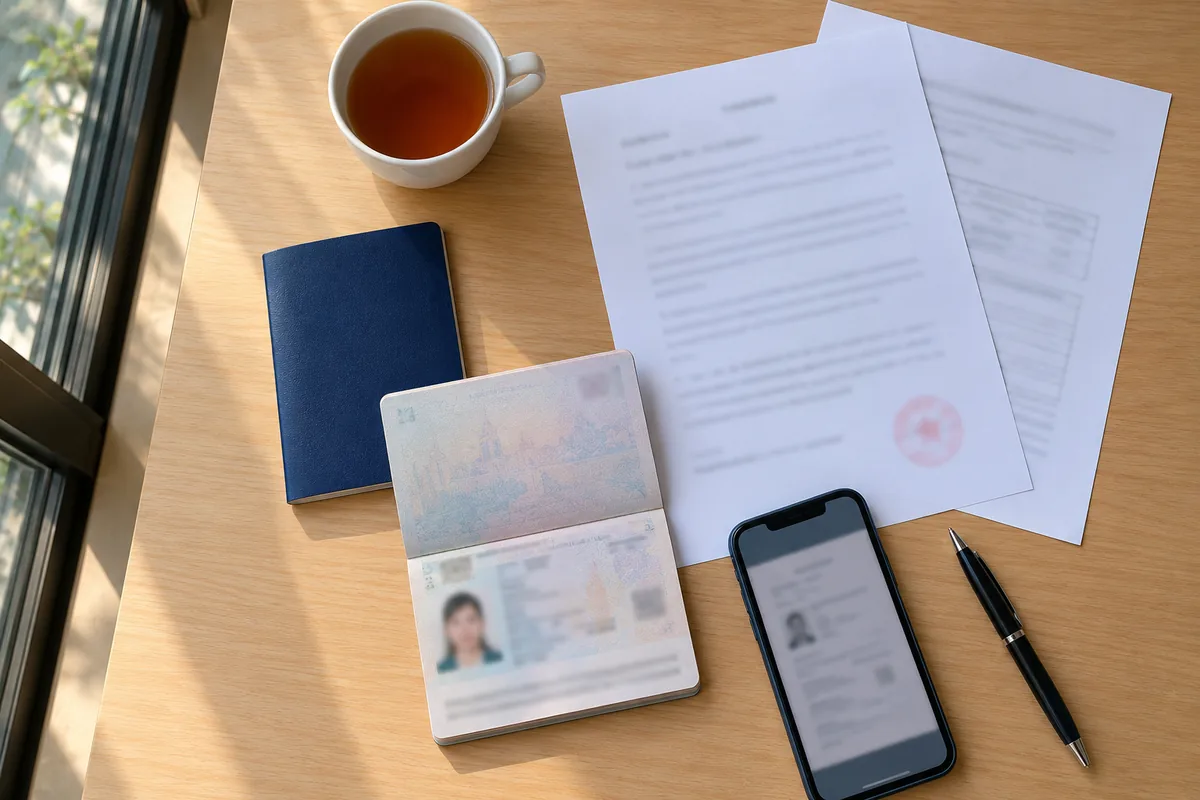
The Tibet entry approval
No Chinese authority publishes how far ahead to apply for the Tibet entry approval, which documents are needed, or how long the approval is valid. Everything below is common agency practice; confirm the details with yours.
- Documents: agencies usually ask for a clear scan of your passport photo page and of your Chinese visa or entry stamp, plus your planned dates and route. If you are already living in China, expect to send your residence permit page as well. Confirm the exact list with your agency.
- Timing: agencies set their own deadlines, and these change with the season and the route. Ask your agency for their deadline when you first contact them, and build in extra time if your route goes beyond Lhasa or you are travelling in a busy month.
- Original or copy: agencies handle this differently. Some send the approval as a scan, some deliver a paper copy to your hotel before you board, and some have the guide keep it. Ask how yours does it and what you need to carry for your train or flight.
- Who keeps it: on most tours the guide usually carries the approval and shows it where needed. Keep your own copy on your phone in case you get separated.
The Aliens' Travel Permit
This permit has published rules. The exit-entry office decides within 30 working days of accepting an application, the fee is ¥50 per permit, and approved permits are collected in person with the receipt. When a foreign tour group's route goes into areas not open to foreigners, the agency must file a reception plan with the provincial exit-entry office 60 days before the group arrives; the office checks whether the route crosses areas foreigners may not enter. A route that does not cross them needs no approval; for one that does, the agency must submit the plan, a name list and copies of passports and visas for approval. That is the national rule. How it plays out for a given Tibet route is your agency's job, so ask them which of these steps applies to your itinerary.
The border permit
Foreigners must apply for the electronic border permit in person at a county-level or higher exit-entry office or a designated police station, and the permit is used together with your passport; you can show it on your phone or as a printout. On a Tibet tour, your agency tells you whether your route needs it and how the in-person application works. Ask whether you need to be present for the application and where.
💡 Tip: Choose your agency on how clearly it answers your questions. Before you pay, ask it to confirm in writing: which approvals your route needs, the document deadline, how and when you will receive the approval, whether it covers your train or flight into Tibet, and the refund terms if an approval is refused or suspended.
Visas, Visa-Free Entry and Residence Permits
The Tibet entry approval sits on top of your right to be in China. It does not replace a visa, and you need to sort out the visa side first.
Applying for a visa
If you are applying for a Chinese visa, be open about Tibet. China's Consulate-General in Cebu (Philippines), in its 2023 visa notes, covers Tibet travel as part of the visa application, with an authorised agency tour or a written notice from the tourism bureau. Leaving Tibet off the application is not a shortcut. For the general visa process, see our guide to applying for a China visa.
240-hour visa-free transit
This one is clear: the 240-hour transit scheme does not cover Tibet. The National Immigration Administration lists 24 provinces, regions and cities where transit passengers may stay, Tibet is not one of them, and transit passengers may not go outside that area. Our 240-hour visa-free transit guide explains how the scheme works.
30-day visa-free entry
China lets ordinary-passport holders from a list of 50 countries enter without a visa for up to 30 days for tourism, business, family visits, exchanges or transit. For most of those countries the scheme runs until 31 December 2026; Russia's runs to the end of 2027 and Brunei's has no end date, so check whether it has been extended before you plan around it. Official sources do not say whether you can visit Tibet on this 30-day entry. The 2001 rule on prior approval does not mention visa types at all, so in practice it is the agency that decides whether it can apply for a visitor who entered visa-free. Ask before you book anything, and if the answer is unclear, a tourist visa removes the question. Our 30-day visa-free entry guide covers who qualifies.
Living in China on a residence permit
Foreigners who work or study in China are still foreigners under the Tibet rule. The only official text that names this group is an old page from China's embassy in Austria, dated 2004, which says all foreigners going to Tibet for tourism, family visits, study or business need an entry confirmation letter. That page is old and may be out of date, so confirm the current requirements with your agency. In practice, residents typically book through an agency just like tourists, usually sending their passport and residence permit.
Coming from Nepal
Tibet also connects directly with Nepal. Himalaya Airlines plans flights between Lhasa and Kathmandu every Monday to Saturday (schedule as of September 2026; check winter timings), and in autumn 2025 a group of foreign motorbike tourists entered at the Zhangmu land port in Shigatse with help from their travel agency. Entering from Nepal still needs a Chinese visa or other valid entry and the Tibet entry approval. Zhangmu is in Shigatse, which is affected by the current suspension and the August 2026 debris flow, so check with your agency whether the route is running.
Who Checks Your Permit, and Where
Some checks are written into the rules, and some are only what agencies and travellers report.
- Checkpoints on the road: in the Everest area and other border areas, officials ask for the border permit at checkpoints, and the notice does not separate foreigners from Chinese travellers, so confirm with your agency what you personally need to show. Your guide usually handles this, but have your passport ready.
- Hotels: under Article 39 of the Exit and Entry Administration Law, a hotel registers every foreign guest and reports the details to the local police; foreigners staying anywhere other than a hotel must register with the police within 24 hours. Agencies typically book hotels they know handle foreign guests' registration, and you hand over your passport at check-in. Our hotel booking and registration guide explains the general rule.
- Sights: the big sights sell real-name tickets tied to an ID document. The Potala Palace needs a real-name booking in advance even during the winter free-entry period, and Namtso tickets are real-name too. For you, that ID is your passport, so keep it on you every day.
- Trains and flights: no official text says that railway or airline staff check the Tibet entry approval when you board. Agencies and travellers do report checks when buying tickets and at boarding, so assume you will be asked: carry the approval (or the copy your agency gives you) with your passport, and confirm with your agency what form they will send it in.
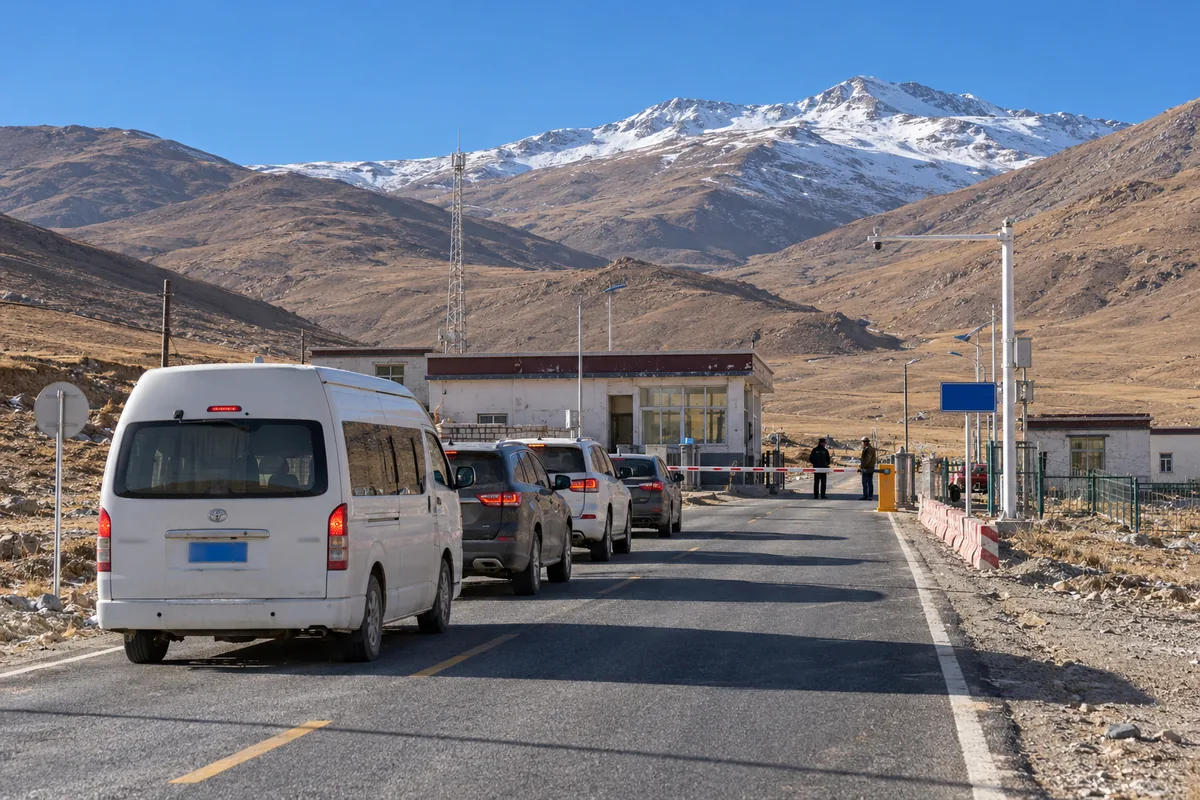
If you are going by train, the Qinghai–Tibet Railway guide covers which city to board in, fares and what happens on board; Xining, the most common boarding city, has its own Xining and Qinghai Lake guide.
Can You Travel Tibet Independently?
For a foreign tourist, no — not in the sense of booking your own hotels and wandering on your own. China's official texts describe a prior application, and one Chinese consulate's guidance (Cebu, Philippines, 2023) points tourists to tours run by authorised local agencies, with individual travellers needing a written notice from the tourism bureau. Foreign governments are blunter. The UK says you must get a permit through a specialist Chinese travel agency and join an organised tour; Canada says unaccompanied private travel to Tibet is still prohibited; Japan says foreigners must obtain an entry permit for the Tibet Autonomous Region. You can read the British advice on GOV.UK's China regional risks page and the Canadian advice on travel.gc.ca.
Whether a guide must be with you every minute inside Lhasa is not written down in any official source. Agencies set their own rules for free time in Lhasa, and they differ. If walking around the old town on your own matters to you, ask the agency how they handle it before you book, and get the answer in writing.
Private tour or join-in group?
Within the "tour with an agency" rule you still have a real choice, and it is mostly about money against flexibility.
- Private tour: you, your companions, a guide, a driver and a car. You set the pace, which matters at altitude: you can take an extra rest day in Lhasa or skip a long drive if someone feels unwell. It costs more per person, especially if you travel alone, because one guide and one car are split between fewer people.
- Join-in group: you share a guide and vehicle with strangers on a fixed itinerary and fixed dates. It is usually the cheaper option and works well if your dates are fixed and you are happy with the standard Lhasa, Namtso and Yamdrok circuit. The downside is that one sick group member, or a change to one person's documents, can affect everyone's plans; ask the agency how they handle that.
For first-timers with flexible dates and a mid-range budget, a small private tour of three to five days around Lhasa is usually the easiest option. Our Lhasa and Tibet guide covers how many days to plan, when to go and how to handle the altitude.
Hong Kong, Macao and Taiwan Residents
Hong Kong and Macao residents do not need the Tibet entry letter: a Civil Aviation Administration notice from 2003, still marked as valid, says they can buy flights to Tibet directly with their Home Return Permit, Hong Kong or Macao identity card or SAR passport. For border management areas that are not open to them, residents of Hong Kong, Macao and Taiwan still need a border permit, which they apply for in person.
For Taiwan residents, there is no official text on whether the Tibet entry approval applies. Confirm the current rule with a travel agency before you book. Diplomats and journalists follow a separate process through Tibet's foreign affairs office, applying at least 15 working days ahead; this page does not cover it.
Suspensions and Short-Notice Changes
Tibet permits can stop or change with little warning, and you should plan with that in mind. The UK government says the Chinese authorities sometimes stop issuing permits without notice. Japan's foreign ministry notes that security is tightened every year around February and March because of anniversaries in that period. Permit pauses for foreign tourists are not usually announced publicly, so your agency's written confirmation is what to rely on.
Some changes are about the place, not the permit. The Everest scenic area often stops ticket sales or closes at short notice in autumn, winter and spring when snow ices the roads, with reopening announced by the county tourism office. For example, in 2026 it closed on 9 April because of snow, and stopped ticket sales on 25 September, reopening sales the next day with some areas still icy. And for the Shigatse border permit suspension described above, the restart date will come in an official notice.
Winter also brings one change in your favour. During the "Winter in Tibet" (冬游西藏, Dōng Yóu Xīzàng) scheme, from 15 October 2026 to 15 March 2027, all A-grade scenic areas in Tibet are free to enter except temples. Temples such as the Jokhang and Tashilhunpo still charge their usual price. The scheme is about entrance tickets only; it does not change any of the permit rules on this page.
⚠️ Warning: Do not book non-refundable flights or trains into Tibet until your agency confirms the approval has been issued for your dates. If an approval is delayed or suspended, a flexible ticket is far easier to deal with.
Next Steps: Your Permit Checklist
- Sort out your entry to China. Decide whether you need a visa or can use visa-free entry, and check with your shortlisted agencies that they accept your type of entry for Tibet. The 240-hour transit scheme does not work for Tibet. Start with do you need a visa for China.
- Choose your route and season. Lhasa-only trips are the simplest. If Everest or Shigatse is on your list, check whether border permits for Shigatse are being issued again.
- Pick an authorised agency and get its answers in writing: approvals needed, document deadline, how you receive the approval, Lhasa free-time rules and refund terms.
- Send your documents, usually passport and visa scans, by the deadline your agency sets.
- Wait for confirmation that the approval is issued before you buy anything you cannot cancel.
- Book your train or flight into Tibet. See the Qinghai–Tibet Railway guide for trains, or the Lhasa and Tibet guide for flights and trip planning.
- Book the Potala Palace early: during winter 2026–27 it sells no same-day tickets. The Potala Palace guide explains how booking works.
- Before you go, save the approval copy, your passport scan and your agency's phone number on your phone, and note China's emergency numbers.
Frequently Asked Questions
Can I get the Tibet Travel Permit myself?
Not as a foreign tourist in practice. Official texts say foreign tourists apply in advance to the Tibet tourism authority, and China's Consulate-General in Cebu (Philippines), in its 2023 visa notes, points tourists to tours run by authorised local agencies. The UK government says you need a specialist agency and an organised tour, and Canada says unaccompanied private travel is prohibited and you go through an accredited agency. Book a tour and the agency applies for you.
Can I visit Tibet on visa-free entry?
Not on the 240-hour transit scheme, because Tibet is outside the area where transit passengers may stay. For the 30-day visa-free entry, official sources do not say either way, so whether an agency will apply for you is up to the agency; ask before you book, and remember the scheme for most countries currently runs to 31 December 2026, so check for an extension.
How far in advance should I apply for the Tibet permit?
No official source gives a lead time for the Tibet entry approval. Agencies set their own deadlines, which change with season and route, so ask yours for its deadline at the start and confirm it in writing. For routes into areas closed to foreigners, the national rule asks the agency to file its group reception plan with the police 60 days before arrival — that is the agency's filing deadline, not a published deadline for travellers, so ask your agency how it affects when you need to book.
What permits do I need for Everest Base Camp?
First, the Tibet entry approval. Beyond that, Shigatse's official notice says everyone travelling the Everest road needs a border permit, checked at checkpoints; national rules mention both the border pass and the Aliens' Travel Permit for foreigners, so your agency tells you which permit your route needs and how it is applied for (for the border permit, foreigners apply in person) — confirm the details with them. Electronic border permits for Shigatse have been suspended since 28 August 2026, with the restart date to be set by an official notice. Note that tourists stop at Rongbuk Monastery: the 5,200 m climbers' base camp, about 2 km further on, has been closed to tourists since December 2018. The tourist area still appears in the official eco-bus timetable as "Everest Base Camp" (珠峰大本营, Zhūfēng Dàběnyíng).
Do foreigners who work or study in China also need a Tibet permit?
Yes, assume you do. The only official text that names this group is a 2004 page from China's embassy in Austria saying all foreigners going to Tibet for tourism, family visits, study or business need an entry confirmation letter. It is old, so confirm the current requirements with your agency, but in practice residents typically book through an agency with their passport and residence permit, the same as tourists.
Summary
To visit Tibet, a foreign tourist needs the Tibet entry approval, arranged by an authorised agency as part of a tour. Areas closed to foreigners add an Aliens' Travel Permit, and on the Everest road Shigatse's notice asks for a border permit — your agency tells you which permit your route needs and how it is applied for (for the border permit, foreigners apply in person), and Shigatse's electronic border permit is currently suspended. None of these replaces a visa, and the 240-hour transit scheme does not cover Tibet. Official sources do not publish lead times, document lists or whether trains and flights check the approval, so get your agency's answers in writing before you pay. Your next step: choose your route, contact two or three agencies, and do not buy non-refundable transport until the approval is issued. Then use the Lhasa and Tibet guide to plan the trip itself.
Last updated: October 2026
Fact-checked sources
- Official Ministry of Foreign Affairs 4 pages
- Official Chinese embassies and consulates 5 pages
- Official gov.uk
- Official Government of Canada travel advice
- Official anzen.mofa.go.jp
- Official National Immigration Administration 3 pages
- Official wlt.xizang.gov.cn 14 pages
- Official gat.guizhou.gov.cn
Show 8 more sources
- ydyl.gansu.gov.cn
- Official Shanghai Municipal Government
- Official Chinese central government (gov.cn)
- Official China Visa Application Service Center
- Official lasa.gov.cn
- Official Civil Aviation Administration of China (CAAC)
- Official xzmt.gov.cn
- Official xz.spb.gov.cn
Last verified: 2026-10-22
Read in other languages
Last train times for 10 Chinese metro systems
Every line and station, checked by hand — the same data behind our offline route planner.
Get the WaysChina App
Offline guides, currency converter, essential phrases, and more — all in your pocket.

Related Articles
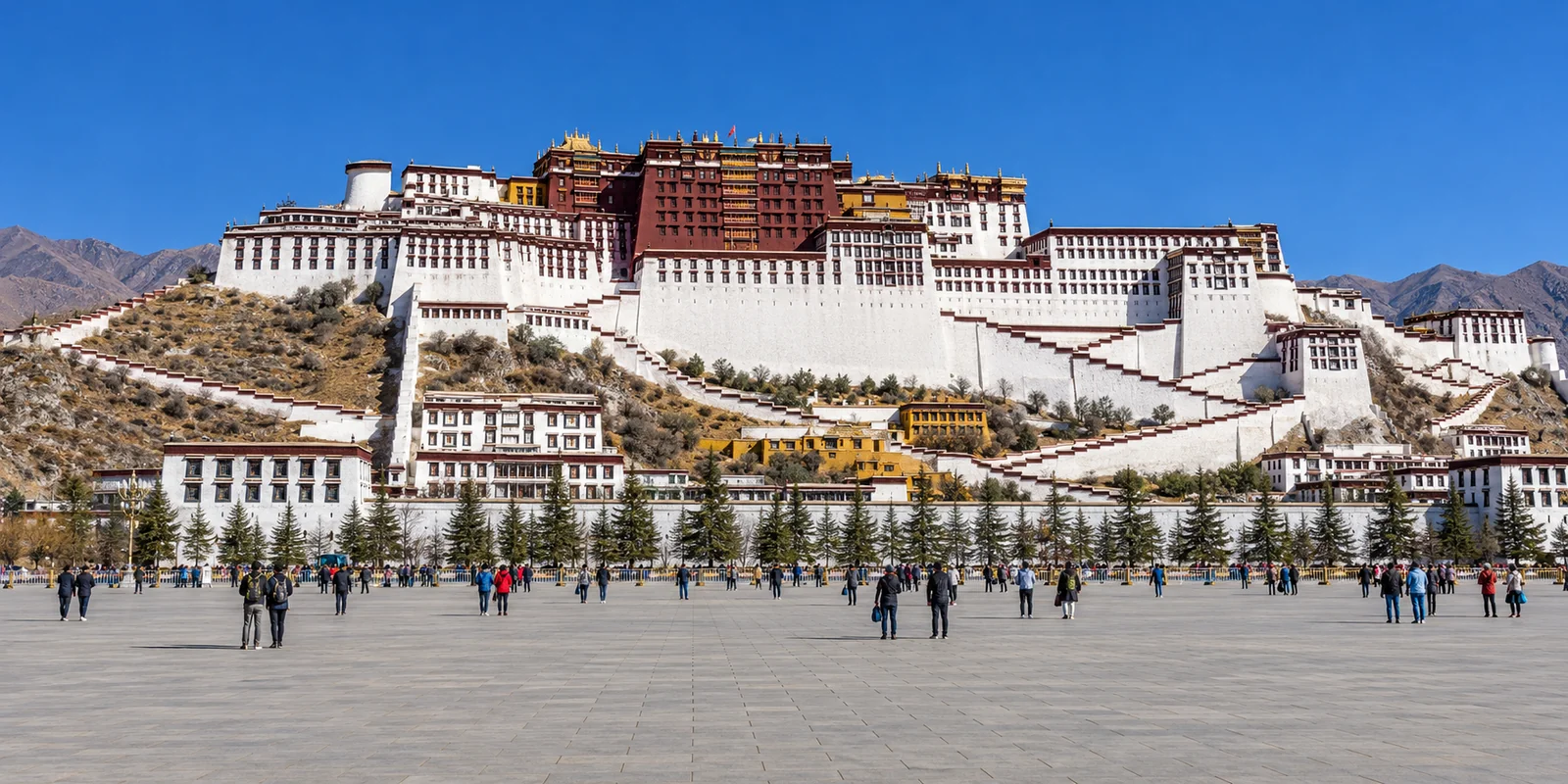
Lhasa & Tibet Travel Guide: How Many Days, Permits, Altitude, Trains and Everest
How many days to plan for Lhasa, the lakes and Everest, which Tibet permits foreigners need, how to handle the...

China's 240-Hour Visa-Free Transit: Who Qualifies and How It Works
Not on China's visa-free list? If you're flying on to a third country, the 240-hour transit policy lets you enter...

Arriving in China: The Arrival Card, Immigration and Customs
Your first hour on the ground, step by step: filing the arrival card online before you fly, what immigration...

Do You Need a Visa for China? Check by Nationality
One table answers it: every nationality with a visa-free route into mainland China — 30-day entry, 240-hour transit,...