

This article contains affiliate links. If you make a purchase through these links, we may earn a small commission at no extra cost to you. This helps support our work in creating free travel guides.
The most practical way to ride the Qinghai–Tibet Railway (青藏铁路, Qīngzàng Tiělù) to Lhasa is to board in Xining, the capital of Qinghai province: on our sample travel day, 29 October 2026, six direct trains left Xining for Lhasa and most took about 20 to 20.5 hours. Long through-trains also run from Beijing West, Shanghai and Guangzhou Baiyun, taking roughly 40 to 53 hours. Before any of that, a foreign tourist needs a Tibet trip approved in advance through the Tibet tourism authority, which in practice means booking with an authorised agency. Winter cuts the timetable: on a 4 November 2026 check, Xining had four direct trains to Lhasa, so check 12306 for your date.
The Short Answer: Where to Board, How Long, What You Need
Board in Xining if you can. Xining has the most trains to Lhasa, the shortest ride, and it is a sensible place to spend a night or two before the plateau. The city sits at 2,261 m, so you start getting used to thinner air before the train climbs. On the 29 October sample day, the Xining–Lhasa trains took between 19 hours 42 minutes and 22 hours 30 minutes. Most of them leave Xining in the afternoon or evening and reach Lhasa the next morning or afternoon. Our Xining and Qinghai Lake guide covers the city, getting there by high-speed train, and a day at the lake if you have time.
Through-trains from other cities make sense if you want one long, unbroken trip and do not mind two nights on board. Beijing West to Lhasa took 39 hours 58 minutes on the sample day. Shanghai took 45 hours 3 minutes, and Guangzhou (from Guangzhou Baiyun Station) took 53 hours 27 minutes. Chongqing and Chengdu trains run only every other day, and the Chengdu train showed as "suspended" for early November dates.
You need your Tibet arrangements in place first. Foreign governments put it in slightly different ways: the UK says you need a permit obtained through a specialist Chinese travel agency and must join an organised tour, and that the authorities sometimes stop issuing permits without notice; Canada says unaccompanied private travel to Tibet is still not allowed and that you can go through a qualified agency that gets the permit for you; Japan says foreigners must obtain a Tibet entry permit. Book the agency and get the approval process started before you buy train tickets. Our Tibet travel permit guide explains every part of it.
Winter changes things. The extra Xining–Lhasa train Y839 runs only until 31 October 2026, and the Chengdu-originating Z323 is not sold from November. The upside of a winter trip is price at the other end: during the Winter in Tibet scheme (15 October 2026 to 15 March 2027), A-grade scenic areas across Tibet are free except temples, so Jokhang Temple and Tashilhunpo still charge. Our Lhasa and Tibet guide covers what that means for a trip.
The Line at a Glance: Length, Altitude and the Highest Point
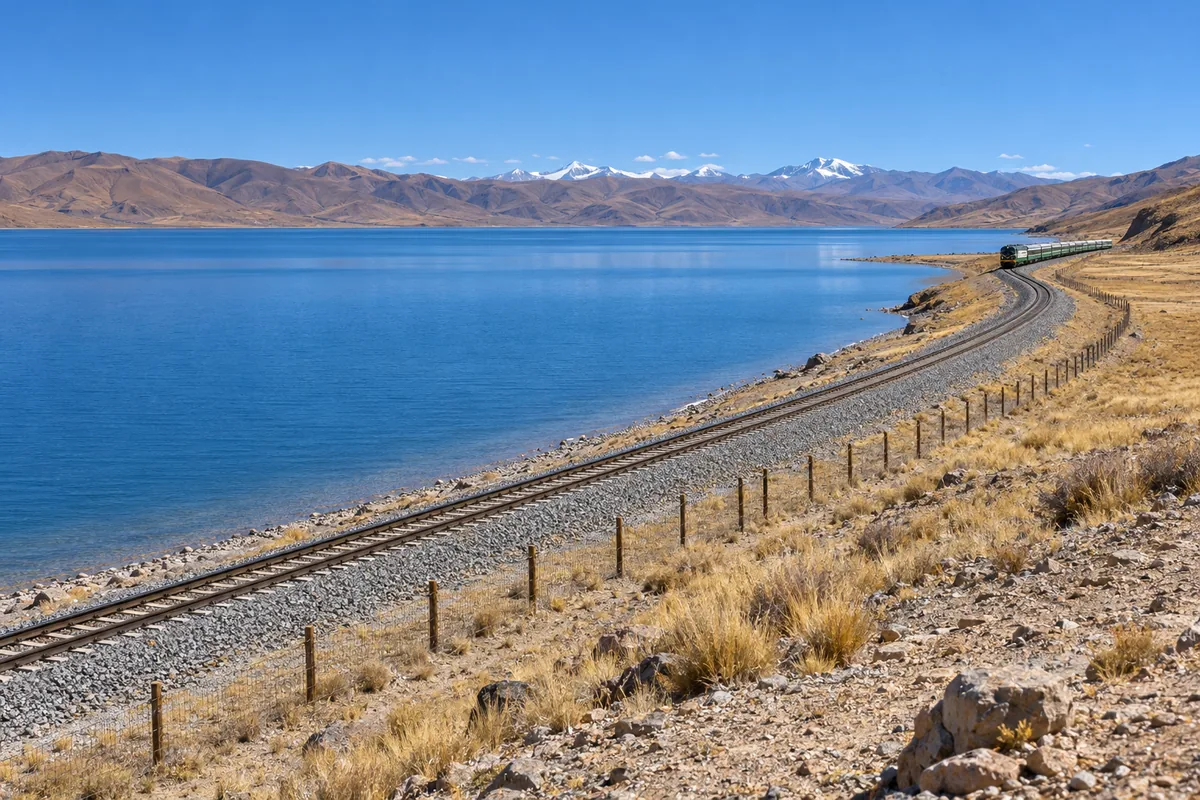
The Qinghai–Tibet Railway runs 1,956 km from Xining in the east to Lhasa in the west, and it was built in two stages. The first stage, Xining to Golmud, is 814 km and opened to traffic in 1984. The second stage, Golmud to Lhasa, is 1,142 km and went into trial operation on 1 July 2006.
The second stage is the one people mean when they talk about the "sky railway". From Golmud the line climbs past Naij Tal, Wudaoliang, Tuotuohe and Yanshiping, crosses the Tanggula range, and then drops through Amdo, Nagqu, Damxung and Yangbajain to Lhasa. More than 960 km of the whole line is above 4,000 m.
The highest point is the Tanggula Pass at 5,072 m, where the air holds less than half the oxygen it does at sea level and the record low is minus 40°C. For comparison, Lhasa sits at about 3,658 m. So the train takes you well above Lhasa before it brings you down to it. That matters for how you think about altitude on board, covered below.
Trains to Lhasa from Each City
The table below shows the 12306 sample-day picture for every departure city: train numbers, departure times, journey times and the three fares (hard seat, hard sleeper, soft sleeper). It also lists the Lhasa–Shigatse and Lhasa–Nyingchi trains. Treat it as a snapshot of one day, not a fixed timetable. Times and fares vary by train and berth, and you should check 12306 for your own date.
| Route | Trains | Journey time | Fares |
|---|---|---|---|
| Xining → Lhasa 12306 sample: Oct 29, 2026 | 6 a day departures 11:42–20:50 Z323 11:42 · Z8981 12:50 · Z21 15:27 · Z265 18:19 · Z165 19:28 · Y839 20:50 Z8981 and Y839 start in Xining; the others are through trains from other cities Y839 is a seasonal extra train (Sep 29 – Oct 31, 2026) Z323 (through train from Chengdu West) is not on sale from Nov 2026 Winter check, Nov 4, 2026: 4 trains (Z8981, Z21, Z265, Z165) | 19 h 42 min – 22 h 30 min most about 20–20.5 h | hard seat 224 yuan hard sleeper 495 yuan soft sleeper 781 yuan |
| Beijing West → Lhasa 12306 sample: Oct 29, 2026 | 1 a day Z21 19:48 arrives Lhasa 11:46 on day 3 Return: Z22 leaves Lhasa 15:50, 40 h 53 min | 39 h 58 min | hard seat 360 yuan hard sleeper 720 yuan soft sleeper 1,144 yuan |
| Shanghai → Lhasa 12306 sample: Oct 29, 2026 | Z164 18:33 | 45 h 03 min | hard seat 402.5 yuan hard sleeper 793.5 yuan soft sleeper 1,262.5 yuan |
| Guangzhou Baiyun → Lhasa 12306 sample: Oct 29, 2026 | Z264 09:26 | 53 h 27 min | hard seat 447 yuan hard sleeper 865 yuan soft sleeper 1,468 yuan |
| Chongqing West → Lhasa 12306 sample: Oct 29, 2026 | Z223 21:00 Every other day; Chengdu West and Chongqing West alternate Runs Oct 29, Oct 31, Nov 2 and Nov 4 | 34 h 24 min | hard seat 302.5 yuan hard sleeper 627.5 yuan soft sleeper 997.5 yuan same fares on both trains |
| Chengdu West → Lhasa 12306 sample: Oct 28, 2026 | Z322 20:46 Every other day; Chengdu West and Chongqing West alternate On sale only for Oct 28, 2026; Oct 30 and Nov 1 showed “timetable adjustment, sales suspended” (列车运行图调整,暂停发售) on 12306 | 34 h 38 min | hard seat 302.5 yuan hard sleeper 627.5 yuan soft sleeper 997.5 yuan same fares on both trains |
| Lanzhou → Lhasa 12306 sample: Oct 29, 2026 | 4 a day departures 08:40–16:36 Z323, Z21, Z265, Z165 Z323 (through train from Chengdu West) is not on sale from Nov 2026 through trains from other cities, none start here | 22 h 44 min – 23 h 21 min | hard seat 240 yuan hard sleeper 522 yuan soft sleeper 823 yuan |
| Xi'an → Lhasa 12306 sample: Oct 29, 2026 | 2 a day Z265 07:53 · Z165 09:27 through trains from other cities, none start here | fastest 30 h 09 min about 30–31 h | hard seat 293.5 yuan hard sleeper 611.5 yuan soft sleeper 969.5 yuan |
| Lhasa → Xining 12306 sample: Oct 29, 2026 | 6 a day departures 09:50–17:30 Y840 is a seasonal extra train (Oct 1 – Nov 2, 2026) Winter check, Nov 4, 2026: 5 trains (Z8982, Z166, Z266, Z22, Z224) | 20 h 31 min – 22 h 53 min most about 21–22 h | hard seat 224 yuan hard sleeper 495 yuan soft sleeper 781 yuan |
| Lhasa → Shigatse 12306 sample: Oct 29, 2026 | 3 a day each way 08:40 · 13:40 · 17:00 Return from Shigatse: 11:05 · 16:05 · 19:37 | 2 h 04 min – 2 h 17 min | 2nd class 64 yuan 1st class 103 yuan business class 225 yuan |
| Lhasa → Nyingchi 12306 sample: Oct 29, 2026 | 2 a day each way C881 08:00 · K6831 16:45 Return from Nyingchi: K6832 09:50 · C882 12:24 | C881 4 h 04 min K6831 5 h 31 min | C881: 2nd class 129 yuan · 1st class 206 yuan · business class 452 yuan K6831: hard seat 64.5 yuan · hard sleeper 159.5 yuan · soft sleeper 245.5 yuan |
| Lhasa → Shannan 12306 sample: Oct 29, 2026 | Both Nyingchi trains stop here | C881 1 h 04 min K6831 1 h 35 min | C881: 2nd class 37 yuan K6831: hard seat 19.5 yuan |
What the table means for planning, city by city:
Xining: the best place to board
Six trains on the sample day, leaving between 11:42 and 20:50. The fastest was Z323 at 19 hours 42 minutes, but it is the Chengdu train passing through, and it is not sold from November. Only two of the six actually start in Xining, Z8981 and the seasonal Y839; the others are through-trains from Beijing West, Shanghai, Guangzhou Baiyun and Chengdu West. On the 4 November check, Xining had four trains to Lhasa: Z8981, Z21, Z265 and Z165. Fares from Xining were the same on every train sampled: hard seat ¥224, hard sleeper ¥495 and soft sleeper ¥781.
Z8981 starts in Xining, so all its berths are sold from Xining, while through-trains may already be partly full from their starting city. It is the first train to check when sleepers look tight.
Beijing
One direct train a day, Z21, leaving Beijing West at 19:48 and arriving in Lhasa at 11:46 on the third day, 39 hours 58 minutes later. Fares from Beijing West were ¥360 hard seat, ¥720 hard sleeper and ¥1,144 soft sleeper. It suits travellers who are already in Beijing and want the whole crossing in one go. If you would rather break it up, take a high-speed train to Xining (via Lanzhou) and board there.
Shanghai and Guangzhou
Each has one direct train: Z164 from Shanghai Station at 18:33 (45 hours 3 minutes) and Z264 from Guangzhou Baiyun Station at 09:26 (53 hours 27 minutes). The Guangzhou train leaves from Baiyun Station, not the older Guangzhou Station, so check the station name on your ticket. Fares from Shanghai were ¥402.5 / ¥793.5 / ¥1,262.5 and from Guangzhou ¥447 / ¥865 / ¥1,468 for hard seat / hard sleeper / soft sleeper. Two full days and nights is a long time on a train. If that sounds like too much, fly or take a high-speed train to Xining and board there.
Long-distance trains in China often change number partway through the trip. The Chengdu train, for example, is sold as Z322 from Chengdu West but shows as Z323 at Xining. Trains from Shanghai and Guangzhou also appear under a different number at Xining (one digit higher), so on 12306 search by station pair, not by train number.
Chongqing and Chengdu
Both run every other day. Chongqing West's Z223 left at 21:00 on 29 and 31 October and 2 and 4 November, taking 34 hours 24 minutes. Chengdu West's train (sold as Z322, 20:46 departure, 34 hours 38 minutes) could only be bought for 28 October; the following dates showed "timetable adjustment, sales suspended". That means there was no Chengdu train to buy for early November. Both share the same fares: ¥302.5 hard seat, ¥627.5 hard sleeper and ¥997.5 soft sleeper. If you are starting in Chengdu in winter, flying to Lhasa or getting to Xining first are the realistic choices.
Lanzhou and Xi'an
Neither city has its own train to Lhasa; you board through-trains as they pass. On the sample day Lanzhou had four (Z323, Z21, Z265 and Z165), taking about 22 hours 44 minutes to 23 hours 21 minutes, and Xi'an had two (Z265 and Z165), taking about 30 to 31 hours. Z323 is not sold from November, so expect fewer Lanzhou departures in winter and check 12306 for your date. Lanzhou has two main stations: conventional trains mostly use Lanzhou Station, while bullet trains to Xining leave from Lanzhou West, so check the station name on your Lhasa ticket. The alternative is the bullet train from Lanzhou West to Xining, which takes about an hour, followed by a night in Xining and then a Lhasa train. If you are coming along the Silk Road, our Lanzhou guide and Xi'an to Dunhuang route help you fit Xining into the trip.
Stops and Scenery Along the Way
The scenery depends almost entirely on which part of the line you cross in daylight. The 12306 stop lists for the sample day give the times:
- Z21 (from Beijing): Xining 15:27, Delingha 19:18, Golmud 21:42–22:07, Nagqu 08:13, Lhasa 11:46.
- Z265: Xining 18:19, Golmud departs 00:54, Amdo 09:36, Nagqu 10:56, Lhasa 14:53.
- Z165: Xining 19:28, Golmud departs 01:56, Amdo 10:46, Nagqu 12:06, Lhasa 15:36.
- Z8981 (starts in Xining): Xining 12:50, Golmud departs 20:30, then no listed stop until Lhasa at 11:20.
- Y839 (seasonal, ended 31 October): Xining 20:50, Golmud departs 03:15, Tuotuohe 08:19, Yanshiping 09:32, Amdo 11:47, Lhasa 17:20.
Golmud is the long stop, usually 25 minutes. It is a good moment to stretch your legs on the platform, but stay close to your carriage door and follow the attendant's call to reboard.
Here is what you see from each train:
- Z265 and Z165 cross the Tanggula Pass shortly before Amdo, in the morning, and then run through Amdo, Nagqu, Damxung and the grasslands to Lhasa in full daylight. Z165 is about an hour later, so you get a better chance of light at the pass itself. Tsonag Lake lies on this stretch, between Amdo and Nagqu. For the winter timetable, these two are the scenery picks.
- Z21 crosses the highest ground at night and reaches Nagqu at breakfast time. You see the last few hours of grassland and valleys before Lhasa.
- Z8981 leaves Golmud in the evening and arrives in Lhasa late morning, so most of the high section passes in the dark.
- Seasonal extras such as Y839, added for the October 2026 holiday period, gave the most daylight on the highest part of the line, from Tuotuohe over Tanggula to Amdo. Watch for similar extras at busy times.
The Hoh Xil area (可可西里, Kěkěxīlǐ), known for Tibetan antelope, sits on the stretch south of Golmud toward Tuotuohe. Most winter trains pass it at night or around dawn. Tibet runs on Beijing time, so in autumn and winter it gets light late in the morning on the plateau, which pushes good viewing later than the clock suggests.
Oxygen on Board and Altitude Sickness
The carriages are oxygen-enriched, not pressurized. Between Golmud and Lhasa, trains to Tibet supply diffused oxygen into the whole carriage and also have personal oxygen outlets you can use. China Railway describes them as high-altitude carriages with an on-board oxygen generator, oxygen outlets and backup bottled oxygen, staffed by crews specially trained for the line. The air still has less oxygen than at sea level. The oxygen supply makes the high section easier; it does not stop altitude from affecting you.
Z21: Xining 15:27 → Delingha 19:12–19:18 → Golmud 21:42–22:07 → Nagqu 08:13–08:19 → Lhasa 11:46
Z265: Xining 18:19 → Delingha 22:04–22:08 → Golmud 00:29–00:54 → Amdo 09:36–09:38 → Nagqu 10:56–11:02 → Lhasa 14:53
Z165: Xining 19:28 → Golmud 01:31–01:56 → Amdo 10:46–10:48 → Nagqu 12:06–12:12 → Lhasa 15:36
Z8981: Xining 12:50 → Delingha 16:55–17:01 → Golmud 20:05–20:30 → Lhasa 11:20
Golmud is the long stop, usually 25 min
China Railway (2019): high-altitude carriages with an on-board oxygen generator, oxygen outlets and backup bottled oxygen; crews from the Xining passenger depot are trained for the line
12306 page from 2015; ask your agency or attendant whether the card is still collected
Current practice is not officially confirmed; ask the attendant on your train
Two things to know before you board:
- Passenger health registration card (旅客健康登记卡, lǚkè jiànkāng dēngjì kǎ). 12306's Qinghai–Tibet train page asks passengers to fill in this card and hand it to their carriage attendant, and also suggests a health check before the trip, preparing altitude medicine under a doctor's guidance, and no smoking or alcohol at altitude. That page dates from 2015, so ask your agency or the attendant whether the card is still collected and check that you have filled it in if it is.
- Change of carriages at Xining. Qinghai government reports from 2018 describe through-trains from cities like Shanghai, Guangzhou and Chengdu changing at Xining onto high-altitude oxygen-supplied carriages, with all passengers moved "train to train, door to door". Check with the attendant on your through-train whether this still happens, and keep your bags packed as you approach Xining in case it does.
Will you get altitude sickness on the train?
Some people do. A Sichuan health-commission guideline says altitude sickness mainly happens above 2,500 m, with mild symptoms often starting within a few hours of arrival: chest tightness, shortness of breath, headache, dizziness, poor sleep, nausea, vomiting or diarrhoea. The train passes through that zone for many hours, and the Tanggula section is higher than anywhere you will sleep in Lhasa.
The same guideline says people with serious COPD, asthma, interstitial lung disease, congenital heart disease or pulmonary hypertension are not advised to go to high altitude. A Lhasa People's Hospital emergency doctor adds severe high blood pressure, heart disease, respiratory disease, and obesity with breathing problems. If any of that applies to you, or you are pregnant, talk to a doctor before you book anything.
On board, drink water steadily, eat light meals, move slowly (especially climbing to an upper berth), skip alcohol, and sleep when you can. If you feel short of breath or get a headache on the high section, use the oxygen outlet at your berth or ask the attendant; that is what it is for.
A note on the "slow ascent" idea: the train does take you up over a day, which many people find easier than flying straight in. But it also takes you above 5,000 m, higher than Lhasa, and you arrive having slept poorly. Treat your first day in Lhasa the same way you would after a flight.
How to Book Train Tickets to Lhasa
Sort out the Tibet side first. China's Consulate-General in Cebu (Philippines), in its 2023 visa notes, says to join a tour run by an authorised local agency, and the 240-hour visa-free transit scheme does not cover Tibet. Official sources do not say whether 12306 or the station checks your Tibet approval when you buy a ticket or board. Agencies usually either book the train for you or tell you when to book it and what to carry, so confirm with yours before you pay for anything. Details are in the permit guide.
Ticket sales open 15 days ahead, including the travel day. For a train leaving Xining on the 20th, sales open on the 6th. Sleepers on the Lhasa line go fast in summer and around Chinese public holidays, so be ready on the first sale day for those dates. In the quiet winter months it is usually much easier, though fewer trains also means fewer berths.
Buying with a foreign passport on 12306. The official app and website (12306 English site) work with a passport:
- Your ID verification has three states: passed, pending or failed. Only "passed" lets you buy online. You can verify by uploading your passport photo in 12306, or at a station ticket window with the original passport.
- Enter your name in the order it appears in English on your passport, keep any spaces inside your surname or given name, and put a space between surname and given name. A mismatch here is the most common reason a passport booking fails.
- If the berth you want is sold out, use the waitlist (候补, hòubǔ). Each account can hold up to 6 waitlist orders, each covering up to 3 dates and up to 60 trains in total. Add Z8981, Z21, Z265 and Z165 on two or three dates and you have a fair chance.
- At the station, passport holders use the manual gate for ID checks and ticket checks, because passports cannot be read by the automatic gates. Allow extra time at Xining.
Our step-by-step guide to booking train tickets with a foreign passport walks through 12306 screen by screen, and our train station guide covers getting through the station. If the 12306 verification is giving you trouble, you can also book the same trains in English through Trip.com.
Which Berth to Choose
For a 20-hour ride at altitude, a bed is worth it. Here is how the three classes compare from Xining, where hard seat was ¥224, hard sleeper ¥495 and soft sleeper ¥781 on the sample day:
- Soft sleeper (软卧, ruǎnwò): four berths in a compartment with a door. It is quieter, you can close out the corridor, and you share with three people instead of five. This is our pick for a first trip to Tibet, and the extra cost buys real sleep.
- Hard sleeper (硬卧, yìngwò): six berths in an open bay, three on each side (lower, middle, upper). It is clean and perfectly fine, and the price difference covers a good part of a night's hotel in Lhasa. Choose a lower or middle berth if you can: the upper berth is close to the ceiling, and climbing up and down is harder work at altitude.
- Hard seat (硬座, yìngzuò): an upright seat for the whole night and day. Only consider it on a tight budget and if you sleep easily sitting up. Poor sleep makes altitude symptoms feel worse.
Lower berths are the most comfortable but also become the daytime seat for everyone in the bay. Upper, middle and lower berths can be priced slightly differently; 12306 shows the exact fare when you choose one. Our train seat classes guide shows what each class looks like.
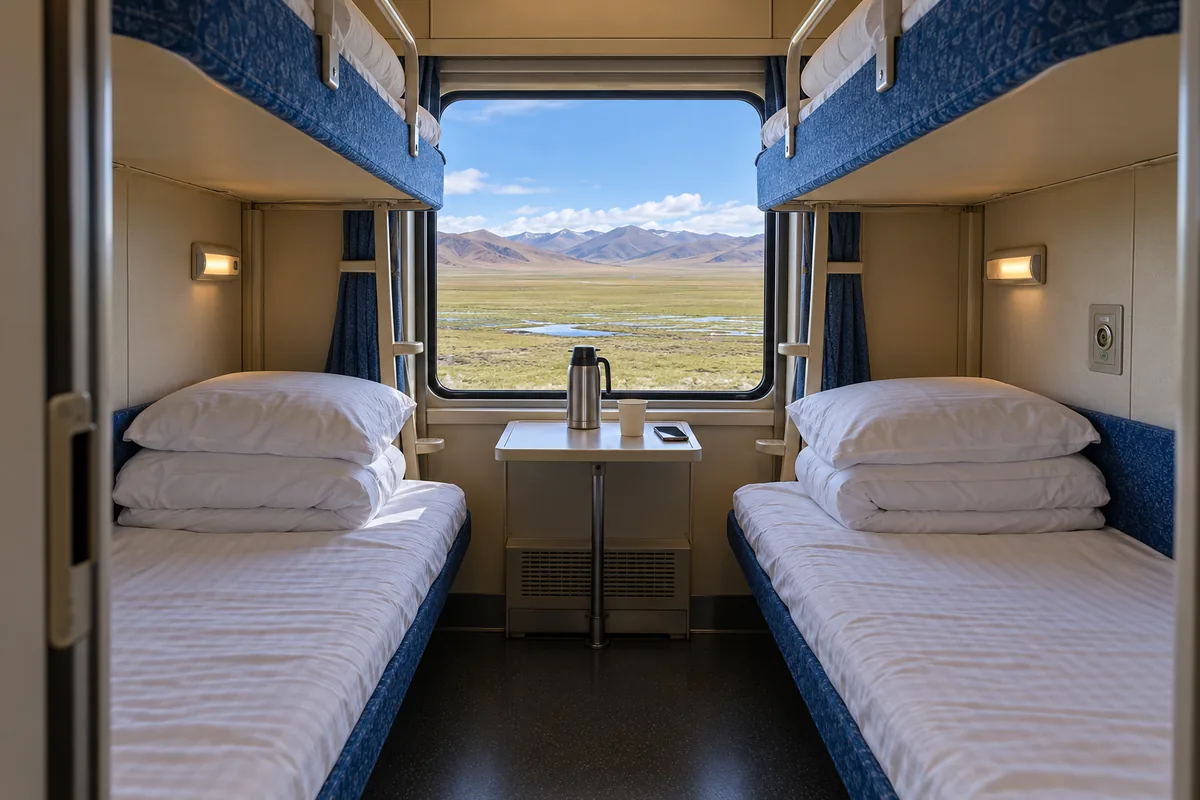
Pack for the ride: a warm layer (carriages are heated, but the platforms on the plateau are cold, especially in winter), snacks and instant noodles if you like them (there is hot water on board), lip balm and moisturiser for dry air, and a refillable water bottle. A dining car runs on the train, but menus are simple.
Arriving at Lhasa Station
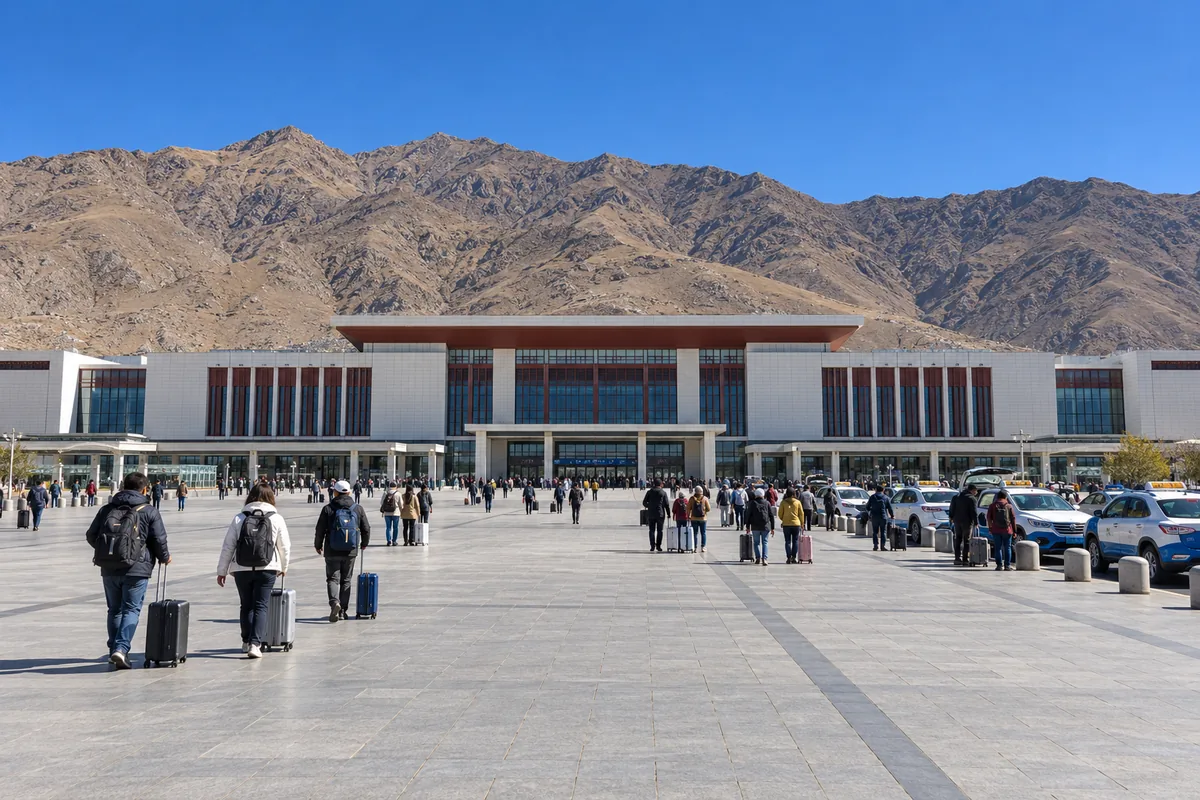
Lhasa Station is in the Liuwu new district, southwest of the city centre, not in the old town. City buses 1, 13, 14 and 30 start from the station, according to a 2023 route notice; check the current route at the station, since bus lines change. Most travellers with a tour are met by their guide. Otherwise a taxi to the old town is the easiest option after a long ride. Agree the plan with your agency or hotel before you arrive.
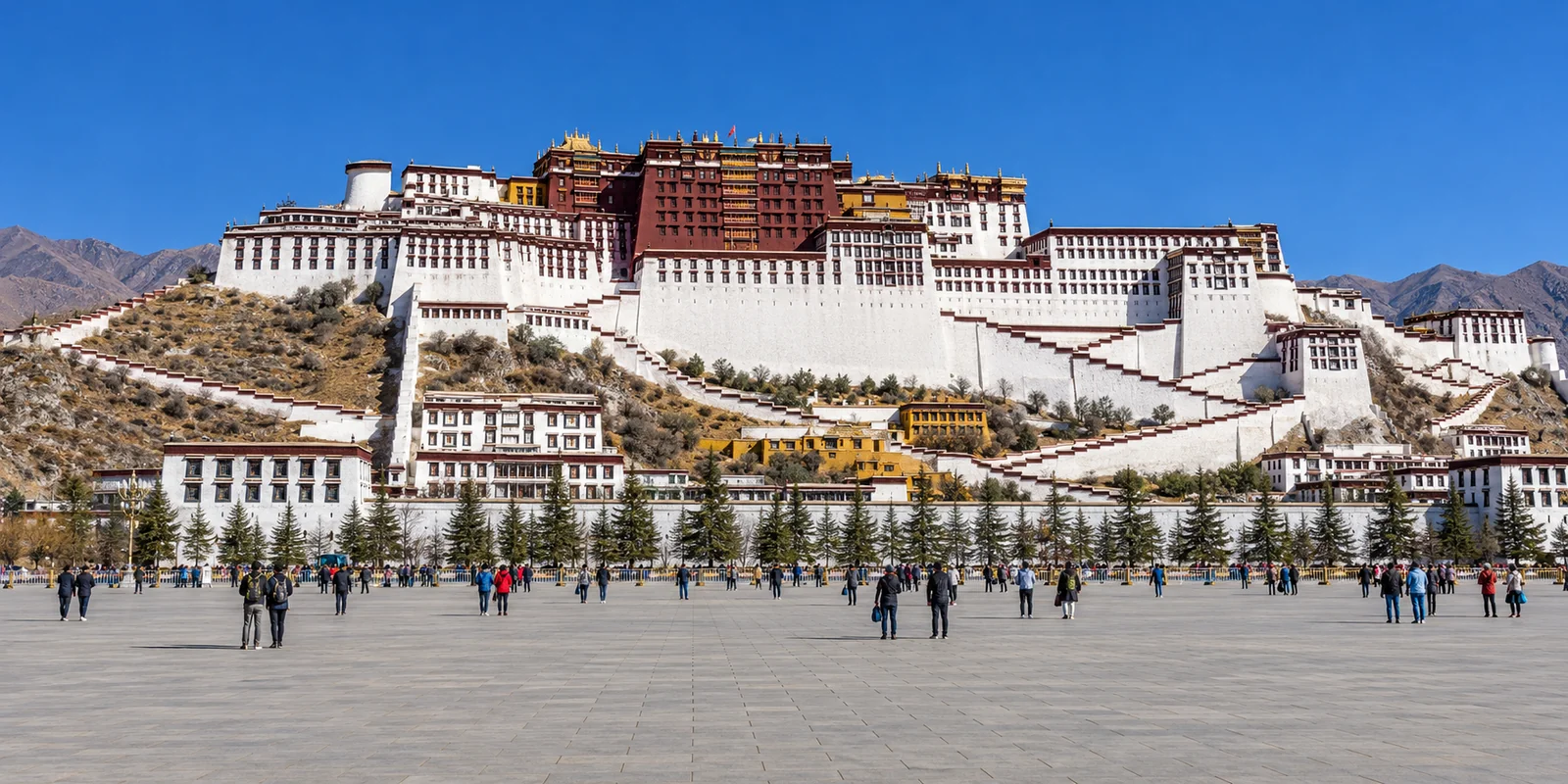
Then rest. A Lhasa hospital emergency doctor advises new arrivals not to rush into climbing or sightseeing, to avoid strenuous exercise, late nights and very hot showers, and to take it gradually. Keep the first afternoon free. Potala Palace has steep stairs and its booking rules are strict, so it is better on day two or three; see our Potala Palace guide for booking and timing.
The Return Trip and Trains to Shigatse and Nyingchi
Lhasa to Xining. On the sample day six trains left Lhasa for Xining between 09:50 and 17:30, taking 20 hours 31 minutes to 22 hours 53 minutes. The seasonal Y840 only ran until 2 November, and the 4 November 2026 check showed five trains: Z8982, Z166, Z266, Z22 and Z224. That is one more than the four going toward Lhasa on the same check, and counts vary by day, so check 12306 for your date. Z22 continues all the way to Beijing West, leaving Lhasa at 15:50 and taking 40 hours 53 minutes. Booking works the same way as the trip in, with the same 15-day sales window.
Lhasa to Shigatse. Three bullet trains a day each way on the sample day, leaving Lhasa at 08:40, 13:40 and 17:00 and taking about 2 hours to 2 hours 17 minutes. Second class was ¥64. Shigatse is the base for Everest trips, and the Everest scenic area asks visitors to carry a border permit. The National Immigration Administration suspended issuing electronic border permits for Shigatse from 28 August 2026, with resumption "to be announced". Check the latest with your agency before planning a Shigatse leg.
Lhasa to Nyingchi. Two trains a day each way on the sample day: the C881 bullet train at 08:00, taking 4 hours 4 minutes with second class at ¥129, and the slower K6831 at 16:45, taking 5 hours 31 minutes. Both stop at Shannan on the way. The line opened in 2021 and runs Fuxing (复兴号, Fùxīng) high-altitude trains. Nyingchi is lower and greener than Lhasa, and the ride along the river valley is a good one to do by day.
Train or Flight?
There is no wrong answer; it depends on time, budget and how you want your first day at altitude to go.
- Time. From Xining, the train takes most of a day and a night, plus getting to Xining. A flight takes hours, not days. If your total trip is under a week, flying at least one way leaves more time in Tibet.
- Altitude. The train gives a gradual climb, but it also takes you over 5,000 m and you arrive tired. Flying puts you straight from low ground to about 3,600 m at the airport. Either way, plan a quiet first day.
- Price. A Xining hard sleeper at ¥495 on the sample day is often cheaper than a peak-season flight, but flight prices swing a lot by season, so compare on your dates.
- The ride itself. The plateau scenery is the reason to take the train. If you only care about getting there, fly.
A popular combination is train in, fly out: you see the plateau on the way up and save a day on the way home. Lhasa Gonggar Airport is in Shannan, about 65 km from the city, and the airport bus to town costs about ¥30 and takes around 70 minutes. The terminal does not allow overnight stays. There are also flights between Lhasa and Kathmandu if you are continuing to Nepal. The table below has the airport details.
Feb 2026 official guide; schedules and stops change, so check the airport notice
From Liuwu Bus Station (west side of Lhasa Railway Station): 08:00, 09:00, 10:00, 14:00, 15:00, 16:00; about 60 min, 30 yuan
To Shigatse: 09:40–20:00, 11 a day, about 3 h; fare shown in the 珠峰出行 mini program
Feb 2026 official guide; schedules and stops change, so check the airport notice
Schedule as of September 2026; the winter season can change it
2025 official guidance
2023 route notice; lines change, so check at the station
You can compare flights into Lhasa on Trip.com. The same Tibet approval applies whichever way you travel, so book flights only after your agency has started it. Medical evacuation from high altitude is expensive, so read the altitude and evacuation clauses in your policy; our travel insurance guide explains which ones matter.
FAQ
Will I get altitude sickness on the Qinghai–Tibet Railway?
You might. The line goes above 4,000 m for more than 960 km and reaches 5,072 m at the Tanggula Pass. The carriages get extra oxygen and have personal outlets between Golmud and Lhasa, which helps but does not remove the risk. Mild headache and shortness of breath are common; severe headache, vomiting or loss of balance need medical help quickly. People with serious heart or lung conditions, or severe high blood pressure, are advised not to travel to high altitude; talk to a doctor first.
Can foreigners buy train tickets to Tibet on 12306 themselves?
12306 sells tickets to foreign passport holders once the passport is verified. But a foreign tourist's Tibet trip has to be arranged in advance through the Tibet tourism authority, in practice via an authorised agency. Official sources do not say whether the ticket sale or the station checks the Tibet approval, so confirm with your agency whether they book the train or you do. Start with the permit guide.
How long is the train from Xining to Lhasa?
On the 29 October 2026 sample day, between 19 hours 42 minutes and 22 hours 30 minutes, with most trains taking about 20 to 20.5 hours. From November the fastest train (Z323) is not sold; on a 4 November 2026 check, Xining had four direct trains to Lhasa, so check 12306 for your date.
Which part of the Qinghai–Tibet Railway has the best scenery?
The high section from Tuotuohe over the Tanggula Pass and down through Amdo and Nagqu to Lhasa, with grassland, lakes and snow peaks. On the sample day, Z265 and Z165 reached Amdo at 09:36 and 10:46, just after the pass, so you see this stretch in daylight. Both were still running on the November check. Trains that leave Golmud in the evening cross the highest ground in the dark.
Last updated: October 2026
Fact-checked sources
- Official China Railway 12306 27 pages
- Official The Paper (thepaper.cn)
- Official Ministry of Foreign Affairs
- Official Chinese embassies and consulates 4 pages
- Official xining.gov.cn
- Official gov.uk
- Official Government of Canada travel advice
- Official anzen.mofa.go.jp
Show 16 more sources
- Official wlt.xizang.gov.cn 4 pages
- Official xzmt.gov.cn
- Official geermu.gov.cn
- Official mee.gov.cn
- Official xizang.gov.cn 3 pages
- Official lasa.gov.cn 3 pages
- Official lasa.xzdw.gov.cn 2 pages
- Official China State Railway Group 2 pages
- toutiao.xzdw.gov.cn
- Official qinghai.gov.cn
- Official wsjkw.sc.gov.cn
- Official Qingpu District Government (Shanghai)
- Official Shanghai Municipal Government
- Official Embassy of Japan in China
- Official National Immigration Administration 2 pages
- Official shannan.gov.cn
Last verified: 2026-10-22
Read in other languages
Last train times for 10 Chinese metro systems
Every line and station, checked by hand — the same data behind our offline route planner.
Get the WaysChina App
Offline guides, currency converter, essential phrases, and more — all in your pocket.

Related Articles

China Train Seat Classes Explained: Second, First, Business and Sleepers
What second class, first class, business class and the sleeper berths on Chinese trains are actually like, how child...
Lhasa & Tibet Travel Guide: How Many Days, Permits, Altitude, Trains and Everest
How many days to plan for Lhasa, the lakes and Everest, which Tibet permits foreigners need, how to handle the...

Potala Palace: Tickets, Booking, Opening Hours and How the Visit Works
No same-day tickets: how to book the Potala Palace, what it costs by season, Monday closure, hours, rules on photos...

China's Top High-Speed Train Routes: Stations, Times and Fares
Beijing–Shanghai, Beijing–Xi'an, Shanghai to Hangzhou and Suzhou, Guangzhou–Hong Kong, Chengdu–Chongqing and Guilin:...