
This article contains affiliate links. If you make a purchase through these links, we may earn a small commission at no extra cost to you. This helps support our work in creating free travel guides.
Tibet is one of the few places in China where foreign tourists cannot travel independently. You need a Tibet Travel Permit (西藏旅游许可证) on top of your Chinese visa, and that permit can only be arranged through a registered Tibetan travel agency — which also means you'll be on an organized tour with a licensed guide the entire time. It sounds restrictive, and it is, but the process is straightforward once you understand it. This guide covers the permit system, how to get to Lhasa, how to handle the altitude (Lhasa sits at 3,650m), and what's actually worth your time across a 5–7 day trip.
The Permit System: Read This First
This is the part that trips people up, so let's be clear about how it works before anything else.
To enter the Tibet Autonomous Region (TAR) — which includes Lhasa, Everest Base Camp, Namtso, and most of what people picture as "Tibet" — foreign passport holders need:
- A valid Chinese visa (your standard tourist L visa works for most people)
- A Tibet Travel Permit (TTP), also called the Tibet Entry Permit
- A booked tour with a licensed Tibetan agency, including a guide and private transport
You cannot apply for the Tibet permit yourself. The travel agency applies on your behalf using scans of your passport and Chinese visa, usually 15–20 days before your trip. They mail or hand you the physical permit (or a copy, depending on how you're arriving), and you'll need it to board your train or flight to Lhasa.
If you plan to travel beyond Lhasa to "closed" or border areas — Everest Base Camp, Mount Kailash, Namtso in some cases — you'll also need additional permits (the Alien's Travel Permit and military permits). Your agency handles all of these as part of the itinerary; you don't deal with them separately.
For the official rules on entering China, the National Immigration Administration is the authoritative source, though Tibet-specific permit policy is administered regionally and can shift with little notice. Always confirm current requirements with your agency before booking flights.
Why You Need a Tour (and What That Actually Means)
"Tour" doesn't necessarily mean a big bus group. Most foreign travelers book a private tour — just you (or your group) plus a guide and a driver. You can shape the itinerary, choose your hotels within reason, and move at your own pace. The guide must accompany you to sightseeing spots, but you're generally free to wander Lhasa's old town and eat where you like in the evenings.
Costs vary a lot by season and route. A basic 4-day Lhasa-only private tour starts around USD 400–600 per person; adding Everest Base Camp pushes a 7–8 day trip well past USD 1,000. Booking with a few people splits the guide and vehicle cost, so solo travelers pay the most per head. Platforms like China Highlights run permit-inclusive Tibet tours if you'd rather book end-to-end in English; you can also work directly with Lhasa-based agencies, which is often cheaper but requires more back-and-forth.
Altitude: Take This Seriously
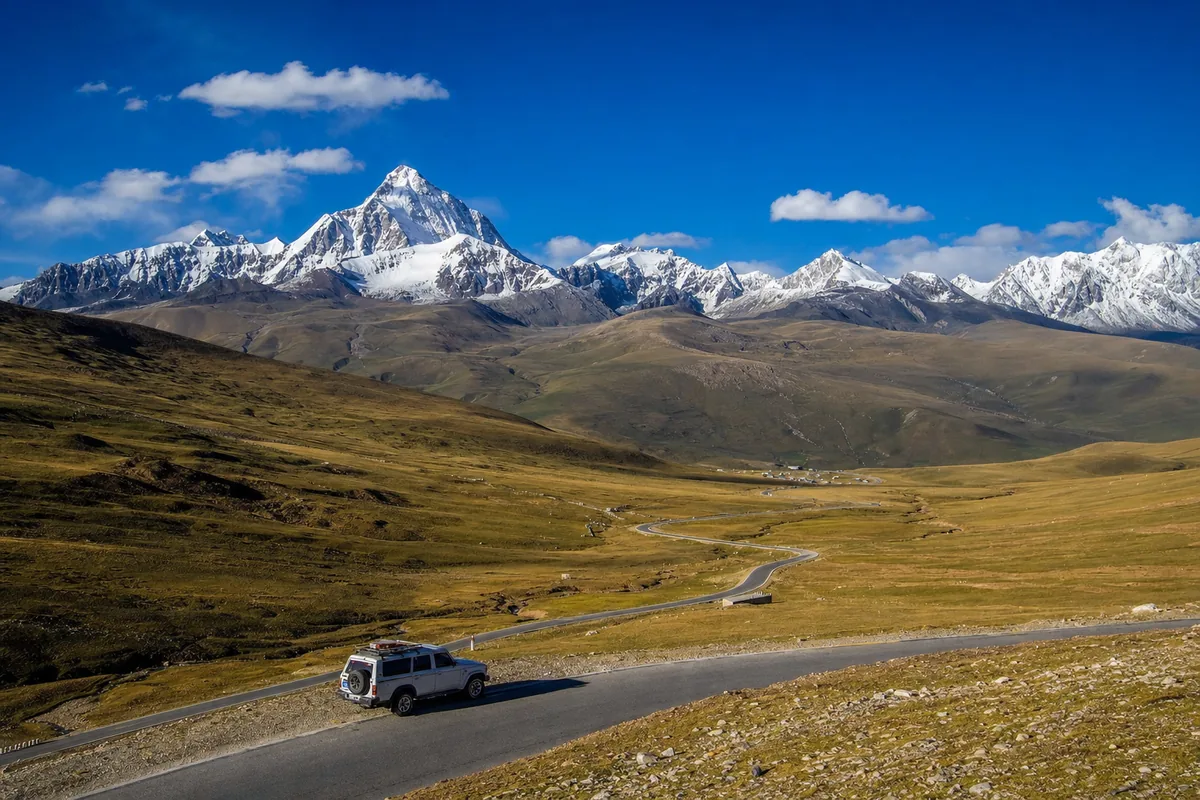
Lhasa sits at 3,650m (11,975 ft). That's high enough that most visitors feel something on the first day — headache, shortness of breath, trouble sleeping, mild nausea. This is normal acute mountain sickness (AMS), and for most people it passes within 24–48 hours as the body adjusts. The danger is ignoring symptoms that get worse instead of better.
How to give yourself the best odds:
- Don't overexert on day one. Take it slow, skip the stairs-heavy sights, drink lots of water. Build the demanding parts (Everest, Namtso) into the back half of your trip.
- Consider acclimatization meds. Acetazolamide (Diamox) helps many people; talk to your doctor before you travel. Some visitors take traditional Tibetan herbal remedies like Rhodiola (红景天, hóngjǐngtiān) starting a few days before arrival.
- Avoid alcohol the first day or two, and go easy on heavy meals.
- Know the route up. Higher points like Everest Base Camp (5,200m) and Namtso (4,700m) are where altitude bites hardest. Acclimatize in Lhasa first.
For coverage that includes high-altitude activity, providers like SafetyWing are worth checking before you go. Read the altitude clause carefully — "trekking" coverage often has an elevation ceiling.
One reassurance: Lhasa has hospitals and oxygen is widely available, including portable canisters sold in shops and oxygen ports in many hotel rooms. People with serious heart or lung conditions, or who are pregnant, should consult a doctor before committing to Tibet at all.
Getting to Lhasa
Two main routes: fly or take the train. Both have trade-offs.
The Tibet Train
The Qinghai–Tibet Railway (青藏铁路, Qīngzàng Tiělù) is the highest railway in the world, crossing the Tanggula Pass at over 5,000m. Carriages are pressurized and oxygen is piped in. The classic route runs from Xining (the gateway in Qinghai), but through trains run from Beijing, Shanghai, Chengdu, Xi'an, and others.
The appeal is the journey itself — high plateau, grazing yaks, snow peaks, frozen lakes. The downside is time: Beijing to Lhasa takes about 40 hours; Xining to Lhasa about 21. The slow ascent does help some people acclimatize gradually, which is a genuine advantage over flying straight up.
Book a soft sleeper (软卧, ruǎnwò) if you can — four berths, more comfortable for a long haul. Tickets sell out fast in summer, so reserve well ahead. You can book through your agency or a platform like Trip.com, which handles English-language booking and seat selection. Note that you'll still need your Tibet permit to board.
Flying
Flights to Lhasa Gonggar Airport run from Chengdu (about 2 hours and the most frequent), Xi'an, Chongqing, Beijing, Shanghai, and several others. Chengdu is the most common jumping-off point and a worthwhile stop in its own right. Flying saves days, but the abrupt jump from low elevation to 3,650m means altitude can hit harder — plan a very relaxed first day.
Connecting Cities
| From | By Air | By Train |
|---|---|---|
| Chengdu | ~2 hrs, multiple daily | ~36 hrs |
| Xi'an | ~3 hrs | ~33 hrs |
Both Chengdu and Xi'an make natural pairings with a Tibet trip — Chengdu for pandas and Sichuan food, Xi'an for the Terracotta Army. See our Chengdu Complete Guide and Xi'an Complete Guide if you're building a longer route.
What to See
Potala Palace
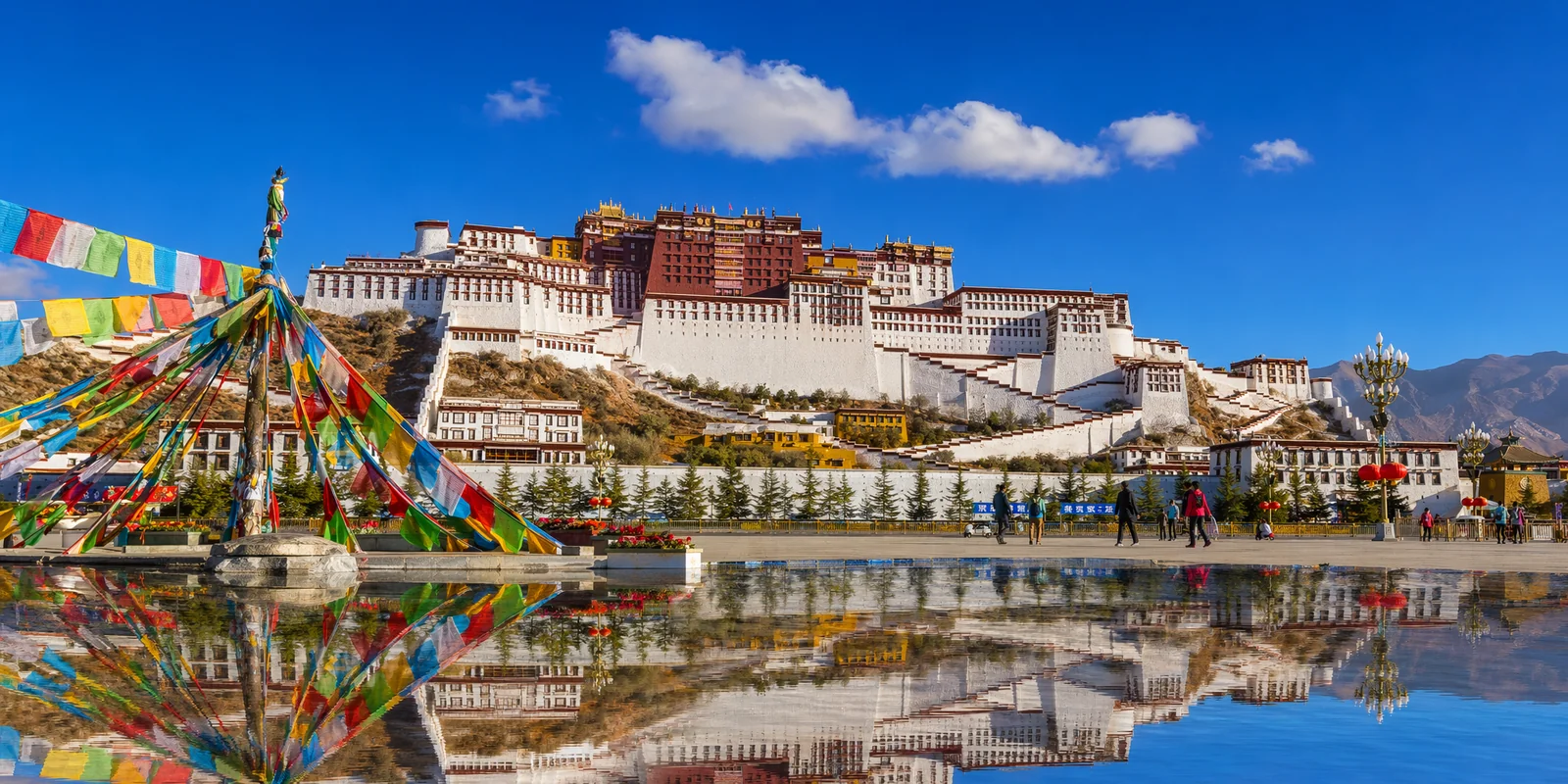
The Potala (布达拉宫, Bùdálāgōng) is the image everyone has of Tibet — the white-and-red fortress-palace rising 13 stories up Marpo Ri hill, former winter residence of the Dalai Lamas and a UNESCO World Heritage Site. Inside are gilded tombs of past Dalai Lamas, thousands of statues, murals, and chapels thick with the smell of yak-butter lamps.
Visits are tightly controlled. Tickets are limited daily and must be reserved in advance — your guide handles this, but it means the Potala has to be locked into your itinerary on a specific date. You're given a time slot and, once inside the main rooms, only about an hour to move through. The climb up the exterior steps is your first real altitude test; pace yourself.
You can read more about UNESCO's listing of the Historic Ensemble of the Potala Palace for background before you go.
Jokhang Temple
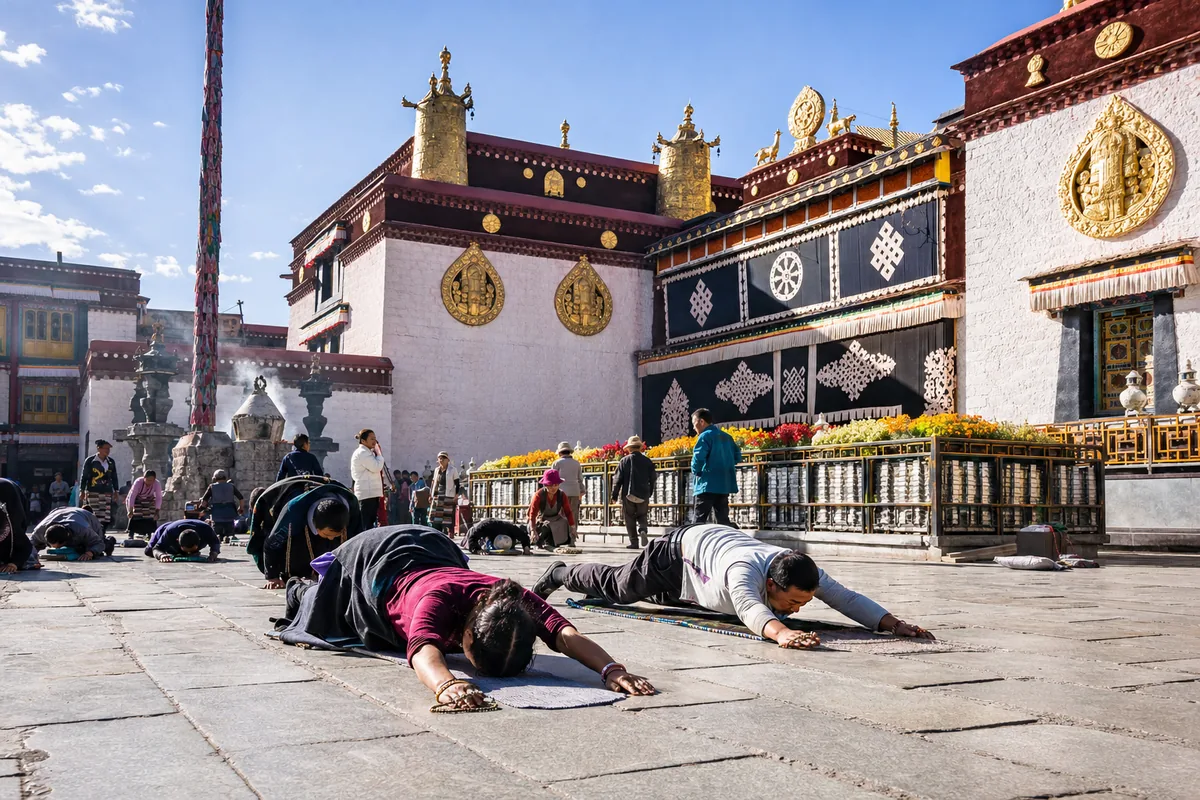
If the Potala is the icon, the Jokhang (大昭寺, Dàzhāosì) is the spiritual heart. This 7th-century temple is the holiest site in Tibetan Buddhism, and the devotion is palpable — pilgrims prostrate themselves full-length on the flagstones out front, some having traveled for weeks to do so. The central hall houses the Jowo Shakyamuni, a revered statue said to date from the Buddha's lifetime. Go in the morning to see the prostrations and the rooftop view back toward the Potala.
Barkhor Street
Barkhor (八廓街, Bākuòjiē) is the pilgrim circuit that loops clockwise around the Jokhang, and also Lhasa's oldest market street. Join the flow of pilgrims spinning prayer wheels and walk the kora (the devotional circuit) yourself — clockwise, always. Stalls sell prayer flags, turquoise, thangka paintings, yak-bone trinkets, and butter tea. It's touristy in parts but still genuinely alive with worship. This is the best place to spend an unhurried evening once you've acclimatized.
Namtso Lake
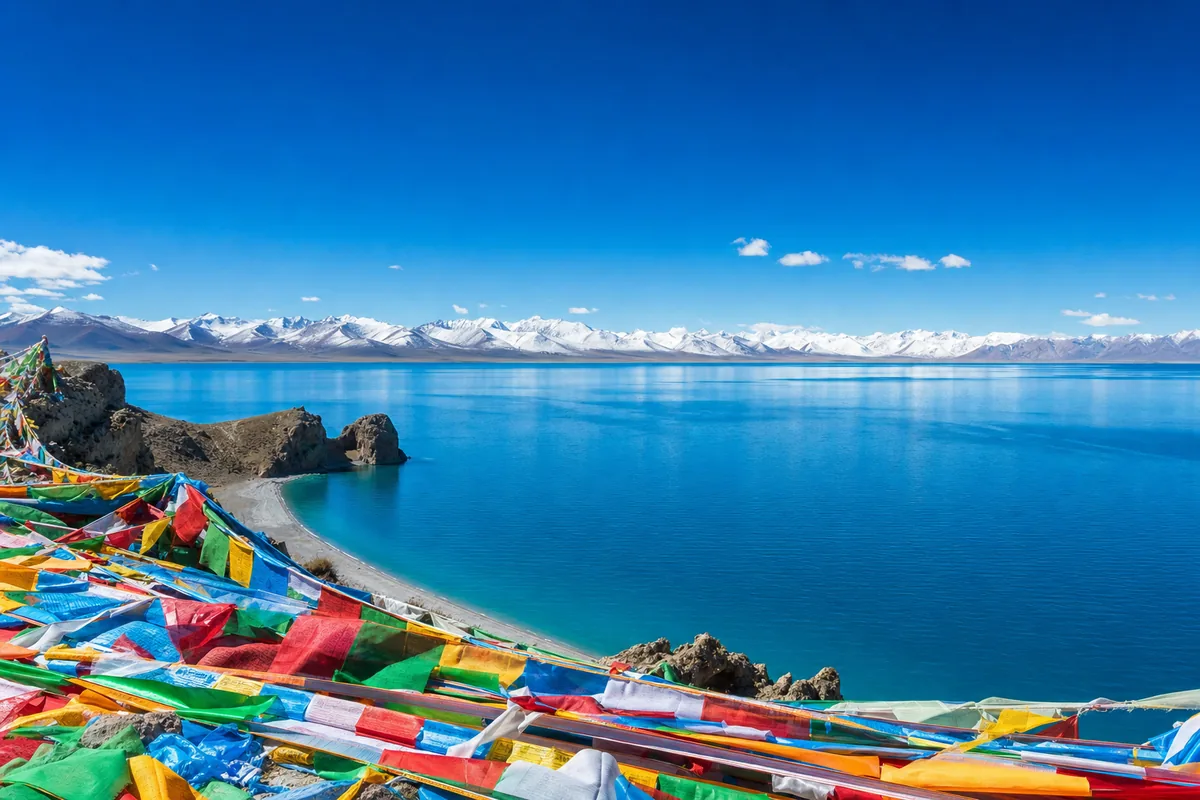
About a 4–5 hour drive north of Lhasa, Namtso (纳木错, Nàmùcuò) is one of the highest saltwater lakes in the world at 4,700m. The water is an intense turquoise against snow-capped peaks, and on a clear day the scale of it is hard to absorb. Because of the elevation, most itineraries visit Namtso after a few days in Lhasa, and many do it as a long day trip rather than overnighting — sleeping at 4,700m is rough if you're not well acclimatized. Bring serious warm layers; it's cold even in summer.
Mount Everest Base Camp
The Tibetan side of Everest Base Camp (珠峰大本营, Zhūfēng Dàběnyíng) sits at around 5,200m, and reaching it is a multi-day overland trip from Lhasa, usually via Shigatse and Tingri. The reward is a head-on view of the world's highest mountain rising straight ahead, often best at sunrise or sunset when the light hits the north face. This is the high point of the trip in every sense — and the one that demands you've acclimatized properly first. Accommodation up here is basic (tented camps or simple guesthouses), and oxygen is your friend.
Food in Tibet
Tibetan cuisine is built for a cold, high environment — hearty, warming, not subtle. A few things to try:
- Tsampa (糌粑) — roasted barley flour, the staple, often mixed with butter tea into a dough.
- Yak butter tea (酥油茶, sūyóuchá) — salty, rich, an acquired taste but warming. You'll be offered it everywhere.
- Momos — steamed or fried dumplings stuffed with yak meat or vegetables.
- Thukpa — a hearty noodle soup, perfect after a cold day.
- Yak meat — dried, stir-fried, in stews; lean and flavorful.
Lhasa also has plenty of Sichuan and Nepali restaurants, plus Western-style cafés around Barkhor catering to travelers. If you have a sensitive stomach, ease into the local food rather than diving in headfirst on day one — your digestion is already working harder at altitude.
Where to Stay
Most travelers base themselves in Lhasa for the whole trip, doing Namtso and EBC as outings. Stay in or near the old town around Barkhor if you want atmosphere and walkable access to the Jokhang; the newer parts of the city have more modern hotels but less character.
Options range from basic guesthouses to international-standard hotels like the St. Regis Lhasa. Many mid-range and up properties offer oxygen-enriched rooms — genuinely worth it for sleeping comfortably your first nights. Your tour agency usually books accommodation as part of the package, but you can request specific properties or upgrade. Note that, as everywhere in China, your hotel handles police registration (住宿登记, zhùsù dēngjì) when you check in. For background on how that works, see Booking Hotels & Registration Rules.
Suggested 7-Day Itinerary
- Day 1 — Arrive Lhasa. Rest, hydrate, do nothing strenuous. Let your body adjust.
- Day 2 — Lhasa city. Potala Palace in the morning (your reserved slot), Jokhang and Barkhor in the afternoon/evening.
- Day 3 — Lhasa area. Drepung and Sera monasteries; watch the monks' debating sessions at Sera.
- Day 4 — Namtso Lake. Long day trip north; back to Lhasa by evening.
- Day 5 — Toward Shigatse. Drive via Yamdrok Lake and Karola Glacier; overnight Shigatse.
- Day 6 — Everest Base Camp. Onward to Tingri and EBC; overnight near the mountain.
- Day 7 — Return. Sunrise at Everest, then the long drive back, or fly out from Shigatse depending on your plan.
A shorter 4-day version drops EBC and keeps everything in the Lhasa–Namtso radius — a good choice if altitude or time is a concern. For planning day-by-day routes and saving your itinerary across cities you visit before or after Tibet, the WaysChina app has offline metro maps and a built-in trip planner.
Best Time to Go
Late spring through autumn is the practical window. Summer (June–August) is warmest and greenest, with the best chance of clear lake and mountain views, but it's also peak season — book permits, trains, and hotels well ahead. Autumn (September–November) brings crisp air and excellent visibility with thinner crowds, arguably the sweet spot. Winter is cold and some high routes close, though Lhasa itself stays sunny and very quiet. Tibet also periodically closes to foreign tourists around sensitive dates, usually in late winter and early spring — another reason to confirm timing with your agency.
For the bigger seasonal picture across China, our Best Time to Visit China guide adds context if you're combining Tibet with other regions.
A Few Cultural Notes
- Always walk clockwise around temples, stupas, mani stones, and prayer wheels.
- Ask before photographing people, especially monks and pilgrims. Photography is often forbidden inside temple halls.
- Dress modestly at religious sites — covered shoulders and knees.
- Don't touch anyone's head, and don't point your feet at altars or people.
- Topics around politics and religion are sensitive; your guide may steer conversations, and it's best to be respectful and let them.
For broader guidance, see Cultural Etiquette & Taboos.
Bottom Line
Visiting Tibet takes more planning than anywhere else in China — you can't just show up. The two non-negotiables are the Tibet Travel Permit (arranged by a licensed agency, with a guide for your whole stay) and respecting the altitude (ease in, hydrate, watch for serious symptoms, insure properly). Get those right and the rest falls into place: the Potala at altitude, pilgrims circling the Jokhang, the turquoise of Namtso, and — if you go the distance — Everest filling the horizon. Start by contacting a registered agency 20+ days before you want to travel, lock in your Chinese visa first, and build a relaxed first day into the schedule. Five to seven days is enough to do Lhasa and one big outing without rushing.
Last updated: June 2026
Read in other languages
Last train times for 10 Chinese metro systems
Every line and station, checked by hand — the same data behind our offline route planner.
Get the WaysChina App
Offline guides, currency converter, essential phrases, and more — all in your pocket.

Related Articles
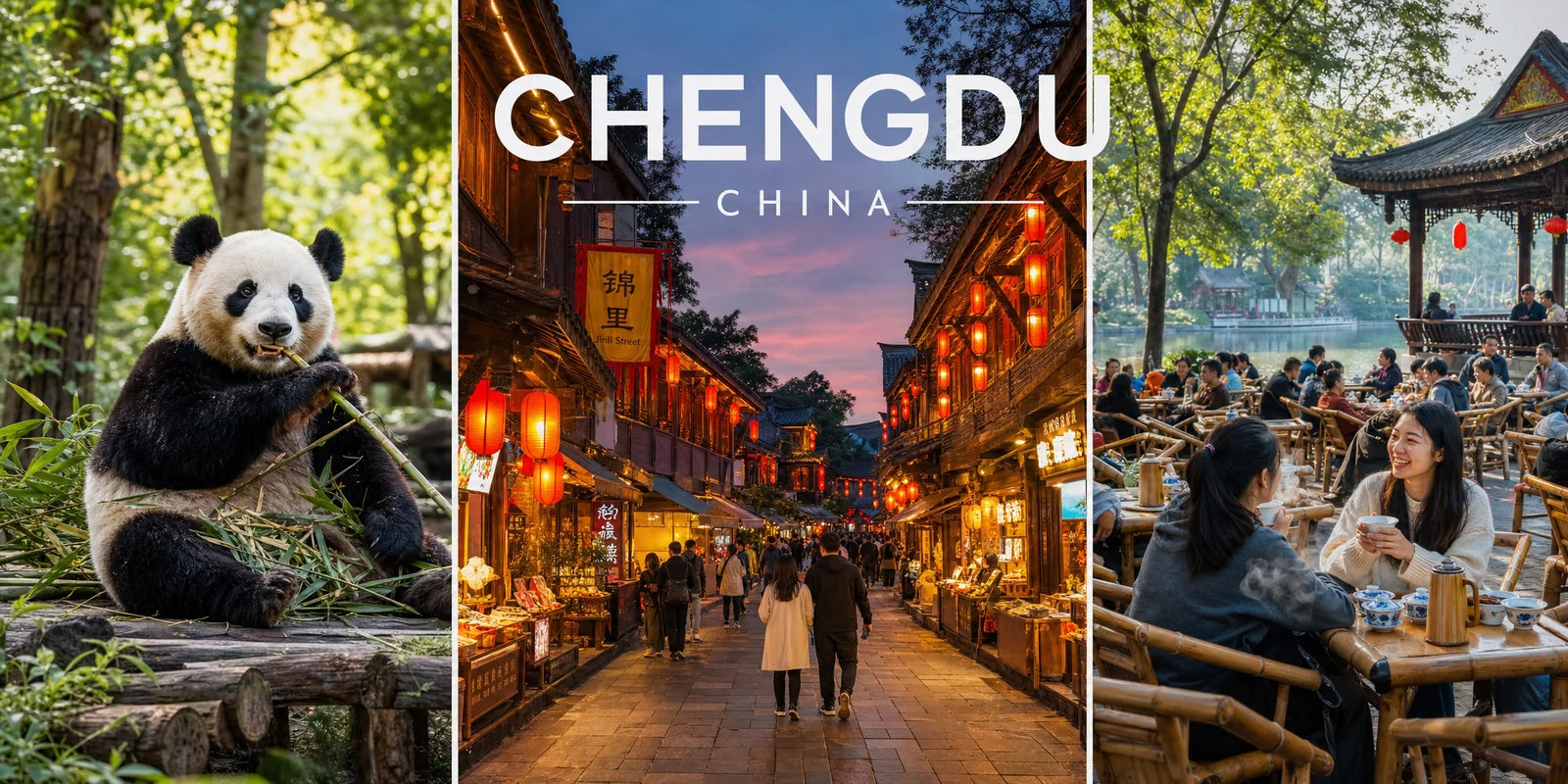
3-Day Chengdu Itinerary
A practical 3-day Chengdu plan covering the Panda Base, Wuhou Shrine, Jinli, People's Park, and a day trip to Leshan...
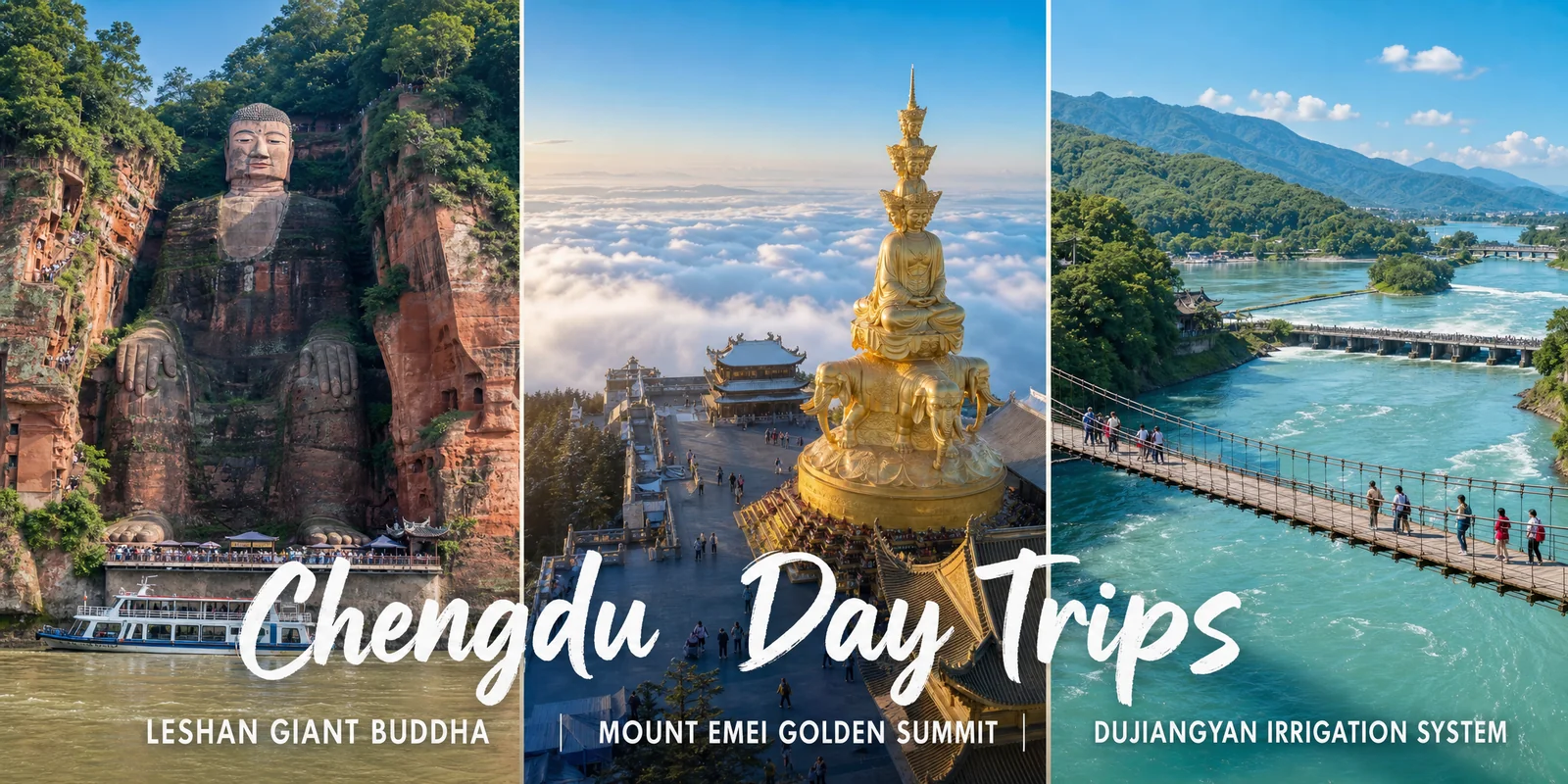
Chengdu Day Trips
The best day trips from Chengdu: the Leshan Giant Buddha, Mount Emei, Dujiangyan, and Qingcheng Mountain — plus...
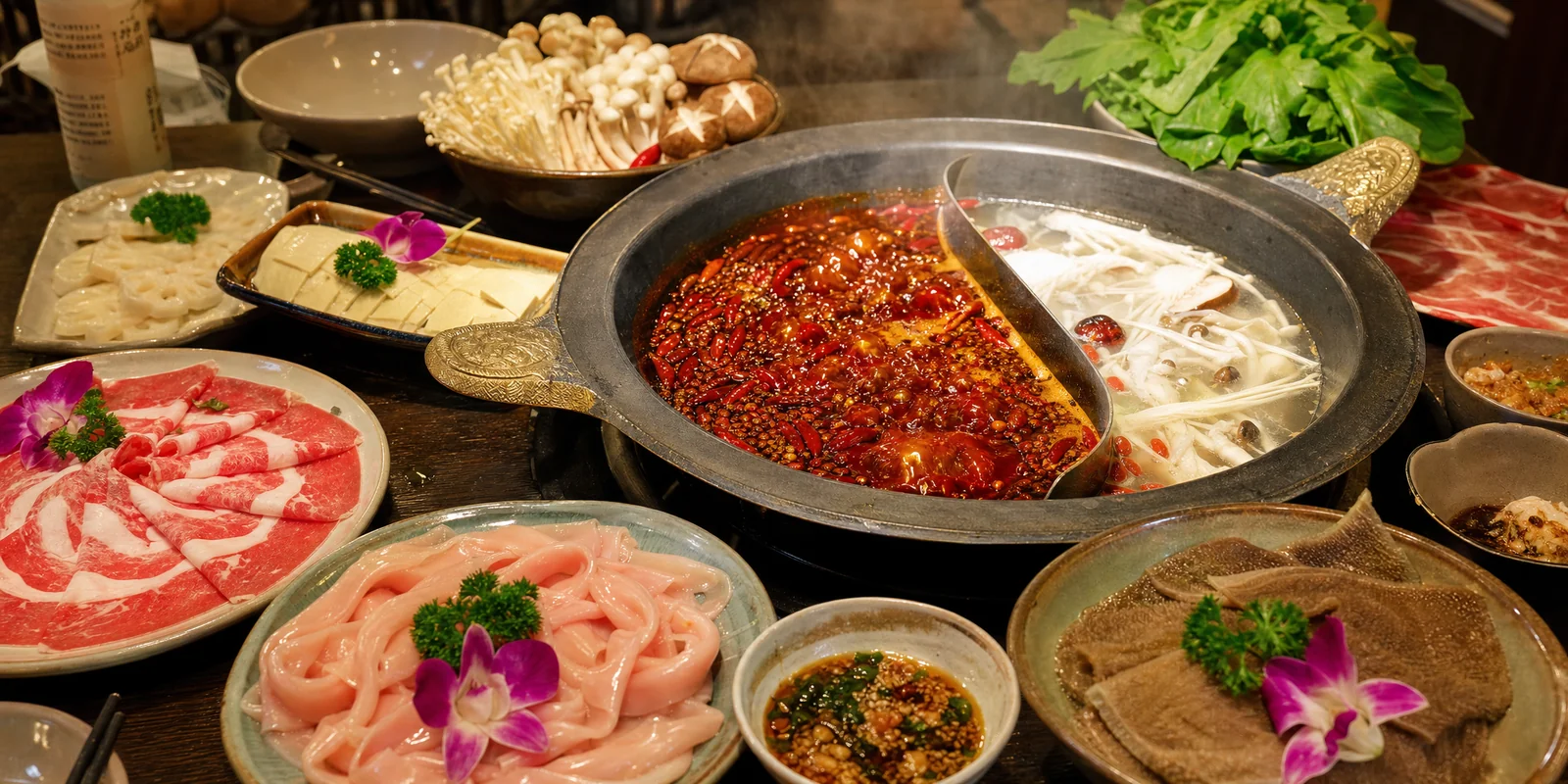
Chengdu Food Guide
Chengdu is China's spice capital and a UNESCO City of Gastronomy. Here's what to eat, where to find it, and how to...
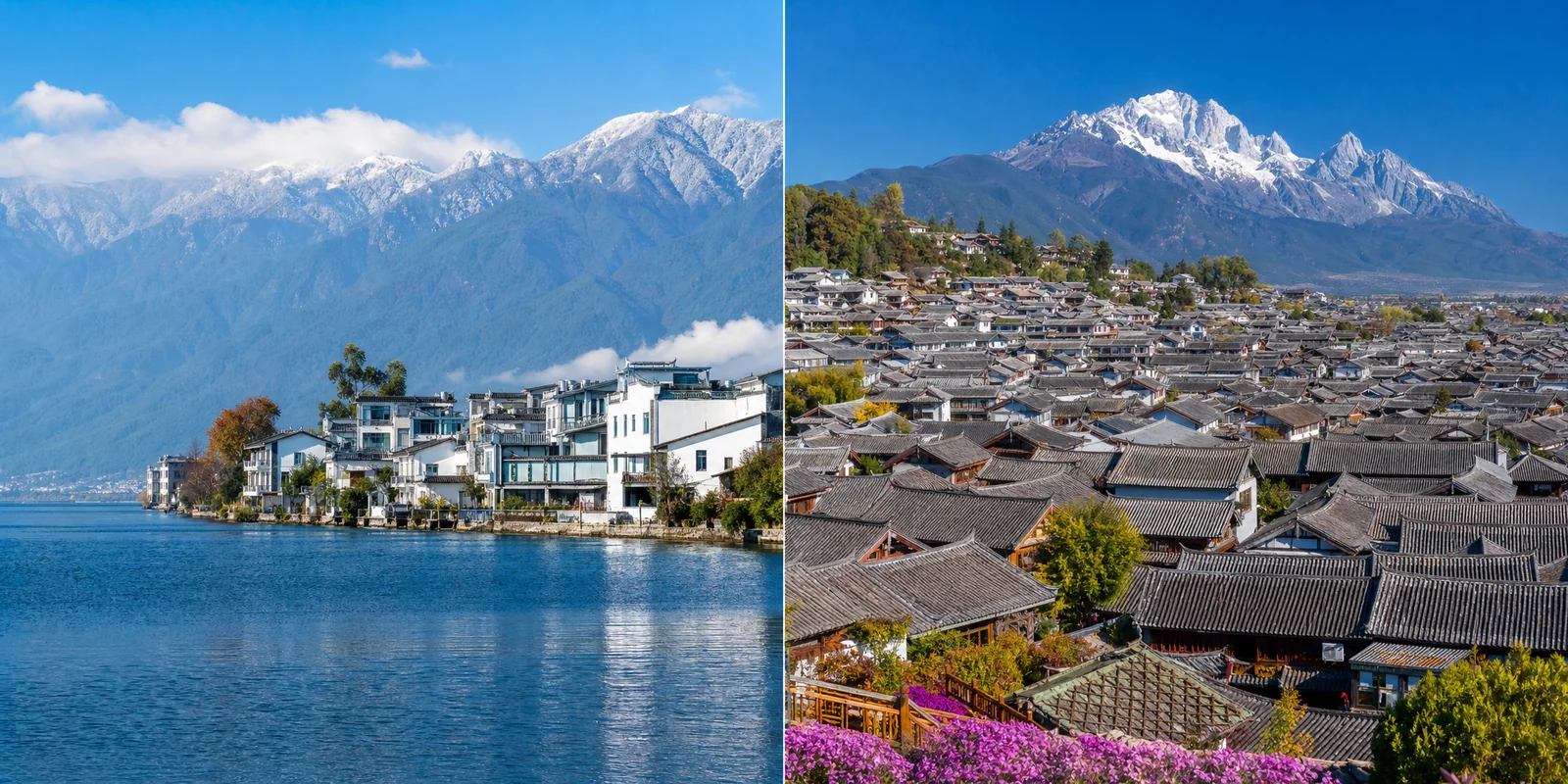
Dali & Lijiang Guide
A practical, in-depth guide to Dali and Lijiang in Yunnan — old towns, Erhai Lake, Jade Dragon Snow Mountain,...