
This article contains affiliate links. If you make a purchase through these links, we may earn a small commission at no extra cost to you. This helps support our work in creating free travel guides.
Traditional Chinese medicine (中医, Zhōngyī, usually shortened to TCM) is woven into everyday life here. People drink herbal teas for a sore throat, get cupping done before a big competition, and book a foot massage the way Westerners might grab a coffee. For visitors, a Chinese medicine experience can be one of the more memorable and genuinely relaxing parts of a trip — if you know what you're signing up for and where to go.
This guide covers what TCM actually is, the main treatments you can try as a tourist, where to find legitimate practitioners and museums, and how to avoid the tourist-trap spots that overcharge for mediocre work.
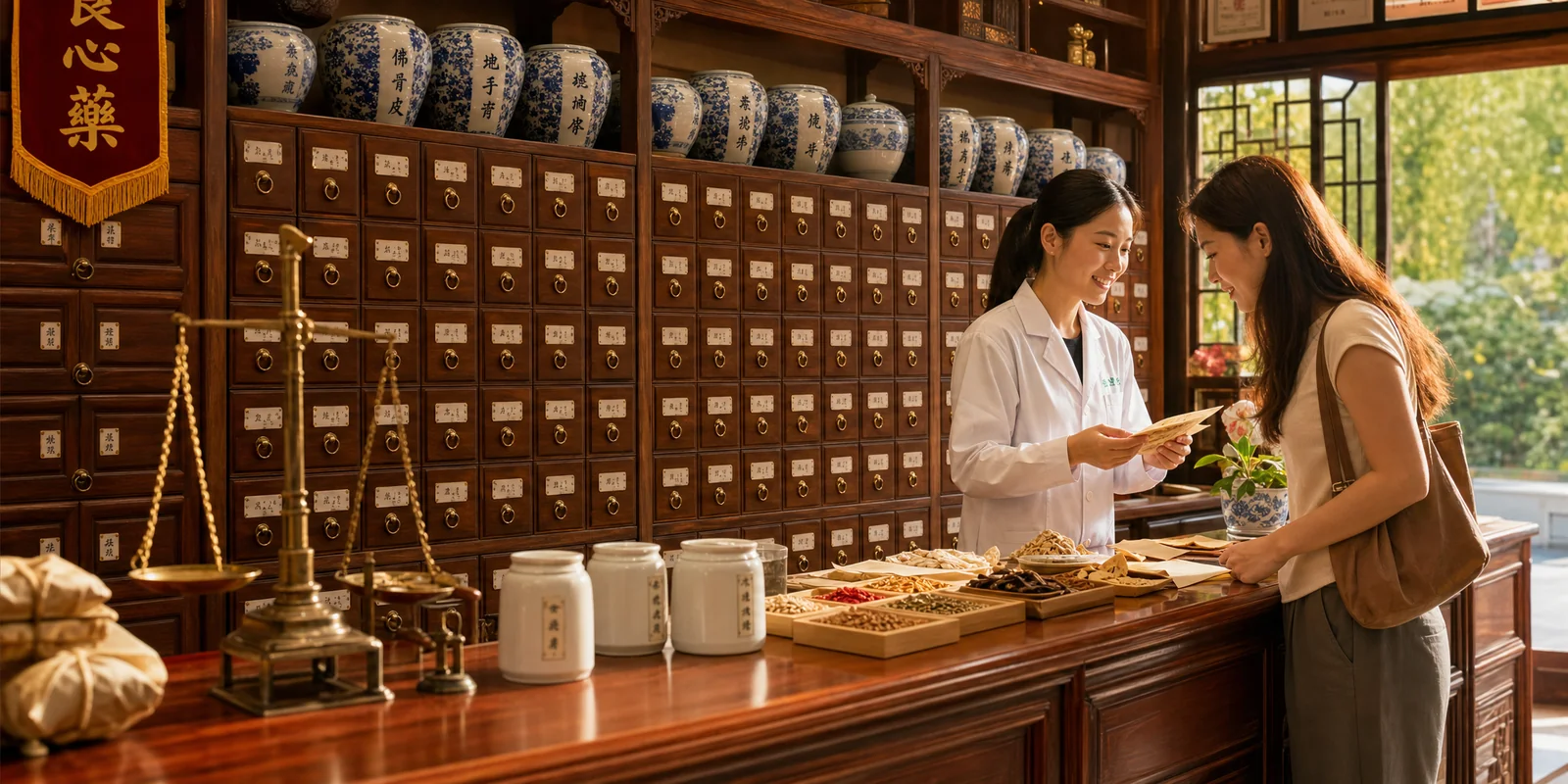
What Traditional Chinese Medicine Actually Is
TCM is a medical system that's been practiced for over two thousand years. Its core idea is balance — the flow of qi (气, qì, roughly "vital energy") through channels in the body called meridians. When that flow is smooth, you're healthy. When it's blocked or out of balance, you get sick. Treatments aim to restore the balance rather than just target symptoms.
You don't need to believe the theory to enjoy the experience. Plenty of travelers approach acupuncture or cupping with healthy skepticism and still walk away feeling looser, calmer, and curious. Think of it as cultural immersion with a physical payoff, not a substitute for your regular doctor.
The Main Treatments You Can Try
Tui Na and Foot Massage
Tui na (推拿, tuī ná) is therapeutic Chinese massage — firmer and more clinical than a Western spa massage, focused on pressure points, kneading, and stretching. It's the most accessible TCM experience and the one most travelers try first.
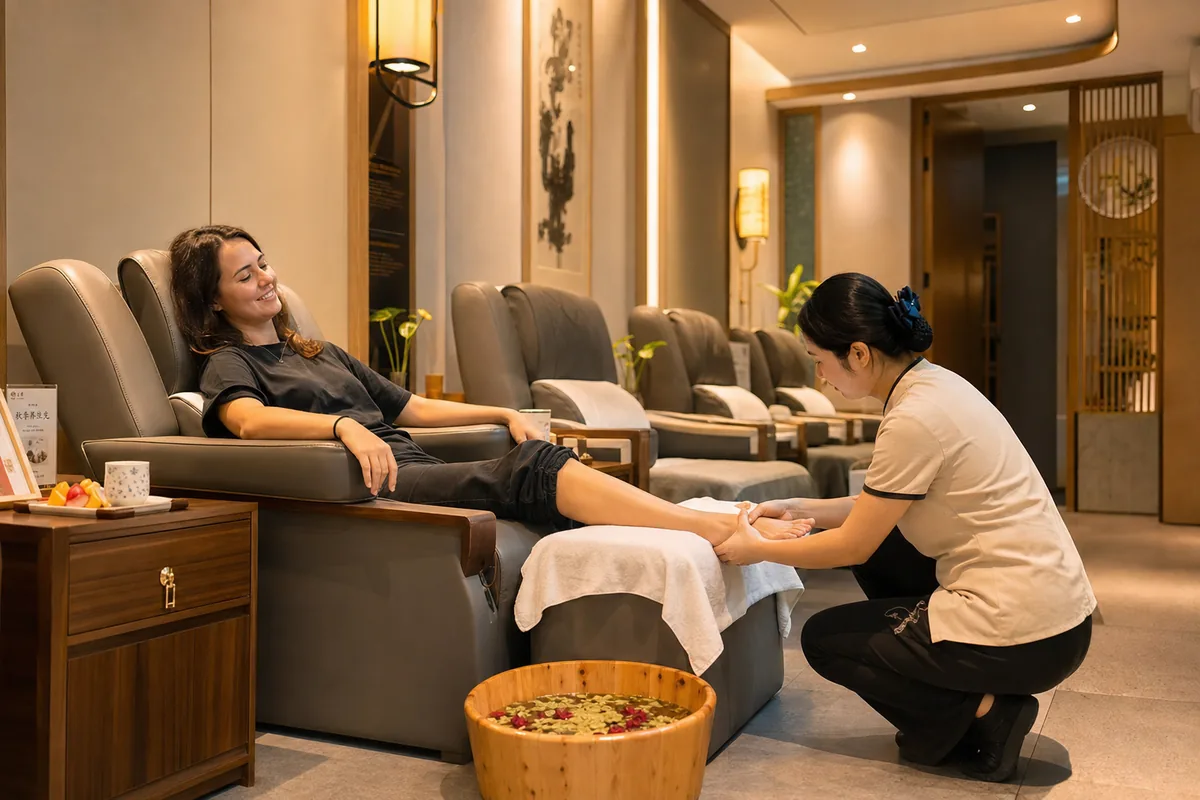
Foot massage (足疗, zúliáo) is hugely popular across China. You sit in a reclining chair, soak your feet in warm herbal water, and a therapist works on reflexology points for 45 to 90 minutes. Many places throw in a head, neck, and shoulder rub. A solid foot massage runs roughly ¥80–200 depending on the city and the place — far cheaper than equivalent treatments back home, which is why it's such an easy yes.
Acupuncture
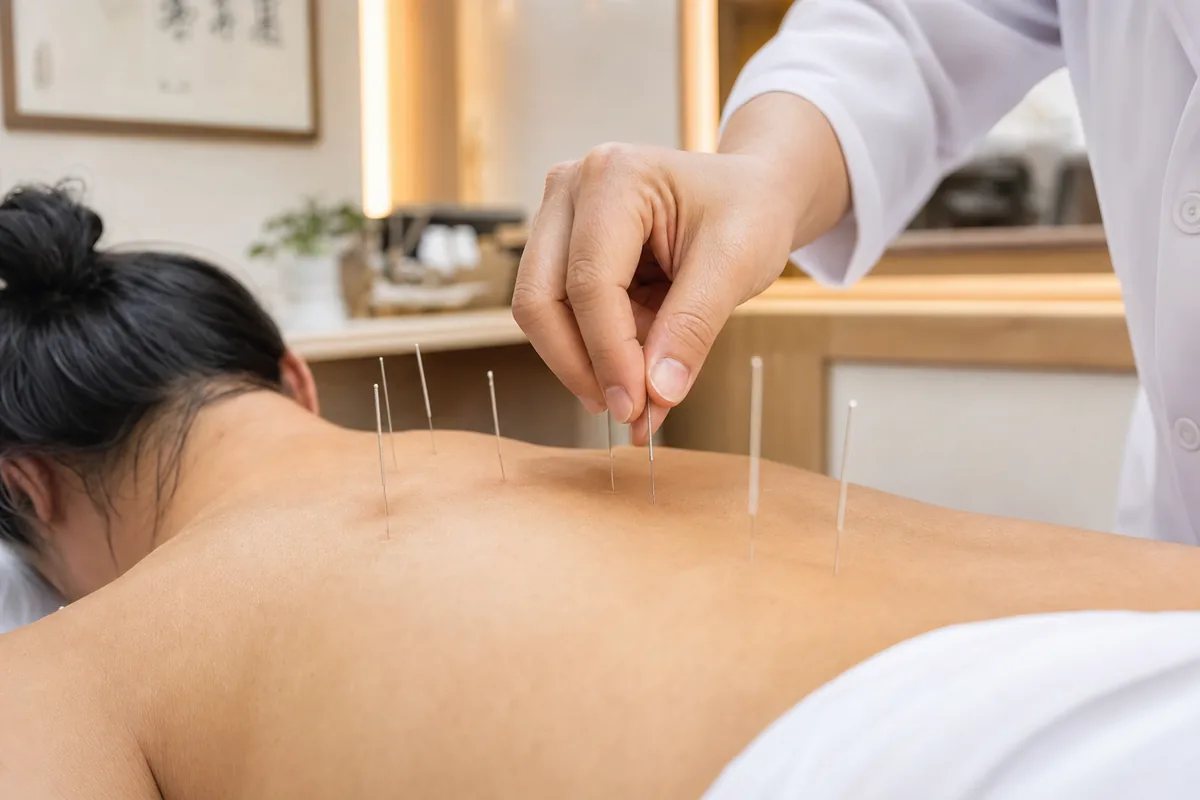
Acupuncture (针灸, zhēnjiǔ) involves inserting very thin needles at specific points to stimulate the body's energy flow. It sounds intense but is usually nearly painless — most people feel a small prick at most, then a dull, heavy sensation around the needle. Sessions last 20 to 40 minutes while you lie still.
If you want to try acupuncture, go to a licensed clinic or hospital TCM department rather than a random spa. Single-use, sterile needles are standard in legitimate places, but it's worth confirming.
Cupping and Gua Sha
Cupping (拔罐, báguàn) uses heated glass or silicone cups placed on the skin to create suction, drawing blood to the surface. It leaves those distinctive round purple marks you may have seen on athletes — they fade in a few days to a week and don't hurt. The sensation is a strong pulling, not pain.
Gua sha (刮痧, guāshā) involves scraping the skin with a smooth-edged tool to stimulate circulation. It also leaves temporary red marks. Both are commonly offered alongside massage at TCM clinics and some spas.
Moxibustion
Moxibustion (艾灸, àijiǔ) burns dried mugwort near or on acupuncture points to warm them. You'll smell the herb — it's earthy and a bit smoky. It's often combined with acupuncture and feels pleasantly warm rather than hot.
Where to Go: Legitimate Places by Type
The quality gap in China is huge. A neighborhood foot massage chain can be excellent; a flashy spot near a major tourist attraction can be overpriced and pushy. Here's how to sort them.
Reputable Massage Chains
For tui na and foot massage, established chains are your safest bet — consistent quality, clear pricing, clean facilities. Look for names like Liangzi (良子) and Fuhua (富华), which have branches in many cities. Prices are posted, therapists are trained, and there's no hard upsell.
| Treatment | Typical Duration | Rough Price (¥) | Good For |
|---|---|---|---|
| Foot massage | 60–90 min | 80–200 | First-timers, relaxation |
| Tui na (body) | 45–60 min | 120–300 | Sore muscles, jet lag |
| Acupuncture | 20–40 min | 100–400 | The curious; do it at a clinic |
| Cupping / gua sha | 20–30 min | 60–150 | Add-on to massage |
Prices vary by city — Shanghai and Beijing run higher than Chengdu or Xi'an. Treat these as ballpark figures and check the posted menu before you commit.
Hospital TCM Departments
For acupuncture and more medical treatments, large public hospitals have dedicated TCM departments staffed by certified doctors. This is where locals go for real conditions. Foreigners can use them too — you'll need to register at the front desk, and some larger hospitals in Beijing and Shanghai have international clinics with English-speaking staff. It's more clinical than a spa, but it's the gold standard for safety.
TCM Museums and Pharmacies
If you'd rather learn than be treated, a TCM museum is a great half-day. Standouts include:
- Shanghai University of TCM Museum — well-organized exhibits on herbs, instruments, and the history of Chinese medicine.
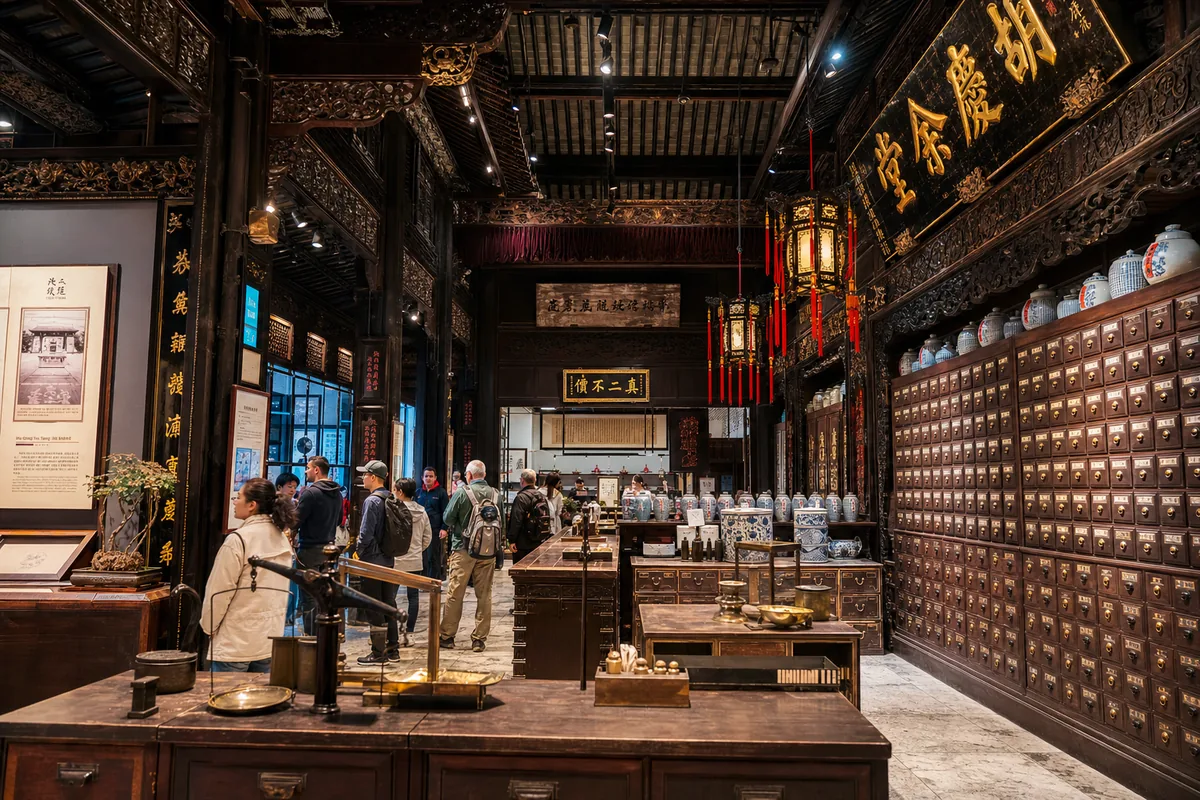
- Hu Qing Yu Tang (胡庆余堂) in Hangzhou — a working 19th-century pharmacy and museum, beautifully preserved, where you can watch traditional medicine prepared and buy herbal remedies. It's one of the most atmospheric spots in the city.
- Beijing's Tongrentang (同仁堂) — a 350-year-old pharmacy brand with flagship stores where staff can explain remedies and you can get a consultation.
The UNESCO listing for acupuncture and moxibustion as Intangible Cultural Heritage is worth a read before you go — the UNESCO Intangible Cultural Heritage listing gives solid background on why these practices matter culturally.
Booking a Guided Experience
If you'd rather not navigate Chinese-only menus and want an English-speaking guide who explains what's happening, a few platforms package TCM experiences — herbal pharmacy tours, guided clinic visits, or museum-plus-treatment combos. Booking through a platform like Klook can be worth it for the convenience and clear English descriptions, especially on a short trip when you don't want to risk a tourist-trap spa.
How to Spot a Tourist Trap
The biggest risk isn't danger — it's overpaying for poor quality or getting pressured into expensive "herbal packages" you don't need.
- Avoid spas right next to major attractions with English-only touts outside. Walk two blocks away and prices often halve.
- Check that prices are posted in yuan. No menu usually means the price gets invented based on how you look.
- Skip anything promising medical "cures." Reputable practitioners describe TCM as supportive care, not a miracle fix.
- Look at who else is inside. A place full of local regulars is a good sign. A place full of confused tourists is not.
Etiquette and Practical Notes
A few things that make the experience smoother:
- Wear loose clothing. For tui na and cupping you may be asked to change into provided clothes or expose your back. It's all professional and routine.
- Speak up about pressure. Tui na can be firm. Say "轻一点" (qīng yīdiǎn, "lighter please") if it's too much. Most therapists adjust happily.
- Tipping isn't expected. See our Tipping Culture in China guide — massage places don't expect tips, and prices are what's posted.
- Don't shower right after cupping. Your skin is sensitive; wait a few hours.
- Payment is by QR code. Almost everywhere takes Alipay or WeChat Pay. Set one up before your trip so you're not fumbling for cash.
- Tell the practitioner about medical conditions — pregnancy, blood thinners, recent surgery. Acupuncture and cupping aren't right for everyone.
The Bottom Line
A TCM experience is one of the easiest cultural activities to fit into any China trip — accessible, affordable, and genuinely relaxing. Start with a foot massage or tui na at a reputable chain to get comfortable, then try acupuncture or cupping at a proper clinic if you're curious. Visit a pharmacy-museum like Hu Qing Yu Tang to understand the history behind it. Just stick to places with posted prices and local clientele, watch for upsell traps, and remember this is cultural enrichment, not a replacement for real medical care.
Next, pair it with another hands-on tradition — a Chinese tea ceremony goes naturally with a TCM theme, or unwind your body differently with Tai Chi, which shares the same philosophy of energy and balance.
Prices and clinic policies change — confirm the current menu and treatment availability before you book.
Last updated: June 2026
Read in other languages
Last train times for 10 Chinese metro systems
Every line and station, checked by hand — the same data behind our offline route planner.
Get the WaysChina App
Offline guides, currency converter, essential phrases, and more — all in your pocket.

Related Articles
Acrobatic Shows in China: Where to Watch and How to Book
Chinese acrobatics combines contortion, balance, and motorcycle stunts into a fast-paced live show. Here's where to...
Chinese Calligraphy Classes: A Beginner's Guide for Travelers
How to take a Chinese calligraphy class as a tourist: what to expect, where to book in Beijing and Shanghai, typical...
Chinese Tea Ceremony: Culture, Types, and Where to Experience It
What the Chinese tea ceremony actually involves, the main tea types you'll taste, and where to book a real session...
Chinese Cooking Classes: Where to Learn in China
A practical guide to Chinese cooking classes for travelers — what a class actually involves, real prices, and...