
Leaving China is usually straightforward, but a few rules catch travelers off guard: what you can legally take out, how the tourist tax refund actually works, and how much time to allow at the airport. There's no separate departure tax to pay at the gate — that's already built into your ticket. The things worth knowing in advance are the customs limits on cash and certain goods, and the VAT refund process, which has gotten noticeably easier and more generous in the past couple of years. This guide walks through the whole departure flow step by step, so you know what to do before you ever reach the check-in counter.
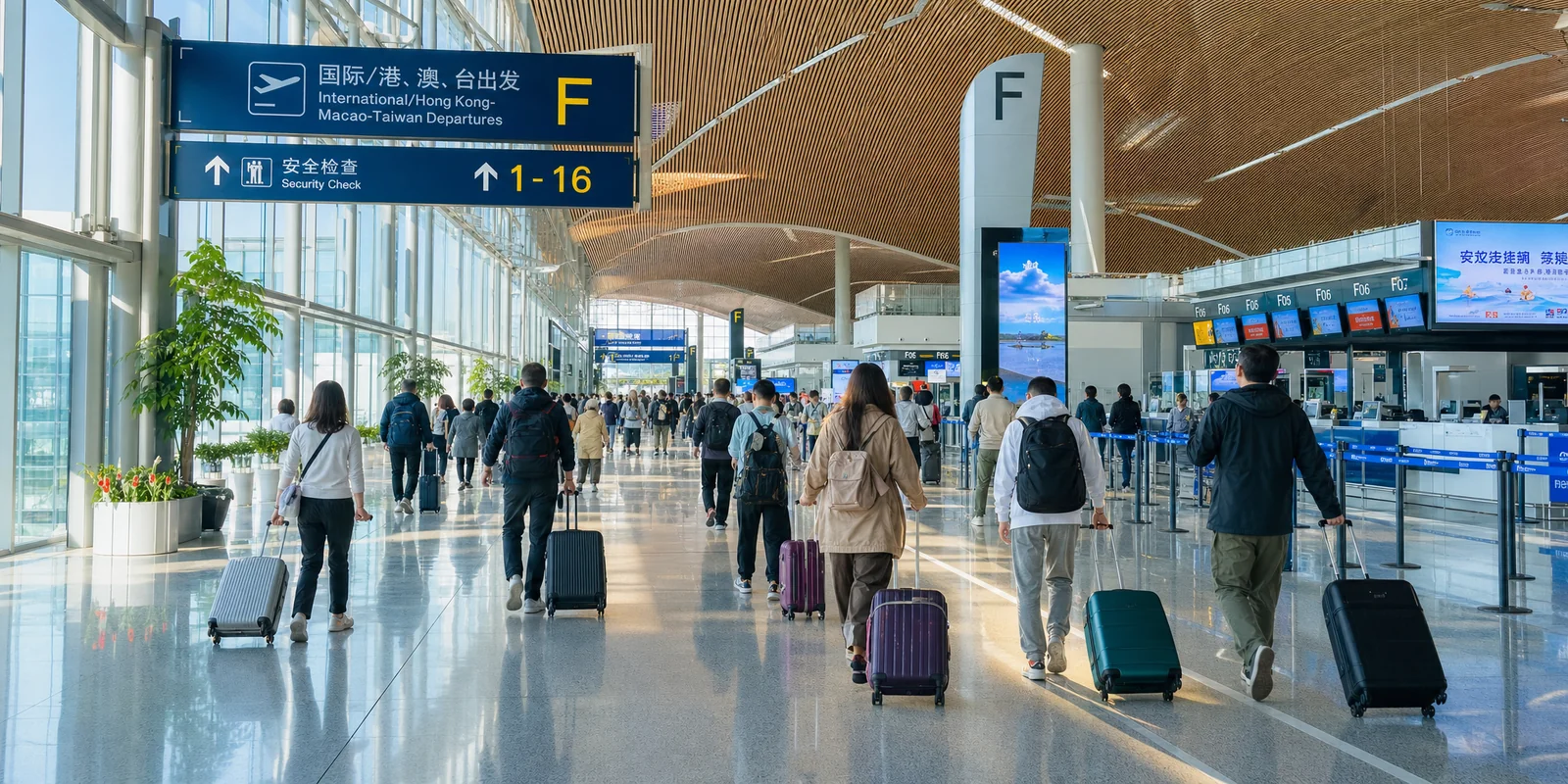
The Departure Flow at a Glance
If you've already read our arriving in China guide, departure is essentially the same process in reverse. At an international airport, the order looks like this:
- Check-in — show your passport, visa, and ticket; drop checked luggage.
- Customs — declare anything that requires it (most travelers walk straight through the green channel).
- Immigration / border inspection — passport stamp and exit check.
- Security screening — the same liquids and electronics screening you know from other airports.
- Boarding area — duty-free shops, gates, and your VAT refund counter if you're claiming one.
One thing to flag early: if you're claiming a tax refund, you handle the customs verification before you go through immigration, and you collect the actual money after security, inside the departure (isolation) area. More on that below.
How Much Time to Allow at the Airport
For international flights, plan to arrive well ahead of departure — most travelers aim for around three hours, and more during peak holiday periods like Golden Week or Chinese New Year. Check-in cutoff times vary by airline. As an example, Shenzhen Bao'an International Airport lists check-in closing anywhere from 40 to 60 minutes before departure depending on the carrier (China Southern 40 minutes; Malaysia Airlines, Emirates, and Korean Air 60 minutes; most others 45 minutes), per the airport's official International Departures guide.
The exact recommended arrival window isn't standardized across airports, so check your specific departure airport and airline before you travel — especially if you're claiming a tax refund, which adds time. For airport-specific layouts and transport, see our Beijing Airport Guide and Shanghai Airport Guide.
Biometrics at exit
China's immigration authorities collect fingerprints and a facial image from most foreign nationals aged 14 to 70 at the border, including on exit. You'll usually do this at a self-service machine and then pass through the inspection booth with a receipt. Some travelers are exempt — for example, diplomatic passport holders, citizens of countries with reciprocal exemption arrangements, airport transit passengers who don't formally enter, and those whose biometrics are already on file. It only takes a minute or two; just follow the on-screen prompts or staff directions.
China Customs: Leaving the Country
China uses the same dual-channel system on exit as on entry. If you have nothing to declare, you take the green channel (Nothing to Declare). If you're carrying something that requires declaration, you take the red channel (Goods to Declare) and fill out a Baggage Declaration Form. The official rule of thumb: if you're not sure whether something needs declaring, take the red channel and ask. Children under 16 traveling with an adult generally don't need their own form.
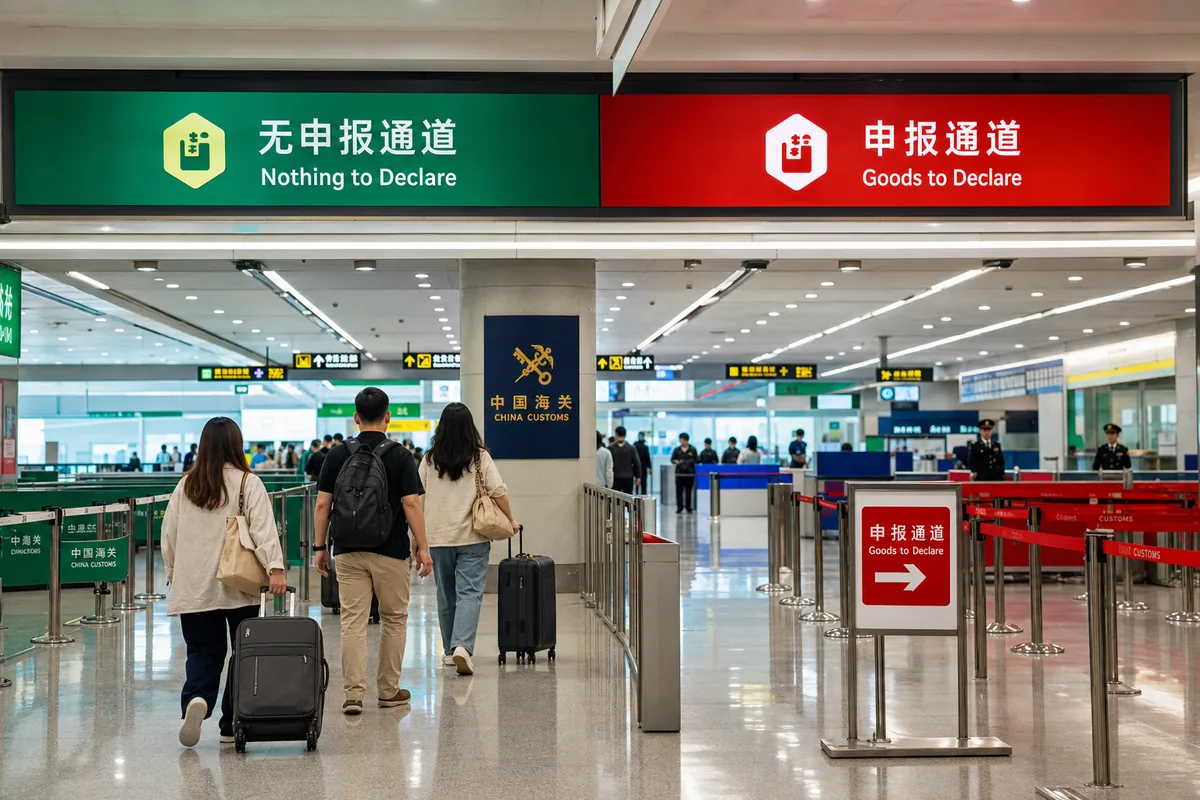
According to the General Administration of Customs guide for international travelers, you must make a written declaration when leaving if you're carrying any of the following:
- Prohibited items (see below)
- Restricted items above the allowed limit, or items requiring a permit
- Commercial goods, samples, or advertising materials
- Blood and other human tissue, pathogens, biological products and similar public-health-sensitive items
- Currency above the declared limits (covered below)
- Anything else the law requires you to declare in writing
Cash limits when leaving China
This is the rule most travelers actually need. Here's how it breaks down:
| Currency | What you can take out |
|---|---|
| Chinese yuan (RMB) cash | Up to ¥20,000 per person per trip. Amounts above this are not permitted to leave the country. No age exemption. |
| Foreign currency cash (with entry record) | Up to the amount you declared on your most recent entry — customs clears it against that record. |
| Foreign currency cash (no record / above record) | Up to USD 5,000 equivalent: cleared freely. USD 5,000–10,000: requires a Permit to Carry Foreign Exchange Out from a bank. Above USD 10,000: requires a permit from the local State Administration of Foreign Exchange branch. |
If you brought in more than USD 5,000 equivalent in cash, you should have made a written declaration on entry — customs uses that record to clear the corresponding amount when you leave. Carrying gold, silver, or their products over 50 grams also needs to be declared. For exchanging leftover yuan before you fly, see our guide to exchanging money.
Prohibited items — you cannot take these out
Per the State Council's customs information for visitors, prohibited exports include:
- Everything on the prohibited-imports list
- Manuscripts, printed matter, film, photos, audio/video recordings, and computer storage media whose content involves state secrets
- Precious cultural relics and other relics prohibited from leaving the country
- Endangered and precious animals and plants (including specimens), their seeds, and reproductive material
Restricted items — allowed only within limits or with a permit
Restricted exports include precious metals like gold and silver and their products, RMB currency, foreign currency and securities, radio transmitters and encrypted communication devices, precious Chinese medicinal materials, ordinary cultural relics, and other items customs restricts. These aren't banned outright, but you need to stay within limits or carry the right paperwork.
Antiques, Art, and Traditional Medicine
This is where well-meaning travelers most often run into trouble — usually with something bought at a market or a thoughtful gift.
Cultural relics and antiques
Precious cultural relics are prohibited from leaving China; ordinary relics are restricted. Under the Ministry of Culture and Tourism's rules on the examination of cultural relics for export, if you want to take or mail personal cultural relics out of the country, you must first submit an export application form to the relics examination authority. They have 15 working days to respond. Items cleared for export get a Cultural Relics Export Permit and a red wax export seal, which customs uses to clear them. Artworks, crafts, manuscripts, and documents dating from 1949 or earlier generally need this review.
Chinese medicine and herbal products
Traditional Chinese medicine makes a popular gift, but there are value limits when taking it out. Under the relevant customs regulation, when carrying TCM materials and patent medicines out: the total value limit is ¥150 to Hong Kong and Macau, and ¥300 to other countries. When mailing them out: ¥100 to Hong Kong and Macau, ¥200 abroad. Musk (麝香, shèxiāng) cannot be carried or mailed out at all. Note that some animal-derived ingredients fall under endangered-species rules — for example, antelope horn requires an export certificate from China's endangered-species authority. And always check what your destination country allows: many places restrict importing animal- and plant-based products regardless of Chinese rules.
China Tourist Tax Refund (VAT Refund)
If you've done meaningful shopping in China, the departure VAT refund — known as the tax refund for departing overseas travelers — is worth understanding. The policy has expanded significantly, with a lower minimum spend, higher cash limits, and far more participating stores than before.
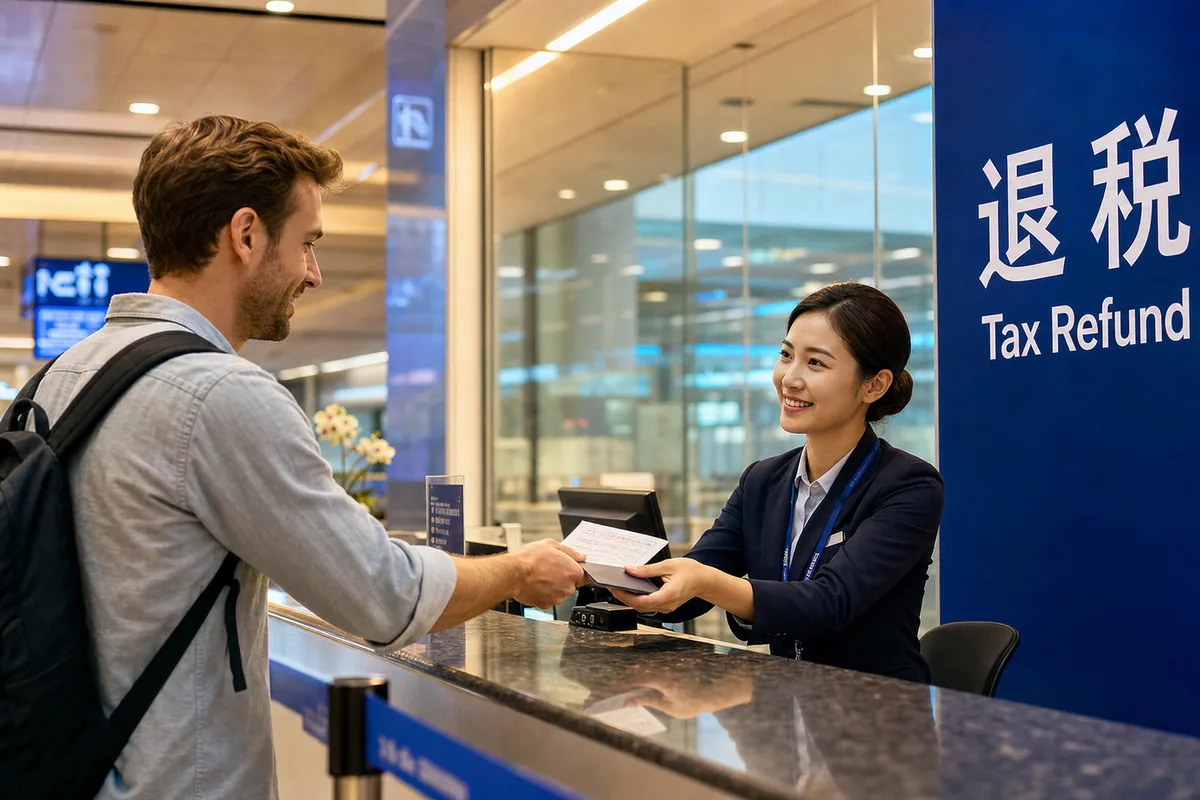
Who qualifies
You're eligible if you're a foreign national (or a resident of Hong Kong, Macau, or Taiwan) who has stayed in mainland China for no more than 183 consecutive days. The goods must leave the country with you — carried or checked — within 90 days of purchase, and they must be unused and unconsumed.
How much you actually get back
The refund rate depends on the VAT rate of the goods. For items taxed at 13% VAT, the refund rate is 11% (this includes the agency's handling fee); for items at 9% VAT, the refund rate is 8%. After the 2% handling fee, what you actually receive works out to roughly 9% of the purchase amount. According to the official guidance published by the Shenzhen Municipal Government, this is the standard structure nationwide.
Minimum spend and cash limits
The threshold dropped in 2025: the same traveler now needs to spend just ¥200 at the same tax-refund store on the same day to qualify (it used to be ¥500). The cash refund ceiling was also raised to ¥20,000 — refunds above that amount must be paid by bank transfer rather than cash.
| Item | Detail |
|---|---|
| Minimum spend | ¥200, same store, same day |
| Stay limit | ≤ 183 consecutive days in mainland China |
| Goods must exit within | 90 days of purchase |
| Effective refund | ≈ 9% of purchase (after 2% fee) |
| Cash refund cap | ¥20,000 (above this, bank transfer only) |
The standard refund process — step by step
- Shop at a tax-refund store and ask for the Tax Refund Application Form plus the sales invoice. Look for stores displaying tax-refund signage; bring your passport when you buy.
- At the airport, before immigration, get customs verification. Show customs the goods, the application form, the invoice, and your passport. They verify and stamp the form. Keep the goods accessible — don't bury refund items deep in checked luggage you've already dropped.
- After security, inside the departure area, go to the refund agency counter. Present the customs-stamped form, invoice, and your ID.
- Collect your refund by cash or bank transfer.
The refund agency is often a bank. The Bank of China, for example, operates departure tax-refund counters at exit ports across many provinces and cities — including Beijing, Shanghai, Sichuan, Shaanxi, Tianjin, Shandong, Guangxi, Hainan, Jiangsu, and more, per its Departure Tax Refund Service page.
"Refund-on-purchase" — get cash at the store
A newer option, now rolled out nationwide, is refund-upon-purchase: you get the cash refund at the store right when you buy, instead of waiting until the airport. You sign an agreement and provide a credit card pre-authorization as a guarantee. You still have to complete customs verification and the agency confirmation when you actually leave — and you must leave within a set window after the purchase. If you fail to exit in time or don't get the goods verified, the pre-authorized amount is charged.
What you need to bring
- Your valid ID — passport, or the Hong Kong/Macau or Taiwan travel permit — showing your most recent entry date.
- The Tax Refund Application Form, stamped by customs.
- The original sales invoice(s).
- The goods themselves, unused, available for inspection.
What can't be refunded
Tax refunds don't apply to items on the prohibited/restricted export list, to goods that were already sold VAT-exempt, or to other categories specified by the finance, customs, and tax authorities. In short: if you couldn't legally take it out anyway, you can't get a refund on it either.
Airport Duty-Free Shopping
Once you're through security, the departure area has duty-free shops. At Beijing Capital International Airport, terminals T2 and T3 handle international flights, with duty-free operated by China Duty Free Group and Wangfujing Group, carrying brands like Omega, Burberry, and Bulgari. Selection and prices vary by airport and terminal.
Two things to keep straight: the well-known duty-free allowances for cigarettes and alcohol (for instance, 400 cigarettes and 1.5 liters of alcohol over 12% ABV) are entry allowances for arriving travelers — they're about what you can bring into China. When you're leaving, what matters far more is the limit of your destination country. Buy your duty-free with your home country's allowance in mind, not China's. Travelers under 18 don't get tobacco and alcohol allowances. If you're transiting through another country, also check liquid rules for that connection — sealed duty-free bags aren't always honored at every transfer point.
Before You Go: A Departure Checklist
- Visa / stay validity: make sure you're leaving within your authorized stay. Overstaying carries penalties — if you're cutting it close, see our visa extension guide well in advance.
- Hotel registration: nothing extra is needed on exit, but keep your travel documents together.
- Leftover RMB: spend it, or exchange it within the ¥20,000 limit before you reach security.
- Tax refund items: keep them accessible and unused; carry your invoices and passport.
- Antiques / art / TCM: confirm exportability and paperwork before heading to the airport — not at the counter.
- Phone, eSIM, payments: if you used a local SIM or eSIM, decide whether to keep or cancel it; the rest of your payment apps can stay installed for a future trip.
Common Questions
Is there a departure card to fill out when leaving China?
For most air travelers the exit process is handled at the inspection booth with your passport and biometrics; you generally won't need a paper card on departure. Procedures can change, so follow the signage and staff instructions at your departure point.
How long does the tax refund take?
The customs verification and agency steps usually take a few minutes each if your paperwork is in order and the goods are accessible, but lines vary. Allow extra time on top of your normal airport buffer if you're claiming a refund.
Can I take Chinese tea, snacks, and silk home?
Yes — ordinary tea, packaged food, silk, crafts, and modern souvenirs are fine to take out of China. The catch is your destination country's import rules, especially for food, meat, and plant products. Check those before you buy in bulk.
Who do I call with a customs question?
China Customs runs a nationwide service hotline, 12360 (switchboard 010-65194114). Beijing Capital Airport has its own service line at 010-96158. For other airports, look up the official airport hotline rather than relying on numbers found on forums.
The Short Version
There's no separate departure tax — it's in your ticket. Don't carry out more than ¥20,000 in RMB cash, and declare foreign currency above your entry record. Antiques, certain Chinese medicines, endangered-species products, and items involving state secrets are restricted or banned, so handle those before the airport. If you shopped enough to clear ¥200 at a single tax-refund store, claim your VAT refund: customs verification before immigration, money after security. And give yourself a generous time buffer — roughly three hours for international flights, more during major holidays. Sort the refund and any antique paperwork in advance, and the rest of your departure is just the usual check-in, immigration, and security.
Last updated: June 2026
Read in other languages
Last train times for 10 Chinese metro systems
Every line and station, checked by hand — the same data behind our offline route planner.
Get the WaysChina App
Offline guides, currency converter, essential phrases, and more — all in your pocket.