
This article contains affiliate links. If you make a purchase through these links, we may earn a small commission at no extra cost to you. This helps support our work in creating free travel guides.
China doesn't yet have a dedicated digital nomad visa, but plenty of remote workers spend months here anyway — usually on tourist or business visas. The practical challenges aren't what most people expect. The internet is fast and cheap, coworking spaces are everywhere in big cities, and the cost of living can be genuinely low if you base yourself outside Beijing or Shanghai. The real friction points are visa length, getting past the Great Firewall to reach the tools you rely on, and the fact that remote work technically isn't what most short-stay visas are issued for. This guide walks through all of it.

The Legal Reality: What Visa Lets You Work Remotely?
Let's be direct about this, because there's a lot of vague information online. China has no digital nomad visa as of now. There's no equivalent to what Portugal, Thailand, or Indonesia offer. So remote workers fall into a gray area: you're physically in China, but your income comes from a company or clients abroad.
Most people doing this use one of two routes:
Tourist Visa (L visa)
The standard tourist visa (L visa) is the most common choice. Depending on your nationality and where you apply, you can often get a multiple-entry visa valid for years, with each stay limited to 30, 60, or 90 days. For Americans, 10-year multiple-entry tourist visas have been common, though the per-entry stay is usually 30 or 60 days. The L visa doesn't authorize employment in China, but working remotely for a foreign employer on your laptop sits in an unregulated space that authorities generally don't pursue for short stays.
Business Visa (M visa)
The M visa is for commercial and trade activities. It usually requires an invitation letter from a Chinese company or trade partner. If you have genuine business ties in China — clients, suppliers, partners — this is a cleaner fit and often comes with longer per-entry stays. It still doesn't cover local employment, but it's the more honest category if your work involves Chinese business relationships.
Longer stays and extensions
If you want to stay beyond your visa's per-entry limit, you can sometimes apply for an extension at the local Exit-Entry Administration (出入境管理局, chūrùjìng guǎnlǐjú) of the Public Security Bureau. Extensions are discretionary, usually granted once, and not guaranteed. Many long-stay nomads instead do visa runs to Hong Kong, Macau, or a neighboring country to reset their stay. Visa policy shifts often, so confirm current rules with the National Immigration Administration or your nearest Chinese embassy before you book anything.
For the full breakdown of categories and how to apply, see our Visa Types Overview and How to Apply for China Visa. If you're counting on staying longer, read the Visa Extension Guide first so you know what's realistic.
Internet and VPN: The Part You Must Plan For
Here's the good news: China's internet infrastructure is excellent. Fixed broadband in cities regularly hits 100–500 Mbps, and 5G coverage in urban areas is widespread and fast. Coworking spaces, cafés, and apartments almost always have solid connections. China WiFi speed is rarely your bottleneck.
The catch is the Great Firewall. Google (including Gmail, Drive, Docs, Meet), WhatsApp, Instagram, Facebook, X, most Western news sites, and many SaaS tools are blocked. If your workflow depends on the Google ecosystem, Slack, Notion, or similar, you cannot rely on them working without help.
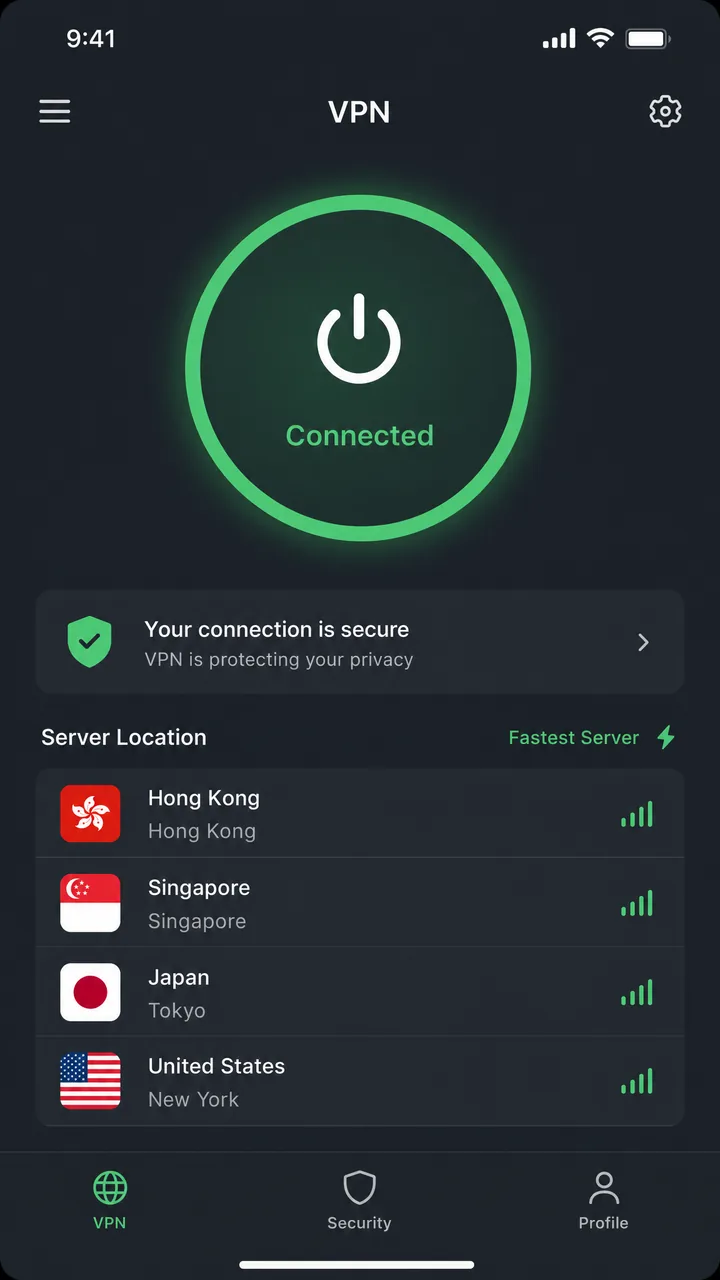
VPNs: what actually works
A VPN is essential for most remote workers in China. Two practical realities:
- Set it up before you arrive. Many VPN provider websites are blocked inside China, so downloading and configuring once you land is much harder.
- Reliability varies. The Firewall gets more aggressive during sensitive periods (major political meetings, anniversaries), and even good VPNs can slow down or drop. Having two providers installed is a common backup strategy.
In our experience, the VPNs that hold up best in China are the larger, well-resourced ones that actively maintain their China infrastructure. ExpressVPN and Nordvpn are the two most remote workers install before flying out, precisely because they tend to keep working when smaller services don't. Download the apps and confirm they connect while you still have unrestricted internet at home.
Mobile data and eSIM
For connectivity on arrival, a travel eSIM is the fastest option. Some international eSIM providers route your data through servers outside mainland China, which means you may reach blocked sites without a separate VPN — a genuine convenience, though speeds and behavior vary. Airalo sells China and regional eSIMs you can activate the moment you land. For a longer stay, a local SIM from China Mobile, China Unicom, or China Telecom is cheaper per gigabyte but goes through the Firewall like everything else, so you'll still want your VPN.
For the full comparison of local SIMs, eSIMs, and how the Firewall affects each, see our China SIM Card & eSIM Guide and the Internet & VPN Guide.
Coworking Spaces and Where to Actually Work
Coworking is well established in China's tier-1 and tier-2 cities. You'll find international-style spaces alongside local chains, and day passes are easy to buy.
- WeWork operates in Beijing, Shanghai, Shenzhen, Chengdu, and other major cities. Familiar format, English-friendly, hot desks and private offices.
- Local chains and boutique spaces are often cheaper and more interesting, especially in Chengdu and Dali. Many cluster in creative districts or converted factory zones.
- Cafés are a default backup. Chains like Manner, Seesaw, % Arabica, and the ever-present Luckin and Starbucks have WiFi, though Chinese WiFi sign-ups sometimes require a local phone number for SMS verification.
Expect to pay roughly ¥50–120 for a day pass at a coworking space, or ¥800–2,500 a month for a dedicated desk, depending on the city and how central it is. Booking is usually done through WeChat — many spaces have a mini-program you reserve and pay through, so having WeChat Pay set up matters.
Best Digital Nomad Friendly Cities in China
You can work from anywhere with internet, but three cities stand out for remote workers, each for different reasons.

Chengdu — the balanced choice
Chengdu (成都) is probably the single best all-rounder for nomads. It has a large, settled expat community, a famously relaxed pace, low cost of living, strong coworking and café culture, and excellent food. Rent for a decent one-bedroom in a central area runs roughly ¥3,000–5,000 a month. The airport and high-speed rail connect you to the rest of the country and to Southeast Asia easily. The downside is winter is gray and damp, and summers are humid.
If you settle here, our Chengdu Complete Guide covers neighborhoods, transport, and daily logistics.
Dali — the slow-living base
Dali (大理), in Yunnan, has become China's unofficial nomad and creative-community capital. It sits between Erhai Lake and the Cangshan mountains at altitude, the air is clean, and there's a long-running scene of artists, remote workers, and people running small businesses. Cost of living is low — you can rent a room in a courtyard guesthouse or a lakeside apartment for far less than in any tier-1 city. The trade-off is it's smaller and more remote; you're choosing it for the lifestyle, not the convenience. Internet is still good.
See the Dali & Lijiang Guide and the broader Yunnan Complete Guide for the wider region.
Shenzhen — the tech and business base
Shenzhen (深圳) makes sense if your work touches hardware, manufacturing, or the China tech scene, or if you want proximity to Hong Kong for visa runs and international flights. It's young, fast, and intensely business-oriented, with world-class coworking and the most efficient public infrastructure in the country. Cost of living is higher than Chengdu or Dali but lower than you'd expect for a city of its scale. It's less charming and more functional — a place you go to get things done.
The Guangzhou & Shenzhen Guide has the detail.
| City | Best for | Cost level | Vibe |
|---|---|---|---|
| Chengdu | All-round nomad life | Low–moderate | Relaxed, social, foodie |
| Dali | Slow living, community | Low | Creative, outdoorsy, quiet |
| Shenzhen | Tech, business, HK access | Moderate–high | Fast, modern, work-focused |
Cost of Living for Nomads in China
Outside the most expensive parts of Beijing and Shanghai, China can be very affordable. Rough monthly estimates for a comfortable solo nomad in a tier-2 city like Chengdu:
- Rent (central 1-bedroom): ¥3,000–5,000
- Food (mix of cooking, local restaurants, occasional Western meals): ¥2,000–3,500
- Coworking desk: ¥800–2,500
- Transport (metro, ride-hailing, occasional intercity): ¥300–600
- Mobile + VPN: ¥150–300
That puts a realistic, comfortable budget around ¥7,000–12,000 (roughly US$1,000–1,700) per month. In Dali you can go lower; in central Shanghai, plan to roughly double the rent line. For a fuller breakdown across travel styles, see our China Travel Budget Guide.
Health Insurance and the Boring-but-Important Stuff
China's public hospitals are capable but can be chaotic and language-heavy; international clinics in big cities are excellent but expensive without insurance. Since you're not on a local employment contract, you won't have local coverage, so travel or nomad-specific health insurance is worth having. SafetyWing is popular with remote workers because it's built for long, open-ended stays abroad and you can sign up while already traveling. Whatever you choose, confirm it covers China and the length of stay you're planning.
Also keep this in mind: most hotels and many landlords must register your stay with the police (住宿登记, zhùsù dēngjì) within 24 hours of arrival. Hotels do this automatically; if you rent privately or stay with friends, you're responsible for registering at the local police station. Our Booking Hotels & Registration Rules guide explains the process.
Getting Around While You're Based Here
Daily city travel runs on the metro and ride-hailing. Metro systems in Chengdu, Shenzhen, and every major city are clean, cheap, and signed in English. For ride-hailing, Didi (滴滴) is the standard and has an English in-app option. Intercity, the high-speed rail network is fast and reliable — Chengdu to Chongqing in about an hour, for example — and far less hassle than flying for medium distances.
For planning metro routes and day-by-day exploring across the cities you base in or visit on weekends, the WaysChina app has offline metro maps and a built-in trip planner. See also our Metro Systems Guide and High-Speed Train Complete Guide.
Frequently Asked Questions
Is it legal to work remotely in China on a tourist visa?
There's no clear law for or against it. Tourist and business visas don't authorize employment in China, but working online for a foreign employer or your own foreign clients falls into an unregulated gray area that isn't actively pursued for short stays. Local employment or getting paid by a Chinese entity is a different matter and requires a work visa.
Can I survive without a VPN?
If your work uses Google services, Slack, Notion, WhatsApp, or most Western tools, no. Set up a VPN before you arrive. Some international eSIMs reach blocked sites without one, but most serious remote workers carry a proper VPN as their main tool and treat the eSIM trick as a bonus.
How fast is the internet?
Fast. Urban broadband commonly runs 100–500 Mbps and 5G is widespread. Speed isn't the problem; access to blocked services is.
How long can I stay?
It depends on your visa's per-entry limit (often 30, 60, or 90 days). Extensions are possible but discretionary. Many long-stay nomads do periodic visa runs to Hong Kong or a neighboring country to reset.
Bottom Line
China works well as a remote-work base if you plan three things in advance: the right visa for how long you want to stay, a reliable VPN installed before you land, and a base city that fits your budget and lifestyle — Chengdu for balance, Dali for slow living, Shenzhen for tech and business. The infrastructure is genuinely excellent and costs are reasonable outside the biggest cities. The main work is on the admin side: visas, registration, and connectivity. Sort those out before you fly, confirm the latest visa rules with official sources, and the rest is easier than most people assume.
Start with our visa application guide and connectivity guide, then pick your city.
Last updated: June 2026
Read in other languages
Last train times for 10 Chinese metro systems
Every line and station, checked by hand — the same data behind our offline route planner.
Get the WaysChina App
Offline guides, currency converter, essential phrases, and more — all in your pocket.

Related Articles

Accessible Travel in China
An honest look at wheelchair travel in China: what works, what doesn't, and how to plan around the gaps. Covers...

Business Travel in China
A practical guide to business travel in China: visas, etiquette for meetings and dinners, business card customs,...

Couples & Honeymoon Travel in China
A practical guide to romantic travel in China — where to go for couples and honeymoons, how to plan the route, and...

Female Solo Travel in China
China is one of the safer destinations for women traveling alone. Here's an honest, practical guide to safety,...