
This article contains affiliate links. If you make a purchase through these links, we may earn a small commission at no extra cost to you. This helps support our work in creating free travel guides.
Hangzhou (杭州, Hángzhōu) is worth two days: one for West Lake on foot, half a day for Lingyin Temple and the Longjing tea hills, and the rest for the wetland park, the canal district or the old street. With one day from Shanghai you get the lake and the old street. Below, in the order you will need them: which of the three railway stations to book, how to get around a lake district that limits cars on weekends and bans bikes on the causeways, what West Lake charges for, and the rule most guides have wrong — Lingyin Temple is free now, but you must reserve at least a day ahead.
How many days, when to come, and how the city fits together
Two days is the right length: West Lake takes a whole day if you walk the classic loop and take one boat; Lingyin Temple and Feilai Peak plus a tea village take a morning and early afternoon. A third day is for Xixi Wetland, the Grand Canal district, or a water town on the way to Suzhou. One day only works if you arrive early: stay on the lake's east and south shores, add Hefang Street for dinner, and leave the temple for next time.
Spring and autumn are pleasant and busy. Spring is tea season — the first Longjing leaves are picked around early April, when the tea villages are greenest and most crowded. Summer means lotus on the lake and humid afternoons; autumn brings the smell of osmanthus and the best walking weather; winter is quiet and grey. Weekends matter more than months here: on Saturdays, Sundays and short public holidays the lake district runs traffic controls from 08:00 to 17:00, with extra limits on the temple zone and the south-shore road in the peak months of March to May and September to November. Golden Week in early October is the lake at its fullest — see our Golden Week survival guide.
The layout is simple: the sights are around the lake on the west side of the city; the modern city is east of it. West Lake (西湖, Xī Hú) has no walls, no gates and no ticket — it is an open public park with a lake in the middle. Its east shore is Hubin (湖滨, "lakeside"), where Longxiangqiao station (龙翔桥) on Metro Line 1 is a few minutes' walk from the water; Wulin (武林), just north, is the old downtown and one of the shuttle-bus hubs for the scenic area. Nanshan Road (南山路) is the south-shore road past Leifeng Pagoda, with the temple and tea hills behind it. Qianjiang New City (钱江新城) is the riverside business district to the south-east, with Hangzhou East station beyond it.
Getting in: the airport and the three railway stations
Hangzhou Xiaoshan Airport (HGH, 萧山机场) has a metro station on Lines 1, 7 and 19; it opens at 05:50 and closes at 00:27, and Line 1 in the Xianghu (湘湖) direction — the one that passes the lake — runs from 06:00 to 22:30. That train reaches Longxiangqiao at the lake without a change, and fares are distance-based from a 2-yuan start, so it costs a few yuan. The airport's metro guide lists first and last trains by line. Taxi ranks are outside Door 14 at T3 arrivals and on the walkway between T4 and the transport centre; a taxi to the lake district takes roughly 40 to 60 minutes depending on traffic, and airport buses also run — our airport transfers guide compares them.
Most visitors come by train; get the station name right, because Hangzhou has three, far apart:
- Hangzhou East (杭州东站, Hangzhoudong) is the main high-speed hub, where almost all trains from Shanghai, Nanjing and Ningbo stop. Lines 1 and 4 are under the station hall; Lines 6 and 19 are under the east square, about 360 metres away. Line 1 towards Xianghu reaches Longxiangqiao in six stops.
- Hangzhou Station (杭州站, also called Chengzhan 城站, "city station") is the old downtown station on Lines 1 and 5, two stops from Longxiangqiao — the closest of the three to West Lake. Only some Shanghai trains end here; if one fits your time, take it.
- Hangzhou West (杭州西站) is new and far out in the north-west, on Lines 3 and 19, mainly for trains heading west and south; avoid it unless your train only leaves from there.
From Shanghai, the high-speed train from Hongqiao to Hangzhou East takes about 45 minutes at the fastest and 50 to 60 for most services, with several departures an hour and a few trains running to Hangzhou Station instead; second-class fares are roughly 60 to 90 yuan, varying by train. Timetables change with each seasonal adjustment, so check the day's list when you book. From Suzhou, direct trains to Hangzhou East take roughly an hour and a quarter to an hour and fifty minutes; the newer Suzhou South–Hangzhou West link is quicker on paper, but both stations are far from the old towns, so stick with Hangzhou East.
Tickets are real-name and bought against your passport, which the official 12306 site and app accept; type your name exactly as the passport shows it, spaces included, and at the station use the staffed lane rather than the automatic gates. The walk-through is in how to book train tickets with a foreign passport.
Getting around: metro, lakeside shuttles, bikes and the weekend rules
The metro does the longer hops; the lake itself is on foot, by boat or by electric cart. Fares start at 2 yuan for the first 4 kilometres and climb slowly, so a ride across the centre is a few yuan; a journey must be completed within 240 minutes of entering. Paying is where Hangzhou differs from some other big Chinese cities: the official rules list machine tickets, QR codes (Hangzhou Metro app, Alipay, WeChat), transit cards and UnionPay-standard bank cards — tapping a foreign Visa or Mastercard at the gate is not on the list, so check the gate signage rather than assume. For a visitor that means two methods: the Alipay transit code with a foreign card linked (see how to use Alipay with foreign cards), or a single ticket from the machine.
For two days, skip the passes: a metro day pass is 15 yuan and a three-day pass 40, from station counters, with longer e-passes in the Chinese-language Hangzhou Metro app — you would need five or six rides a day to come out ahead. The bus day pass in Alipay, 8.8 yuan for one day or 15.8 for two, only pays if you bus out to the tea villages and back. Around the lake, the electric sightseeing cart runs a loop on the lakeside roads in four segments (north-east corner, east shore, Leifeng Pagoda, Yue Fei Temple), 08:30 to 17:00 and later in summer; hail it, pay by QR code on board — 10 yuan a segment or 40 for the loop — and note that a ticket ends when you get off.
Two rules catch visitors out. Bikes: the Su and Bai causeways, including Broken Bridge, are closed to all bicycles, e-bikes and scooters all day, every day, and the scenic area does not allow rental e-bikes; ride the lakeside roads and walk the causeways. Weekend traffic: taxis are exempt from the odd-even plate rule, but on weekends and holidays from 08:00 to 17:00 they cannot enter the Lingyin zone at all — you are dropped at an outer car park for a shuttle bus — and the official advice is metro to Longxiangqiao or Wulin Square, then the scenic-area shuttle (zone map in the transport bureau's notice, Chinese). Weekday taxis are fine and cheap (taxis and ride-hailing in China covers the apps). Last trains vary by line — check Hangzhou last-train times before a late dinner. For the metro map and a simple two-day plan offline, the WaysChina app covers the Hangzhou network and has a trip planner built in.
West Lake: what is free, what is not, and the classic loop
The lake is free: no ticket gate, no fence, and the causeways and shore parks are open at any hour. You pay for four things only: Leifeng Pagoda, boats, landing on the island of Three Pools Mirroring the Moon, and a few walled sights such as Yue Fei Temple.
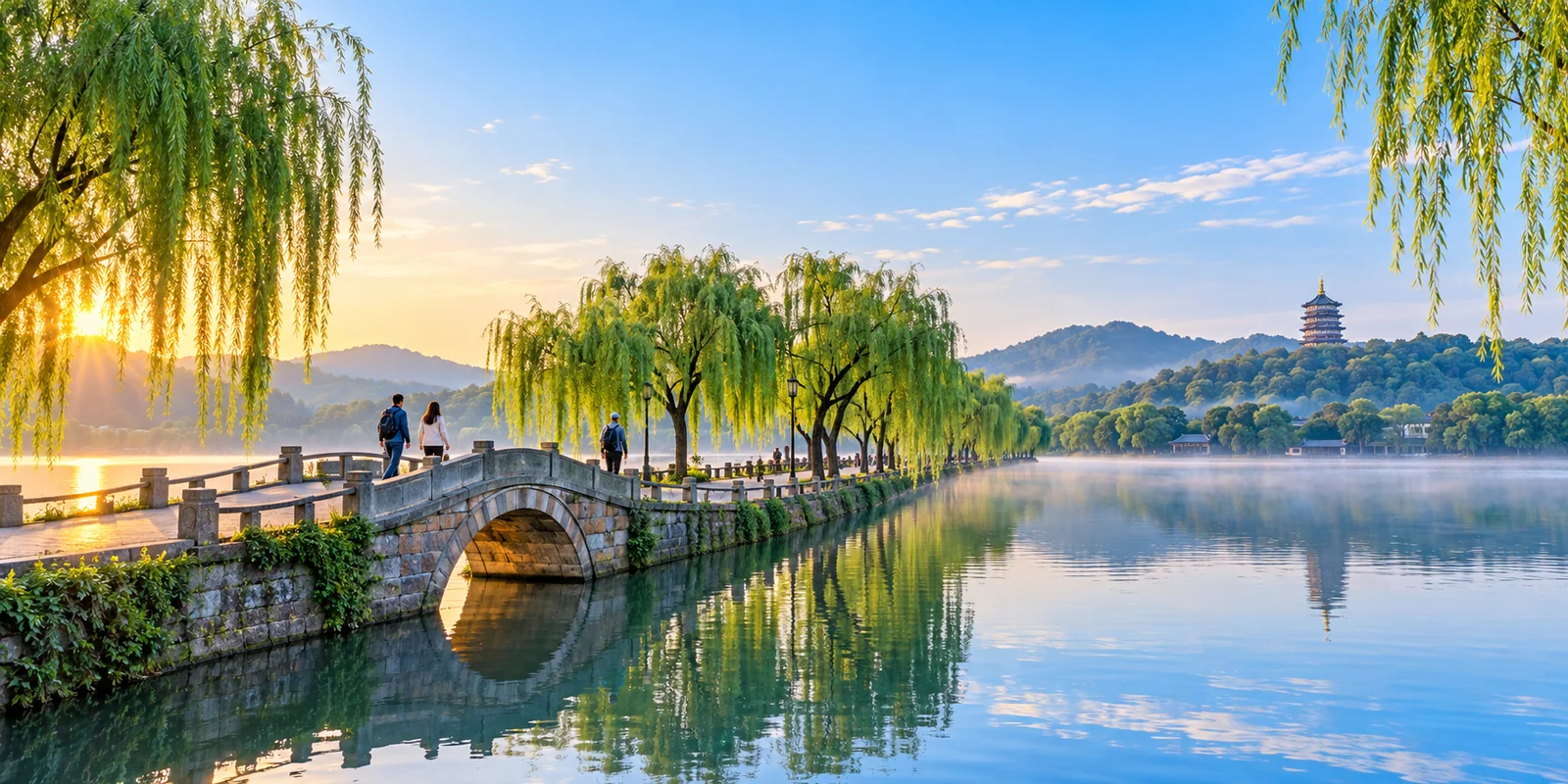
The classic loop starts at Broken Bridge (断桥, Duànqiáo) in the north-east corner. Walk west along the Bai Causeway (白堤, Bái Dī), a willow-lined embankment with water on both sides, to Solitary Hill (孤山, Gūshān), a low island with the provincial museum. Continue along the north shore to Yue Fei Temple (岳王庙, Yuè Wáng Miào), the memorial to a twelfth-century general, open 08:00 to 17:00 — sometimes to 18:00 in summer — with a modest ticket of around 25 yuan, so check on the day. From its door the Su Causeway (苏堤, Sū Dī) runs straight south across the lake over six small bridges, about forty minutes on foot and the best walk in Hangzhou. At the south end, a short walk east along Nanshan Road brings you to Leifeng Pagoda (雷峰塔, Léifēng Tǎ).
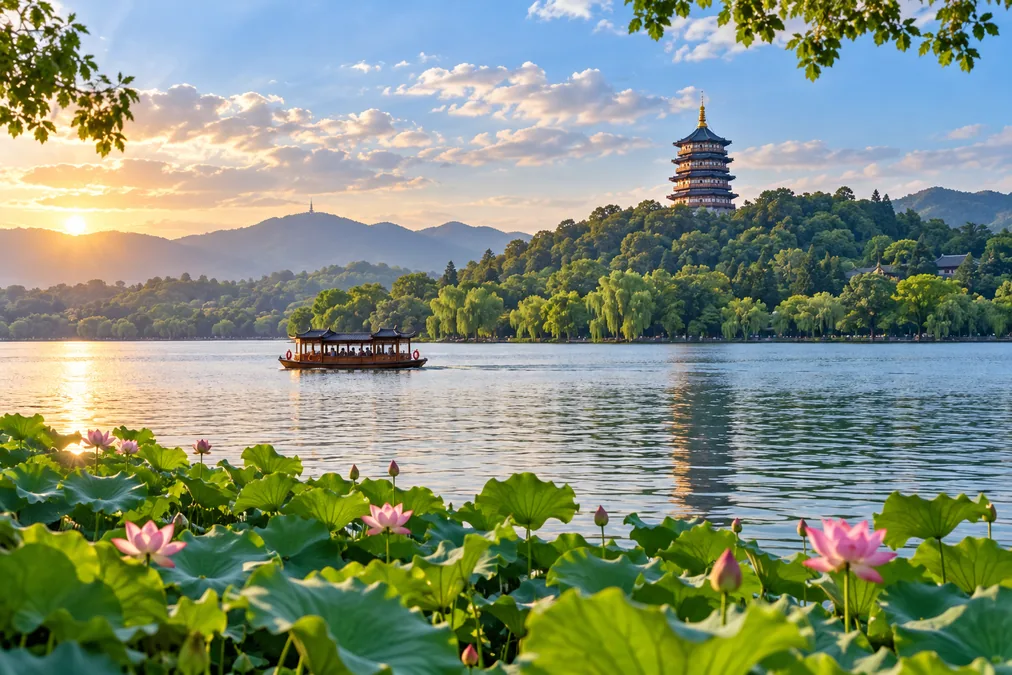
Leifeng Pagoda is a modern rebuild with escalators over the ruined base of the old tower; the adult ticket is 40 yuan, with reductions for students, teenagers and people in their sixties and free entry for young children and the over-seventies. It closes at 17:30 from November to mid-March, at 19:00 in late March and April, and at 20:00 from May to October, so from late March to October the tower is open past sunset; in winter it closes at about sunset, so watch from the Su Causeway's southern bridges instead.
Boats are the other paid piece. Three Pools Mirroring the Moon (三潭印月, Sāntán Yìnyuè) — the island with the three stone lanterns on the back of the one-yuan note — is reached only by the official island boats: 55 yuan on the standard boat or 70 on the painted or electric boats, island entry included, from any of nine piers, paid by QR code. Without the island, the hop-on lake loop is 6 to 8 yuan a leg or 70 for the circuit, and self-drive electric boats rent at 30 yuan per half hour. On a first visit take the island boat.
Crowds peak from mid-morning to mid-afternoon on weekends and holidays — the same hours the traffic controls run. Start at Broken Bridge before 08:00 and the Bai Causeway is nearly yours; by noon it is a slow procession. The table below has current prices and hours for the lake's paid spots, the temples, Xixi and the Tea Museum.
| Sight | Ticket | Booking | Hours |
|---|---|---|---|
| Lingyin Temple & Feilai Peak | Free since Dec 1, 2025 | Required, real-name, free: the official 杭州灵隐飞来峰 mini-program (Alipay or WeChat), at least 1 day ahead and up to 7 days; passport accepted; two slots 07:30–12:00 / 12:00–17:00; up to 5 people per phone; the day’s quota is released at 08:00 | 07:30–17:30 · last entry 17:00 |
| Leifeng Pagoda | adult ¥40; ages 6–18, students and 60–69 ¥20; under 6 and 70+ free | — | 08:00–17:30 (Nov 1–Mar 15) / 08:00–19:00 (Mar 16–Apr 30) / 08:00–20:00 (May–Oct) · last entry 30 min before closing · no closing day |
| Three Pools Mirroring the Moon (island boat) | ¥55 standard boat / ¥70 luxury, painted or electric boat, island ticket (¥20) included; children 1.2–1.5 m half price | No booking: pay by QR at any of the 9 lakeside docks or in the 西湖旅游 WeChat account | boat ticket sales from 08:00; last sale 16:00–17:00 depending on season |
| West Lake boats (loop line & rowing boats) | loop line ¥6–8 per leg / ¥70 full circuit · Song-style painted boat ¥90 · self-drive electric boat ¥30 per 30 min · rowing boat ¥30 per hour · boatman-rowed boat ¥150 per hour (6 seats, 1 hour minimum) | — | — |
| Yue Fei Temple | — | — | 08:00–17:00 · summer (Jul 15–Sep 30, 2025) 08:00–18:00, last sale 17:45 — check the year’s notice · no closing day |
| Liuhe Pagoda | — | — | 07:00–17:30 summer / 07:00–16:55 winter · no closing day |
| Hupao Spring | — | — | 07:00–17:30 summer / 07:00–16:55 winter · no closing day |
| China National Tea Museum | — | — | Tue–Sun 09:00–16:30 · closed Mon (open on public holidays) · two sites (Shuangfeng and Longjing) |
| Xixi National Wetland Park | adult ¥80 · electric boat +¥60 · combo ¥140 | No booking: ticket offices, the 西溪湿地 WeChat account or Trip.com-type platforms | 08:30–17:30 (Apr–Oct) / 08:30–17:00 (Nov–Mar) · last entry and last ticket 16:30 / 16:00 · no closing day |
Lingyin Temple, Feilai Peak and the Longjing tea hills
Lingyin Temple (灵隐寺, Língyǐn Sì, "Temple of the Soul's Retreat") sits in a wooded valley west of the lake, reached through the Feilai Peak (飞来峰, Fēilái Fēng, "Peak That Flew Here") scenic area, whose cliffs are carved with hundreds of Buddhist figures. This is where old information is most wrong. Since 1 December 2025 the whole area, including Lingyin, Yongfu and Taoguang temples, has been free — the former 45-yuan scenic-area ticket and 30-yuan incense voucher are gone. In exchange, entry is by real-name reservation only, through the official "杭州灵隐飞来峰" (Hangzhou Lingyin Feilai Peak) mini-program in Alipay or WeChat, at least one day ahead and up to seven days out, for a morning session (07:30 to 12:00) or an afternoon one (12:00 to 17:00), with a daily cap. There is no same-day booking. Foreign passports are accepted; one phone can book up to five people, new slots open at 08:00 daily, and the area is open 07:30 to 17:30 with last entry at 17:00.
In practice: once your Alipay is set up, search the Chinese name, pick date and session, enter each passport number exactly, screenshot the confirmation and bring the same passport. If the app defeats you, a hotel front desk can usually do it for you — ask the day before. The Zhejiang government's announcement is the original source.
On weekends and holidays from 08:00 to 17:00 no taxi may enter the Lingyin zone, so go by metro and shuttle; on a weekday a taxi from the lake takes 20 to 30 minutes. Arrive as the morning session opens, before the tour groups. It is a working monastery: cover shoulders and knees, and keep the camera away from people praying.
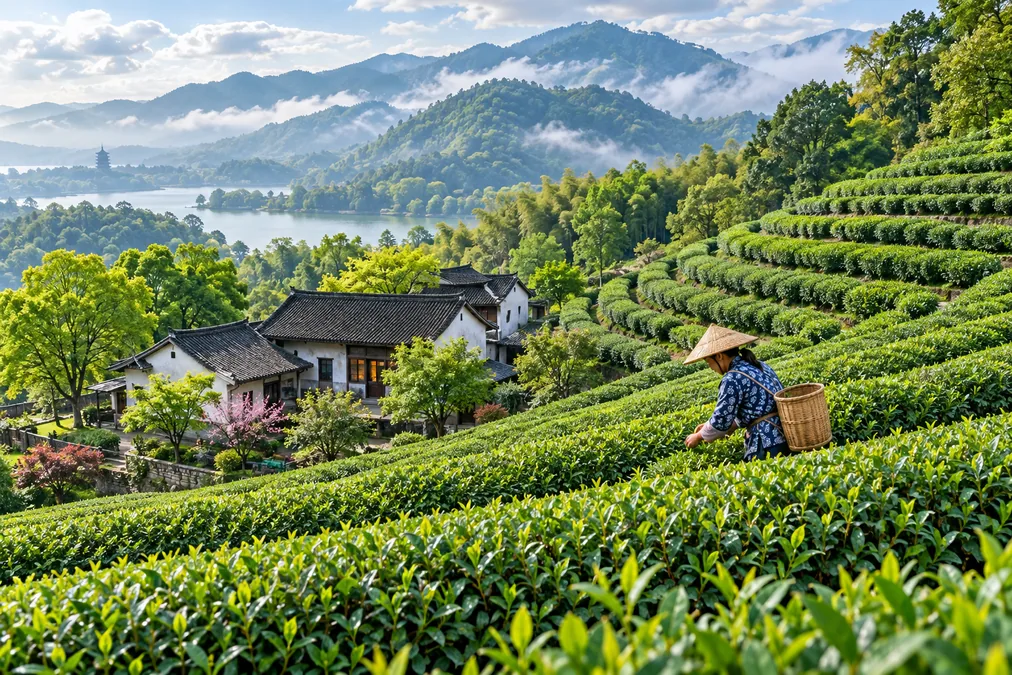
The tea country is just over the hill. Longjing Village (龙井村, Lóngjǐng Cūn, "Dragon Well") is the core growing area for Longjing green tea: an ordinary open village with terraces behind it, no ticket, no gate, and the old Dragon Well spring and the eighteen "imperial" tea bushes as its sights. Sit at a farmhouse tea table, order a pot, and stay an hour; the tea is priced by the house, and buying leaves is about tasting, not labels. The China National Tea Museum (中国茶叶博物馆) has two sites on the road in, open Tuesday to Sunday 09:00 to 16:30 and closed Mondays except public holidays; check whether you need to reserve. Grades, brewing and tea-house manners are in our Chinese tea ceremony guide.
With legs left, walk on: a stream-side path drops south from Longjing through Jiuxi (九溪, "Nine Creeks") for about 2.5 kilometres to the Jiuxi park, roughly 5 kilometres in all if you carry on to the Qiantang River; the whole valley is free and open all day. Near the river end are two small paid sights, both open 07:00 to 17:30 in summer and to 16:55 in winter: Hupao (虎跑, "Tiger Spring"), whose spring water is traditionally paired with Longjing tea, and Liuhe Pagoda (六和塔, "Six Harmonies Pagoda"), the old tower above the river; both charge small tickets — think around 15 and 20 yuan — but check on the day. Between these places it is a taxi or a local bus — ask your hotel which route.
Xixi Wetland, Hefang Street, the Grand Canal and Songcheng
Each is a half day; none is essential.
Xixi National Wetland Park (西溪湿地) is the choice if West Lake felt busy: channels, ponds and persimmon groves explored by boardwalk and electric boat. It is open 08:30 to 17:30 from April to October (last entry 16:30) and 08:30 to 17:00 from November to March (last entry 16:00); the main east gate is at 518 Tianmushan Road. Entry is 80 yuan, the electric boat 60 and the combined ticket 140; confirm at the gate. Worth it on a third day; skip it on two.
Hefang Street (河坊街) and the Southern Song Imperial Street (南宋御街) are free pedestrian streets a short walk from the lake's south-east corner — a restored late-Qing shopping street with old-name pharmacies and snack stalls, and the rebuilt central axis of the Song capital. Touristy, but it is where you eat on your first evening.
The Grand Canal at Gongchen Bridge (拱宸桥): the tall stone arch, the Qiaoxi (桥西, "west of the bridge") street of craft museums and the Xiaohe (小河, "small river") street of old canal houses are all free, with an evening cruise from 19:30 to 20:30; ask the fare at the pier.
Songcheng (宋城, "Song Dynasty Town") is a theme park built around one show, "Romance of the Song Dynasty" (宋城千古情), an hour-long song-and-dance spectacle; the park opens at 10:00 and closes half an hour after the last performance, and the smaller theatres are first come, first seated. Tickets go through the park's WeChat channel — expect around 300 yuan including the show, and check before you go; English-language platforms such as Klook usually list it too. Go for spectacle; skip it if you came for quiet.
The Qianjiang New City light show is free: on the current spring–summer schedule (mid-April to the end of September) the riverbank towers light up at 19:30 and 20:30 on Fridays and Saturdays and at 20:30 on other nights, with a music fountain a quarter of an hour before each show. The winter timetable is earlier, so check the day's times from October. Watch from the City Balcony (城市阳台) on the north bank.
Where to stay
Choose by how you will move. Hubin and Wulin, the east shore and the downtown just north of it, are the answer for a first visit: the lake is minutes away on foot, Longxiangqiao on Line 1 links both main stations without a change, and Wulin Square is a shuttle-bus hub on restricted days. Nanshan Road and the south shore give you the atmosphere — tree-shaded lanes, lake views if you pay for them — but the road sits inside the weekend control zone, so taxis are slower on Saturdays and Sundays and the metro is a longer walk. Xixi is quiet, green and far; a second-visit choice. Qianjiang New City and Hangzhou East suit business travellers and very early trains, but you would commute to everything you came for.
Book early for spring and autumn weekends — lake-view rooms in Hubin go first — and compare your shortlist on Trip.com, which handles Chinese hotels well and filters by metro station. Every hotel photographs your passport at check-in; that is normal, see booking hotels and registration rules.
What to eat
Hangzhou cooking is mild, slightly sweet, built on freshwater fish, bamboo shoots and pork. Order Dongpo pork (东坡肉, Dōngpō ròu), pork belly braised until it collapses; West Lake vinegar fish (西湖醋鱼, Xīhú cùyú), a whole fish in sweet-and-sour sauce that people either love or find bland — try it once; Longjing shrimp (龙井虾仁, Lóngjǐng xiārén), river shrimp stir-fried with fresh tea leaves; pian'er chuan (片儿川), noodles with pork, bamboo and pickled greens, the best cheap lunch in town; and cong bao gui (葱包桧), a griddled wrap of spring onion and fried dough from street carts. For the old-name restaurants, follow the queue of local families, not the picture menu; Hefang Street has several historic brands in a row. If you cannot read the menu, how to order food with zero Chinese gets you fed.
One day or two: how to arrange it
One day. Broken Bridge, the Bai Causeway and Solitary Hill; the island boat from the Zhongshan Park pier and back to the same shore; the Su Causeway south on foot, or the electric cart along the parallel lakeside road; Leifeng Pagoda in the late afternoon; dinner on Hefang Street. That is a full day on foot; do not add the temple.
Two days. Day one as above. Day two: Lingyin and Feilai Peak in the morning session, reserved at least a day earlier — so book it before bed on day one at the latest — then a taxi or bus to Longjing Village for a long tea break, and either the Jiuxi walk down to the river or the metro to the canal district for the evening. If your two days straddle a weekend, put Lingyin on the weekday; the weekend traffic rules make it the slow one to reach. Swap the canal for Xixi if you want more green.
Out of the city
For Wuzhen, take a high-speed train from Hangzhou East to Tongxiang — around half an hour or less, with trains through the day, though times shift with each timetable change — then the K282 bus to Wuzhen bus station, roughly every half hour until about 5 pm — after that it is a taxi — with late buses back to the station from Xizha (西栅, the West Zone); a direct coach also runs from Xizha to Wulinmen (武林门, near Wulin Square) downtown, about two hours, several times a day. For Xitang, the train to Jiashan South takes half an hour to three quarters, then the K222 bus or a 20-to-30-minute taxi. Which town suits you, and how to loop the region, is in our Jiangnan water towns route. Suzhou is a direct train from Hangzhou East — see the Suzhou garden city guide for what to book there. Shaoxing, an old canal town known for its yellow rice wine, is a quieter day trip on a third day; Qiandao Lake, the reservoir of a thousand islands to the west, is an overnight rather than a day out. If Shanghai is your base, day trips from Shanghai compares Hangzhou with the alternatives.
Frequently asked questions
Is Hangzhou worth a separate trip from Shanghai, and how many days?
Yes. The train from Shanghai Hongqiao to Hangzhou East takes about 45 minutes at the fastest and around an hour for most services, several times an hour. Two days is right: the lake on one, the temple and tea hills on the other. As a day trip you get the lake and Hefang Street.
Do you need a ticket for West Lake?
No. The lake, its causeways, gardens and shore paths are an open park with no entrance fee. You pay only for extras: Leifeng Pagoda is 40 yuan, the boat to Three Pools Mirroring the Moon is 55 yuan on the standard boat with the island included, and Yue Fei Temple and a few other walled sights charge small tickets — check at the door.
How do you reserve Lingyin Temple now, and can foreigners do it?
Entry is free but reservation is compulsory: use the official "杭州灵隐飞来峰" (Hangzhou Lingyin Feilai Peak) mini-program in Alipay or WeChat at least one day ahead and up to seven days out, choose a morning or afternoon session, and register each visitor's real name — foreign passports are accepted. There is no same-day booking and no ticket window, so if the app defeats you, ask your hotel to book it the day before.
Which Hangzhou railway station is closest to West Lake?
Hangzhou Station (Chengzhan): two stops on Line 1 to Longxiangqiao on the lake's east shore. Hangzhou East, where most high-speed trains arrive, is six stops on the same line. Hangzhou West is far out in the north-west and needs a change of line; avoid it unless your train only serves that station. The city tourism bureau's English metro line guide lists every station in order.
Last updated: September 2026
Read in other languages
Getting to the sights by metro
West Lake
Iconic freshwater lake immortalized by poets, with causeways, pagodas and pavilions.
- Longxiangqiao
- Fengqi Road
- Ding'an Road
Lingyin Temple
1700-year-old Chan Buddhist temple at the foot of Lingyin Mountain, famed for grottoes.
- Huanglong Sports Center
- Longxiangqiao
Leifeng Pagoda
Five-story pagoda with sunset lake views; setting of the Madame White Snake legend.
- Ding'an Road
- Longxiangqiao
Hefang Street
Restored Song-dynasty pedestrian street with snacks, traditional crafts and tea houses.
- Ding'an Road
- WuShanGuangChang
Song Dynasty Town
Theme park recreating Song dynasty life, famed for its evening 'Romance of the Song' show.
- Ding'an Road
Xixi National Wetland Park
Vast urban wetland with boat tours, persimmon orchards and waterside boardwalks.
- XiXiShiDiBei
- XiXiShiDiNan
Huanglongdong Park
Tranquil garden park with bamboo groves, traditional pavilions and waterfalls.
- Huanglongdong
Grand Canal & Gongchen Bridge
Hangzhou's terminus of the UNESCO Grand Canal, marked by the 380-year-old Gongchen Bridge.
- East Gongchen Bridge
Qianjiang New City Skyline
Riverside CBD with the iconic 'Sun & Moon' towers and nightly light shows.
- Citizen Center
- Qianjiang Road
Wulin Square
Downtown shopping plaza with Hangzhou Tower and luxury brand flagship stores.
- Wulin Square
- Wulinmen
Hupao Spring
Famed spring whose waters are paired with Longjing tea by tea connoisseurs.
- Ding'an Road
Liuhe Pagoda
Northern Song-era octagonal pagoda overlooking the Qiantang River tidal bore.
- Ding'an Road
Hangzhou East Railway Station
One of Asia's largest high-speed rail hubs, an architectural sight in itself.
- East Railway
Hangzhou Xiaoshan International Airport
Hangzhou's main airport (HGH); 27 km from city center; major eastern China hub for Sino-Asian services.
- Xiaoshan International Airport
Hangzhou metro: last train times by station
Every line and station, checked by hand — the same data behind our offline route planner.
Get the WaysChina App
Offline guides, currency converter, essential phrases, and more — all in your pocket.

Related Articles
3 Days in Shanghai: An Itinerary You Can Follow As Written
A day-by-day Shanghai route built on metro logic: museum and Bund on day one, towers and old town on day two, a flex...
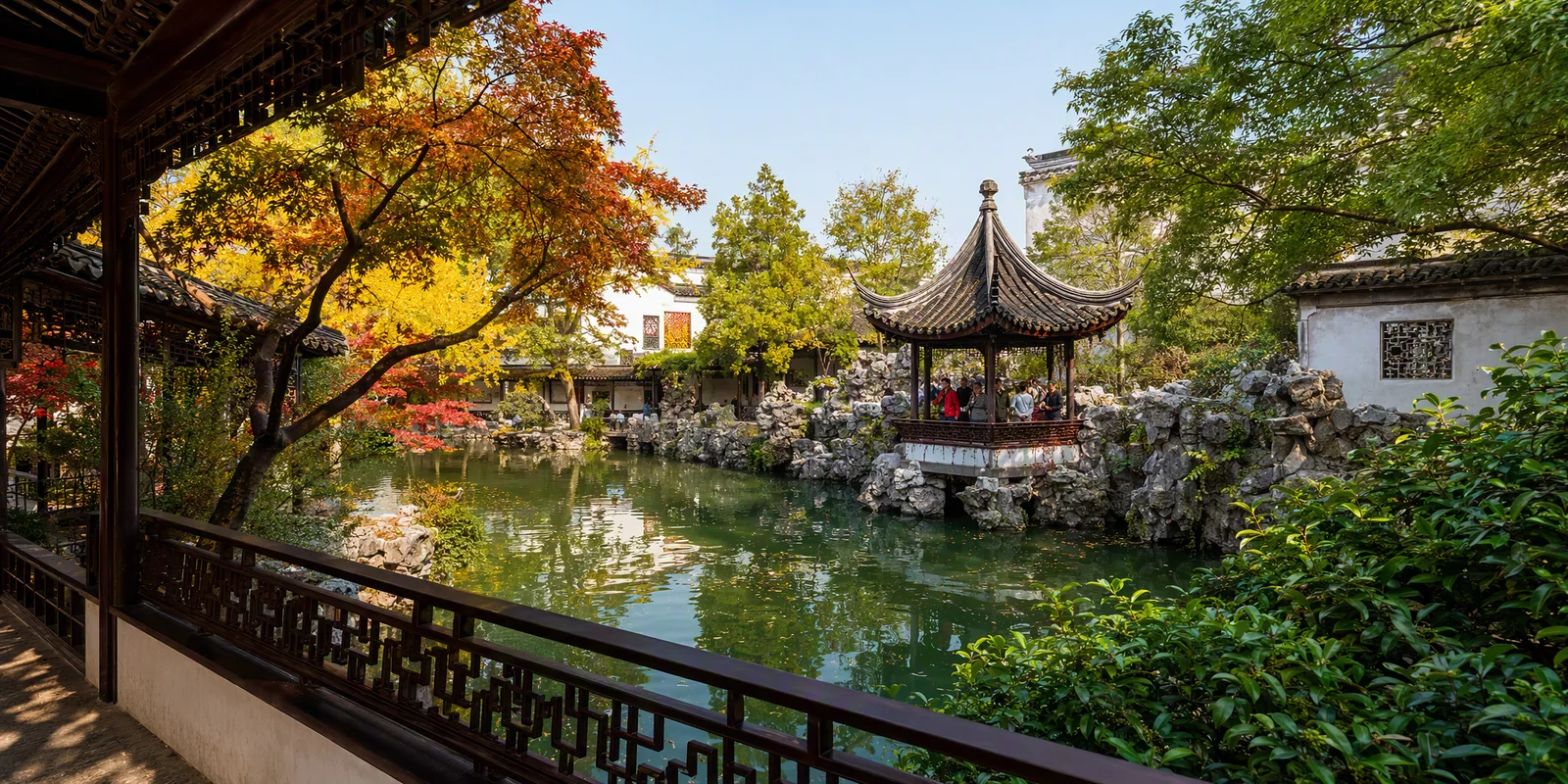
Day Trips from Shanghai: Water Towns, Suzhou and Hangzhou, Honestly Compared
Which Shanghai day trip fits you: metro-reach Zhujiajiao, Suzhou's real-name garden tickets, free West Lake, or an...
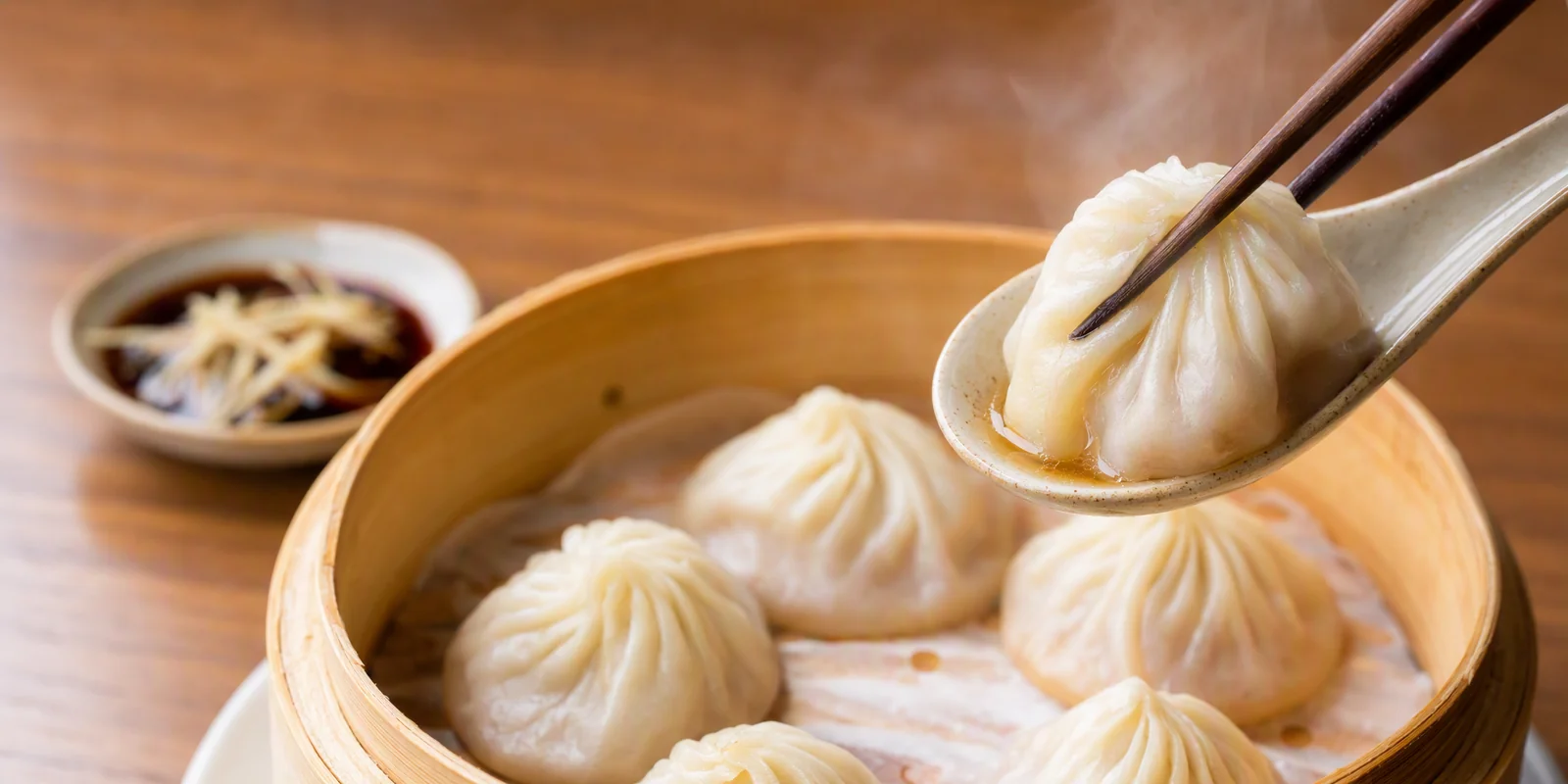
Shanghai Food Guide: What to Eat, Where to Eat It, and How to Order
Beyond soup dumplings: how to eat xiaolongbao without scalding yourself, where locals actually eat, halal and...
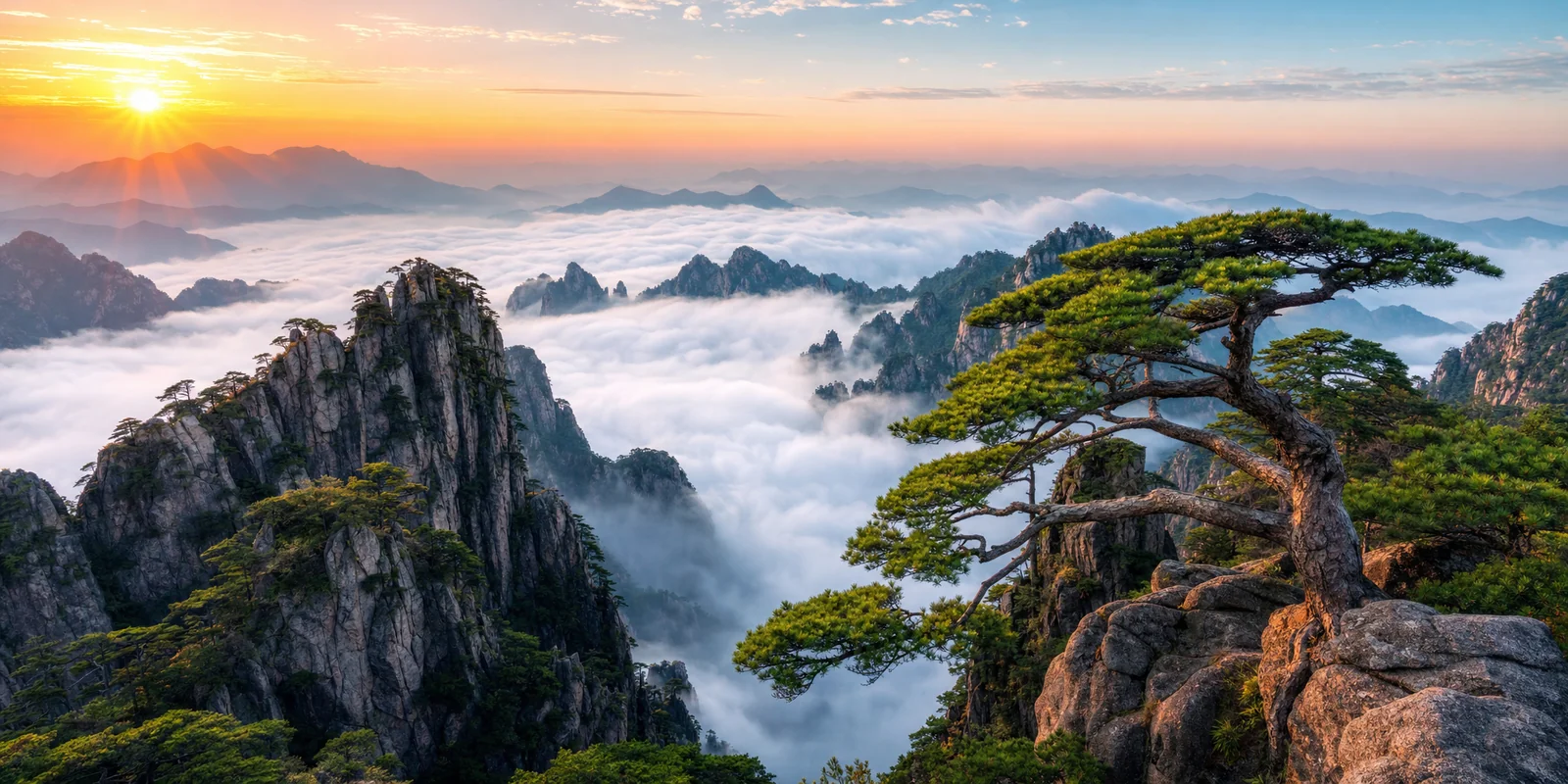
Huangshan Guide
How to plan a trip to Mount Huangshan: choosing your route up and down, catching the sunrise, where to sleep on the...