
This article contains affiliate links. If you make a purchase through these links, we may earn a small commission at no extra cost to you. This helps support our work in creating free travel guides.
China's National Day holiday — known as Golden Week (黄金周, huángjīn zhōu) — runs for seven days starting October 1st. It's the country's biggest domestic travel period, when hundreds of millions of people are on the move at the same time. The Ministry of Culture and Tourism regularly reports over 700 million domestic trips during this single week. If you're planning to be in China in early October, this isn't something you can ignore. This guide covers what actually changes during Golden Week, which destinations get unbearable, where you can still find breathing room, and the booking strategy that keeps the holiday from wrecking your trip.
What Golden Week Actually Is
Golden Week is the holiday built around National Day (国庆节, Guóqìng Jié) on October 1st. The official break is seven days, usually October 1–7, though the exact dates shift slightly each year because the government adjusts surrounding weekends to create the full run. There's a second "golden week" around Chinese New Year, but when people say it in an October context, they mean this one.
The reason it matters so much for foreign visitors: this is one of only two times a year when nearly the entire working population has the same days off. Domestic tourism spikes to levels that are hard to imagine until you've stood in the middle of it. Popular sites hit visitor caps by mid-morning, train tickets vanish weeks ahead, and hotel prices in tourist cities can double or triple.
The dates are confirmed each year by China's State Council, usually a few months in advance. Always check the official holiday schedule before locking in plans — you can find it through the State Council's official website.
The Honest Question: Should You Avoid It?
If you have any flexibility in your dates, shifting your trip even one week before or after October makes a real difference. Late September and mid-to-late October are excellent times to be in China — good weather across most regions, manageable crowds, and normal prices.
But plenty of travelers don't have that choice. Maybe Golden Week lines up with your own holiday back home, or it's simply when you can get away. That's fine. Traveling during Golden Week is completely doable — it just requires more planning and a willingness to skip the most crowded spots. The mistake is treating it like a normal week and showing up without reservations.
Here's the simple decision: if your dream trip is the Great Wall, Zhangjiajie's glass bridges, or West Lake in Hangzhou, and your only option is Golden Week, you'll need to adjust expectations or pick alternatives. If you're flexible on destinations, you can have a great trip by leaning into cities and regions that locals don't flood.
Places to Avoid During Golden Week
Some destinations become genuinely unpleasant — not "a bit busy," but shoulder-to-shoulder, three-hour queues for a cable car, visitor caps reached before noon. These are the marquee domestic attractions, and Chinese travelers descend on all of them at once.
Major scenic mountains and national parks
Avoid these if at all possible during the holiday week:
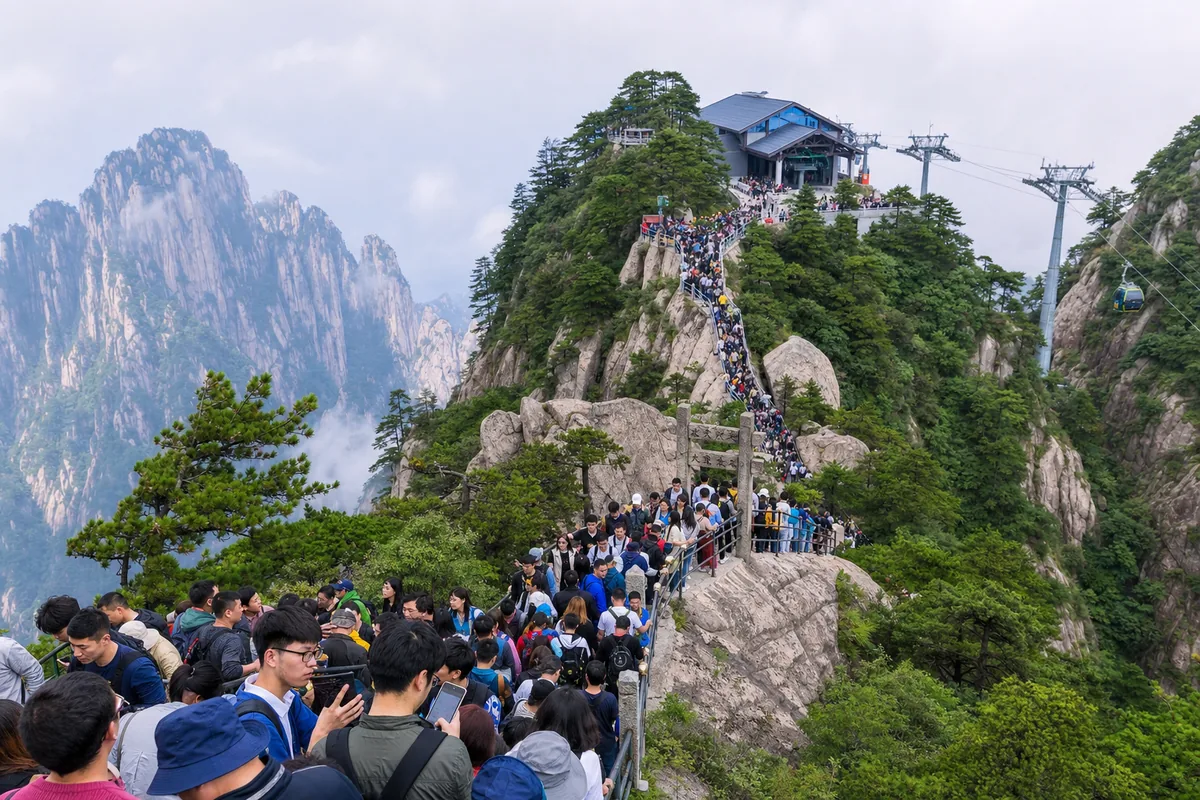
- Huangshan (黄山) — Famous for its peaks and sea of clouds, and infamous for Golden Week crowds. Photos of crammed summit trails go viral every year. Cable car waits can exceed three hours.
- Zhangjiajie (张家界) — The pillars that inspired Avatar's landscape. Stunning, and completely overrun during the holiday. Elevator and shuttle queues are brutal.
- Jiuzhaigou (九寨沟) and other capped parks — Many national parks enforce daily visitor limits. During Golden Week those caps fill early, and entry can sell out before you arrive.
Iconic city landmarks
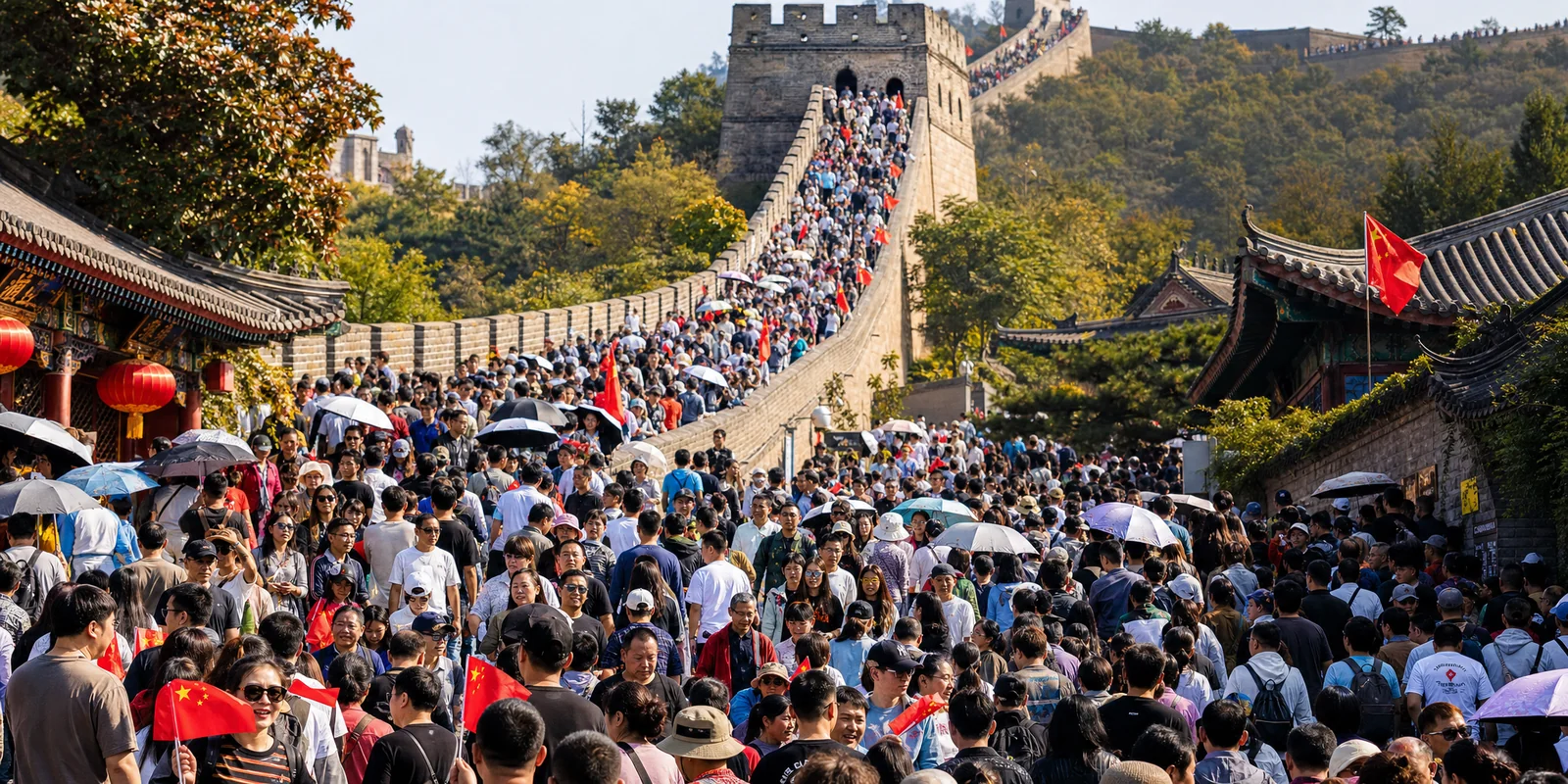
- The Great Wall at Badaling (八达岭) — The most accessible Wall section near Beijing, and therefore the most packed. The famous "wall of people" images come from here. If you must see the Wall during Golden Week, choose a less-visited section like Mutianyu or Jinshanling and go at opening time.
- The Bund and Nanjing Road, Shanghai — Crowd control barriers and one-way pedestrian flow get deployed here during peak periods.
- West Lake, Hangzhou — Beautiful, free to enter, and consequently jammed. The causeways become single-file shuffles.
- The Terracotta Army, Xi'an — Long queues just to enter the pits, and limited time to actually see anything once inside.
Where Crowds Thin Out
The good news: China is enormous, and the domestic travel rush concentrates on a predictable set of famous places. Step away from those and you'll find cities and regions that stay perfectly enjoyable — sometimes even better, because they're festive without being mobbed.
Second-tier cities with first-rate experiences
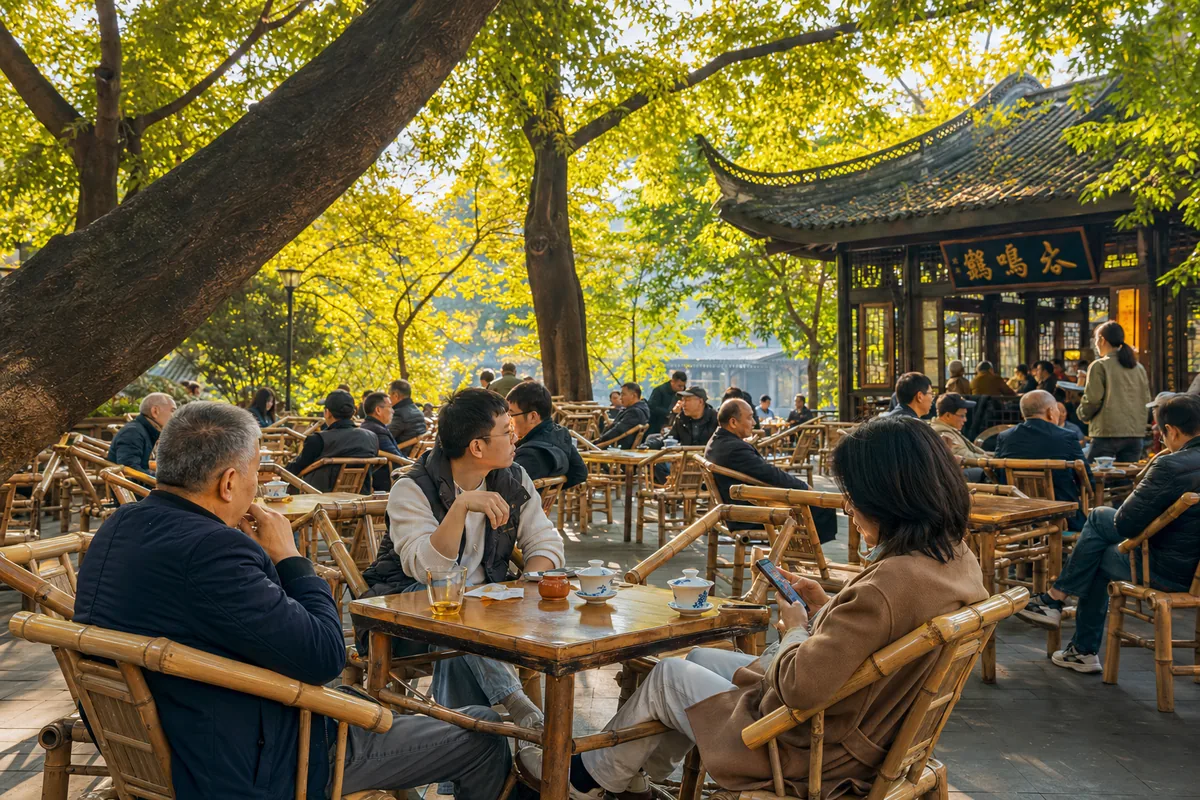
- Chengdu (成都) — Big enough to absorb crowds, with great food, teahouse culture, and pandas. Book the panda base early since it's popular, but the city itself rarely feels suffocating.
- Datong (大同) — The Yungang Grottoes and Hanging Temple are world-class and far less swarmed than the marquee sites further south.
- Quanzhou and Xiamen's quieter corners (福建) — Fujian's coast offers history, seafood, and tea without the Hangzhou-level crush. Xiamen's Gulangyu Island does get busy, so plan around it.
- Tianjin (天津) — An hour from Beijing by high-speed rail, with European-style architecture and a relaxed riverside. A solid base if Beijing hotels are full or overpriced.
Regions that spread out
- Yunnan's less-famous stops — Dali and Lijiang get busy, but the broader province has plenty of space. Yuanyang's rice terraces and smaller towns stay calm.
- The Northwest (Gansu, Qinghai) — Dunhuang, Zhangye's Danxia landforms, and Qinghai Lake cover huge areas. October weather is crisp and the light is excellent for photos.
- Northeast China — Dalian, Shenyang, and the broader region see far fewer holiday tourists than the southern hotspots.
Big cities as cities, not checklists
You can still enjoy Beijing, Shanghai, or Xi'an during Golden Week — you just shift how you spend your time. Skip the headline monuments and lean into neighborhoods, museums (many require free reservations), parks beyond the famous ones, food streets in the early morning or late evening, and day trips to outer districts. A city like Shanghai has endless texture beyond the Bund.
Weather and What to Pack
Early October is one of the most pleasant times to travel in much of China, which is partly why everyone travels then. But "China" spans climates from subtropical to near-alpine, so what you pack depends heavily on where you go.
| Region | Typical Early-October Weather | What to Bring |
|---|---|---|
| Beijing & North | Cool, dry, sunny. 10–22°C, chilly mornings/evenings | Layers, light jacket, comfortable walking shoes |
| Shanghai & East | Mild, occasional rain. 18–26°C | Light layers, compact umbrella |
| Chengdu & Southwest | Mild, humid, often overcast. 17–25°C | Light layers, umbrella, breathable clothing |
| Guangzhou & South | Warm to hot, humid. 24–31°C | Summer clothes, sun protection |
| Northwest (Gansu/Qinghai) | Cold, dry, big day-night swings. 0–18°C | Warm jacket, layers, sunglasses, lip balm |
| Tibet & high altitude | Cold, intense sun, thin air. -2–15°C | Warm layers, sunscreen, altitude precautions |
Across the board, October calls for layering. Mornings and evenings are cool even where afternoons feel warm, and indoor heating hasn't kicked in yet up north. For a fuller breakdown by region, see our Weather by Region guide and seasonal Clothing by Season checklist.

The Booking Strategy That Saves Your Trip
If you take one thing from this guide: book everything early. Golden Week rewards planners and punishes the spontaneous. Here's the order of priority.
1. High-speed rail tickets — the hardest to get
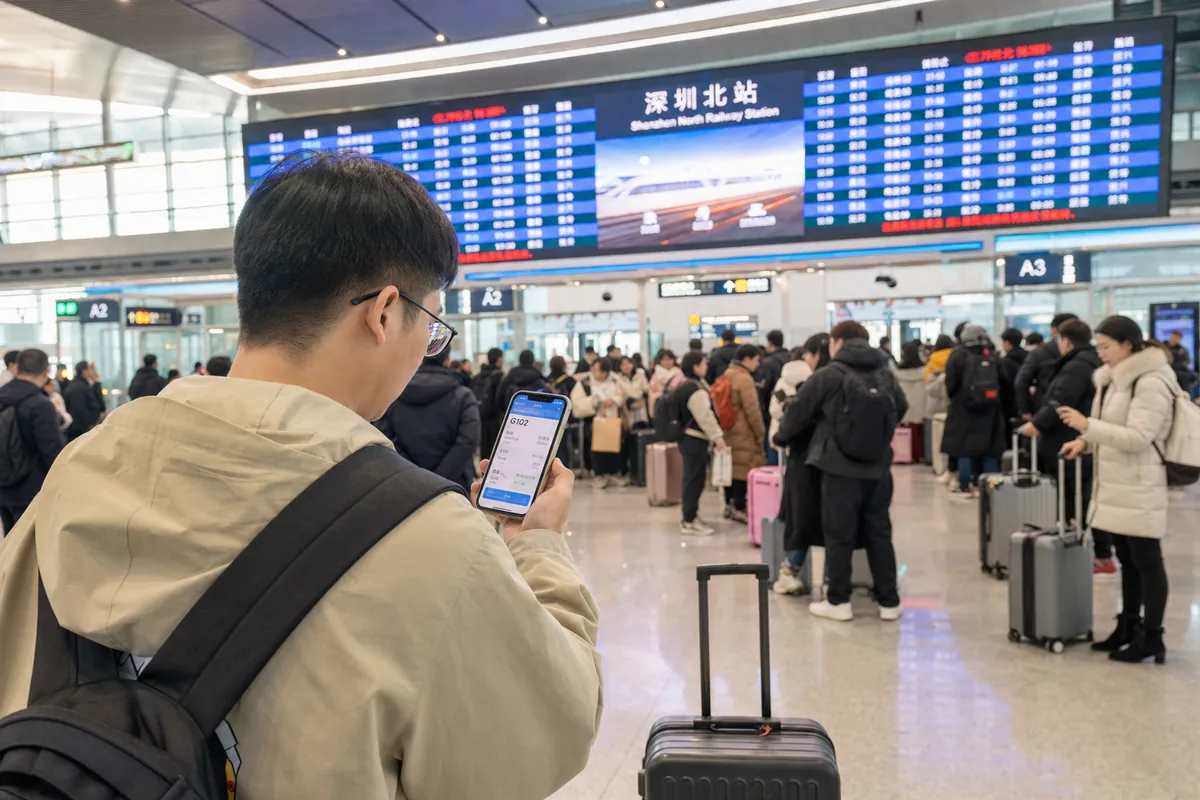
Train tickets are the biggest bottleneck. Tickets go on sale a set number of days before departure (the window has shifted over the years, so check current rules), and popular routes between major cities can sell out within minutes for Golden Week travel. The official platform is 12306, run by China Railway.
- Create your 12306 account and complete passport verification well before tickets release — verification can take a day or two.
- Know the exact release time and be online ready to book the instant tickets open.
- If your first choice sells out, consider nearby departure times, a different class of seat, or breaking the journey into segments.
- Avoid traveling on October 1st and the final return day — these are the absolute peak. Departing a day earlier or later helps enormously.
Our How to Book Train Tickets guide walks through the 12306 process step by step, including how foreign passport holders register.
2. Flights — book early, watch prices
Domestic flights have more capacity flexibility than trains, but Golden Week prices climb fast and the cheapest fares disappear first. For longer distances (Beijing to Chengdu, Shanghai to Yunnan), flying is often more practical than rail anyway. Book as far ahead as you can and avoid the peak departure and return days. See our Domestic Flights Guide for booking tips.
3. Hotels — reserve now, especially in tourist cities
In popular destinations, hotel rooms fill up and rates surge during Golden Week. The good options at reasonable prices go first. Book refundable rooms early so you lock in availability and price while keeping flexibility — you can always cancel and rebook if a better deal appears.
For comparing rooms across cities and securing free-cancellation rates ahead of the rush, platforms like Booking.com let you filter for refundable bookings, which is exactly what you want when plans might shift. Our Booking Hotels & Registration Rules guide also explains the police registration step that applies to all foreign guests.
4. Attraction reservations
An increasing number of museums and major sites require timed-entry reservations, often free, made days in advance through official channels. Many of these are managed via WeChat mini-programs. Set up WeChat before you arrive so you can book entry slots and pay for things smoothly.
On-the-Ground Tactics for Golden Week
Beyond booking, a few habits make holiday travel much smoother:
- Start early. Most domestic tourists are not early risers. Arriving at a site right when it opens can mean an hour or more of relative calm before the crush.
- Eat at off-peak times. Popular restaurants have long waits during standard meal hours. Eat lunch at 11am or 2pm, dinner at 5pm or 8:30pm.
- Use the metro over taxis in big cities. Road traffic gets heavy and ride-hailing surge pricing kicks in. Subways keep moving. See our Metro Systems Guide.
- Build in buffer time. Everything takes longer — security lines, boarding, getting through crowds. Leave margin so a delay doesn't cascade.
- Carry your passport. You'll need it for train stations, attraction entry, and hotel check-in. Keep it accessible but secure.
- Set up mobile payments beforehand. Cash is rarely used; QR-code payment via Alipay or WeChat Pay makes everything faster, which matters when lines are long.
A Sample Approach: Two Itineraries
To make this concrete, here's how a flexible traveler might think about Golden Week versus a date-locked one.
| Scenario | Smart Choice |
|---|---|
| Flexible dates | Shift the trip to late September or mid-October entirely. Visit anywhere, including the famous sites, at normal prices. |
| Must travel during Golden Week, crowd-averse | Base in Chengdu or a Northwest loop (Xining–Zhangye–Dunhuang). Avoid capped mountain parks. Book trains and hotels the moment they release. |
| Must travel, want big cities | Pick one or two cities, skip the headline monuments, focus on neighborhoods, museums, food, and day trips. Use the metro. |
| Set on one famous site | Book timed entry the instant it opens, go at opening hour, and accept that it will be busy regardless. |
For full route ideas that work well in shoulder season, see our Silk Road Route and Yunnan Circuit.
The Bottom Line
Golden Week is the busiest domestic travel period of the year in China, and the difference between a frustrating trip and a good one comes down to planning. If you can move your dates even a week, do it — late September and mid-October are some of the best travel windows China offers. If you're locked into the holiday, you can still have a great time by avoiding the marquee mountains and monuments, choosing second-tier cities or spread-out regions, and booking trains, flights, and hotels the moment they become available. Set up your accounts, payments, and reservations ahead of time, start your days early, and build in buffers. Do that, and the crowds become a backdrop rather than an obstacle.
Related Reading
- Best Time to Visit China — find the ideal window for your trip
- Autumn Travel in China — what October offers beyond the holiday rush
- How to Book Train Tickets — master 12306 before tickets release
- Chinese New Year Travel Guide — the other major travel rush to plan around
Last updated: June 2026
Read in other languages
Last train times for 10 Chinese metro systems
Every line and station, checked by hand — the same data behind our offline route planner.
Get the WaysChina App
Offline guides, currency converter, essential phrases, and more — all in your pocket.

Related Articles
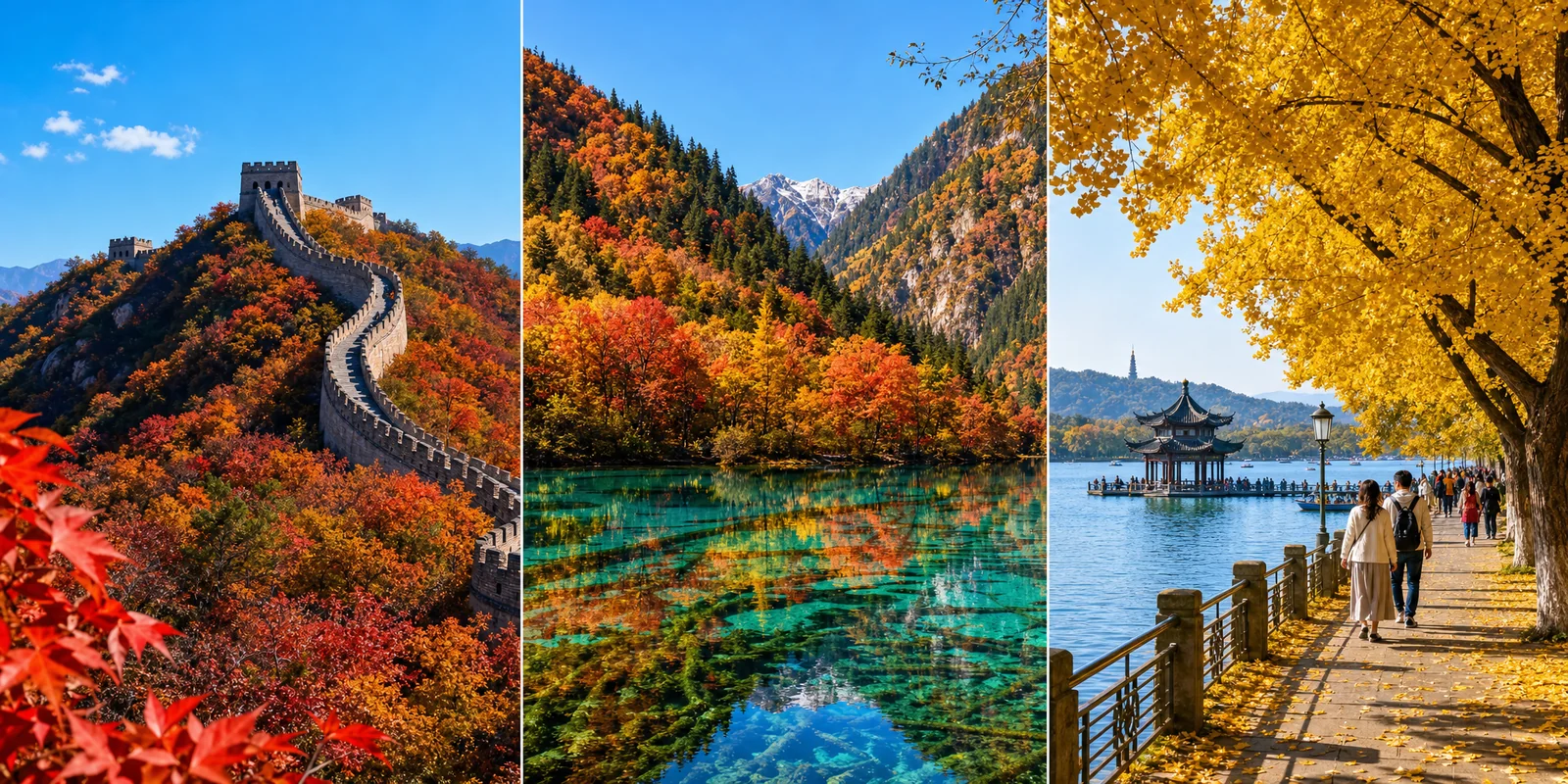
Autumn Travel in China
Autumn is arguably the best season to visit China: comfortable weather, clear skies, golden foliage, and the...
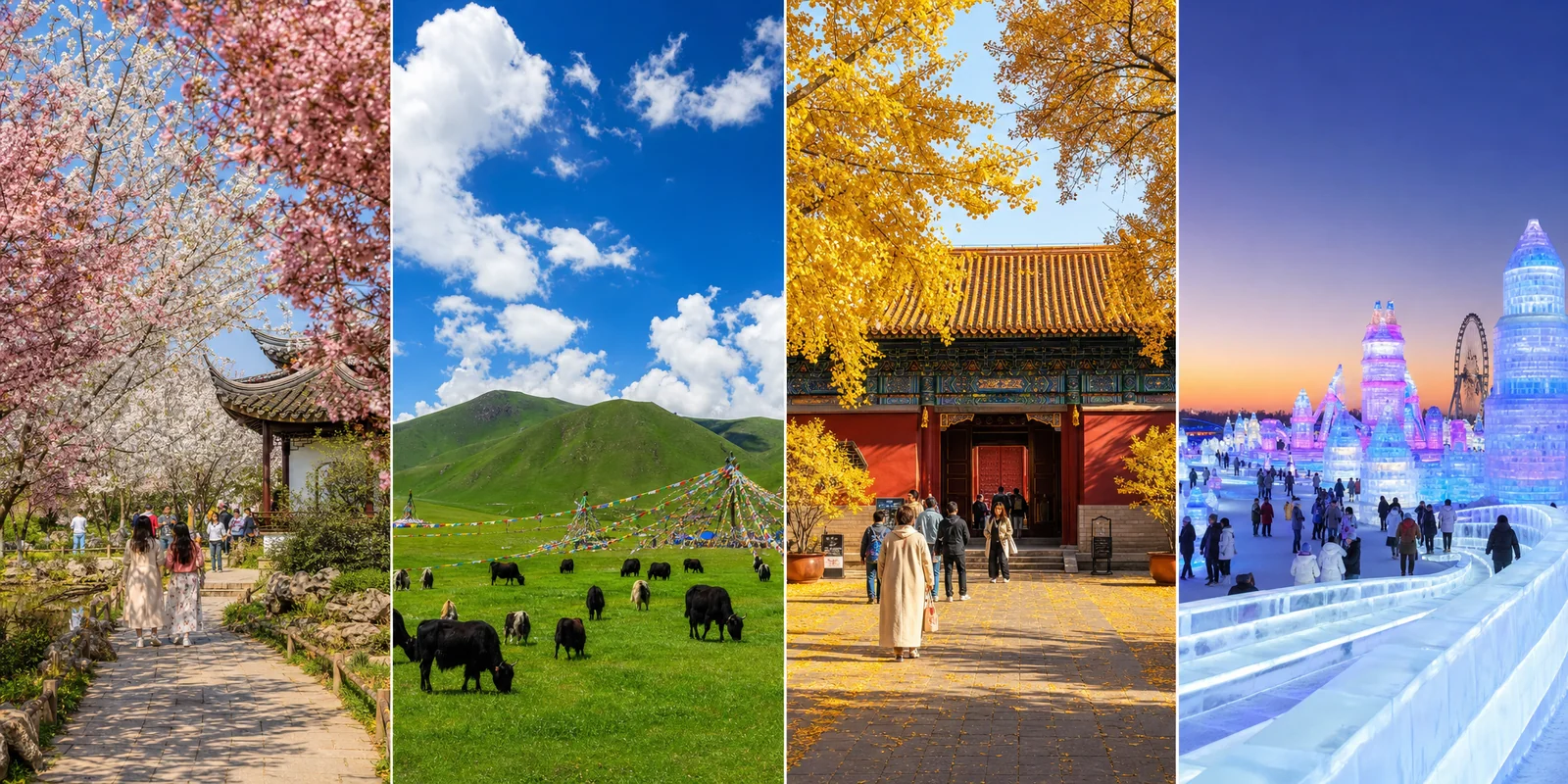
Best Time to Visit China
China spans subtropical beaches to subarctic forests, so the best time to visit depends entirely on where you're...
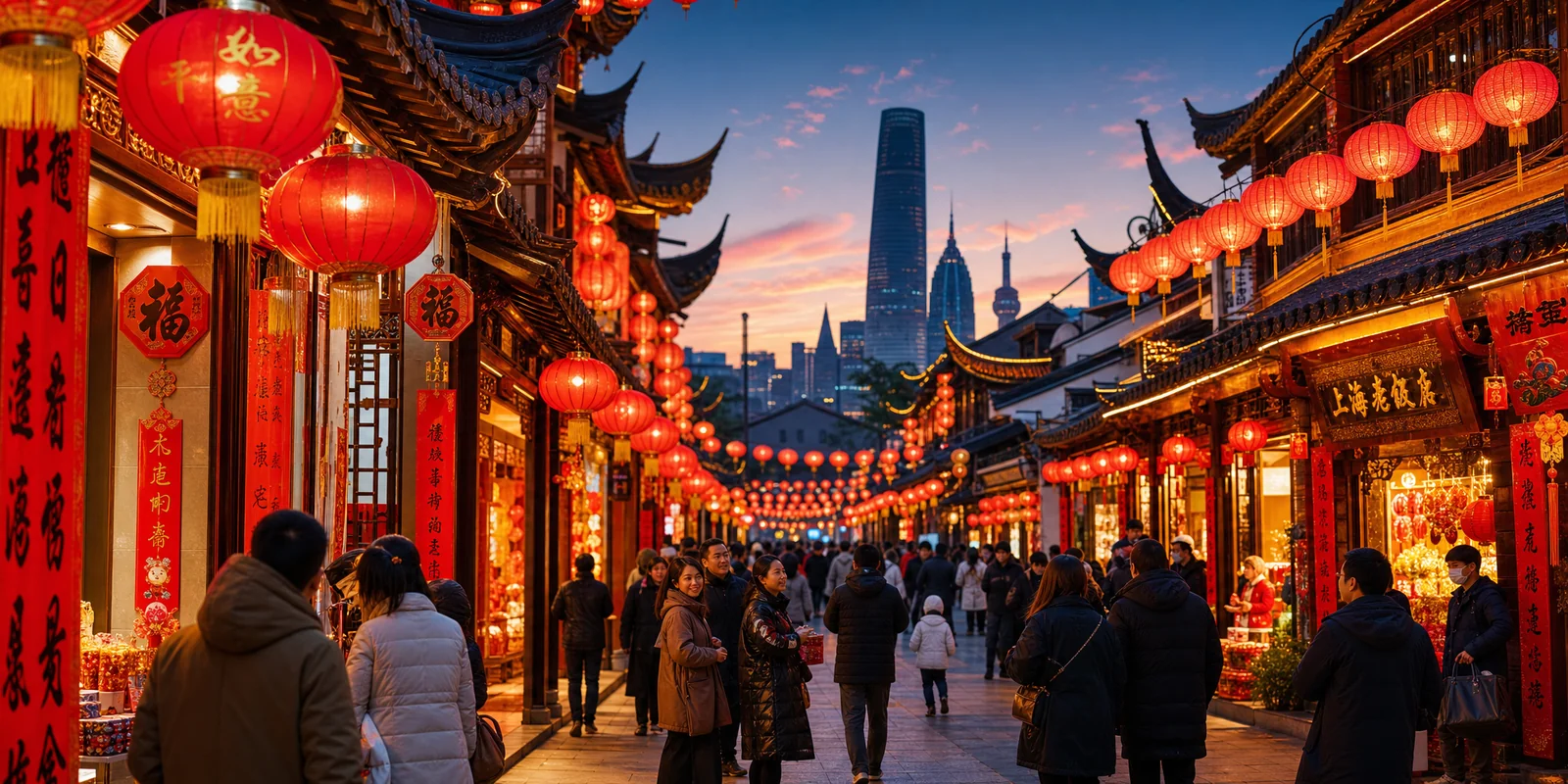
Chinese New Year Travel Guide
Traveling to China during Chinese New Year means festive cities, closed shops, and the world's largest annual...
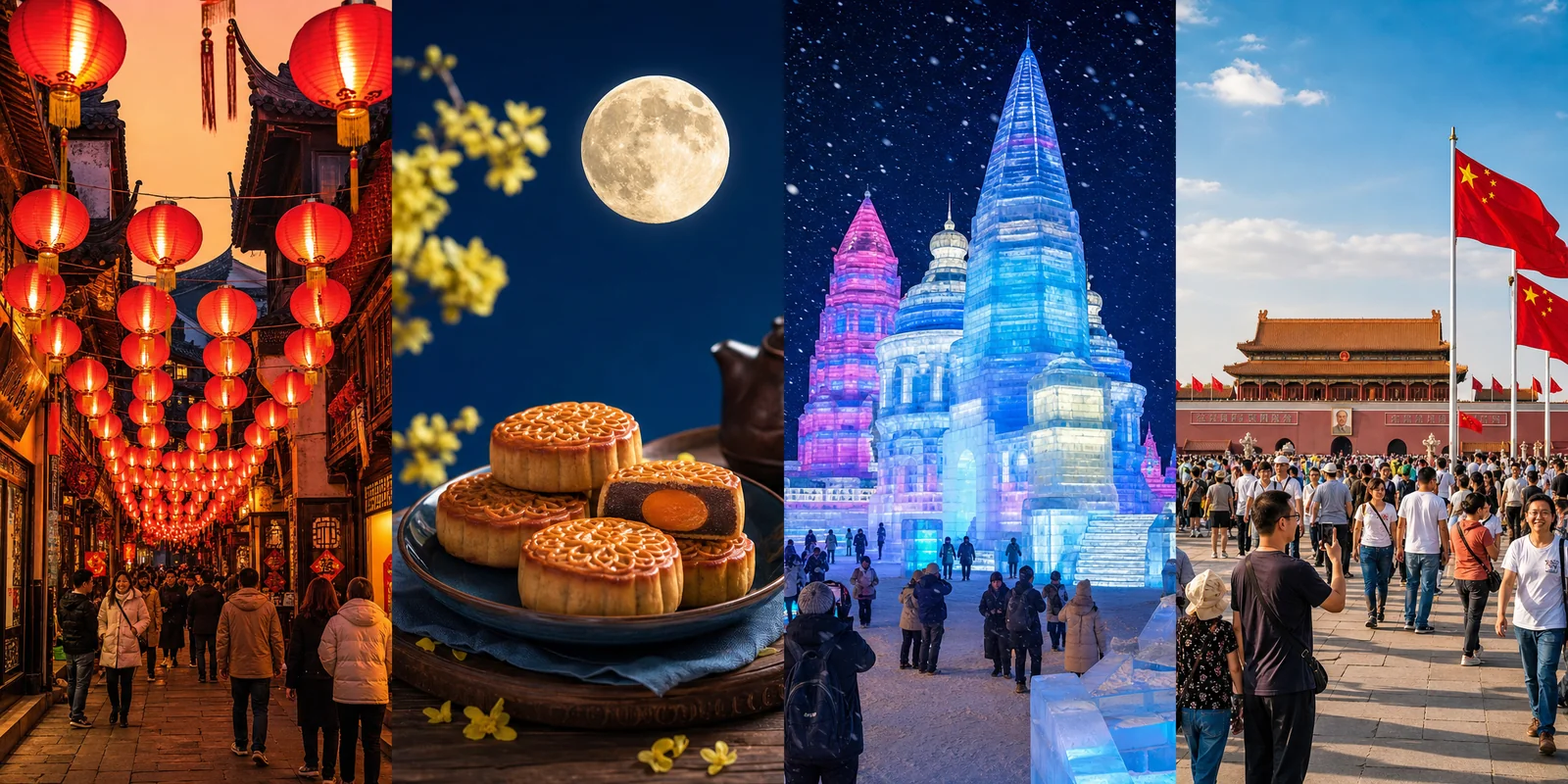
Festival Calendar: China's Holidays & Festivals Explained
China's festival calendar mixes lunar holidays with fixed public holidays. Here's when each one falls, what closes,...