

This article contains affiliate links. If you make a purchase through these links, we may earn a small commission at no extra cost to you. This helps support our work in creating free travel guides.
Book your Terracotta Army ticket online, in your own name, before you go. The site is run by the Emperor Qinshihuang's Mausoleum Site Museum (秦始皇帝陵博物院, Qínshǐhuángdì Líng Bówùyuàn), and every visitor, foreigners included, books in real name on the museum's website bmy.com.cn or one of its two official WeChat accounts; foreign visitors book with their passport details and show the original passport at the ticket gate. An adult ticket costs 120 yuan and covers both the pits and Lishan Garden, where the Bronze Chariots are. Ticket checks start at 8:30 and stop at 17:00 until 15 November, then at 16:30 from 16 November to 15 March. To get there, take metro Line 9 to Huaqingchi station and change to a local bus for the last stretch.
The short answer: booking, price, hours and getting there
- Book only on the official channels. The museum says its tickets are sold only on its own ticket website and the WeChat accounts "秦始皇帝陵博物院" (the museum's name) and "兵马俑票务在线" (Bīngmǎyǒng Piàowù Zàixiàn, "Terracotta Warriors Ticketing Online"), and that it has never authorised any third party to sell them.
- Passport is fine. Foreign visitors book with passport details and bring the original passport on the day.
- One ticket, two sites. 120 yuan for adults, the same price all year, valid for the day of your booking; it covers the Terracotta Warriors Museum with Pits 1–3 and Lishan Garden with the Bronze Chariots hall, and a free shuttle runs between them.
- Most free and discounted tickets are for Chinese citizens. Foreign adults, including those over 60, pay the full 120 yuan.
- Timed entry. Your ticket has a time slot; arrive half an hour before it.
- No weekly closing day. The museum is open every day, with special hours on big holidays.
The table below has the full set of numbers for the Terracotta Army and for Huaqing Palace, the other big sight on the same road out of Xi'an.
If you are planning your whole stay, our Xi'an travel guide covers how many days to give the city and what else needs booking.
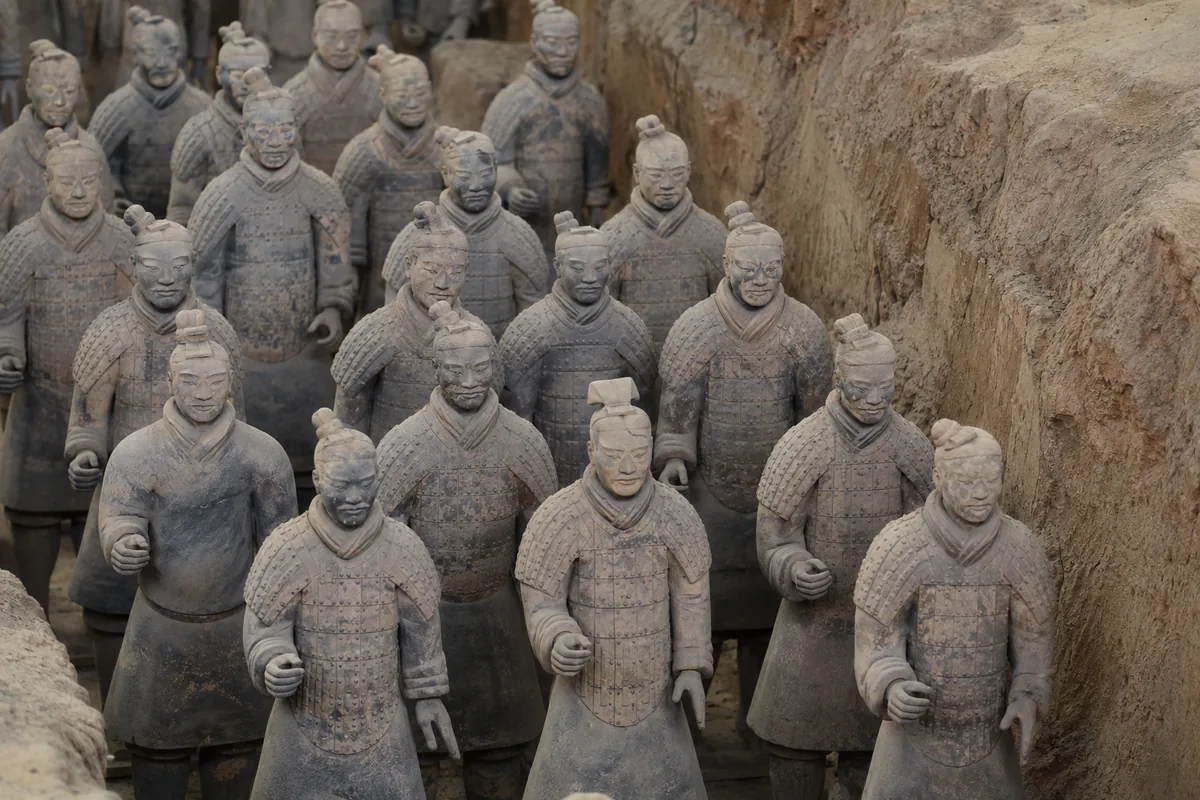
How to book with a foreign passport
The museum runs real-name online booking for everyone. Visitors from Hong Kong, Macao and Taiwan, foreign visitors and people entitled to free entry all book through the same channels: the official website bmy.com.cn or the two WeChat official accounts. Foreign visitors book with their passport details, and at the ticket gate staff check that the person, the ticket and the passport match. The museum's ticket information page has the current rules in Chinese and English.
How it works in practice:
- Pick your channel. If you have WeChat, the two official accounts are the quickest. If you do not, use the museum's website, bmy.com.cn. One trap: the "Ticket" link in the top menu of the museum's English website sends you to Trip.com, a third-party travel platform, which is not one of the official channels the museum names. Book through the ticketing section of the Chinese website or the WeChat accounts instead; the booking pages are mainly in Chinese, so a browser translation tool helps, and check which payment methods the booking page accepts before you start.
- Choose the date and a time slot. Tickets are sold in time slots and checked by time slot. An early slot gives you the quietest pits and leaves the afternoon free for Lishan Garden or Huaqing Palace.
- Enter each visitor's passport details. Type them exactly as they appear in the passport you will carry, because that passport is checked at the gate.
- Book children too. Children who are not mainland Chinese citizens and are 1.4 metres tall or under go in free, but they must be with a parent and still need to be booked in advance on the website or WeChat account.
- On the day, arrive 30 minutes before your slot with the original passport.
Changing your plans. You can cancel any time before your ticket is checked; after that it cannot be refunded. Refunds go back to the original payment method within 3–5 working days.
How far ahead to book. The museum does not publish its booking window or release time, and it lists only online channels, so do not count on buying a ticket at the gate on the day. Book one to three days ahead, and earlier for holidays and the busy season; your date may open later than you expect, so keep checking the booking page until it appears. On busy holidays the museum has released tickets in several batches a day: for the May Day holiday in 2023, it opened booking early and released tickets three times a day, at 10:00, 15:00 and 20:00. Around Chinese public holidays, book the moment you can, and read our Golden Week guide if your dates touch the October holiday week.
If your date is sold out. The site takes up to 65,000 visitors a day, and once that limit is reached ticket sales stop. Your options:
- Check again later. Other visitors can cancel up to the moment their ticket is checked, so look at the booking page again the evening before and the morning of your visit.
- Swap days. Move the Terracotta Army to another day of your trip and put a city sight in its place. Our 2-day Xi'an itinerary shows how the days fit together.
- Call the ticket line. The museum's ticket enquiries number is +86 29 8139 9127.
- Do not buy from a tout. A ticket is tied to one passport and checked against it at the gate, so a ticket bought from someone else will not get you in.
Touts, fake "official" tours and other sellers
In June 2025 the museum put out a public statement: the only official places to buy tickets are its ticket website and the two WeChat accounts; it has never authorised any other platform, channel or company to sell tickets; and its official ticket platform does not bundle any extra paid service with the ticket. It asked visitors not to buy elsewhere, and said that unauthorised sales and bundled sales can be reported on +86 29 8139 9174.
What this means for you:
- If a website or app asks you to pay more than the ticket price for "ticket plus transfer" or "ticket plus guide", that bundle is not coming from the museum.
- If a link on any site, even one that looks like the museum's, sends you to a travel agency or a booking app to buy the ticket, that is not one of the three channels the museum named. Go back to bmy.com.cn and book there.
- People near Xi'an's railway stations or on the street outside the museum who offer a cheap "official" bus or day tour, or a "ticket that skips the queue", are not working for the museum. Say no and walk on.
Tickets, discounts and opening hours
Price. An adult ticket costs 120 yuan, with no high-season or low-season difference. The ticket is valid all day on the date you booked and is scanned up to three times. You do not need a second ticket for the Bronze Chariots.
Discounts, and who actually gets them. Most of the museum's free and half-price tickets are written for Chinese citizens:
- Free entry for visitors aged 65 and over, and for under-16s with a guardian, applies to Chinese citizens only.
- The half-price student ticket, 60 yuan, is for full-time Chinese students up to undergraduate level. A foreign student card does not count here.
- Foreign adults, including visitors over 60, pay the full 120 yuan.
- The one discount written for foreign families: children who are not mainland Chinese citizens and are 1.4 metres or under go in free, booked in advance and with a parent.
Do not assume other sights work the same way. China has no national rule on concessions for foreign visitors; each site decides, and some do include foreigners — Huaqing Palace, for example, gives half price to international students studying in China.
Opening hours. The museum switches seasons in mid-March and mid-November:
- 16 March to 15 November: ticket checks from 8:30, last check at 17:00, museum closes at 18:30.
- 16 November to 15 March: ticket checks from 8:30, last check at 16:30, museum closes at 18:00.
The last ticket check is the time that matters. If you arrive after it you are not let in, even with a booking. And because Lishan Garden needs its own hour and a half after the pits, a slot after about 13:00 makes the full visit tight, especially in winter. There is no fixed weekly closing day, but hours change on major holidays, so check the latest notice on the museum's website before a holiday visit.
Getting there from Xi'an
The Terracotta Army is in Lintong (临潼, Líntóng), east of Xi'an. There are four sensible ways to get there.
Metro Line 9 and a local bus (the museum's recommended route)
Take metro Line 9 to Huaqingchi (华清池, Huáqīngchí) station and leave by exit C. Walk about 200 metres to the Huaqingchi bus stop and take Lintong bus 613 to "秦俑村" (Qínyǒng Cūn, Terracotta Village) or Lintong bus 602 to "秦兵马俑" (Qín Bīngmǎyǒng, Terracotta Warriors).
Getting onto Line 9 from the main stations:
- From Xi'an North (the high-speed station): Line 2 to Beidajie, change to Line 1 to Fangzhicheng, then change inside the station to Line 9.
- From Xi'an Railway Station (the old station by the city wall): Line 4 to Wulukou, change to Line 1, then change to Line 9 at Fangzhicheng.
Paying for the metro: you cannot tap a foreign bank card at the gates. Alipay and WeChat transit QR codes work, and ticket machines take cash, WeChat Pay and Alipay. A handful of stations, Huaqingchi among them, have a staffed service desk where you can buy a ticket with a foreign card. Our China metro guide walks through setting up the transit QR code.
This is the route we would pick for most first-timers. The metro part is easy to follow and it drops you right at Huaqing Palace, which is useful if you are combining the two. The bus part is short. The museum's own page puts the whole trip from Xi'an airport at about 2.5 hours, so from the city centre it is less.
Tourist Bus 5 (route 306) from Xi'an East Railway Station
Since 29 August 2026, Tourist Bus 5, also numbered 306 (游5, Yóu 5), runs from Xi'an East Railway Station (西安东站) to the Terracotta Army — a different station from both Xi'an North, the main high-speed station, and the old Xi'an Railway Station. The route is 45 kilometres with 28 stops, passing Fangzhicheng hub, Huaqingchi and Lintong Dongguan, and buses run from 7:00 to 19:00. It no longer goes past the old Xi'an Railway Station; many older guides still send you there, so ignore them.
Tickets are sold by a conductor on board and you cannot tap a transport card. Ask the conductor the fare and have some cash ready in case QR payment is not taken. Bus 306 is also left out of Xi'an's bus–metro transfer discount.
With 28 stops over 45 kilometres, it is a slow ride, so check the journey time with the driver or a map app before you rely on it. Use Bus 5 if you are staying near Xi'an East station or Fangzhicheng, or if you want one seat all the way. It is also the easy link between Huaqing Palace and the Terracotta Army, because it stops at both.
The Terracotta Army shuttle from Tonghuamen
The museum's website also lists the "兵马俑景区直通车" (Terracotta Army scenic area direct bus). Take metro Line 3 to Tonghuamen (通化门, Tōnghuàmén), leave by exit D on the north-east side, and walk about 310 metres to the Qinfeng (秦风) bus terminal, where the direct bus goes to the museum's own bus stop. Confirm the fare and timetable at the terminal before you plan around it, as the museum's page lists the route only. It suits you if you are staying near Line 3 in the north-east of the city.
Taxi or DiDi
For two or three people, a car is the least effort and the quickest: it is about 40 minutes by expressway from the city to Huaqing Palace and about 15 minutes more on to the Terracotta Army, so roughly an hour from central Xi'an in normal traffic. You are dropped at the museum's car park and the free shuttle to Lishan Garden leaves from there. Xi'an taxis run on a meter, with long-distance and toll charges paid by the passenger, so it costs more than the bus; the DiDi app shows you the estimated fare before you book. Our DiDi guide explains how to set it up in English.
Coming back
Plan the return before you go in. Bus 5 runs until 19:00, but check with the conductor which end that last bus leaves from. If you stay for the evening show at Huaqing Palace, you will be on the metro late; check the last Line 9 train back on our Xi'an last-train times page. For metro routes and your day plan on your phone without data, the WaysChina app is our offline metro and trip-planning helper for 10 Chinese cities, Xi'an included.
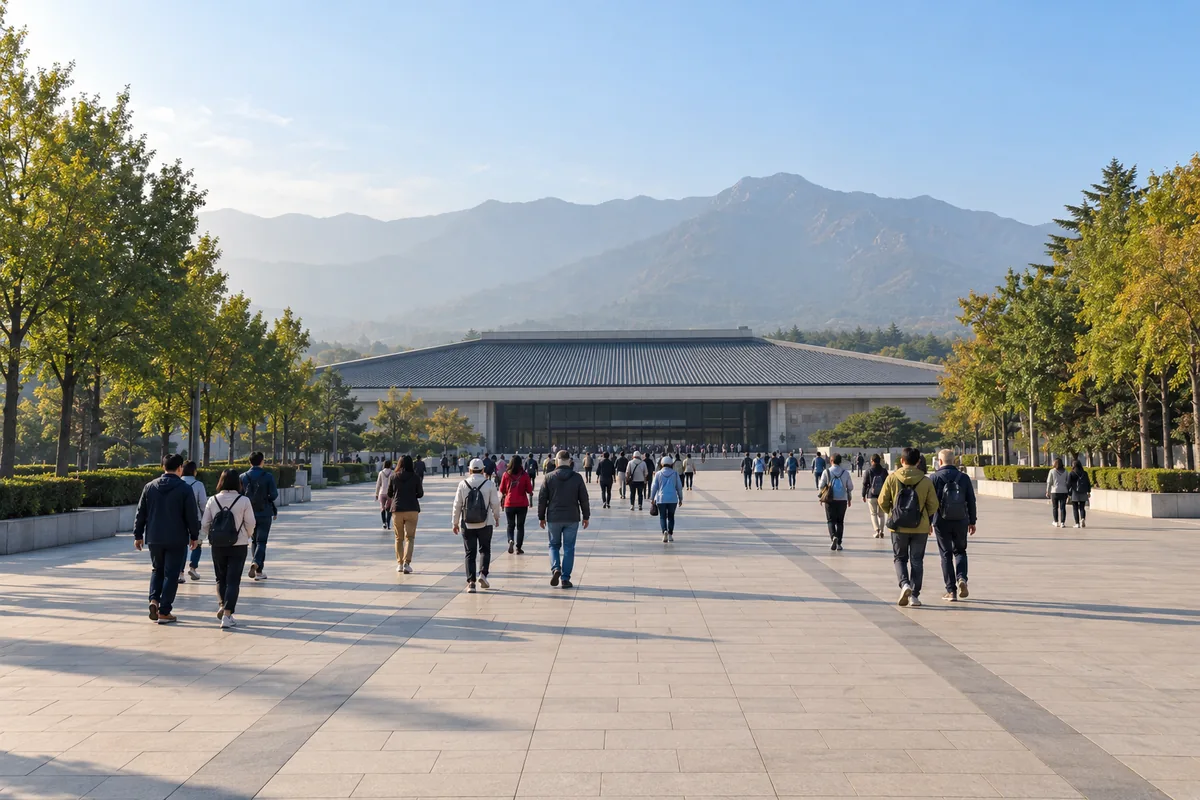
Inside: the three pits, the Bronze Chariots and Lishan Garden
Your ticket covers two separate sites. The Terracotta Warriors Museum holds Pits 1, 2 and 3 and the exhibition halls. Lishan Garden (丽山园, Lìshān Yuán), the Qin Mausoleum archaeological park, is where the emperor's tomb mound and the Bronze Chariots hall are. The museum suggests about 1.5 hours for each site, with a free shuttle between them.
Getting in. Go through security, then the ticket gate at your time slot. The museum runs a one-way route through the pits, and the north gate is its only entrance. Follow the signs and do not expect to walk back the way you came.
The order to see the pits. The museum's recommended order is Pit 1, then Pit 3, then Pit 2, and after that the Bronze Chariots hall. The Bronze Chariots hall is in Lishan Garden, so that last step means leaving the museum area and taking the free shuttle. Plan on about 1.5 hours for the pits and another 1.5 hours for Lishan Garden.
- Pit 1. The big one, and the picture everyone knows. It covers 14,260 square metres and holds an estimated 6,000 clay soldiers and horses; more than 500 life-size soldiers, 24 horses and 6 wooden chariots have been dug out so far. You walk along the edge of a huge covered hall and look down onto long earth corridors full of soldiers in rows. Take your time and walk the whole way round the hall: the view changes from the front rows to the sides.
- Pit 3. Small, about 520 square metres, and thought to be the command post for the other two pits. It is the only pit that was not burned, so more of the original paint survives on its figures. Ten minutes is enough.
- Pit 2. About 6,000 square metres, L-shaped, with crossbowmen, cavalry, infantry and chariots grouped in four units; it holds 939 figures, 472 horses and 89 chariots.
- The exhibition halls. If you have time before leaving the museum area, the galleries put the pits in context and show smaller finds.
The Bronze Chariots are not in the pits. The two large painted bronze chariots, dug up in 1980 on the west side of the tomb mound, are shown in the Bronze Chariots hall inside Lishan Garden. Many visitors leave without them because they think they have seen everything. After the pits, walk out to the Terracotta Army car park and take the free shuttle bus to Lishan Garden; it is the same ticket.
Electric carts. Inside both sites there are electric carts that cost extra: 5 yuan per person from just inside the first ticket gate at the museum (east side), and 15 yuan per person from just inside the Lishan Garden ticket gate (west side). Lishan Garden is a large park, so the cart is worth it if you are tired after the pits.
How long it takes. About three hours on site in total — roughly 1.5 hours at the pits and 1.5 hours at Lishan Garden — plus the shuttle and queues. Add the trip from Xi'an each way, and the Terracotta Army takes most of a day. Pick an early slot.
Guides, audio guides and who to ignore
Do you need a guide? A good guide turns rows of figures into a story about who made the army, why, and how it was found. If you care about the history, it is worth it. If you mostly want to see Pit 1 with your own eyes, you can do without.
The museum has its own official guides. A premium guided tour for a group of 1–5 people through Pits 1–3 and the Qin Mausoleum archaeology exhibition takes 90–120 minutes and costs 300 yuan per group in Chinese or 500 yuan per group in a foreign language. A longer tour of the mausoleum, the K9901 and K0006 pits and the Bronze Chariots museum takes 120–150 minutes and costs 450 yuan per group in Chinese or 750 yuan per group in a foreign language. Large groups can book a group guide instead: 30 yuan per person in Chinese with at least 30 people, or 50 yuan per person in a foreign language with at least 20 people. The fee includes the guide and the audio receiver set. You book at the information desk at Pit 1, or by phone on +86 29 8139 9047 or +86 29 8139 9048.
For a family or a couple, the 1–5 person price works out well, because you pay per group, not per person. The museum's price list says "foreign language" without naming which ones, so if you need a language other than English, call the booking number a day ahead and confirm it is available. For a self-guided audio player on its own, ask at the same Pit 1 desk.
Private tours. If you would rather have a guide meet you at your hotel and handle the transport, a small-group or private tour from GetYourGuide or Klook is the easy option. Book the tour, not the ticket, through them: the museum says only its own website and WeChat accounts sell tickets, and a tour does not guarantee you a time slot. Before paying, ask the company whether it books your real-name ticket on the museum's system or expects you to do it.
Who to ignore. People outside the gate or at the bus stop who say they are "official guides" and offer to walk you in are not museum staff. Official guides are booked at the Pit 1 information desk inside, at the published price.

Adding Huaqing Palace on the same day
Huaqing Palace (华清宫, Huáqīng Gōng), the old imperial hot-spring palace at the foot of Mount Li (骊山, Lí Shān), is on the same tourist road in Lintong, about 15 minutes' drive from the Terracotta Army, and its official site suggests seeing both on the same day. Its west gate is a 3–5 minute walk from exit B or C of Huaqingchi metro station on Line 9, and Bus 5 (306) stops at Huaqingchi too.
Tickets and hours. Huaqing Palace has its own ticket: 120 yuan full price, valid for two days from the date you buy it, with re-entry allowed and one ticket per ID per day. It is open 7:30–17:30, with the last tickets sold and last entry at 17:00, and hours can change with the season, so check the latest notice on its official English website. If you want to go up Mount Li as well, allow 2–3 hours for that part alone.
How we would order the day.
- Terracotta Army first. Book a slot around 9:00, do the pits and then Lishan Garden, and have lunch near the museum. In the afternoon take a taxi or Bus 5 to Huaqingchi, see Huaqing Palace before its 17:00 last entry, and walk to the Line 9 station to head back. This order puts the sight you booked first, when you are fresh and the pits are less crowded.
- Huaqing Palace first. Its gates open at 7:30, and on holidays and in summer its official advice is to arrive before 8:00. Spend the morning there, then go on to the Terracotta Army on an early-afternoon slot. Watch the last ticket check: 17:00 until 15 November and 16:30 after that, which leaves little time for Lishan Garden on a short winter afternoon.
The evening show. The Song of Everlasting Sorrow (长恨歌, Chánghèn Gē) is an outdoor show staged at Huaqing Palace's Nine-Dragon Lake. It currently runs four times a night, at 18:30, 19:55, 21:20 and 22:45, for about 65 minutes; the palace has announced it will not be performed from 1 December 2026 and will return on 25 December. Show tickets are sold separately from the palace ticket and you do not need a palace ticket to watch; seats range from 249–299 yuan at the sides to 988 yuan for the best VIP seats, with the first show of the night the most expensive. Show tickets are real-name and cannot be refunded or changed; on the day, after 15:00, you collect your seat voucher with your passport at the east gate ticket office. The 18:30 show may leave time for the metro — check the last Line 9 train on the last-train page — the later shows finish late (the last one close to midnight), so for those plan on a taxi back.
For other trips out of the city — Mount Hua, Famen Temple and the imperial tombs — see our Xi'an day trips guide.
Rules at the gate
Bring the original passport you booked with. Security stops a long list of items, including lighters, knives and other weapons, toy guns, drones and kites, loudspeakers, professional video equipment, self-balancing scooters, bicycles and scooters, and pets. Bags can be left for free at the left-luggage office behind the LED screen wall on the east side of the ticket hall, but it will not take valuables such as cash, phones, laptops, documents or jewellery, or drinks and cooked food. Phone and ordinary photos in the pits are normal; follow any sign or staff instruction, and keep the flash off around the painted figures.
A short history
The pits are part of the burial complex of Qin Shi Huang (秦始皇, Qín Shǐhuáng), the first emperor to unify China. Villagers digging a well near Xiyang Village in Lintong found the first pit in March 1974; the Terracotta Warriors Museum opened on 1 October 1979; and on 11 December 1987 UNESCO added the Mausoleum of the First Qin Emperor, including the pits, to the World Heritage List. The Pit 3 exhibition hall opened in September 1989. For how the Terracotta Army compares with China's other ancient sites and museums, see our historical sites guide and our museum guide.
Frequently asked questions
How do foreigners book Terracotta Army tickets?
Book online in real name on the museum's website bmy.com.cn or its WeChat accounts "秦始皇帝陵博物院" and "兵马俑票务在线", using your passport details, and bring the original passport to the gate. These are the only official channels; the museum has not authorised any third party to sell tickets. Choose a time slot and arrive 30 minutes before it.
Do I need a guide for the Terracotta Army?
No, but it helps if you want the history. The museum's official guides are booked at the Pit 1 information desk or by phone; a 90–120 minute tour of the three pits for a group of 1–5 people costs 500 yuan in a foreign language. Ignore anyone outside the gate offering to be your "official" guide.
What is the easiest way to get from Xi'an to the Terracotta Army?
For most visitors: metro Line 9 to Huaqingchi, exit C, then Lintong bus 613 or 602 for the last stretch. Tourist Bus 5 (306) goes all the way from Xi'an East Railway Station, and a taxi or DiDi is the least effort for a small group.
How long do you need at the Terracotta Army?
About 1.5 hours for the pits and another 1.5 hours for Lishan Garden and the Bronze Chariots. With the trip from Xi'an and back, plan on most of a day, or a full day if you add Huaqing Palace.
Before you go
Book on bmy.com.cn or the museum's WeChat accounts with your passport, pick an early time slot, and check the season: last ticket check at 17:00 until 15 November and 16:30 after that. On the day, carry the original passport, take Line 9 to Huaqingchi and the bus on, or Bus 5 from Xi'an East. See the pits in the order 1, 3, 2, then take the free shuttle to Lishan Garden for the Bronze Chariots. Decide before you go whether you want an official guide, and add Huaqing Palace in the afternoon if you have the energy.
Last updated: October 2026
Fact-checked sources
- Official bmy.com.cn 7 pages
- Official Guangming Online
- Official wuhouci.net.cn
- Official tangparadise.cn
- Official drc.xizang.gov.cn
- Official hqpalaceglobal.com 4 pages
- Official Tencent News 3 pages
- m.cnwest.com
Show 2 more sources
- Official jtyst.shaanxi.gov.cn
- Official xasjj.xa.gov.cn
Last verified: 2026-10-30
Read in other languages
Getting to the sights by metro
Terracotta Army Museum
UNESCO site with 8,000 life-size warriors guarding Emperor Qin Shi Huang's tomb.
- Huaqing Pool
Xi'an City Wall
14km Ming-era city wall, fully circumnavigable on foot or rented bicycle.
- Yongningmen
- North Avenue
- Bell Tower
Bell Tower & Drum Tower
Ming-era twin towers at the city's heart, bracketing the Muslim Quarter.
- Bell Tower
Muslim Quarter (Hui Min Jie)
Halal food street with lamb skewers, biang-biang noodles and roujiamo since the Tang dynasty.
- Bell Tower
- North Avenue
Big Wild Goose Pagoda
Tang-era 7-story pagoda built by Xuanzang to house Buddhist sutras from India.
- Great Wild Goose Pagoda
Shaanxi History Museum
Top museum for Tang-era treasures and Silk Road artifacts; book ahead online.
- Great Wild Goose Pagoda
- Xiaozhai
Small Wild Goose Pagoda
Tang-era 13-story pagoda paired with the Xi'an Museum (free entry).
- Nanshaomen
- Wenyi Road
Tang Paradise (Datang Furong Park)
Tang-themed cultural park with nightly water-screen movie and palace re-creations.
- TangParadise
Tang Eternal City (Datang Everbright City)
Tang-themed pedestrian street with viral 'Living Statue Lady' street performance.
- Datang Everbright City
- Great Wild Goose Pagoda
Forest of Stelae Museum (Beilin)
World's largest collection of stone tablets — 11,000+ inscriptions, calligraphy treasury.
- Yongningmen
- Bell Tower
Huaqing Palace Hot Springs
Tang-era imperial hot springs and site of Yang Guifei's bathing chamber.
- Huaqing Pool
Datang West Market Museum
Reconstructed Tang-dynasty Silk Road market, with archaeology museum below.
- Datangxishi
Xi'an North Railway Hub
Massive high-speed rail hub linking Xi'an to all of central China.
- Xi'an North Railway
Xi'an Xianyang International Airport
Northwest China's main international airport (XIY); located 30 km northwest of central Xi'an.
- Airport
- Airport West
Xi'an metro: last train times by station
Every line and station, checked by hand — the same data behind our offline route planner.
Get the WaysChina App
Offline guides, currency converter, essential phrases, and more — all in your pocket.

Related Articles

Xi'an Travel Guide: How Many Days, Terracotta Army Booking and Getting Around
How many days Xi'an needs, how to book the Terracotta Army and the Shaanxi History Museum with a passport, where to...
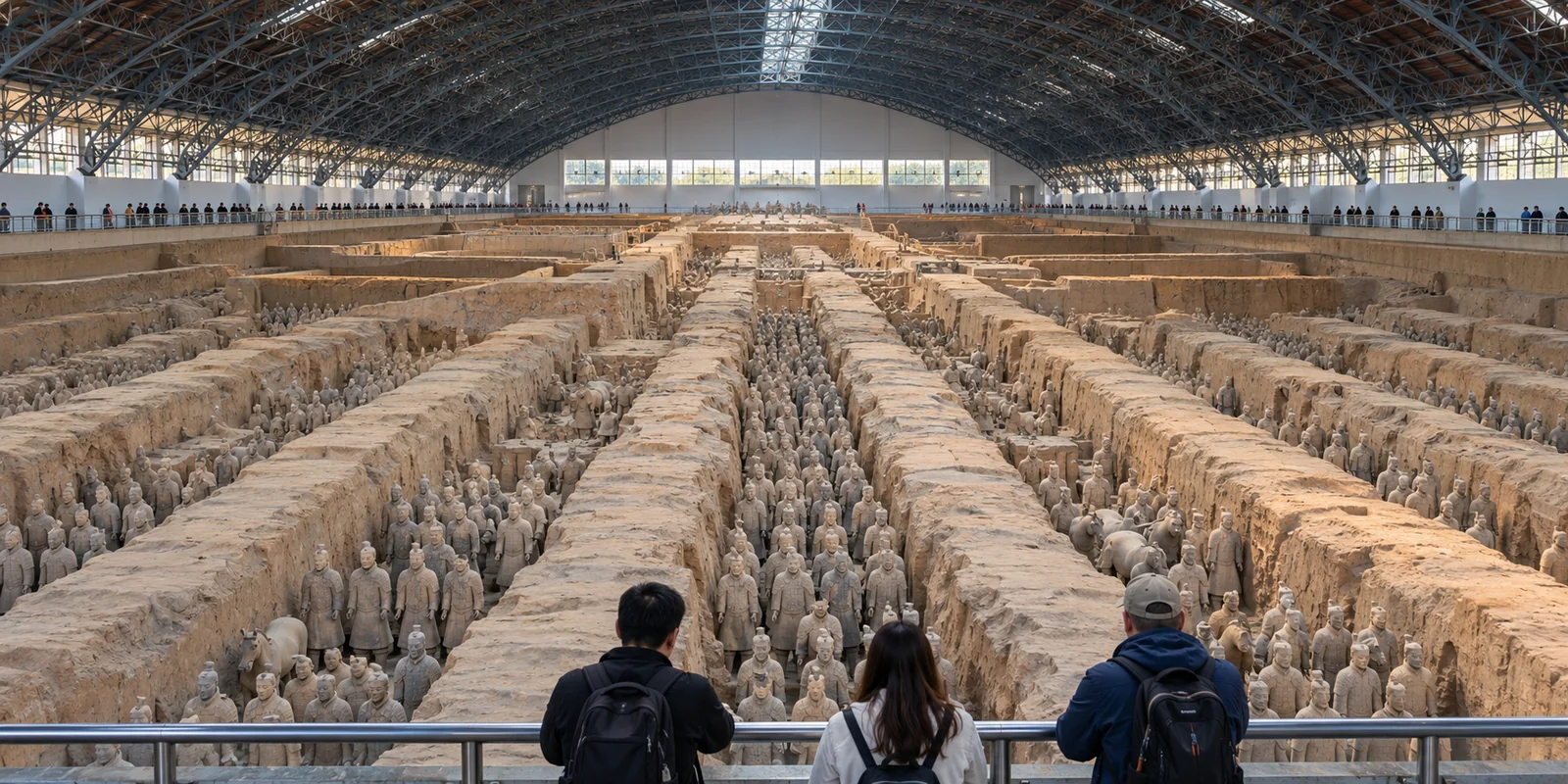
2 Days in Xi'an: A Day-by-Day Itinerary from the Terracotta Army to the City Wall
Two days in Xi'an in route order: the Terracotta Army at opening and Huaqing Palace, then the museum, pagoda, City...

Xi'an Day Trips: Mount Hua, Famen Temple and the Imperial Tombs
Mount Hua, Famen Temple, Hanyangling or Qianling: which day trip from Xi'an to pick, how to book Mount Hua and its...
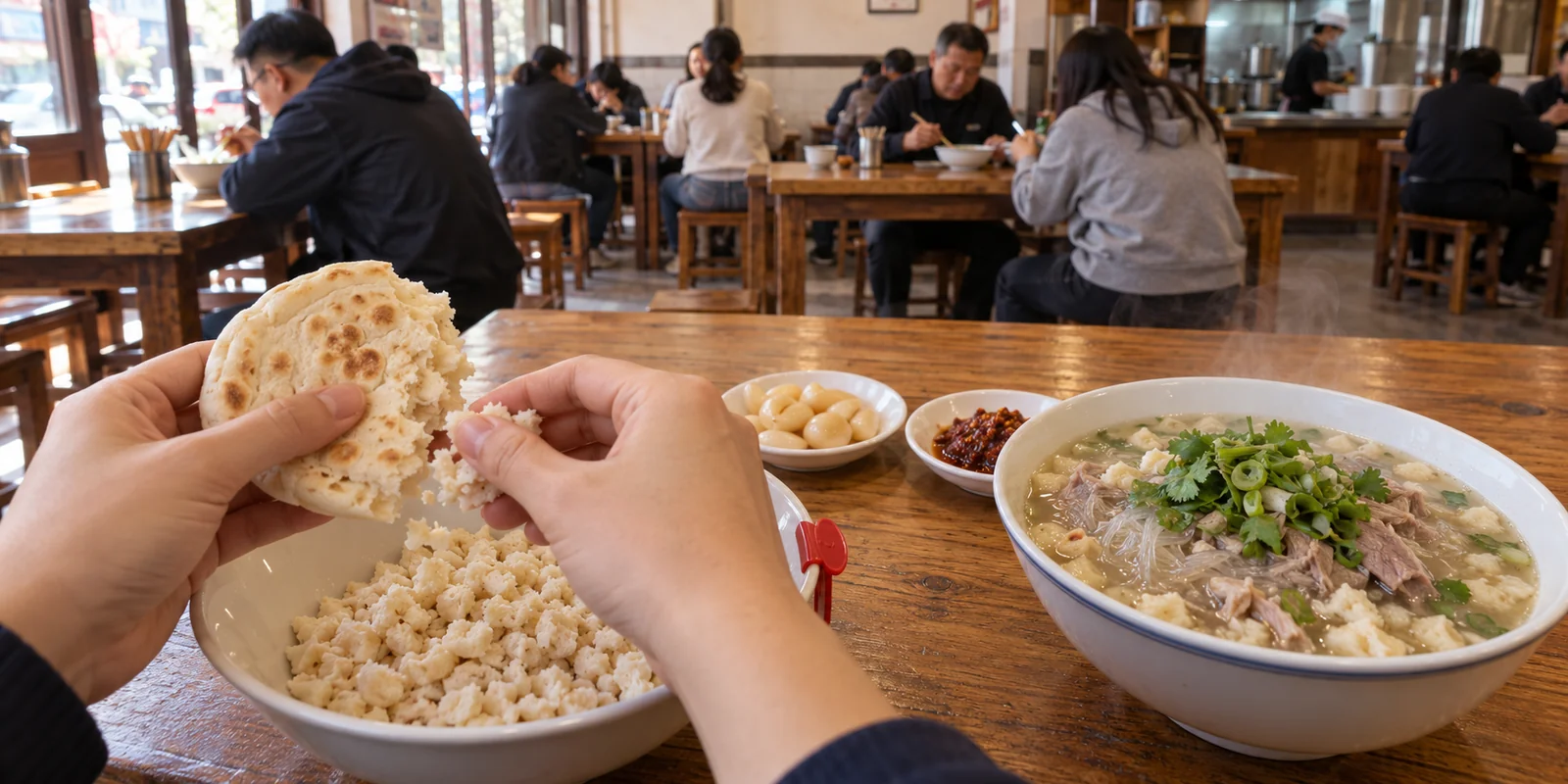
Xi'an Food Guide: Paomo, Roujiamo, Noodles and Where to Eat Them
How to tear bread for lamb paomo, pork vs halal beef roujiamo, biangbiang and oil-splashed noodles, which streets...