
This article contains affiliate links. If you make a purchase through these links, we may earn a small commission at no extra cost to you. This helps support our work in creating free travel guides.
China's best museums are world-class, and most of them are free. The catch is that "free" almost always means you need to reserve a timed entry slot in advance, usually through a Chinese-language mini-program or website. Show up without a booking at the National Museum of China or the Shanghai Museum and you'll likely be turned away at the gate, especially on weekends and holidays. This guide covers the museums worth your time across the country, what makes each one special, and the practical steps — reservations, passport rules, free-ticket logistics — that trip up most foreign visitors.
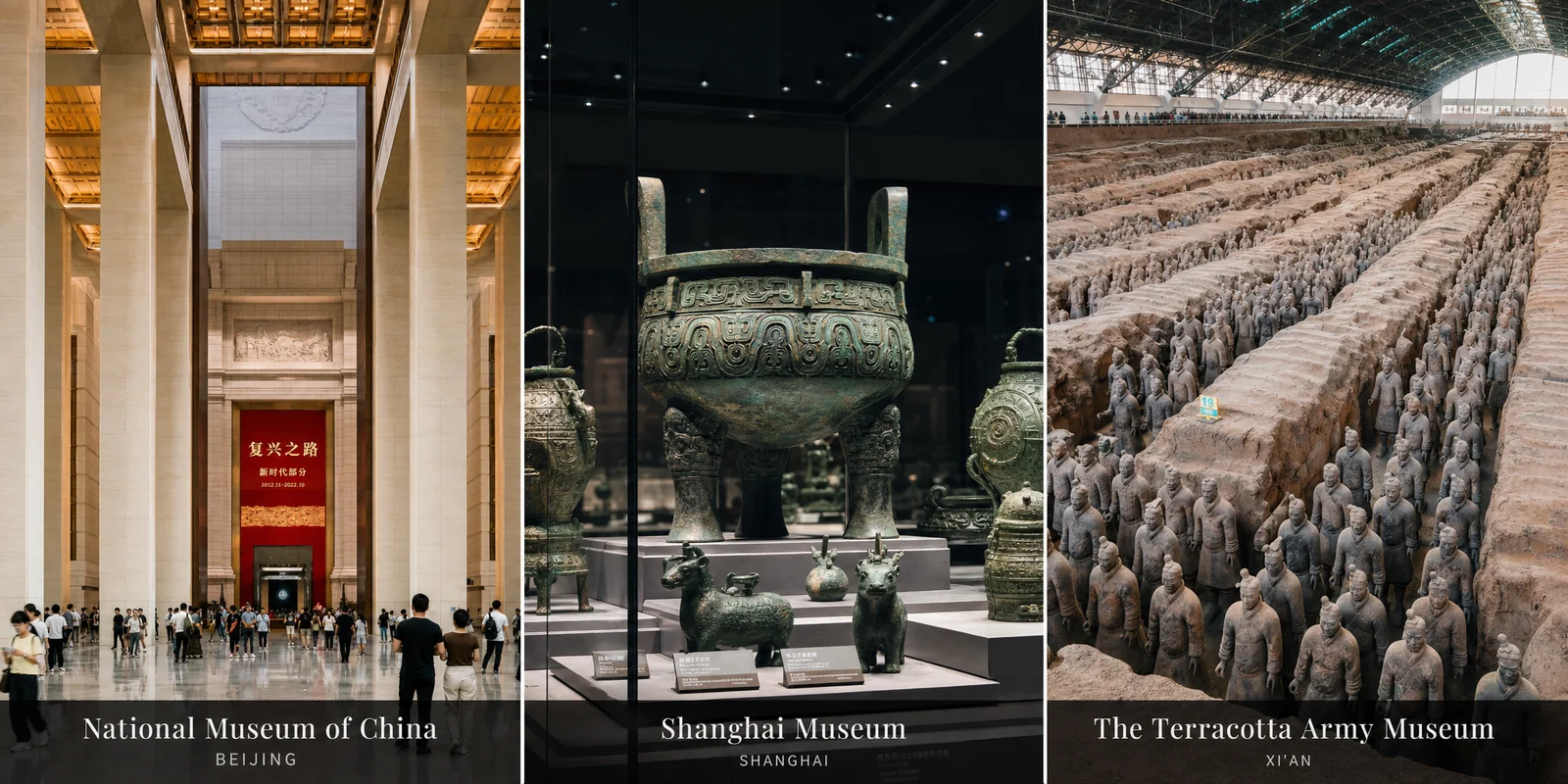
Before You Go: How Museum Reservations Work in China
This is the single most important thing to understand, so we're putting it first. The vast majority of major public museums in China are free of charge but require advance booking. They release a fixed number of timed-entry tickets per day, and popular museums sell out days — sometimes a week or more — in advance.
Reservations are almost always made through a museum's official WeChat (微信, Wēixìn) mini-program or its website. You'll need to enter your passport details, and when you arrive, you scan your passport or a QR code at the entrance. The booking systems are predominantly in Chinese, so a translation app helps. If you've set up WeChat before your trip, the process is much smoother.
You'll always need your physical passport to enter — the name on your booking must match. Children usually need their own reservation tied to a passport too, even when entry is free. For help getting WeChat working before you arrive, see our WeChat Setup Guide.
The Big National Institutions
National Museum of China (Beijing)
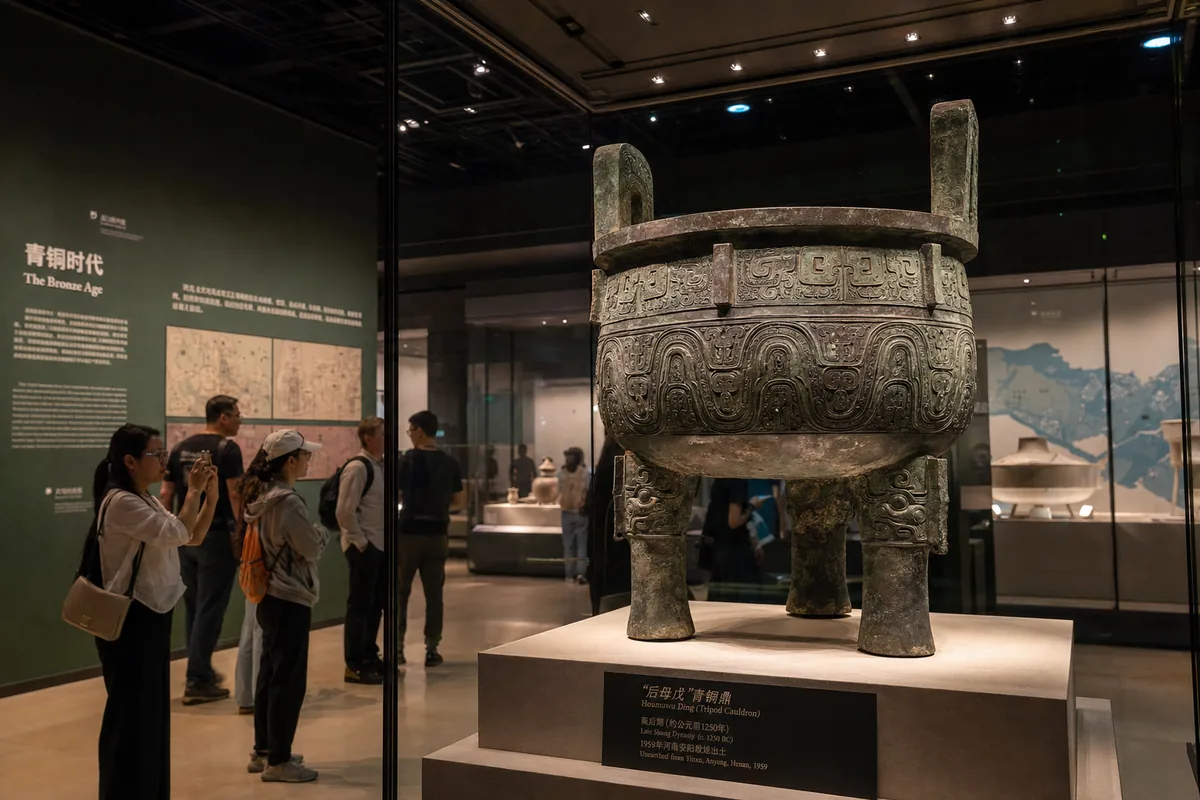
Sitting on the east side of Tiananmen Square, the National Museum of China (中国国家博物馆, Zhōngguó Guójiā Bówùguǎn) is the largest museum in the country and one of the most visited in the world. Its permanent "Ancient China" exhibition walks you through the full sweep of Chinese civilization — from prehistoric pottery and oracle bones to Bronze Age ritual vessels, Tang dynasty figurines, and imperial-era treasures. The bronze collection alone is worth the trip.
Entry is free, but reservation is essential and competitive — this is one of the hardest tickets in Beijing. Book through the museum's official channels as soon as your travel dates are set. Note that getting onto Tiananmen Square itself also requires a separate booking and a security check, so plan the logistics together.
The Palace Museum / Forbidden City (Beijing)
The Palace Museum (故宫博物院, Gùgōng Bówùyuàn) is both a museum and the imperial palace complex of the Ming and Qing dynasties. The ticket covers the grounds and most halls; certain special galleries (like the Treasure Gallery and the Clock Gallery) carry a small extra charge. It is not free, but it's inexpensive, and it is one of the most extraordinary sites in China.
Tickets are released in limited daily batches and sell out fast. Book on the official Palace Museum platform 7 days ahead. Plan for at least half a day — the complex is enormous, and you'll walk several kilometers. Wear comfortable shoes and bring water.
Shanghai Museum (Shanghai)
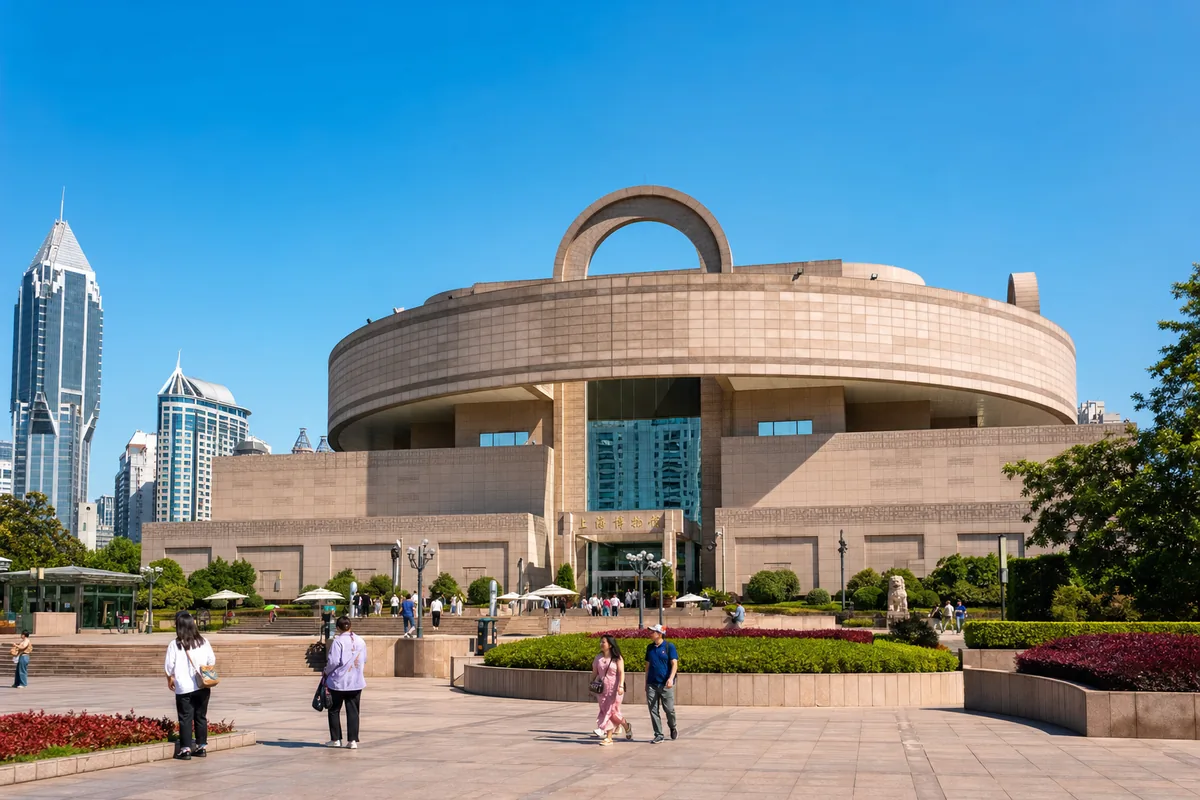
The Shanghai Museum (上海博物馆, Shànghǎi Bówùguǎn) is China's premier museum of ancient Chinese art. Its strengths are bronzes, ceramics, calligraphy, painting, jade, and ancient coins — the ceramics and bronze galleries in particular are among the best anywhere. The original building sits on People's Square, while a much larger second branch, the Shanghai Museum East in Pudong, has opened with expanded space.
Both are free with advance reservation. The East branch is newer, less crowded in some galleries, and worth considering if the People's Square site is fully booked. Either way, reserve ahead through the official channels.
For History: Where the Past Comes Alive
Shaanxi History Museum & the Terracotta Warriors (Xi'an)
Xi'an was the capital of multiple dynasties, and its museums reflect that depth. The Shaanxi History Museum (陕西历史博物馆, Shǎnxī Lìshǐ Bówùguǎn) holds one of the richest collections of Tang dynasty artifacts in the country — gold and silver work, tri-colored ceramics, and Silk Road treasures. It's free, and the reservation competition is intense; book early.
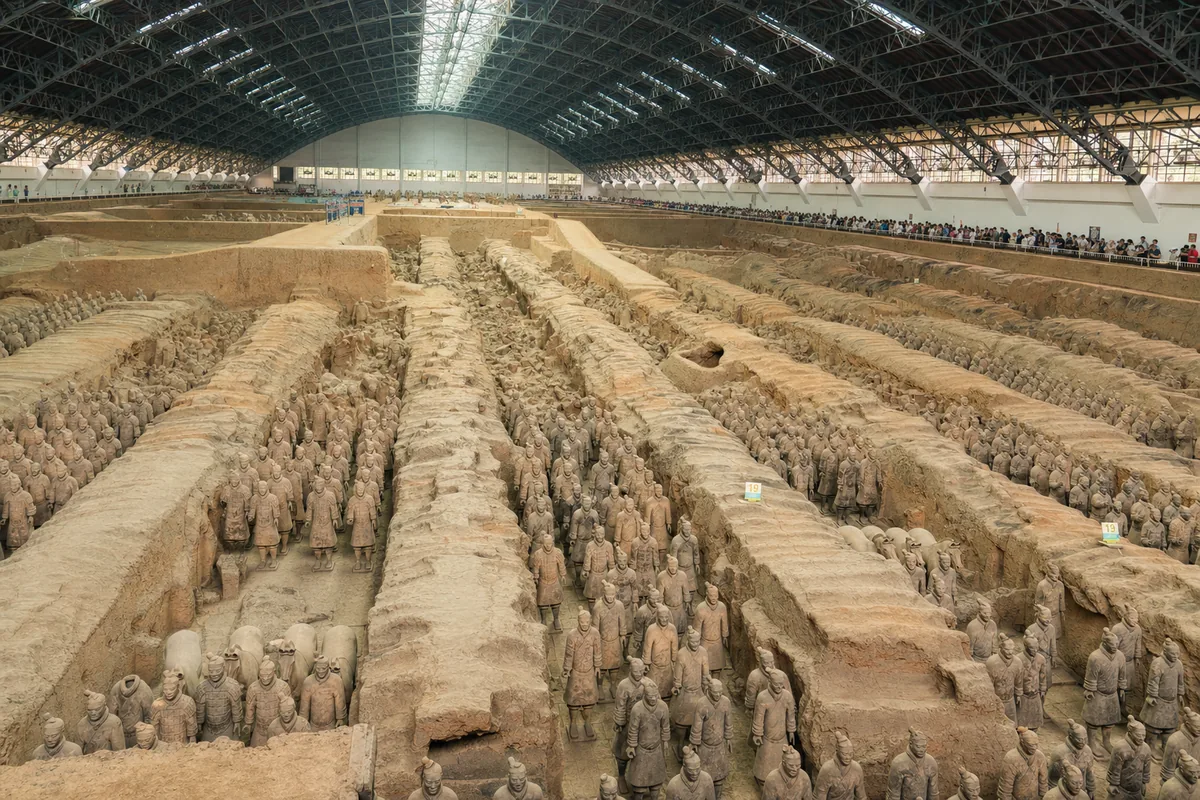
A short drive outside the city, the Museum of the Terracotta Army (秦始皇兵马俑博物馆, Qín Shǐhuáng Bīngmǎyǒng Bówùguǎn) is a paid site and arguably the most famous archaeological find of the 20th century — thousands of life-sized clay soldiers buried to guard the first emperor. The three excavation pits are staggering in scale. A guided tour genuinely helps here, because the site has little signage that explains the context well. You can arrange a licensed English-speaking guide or a small-group day tour through platforms like Klook, which also handles transport from central Xi'an.
Nanjing Museum (Nanjing)
One of the oldest and largest museums in China, the Nanjing Museum (南京博物院, Nánjīng Bówùyuàn) is underrated by international visitors. It spans several themed halls, including a popular "Republic of China Street" that recreates a 1930s Nanjing streetscape indoors — atmospheric and great for photos. The collection ranges from ancient bronzes to imperial porcelain. Free with reservation.
Hubei Provincial Museum (Wuhan)
If you have any interest in ancient music or bronze work, the Hubei Provincial Museum (湖北省博物馆, Húběi Shěng Bówùguǎn) is essential. Its centerpiece is the set of bronze bells (the Bianzhong of Marquis Yi of Zeng) from over 2,400 years ago — a complete, still-playable 65-bell instrument. The museum sometimes stages short performances on replicas. Free with reservation.
For Art Lovers
China Art Museum / Power Station of Art (Shanghai)
Shanghai is the strongest city in China for modern and contemporary art. The China Art Museum (中华艺术宫, Zhōnghuá Yìshùgōng), housed in the former China Pavilion from the 2010 World Expo, holds modern Chinese painting. The Power Station of Art (上海当代艺术博物馆) is a contemporary art museum in a converted power plant — the closest mainland equivalent to London's Tate Modern. Both are free or low-cost; check current exhibitions before you go.
M+ and the Palace Museum (Hong Kong)
In the West Kowloon Cultural District, M+ is one of Asia's largest museums of visual culture — design, moving image, and contemporary art across Asia. Next door, the Hong Kong Palace Museum displays treasures on loan from Beijing's Palace Museum. Both are ticketed (Hong Kong operates separately from the mainland on pricing and booking), and you can usually buy tickets online or at the door. No mainland reservation system applies here.
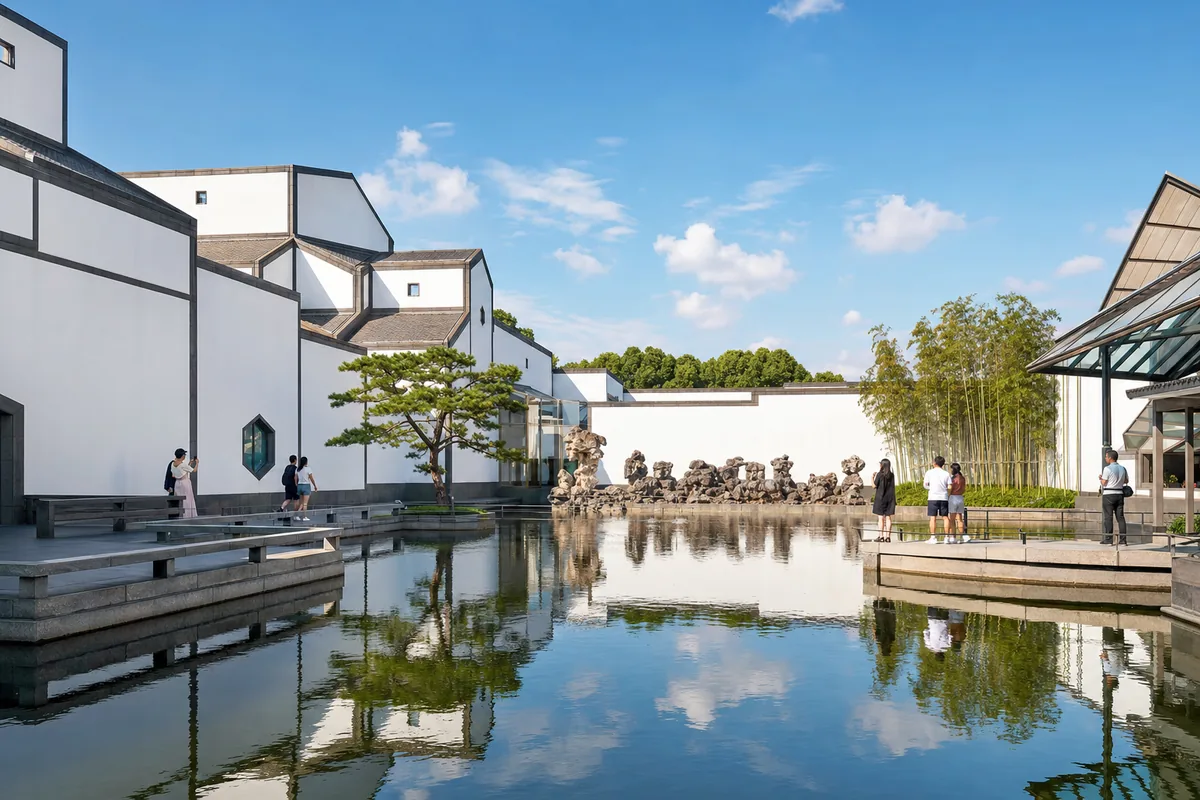
Suzhou Museum (Suzhou)
Even if the collection weren't excellent, the Suzhou Museum (苏州博物馆, Sūzhōu Bówùguǎn) would be worth visiting for the building alone — designed by I. M. Pei, who drew on the geometry and water gardens of his hometown. It sits beside a classical garden and a former princely mansion. The galleries hold refined Jiangnan-region antiquities. Free with reservation, and it pairs perfectly with a day exploring Suzhou's gardens.
Specialized & Unusual Museums
Sanxingdui Museum (near Chengdu)
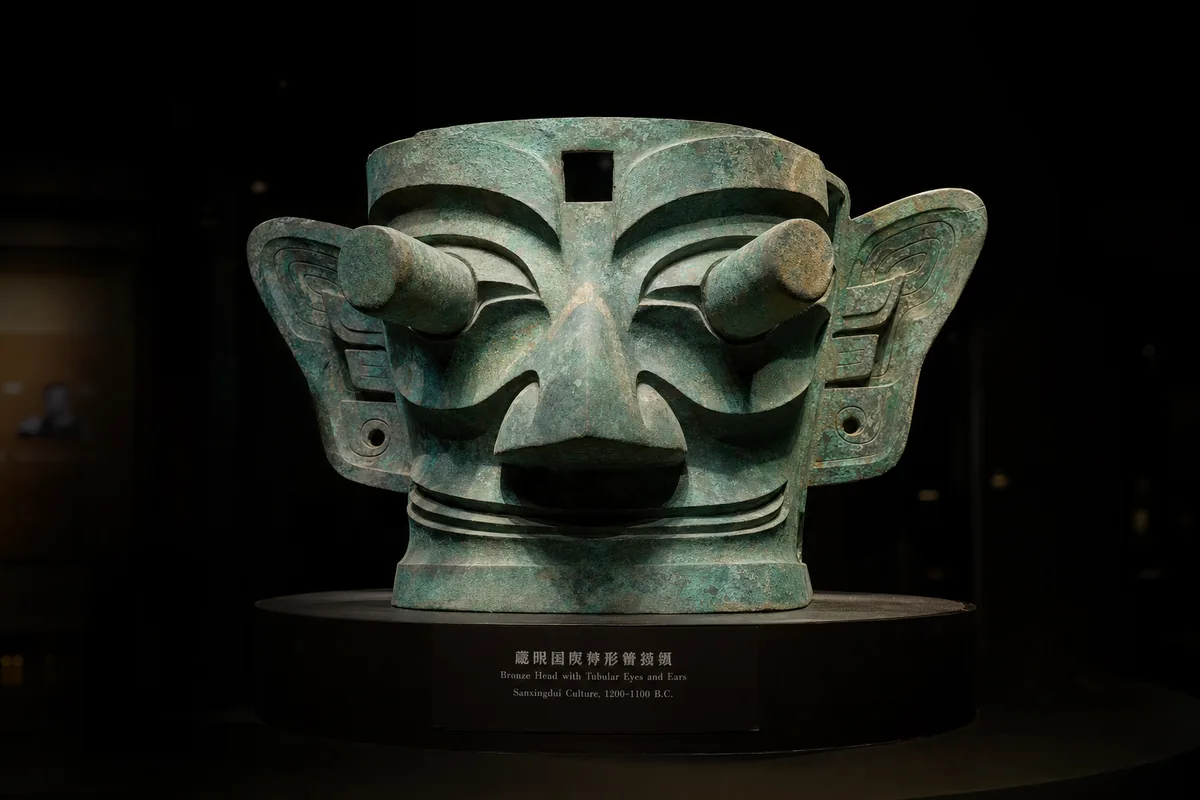
About 1,300 years older than the Terracotta Army's culture in popular imagination — and far stranger — the Sanxingdui Museum (三星堆博物馆, Sānxīngduī Bówùguǎn) displays bronze masks with protruding eyes, a 2.6-meter bronze figure, and gold artifacts from a Bronze Age culture that left no written records. Nothing else in China looks like it. The newly expanded museum building is excellent. It's a paid site, reachable as a day trip from Chengdu.
Mogao Caves & Dunhuang (Gansu)
Not a conventional museum, but the Mogao Caves (莫高窟, Mògāokū) near Dunhuang are an open-air gallery of over a thousand years of Buddhist cave painting and sculpture. Visits are tightly controlled to protect the murals: you book through the official reservation center, watch two introductory films at the digital exhibition center, then take a shuttle to the caves for a guided tour of a rotating selection. English-language tours are available but limited — reserve well ahead. See our Dunhuang & Silk Road Guide for the full logistics.
Quick Comparison
| Museum | City | Cost | Reservation | Best For |
|---|---|---|---|---|
| National Museum of China | Beijing | Free | Essential, competitive | Full sweep of Chinese history |
| Palace Museum | Beijing | Paid (low) | Essential, 7 days ahead | Imperial palace + treasures |
| Shanghai Museum | Shanghai | Free | Required | Ancient Chinese art |
| Shaanxi History Museum | Xi'an | Free | Essential, competitive | Tang dynasty & Silk Road |
| Terracotta Army Museum | Xi'an | Paid | Recommended | Archaeology, scale |
| Nanjing Museum | Nanjing | Free | Required | Variety, Republic-era street |
| Hubei Provincial Museum | Wuhan | Free | Required | Ancient bronze bells |
| Suzhou Museum | Suzhou | Free | Required | Architecture, Jiangnan art |
| Sanxingdui Museum | near Chengdu | Paid | Recommended | Mysterious Bronze Age culture |
| M+ / HK Palace Museum | Hong Kong | Paid | Online or at door | Contemporary art / treasures |
Practical Tips for Visiting Museums in China
- Bring your passport, always. It's your ticket. No passport, no entry, even for free museums.
- Go on weekday mornings. Weekends and school holidays bring large domestic crowds. Most major museums are closed on Mondays — double-check before you plan.
- English signage varies. Big national and provincial museums have decent English labels; smaller ones may not. Many offer audio guides (sometimes a small deposit or fee), and some have free official apps with English content.
- Expect security screening. Bag checks are standard. Leave large bags at hotel or use lockers. Liquids and lighters are often restricted.
- Photography is usually allowed without flash, but tripods and selfie sticks are commonly banned, and some special exhibitions prohibit photos entirely.
- Cancellation policy matters. If your plans change, cancel your free reservation. Repeated no-shows can get your passport flagged in some booking systems.
How to Fit Museums into Your Trip
You don't need to see them all. For a first visit focused on Beijing, Xi'an, and Shanghai, three museums cover enormous ground: the National Museum of China, the Shaanxi History Museum, and the Shanghai Museum. Add the Palace Museum (which doubles as a historical site) and you've traced the entire arc of Chinese civilization. If you have a deeper interest, route a trip around a specialty — Sanxingdui from Chengdu, the Mogao Caves from Dunhuang, or the bronze bells in Wuhan.
The two non-negotiables: reserve early, and carry your passport. Get those right and the rest is easy. China's museums are some of the most rewarding — and best-value — cultural experiences you can have anywhere, and the free admission at most of them is genuinely remarkable.
Related Reading
- Historical Sites — pair your museum visits with the real places the artifacts came from
- Xi'an Complete Guide — home of the Terracotta Army and the Shaanxi History Museum
- Shanghai Complete Guide — for the Shanghai Museum and the city's art scene
- WeChat Setup Guide — set this up before you go to make reservations painless
- Dunhuang & Silk Road Guide — for visiting the Mogao Caves
Last updated: June 2026
Read in other languages
Last train times for 10 Chinese metro systems
Every line and station, checked by hand — the same data behind our offline route planner.
Get the WaysChina App
Offline guides, currency converter, essential phrases, and more — all in your pocket.

Related Articles
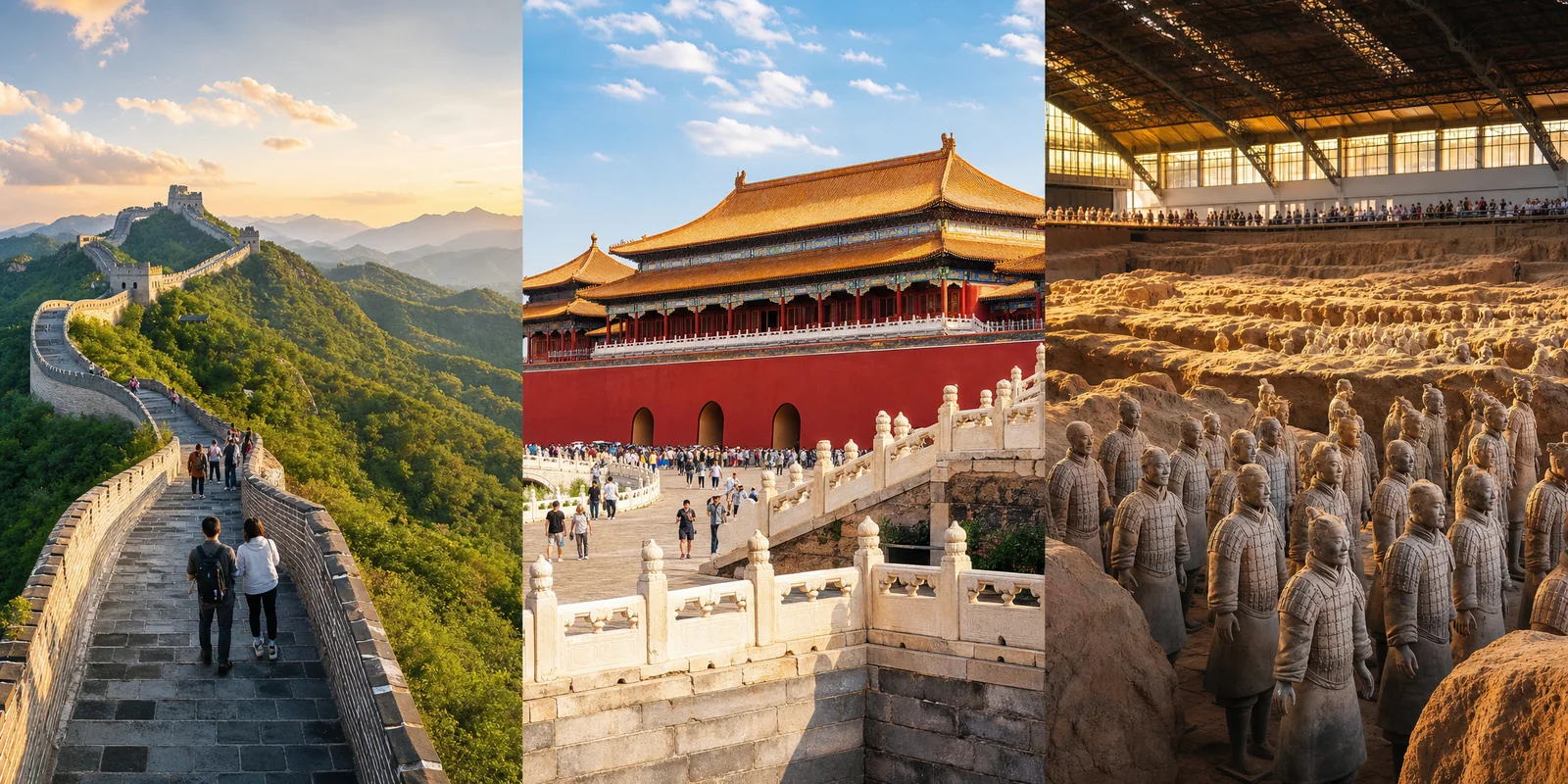
China's Historical Sites: 12 Ancient Landmarks Worth Your Time
From the Great Wall to the Terracotta Army, here are the historical sites in China that actually live up to their...
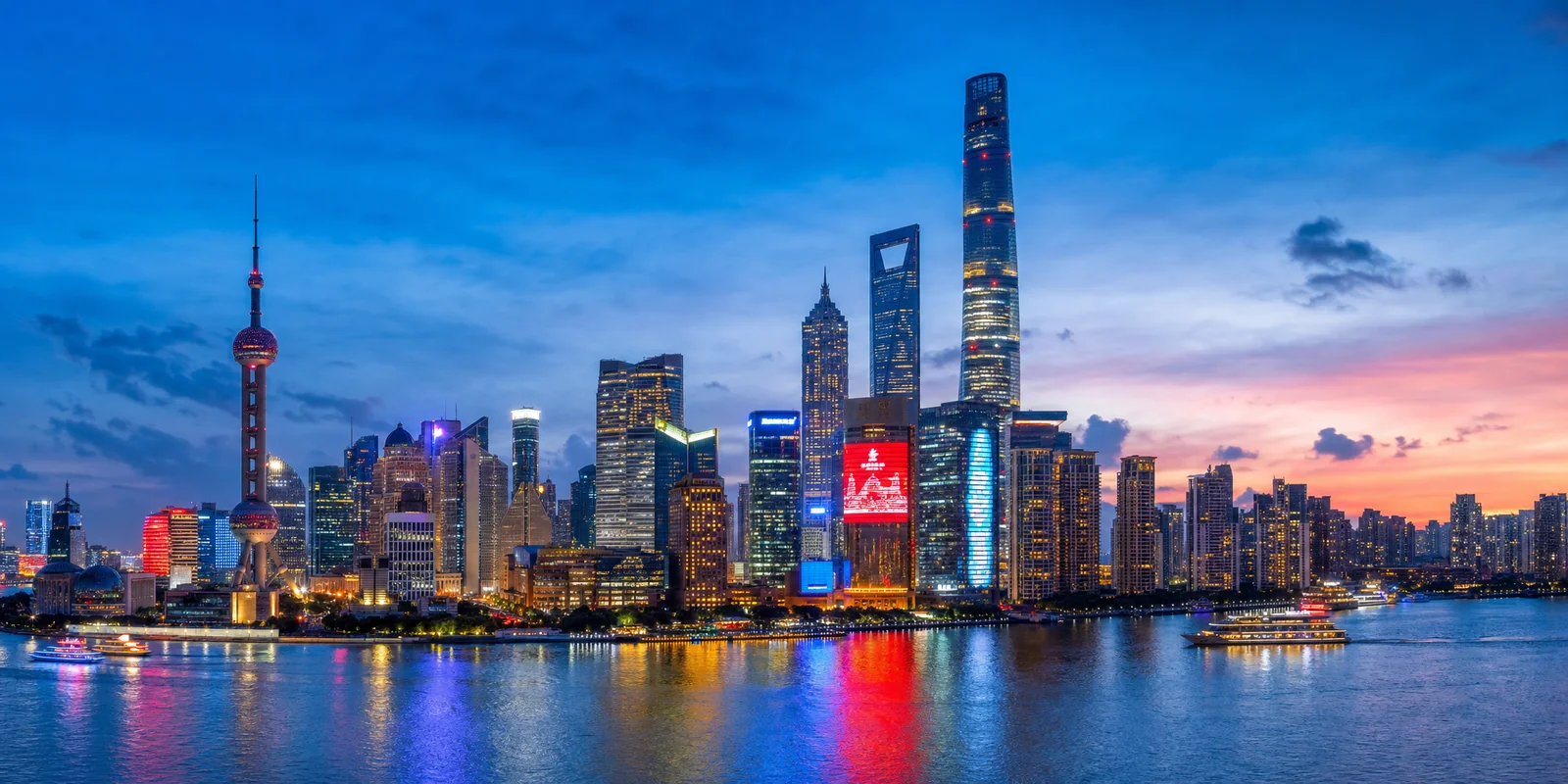
Modern Landmarks: China's Skyscrapers, Skylines & Observation Decks
From the Shanghai skyline to the world's second-tallest tower, here are China's best modern landmarks — what to see,...
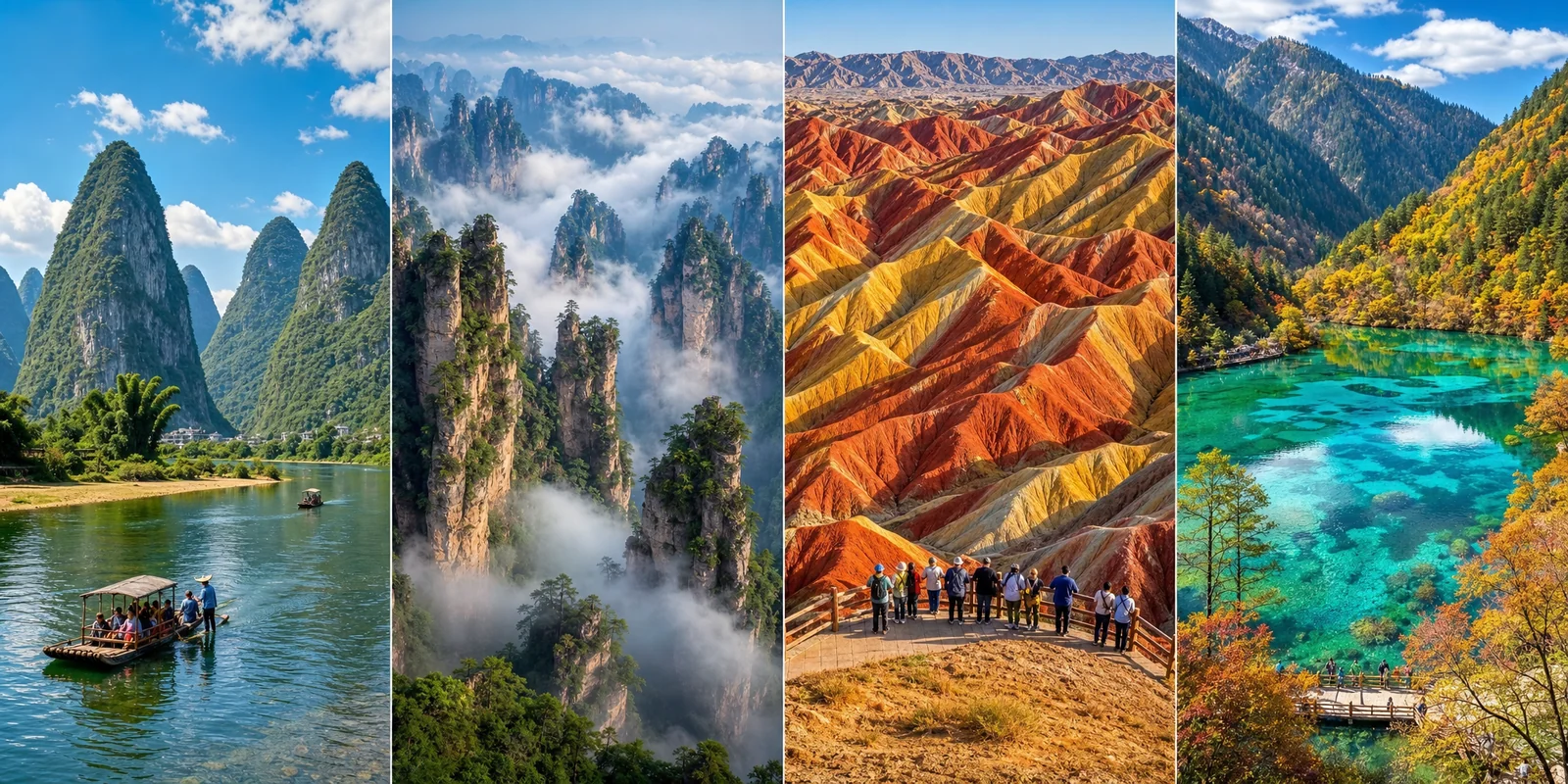
Natural Wonders: China's Most Spectacular Landscapes
From the sandstone pillars of Zhangjiajie to the rainbow-striped hills of Zhangye, here are China's most striking...
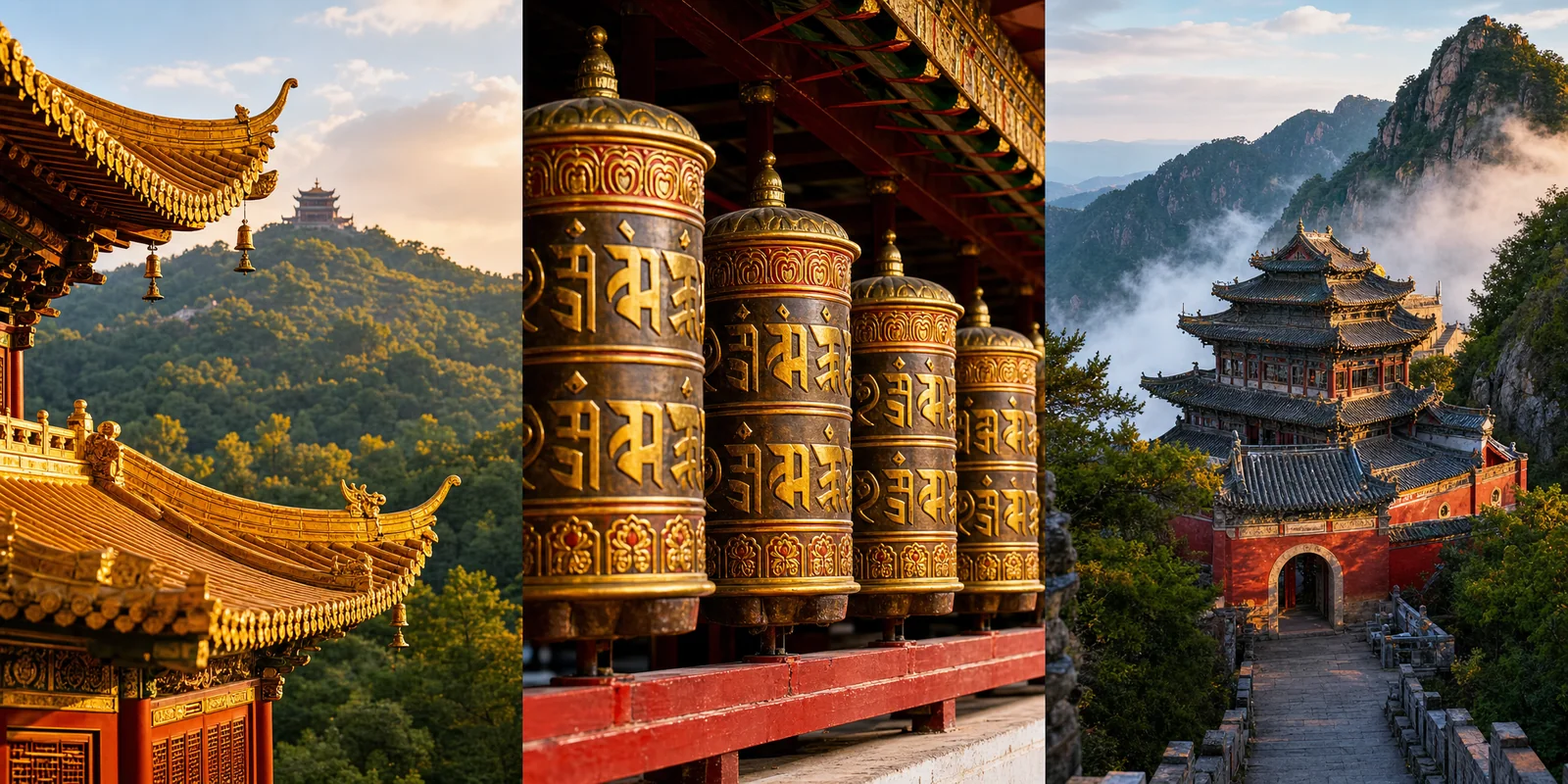
Religious Sites in China: Temples, Monasteries & Etiquette
A practical guide to China's most rewarding temples, monasteries, and mosques — what to see, how to behave, and the...