
This article contains affiliate links. If you make a purchase through these links, we may earn a small commission at no extra cost to you. This helps support our work in creating free travel guides.
China has more than 5,000 years of recorded history, and a lot of it is still standing. The country holds 59 UNESCO World Heritage sites — second only to Italy — covering everything from imperial palaces to Buddhist cave complexes carved into cliffs. The problem isn't finding historical places; it's deciding which ones are worth your limited travel days.
This list covers 12 sites that consistently reward the effort to get there, organized roughly by region. For each one you'll find what makes it worth seeing, opening hours and ticket prices (which change, so confirm before you go), and the easiest way to arrive. Most are accessible by high-speed rail and metro, so you won't need a car.
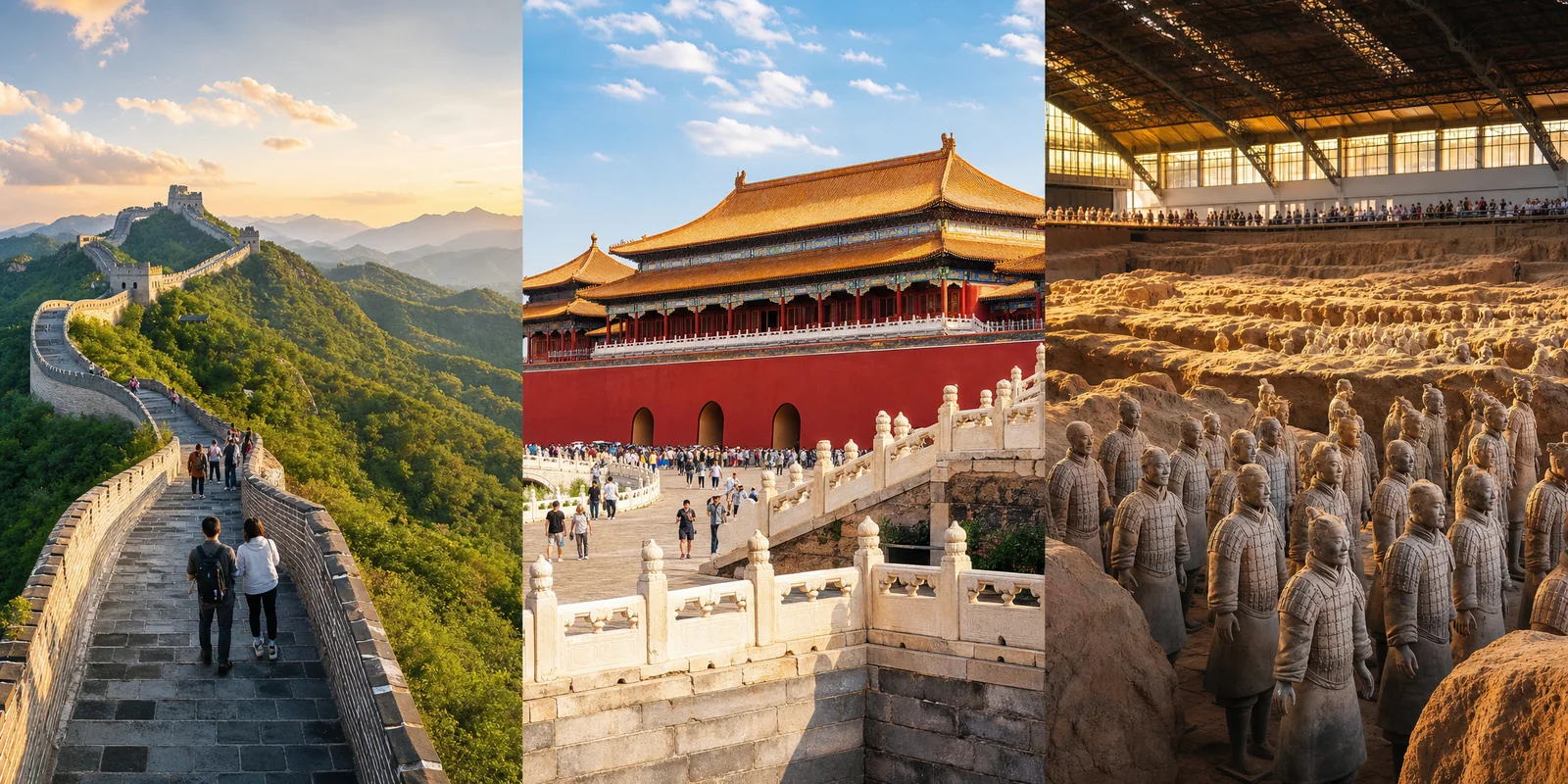
Northern China: Imperial Capitals and the Great Wall
1. The Great Wall (长城, Chángchéng)
The Wall isn't a single structure — it's thousands of kilometers of fortifications built over centuries. For most visitors based in Beijing, the question is which section to visit. Mutianyu is the best balance: well-restored, less crowded than Badaling, and equipped with a cable car and toboggan ride down. Jinshanling rewards hikers with partially wild, unrestored sections and dramatic mountain views. Skip Badaling unless you have no other option — it's the most crowded and feels the most commercialized.
- Hours: Roughly 7:30am–5:30pm at Mutianyu (shorter in winter)
- Tickets: ~¥45 entry at Mutianyu; cable car/toboggan extra (~¥120 round trip)
- Getting there: Mutianyu is about 90 minutes from central Beijing. There's no direct metro — most visitors take a tour bus, a chartered car, or the 916 bus to Huairou plus a local shuttle.
2. The Forbidden City (故宫, Gùgōng)
The imperial palace at the heart of Beijing served as home to 24 emperors across the Ming and Qing dynasties. It's the largest preserved wooden palace complex in the world — 980 surviving buildings across 72 hectares. You can't see all of it in one visit, and you shouldn't try. Focus on the central axis (the great ceremonial halls) and pick one or two of the quieter side palaces and gardens.
- Hours: 8:30am–5:00pm (closed Mondays except public holidays); shorter winter hours
- Tickets: ~¥60 peak season, ~¥40 off-season. Tickets are timed and sell out — you must book online in advance.
- Getting there: Tiananmen East or Tiananmen West stations on Beijing Metro Line 1. Enter at the Meridian Gate (south) and exit at the north — you can't backtrack.
3. Temple of Heaven (天坛, Tiāntán)
Where emperors performed annual rituals praying for good harvests. The circular Hall of Prayer for Good Harvests, built entirely without nails, is one of the most photographed buildings in Beijing. Just as memorable is the surrounding park, where locals gather in the early morning to do tai chi, play instruments, dance, and practice calligraphy with water on the pavement. Come early to see both the architecture and the daily life around it.
- Hours: Park 6:00am–9:00pm; halls 8:00am–5:00pm
- Tickets: Combined ticket ~¥34 (park entry alone ~¥15)
- Getting there: Tiantandongmen station on Metro Line 5
4. Pingyao Ancient City (平遥古城, Píngyáo Gǔchéng)
A remarkably intact Qing-dynasty walled town in Shanxi province. Pingyao was once a banking hub — China's first draft banks were established here — and the entire old town, with its courtyard houses, temples, and 6km of city walls, has been preserved. Unlike many "ancient towns" that are mostly reconstruction, Pingyao is the real thing. Stay overnight in a converted courtyard inn to experience it after the day-trippers leave.
- Hours: Town is always open; a combined ticket covers ~20 sites within the walls
- Tickets: Combined attractions pass ~¥120, valid 3 days
- Getting there: High-speed rail to Pingyao Gucheng station (about 3.5 hours from Beijing, 1 hour from Xi'an via connecting routes)
For the full picture, see our Pingyao Ancient City Guide.
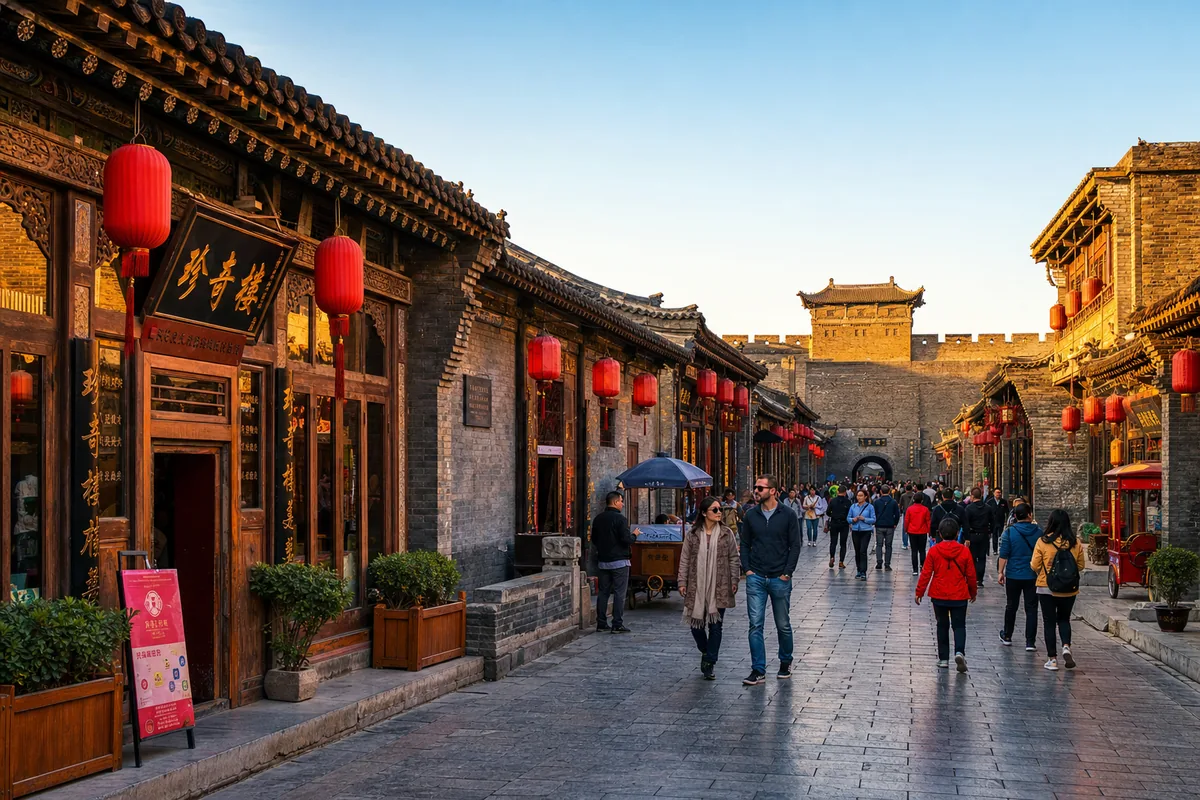
Central and Western China: The Silk Road and Ancient Capitals
5. The Terracotta Army (兵马俑, Bīngmǎyǒng)
Over 8,000 life-sized clay soldiers, horses, and chariots, buried to guard China's first emperor in the afterlife and discovered by farmers digging a well in the 1970s. Each face is different. Standing at the edge of Pit 1, looking down at rows of warriors stretching into the distance, gives a sense of scale that photos never capture. It's near Xi'an and ranks among the most significant archaeological finds anywhere.
- Hours: 8:30am–5:00pm (last entry ~4:00pm)
- Tickets: ~¥120; book in advance, especially in peak season
- Getting there: From Xi'an, take tourist bus 5 (306) from Xi'an Railway Station east square, about 1 hour. A taxi or ride-hail is faster but costs ~¥120–150 each way.
6. Xi'an City Wall (西安城墙, Xī'ān Chéngqiáng)
The most complete ancient city wall in China — 14km of Ming-dynasty fortifications encircling the old center of Xi'an, wide enough on top to drive a car. The best way to experience it is to rent a bike and cycle the full loop, which takes about 90 minutes to 2 hours at an easy pace. At night the wall is lit up and the gate towers glow.
- Hours: 8:00am–10:00pm (sections vary)
- Tickets: ~¥54; bike rental ~¥45 for 3 hours plus deposit
- Getting there: Yongningmen (South Gate) is the main entrance, reachable via Metro Line 2, Yongningmen station
Xi'an packs a lot of history into a compact area — our Xi'an Complete Guide covers how to fit it together.
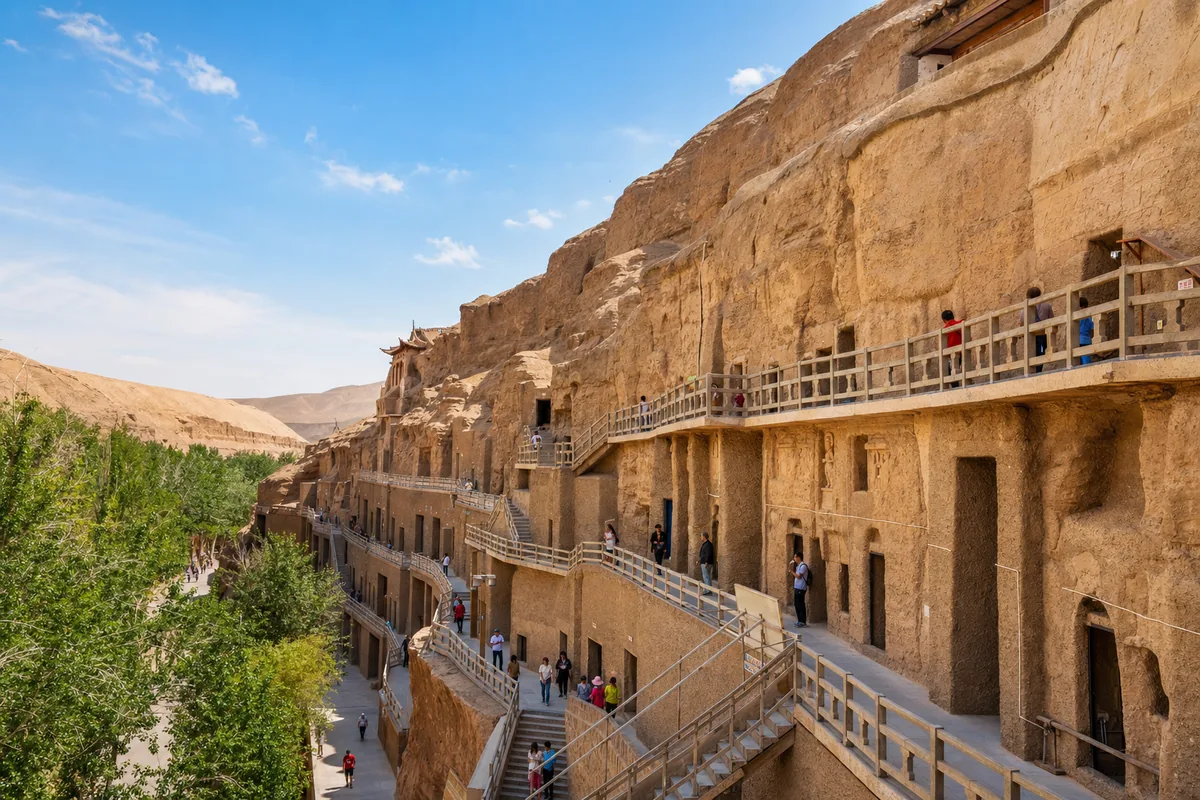
7. Mogao Caves (莫高窟, Mògāokū)
A complex of 492 Buddhist cave temples carved into a cliff near Dunhuang, on the old Silk Road. The caves hold over 1,000 years of murals and statues — some of the finest Buddhist art on earth. Because the pigments are fragile, access is strictly controlled: you visit a rotating selection of caves on a guided tour, and photography inside is forbidden.
- Hours: Tours run roughly 8:00am–6:00pm; tickets are timed
- Tickets: Full ticket ~¥238 (includes 8 caves + films); reduced "emergency" tickets ~¥140 in peak season. Book through the official reservation site well ahead.
- Getting there: About 25 minutes from Dunhuang city by taxi or tourist bus; the visitor center is where tours depart
The Mogao Caves anchor any Silk Road trip — see our Dunhuang & Silk Road Guide.
8. Yungang Grottoes (云冈石窟, Yúngāng Shíkū)
Near Datong in Shanxi, these 5th-century grottoes contain over 51,000 carved Buddhist statues, the largest standing 17 meters tall. The scale and age make them one of China's three great cave-temple sites (along with Mogao and Longmen). They're easy to combine with the Hanging Temple and the Datong city sights.
- Hours: 8:30am–5:00pm (shorter in winter)
- Tickets: ~¥120 peak season
- Getting there: Bus 3 from central Datong, about 40 minutes; Datong is on the high-speed rail network
Details in our Datong Complete Guide.
Eastern and Southern China: Gardens, Capitals, and Water Towns
9. Suzhou's Classical Gardens (苏州园林, Sūzhōu Yuánlín)
Suzhou's gardens are a different kind of historical site — not monumental, but intimate. Designed by scholars and officials over centuries, these walled gardens use rocks, water, pavilions, and carefully framed views to create the illusion of a vast landscape in a small space. The Humble Administrator's Garden is the largest and most famous; the Master of the Nets Garden is smaller and, many think, more perfectly composed.
- Hours: Generally 7:30am–5:30pm
- Tickets: Humble Administrator's Garden ~¥70 peak; smaller gardens ~¥30–40
- Getting there: Suzhou is 25 minutes by high-speed rail from Shanghai; gardens are reachable by metro and short taxi rides
See our Suzhou Garden City Guide for which gardens to prioritize.
10. Nanjing's Ming Dynasty Sites (南京明城墙, Nánjīng Míng Chéngqiáng)
Nanjing served as capital for several dynasties, and the Ming founder's legacy is everywhere: the massive Ming City Wall (the longest city wall ever built), the Ming Xiaoling Mausoleum set among forested hills, and the spirit-way lined with stone animals. It's a quieter, less touristy historical city than Beijing or Xi'an.
- Hours: Ming Xiaoling 6:30am–6:00pm; wall sections vary
- Tickets: Ming Xiaoling scenic area ~¥70
- Getting there: Nanjing is about 1 hour from Shanghai by high-speed rail; the city has an extensive metro
Our Nanjing Historical Capital Guide ties these together.
11. Longmen Grottoes (龙门石窟, Lóngmén Shíkū)
Near Luoyang in Henan, tens of thousands of Buddha statues are carved into limestone cliffs along the Yi River. The centerpiece is the 17-meter Vairocana Buddha, whose serene face is one of the most recognizable images in Chinese art. Walking the riverside path with the cliffs of carvings on one side is worth a half day.
- Hours: 8:00am–5:30pm (varies by season)
- Tickets: ~¥90
- Getting there: Luoyang is on the high-speed line between Xi'an and Zhengzhou; bus 81 or a taxi reaches the grottoes from the city
More in our Luoyang Ancient Capital Guide.
12. Fenghuang Ancient Town (凤凰古城, Fènghuáng Gǔchéng)
A riverside town in western Hunan with stilt houses built over the Tuojiang River, old stone bridges, and city gates dating back centuries. It's home to Miao and Tujia ethnic minority cultures and looks especially atmospheric at dusk when the riverside buildings light up. It does get crowded and commercial in peak season, but stay overnight and the early mornings are calm.
- Hours: Town always open; individual attractions ~8:00am–5:30pm
- Tickets: Town entry is free; a combined ticket for 9 attractions ~¥108
- Getting there: Fenghuang has its own high-speed rail station (Fenghuang Gucheng), reachable from Zhangjiajie and Changsha
See our Fenghuang Ancient Town Guide.
Practical Notes for Visiting Historical Sites
Booking and tickets
Most major sites now require online reservations tied to your passport number, and several (the Forbidden City and Mogao Caves especially) sell out days ahead in peak season. Reserve through official channels where possible. Bring your physical passport — it's your ID for entry and you'll often scan it at the gate.
Timing and crowds
Avoid the first week of October (National Day Golden Week) and early May if you can — domestic tourism peaks and the famous sites get overwhelmed. Weekday mornings are consistently the best time to visit. For more on this, see our Golden Week Survival Guide.
Guides and context
For sites like the Terracotta Army, Mogao Caves, and the grottoes, a good guide transforms the experience. You can hire one on-site, use the official audio guides, or book a small-group tour in advance. Comparing options on platforms like platforms like Klook can save time if you'd rather have transport and entry sorted ahead.
Putting It Together
If you only have time for the classics, the Beijing–Xi'an pairing covers the Great Wall, Forbidden City, and Terracotta Army — three of the most significant sites in the country, linked by a few hours of high-speed rail. Add Suzhou or Nanjing for a gentler eastern leg, or head west to Dunhuang for the Silk Road and the Mogao Caves. The whole network is well-connected by train, so distances that look daunting on a map are usually a comfortable half-day ride.
Wherever you go, book your tickets ahead, carry your passport, and start early. For mapping out which sites fit into your days and planning metro routes within each city, the WaysChina app has offline metro maps and a built-in trip planner.
Last updated: June 2026
Read in other languages
Last train times for 10 Chinese metro systems
Every line and station, checked by hand — the same data behind our offline route planner.
Get the WaysChina App
Offline guides, currency converter, essential phrases, and more — all in your pocket.

Related Articles
Modern Landmarks: China's Skyscrapers, Skylines & Observation Decks
From the Shanghai skyline to the world's second-tallest tower, here are China's best modern landmarks — what to see,...
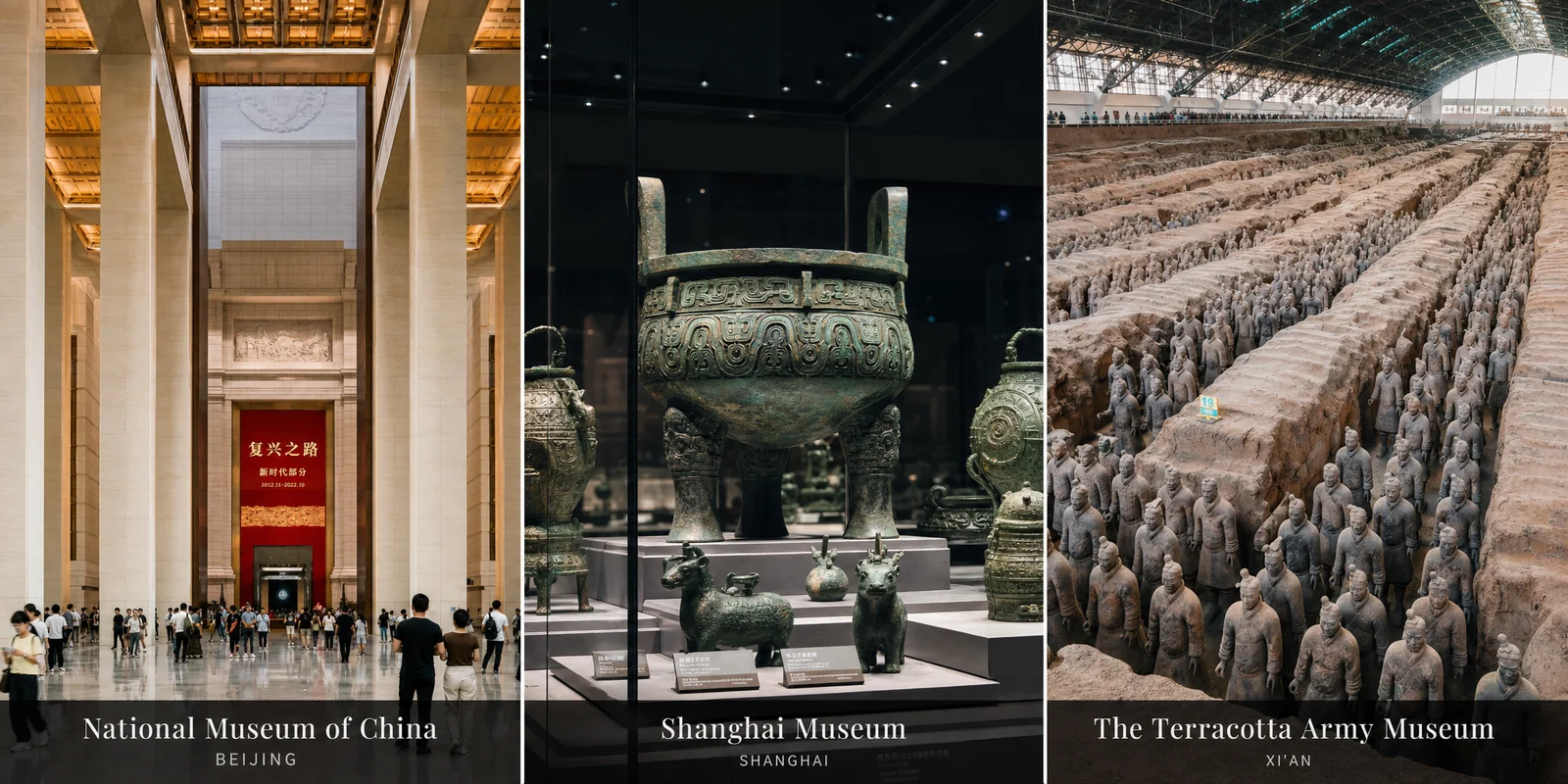
Best Museums in China: A Visitor's Guide
China's top museums hold thousands of years of art, history, and discovery — and most are free. Here's where to go,...
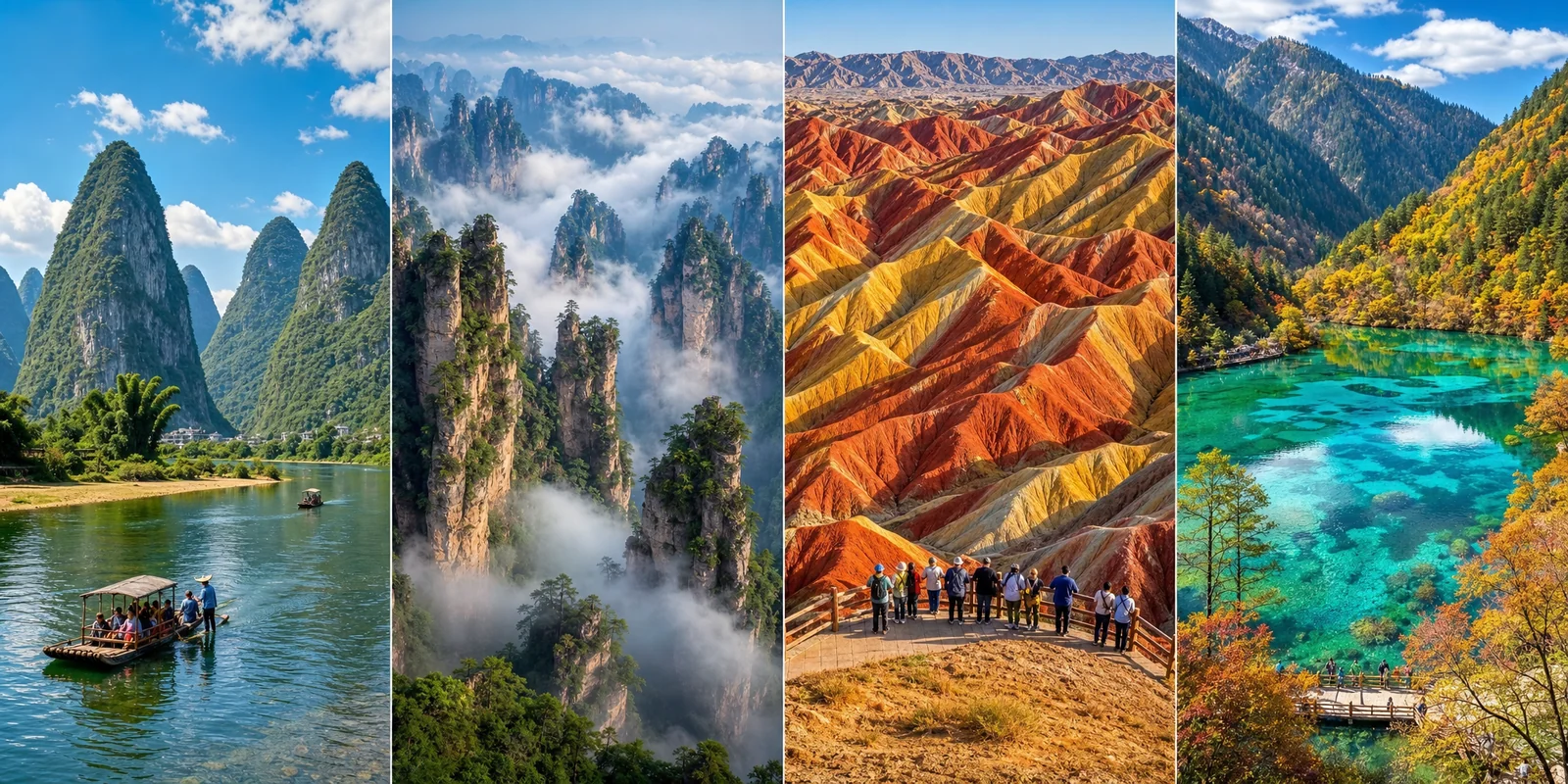
Natural Wonders: China's Most Spectacular Landscapes
From the sandstone pillars of Zhangjiajie to the rainbow-striped hills of Zhangye, here are China's most striking...
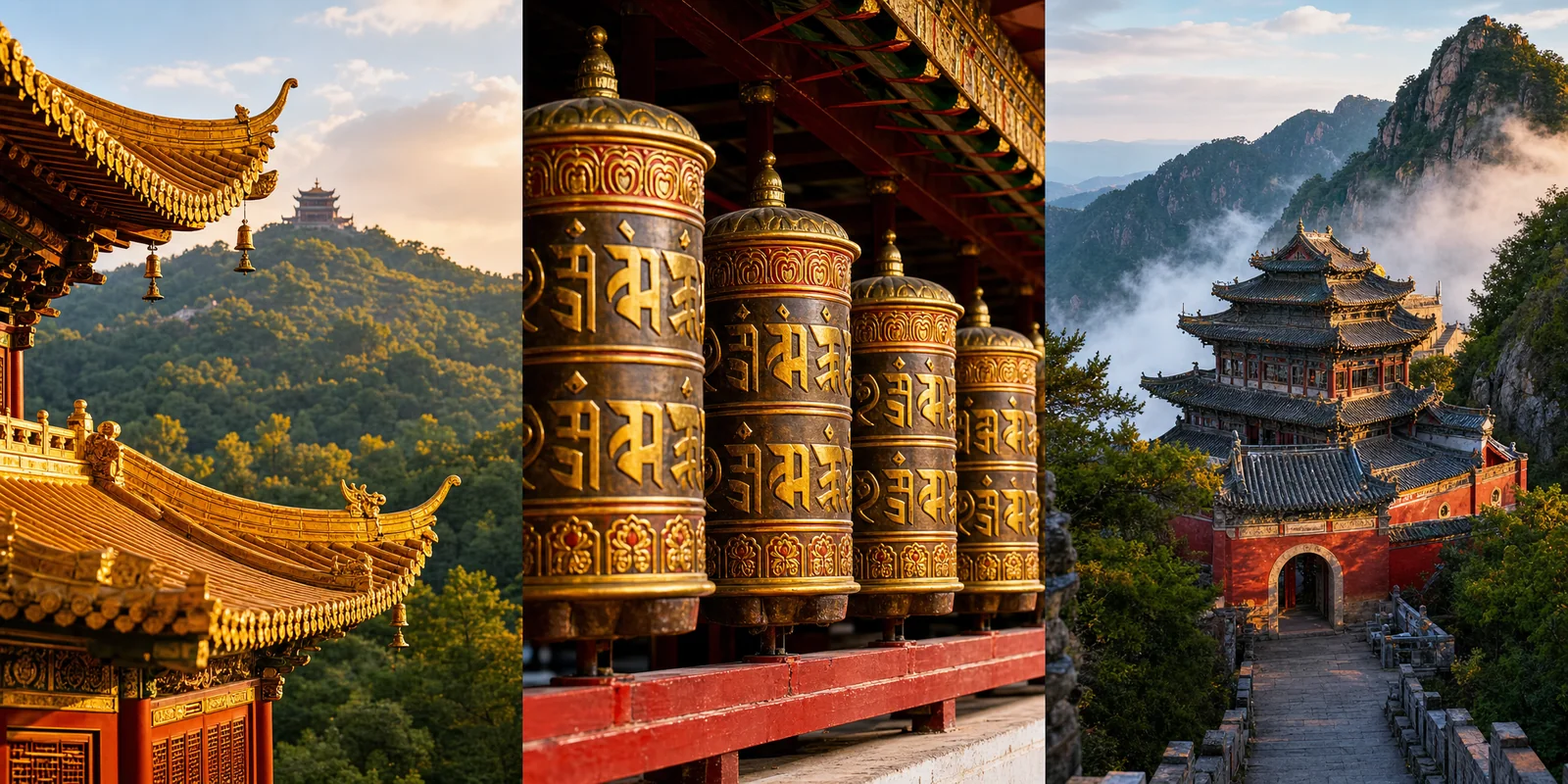
Religious Sites in China: Temples, Monasteries & Etiquette
A practical guide to China's most rewarding temples, monasteries, and mosques — what to see, how to behave, and the...