
China has some of the largest and newest subway networks on the planet — seven of the world's twelve longest metro systems are here, and both Beijing and Shanghai run roughly 900 kilometers of track each. The good news for visitors is that since around 2024, using them has gotten genuinely easy: you can pay with a foreign credit card through Alipay or WeChat Pay, station signs and ticket machines have English, and you don't need a Chinese bank account or phone number to get through the gates.
This guide covers how the metro works across major Chinese cities — how to pay, what fares cost, how tickets and time limits work, what you can't bring through security, and the small things that trip up first-time riders. Most of it applies everywhere; where cities differ (and they do), we've called it out.
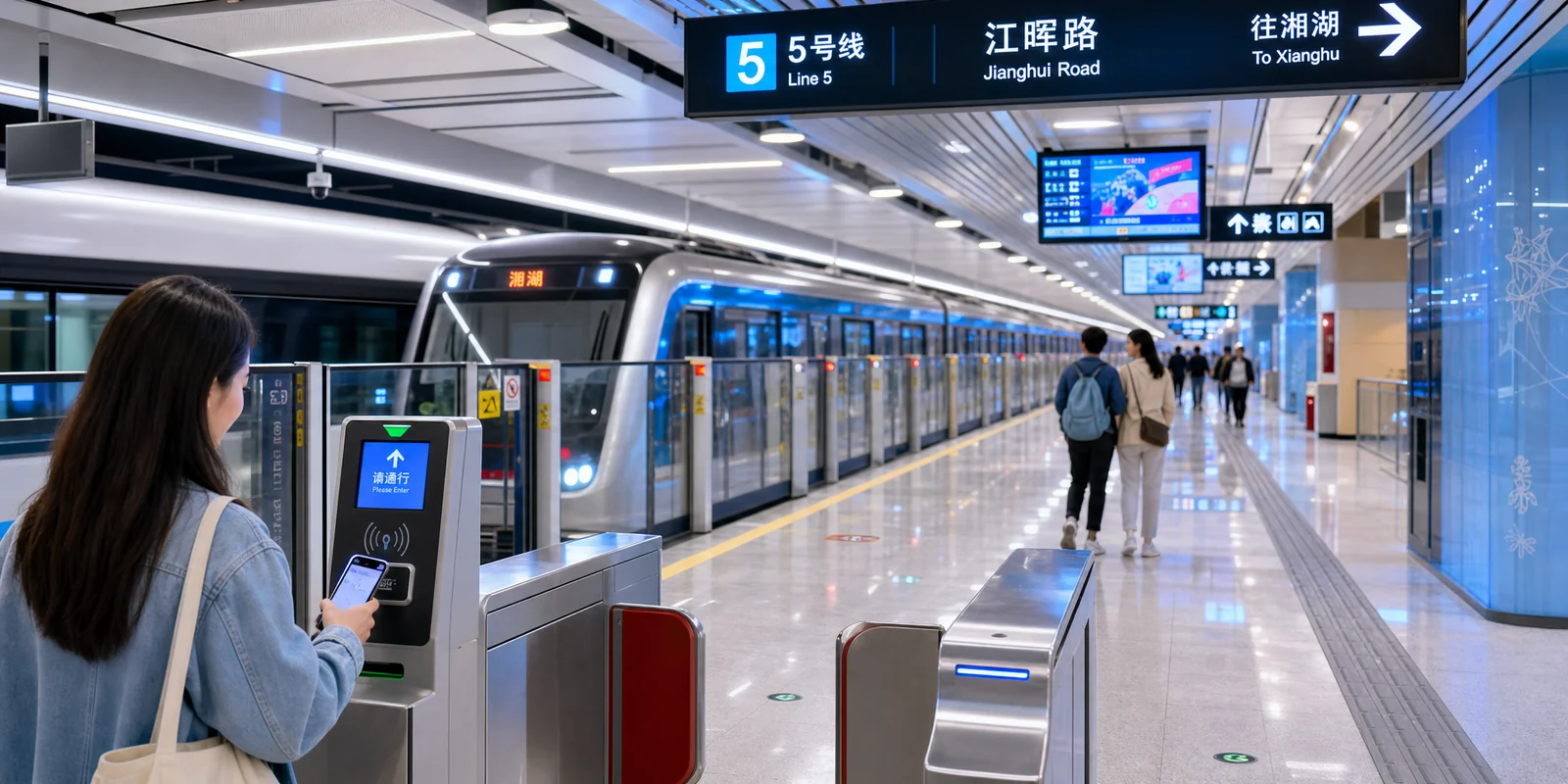
How to pay: your four practical options
Forget buying physical tokens or fumbling with coins. For nearly every visitor, the choice comes down to one of these methods.
1. Alipay or WeChat Pay QR code (recommended for most)
This is the simplest approach if you've already set up a Chinese payment app, which most travelers do anyway for restaurants, taxis, and shops. Both Alipay (支付宝, Zhīfùbǎo) and WeChat Pay (微信支付, Wēixìn Zhīfù) let you bind an international Visa or Mastercard — no Chinese bank account required.
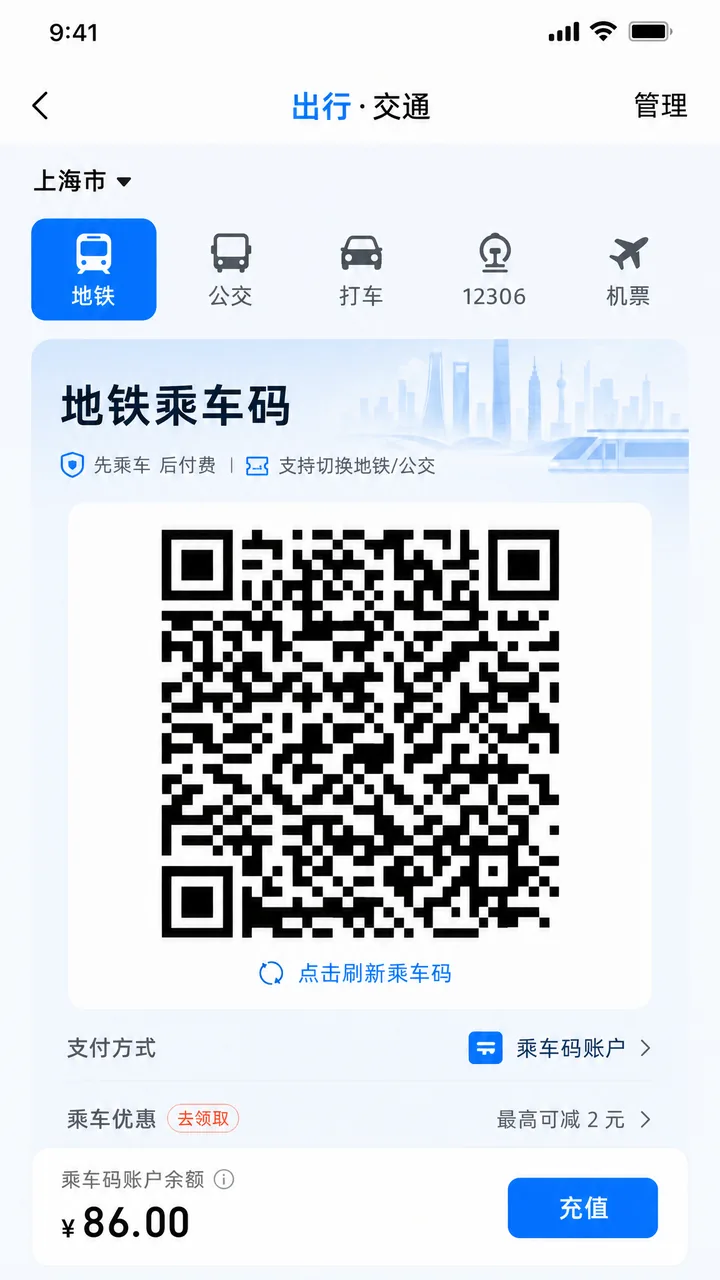
In Alipay, open the app, find "Transport" on the home screen, select the city you're in, and the app generates a metro QR code. Hold your phone over the scanner at the gate to enter, and scan again at the same type of scanner to exit. The fare is deducted automatically based on distance. According to guides on using Alipay's transport feature, you must enter and exit using the same app's code — don't mix Alipay on the way in with WeChat on the way out.
2. Single-journey tickets from a machine
Every station has self-service ticket machines, and they all switch to English. You pick your destination station on a map or list, the machine shows the fare, and you pay. Most machines accept WeChat and Alipay; many take cash; some accept foreign Visa/Mastercard or UnionPay cards directly — but coverage varies machine to machine. You'll get a plastic token (in most cities) or a paper QR ticket. Tap or scan it at the gate to enter, and drop the token in the slot or scan again to exit.
This is a fine backup if your phone dies or an app glitches, but it's slower than scanning a code, especially during rush hour.
3. Foreign contactless credit card (tap-to-ride)
Beijing and Shanghai now support tapping a contactless foreign credit card directly on the gate reader — no app needed. You'll need to have small-amount contactless payments enabled on the card. It's convenient, though it's often slightly more expensive than paying through Alipay, and support for specific card networks isn't always clearly documented. Treat it as a handy option rather than your primary plan, and check the gate for the contactless symbol.
4. Transit cards and city-specific apps
If you're staying a while or riding daily, a stored-value transit card or a city's official metro app can be worth it:
- Beijing: The Beijing Pass smart card is sold at international arrival terminals at Beijing's airports, designed specifically for foreign visitors. Check the latest price, deposit, and refund process when you buy it.
- Shanghai: The Metro Daduhui (Metro大都会) app supports Alipay and WeChat, and lets people without a Chinese account bind a Mastercard. The Suishenxing (随申行 / SH MaaS) app accepts Visa, Mastercard, Discover, Diners Club, JCB and more — and gives you the same fare discounts as local residents. There's also the physical Shanghai Public Transport Card.
- Shenzhen: You can activate a ride code through several mini-programs, including the official Shenzhen Metro app and the MTR (Shenzhen) live+ mini-program.
The official Beijing government subway page and Shanghai government metro page both lay out the official payment options for foreign visitors in English — worth a quick read before you arrive.
What it costs: fares by city
Chinese metros use distance-based fares — the farther you ride, the more you pay, calculated by the shortest path between your entry and exit stations. Fares are cheap by international standards. Here's how the major cities break down. Always confirm current fares, since they do change.
| City | Starting fare | How it scales | Notes |
|---|---|---|---|
| Beijing | 3 yuan (up to 6 km) | 4 yuan to 12 km, 5 yuan to 22 km, 6 yuan to 32 km, then +1 yuan per extra 20 km — no cap | Airport lines priced separately (see below) |
| Shanghai | 3 yuan (0–6 km) | 4 yuan to 16 km, 5 yuan to 26 km, then +1 yuan per 10 km | Network max fare 15 yuan |
| Guangzhou | 2 yuan (within 4 km) | +1 yuan per extra 4 km (4–12 km), per 6 km (12–24 km), per 8 km (beyond 24 km) | — |
| Shenzhen | 2 yuan (first 4 km) | 1 yuan buys 4 km (4–12 km), 6 km (12–24 km), 8 km (beyond 24 km) | Standard-car max fare 15 yuan |
Day passes for heavy sightseeing days
If you're hopping on and off the metro all day, an unlimited-ride pass can pay for itself:
| City | 1-day | 3-day | Other |
|---|---|---|---|
| Beijing | 20 yuan | 40 yuan | Also 2-day (30), 5-day (70), 7-day (90); excludes airport lines |
| Shanghai | 18 yuan | 45 yuan | Maglev excluded |
| Guangzhou | 20 yuan | 50 yuan | — |
| Shenzhen | 25 yuan | 75 yuan | Sold at designated station service centers |
Beijing's passes are electronic and valid across the whole network except airport lines, with unlimited single-person rides during the validity window. The 1-day and 3-day passes in Shanghai, Guangzhou, and Shenzhen run for 24 and 72 hours from first entry, respectively.
Reading the system: lines, signs, and transfers
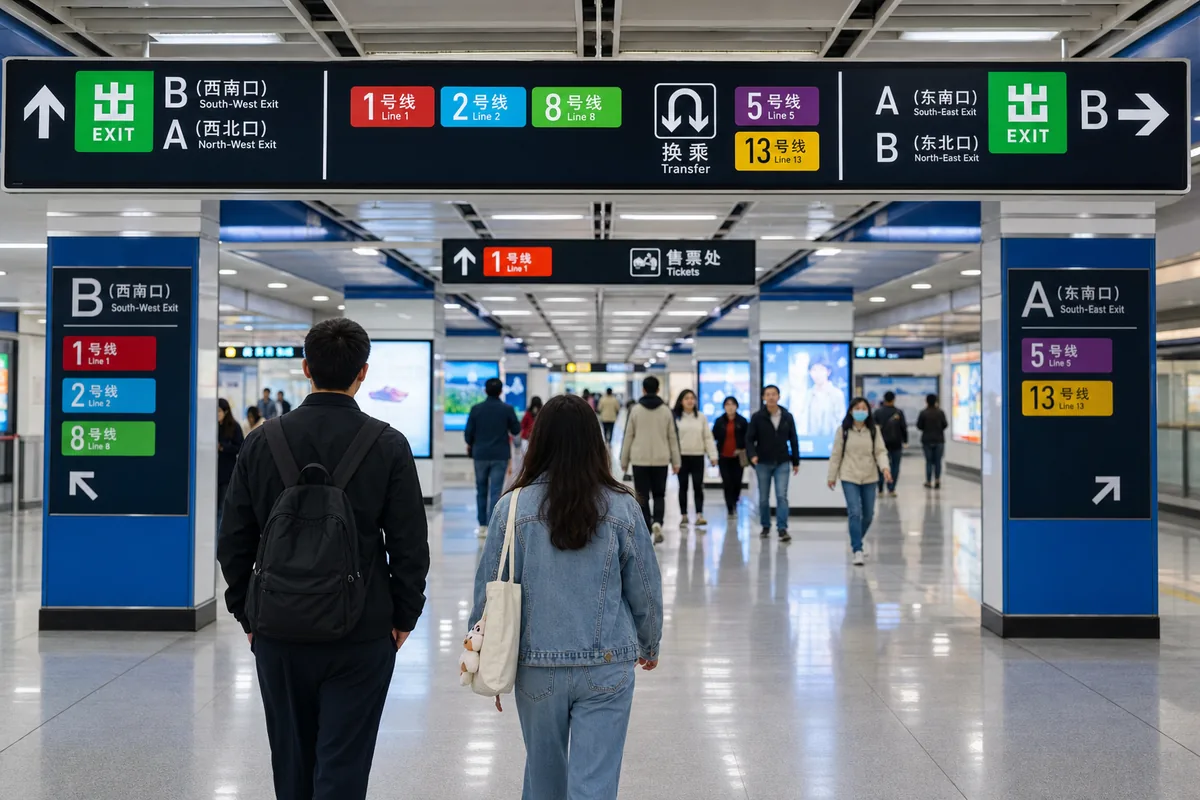
Chinese metro maps look like any other big-city subway map: numbered, color-coded lines you follow from station to station, changing trains at interchange stations. In Beijing and Shanghai, station signs, in-train announcements, and network maps are all bilingual Chinese and English, so you can navigate by line number and color even without reading Chinese.
A few orientation habits that help everywhere:
- Follow line numbers and colors, not just station names — they're consistent and easier to track.
- Check the direction by terminus station. Platforms are labeled with the line's final station in that direction, so know which end you're heading toward.
- Exits are lettered or numbered (Exit A, Exit 2, etc.). Big stations have many exits spread over several blocks; picking the right one saves you a long walk. Map apps usually tell you which exit to use.
Operating hours
Most lines run roughly from early morning to around 11 PM, but exact first and last train times vary by line and by city — and the last train can leave a terminus surprisingly early relative to when it reaches the far end of the line. A few specifics from the official rules:
- Shanghai: Lines run at least 17 hours a day; the first train departs its origin no later than 6:00 AM and the last no earlier than 10:30 PM. Some lines (1, 7, 8, 9, 10, 13) run extended hours on Friday and Saturday nights.
- Shenzhen: Most lines operate from about 6:30 AM to 11:00 PM, with first and last trains departing both ends of each line at those times (Lines 11 and 20 differ).
Time limits and overtime fees
Here's something that surprises visitors: your ticket isn't valid indefinitely once you're inside. There's a maximum time you can stay in the paid area, and overstaying triggers a small fee.
- Beijing: Maximum 4 hours per journey on the network (excluding the Capital Airport line). Overstay and you pay the lowest undiscounted fare — 3 yuan — to exit. The Daxing Airport line charges 10 yuan for overstaying its 4-hour limit.
- Shanghai: Stay over 4 hours from entry to exit and you're charged a 3 yuan overtime fee on exit.
- Shenzhen: Tickets are valid for 3.5 hours (210 minutes); exit late and you're charged the network's highest fare, 15 yuan, as a penalty.
For normal sightseeing this is rarely an issue — these limits are aimed at people lingering far longer than any single trip should take. Just don't treat a station as a place to hang out for hours.
Security checks: what you can and can't bring
Every metro entrance in China has an airport-style security check. You put bags through an X-ray scanner, and staff may ask you to take a sip from a water bottle or scan it. Shanghai runs security checks at all stations, synced to operating hours. It's quick most of the time but adds a few minutes during rush hour.
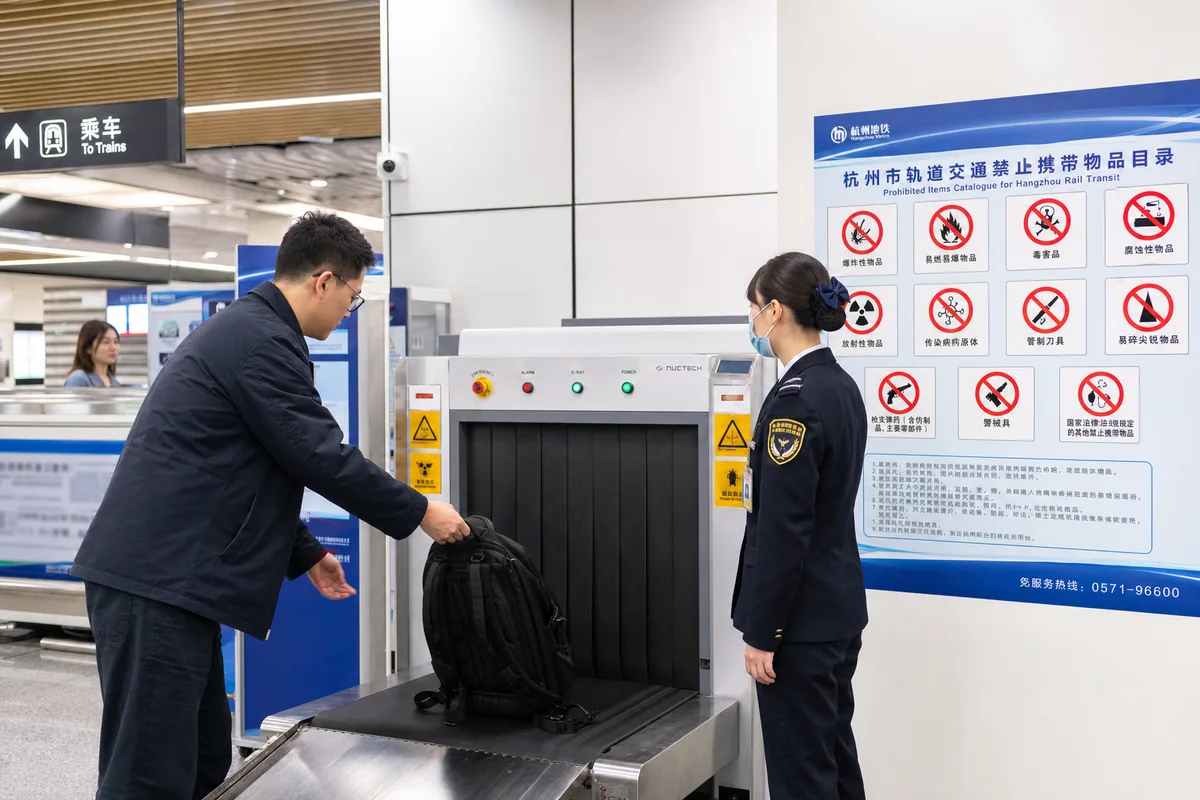
National regulations ban toxic, flammable, explosive, radioactive, corrosive, and other dangerous goods. Beyond that, the specifics that catch travelers off guard:
- Knives of any kind — including utility knives, kitchen knives, and other blades — are not allowed.
- Pressurized spray cans over 120 ml (sunscreen spray, hairspray, insect repellent, air freshener) are restricted.
- More than one ordinary lighter, and nail polish, polish remover, or hair dye over 20 ml, are limited.
Each station is required to post its full list of prohibited and restricted items. If you're carrying something borderline — say, camping gear or a large aerosol — check before you go, or you may have to bin it at the entrance.
Traveling with kids
Children ride free up to a height limit, measured at the gate against a marked line:
- Beijing: Free for children 1.3 m and under.
- Shanghai: One child 1.3 m or under rides free per accompanying adult; additional children need tickets. Preschool-age children can't ride alone without an adult.
- Guangzhou: One adult may bring up to two children under 1.3 m (or below school age) free; beyond that, buy tickets for the extras.
If you're traveling with family, our guide to traveling with kids in China covers strollers, baby supplies, and getting around more broadly.
Useful apps
Beyond your payment app, a couple of tools make metro travel smoother:
- Map apps (Amap / Gaode, Baidu Maps) give metro routing with transfers and exit numbers. Apple Maps and Google Maps work for transit in major cities too, though Google requires a VPN in China.
- MetroMan is a popular third-party app that supports 11 languages including English, covers 53 Chinese cities, works offline, and shows route planning and fare info. It's not official, but it's reliable for navigation when you have no signal.
To keep maps and payment apps working the moment you land, sort out mobile data before you arrive. A travel eSIM from a provider like a provider like Airalo lets you get online immediately without swapping your physical SIM — see our China SIM card and eSIM guide and our internet and VPN guide for the full picture.
Frequently asked questions
Do I need a Chinese bank account or phone number to ride the metro?
No. Since around 2024, you can bind a foreign Visa or Mastercard to Alipay or WeChat Pay and ride using the in-app QR code — no Chinese bank account or local SIM required. Beijing and Shanghai also accept foreign contactless credit cards tapped directly at the gate.
Is cash accepted?
Many ticket machines still take cash for single-journey tickets, and staffed ticket windows accept it. But QR-code payment is faster and more universal, so set up a payment app if you can.
Which is cheaper, Alipay or tapping my credit card?
Paying through Alipay is usually slightly cheaper than tapping a foreign contactless card directly. The difference per ride is small, but it adds up over a multi-week trip.
What if I tap in but can't tap out?
If a code or card fails at exit, go to the staffed service window near the gates — there's one at every station. Staff can sort out the fare manually. Keep the receipt or transaction record if you paid by app.
Can I bring large luggage?
Generally yes, within size limits, but the metro at rush hour with big suitcases is no fun, and you'll go through security with everything. For airport runs with heavy bags, a taxi or ride-hailing car is often worth it. See our luggage rules guide.
Who do I contact with a problem?
Shanghai's metro service hotline is 021-64370000. For Shenzhen transit-card issues, Shenzhen Tong's hotline is 0755-86699000. Station service windows can also help with most on-the-spot problems.
The bottom line
China's metros are fast, cheap, clean, and easier for foreigners than they've ever been. Set up Alipay or WeChat Pay before you travel and you can ride almost any city's subway by scanning a code — no special card needed. Expect distance-based fares (usually 2–6 yuan a ride), bilingual signs in big cities, a quick security check at every entrance, and a 3.5–4 hour limit on how long you can stay inside. For full sightseeing days, look at a day pass. Confirm current fares and last-train times in the official metro app or city government site, especially for airport lines, and keep a ride-hailing app as backup for early flights.
From here, it's worth reading our broader city transportation overview to see how the metro fits with buses, taxis, and walking in each city.
Last updated: June 2026
Read in other languages
Last train times for 10 Chinese metro systems
Every line and station, checked by hand — the same data behind our offline route planner.
Get the WaysChina App
Offline guides, currency converter, essential phrases, and more — all in your pocket.

Related Articles
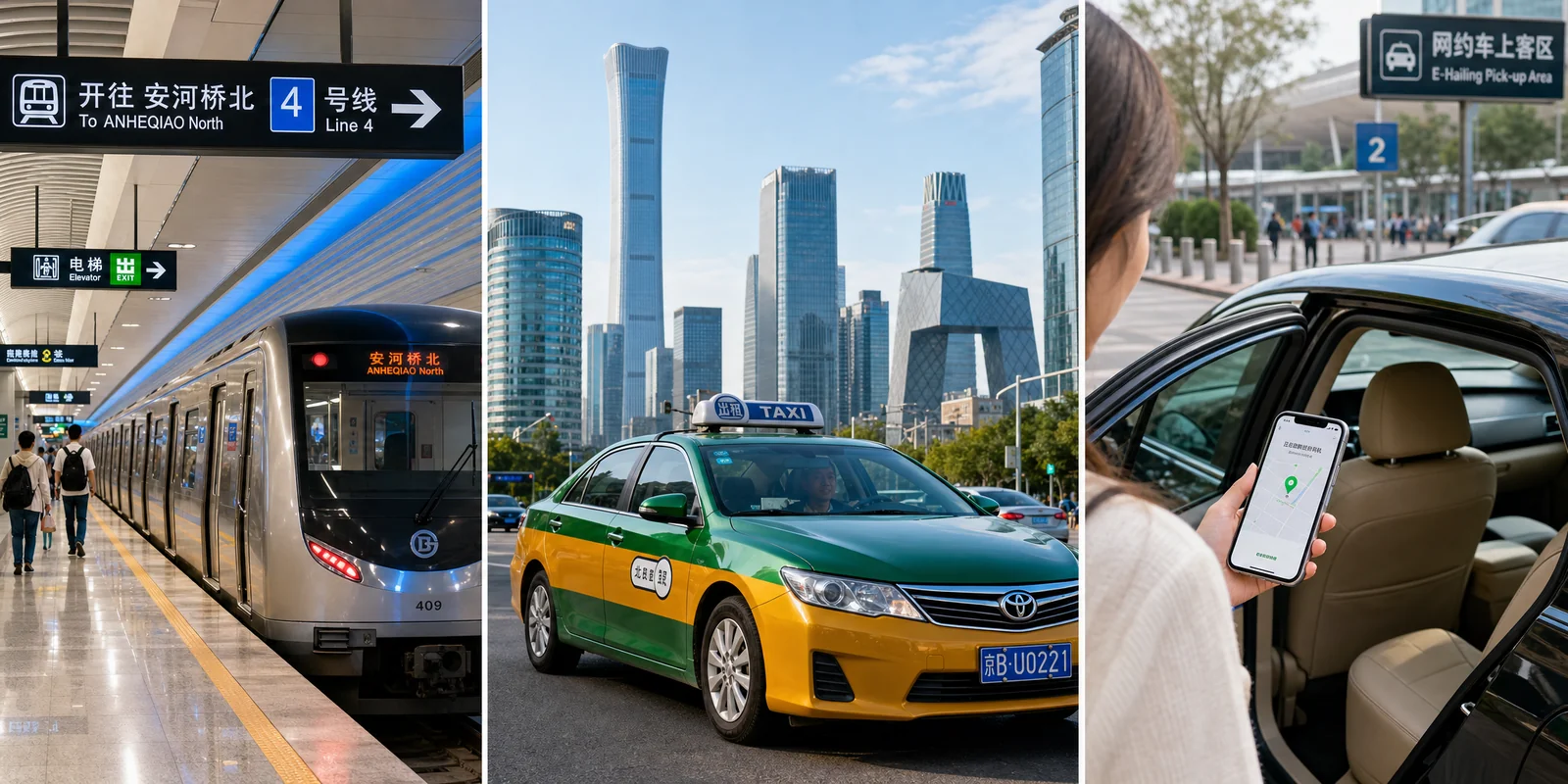
City Transportation in China: How to Get Around
Metros, taxis, buses, and ride-hailing in Chinese cities — what works for foreign visitors, how to pay, and how to...
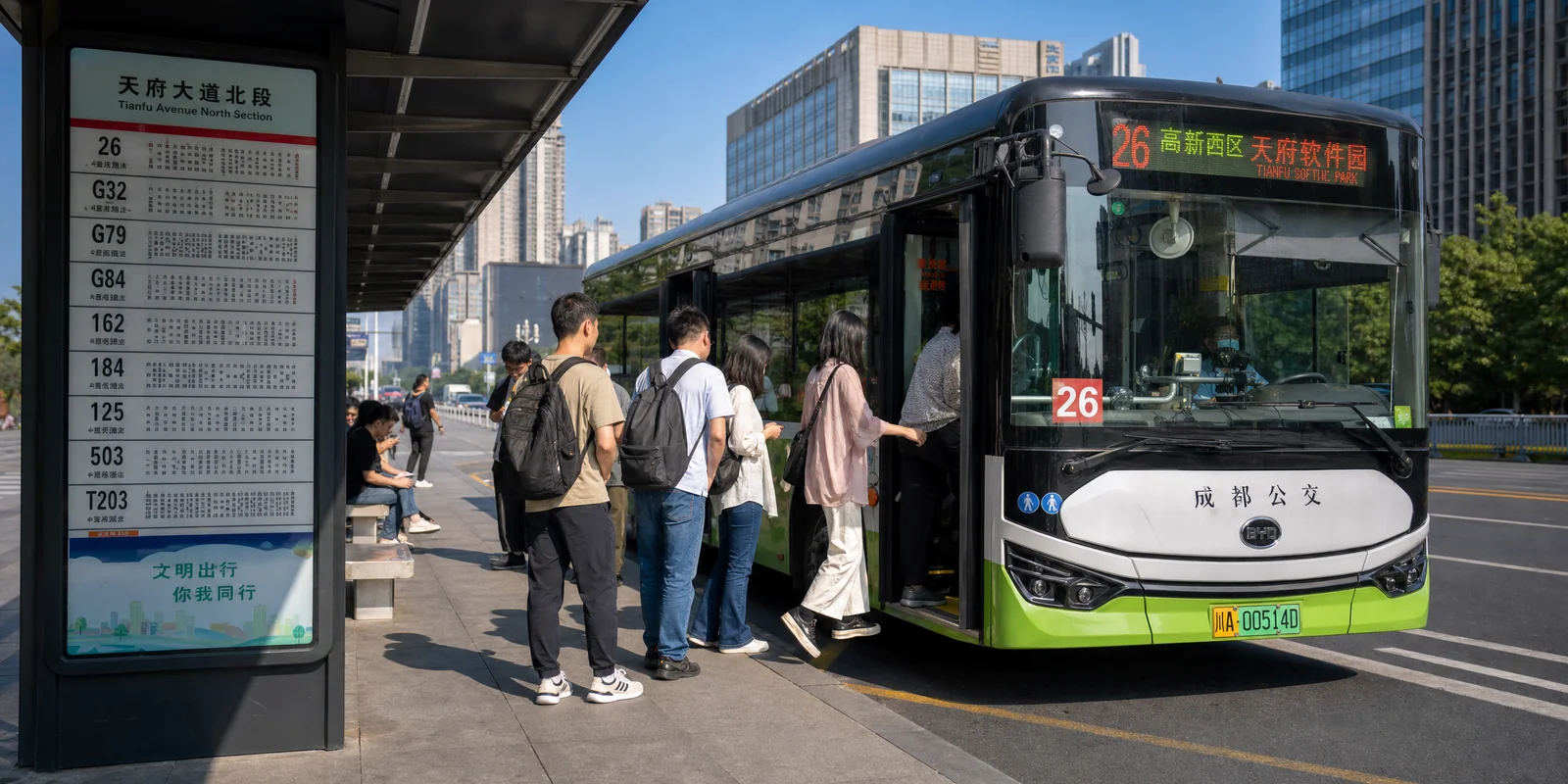
Public Buses Guide
How to ride city buses in China as a foreign visitor: payment options, boarding rules, fares, English support, and...
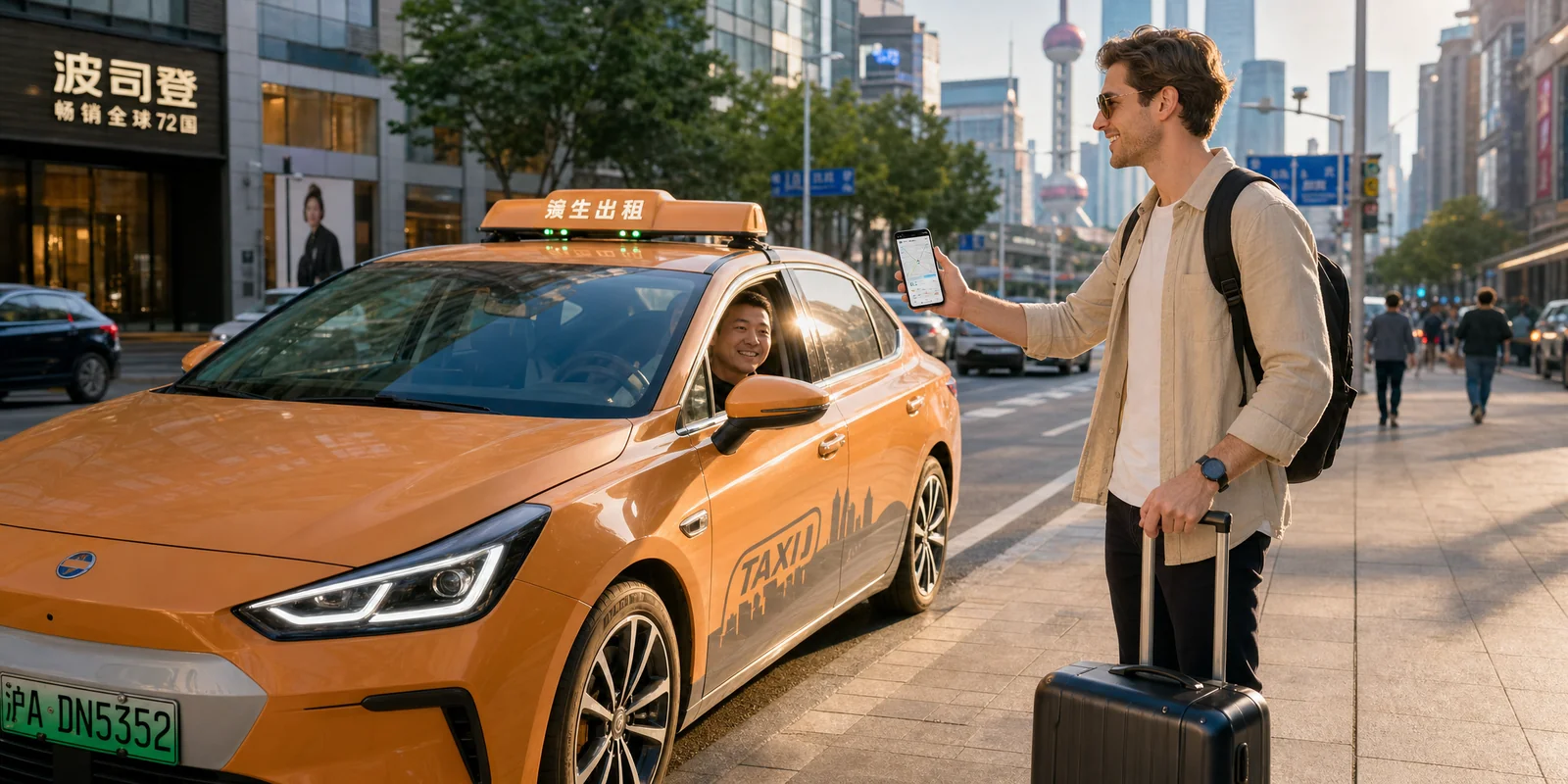
Taxis & Ride-Hailing in China
How to use street taxis and ride-hailing apps like DiDi in China, what fares to expect, and how to avoid the few...