
This article contains affiliate links. If you make a purchase through these links, we may earn a small commission at no extra cost to you. This helps support our work in creating free travel guides.
China's calendar runs on two systems at once. Some holidays follow the lunar calendar, so their dates shift every year — Chinese New Year can land anywhere from late January to mid-February. Others, like National Day, are fixed to the Gregorian calendar. For travelers, the dates matter less than the consequences: certain holidays trigger the biggest human migrations on earth, while others are quiet cultural events you can enjoy without crowds.
This guide lists every major Chinese festival and public holiday, when it falls, and — most importantly — how each one affects your trip. Some are worth planning a trip around. Two of them are worth planning a trip against.
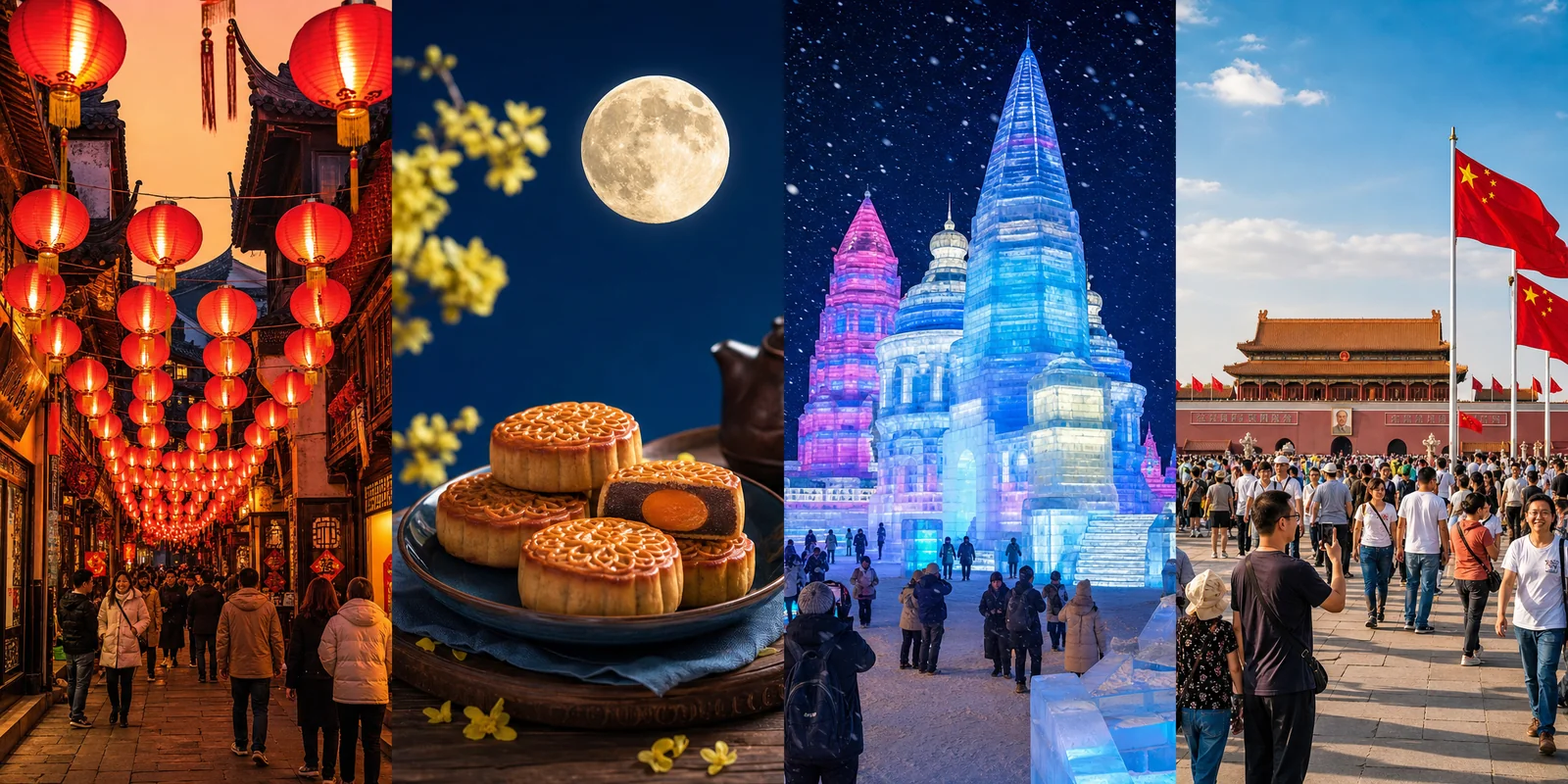
How Chinese Holidays Work
China has seven official public holidays. The government bundles them into longer breaks by shuffling weekends — you'll often see a "holiday" of three days that's actually made by working an adjacent Saturday or Sunday. The exact arrangement (called the holiday schedule, 放假安排, fàngjià ānpái) is published by the State Council late each year for the year ahead.
Two of these breaks — Chinese New Year and National Day's "Golden Week" — are when nearly the entire country travels at once. Trains sell out weeks ahead, popular sites hit capacity, and prices spike. The other holidays are shorter and far more manageable.
The Major Public Holidays
These are the seven statutory holidays when banks, government offices, and many businesses close. Shops, restaurants, and attractions in tourist cities mostly stay open — but transport and accommodation are where you feel the impact.
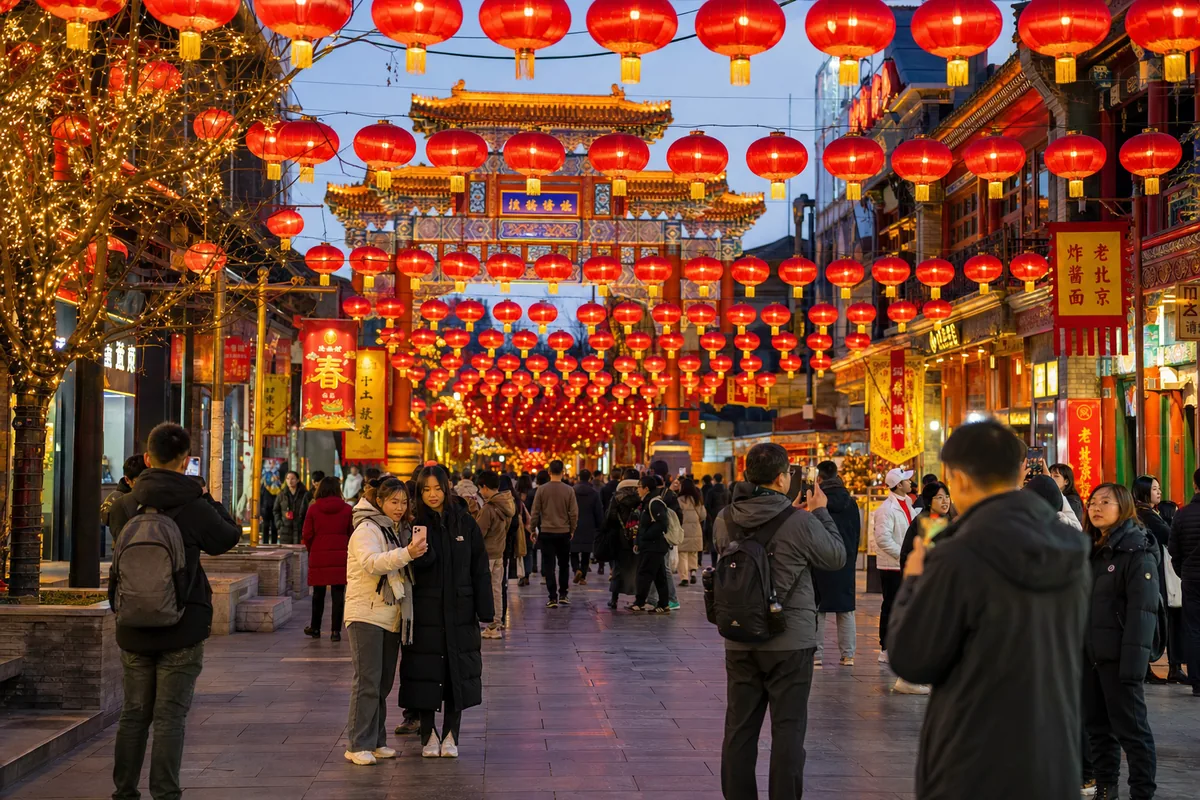
1. New Year's Day (元旦, Yuándàn)
When: January 1, fixed. Usually a one-day holiday, sometimes bridged into three.
A minor holiday by Chinese standards. Some domestic travel happens, but nothing dramatic. Cities are lively, and it's a fine time to visit — just expect slightly busier trains around the date.
2. Chinese New Year / Spring Festival (春节, Chūnjié)
When: First day of the lunar calendar — late January to mid-February depending on the year. The official holiday is around 7-8 days, but the travel rush (春运, chūnyùn) stretches roughly 40 days.
This is the single most important holiday in China and the most consequential for your planning. Hundreds of millions of people travel home, creating the largest annual human migration anywhere. In the days right before and after New Year's Eve, train and plane tickets are nearly impossible to get on popular routes, and prices on flights you can book triple or worse.
Here's the nuance most guides miss: big cities like Beijing and Shanghai actually empty out as migrant workers leave. Many small restaurants and shops close for a week. Meanwhile, hometown destinations and famous temples get packed. If you visit during this period, expect a mix of eerily quiet business districts and intensely crowded temple fairs and scenic spots.
If you do come during Spring Festival, you'll see decorations, fireworks (in cities that allow them), lion dances, and temple fairs. It's a genuinely special time culturally. Just go in with realistic expectations and a locked-in itinerary. See our Chinese New Year Travel Guide for detailed planning.
3. Qingming Festival / Tomb-Sweeping Day (清明节, Qīngmíngjié)
When: Around April 4-6, tied to the solar term. Usually a one-day holiday, often bridged to three.
Families visit ancestors' graves to clean them and leave offerings. For travelers, this is a short break that triggers a wave of domestic short-haul trips. It coincides with spring, so popular scenic spots and gardens get busy, but it's nowhere near Golden Week intensity. A long weekend to plan around lightly, not avoid.
4. Labour Day / May Day (劳动节, Láodòngjié)
When: May 1, often bridged into a five-day break.
This has grown into a significant domestic travel period — sometimes called a "mini Golden Week." Five days off means crowded attractions, higher hotel prices, and busy trains. It's not as extreme as October's Golden Week, but if you can avoid major sights during these exact dates, do. Book accommodation and train tickets at least two to three weeks ahead.
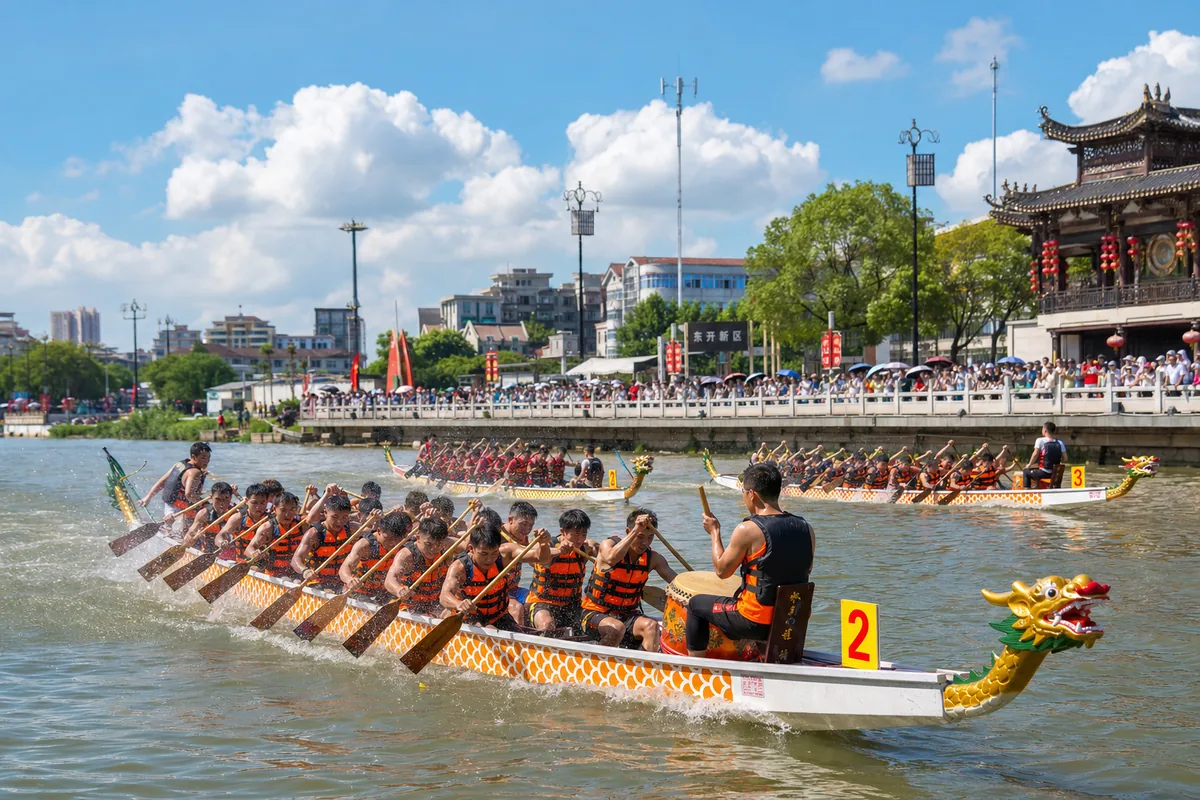
5. Dragon Boat Festival (端午节, Duānwǔjié)
When: Fifth day of the fifth lunar month — typically June. Usually a one-day holiday bridged to three.
Commemorates the poet Qu Yuan. People eat sticky-rice dumplings wrapped in bamboo leaves (粽子, zòngzi) and, in some regions, watch dragon boat races. A pleasant cultural holiday with moderate travel impact. The races in places like Guangzhou, Hong Kong, and along southern rivers are genuinely worth seeing.
6. Mid-Autumn Festival (中秋节, Zhōngqiūjié)
When: 15th day of the eighth lunar month — usually September, occasionally early October. Often falls near or merges with National Day, creating a longer combined break in some years.
The second-most important traditional holiday after Spring Festival. Families gather, eat mooncakes (月饼, yuèbǐng), and admire the full moon. When Mid-Autumn falls right before National Day, the two combine into a single extra-long holiday, which dramatically intensifies travel. Check the dates for your year — a merged break means peak crowds and prices.
7. National Day & Golden Week (国庆节, Guóqìngjié)
When: Starts October 1, fixed. The break runs seven days, known as Golden Week.
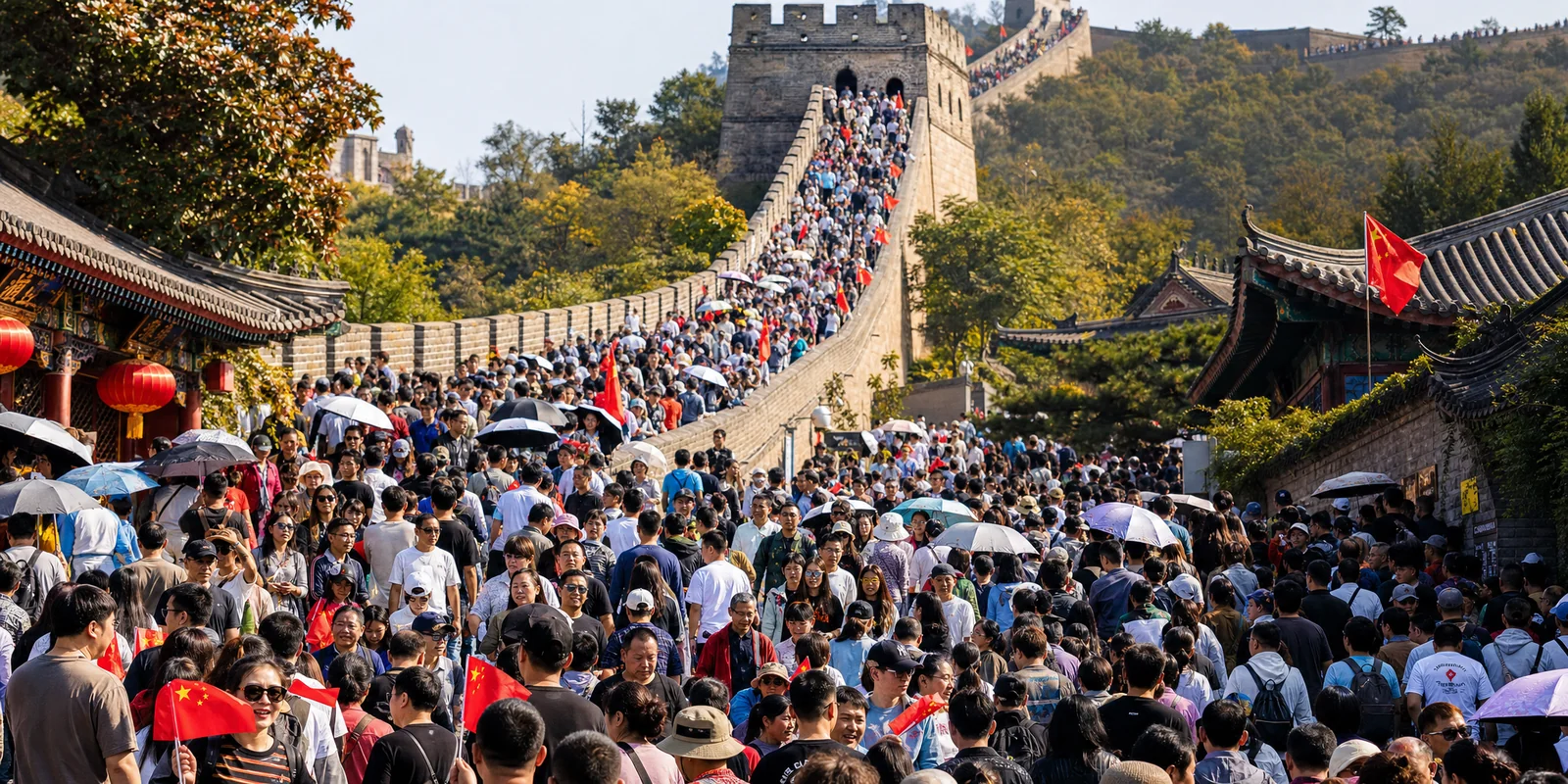
This is the other period to plan around carefully. Like Spring Festival, the entire country travels — but unlike Spring Festival, the crowds concentrate on tourist destinations rather than dispersing to hometowns. The Great Wall, Forbidden City, Zhangjiajie, West Lake — all of them hit visitor caps. Hotel prices in tourist cities can double or triple, and high-speed trains on popular routes sell out the moment booking opens.
If you must travel during Golden Week, focus on less-famous cities, book everything early, and brace for queues. Our Golden Week Survival Guide covers strategies in detail.
Quick Reference: Holidays & Travel Impact
| Holiday | Approximate Timing | Length | Travel Impact |
|---|---|---|---|
| New Year's Day | January 1 | 1-3 days | Low |
| Spring Festival | Late Jan – mid-Feb | 7-8 days (40-day rush) | Extreme |
| Qingming | Early April | 1-3 days | Low-Moderate |
| Labour Day | May 1 | Up to 5 days | High |
| Dragon Boat | Around June | 1-3 days | Moderate |
| Mid-Autumn | Sept – early Oct | 1-3 days (more if merged) | Moderate-High |
| National Day (Golden Week) | October 1 | 7 days | Extreme |
Cultural Festivals Worth Experiencing
Beyond the official holidays, China has rich regional and cultural festivals that don't shut down the country but offer something special if your timing lines up. These are the ones we'd actively plan a trip around.
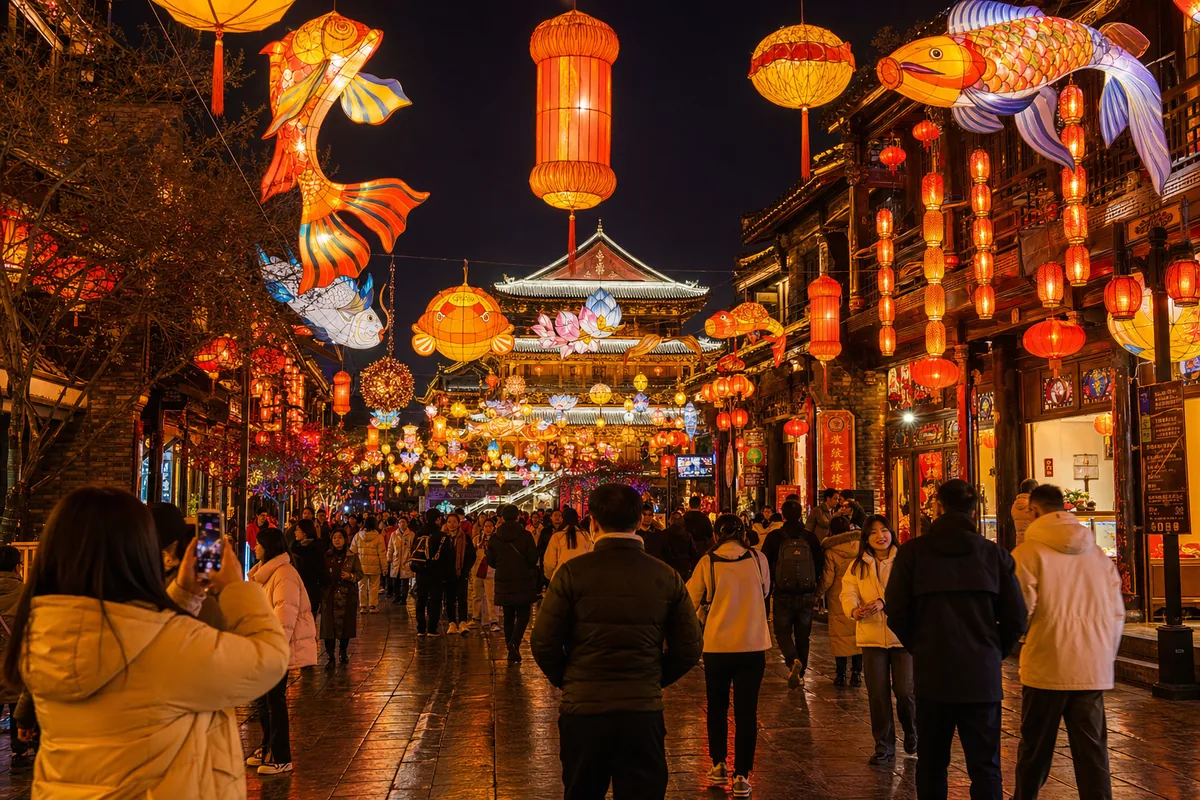
Lantern Festival (元宵节, Yuánxiāojié)
When: 15th day of the first lunar month — about two weeks after Chinese New Year, usually February.
Marks the end of the Spring Festival period. Cities and temples light up with lanterns, and people eat sweet glutinous rice balls (汤圆, tāngyuán). Pingyao, Nanjing, and Xi'an put on particularly good lantern displays. Crowds are manageable since the main New Year rush has passed.
Harbin Ice and Snow Festival
When: Roughly January through February, in the northeastern city of Harbin.
Enormous illuminated buildings carved entirely from ice, plus snow sculptures and winter activities. It's bitterly cold — often -20°C or below — but the scale is unlike anything else. If you're visiting China in deep winter, this is a strong reason to head northeast. See our Harbin Winter Guide for practical details.
Water Splashing Festival (泼水节, Pōshuǐjié)
When: Mid-April, celebrated by the Dai people in Yunnan, especially Xishuangbanna.
The Dai New Year, where people splash water on each other for good fortune. It's a joyful, soaking-wet street celebration. If you're in southern Yunnan in April, it's a highlight worth timing your visit for.
Torch Festival (火把节, Huǒbǎjié)
When: Around the 24th day of the sixth lunar month — usually July or August, celebrated by the Yi and other ethnic groups in Yunnan and Sichuan.
People light torches, dance, and gather around bonfires. Around Dali and the surrounding mountains, it's a vivid window into ethnic-minority culture.
Tibetan and Other Regional Festivals
Tibet, Inner Mongolia, and other regions have their own calendars — Tibetan New Year (Losar), the Nagqu horse racing festival, and Inner Mongolia's Naadam among them. These require more planning and often fall in remote areas, but they're deeply rewarding. Check regional timing carefully, as many follow their own lunar systems.
Planning Around the Calendar
Here's the short version of how to use all this:
- Avoid for big-name sights: Spring Festival (the few days around New Year's Eve) and National Day Golden Week (first week of October). Also be cautious during the five-day Labour Day break.
- Plan around lightly: Qingming, Dragon Boat, and Mid-Autumn create busy long weekends but won't ruin a trip.
- Worth timing a trip for: Lantern Festival, Harbin Ice and Snow Festival, Water Splashing Festival, and regional ethnic celebrations — these add something you can't get any other time of year.
For travelers who want crowds low and weather good, the sweet spots are generally spring (April-May, outside the holidays) and autumn (September-October, outside Golden Week). See our Best Time to Visit China guide for a full breakdown by season and region.
Confirming Dates Before You Book
Because lunar holidays shift and the bridged-weekend arrangement changes yearly, always confirm the official schedule before committing to dates. The State Council publishes the holiday arrangement each year. For an English overview of public holidays and their dates, the official Chinese government portal publishes annual holiday notices. China's national rail booking platform, 12306, also lets you see exactly when tickets become scarce as a date approaches.
Key Takeaways
China's festival calendar blends shifting lunar holidays with fixed public ones. The two you must plan around are Spring Festival and National Day Golden Week — during both, the entire country moves at once and popular routes and sites overload. The rest are manageable long weekends. Meanwhile, cultural festivals like the Lantern Festival, Harbin's ice spectacle, and Yunnan's water-splashing celebration are reasons to time a trip rather than avoid one.
Your next step: pick your rough travel window, check the official holiday schedule for that specific year, and book trains and hotels early if any major holiday overlaps. For learning how the booking rush works, read How to Book Train Tickets.
Last updated: June 2026
Read in other languages
Last train times for 10 Chinese metro systems
Every line and station, checked by hand — the same data behind our offline route planner.
Get the WaysChina App
Offline guides, currency converter, essential phrases, and more — all in your pocket.

Related Articles
Autumn Travel in China
Autumn is arguably the best season to visit China: comfortable weather, clear skies, golden foliage, and the...
Best Time to Visit China
China spans subtropical beaches to subarctic forests, so the best time to visit depends entirely on where you're...
Chinese New Year Travel Guide
Traveling to China during Chinese New Year means festive cities, closed shops, and the world's largest annual...
Golden Week Survival Guide
China's National Day holiday triggers the largest domestic travel rush of the year. Here's how to decide whether to...