
This article contains affiliate links. If you make a purchase through these links, we may earn a small commission at no extra cost to you. This helps support our work in creating free travel guides.
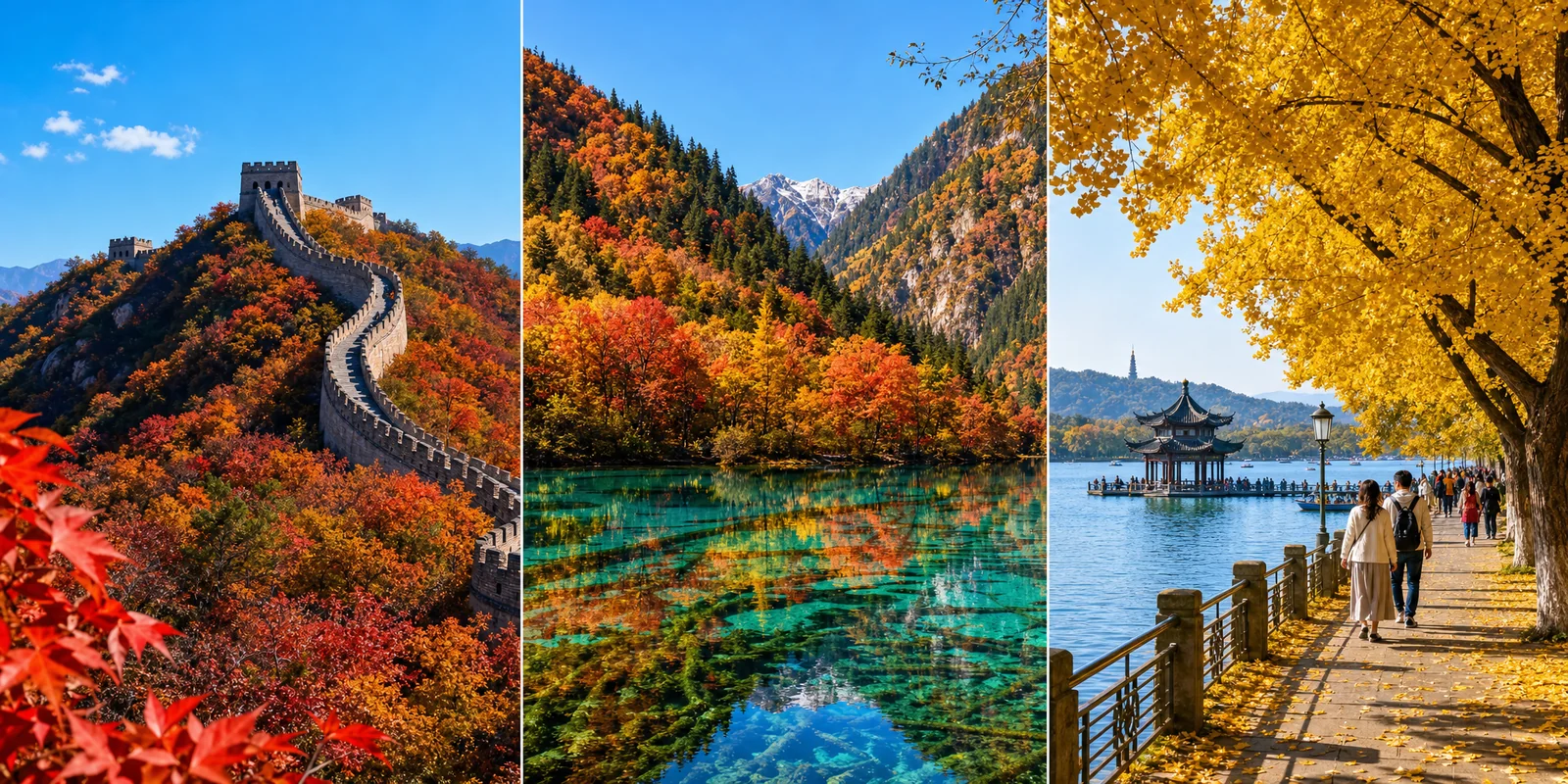
For most travelers, autumn is the best window to see China. From late September through November, the summer humidity breaks, the skies clear up, and temperatures across much of the country sit in a comfortable range for walking and sightseeing. You also get fall foliage in the north and west, the Mid-Autumn Festival, and harvest season in the countryside. The one thing you genuinely need to plan around is the National Day Golden Week (October 1–7), when domestic travel peaks and prices spike. This guide covers the weather month by month, what to pack, the best destinations for autumn color, and how to time your trip.
Why Autumn Is the Best Time to Visit China
If you ask people who live here, autumn and spring are the two seasons they'd recommend to a first-time visitor — and autumn often wins. Here's why:
- Stable, dry weather. September to November brings the lowest rainfall of the year across most of eastern and northern China. Fewer rained-out days means more reliable sightseeing.
- Comfortable temperatures. The brutal summer heat in cities like Beijing, Xi'an, and Shanghai fades to pleasant daytime highs in the 15–25°C (59–77°F) range for much of the season.
- Clear skies. Autumn has some of the clearest air of the year in the north, which matters if you want decent photos of the Great Wall or the Forbidden City.
- Fall color. Maples, ginkgos, and larches turn red and gold from late October into November, and China has some genuinely spectacular foliage spots.
For a season-by-season comparison, see our guide to the best time to visit China.
China Autumn Weather, Month by Month
China is huge, so "autumn" looks very different depending on where you are. Here's a rough breakdown for the most-visited regions.
| Region | September | October | November |
|---|---|---|---|
| Beijing & North | Warm, 20–28°C, occasional rain early | Crisp & clear, 10–20°C — peak season | Cold, 2–12°C, foliage at the Great Wall |
| Shanghai & East | Warm & humid, 23–30°C | Mild & pleasant, 16–24°C | Cool, 9–18°C |
| Xi'an & Central | Mild, some rain, 18–27°C | Clear & comfortable, 10–20°C | Cold, 2–13°C |
| Chengdu & Southwest | Humid, overcast, 20–28°C | Mild, 15–23°C | Cool & damp, 8–17°C |
| Guilin & South | Warm, 24–32°C | Pleasant, 20–28°C | Mild, 13–22°C |
| Harbin & Northeast | Cool, 12–22°C | Cold, 2–14°C, early foliage | Freezing, -8–4°C |
The short version: September is still summer-warm in the south and east, October is the sweet spot almost everywhere, and November turns genuinely cold in the north. For a deeper look at regional patterns, check our weather by region guide.
What to Pack for Autumn in China
The key challenge is the temperature swing. Autumn days can be warm while mornings and evenings get cold, especially in the north and at altitude. Layers solve almost everything.
- September: Mostly summer clothing — t-shirts, light pants — plus a light jacket for evenings in the north.
- October: Layers. A long-sleeve shirt, a sweater or fleece, and a packable jacket. Comfortable walking shoes are essential.
- November: A proper warm coat for the north (Beijing, Xi'an, Harbin), plus a hat and gloves toward month's end. The south stays mild.
Don't forget a small umbrella for early-September rain in the south, and sunglasses — autumn light is bright and low. For a full breakdown by season, see our clothing by season checklist.
Best Autumn Destinations in China
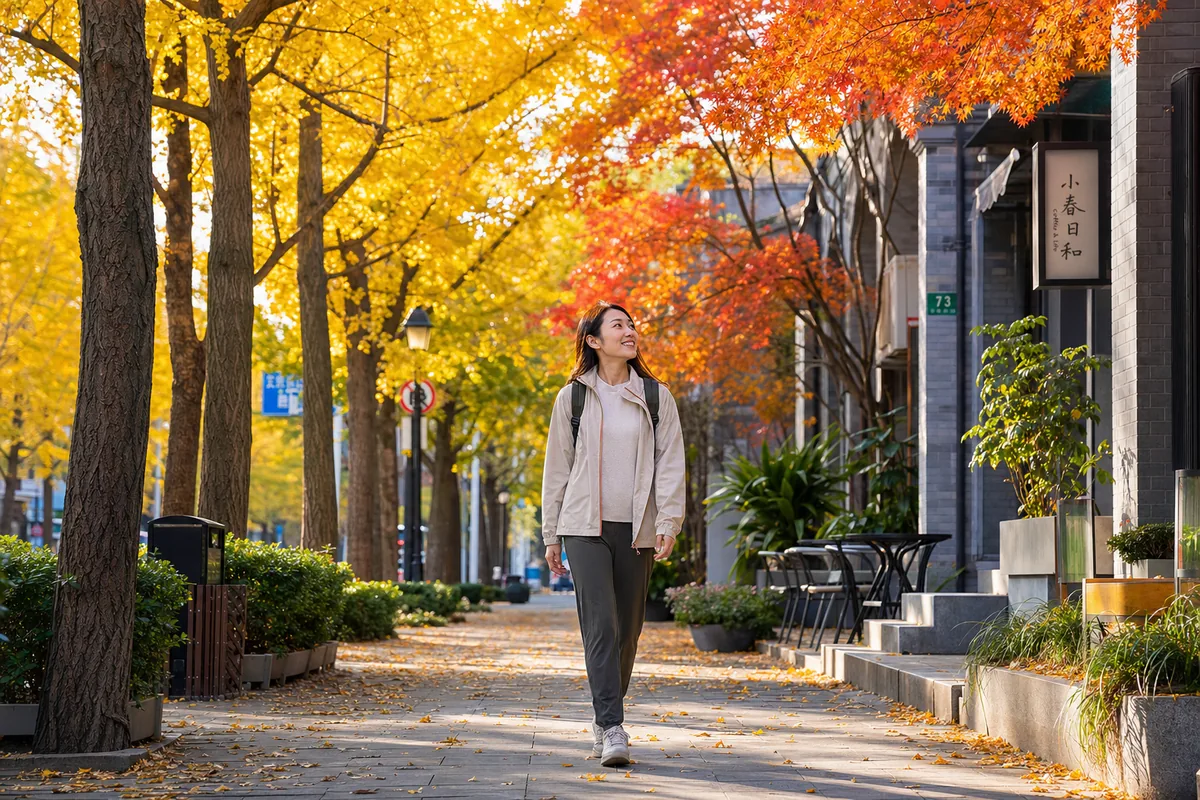
Autumn rewards travelers who chase color and clear weather. These are the destinations that are noticeably better in fall than at other times of year.
Beijing and the Great Wall
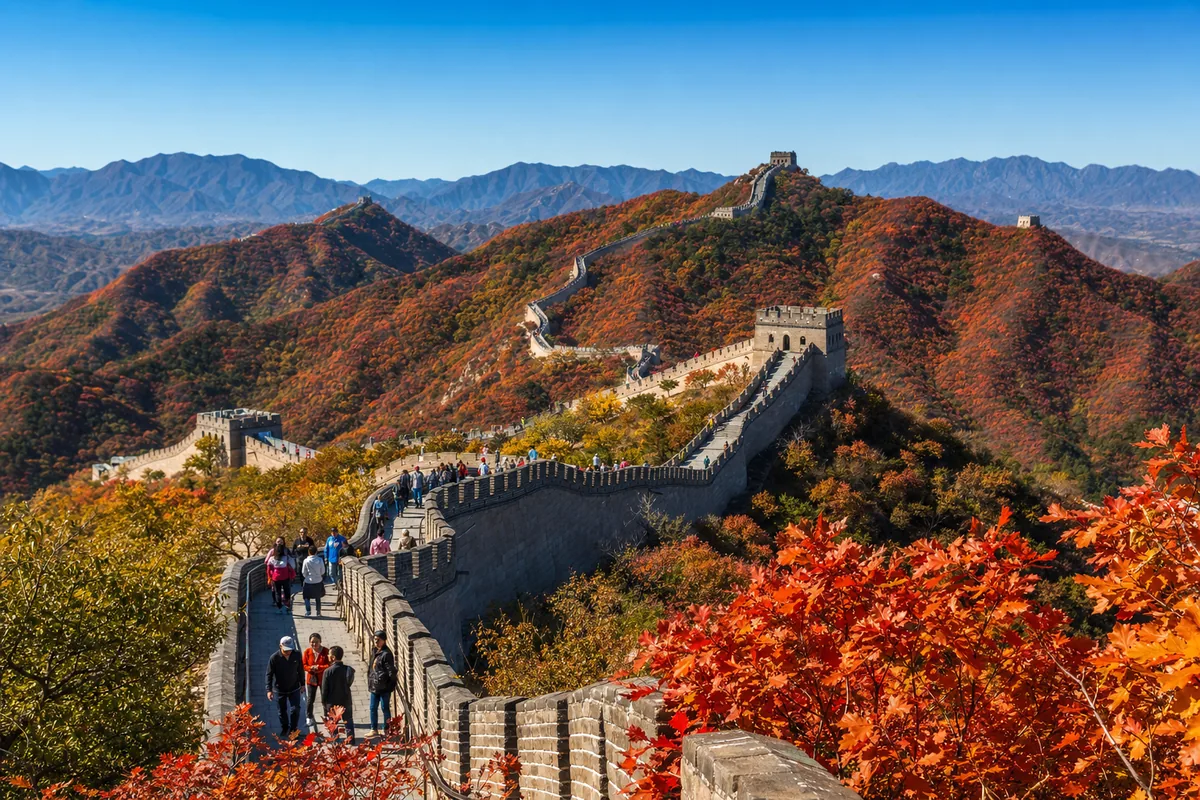
October is Beijing's finest month. The air is clearer than in summer, the heat is gone, and the trees around the city — especially the maples at Fragrant Hills (香山, Xiāngshān) — turn deep red in late October to early November. The Mutianyu and Jinshanling sections of the Great Wall are spectacular with autumn foliage draping the ridgelines. Just know that Fragrant Hills gets extremely crowded on autumn weekends; go on a weekday and arrive early.
Plan a few days here with our 3-day Beijing itinerary.
Jiuzhaigou and Sichuan
Jiuzhaigou (九寨沟, Jiǔzhàigōu) in northern Sichuan is one of China's most famous autumn destinations, and for good reason. From mid-October to early November, the turquoise lakes reflect forests of red, orange, and gold. It's a multi-colored valley you have to see in person. Combine it with a stay in Chengdu — the Chengdu complete guide covers the gateway city, pandas, and food.
Huangshan (Yellow Mountain)
The granite peaks of Huangshan in Anhui province are dramatic year-round, but autumn brings clearer skies and a better chance of the famous "sea of clouds" without summer's haze. Cooler temperatures also make the long stair climbs far more bearable.
Hangzhou and the Jiangnan Water Towns
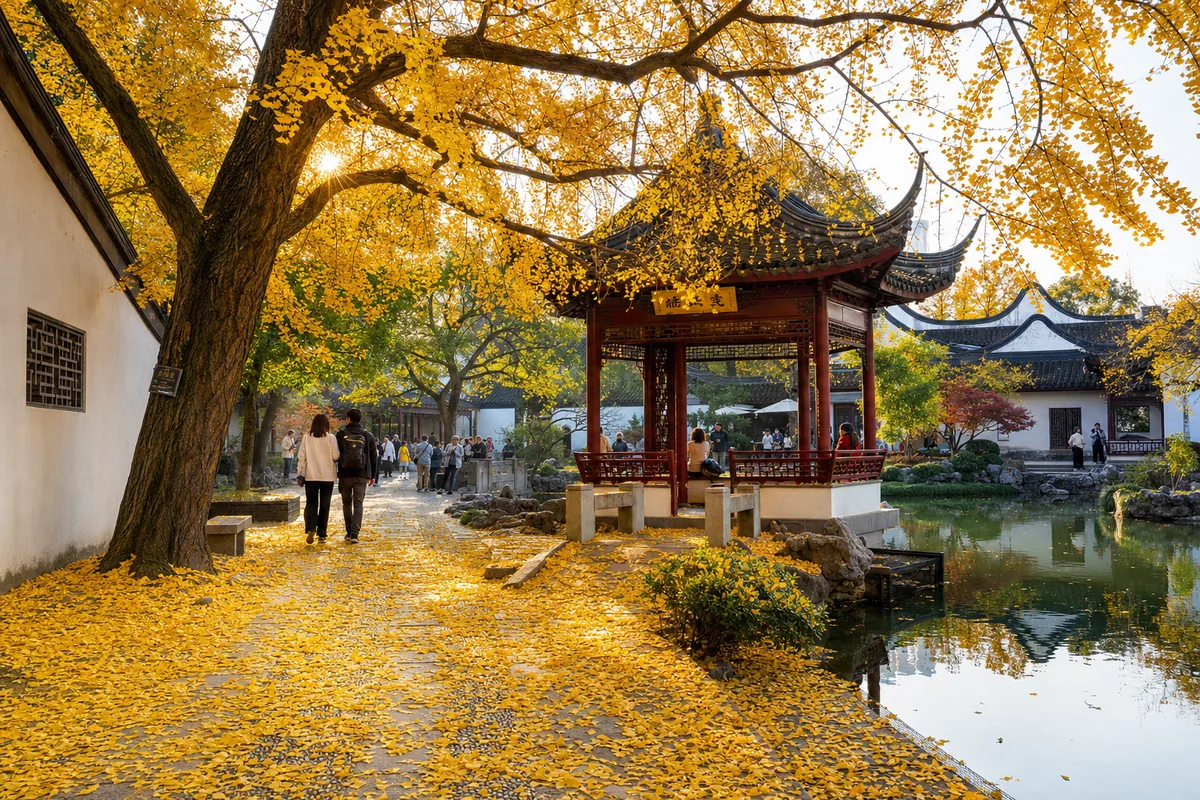
The classical gardens of Suzhou and the West Lake in Hangzhou are gentle and atmospheric in autumn, with ginkgo and maple turning the lakeside golden in November. It's also osmanthus season — the small orange flowers perfume entire streets in Hangzhou, and you'll find the scent in tea and desserts. The Jiangnan water towns route ties Shanghai, Hangzhou, and Suzhou together.

Xinjiang and Kanas Lake
Far to the northwest, the Kanas (喀纳斯, Kānàsī) region in Xinjiang has some of China's most striking early-autumn scenery: birch and larch forests turning gold against snow-dusted peaks, usually peaking from mid-September to mid-October. It's remote and requires more planning, but it's a standout for travelers who want something off the usual circuit.
Zhangjiajie
The sandstone pillars of Zhangjiajie in Hunan are stunning in autumn, when cooler air brings clearer views and the surrounding forest takes on color. Fewer summer storms mean the famous quartz-sandstone columns are more reliably visible.
The Mid-Autumn Festival
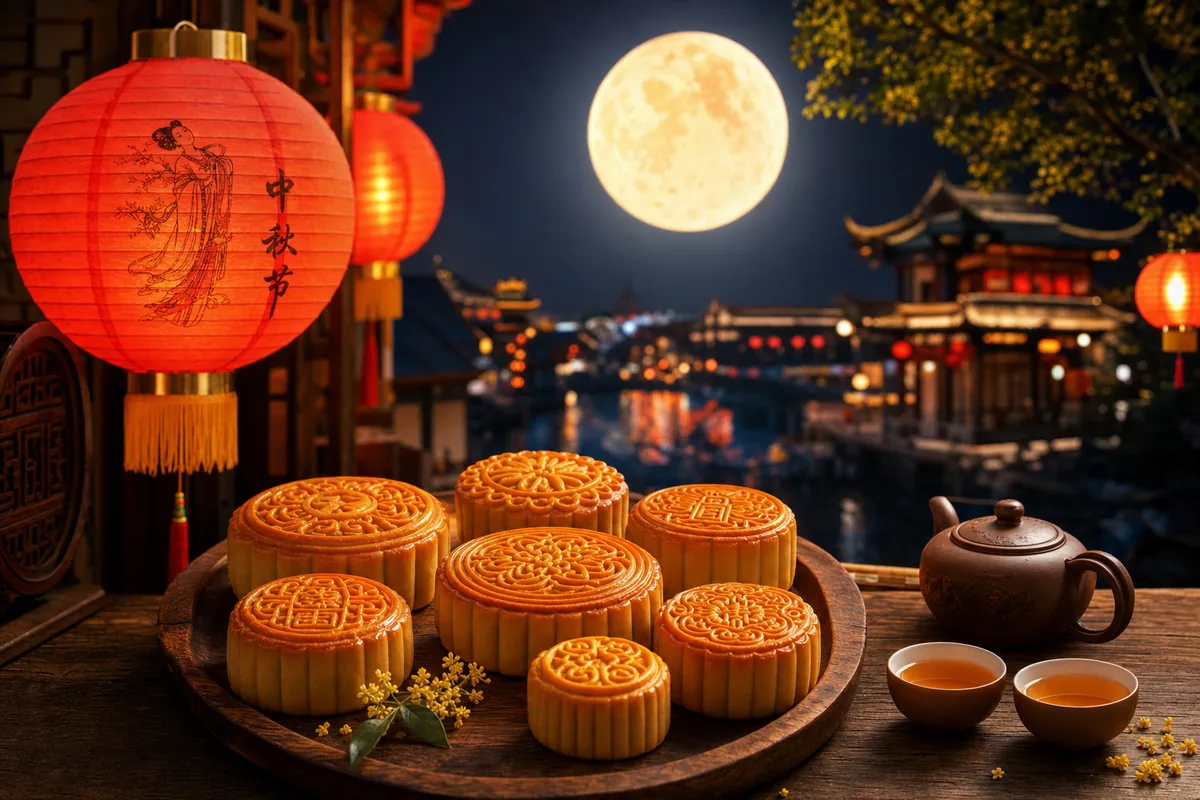
The Mid-Autumn Festival (中秋节, Zhōngqiū Jié) is one of China's most important traditional holidays, falling on the 15th day of the 8th lunar month — usually mid-to-late September or early October. It's a harvest and family-reunion festival centered on the full moon.
What you'll experience as a visitor:
- Mooncakes (月饼, yuèbǐng): Dense, round pastries with fillings like lotus seed paste, red bean, or salted egg yolk. They're everywhere in the weeks beforehand, and they make a good edible souvenir.
- Lanterns and night markets: Many cities hold lantern displays and evening events. Parks and historic districts light up.
- Moon-gazing: Families gather outdoors to admire the full moon. Lakeside spots and rooftops fill up.
Practically speaking, Mid-Autumn is a public holiday, so expect a short surge in domestic travel around it — though it's far milder than Golden Week. To see how it fits with other holidays, check the festival calendar.
Avoiding the National Day Golden Week
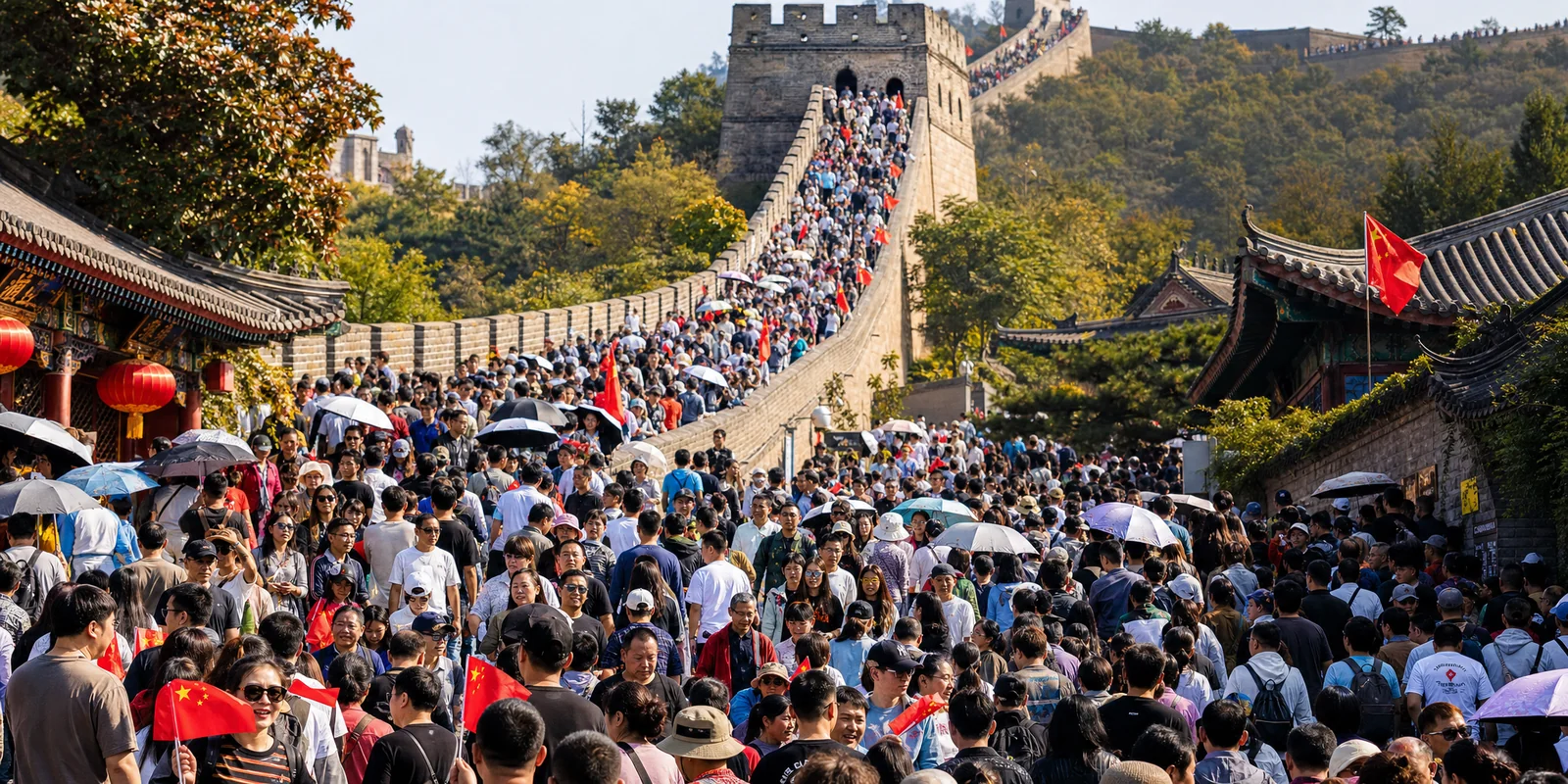
This is the single most important thing to plan around in autumn. National Day Golden Week runs October 1–7, marking the founding of the People's Republic. Hundreds of millions of Chinese travel domestically during this week, and it affects you whether you celebrate it or not.
Your options:
- Best: Schedule your trip to avoid October 1–7 entirely. Travel in mid-to-late September, or after October 8. The week after Golden Week is excellent — good weather, thinning crowds.
- If you must travel during the holiday: Book hotels and trains the moment tickets open (train tickets release about 15 days in advance). Favor lesser-known destinations over headline sights. Expect to pay more and queue more.
For detailed survival strategies, read our dedicated Golden Week survival guide. Train tickets can be booked through the official China Railway 12306 platform, and you'll want to book early. Our guide to booking train tickets walks through the process.
Booking Accommodation in Autumn
Outside Golden Week, autumn accommodation is reasonably priced and widely available. Inside Golden Week and the Mid-Autumn weekend, book as far ahead as you can. Foliage hotspots like Jiuzhaigou and Fragrant Hills get tight specifically during peak color, even on ordinary weekends.
For destinations like Beijing, Hangzhou, and Chengdu, comparing options on a platform like Booking through platforms like Booking.com early in your planning helps you lock in the better-located properties before they fill up for the season. If you're booking around the holiday, don't wait.
Autumn Activities Worth Booking
Some of the best autumn experiences benefit from booking ahead, especially around the holiday period:
- Great Wall hiking tours to the Mutianyu or Jinshanling sections, when the foliage is at its peak.
- Jiuzhaigou park entry and shuttle arrangements, which can sell out during peak color.
- Mid-Autumn Festival lantern events and cultural performances.
You can browse and reserve guided experiences in advance through platforms like Klook, which is handy for skip-the-line entries during the busy weeks. For planning metro routes between sights and building a day-by-day plan across major cities, the WaysChina app has offline metro maps and a built-in trip planner.
Practical Tips for Autumn Travel
- Daylight gets shorter. By November, it's dark by around 5:30 pm in the north. Plan outdoor sightseeing for earlier in the day.
- Foliage timing varies year to year. Peak color depends on the weather, so check recent reports before committing to a foliage-specific trip. A week's difference matters.
- The north dries out. Autumn air in Beijing and the northwest is dry — bring lip balm and moisturizer.
- Heating isn't on yet. In northern China, central heating typically switches on in mid-November. Early-November evenings indoors can feel colder than you'd expect.
Summary and Next Steps
Autumn delivers the most reliable combination of good weather, clear skies, and scenery in China — which is exactly why it's a favorite among people who live here. The plan is straightforward: target October for the broadest good weather, head north and west for fall foliage, build in the Mid-Autumn Festival if the dates line up, and steer firmly clear of the October 1–7 Golden Week unless you book everything well in advance.
Start by fixing your dates around the Golden Week calendar, then book trains and key hotels early — especially for foliage destinations. From there, layer your packing for warm days and cold mornings, and you're set for one of the best travel windows China offers.
Related Reading
- Best Time to Visit China — how autumn compares to other seasons
- Golden Week Survival Guide — surviving the October holiday rush
- Festival Calendar — when the Mid-Autumn Festival and other holidays fall
- Clothing by Season — exactly what to pack for autumn
- 3-Day Beijing Itinerary — making the most of peak-season Beijing
Last updated: June 2026
Read in other languages
Last train times for 10 Chinese metro systems
Every line and station, checked by hand — the same data behind our offline route planner.
Get the WaysChina App
Offline guides, currency converter, essential phrases, and more — all in your pocket.

Related Articles
Best Time to Visit China
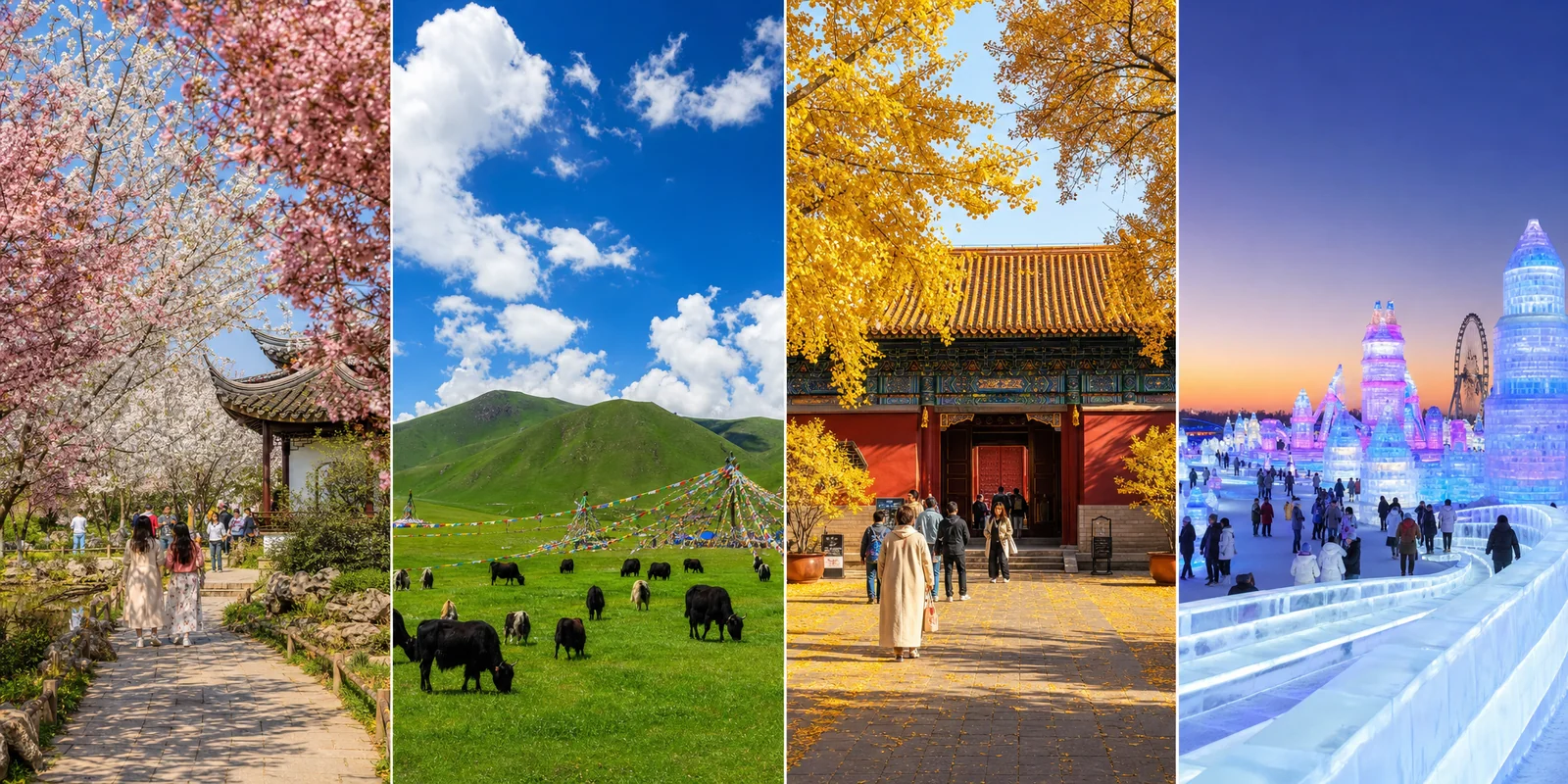
China spans subtropical beaches to subarctic forests, so the best time to visit depends entirely on where you're...
Chinese New Year Travel Guide
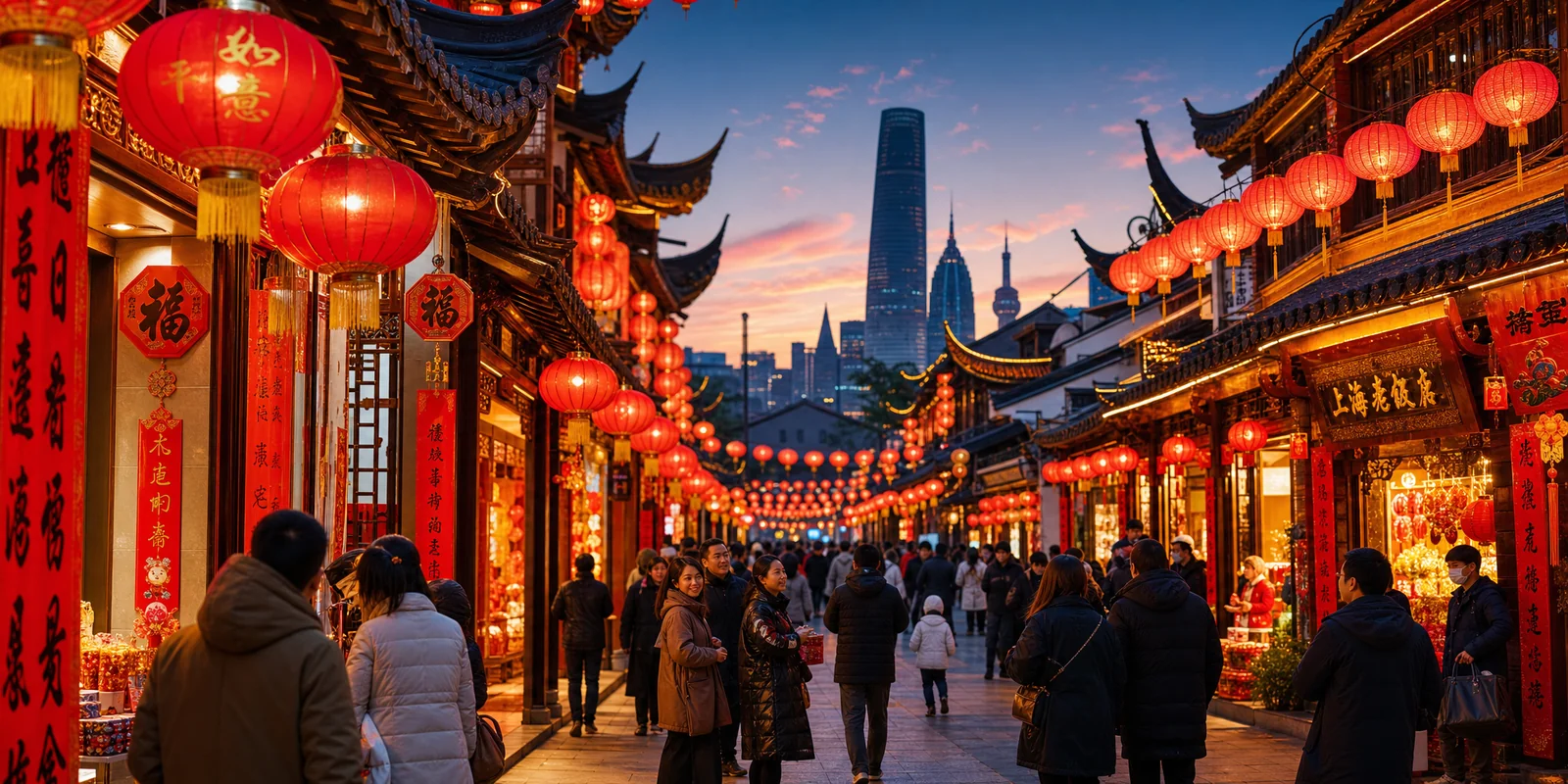
Traveling to China during Chinese New Year means festive cities, closed shops, and the world's largest annual...
Festival Calendar: China's Holidays & Festivals Explained
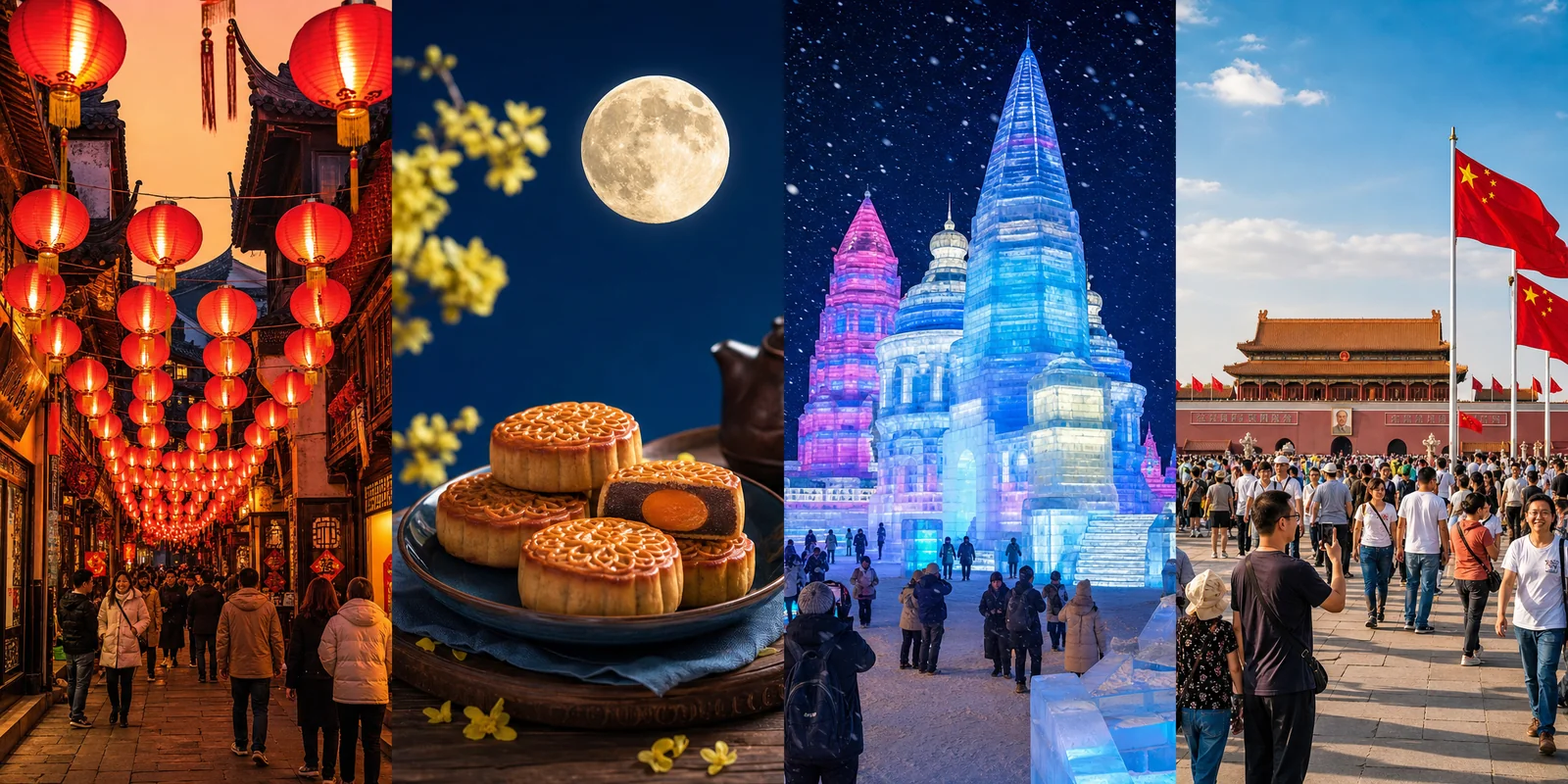
China's festival calendar mixes lunar holidays with fixed public holidays. Here's when each one falls, what closes,...
Golden Week Survival Guide
China's National Day holiday triggers the largest domestic travel rush of the year. Here's how to decide whether to...