
This article contains affiliate links. If you make a purchase through these links, we may earn a small commission at no extra cost to you. This helps support our work in creating free travel guides.
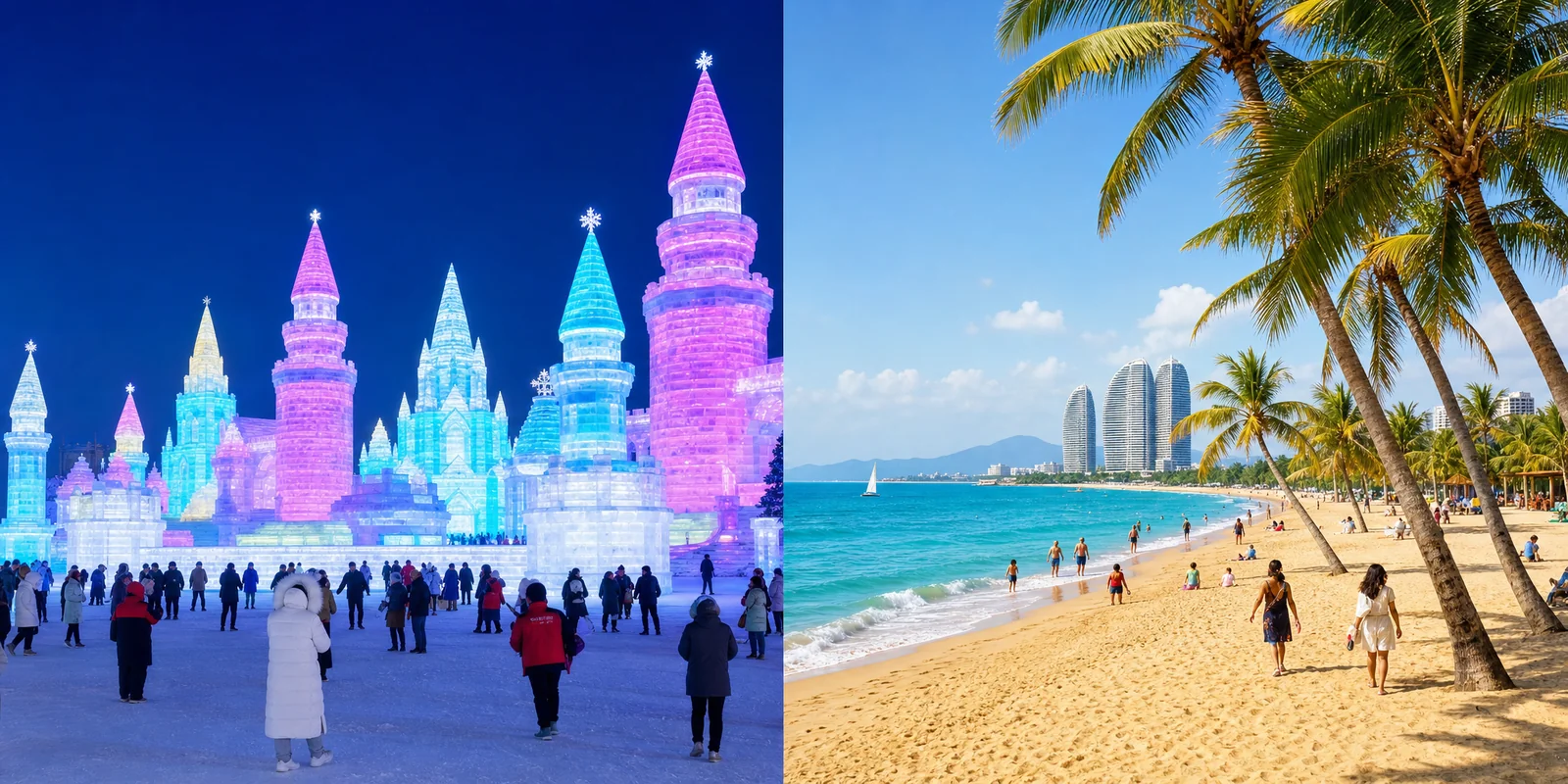
Winter in China runs roughly from December through February, and it splits the country into two completely different trips. Up north, you get serious cold and world-class ice festivals; down south, you can swim on Hainan's beaches in a T-shirt. Both are valid winter vacations, just very different ones. This guide covers what to expect from the weather region by region, where to go for snow versus warmth, what to actually pack, and the practical things that trip people up in winter — Chinese New Year crowds, indoor heating that varies wildly by region, and how short the daylight gets in the far north.
What Winter in China Is Actually Like
China is huge, so "winter" means radically different things depending on where you stand. There's a well-known reference line — the Qinling Mountains and Huai River — that historically divided where the government provided central heating. North of it, buildings have piped central heating that runs all winter and keeps interiors warm. South of it, including Shanghai, Chengdu, and the Yangtze cities, most buildings have no central heating at all, even though it gets genuinely cold and damp.
This catches a lot of visitors off guard. People expect Harbin to be cold and pack accordingly, then arrive in Shanghai in January and find their hotel room chilly, the restaurant unheated, and the damp cold cutting through more than they expected. Air conditioners that double as heaters are common in the south, but they're nowhere near as effective as northern central heating.
Rough Temperatures by Region in Winter
| Region / City | Typical Jan Daytime | What to Expect |
|---|---|---|
| Harbin (Northeast) | -15°C to -25°C | Deep cold, snow, ice festival; well-heated indoors |
| Beijing (North) | -5°C to 5°C | Cold, dry, mostly sunny; warm interiors |
| Shanghai / Hangzhou | 3°C to 9°C | Damp cold, little snow, often no indoor heating |
| Chengdu / Chongqing | 5°C to 12°C | Gray, humid, rarely freezing |
| Kunming (Yunnan) | 10°C to 18°C | Mild, sunny, "Spring City" weather |
| Sanya (Hainan) | 22°C to 28°C | Warm, beach weather all winter |
For a deeper breakdown including rainfall and humidity, see our Weather by Region guide.
The Big Question: Snow or Sun?
Most people planning a winter trip to China fall into one of two camps. Either you want the snow-and-ice experience that you can't get back home, or you're escaping winter and want somewhere warm. China does both well, so it comes down to what you're after.
For Snow and Ice: Head Northeast
The headline destination is Harbin (哈尔滨, Hā'ěrbīn), capital of Heilongjiang province near the Russian border. Its winter is brutally cold — daytime highs well below freezing, nights down to -25°C or lower — but that cold is exactly what makes the city's signature event possible.
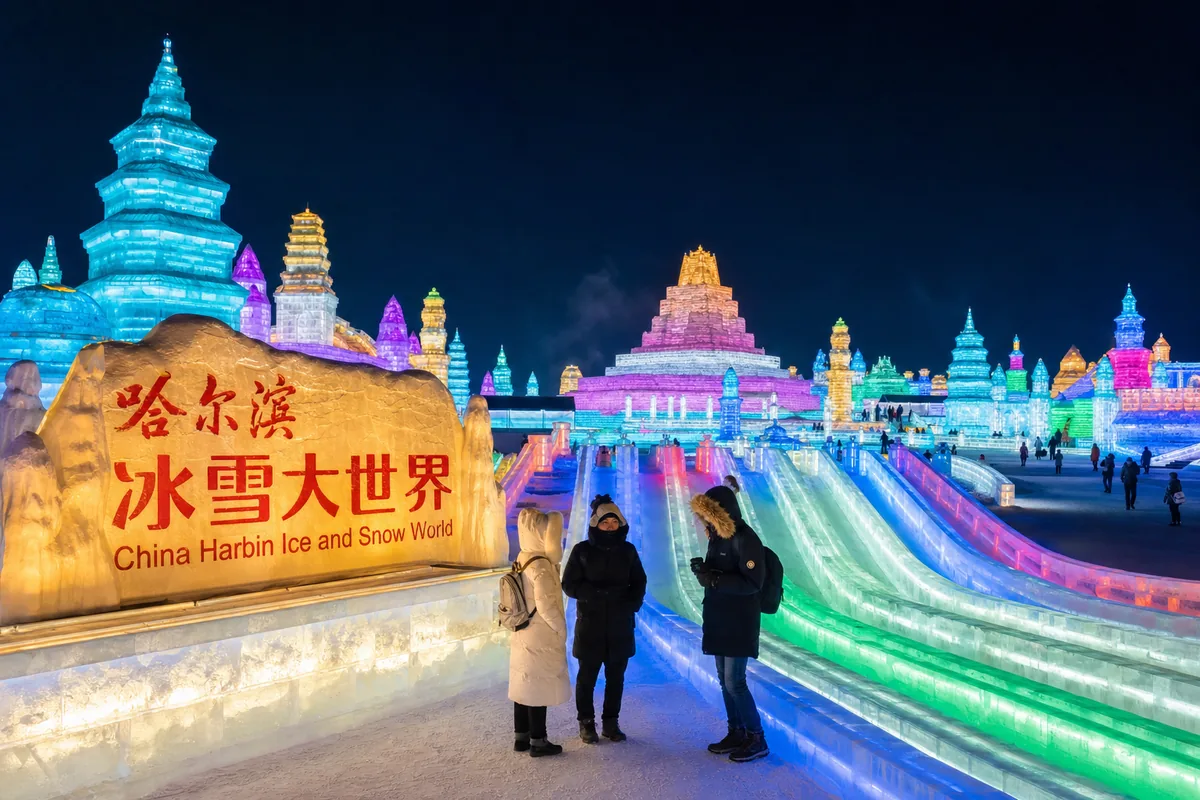
The Harbin International Ice and Snow Festival (哈尔滨国际冰雪节) is the main draw. Crews carve enormous buildings, castles, and slides out of blocks of ice cut from the Songhua River, then light them from inside with colored LEDs. The main park, Ice and Snow World, is best after dark when everything glows. There's also a separate snow sculpture exhibition on Sun Island and an ice lantern park in Zhaolin Park. The festival typically opens in late December or early January and runs through February, though exact dates shift each year — check the current schedule before booking.
Beyond the ice festival, Harbin has a genuinely interesting old town shaped by Russian history. Central Avenue (中央大街, Zhōngyāng Dàjiē) is a cobblestone pedestrian street lined with European-style buildings, and St. Sophia Cathedral is the most photographed landmark in the city. For the full breakdown of timing, tickets, and how to handle the cold, see our Harbin Winter Guide.
If you want to combine Harbin with more of the northeast — including skiing at Changbaishan and the coastal city of Dalian — the Northeast China Route ties them together. Changbaishan (长白山, Chángbáishān) has the region's best ski resorts and a famous crater lake.
For Warmth: Hainan and Yunnan
If your idea of a good winter is no winter at all, two places stand out.
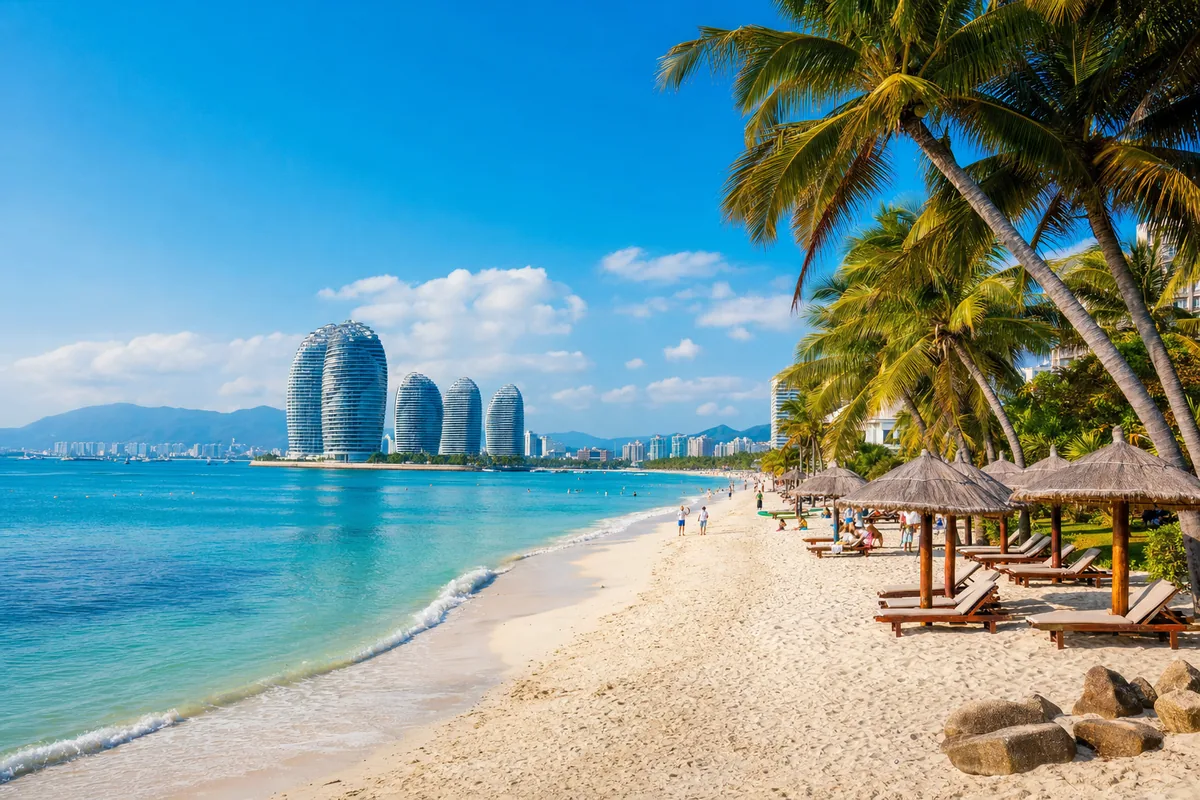
Sanya (三亚), on the southern tip of Hainan Island, is China's tropical beach resort. While Harbin freezes, Sanya sits at 22–28°C with palm trees, warm water, and full beach weather. It's where Chinese tourists go to escape the cold, which means it's busy and prices climb in peak winter, but the weather genuinely delivers. Yalong Bay and Haitang Bay have the big resorts; Dadonghai is more central and budget-friendly. Our Sanya Beach Resort Guide covers where to stay and what to do.
Yunnan, in the southwest, is the milder, more varied option. Kunming is nicknamed the "Spring City" because its winters are sunny and mild — think 15°C and clear skies while much of the country is gray. Dali and Lijiang sit at higher altitude so they're cooler and can get cold at night, but the days are bright and the scenery is the draw: old towns, lakes, and snow-capped mountains in the distance. Yunnan in winter has reliable blue skies, which is a real luxury compared to the haze and gray that settle over much of central and eastern China. See the Yunnan Complete Guide and the Yunnan Circuit route for itineraries.
What About the Classic Cities?
Plenty of people come to China in winter for the headline sights — the Great Wall, the Terracotta Army, the Forbidden City — not for snow or beaches. Winter is actually a strong season for these, with two real advantages: far fewer crowds and lower prices. The trade-off is cold and short days.
Beijing in winter is cold and dry but usually sunny, and the Great Wall under a dusting of snow is one of the best versions of it you can see. Xi'an is similar — cold but manageable, with the Terracotta Army indoors and uncrowded. Both cities have proper central heating, so you're only cold while you're outside.
Shanghai and the Yangtze cities (Suzhou, Hangzhou, Nanjing) are the awkward middle ground. They're not cold enough for snow but cold and damp enough to be uncomfortable, and the lack of indoor heating means you can't fully warm up. They're fine to visit, just dress for it and don't expect cozy interiors everywhere.
The Chinese New Year Factor
The single biggest thing to know about winter travel in China is Chinese New Year (春节, Chūnjié), also called Spring Festival. It falls on a different date each year — anywhere from late January to mid-February — and triggers the largest annual human migration on the planet as hundreds of millions of people travel home.
For roughly a week around the holiday, train and flight tickets sell out far in advance, prices spike, popular destinations get packed, and many small businesses, restaurants, and family-run shops close for several days. It's not a reason to avoid China — the festive atmosphere, lanterns, and fireworks can be a highlight — but it absolutely requires planning. Book transport and hotels well ahead, and don't expect to buy a high-speed train ticket on short notice during this window.
We've covered the details, timing, and survival strategy in the dedicated Chinese New Year Travel Guide. If your trip overlaps the holiday, read it before you book anything.
What to Pack for Winter in China
Your packing list depends entirely on which China you're visiting. Packing for Harbin and packing for Sanya are opposite tasks, and many trips include both extremes.
For the Far North (Harbin, Changbaishan)
You need serious cold-weather gear here — this is colder than most European or North American winters. The key is layering and covering exposed skin:
- A heavy down jacket (a light puffer is not enough)
- Thermal base layers, top and bottom
- Insulated, waterproof boots with good grip — ice is everywhere
- A warm hat that covers your ears, a scarf or face cover, and insulated gloves
- Hand and foot warmers (disposable heat packs) — easy to buy locally and worth it
A solid down jacket and proper insulated boots are the two things worth investing in before you go; you can find well-reviewed options on Amazon. Everything else you can supplement with cheap warm gear once you arrive — northeastern cities sell hats, gloves, and heat packs everywhere.
For the Heated North (Beijing, Xi'an)
Dress warmly for outdoors — coat, hat, gloves — but remember interiors are hot. Layers you can remove easily make the most sense, since you'll go from freezing streets to warm 22°C indoor spaces repeatedly.
For the Unheated South (Shanghai, Chengdu)
This is the layering most people get wrong. The cold is milder but damp and constant, indoors and out. Bring layers you're comfortable wearing all day, including inside — a warm sweater and a windproof jacket beat a single heavy coat you'd want to take off indoors but can't because there's no heating.
For the Tropical South (Sanya, Hainan)
Summer clothes. T-shirts, shorts, swimwear, sunscreen, sandals. If you're flying straight from a northern city, you'll be peeling off thermals in the airport. For a full seasonal breakdown across all regions, see Clothing by Season.
Practical Things to Know
- Air quality: Northern cities can have hazy, polluted days in winter, partly because of coal heating. Beijing has improved a lot in recent years but still gets bad days. A few N95 masks don't hurt if you're sensitive.
- Dry air: Heated northern interiors are extremely dry. Lip balm, moisturizer, and staying hydrated help a lot.
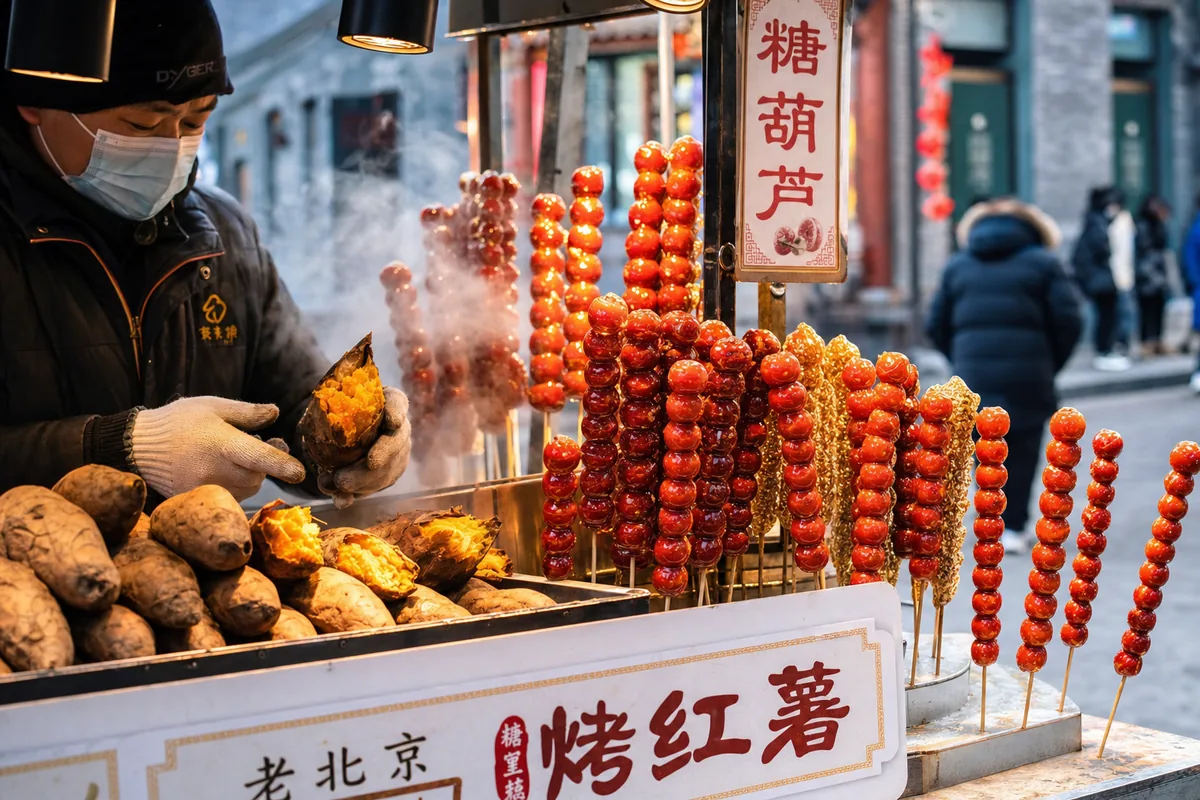
- Hot food is everywhere: Winter is hotpot season, and it's the best time for it. Sichuan hotpot, lamb hotpot in Beijing, and street food like roasted sweet potatoes and candied hawthorn (糖葫芦, tánghúlu) are part of the experience.
- Skiing: Beyond Changbaishan, there are ski resorts near Beijing (Chongli, which hosted Winter Olympic events) and in Xinjiang. Standards have improved a lot, though they're pricier than the rest of a China trip.
Where to Stay
Winter is generally off-season for the classic tourist cities, which means lower hotel prices in Beijing, Xi'an, and the Yangtze cities — a real upside. The exceptions are Harbin during the ice festival and Hainan during peak winter, where demand is high and prices climb; book those well ahead. For Harbin specifically, staying near Central Avenue puts you walking distance from the old town and a short ride from the ice park. You can compare and book accommodation across all these destinations through booking through Booking.com.
If you're moving between cities and want metro maps and a day-by-day planner that works offline, the WaysChina app has offline metro maps for major cities and a built-in trip planner — useful when you're hopping from Beijing to Harbin to wherever's next.
Bottom Line
Winter is an underrated time to visit China, as long as you plan around its quirks. Decide first whether you want snow or sun — Harbin's ice festival and Sanya's beaches are the two anchors, and many travelers do both in one trip. The classic cities are quieter and cheaper in winter, with the trade-off of cold and short days. Pack for the specific regions you're visiting, since the temperature swing from north to south is enormous. And above all, check the Chinese New Year dates against your travel window and book early if they overlap. Get those decisions right and winter gives you a version of China most summer visitors never see.
Next steps: lock in your dates, confirm whether they hit Chinese New Year, and start with our Best Time to Visit China guide if you're still weighing seasons.
Last updated: June 2026
Read in other languages
Last train times for 10 Chinese metro systems
Every line and station, checked by hand — the same data behind our offline route planner.
Get the WaysChina App
Offline guides, currency converter, essential phrases, and more — all in your pocket.

Related Articles
Autumn Travel in China
Autumn is arguably the best season to visit China: comfortable weather, clear skies, golden foliage, and the...
Best Time to Visit China
China spans subtropical beaches to subarctic forests, so the best time to visit depends entirely on where you're...
Chinese New Year Travel Guide
Traveling to China during Chinese New Year means festive cities, closed shops, and the world's largest annual...
Festival Calendar: China's Holidays & Festivals Explained
China's festival calendar mixes lunar holidays with fixed public holidays. Here's when each one falls, what closes,...