
This article contains affiliate links. If you make a purchase through these links, we may earn a small commission at no extra cost to you. This helps support our work in creating free travel guides.
Yunnan sits in China's far southwest, bordering Myanmar, Laos, and Vietnam, and it packs more variety into one province than most countries manage. You go from subtropical rice terraces to 5,000-meter snow peaks, and you pass through villages belonging to 25 of China's officially recognized ethnic minorities along the way. Most travelers do the same core route: Kunming, then north through Dali and Lijiang, ending in Shangri-La near the Tibetan plateau. This guide covers that loop in detail — how to get around, what to eat, where to stay, and how to fit it into 7 to 10 days without rushing.

Why Yunnan, and When to Go
Two things set Yunnan apart. First, the landscape changes fast — you can start a morning beside a warm lake and be in alpine meadows by dinner. Second, the cultural mix is real and visible, not staged for tourists. Bai, Naxi, Tibetan, Yi, and Dai communities each have their own architecture, food, festivals, and dress, and you'll notice the shift as you move north.
The province is also a longtime favorite with backpackers and independent travelers. Hostels are plentiful, the route is well-trodden, and you can string it together on your own without a tour if you want to.
On timing: spring (March-May) and autumn (September-November) are the sweet spots — mild, clear, and good for hiking. Winter (December-February) is cold in Shangri-La (think below freezing) but Kunming and Dali stay pleasant and crowds thin out. Avoid the summer rainy season (June-August) if you can, when afternoon downpours and occasional landslides can disrupt mountain roads. Kunming isn't called the "Spring City" (春城, Chūnchéng) for nothing — its elevation keeps temperatures mild year-round.
Getting to Yunnan
Most trips start in Kunming, the provincial capital. Kunming Changshui International Airport (KMG) connects to every major Chinese city and a growing list of international routes across Southeast and South Asia. From Beijing, Shanghai, or Guangzhou, flying is the obvious choice — direct flights run several times daily and beat the train by many hours. To compare fares and schedules, Trip Com is a reliable place to start.
High-speed rail also reaches Kunming now. The line from Guangzhou and Guiyang makes overland arrival practical from the south and southwest. If you want to book trains yourself, see our guide to booking train tickets.
Linking with Chengdu and Guiyang
Yunnan pairs naturally with neighboring Southwest destinations:
- Chengdu: About 1 hour 15 minutes by flight from Kunming, or roughly 6-7 hours by high-speed rail. Easy to combine — see our Chengdu complete guide.
- Guiyang: About 2 hours by high-speed train from Kunming, making it a convenient gateway or add-on if you're coming through Guizhou.
Getting Around Within Yunnan
The Kunming-Dali-Lijiang corridor is one of the easiest stretches of travel in western China, thanks to a high-speed rail line connecting all three.
| Route | Best option | Time |
|---|---|---|
| Kunming → Dali | High-speed train | ~2 hours |
| Dali → Lijiang | High-speed train | ~1.5 hours |
| Lijiang → Shangri-La | Bus or train | ~2.5-4.5 hours |
| Kunming → Shangri-La | Flight | ~1 hour |
A train now connects Lijiang and Shangri-La as well, cutting what used to be a long mountain bus ride down to a couple of hours. Buses still run frequently if train tickets sell out. Note that train stations in this region often sit well outside the old towns — budget 20-40 minutes and a taxi or Didi ride to reach your accommodation.
For planning metro routes in Kunming and laying out a day-by-day Yunnan itinerary you can save and reorder, the WaysChina app has offline metro maps and a built-in trip planner.
Kunming: The Gateway
Most travelers treat Kunming as a launch pad, spending a day or two before heading north. That's fair, but it's worth a proper look. The mild climate means flowers bloom most of the year, and the city has a relaxed pace compared to China's eastern megacities.
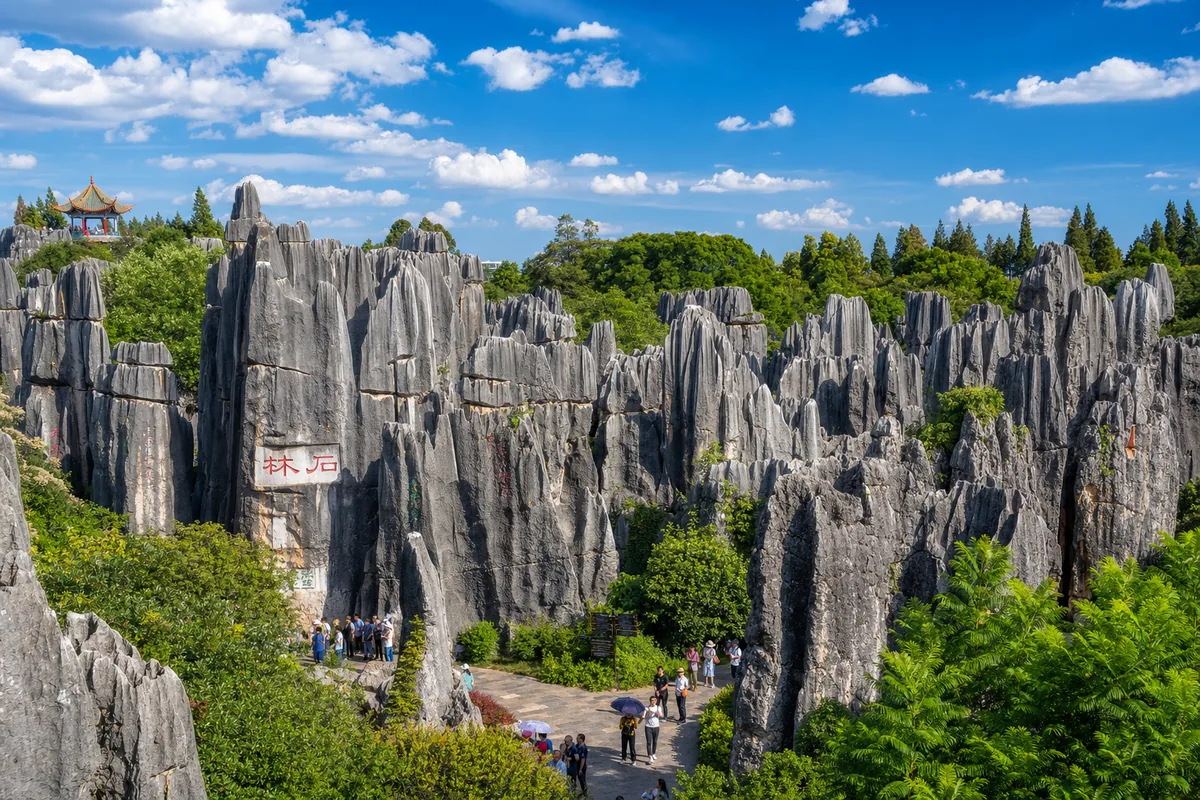
Top stops include the Stone Forest (石林, Shílín), a UNESCO-listed karst landscape of towering limestone pillars about 90 minutes east of the city — strange, maze-like, and genuinely impressive up close. Closer in, Green Lake Park (翠湖, Cuìhú) fills with locals practicing tai chi and, in winter, thousands of migratory black-headed gulls. Yuantong Temple, over a thousand years old, is the city's most important Buddhist site.
Kunming is also where you'll first meet Yunnan's food, which deserves its own section.
Dali: Lakeside Old Town and Bai Culture
Dali is where the trip slows down. The old town sits between Erhai Lake and the Cangshan mountain range, and it's the heartland of the Bai (白族, Báizú) ethnic group, known for their white-walled, gray-tiled houses trimmed with painted designs.
Dali Old Town (大理古城, Dàlǐ Gǔchéng) is walkable and atmospheric — stone streets, old gates at the north and south ends, cafés, and craft shops. Yes, parts are touristy, but wander a few blocks off the main drag and you'll find quieter lanes and local life. The town has been a backpacker hub for decades, and that easygoing, lingering vibe is part of why people stay longer than planned.
Rent an electric scooter or bicycle and ride around Erhai Lake — the loop is about 120km, but even a half-day along the western shore takes you past fishing villages, marshland, and clear views of the mountains reflected in the water. Up in the Cangshan range, a cable car carries you to walking trails with the whole lake spread out below. Don't miss the Three Pagodas (崇圣寺三塔, Chóngshèngsì Sāntǎ), a set of ancient brick towers dating back over a thousand years, especially photogenic mirrored in the temple pond.

Where to Stay in Dali
You've got two main bases. Dali Old Town is best for first-timers who want walkable streets and atmosphere. Shuanglang, a village on the lake's northeast shore, has the boutique lakeside guesthouses with the postcard views — quieter and more romantic, but you'll rely on taxis to get around. Guesthouses here range from cheap hostel dorms to stylish courtyard hotels; you can compare options and read recent reviews on Booking.com.
Lijiang: Naxi Old Town Beneath the Snow Mountain
Lijiang Old Town (丽江古城, Lìjiāng Gǔchéng) is a UNESCO World Heritage Site, a maze of cobbled lanes, canals, and wooden buildings built without a single city wall. It's the cultural center of the Naxi (纳西族, Nàxīzú) people, who have their own pictographic writing system — one of the last living ones in the world. Early morning, before the day-trippers arrive, is the time to walk the lanes; by night the bar street gets loud and commercial, which some love and others avoid.
For a calmer alternative, Shuhe Old Town nearby has the same Naxi architecture with fewer crowds. The quieter Baisha village, with its centuries-old murals, is another worthwhile detour.

Looming over the town is Jade Dragon Snow Mountain (玉龙雪山, Yùlóng Xuěshān), rising to 5,596m. A cable car climbs to a glacier platform at around 4,500m — the highest you can easily reach, and the thin air is noticeable, so move slowly. At its base, the Impression Lijiang outdoor show, directed by filmmaker Zhang Yimou, stages hundreds of local performers against the mountain backdrop. Tickets for the mountain park, cable car, and show can be booked in advance through Klook, which saves queuing at the gate.
Tiger Leaping Gorge: The Best Hike in Yunnan
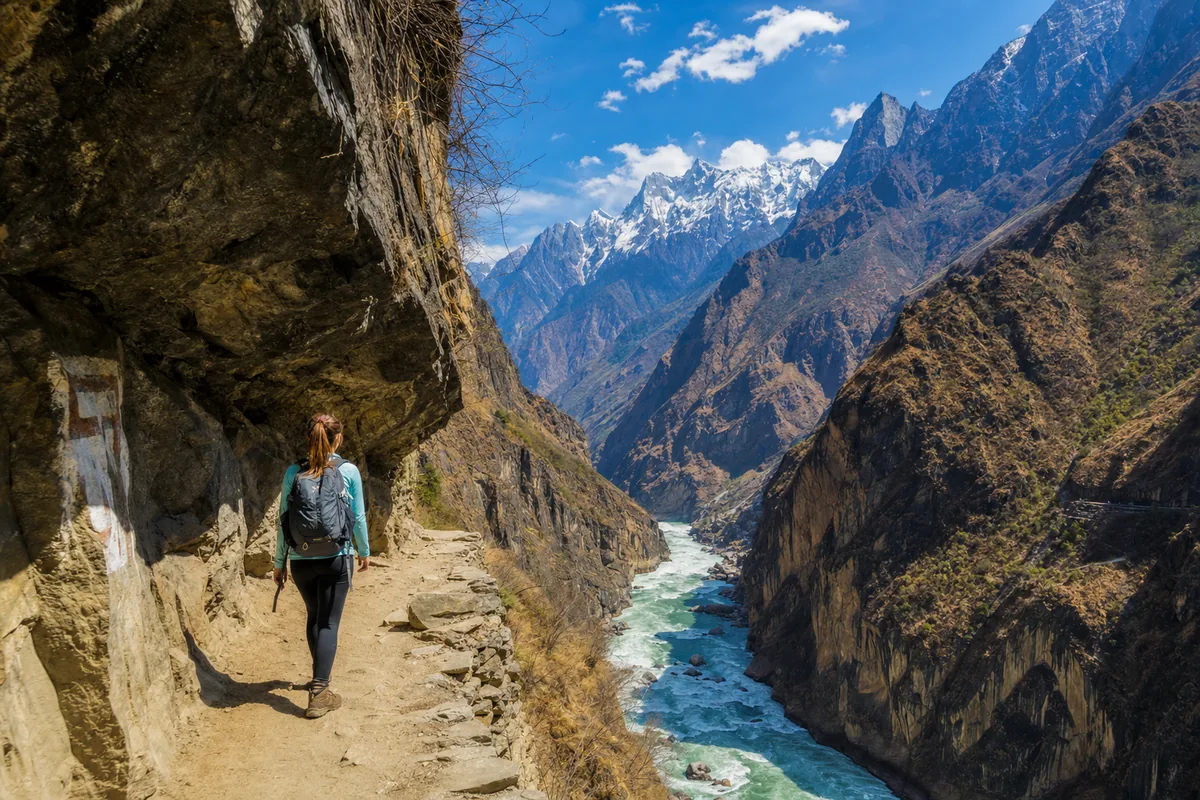
Tiger Leaping Gorge (虎跳峡, Hǔtiào Xiá) is one of the deepest river canyons in the world, where the Jinsha River (an upper stretch of the Yangtze) squeezes between two 5,000m+ massifs. The water roars through a channel so narrow that, by legend, a tiger once leaped across it on a rock — hence the name.
There are two ways to experience it. The lower road has viewing platforms accessible by bus and is fine if you just want to see the gorge. But the real draw is the High Trail, a two-day trek along the upper canyon wall that's widely considered one of China's finest hikes. The path passes through Naxi farming hamlets and guesthouses, with the river thundering far below and snow peaks above.
The most demanding section is the 28 Bends, a steep switchback climb that takes a couple of sweaty hours, but the views from the top — straight down into the gorge — are the payoff. Most hikers split the trail over two days, sleeping at one of the trailside guesthouses (Tea Horse, Halfway, Naxi Family) which serve hot meals and have basic rooms. You don't need a guide; the trail is marked and busy enough that you'll meet other walkers. Guided treks and transfers from Lijiang or Shangri-La can be arranged through platforms like Getyourguide if you'd rather not handle logistics yourself.
Shangri-La: The Edge of Tibet
Shangri-La (香格里拉, Xiānggélǐlā) marks the start of the Tibetan world. The county was officially renamed after the fictional paradise in James Hilton's novel Lost Horizon, and while that's a marketing move, the landscape lives up to it: high grasslands, yak herds, prayer flags, and Tibetan Buddhist monasteries.
The centerpiece is Songzanlin Monastery (松赞林寺, Sōngzànlín Sì), the largest Tibetan Buddhist monastery in Yunnan, often called a miniature Potala Palace for its tiered golden-roofed halls climbing the hillside. The old town of Shangri-La (Dukezong) was largely rebuilt after a 2014 fire but still has the world's largest prayer wheel, which it takes several people to turn.
Beyond town, Pudacuo National Park offers boardwalk walks around alpine lakes and meadows, and Napa Lake draws migratory black-necked cranes in winter. This is the place to slow down, drink butter tea, and feel how different the air and culture are from the lowland Han Chinese cities most travelers know.

Remember the altitude here. Drink plenty of water, skip alcohol the first night, and don't be surprised if you're winded climbing stairs.
Yunnan Food: What to Eat
Yunnan cuisine is one of China's most distinctive, shaped by the province's wild mushrooms, flowers, herbs, and the cooking traditions of its many ethnic groups. It's not the fiery Sichuan style people expect from the southwest — it's fresher, more sour, and more herbal.
- Crossing-the-Bridge Noodles (过桥米线, Guòqiáo Mǐxiàn): Yunnan's signature dish. A bowl of scalding broth arrives with raw ingredients on the side, which you add at the table to cook in the soup. There's a sweet legend about a wife carrying lunch across a bridge to her studying husband behind the name.
- Wild mushrooms (野生菌, yěshēng jūn): In summer and autumn, Yunnan goes mad for foraged mushrooms — porcini, chicken-of-the-woods, and dozens of local varieties. Eat them at a proper restaurant where they're cooked thoroughly.
- Rushan (乳扇): A Bai specialty around Dali — fan-shaped sheets of fried or grilled milk cheese, sometimes drizzled with rose syrup.
- Naxi grilled food and barley dishes in Lijiang, and hearty yak meat and butter tea in Shangri-La.
- Pu'er tea (普洱茶): The famous fermented tea comes from southern Yunnan. Tea shops everywhere will let you taste before buying.

If you have dietary needs, see our guides on vegetarian and vegan travel and ordering food without speaking Chinese.
Suggested 7-10 Day Itinerary
Here's a balanced plan that follows the classic route without rushing. It's the backbone of our detailed Yunnan Circuit route guide.
| Days | Where | Highlights |
|---|---|---|
| 1-2 | Kunming | Arrive, Green Lake, Stone Forest day trip, first taste of Yunnan food |
| 3-4 | Dali | Old town, Erhai Lake cycling, Three Pagodas, Bai villages |
| 5-6 | Lijiang | Old town, Jade Dragon Snow Mountain, Shuhe or Baisha |
| 7-8 | Tiger Leaping Gorge | Two-day High Trail trek (or one day if short on time) |
| 9-10 | Shangri-La | Songzanlin Monastery, Pudacuo Park, fly out from Shangri-La or back via Lijiang |
If you only have a week, skip the full gorge trek or trim Shangri-La. With 10 days you can do everything at a comfortable pace. For a tighter focus on just the two most famous old towns, see our dedicated Dali and Lijiang guide.
Practical Tips Before You Go
- Payments: Set up Alipay (支付宝) or WeChat Pay before arriving — almost everything in Yunnan, even rural guesthouses and noodle stalls, takes QR-code payment. Carry some cash as backup for remote areas.
- Altitude: The route gains elevation steadily toward Shangri-La. Going overland lets your body adjust naturally.
- Connectivity: Get a local SIM or eSIM for reliable data and maps. Coverage is good even in mountain towns. See our SIM and eSIM guide.
- Packing: Layer up. You can need shorts in Kunming and a down jacket in Shangri-La on the same trip.
- Entry fees: Lijiang and some old towns charge a maintenance or preservation fee on top of attraction tickets — check current rates locally, as they change.
For up-to-date details on the Stone Forest and other sites, the UNESCO World Heritage listing for the South China Karst is a useful reference. Always verify ticket prices, transport schedules, and any seasonal closures before you travel, since these change frequently.
Final Thoughts
Yunnan rewards travelers who give it time. The classic Kunming-Dali-Lijiang-Shangri-La loop takes you from spring-like lowlands to the edge of the Tibetan plateau in about a week, through Bai, Naxi, and Tibetan cultures that still shape daily life. Go in spring or autumn, move overland to handle the altitude gently, and build in a slow day or two — Dali and the Tiger Leaping Gorge trail are the kind of places people end up staying longer than planned.
To take it further: book your trains and flights early in peak season, sort out mobile payments and a SIM before you arrive, and read up on the altitude before Shangri-La. Then let the route do the rest.
Last updated: June 2026
Read in other languages
Last train times for 10 Chinese metro systems
Every line and station, checked by hand — the same data behind our offline route planner.
Get the WaysChina App
Offline guides, currency converter, essential phrases, and more — all in your pocket.

Related Articles

3-Day Chengdu Itinerary
A practical 3-day Chengdu plan covering the Panda Base, Wuhou Shrine, Jinli, People's Park, and a day trip to Leshan...

Chengdu Day Trips
The best day trips from Chengdu: the Leshan Giant Buddha, Mount Emei, Dujiangyan, and Qingcheng Mountain — plus...
Chengdu Food Guide
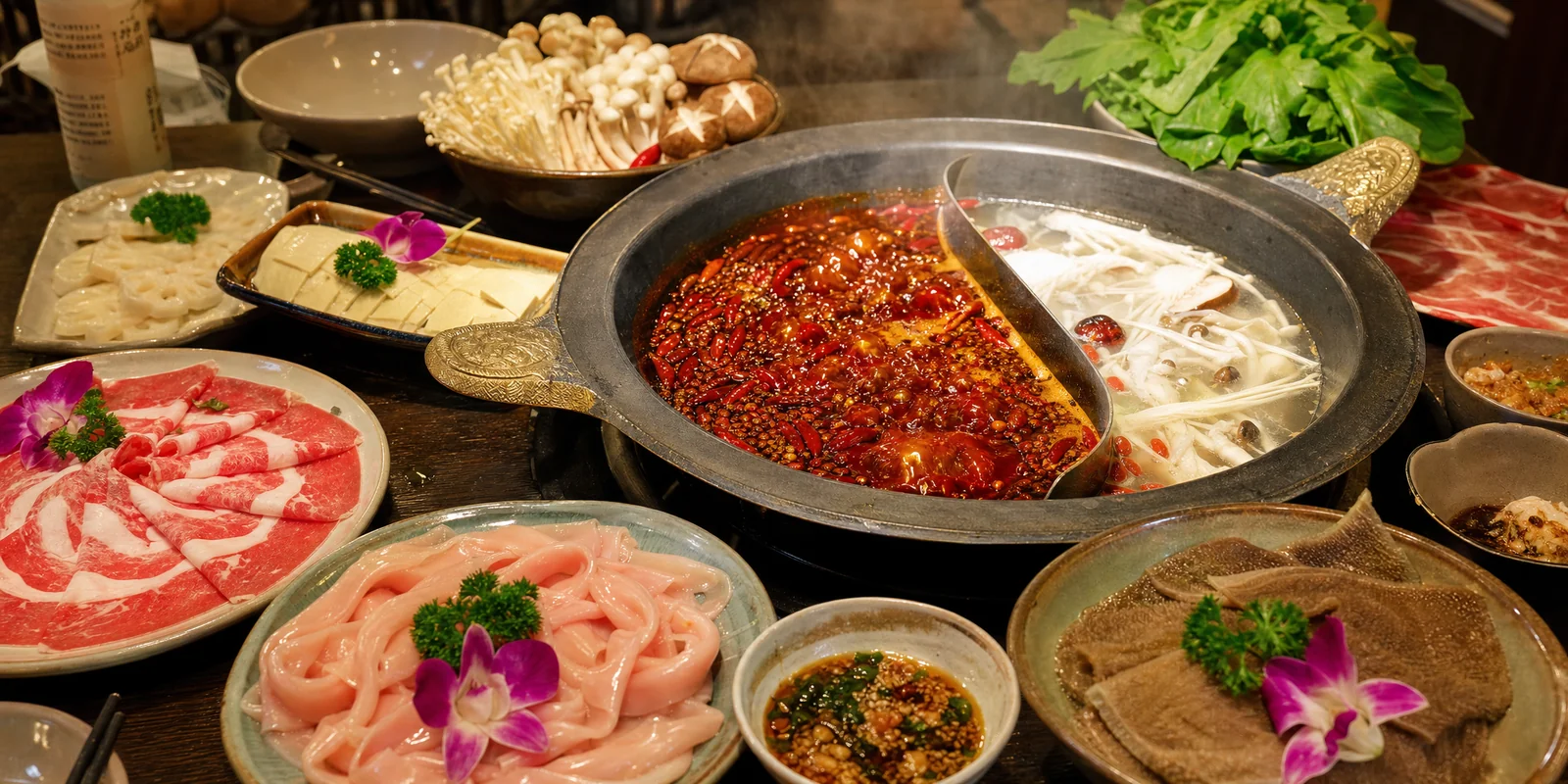
Chengdu is China's spice capital and a UNESCO City of Gastronomy. Here's what to eat, where to find it, and how to...

Dali & Lijiang Guide
A practical, in-depth guide to Dali and Lijiang in Yunnan — old towns, Erhai Lake, Jade Dragon Snow Mountain,...