
This article contains affiliate links. If you make a purchase through these links, we may earn a small commission at no extra cost to you. This helps support our work in creating free travel guides.
Hong Kong and Macau are part of China, but for travel purposes they work like separate countries. Both are Special Administrative Regions (特别行政区, tèbié xíngzhèngqū), which means they have their own immigration controls, currencies, and visa rules — different from mainland China and from each other. Most Western, Japanese, and Korean passport holders get visa-free entry to both, even if they'd need a visa for the mainland. That single fact shapes how you plan, especially if you want to add Guangzhou or Shenzhen to the trip. This guide covers the entry rules, the sights worth your time, where to eat and sleep, and how to stitch it all together over four to five days.
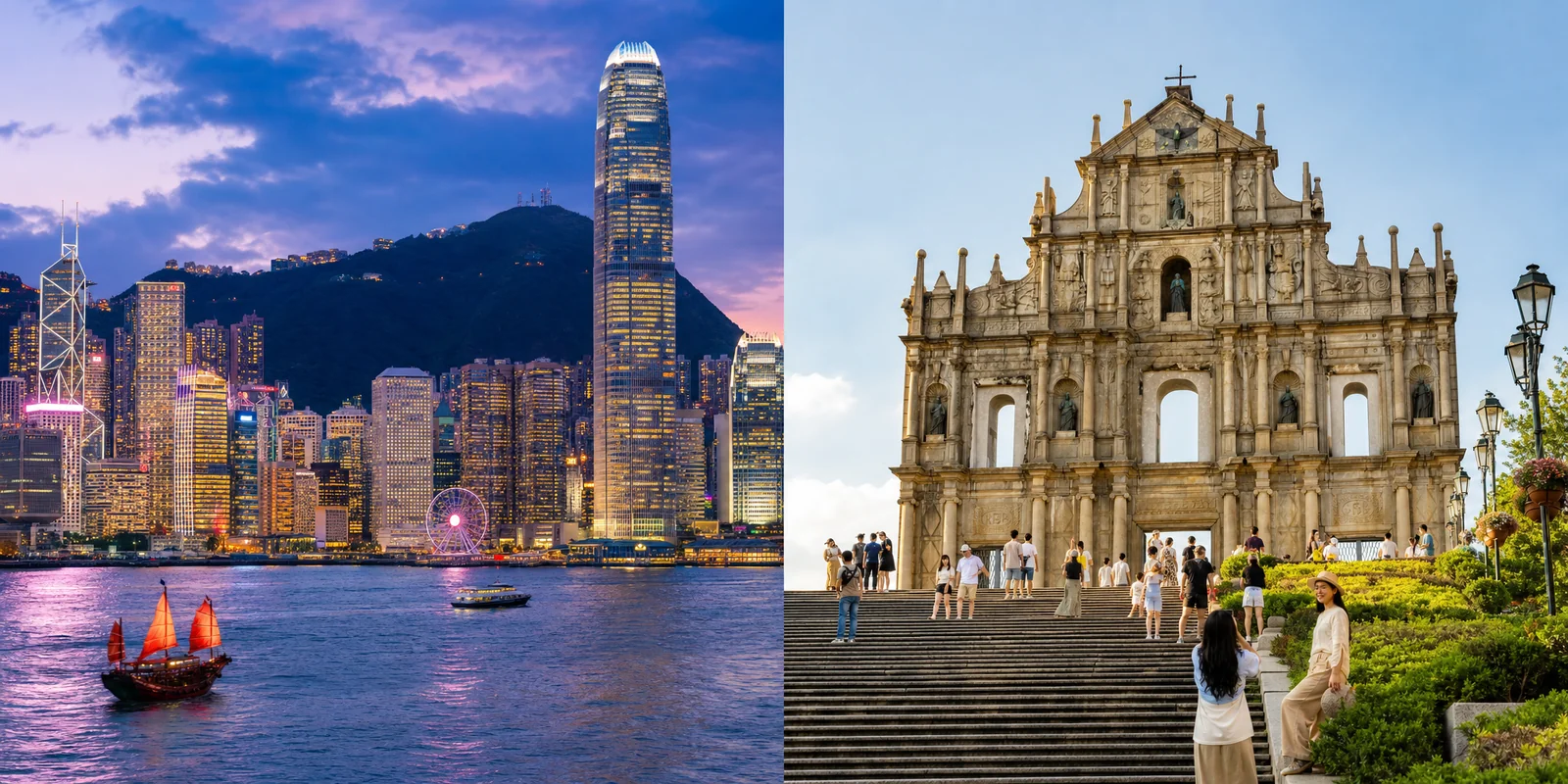
Hong Kong & Macau at a Glance
Hong Kong is dense, vertical, and bilingual — Cantonese and English on every sign, a subway that runs like clockwork, and a skyline crammed against green peaks. Macau, about an hour away across the Pearl River estuary, is smaller and stranger: Portuguese colonial streets, Cantonese street life, and the biggest casino industry on the planet, all packed onto two connected peninsulas and a couple of islands.
You can see the headline sights of both in four to five days. A common split is three days in Hong Kong and one to two in Macau. The best months are autumn (September to November) and winter (December to February) — clear skies, low humidity, comfortable temperatures. Summer is hot, sticky, and prone to typhoons; spring is mild but often grey and damp.
Currencies and money
Hong Kong uses the Hong Kong dollar (HKD); Macau uses the pataca (MOP), though Hong Kong dollars are accepted almost everywhere in Macau at roughly 1:1. Both places run on credit cards, cash, and contactless far more than the mainland. Octopus (八達通, bādátōng), Hong Kong's tap-and-go card, covers the metro, buses, ferries, convenience stores, and many restaurants — buy one at the airport or any MTR station.
Visas and Entry: The Part That Trips People Up
Because the two SARs and the mainland are separate immigration zones, every border crossing between them is a real crossing — passport stamps, customs, the works. Here's how it usually breaks down for tourists.
Hong Kong and Macau
Citizens of the US, UK, EU countries, Australia, Canada, Japan, South Korea, and most of Southeast Asia can enter Hong Kong visa-free for stays ranging from 14 to 180 days depending on nationality (90 days is common). Macau offers similar visa-free access, typically 30 to 90 days. You don't need a Chinese visa for either — your passport alone is enough.
The mainland is different
Mainland China has its own rules. Many nationalities now qualify for visa-free entry or transit, but the conditions change and don't automatically match your Hong Kong allowance. If you plan to cross into Guangzhou or Shenzhen, check whether you need a visa before you go. For the current, official position, see the National Immigration Administration.
For a fuller breakdown of who qualifies for what, our guides on visa-free and transit policies and visa types are worth reading before you commit to a cross-border itinerary.
Core Hong Kong Sights
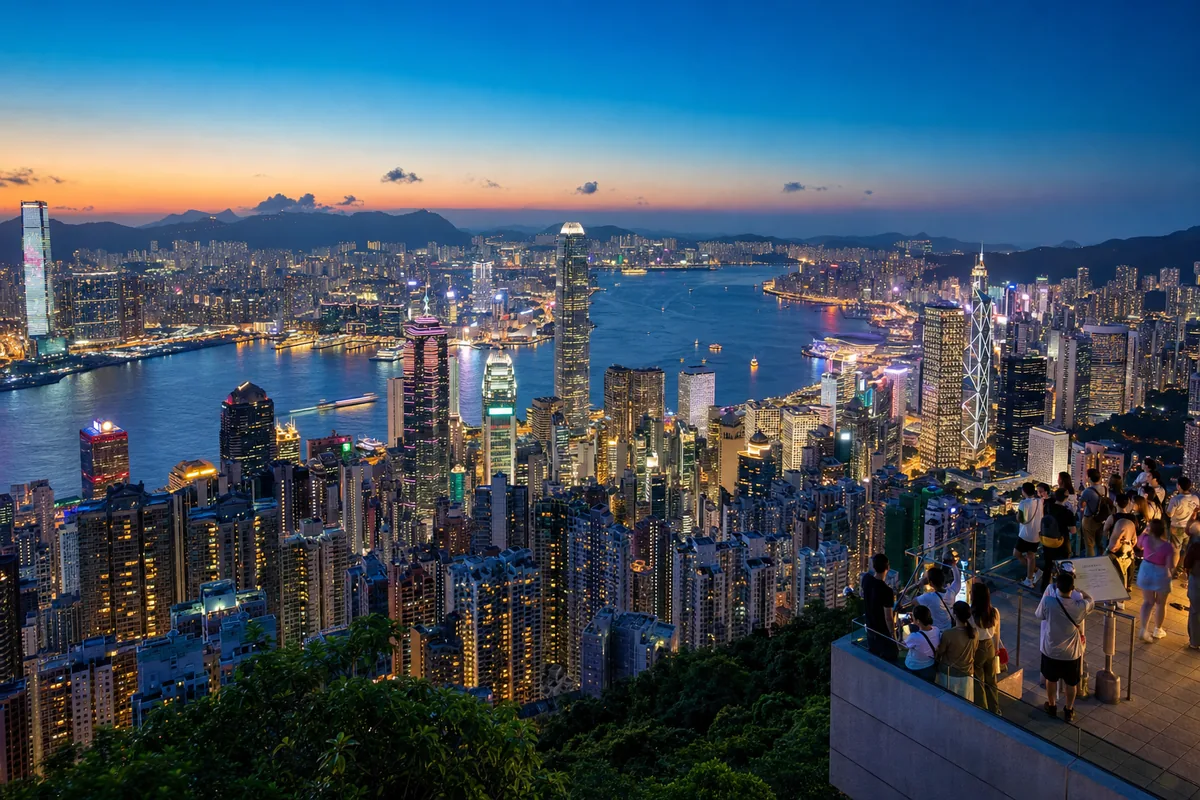
Victoria Peak
The Peak is Hong Kong's signature lookout — the point where the city's vertical sprawl makes sense. From the top you can see Victoria Harbour, the wall of towers on both sides, and on a clear day the green hills of the New Territories beyond. The classic way up is the Peak Tram (山頂纜車), a funicular that climbs at angles steep enough to make the buildings outside look tilted. It's been running since the 1880s.
Go late afternoon and stay for the transition from daylight to the lit-up skyline; that's when the view is best and the crowds thin slightly after sunset. The Sky Terrace 428 viewing deck charges admission; the surrounding Peak Galleria mall and walking paths are free and arguably just as good. The Peak Tram gets long queues — book a timed ticket ahead, or take bus 15 from Central for a cheaper, scenic ride up the hill.
The Star Ferry
The Star Ferry has crossed Victoria Harbour between Hong Kong Island and Kowloon since 1888, and it's still one of the best-value experiences in the city — a few HKD for a ten-minute ride with a full sweep of the skyline from water level. Take it from Tsim Sha Tsui on the Kowloon side toward Central for the most dramatic approach into the towers.
Time it for around 8pm and you'll catch the Symphony of Lights, the nightly sound-and-light show across the harbour-front buildings. The ferry is functional transport, not a tourist cruise, which is exactly why it's worth doing.
Tian Tan Buddha (the Big Buddha)
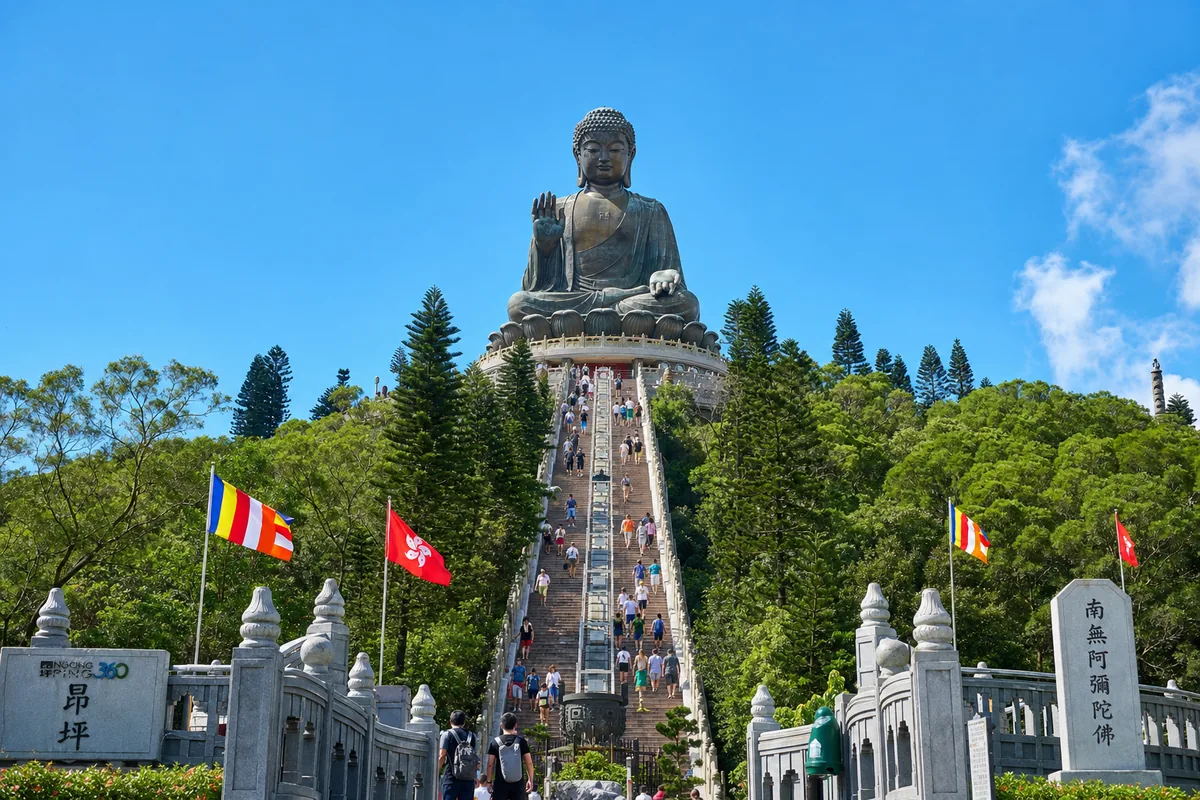
On Lantau Island, the Tian Tan Buddha (天壇大佛, Tiāntán Dàfó) sits at the top of 268 steps — a 34-metre bronze Buddha completed in 1993, facing north toward mainland China. It's next to Po Lin Monastery, and the whole site has a calm, mountain-air quality that contrasts hard with downtown.
Most visitors get there on the Ngong Ping 360 cable car from Tung Chung, a 25-minute ride over the hills and water — the crystal-cabin version has a glass floor. The monastery's vegetarian restaurant serves a good set lunch. Combine this with Tai O, a nearby stilt-house fishing village, to make a full Lantau day.
Other Hong Kong worth-its
- Tsim Sha Tsui waterfront & Avenue of Stars — the best free skyline view, especially at night.
- Temple Street Night Market — street food, fortune tellers, and cheap goods after dark in Kowloon.
- Wong Tai Sin Temple — busy, colourful Taoist temple where locals shake fortune sticks.
- Sham Shui Po — old-school markets, electronics, and some of the city's best cheap eats.
Core Macau Sights
Ruins of St. Paul's
The stone facade of St. Paul's (大三巴牌坊, Dàsānbā Páifāng) is Macau's most recognisable image — all that remains of a 17th-century Jesuit church that burned down in 1835, leaving an ornate front wall standing alone at the top of a grand staircase. The carvings mix European saints with Chinese characters and Japanese chrysanthemums, a record of who built it and who passed through.
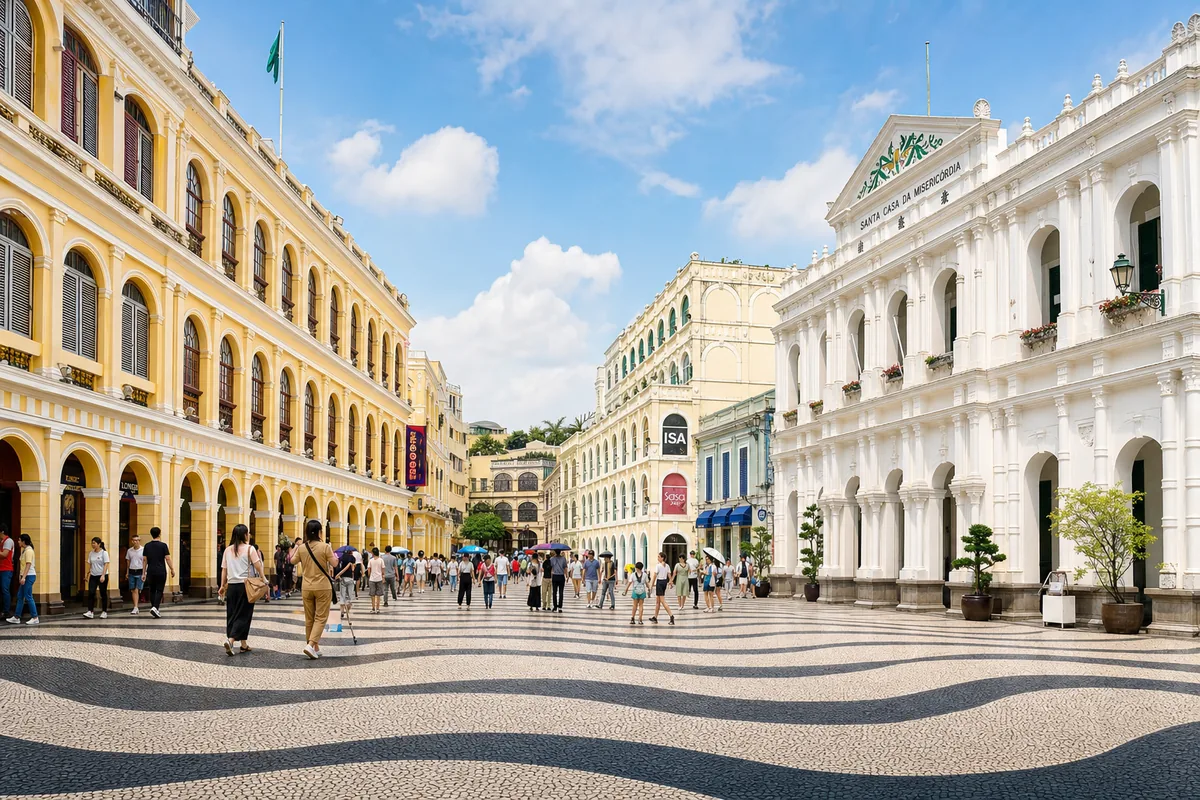
It anchors Macau's UNESCO-listed historic centre, which you can walk in an afternoon. Just behind it sits Monte Fort with old cannons and city views; downhill, Senado Square (議事亭前地) opens up with its wave-pattern Portuguese paving and pastel colonial buildings. The whole old town is compact and made for wandering on foot.
The casinos and the Cotai Strip
Macau is the only place in China where casino gambling is legal, and it pulls in more gaming revenue than Las Vegas. The action splits between the older peninsula casinos and the Cotai Strip, a reclaimed stretch packed with mega-resorts — The Venetian (with its indoor canals and gondolas), the Parisian with its half-scale Eiffel Tower, Wynn Palace, and others.
You don't have to gamble. The resorts are free to walk through and function as air-conditioned theme parks: fountain shows, shopping, restaurants, and cable cars between buildings. The Macau Tower offers a 233-metre observation deck and one of the world's highest bungee jumps if you want it.
What to Eat
Food alone justifies the trip. Hong Kong is one of the great eating cities, spanning Michelin-starred Cantonese to street stalls.
Hong Kong
- Dim sum (點心) — the morning ritual. Steamed shrimp dumplings (har gow), barbecue pork buns (char siu bao), and endless tea. Try an old-style tea house or a Michelin-listed spot like Tim Ho Wan.
- Roast meats — char siu and crispy roast goose over rice, found in cha chaan teng (茶餐廳) diners across the city.
- Egg tarts and milk tea — the Hong Kong-style cha chaan teng breakfast.
- Seafood — head to Sai Kung or Lamma Island to pick your fish and have it cooked.
Macau
Macanese cuisine is its own thing — a fusion of Portuguese and Cantonese cooking developed over four centuries. Don't miss:
- Portuguese egg tarts — crisper and more caramelised than the Hong Kong version; Lord Stow's in Coloane is the famous one.
- Pork chop bun (豬扒包) — a simple, brilliant street snack.
- African chicken and minchi — Macanese classics you won't find elsewhere.
- Almond cookies and jerky — the souvenir snacks sold all along the streets near St. Paul's, with free samples everywhere.
For a deeper dive into Hong Kong's dining scene, see our dedicated Hong Kong food guide.
Getting Around
Within Hong Kong
The MTR (Hong Kong's metro) is fast, clean, fully signed in English, and reaches almost everywhere you'll want to go. Tap in with an Octopus card. Above ground, the historic double-decker trams on Hong Kong Island ("ding ding") are slow but cheap and fun. Taxis are metered and reasonable; red taxis serve the urban areas.
Hong Kong to Macau
Two main options:
| Mode | Time | Notes |
|---|---|---|
| Ferry (TurboJet / Cotai Water Jet) | ~55–70 min | Frequent departures from Hong Kong–Macau Ferry Terminal (Sheung Wan) or Kowloon; runs day and night |
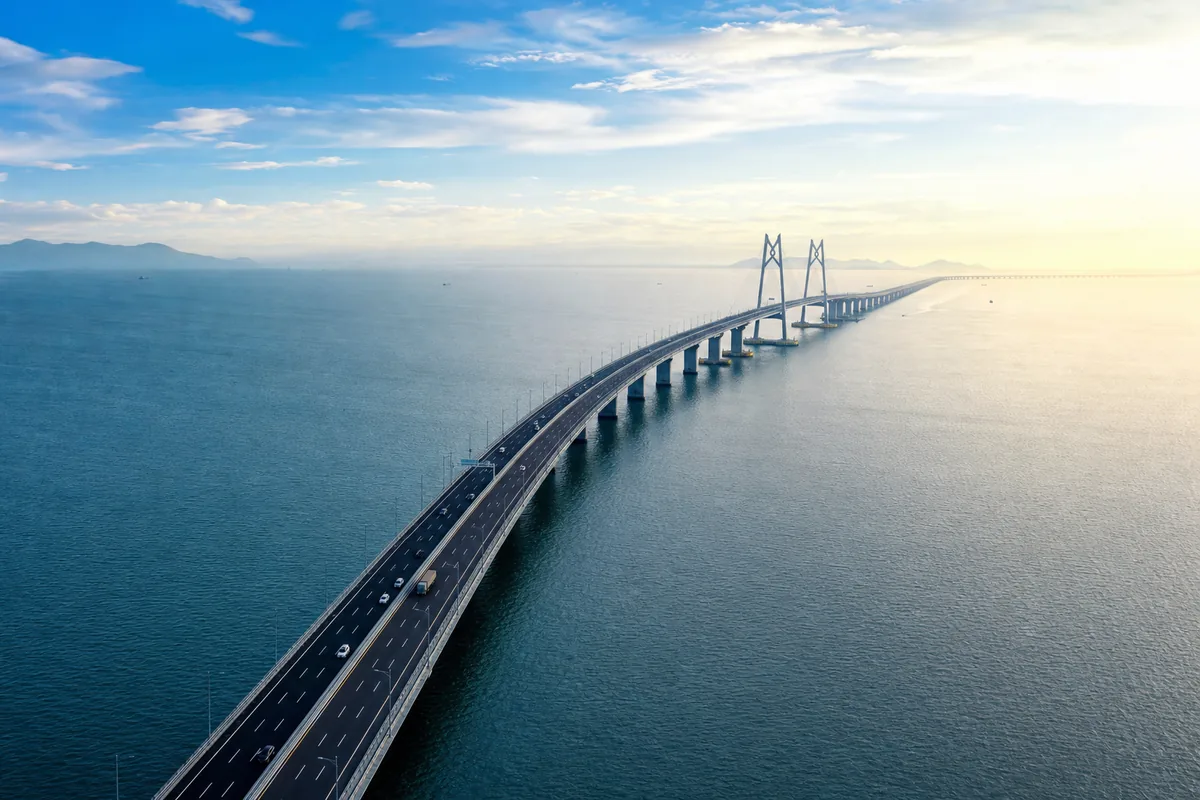
| Bus via Hong Kong–Zhuhai–Macau Bridge | ~45 min + border time | Cheaper; the world's longest sea-crossing bridge; immigration checks at both ends |
Both cross an immigration border, so carry your passport and expect entry/exit formalities. The ferry is the classic choice; the bridge bus is cheaper and a sight in itself.
Connecting to mainland China: Guangzhou and Shenzhen
This is where many travelers extend the trip — and where the visa question becomes real (see the warning above). Two cities are easy add-ons:
- Shenzhen sits directly across the border from Hong Kong. The MTR East Rail Line runs to the Lo Wu and Lok Ma Chau border crossings, where you walk through immigration into Shenzhen — total journey roughly 1 to 1.5 hours from central Hong Kong. High-speed trains from Hong Kong West Kowloon station reach Shenzhen's Futian station in about 15 minutes.
- Guangzhou is about 2 hours from Hong Kong by high-speed train from West Kowloon, or under an hour onward from Shenzhen. The same line continues deep into the mainland network.
The West Kowloon high-speed rail terminal uses "co-location" — you clear both Hong Kong exit and mainland China entry inside the same building before boarding, which saves time. You can book mainland high-speed tickets in advance through Trip Com Train, which handles the China rail system in English.
For what to actually do once you cross, see our Guangzhou & Shenzhen guide. If you're planning to keep going north, the same rail network connects to the routes in our high-speed train guide.
Where to Stay
Hong Kong hotels are small and not cheap — space is the city's scarcest resource. Pick your neighbourhood by what you want.
- Tsim Sha Tsui (Kowloon) — harbour views, shopping, the Star Ferry, and a good range of mid-range to luxury hotels.
- Central / Sheung Wan (Hong Kong Island) — business district by day, bars and dining by night; close to the Peak Tram and Macau ferry.
- Causeway Bay — shopping and food, very central, lively until late.
- Mong Kok — cheaper, gritty, packed with markets and local life.
In Macau, staying on the Cotai Strip puts you among the resorts; staying on the peninsula keeps you closer to the historic centre. Many visitors do Macau as a day trip and don't stay overnight at all. To compare prices and locations across both cities, Booking Com Hotel has the widest selection of Hong Kong and Macau properties.
Shopping and Nightlife
Shopping
Hong Kong is duty-free on most goods, which keeps electronics, cosmetics, and luxury items competitive. The spread runs from designer malls in Central and Tsim Sha Tsui to the chaotic street markets of Mong Kok — the Ladies' Market, the flower market, the goldfish market, the sneaker street. Sham Shui Po is the place for electronics and fabric. For a full strategy on what's actually worth buying and where, see our Hong Kong shopping guide.
Nightlife
Lan Kwai Fong and SoHo in Central are the dense bar-and-club districts, busy every night and packed on weekends. Knutsford Terrace on the Kowloon side is the quieter alternative. For a quieter drink with a view, the rooftop bars in TST and Wan Chai look straight across the harbour. Macau's nightlife centres on the casino resorts — shows, lounges, and late-night dining rather than a street scene.
A Sample 4–5 Day Plan
- Day 1 — Hong Kong Island: Victoria Peak in the afternoon, dinner in Central, drinks in Lan Kwai Fong.
- Day 2 — Kowloon: Markets and dim sum, Star Ferry across the harbour, Symphony of Lights at 8pm from the TST waterfront.
- Day 3 — Lantau: Cable car to the Big Buddha, Po Lin Monastery, Tai O fishing village.
- Day 4 — Macau: Ferry over, Ruins of St. Paul's and the historic centre, Macanese lunch, Cotai Strip resorts in the evening. Return to Hong Kong at night or stay over.
- Day 5 (optional) — Mainland day trip or buffer: High-speed train to Shenzhen or Guangzhou (visa permitting), or extra time for shopping and food in Hong Kong.
For mapping out the metro routes and saving a day-by-day plan offline across these cities, the WaysChina app has offline metro maps and a built-in trip planner.
Quick Practical Notes
- Language: English is widely spoken in Hong Kong and common in Macau's tourist areas. Less so once you cross into the mainland.
- Power: Hong Kong uses UK-style three-pin plugs (Type G). Macau is mixed. The mainland uses Type A/I — pack accordingly.
- SIM/data: A local or travel eSIM works smoothly in both SARs, with no Great Firewall — Google, WhatsApp, and Instagram all work normally, unlike on the mainland.
- Weather: Aim for autumn or winter. Check the forecast for typhoons if you visit in summer.
Bottom Line
Hong Kong and Macau give you two distinct cities in one compact trip — a vertical, bilingual metropolis and a Portuguese-Cantonese casino town an hour apart, both reachable visa-free for most travelers. Four to five days covers the essentials: the Peak, the Star Ferry, the Big Buddha, the Ruins of St. Paul's, and a lot of very good food. The one thing to settle before you leave home is your mainland China status — if you want to add Shenzhen or Guangzhou, confirm your visa or visa-free eligibility in advance, because the SAR entry that let you in won't carry across that border. Get that sorted, and the rest of the trip runs smoothly.
Last updated: June 2026
Read in other languages
Last train times for 10 Chinese metro systems
Every line and station, checked by hand — the same data behind our offline route planner.
Get the WaysChina App
Offline guides, currency converter, essential phrases, and more — all in your pocket.

Related Articles
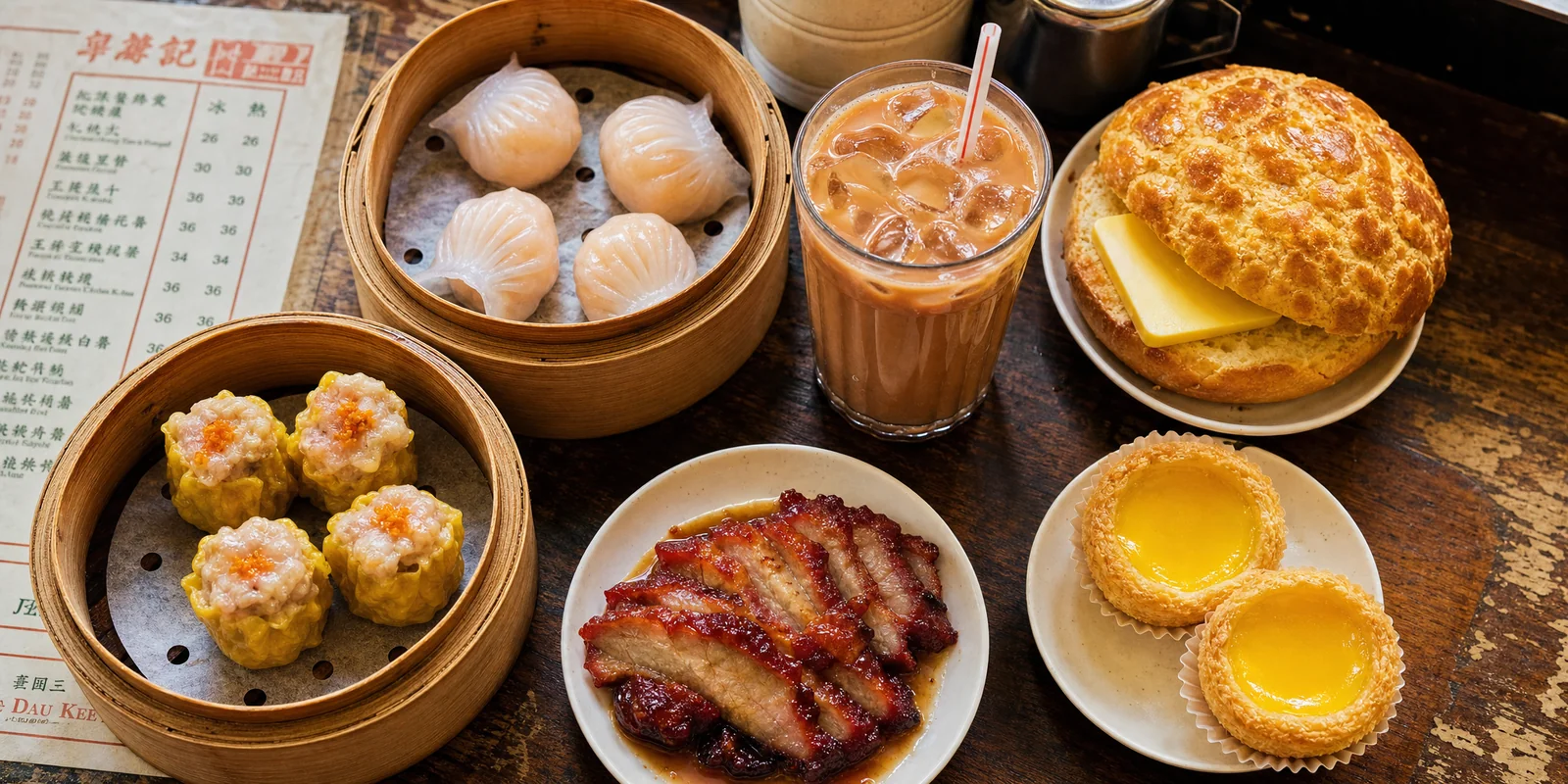
Hong Kong Food Guide
From the world's cheapest Michelin dim sum to Temple Street night market stalls and cha chaan teng milk tea — here's...
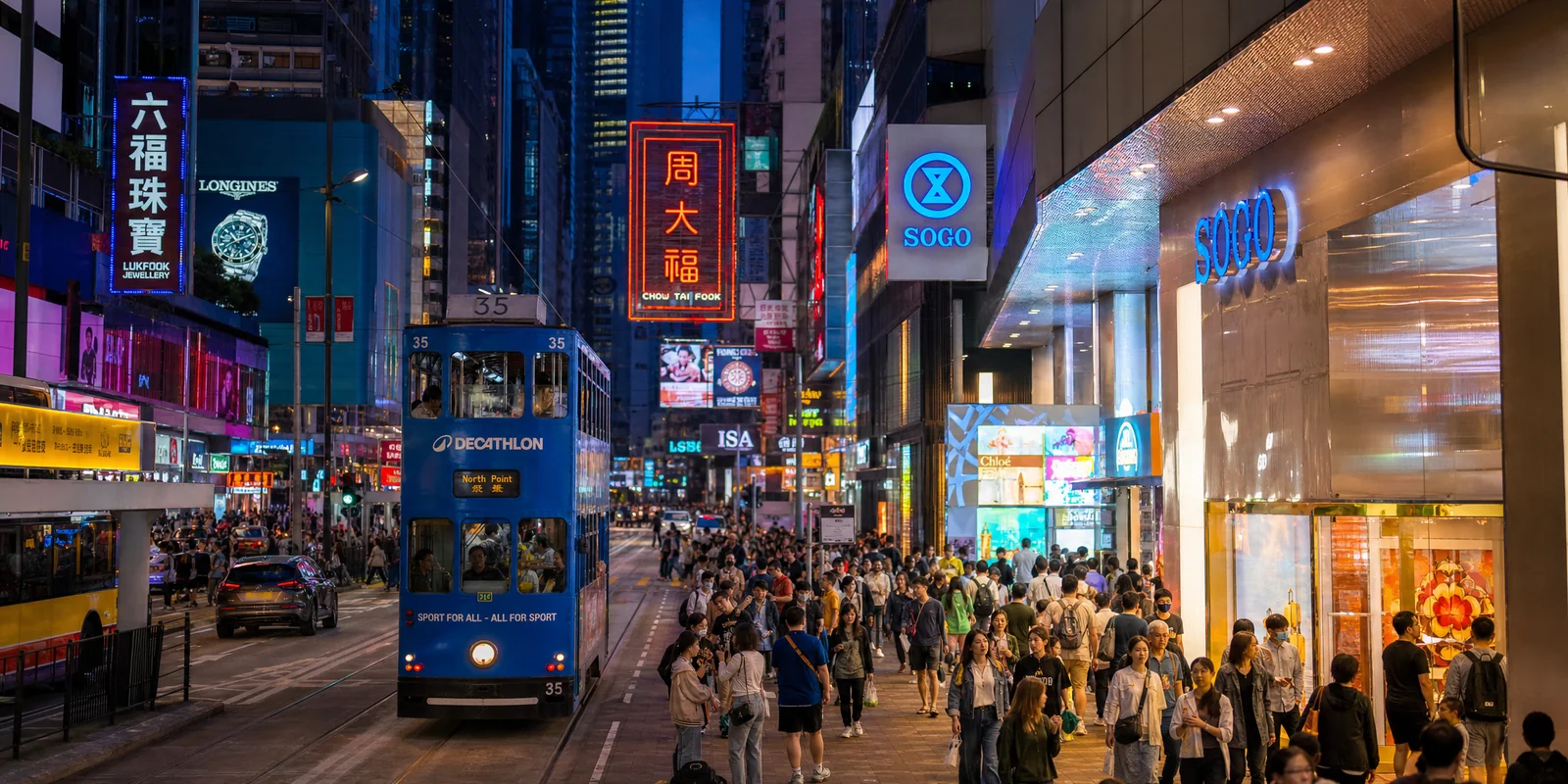
Hong Kong Shopping Guide
From Causeway Bay's luxury malls to the haggling stalls of Ladies' Market and budget streetwear in Sham Shui Po,...
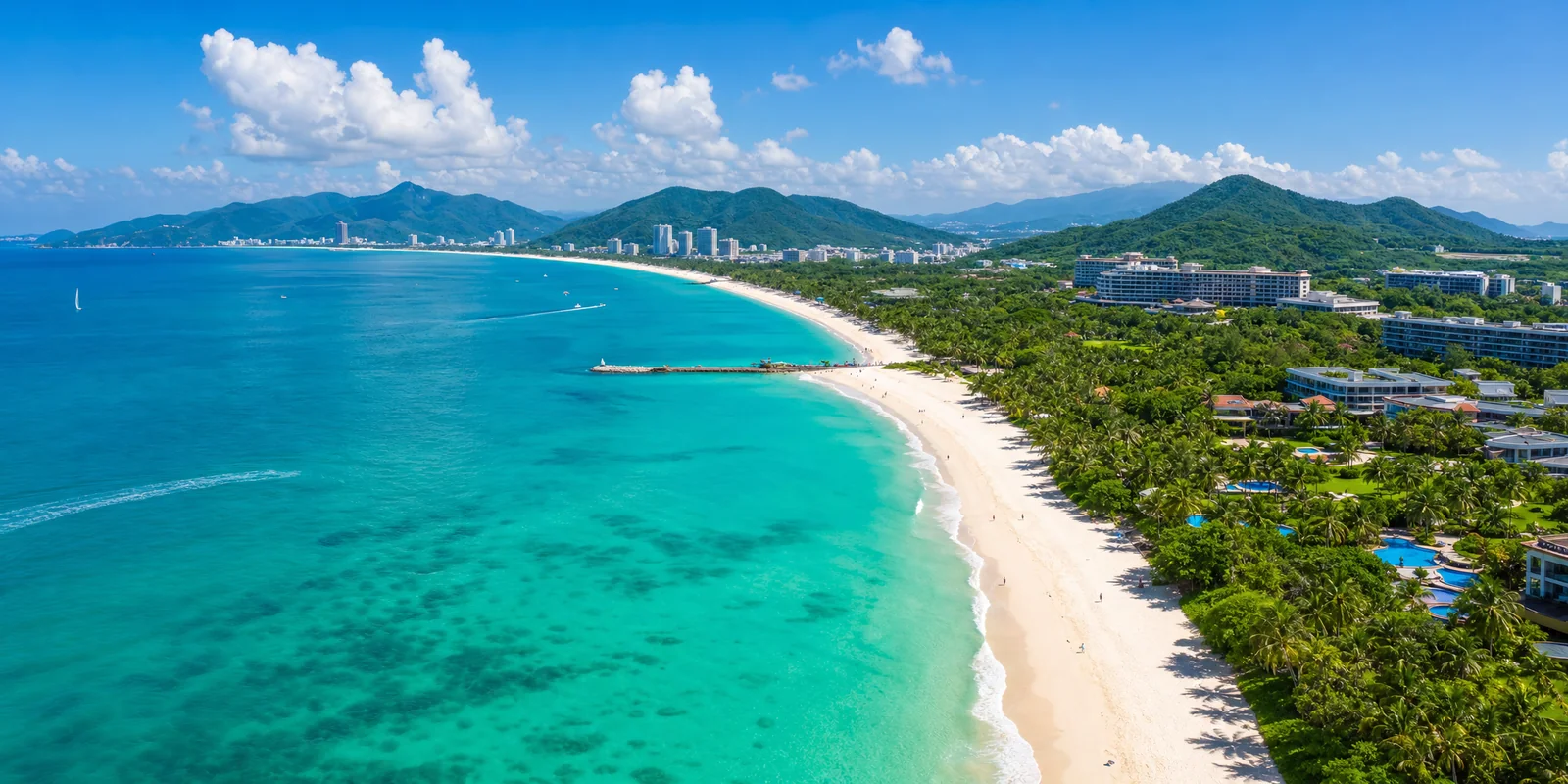
Sanya Beach Resort Guide
Sanya is China's only tropical beach destination, sitting at the southern tip of Hainan Island. Here's how to pick...
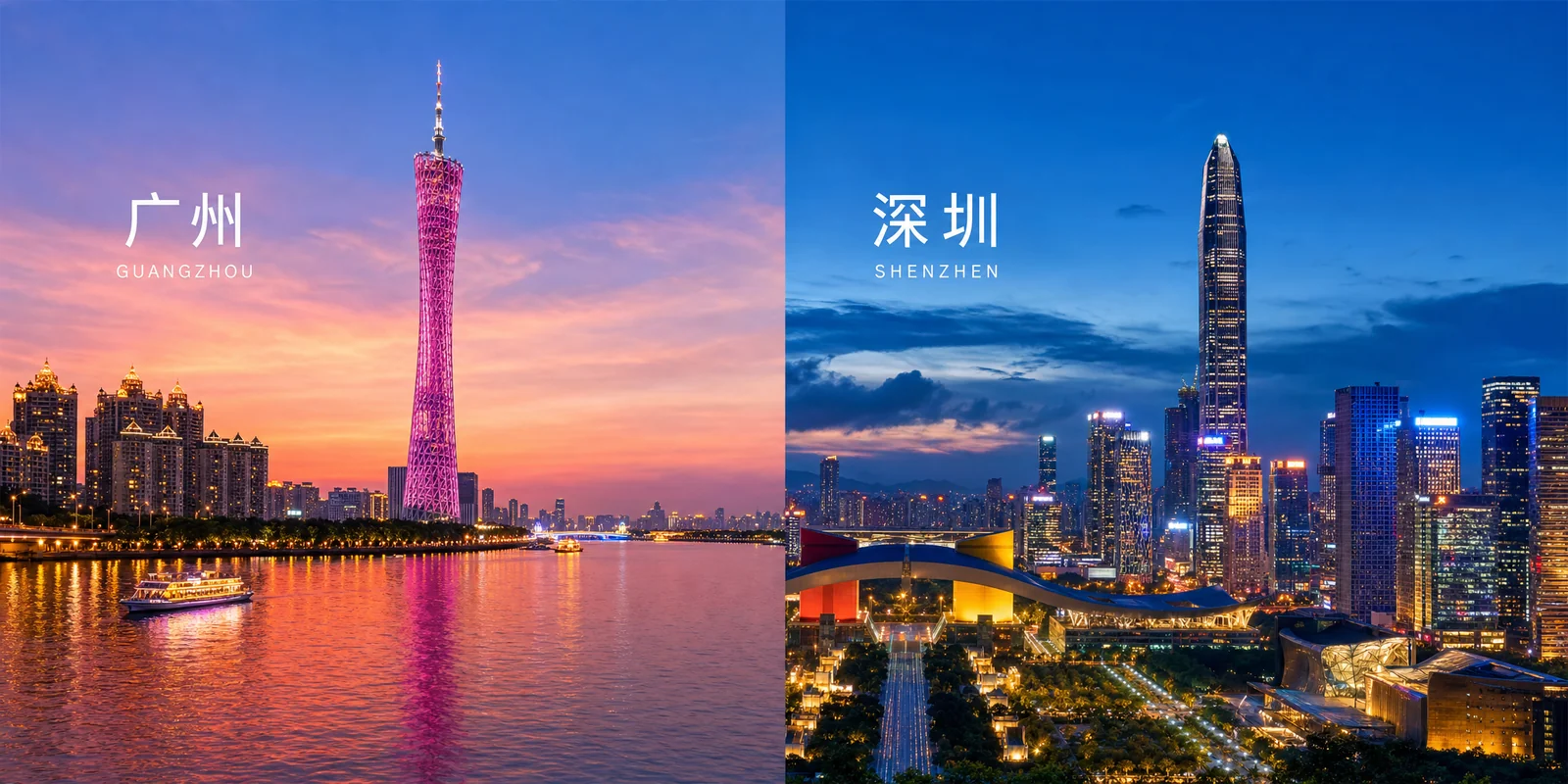
Guangzhou & Shenzhen Guide
Two cities, one trip. Guangzhou brings 2,000 years of trade history and some of China's best food; Shenzhen is the...