
This article contains affiliate links. If you make a purchase through these links, we may earn a small commission at no extra cost to you. This helps support our work in creating free travel guides.
Harbin is the only major Chinese city built around the idea that winter is the main event. From late December through February, temperatures sit around -15°C to -25°C (5°F to -13°F), and the city responds by building entire palaces out of river ice and lighting them up at night. This is when Harbin (哈尔滨, Hā'ěrbīn) draws the biggest crowds and runs at full capacity. This guide covers the core sights, what the cold actually feels like and how to dress for it, where to eat, how to get there, and how to fit it all into two or three days without freezing your trip plans solid.
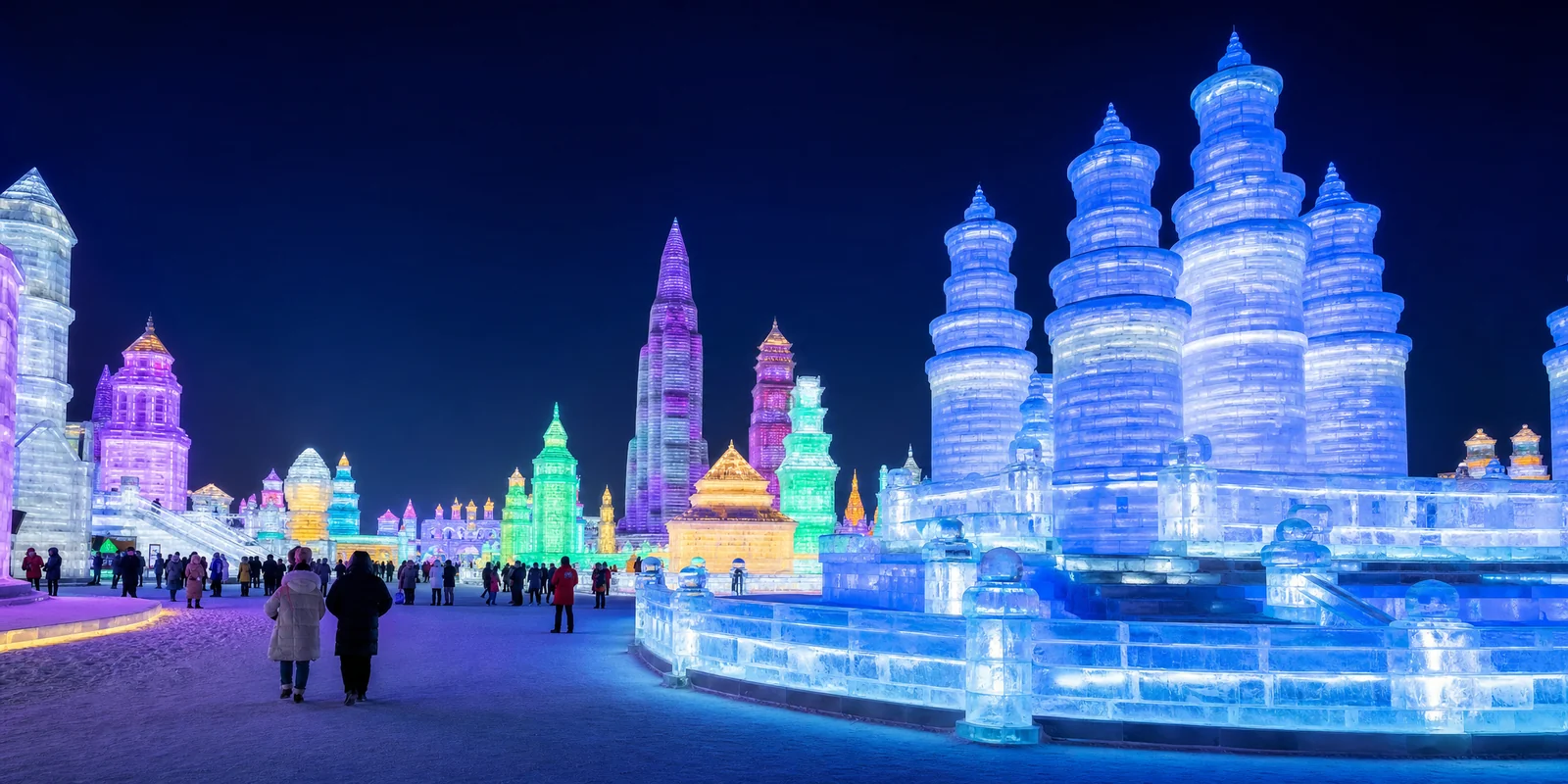
Harbin in Winter: What to Expect
Harbin sits in Heilongjiang Province, the northernmost part of China, closer to Vladivostok than to Beijing. The winter is long and genuinely cold — not "bring a warm coat" cold, but "your phone dies in ten minutes and your eyelashes frost over" cold. The flip side is that the cold is dry, and the city is built to handle it. Indoor spaces are heated aggressively, and you'll be peeling off layers the moment you step inside a restaurant or mall.
The reason most travelers come is the Harbin International Ice and Snow Festival, which runs roughly from late December through late February. The two flagship attractions — Ice and Snow World and the snow sculptures on Sun Island — are the centerpiece, but the whole city leans into the season with ice lanterns, frozen-river activities, and street vendors selling frozen fruit on sticks.
Two to three days is enough to see the main sights without rushing. One full day for the daytime sights and food, one evening for Ice and Snow World, and a half-day buffer for Sun Island or a slower morning.
Harbin Temperature and Cold-Weather Prep
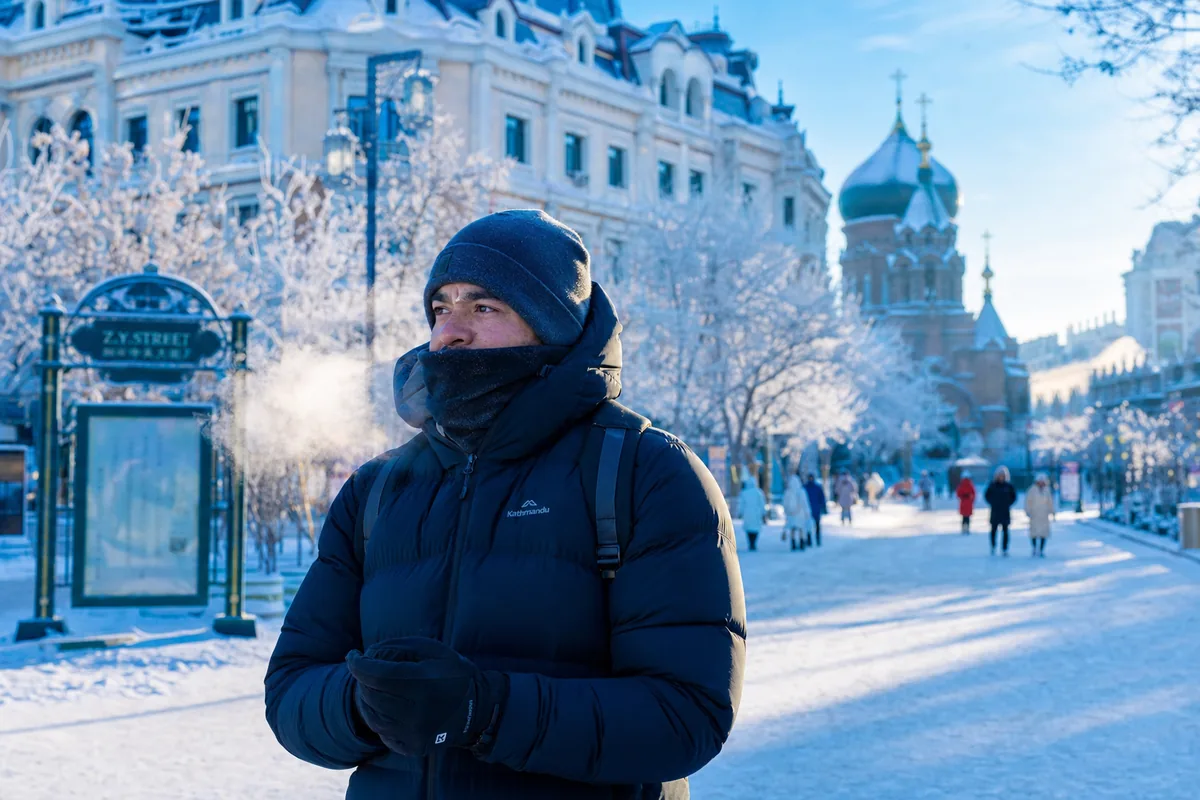
Let's be specific, because underestimating the cold is the single biggest mistake visitors make here. Daytime highs in January often stay below -12°C (10°F), and night drops to -20°C to -25°C (-4°F to -13°F) are normal. Wind makes it feel colder. You will be outdoors for hours at the ice attractions, much of it after dark.
Here's what actually works:
- Layers, not one big coat. A thermal base layer, a fleece or down mid-layer, and a windproof down jacket on top. You'll overheat indoors otherwise.
- Serious boots. Waterproof, insulated, with grippy soles. The ground is packed snow and ice everywhere.
- Cover the extremities. A hat that covers your ears, a neck gaiter or scarf you can pull over your face, and proper gloves (mittens are warmer than fingered gloves).
- Hand and toe warmers. The disposable stick-on kind. Bring more than you think you need, or buy them locally — they're sold everywhere.
- Phone protection. Cold drains batteries fast. Keep your phone in an inside pocket against your body and carry a power bank. Some people bring a second cheap battery pack just for the cold nights.
You can buy most of this gear in Harbin itself — there are stalls near the attractions selling hats, gloves, and warmers — but quality varies, and you don't want to be shopping for boots after you've already gotten cold. If you're flying in from a warm climate and don't own winter gear, it's worth sorting out insulated boots and a down jacket before you leave. A search for insulated winter boots and down jackets on Amazon will give you a sense of what to pack.
For broader seasonal context, our Winter Travel in China guide and the Clothing by Season checklist go deeper on packing for a multi-stop cold-weather trip.
The Core Attractions
Harbin Ice and Snow World (冰雪大世界)
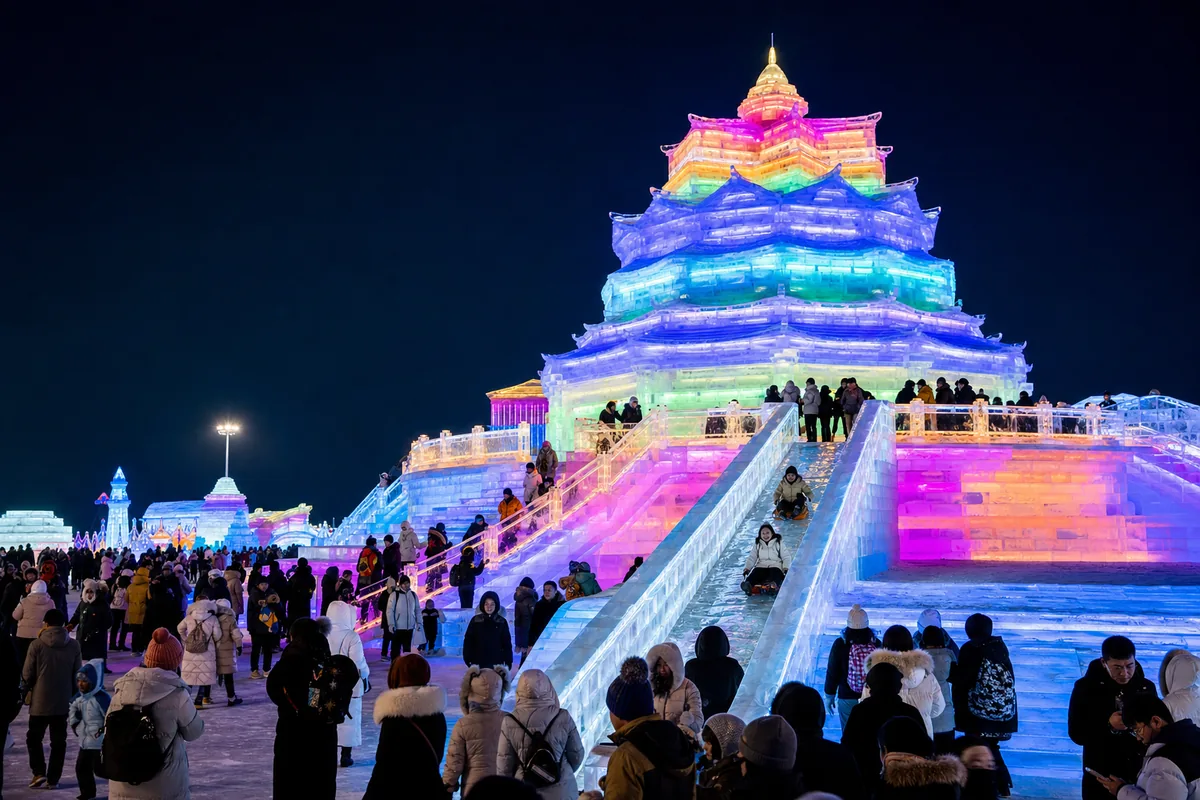
This is the one that makes the postcards. Ice and Snow World is a temporary park built fresh every winter from massive blocks of ice cut straight out of the frozen Songhua River. Crews carve them into full-scale buildings — castles, towers, replica landmarks — some several stories tall, then run colored LED lights through the ice so the whole place glows at night.
It's an evening experience. Come after dark when the lights are on; during the day it's just translucent ice. There are ice slides you can ride down (long ones, genuinely fun), performances, and plenty of room to wander. Plan for two to three hours, and dress for standing around outdoors the entire time — this is the coldest you'll be on the trip.
Tickets are not cheap by Chinese standards, typically in the 300+ RMB range for adults, with the price varying through the season. You can check current pricing and hours through the Harbin municipal tourism information. Buying tickets ahead online saves time at the gate; platforms like platforms like Klook bundle Ice and Snow World tickets and transfers, which is convenient if you'd rather not navigate the ticketing in Chinese.
Saint Sophia Cathedral (圣索菲亚大教堂)
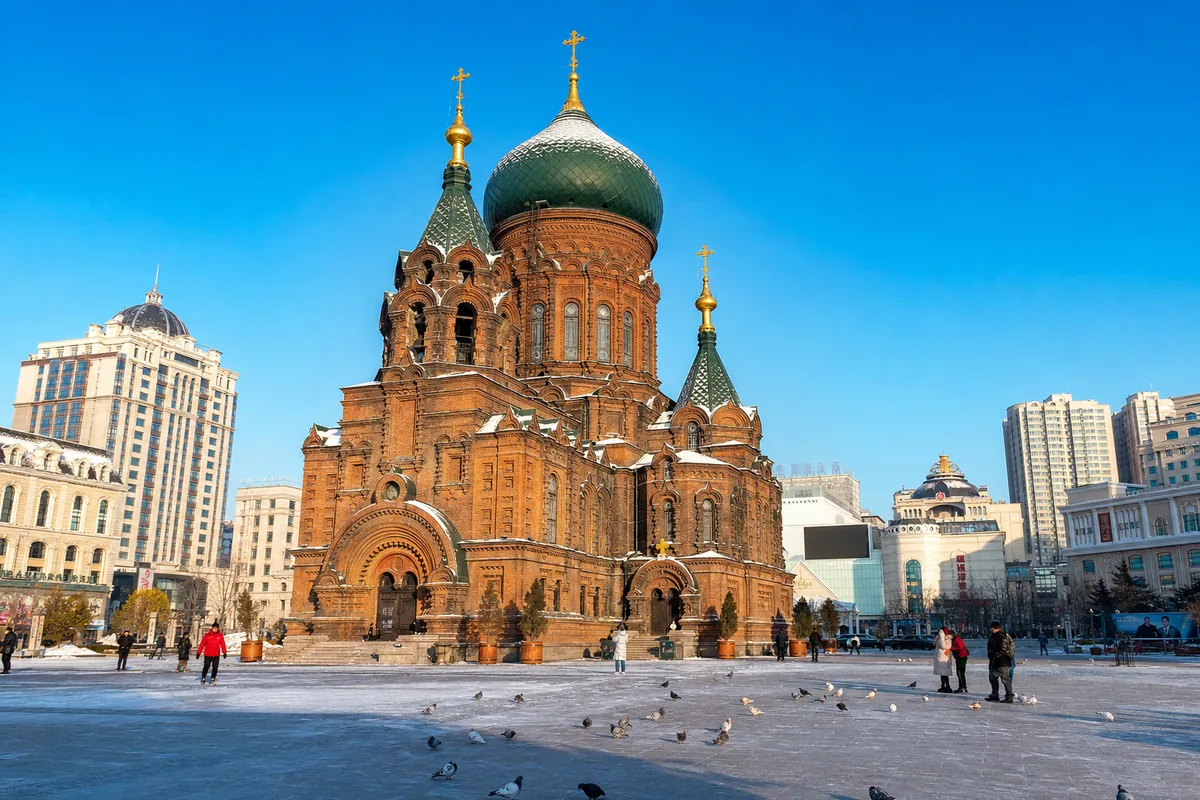
Harbin's most photographed building is a former Russian Orthodox church, built in the early 20th century when the city was a hub on the Russian-built railway. The green-domed, red-brick cathedral sits in a plaza in the city center and looks especially striking against snow and a blue sky. It no longer functions as a church — inside it's an exhibition space on Harbin's architectural history, worth a quick look.
This is the heart of Harbin's Russian architectural heritage, a legacy you'll see all over the older parts of town. Plan 30–45 minutes here, more if you want photos from every angle. The plaza is a short walk from Central Street.
Central Street (中央大街)
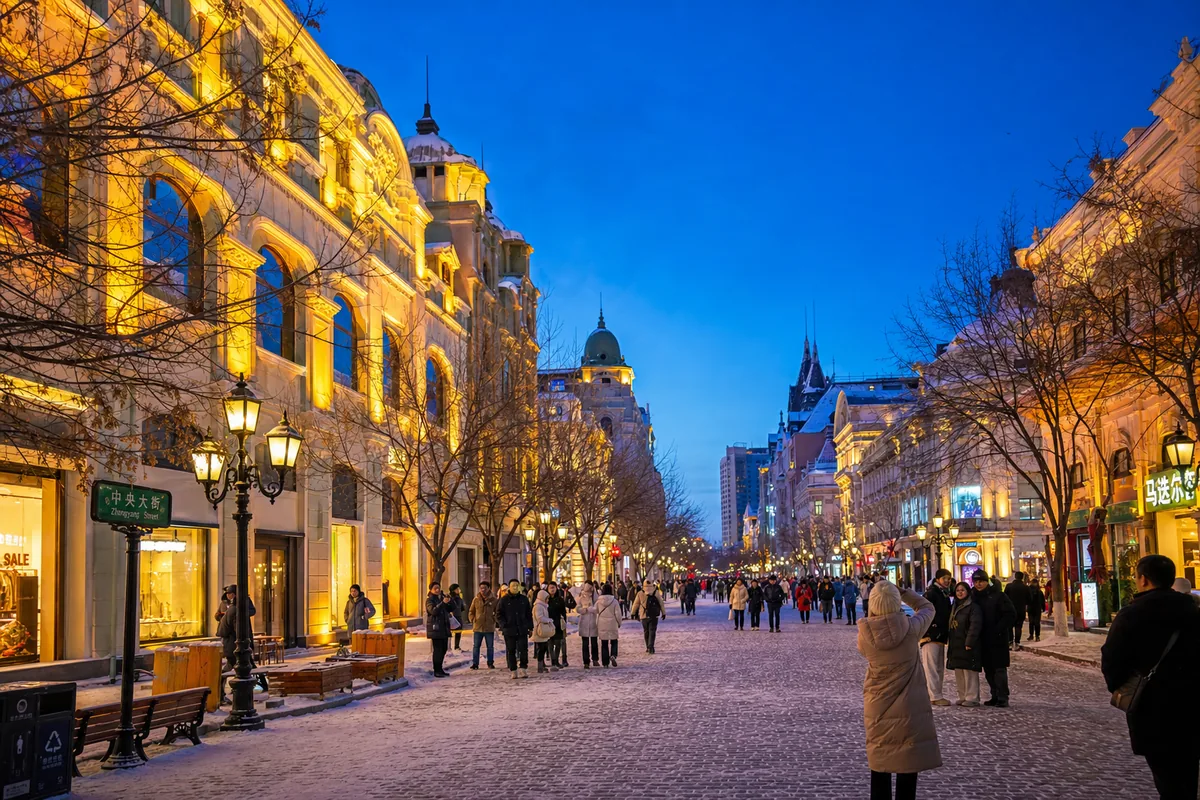
Central Street is a 1.4-km cobblestone pedestrian boulevard lined with early-1900s European-style buildings — Baroque, Renaissance, and Art Nouveau facades that earned Harbin its old nickname as the "Oriental Moscow." It's the best place to wander on foot, eat, and shop, and it stays lively into the evening.
Two things to do here specifically: try a Madie'er ice cream bar (马迭尔冰棍) — a local institution that people happily eat outdoors in subzero weather, because somehow it makes sense here — and duck into one of the warm cafés or restaurants when you need to thaw out. The street is also a good base; many hotels are within walking distance.
Sun Island (太阳岛)
Across the Songhua River from the city center, Sun Island is a large park that hosts the International Snow Sculpture Art Expo in winter. Where Ice and Snow World is about backlit ice at night, Sun Island is about enormous white snow sculptures best seen in daylight — intricate carvings, some the size of buildings. It pairs naturally as a daytime counterpart to an evening at Ice and Snow World.
In deep winter the Songhua River itself freezes solid enough to walk and drive on, and you'll find activities out on the ice — sledding, ice bikes, horse-drawn sleds, and sometimes ice swimming demonstrations by very hardy locals. Getting to Sun Island, you can take a cable car across the river, drive across the ice in winter, or cross by bridge.
Harbin Food Guide
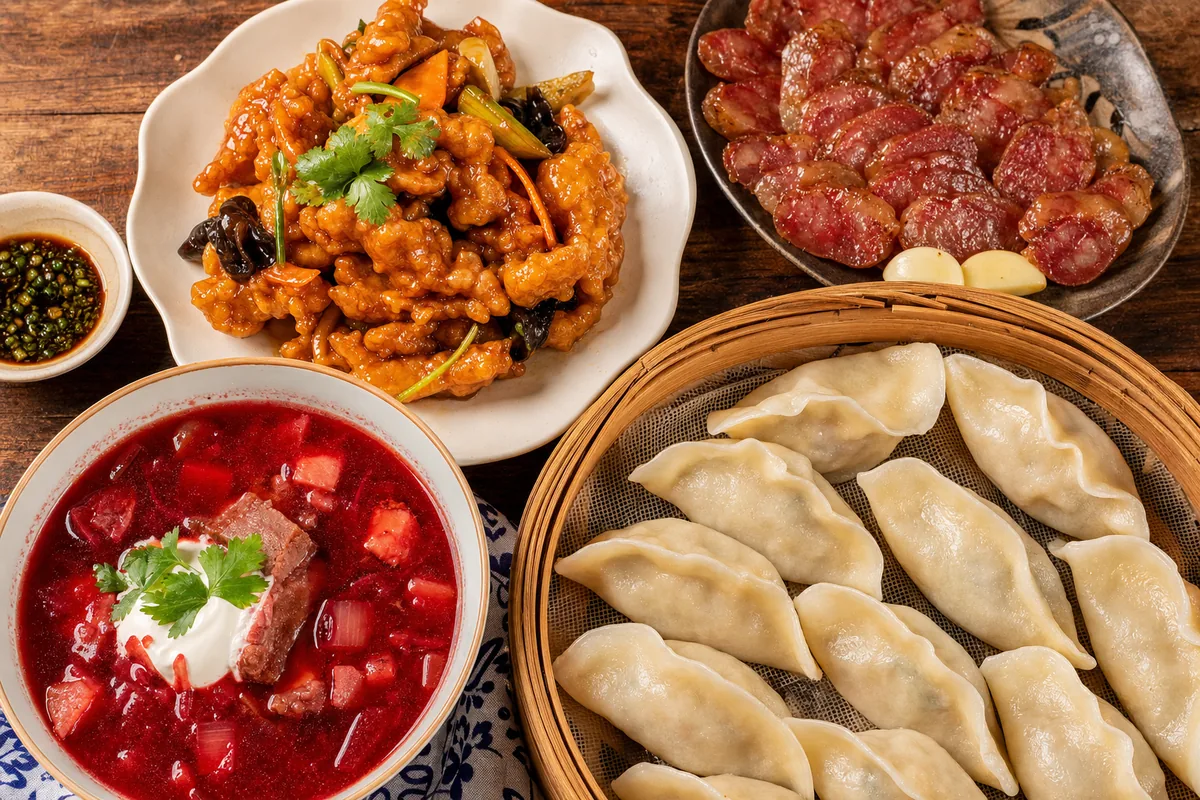
Harbin's food is hearty, warming, and shaped by both Northeastern Chinese (Dongbei) cooking and Russian influence. You won't go hungry, and the portions are big.
What to try:
- Guo bao rou (锅包肉) — sweet-and-sour fried pork, the signature Dongbei dish. Crispy, tangy, addictive.
- Harbin red sausage (红肠, hóngcháng) — a smoked, garlicky sausage that came straight from the Russian/Lithuanian tradition. Buy some at a shop on Central Street.
- Dongbei dumplings and stews — big plates of dumplings, pork-and-cabbage, and the classic "pork stewed with vermicelli."
- Frozen treats outdoors — frozen pears (冻梨) and frozen persimmons sold by street vendors, plus the Madie'er ice cream bars. Eating frozen fruit in the cold is a genuine local habit.
- Russian-style food — borscht (called 苏波汤, sūbōtāng locally), bread, and Western-style sit-down meals along Central Street, a holdover from the city's history.
If you don't read Chinese, ordering is manageable with pictures and a translation app — our guides on how to order food with zero Chinese and the regional cuisine overview help here.
Getting to and Around Harbin
Getting there
Harbin is well connected. Harbin Taiping International Airport (HRB) has direct flights from major Chinese cities and some international routes. By rail, high-speed trains (高铁, gāotiě) connect Harbin to Beijing in around 4.5–5 hours and to other Northeast cities quickly. You can book train tickets through the official China Railway 12306 system or a booking platform — see our guide to booking train tickets if it's your first time.
Getting around
Harbin has a metro system covering key areas, plus buses and plentiful taxis and ride-hailing via Didi. In winter, taxis and Didi are the most comfortable option for hopping between attractions — walking long distances in -20°C gets old fast, and the ice attractions are spread out. Central Street, Saint Sophia Cathedral, and many hotels are close enough to walk between on a good day.
Where to Stay
The most convenient area for most visitors is around Central Street and the Daoli district — you're walking distance from the cathedral, the riverfront, restaurants, and a short ride from Ice and Snow World. Staying here means less time outdoors in transit.
Harbin has the full range, from hostels and budget hotels to international four- and five-star properties. Prices climb sharply during the festival peak and especially over Chinese New Year, so book early if your dates are fixed. You'll find the Central Street options on Booking.com and similar platforms. Whatever you book, confirm the heating is solid (it almost always is in Harbin) and check the walking distance to where you'll spend your evenings.
For more on the registration step that applies to all foreign guests in China, see Booking Hotels & Registration Rules.
Suggested 2–3 Day Itinerary
| Day | Plan |
|---|---|
| Day 1 | Morning: Saint Sophia Cathedral and the surrounding plaza. Afternoon: walk Central Street, eat, try a Madie'er ice cream bar, buy red sausage. Evening: Ice and Snow World after dark (2–3 hours). |
| Day 2 | Morning/afternoon: Sun Island snow sculptures and frozen-river activities on the Songhua. Late afternoon: warm up with a sit-down Russian-style meal back in the city. |
| Day 3 (optional) | Slower morning, a museum or more of Central Street, or use the day to start a Northeast loop toward Changbaishan or Dalian. |
Combining Harbin with Other Cities
Harbin works well as the anchor of a Northeast China trip. Approximate travel times by high-speed rail:
| City | By high-speed rail | Why go |
|---|---|---|
| Changchun | ~1 hour | Provincial capital, film history, more Japanese-era and Soviet-era architecture |
| Shenyang | ~2.5–3 hours | Imperial palace, Qing dynasty history, major Northeast hub |
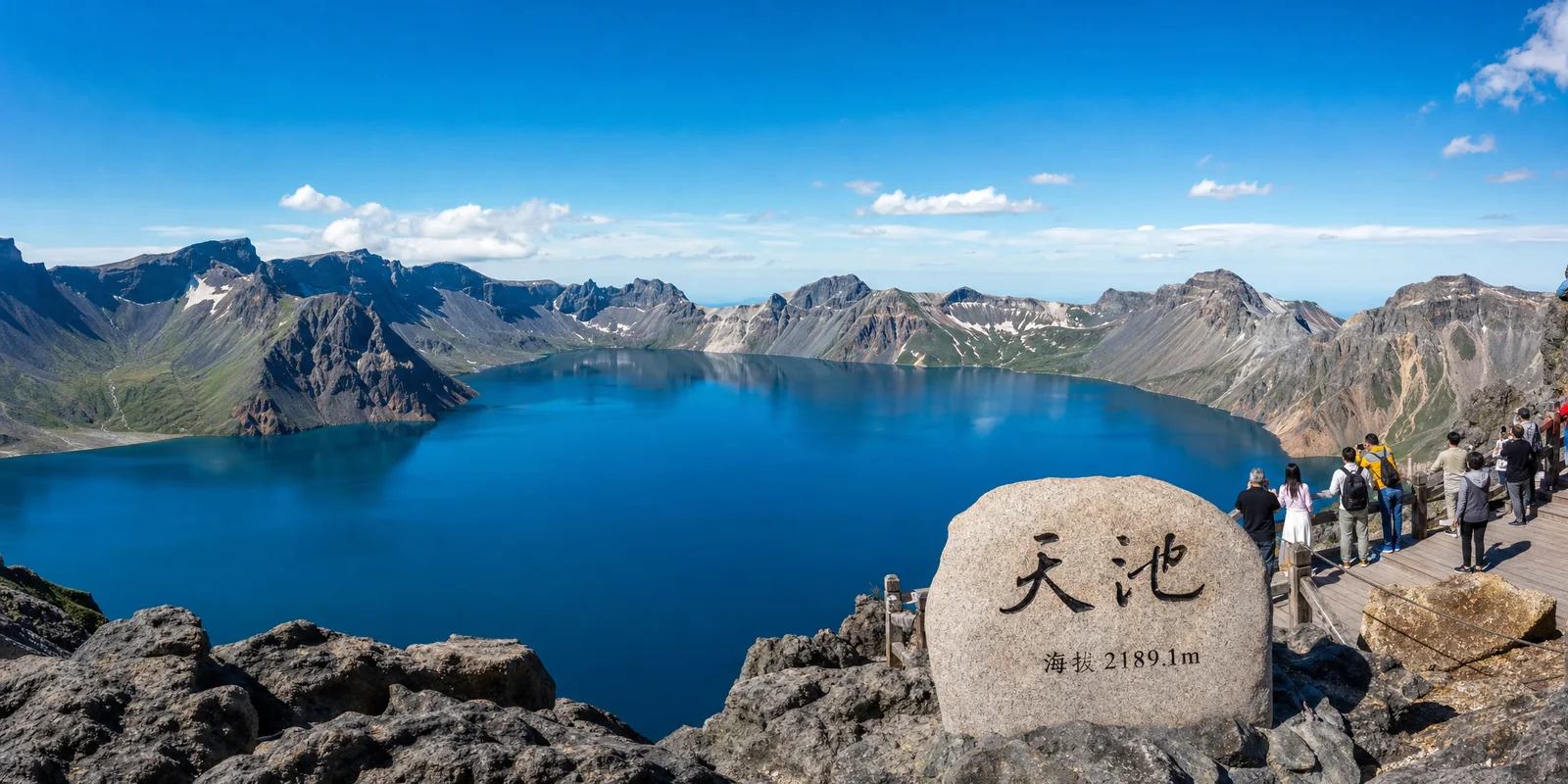
| Changbaishan | ~3.5–4 hours by rail to nearby stations, then transfer | Volcanic crater lake, skiing, hot springs in a snowy mountain setting |
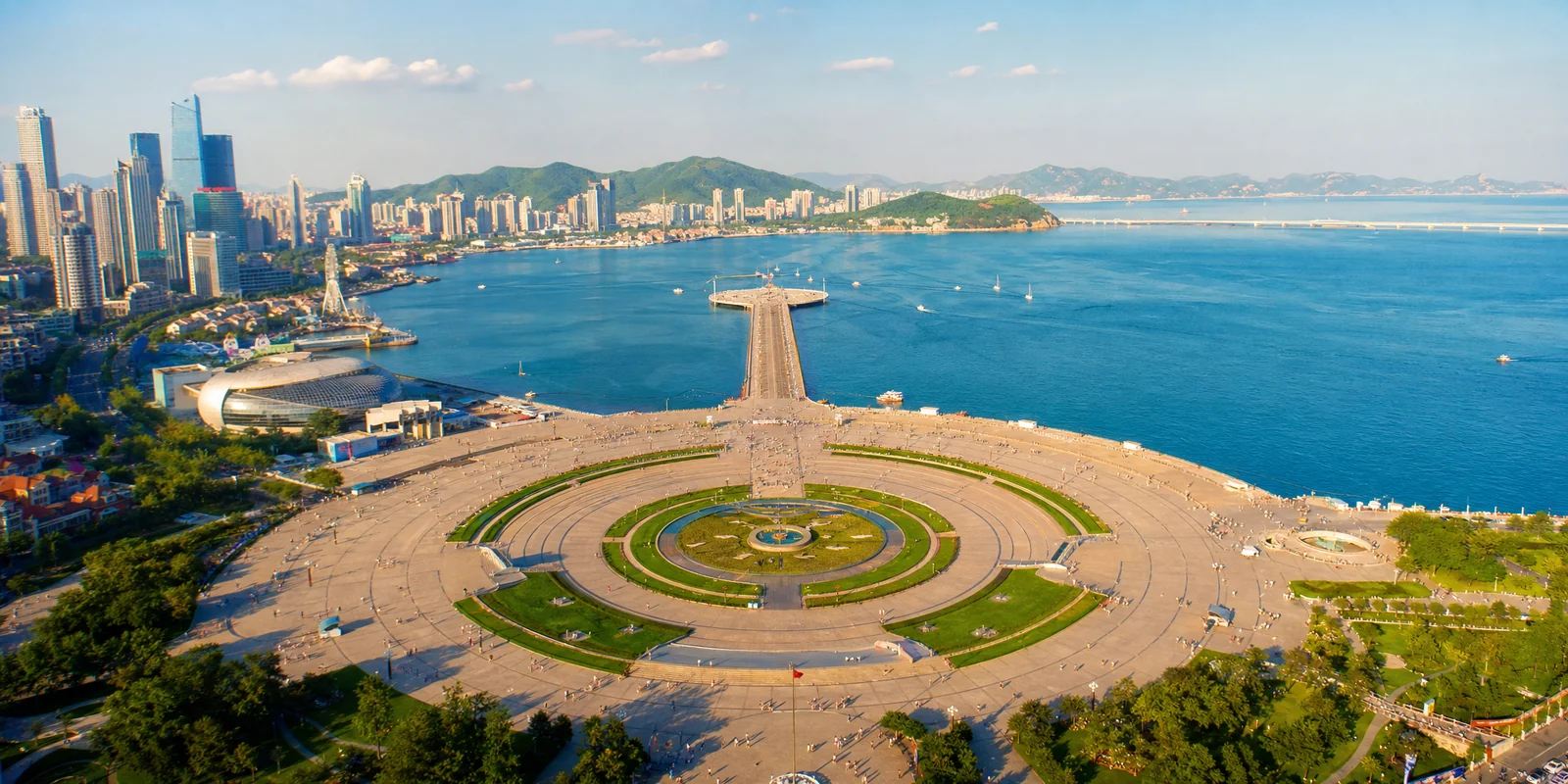
| Dalian | ~4.5 hours | Coastal city, milder winters, Russian and Japanese architecture by the sea |
A popular route ties these together — see our Northeast China Route: Harbin–Changbaishan–Dalian for a full plan, plus the dedicated Changbaishan Nature Guide and Dalian Coastal City Guide.
Final Tips
Harbin in winter is one of China's most distinctive trips — a city that turns the cold into its main attraction. Get the gear right and the cold becomes manageable, even part of the fun. Prioritize Ice and Snow World after dark, give Sun Island a daylight slot, and use Central Street as your warm, walkable base. Book accommodation early if you're visiting around the festival peak or Chinese New Year, and check current ticket prices and operating dates before you lock in plans, since the season's exact start and end shift with the weather each year.
If you're building a longer trip, Harbin pairs naturally with Changbaishan and Dalian into a satisfying loop through the Northeast.
Last updated: June 2026
Read in other languages
Last train times for 10 Chinese metro systems
Every line and station, checked by hand — the same data behind our offline route planner.
Get the WaysChina App
Offline guides, currency converter, essential phrases, and more — all in your pocket.

Related Articles
Changbaishan Nature Guide
Everything you need to plan a trip to Changbaishan: how to reach Heaven Lake, when to come, where to stay, and what...
Dalian Coastal City Guide
Dalian is northeast China's best beach city — fresh seafood, Russian and Japanese colonial architecture, and cool...