
This article contains affiliate links. If you make a purchase through these links, we may earn a small commission at no extra cost to you. This helps support our work in creating free travel guides.
China is roughly the size of the United States and runs from tropical Hainan in the south to subarctic Heilongjiang in the north, so there's no single "best" month for the whole country. The right answer depends on where you're going and what you want out of the trip. That said, two windows work well almost everywhere: spring (April–May) and autumn (September–October), when most of the country is mild and dry. The catch is that these are also the busiest and priciest months. This guide breaks down China's weather by season, flags the holiday periods you'll want to plan around, and tells you when prices drop if you're willing to trade perfect weather for fewer crowds.
The Short Answer: Spring and Autumn
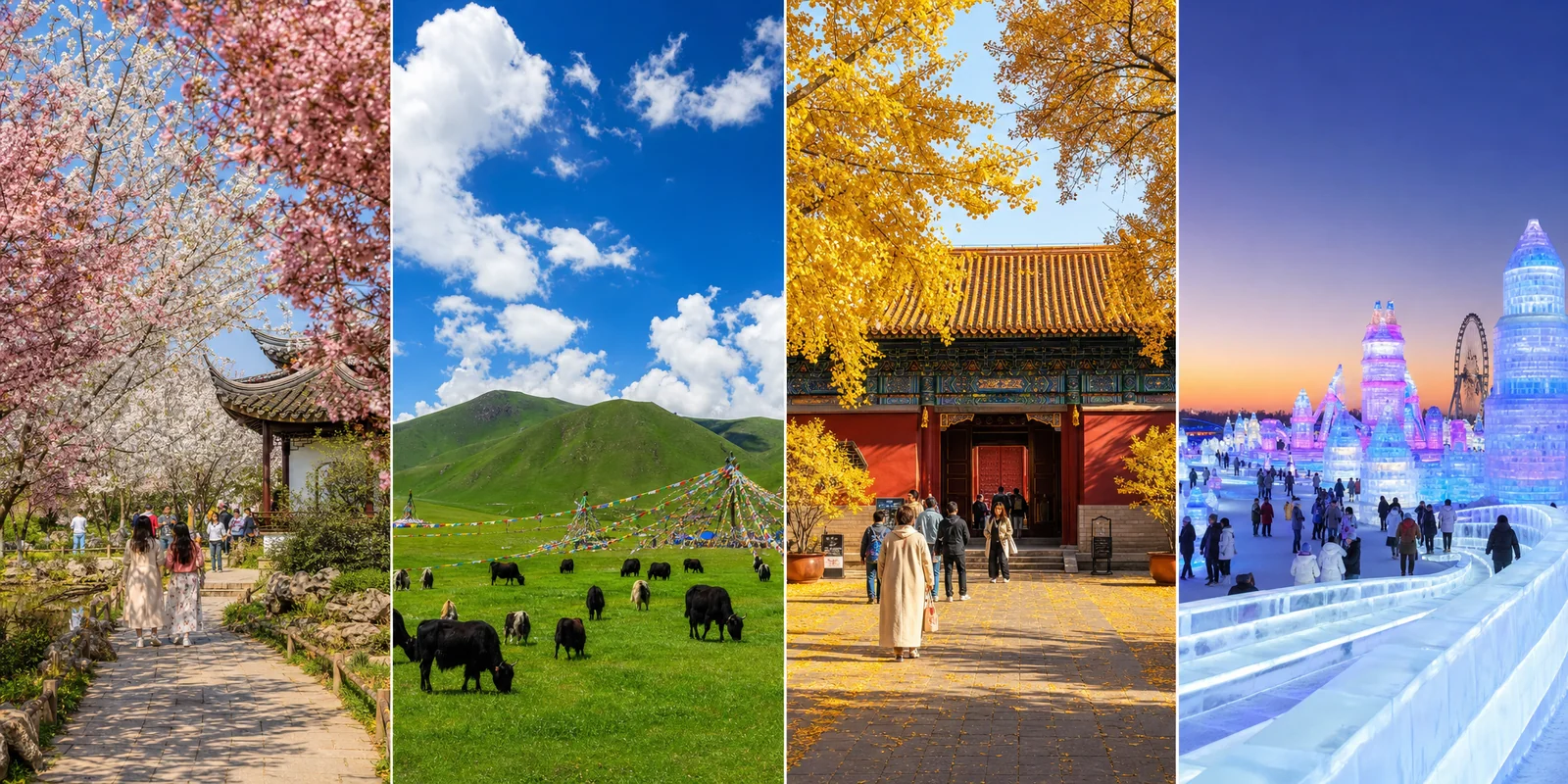
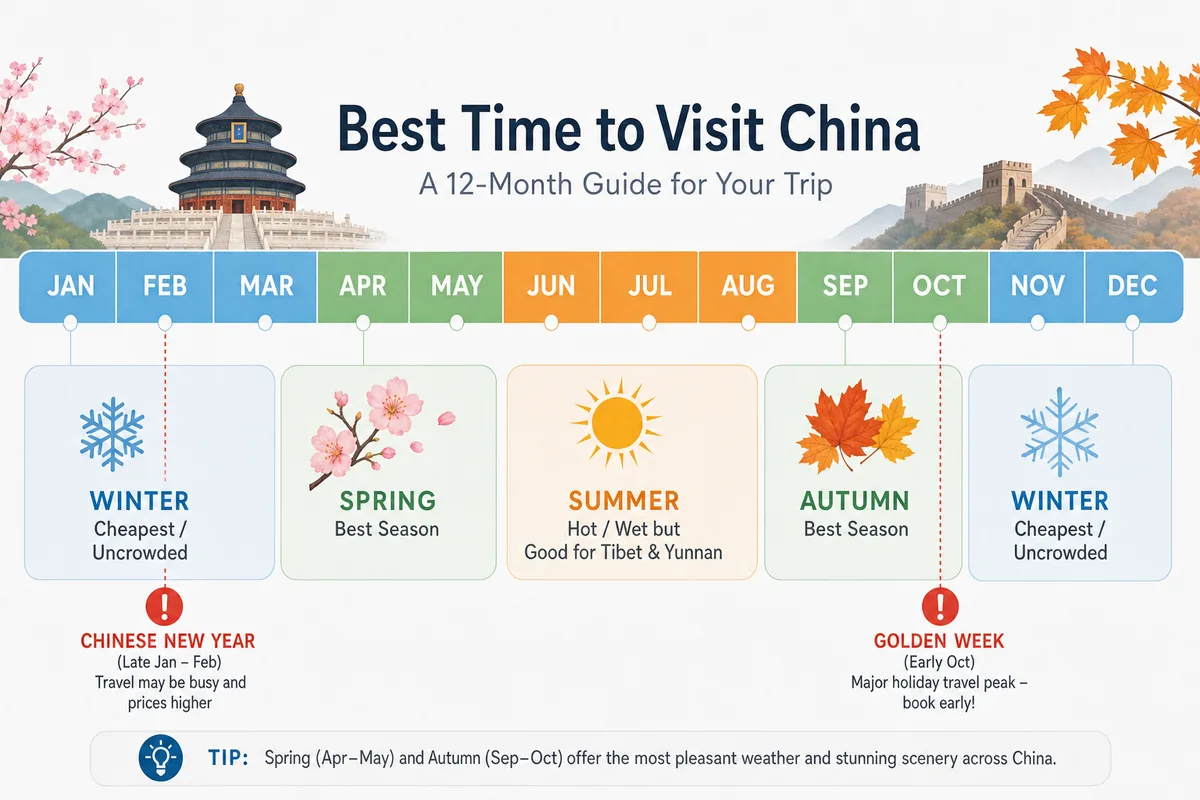
If you only remember one thing: late April through May and September through mid-October give you the most reliable weather across the widest range of destinations. Temperatures sit in a comfortable range, rain is moderate, and the major sights — the Great Wall, the Forbidden City, Guilin's karst hills, the Terracotta Army — all show well.
The trade-off is crowds and cost. Domestic travel surges in these months, and there's one period in particular you'll want to avoid (more on Golden Week below). Summer and winter aren't off-limits — they're actually the right choice for certain regions and experiences — but they require more planning around heat, rain, or cold.
Because China's climate varies so much, it helps to think in terms of region rather than the country as a whole. The Weather by Region guide goes deeper, but the seasonal overview below covers the essentials.
China Weather by Season
Spring (March–May)
Spring is one of the two prime windows. March can still be cold and dusty in the north (Beijing occasionally gets sandstorms blown in from the northwest), but by April most of the country warms up. Southern cities like Guilin, Hangzhou, and Chengdu turn green and pleasant. Cherry and plum blossoms peak in late March in cities like Wuhan and Nanjing.
Daytime highs in April–May typically range from 15–25°C (59–77°F) across central and eastern China. Pack layers — mornings and evenings stay cool, especially in the north and at altitude. Spring rain picks up in the south toward May, so bring a light rain jacket.
Summer (June–August)
Summer is hot, humid, and wet across most of eastern and central China. Cities like Shanghai, Wuhan, Nanjing, and Chongqing regularly hit 35°C+ (95°F+) with oppressive humidity. The southeast coast (including Fujian, Guangdong, and Hong Kong) enters typhoon season from July through September, which can disrupt flights and ferries.
That said, summer is the best time for several regions that are otherwise hard to visit:
- Tibet and the Qinghai-Tibet Plateau — the only comfortable window, with mild days and accessible roads.
- Yunnan (Kunming is nicknamed the "Spring City" for its year-round mild climate).
- Inner Mongolia's grasslands — green and at their best in July–August.
- Northern mountains and Jiuzhaigou — pleasant escapes from the lowland heat.
Summer also overlaps with China's school holidays (July–August), so domestic family travel peaks. Expect crowds at major attractions and higher hotel rates in destinations like Sanya and Qingdao.

Autumn (September–November)
For many seasoned travelers, autumn is the single best season. September and October bring clear skies, comfortable temperatures, and lower humidity across most of the country. Beijing in October — crisp, sunny, with golden ginkgo leaves — is about as good as Chinese sightseeing gets. The autumn foliage at places like Jiuzhaigou, Huangshan, and the Beijing hills peaks from mid-October into early November.
The one complication is the National Day holiday in early October (covered below). Outside that week, autumn is hard to beat. By November the north turns cold and many northern trees are bare, but southern and central China stay pleasant well into the month.
Winter (December–February)
Winter is cold in the north and chilly-damp in the south (note: most of southern China has no central heating, so indoor spaces can feel colder than you'd expect). But it's also the cheapest time to travel and brings two standout experiences:
- Harbin's Ice and Snow Festival — enormous illuminated ice sculptures, typically running from late December or early January. Temperatures drop to -20°C (-4°F) or lower, so serious cold-weather gear is essential.
- Tropical Hainan — Sanya's beaches are warm and busy with domestic tourists escaping the cold, which means it's actually peak season (and peak prices) there.
Winter is generally a great time for cities like Beijing and Xi'an if you don't mind the cold — sights are far less crowded and flights and hotels are cheaper. The big exception is Chinese New Year (see below), which falls in late January or February.

The Two Holidays to Plan Around
China has two nationwide travel surges that you absolutely need to factor into your timing. During these periods hundreds of millions of people travel domestically, and trains, flights, and popular attractions fill up fast.
National Day Golden Week (early October)
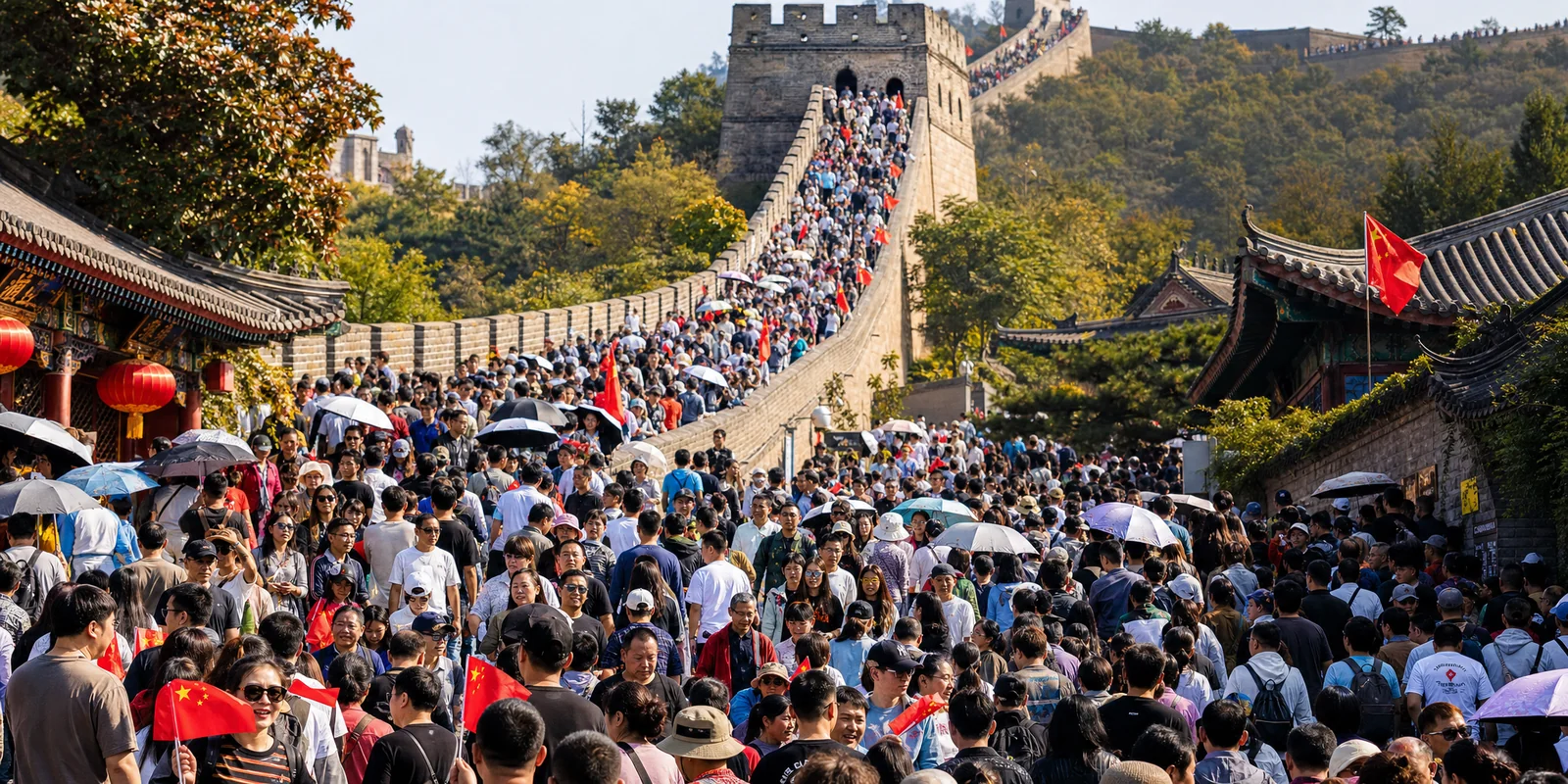
The National Day holiday (国庆节, Guóqìngjié) runs for the first week of October. This is the single busiest travel week of the year. Major attractions hit capacity, train tickets sell out weeks ahead, and prices for flights and hotels spike. The Great Wall, the Bund, and other top sights become genuinely overwhelming.
We cover this period in detail in the Golden Week Survival Guide, including which destinations are most affected and how to navigate it if your dates can't move.
Chinese New Year / Spring Festival (late January–February)
Chinese New Year (春节, Chūnjié) is the country's most important holiday and triggers the world's largest annual human migration as people return to their hometowns. The exact dates shift each year with the lunar calendar, usually landing between late January and mid-February.
This period is genuinely double-edged for foreign visitors. Transport is chaotic for about two weeks, many small businesses and family-run restaurants close, and some attractions have reduced hours. But the festive atmosphere — temple fairs, lanterns, fireworks in places where they're permitted — can be a memorable experience if you plan carefully and stay in major cities, which keep more services running.
The Chinese New Year Travel Guide explains what stays open, what closes, and how to make the most of it.
Best Time to Visit Beijing, Shanghai, and Other Key Cities
Since most first-time itineraries center on a few major cities, here's the quick read on each:
| Destination | Best months | Notes |
|---|---|---|
| Beijing | Apr–May, Sep–Oct | Hot, wet summers; cold, dry winters. October is ideal. Winter is cold but uncrowded. |
| Shanghai | Oct–Nov, Mar–Apr | Humid summers, mild winters. Autumn is the most comfortable. |
| Xi'an | Mar–May, Sep–Oct | Hot summers, cold winters. Spring and autumn are best for the Terracotta Army. |
| Guilin / Yangshuo | Apr–Oct | Long pleasant season; misty karst scenery. Summer brings rain but lush landscapes. |
| Chengdu | Mar–Jun, Sep–Nov | Often cloudy/humid year-round. Spring and autumn are most comfortable. |
| Tibet (Lhasa) | May–Sep | Summer is the only practical window. Roads and weather are accessible. |
| Harbin | Dec–Feb | Visit specifically for the Ice Festival. Brutally cold but spectacular. |
| Sanya (Hainan) | Oct–Apr | Beach season. Peak prices around Chinese New Year and winter holidays. |
| Yunnan (Kunming/Dali/Lijiang) | Mar–Jun, Sep–Nov | Mild most of the year. Avoid summer rains for the best skies. |
Cheapest Time to Visit China
If budget is your priority, the cheapest windows are winter (excluding Chinese New Year) and the shoulder months of late November and early March. International airfares to China drop noticeably outside summer and the two Golden Weeks, and domestic flights and hotels follow the same pattern.
Concretely, here's where the savings come from:
- International flights are typically cheapest from November to early March (excluding the CNY surge). It's worth comparing fares across a flexible date range — flight search tools like Trip.com make it easy to scan a whole month at once and spot the cheapest days to fly.
- Domestic flights within China are heavily discounted in low season; booking a few weeks ahead on weekdays gets the best rates.
- Hotels in northern cities like Beijing and Xi'an can be 30–50% cheaper in winter than in October.
The trade-off is weather — short daylight, cold in the north — but for indoor-heavy itineraries (museums, food, historic sites) winter can be excellent value with far thinner crowds. The Winter Travel in China guide covers how to make a cold-season trip work.
Booking Around Peak Season
If your trip lands in spring or autumn — the most popular windows — book accommodation early, especially in cities like Beijing, Xi'an, and Guilin where the best-located hotels fill up. Rooms near major sights and metro stations go first, and prices climb as availability shrinks. Booking platforms such as Booking.com let you reserve with free cancellation on many properties, which is useful when you're locking in dates months ahead but still finalizing your route.
How to Decide: A Quick Framework
Putting it together, here's how to choose your month:
- Want the best all-round weather and don't mind crowds? Go late April–May or September–early October, but avoid Golden Week (first week of October).
- Visiting Tibet, Yunnan highlands, or northern grasslands? Summer (June–August) is your window.
- On a budget or want fewer crowds? Travel in winter (November–March), skipping Chinese New Year.
- Chasing a specific experience? Harbin's ice sculptures (December–February), autumn foliage (mid-October), cherry blossoms (late March), or Hainan beaches (winter).
For most first-time visitors doing a Beijing–Xi'an–Shanghai loop, our recommendation is the second half of September or the second half of October — you get crisp autumn weather and sidestep both the summer heat and the Golden Week rush.
Summary
There's no universal best month for China — it's too big and too varied. But the reliable rule holds: spring (April–May) and autumn (September–October) offer the best weather across the most destinations, as long as you steer clear of the early-October Golden Week. Summer suits Tibet, Yunnan, and the grasslands; winter is cheapest and unlocks Harbin's ice festival and Hainan's beaches. Pin down your destinations first, then match the season to them.
Next steps: check the Festival Calendar to see whether your dates overlap any holidays, dig into the Weather by Region guide for your specific cities, and start your seasonal packing list once you've settled on timing. Public holiday dates shift slightly each year, so confirm the exact dates before booking.
Last updated: June 2026
Read in other languages
Last train times for 10 Chinese metro systems
Every line and station, checked by hand — the same data behind our offline route planner.
Get the WaysChina App
Offline guides, currency converter, essential phrases, and more — all in your pocket.

Related Articles

Autumn Travel in China
Autumn is arguably the best season to visit China: comfortable weather, clear skies, golden foliage, and the...

Chinese New Year Travel Guide
Traveling to China during Chinese New Year means festive cities, closed shops, and the world's largest annual...
Festival Calendar: China's Holidays & Festivals Explained
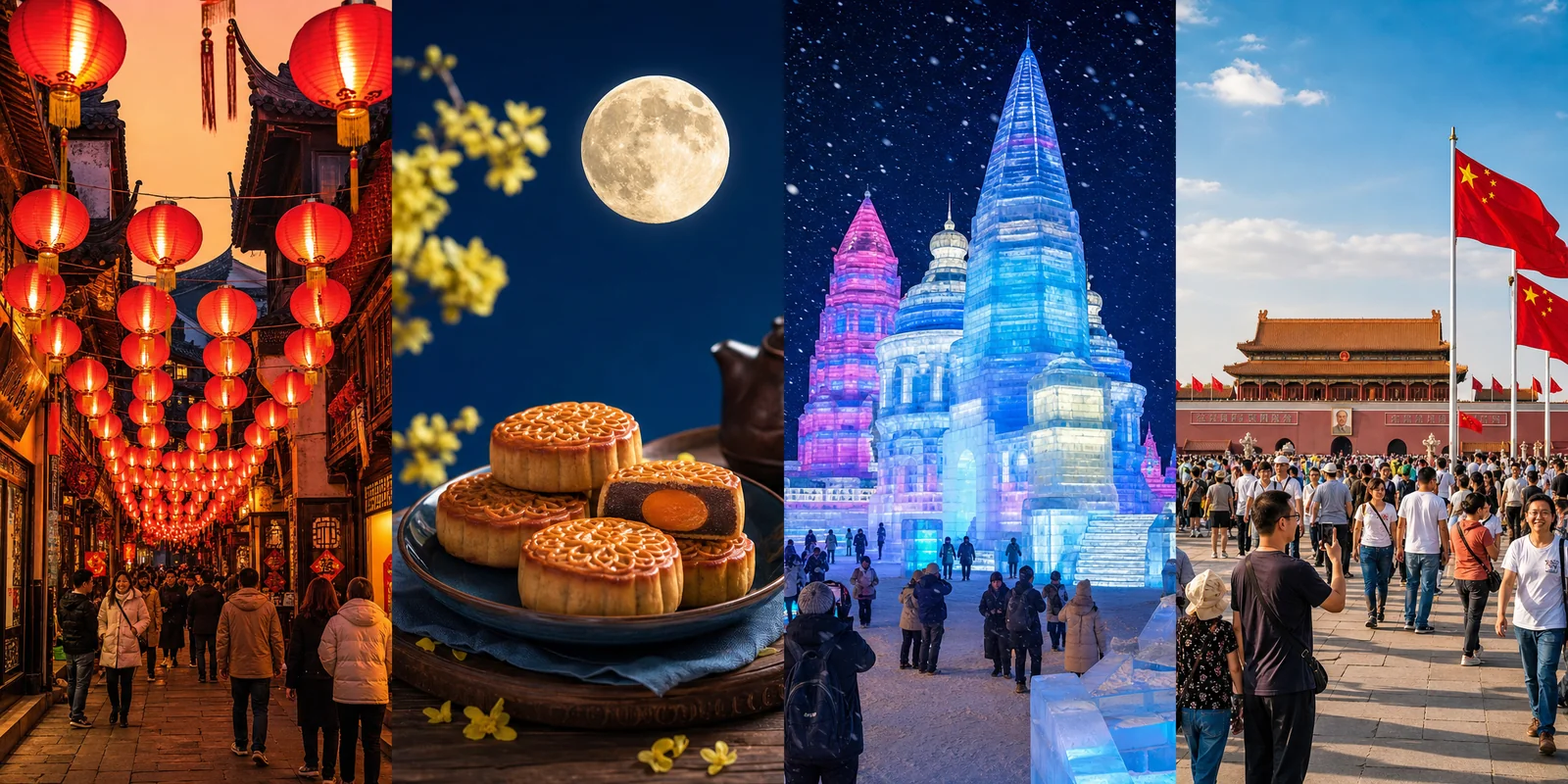
China's festival calendar mixes lunar holidays with fixed public holidays. Here's when each one falls, what closes,...
Golden Week Survival Guide
China's National Day holiday triggers the largest domestic travel rush of the year. Here's how to decide whether to...