
This article contains affiliate links. If you make a purchase through these links, we may earn a small commission at no extra cost to you. This helps support our work in creating free travel guides.
Guangzhou and Shenzhen sit about 100km apart in the Pearl River Delta, connected by trains that run every few minutes and take well under an hour. They're easy to combine, and they make a strong case for each other: Guangzhou (广州, Guǎngzhōu) is the old Cantonese capital, a 2,000-year-old trading port with temples, dim sum, and a riverfront skyline. Shenzhen (深圳, Shēnzhèn) was a cluster of fishing villages 40 years ago and is now a city of 17 million built on electronics, software, and big ambition. Both are entry points for China's 240-hour visa-free transit policy, and both put you within a short hop of Hong Kong, Macau, and Zhuhai. This guide covers what to see, what to eat, how to get around, and how to string it all together in three to four days.
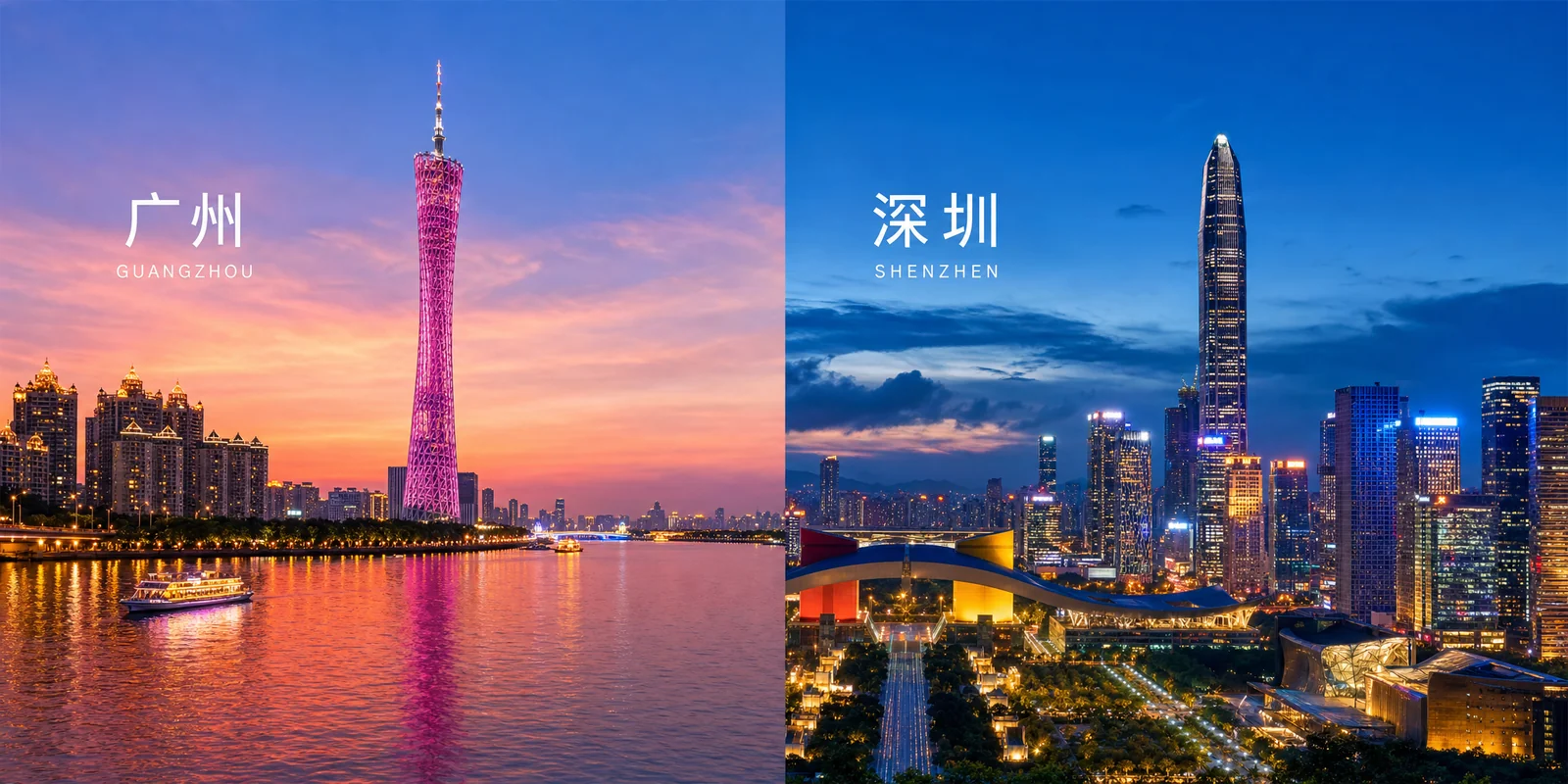
Overview: Two Very Different Cities
It helps to think of these two as opposites that happen to be neighbors. Guangzhou is layered and historic. It's the heart of Cantonese culture, the third-largest city in China, and the home of dim sum (点心, diǎnxīn). The pace is unhurried, the food obsession runs deep, and the old quarters reward slow wandering.
Shenzhen is the opposite of old. It's the country's tech capital, a planned city of glass towers, enormous parks, and shopping complexes the size of neighborhoods. People come here to do business, shop, and use Shenzhen as a launchpad to Hong Kong. It has fewer traditional sights but plenty of energy and some genuinely good modern attractions.
Most travelers spend two days in Guangzhou and one or two in Shenzhen, or use Shenzhen purely as a Hong Kong gateway. Either works. The cities share a subtropical climate, which is the main thing to plan around.
Things to Do in Guangzhou
Guangzhou's appeal is in its mix: a futuristic riverfront on one side, leafy colonial streets and ancient temples on the other. You can see the headline sights in a focused day and a half.
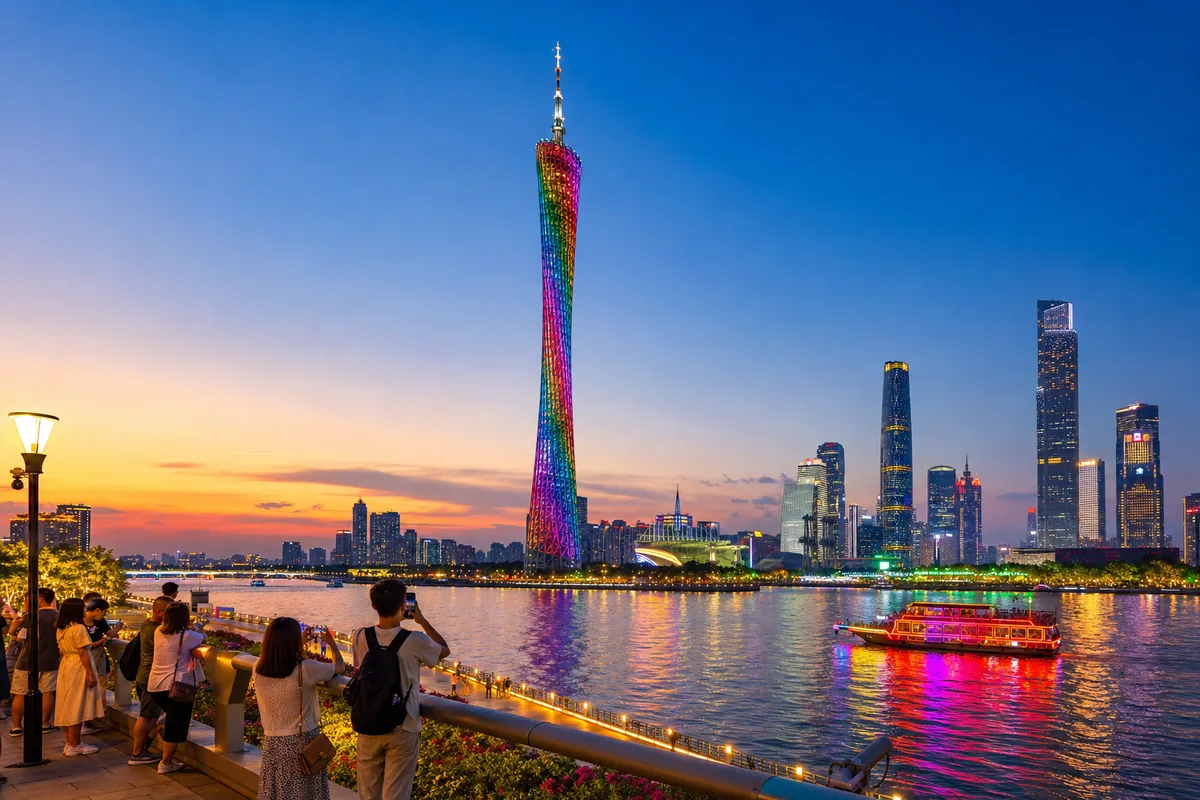
Canton Tower
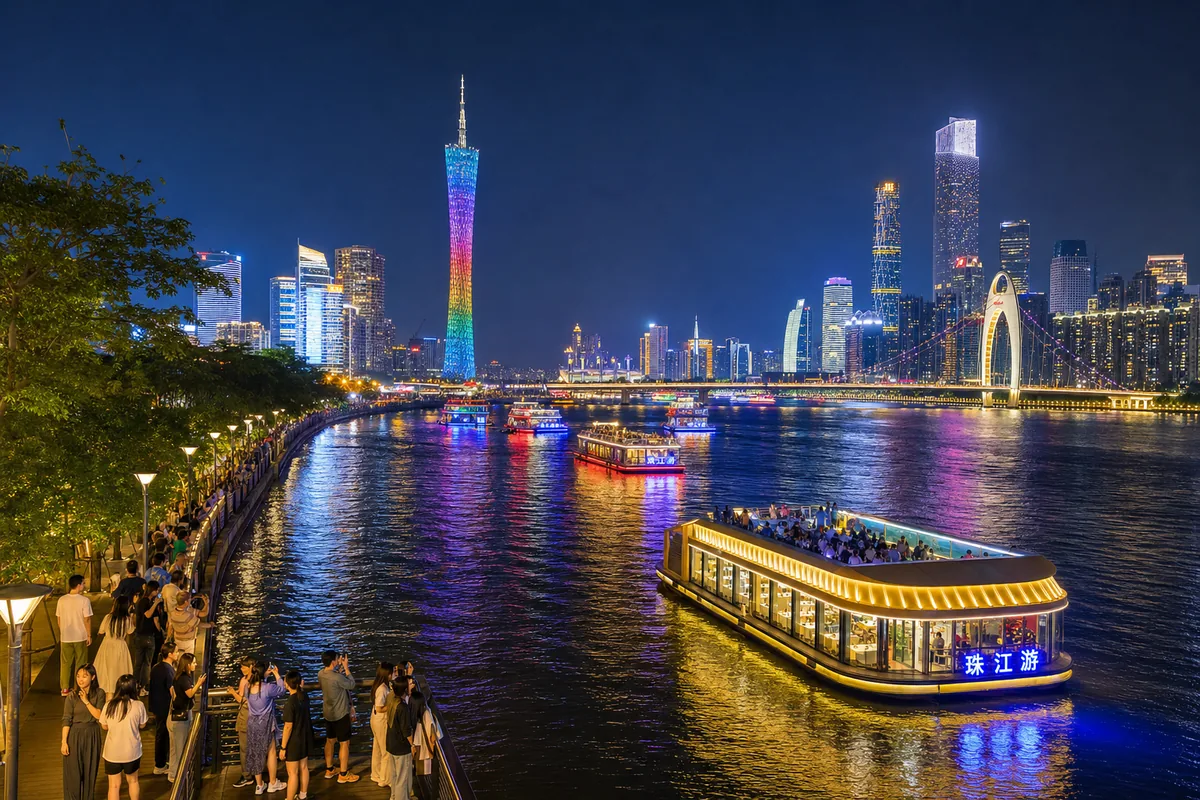
The Canton Tower (广州塔, Guǎngzhōu Tǎ) is the city's signature landmark — a 600-meter twisting tower on the south bank of the Pearl River, recognizable by its narrow "waist" that gives it the nickname "the slim waist." It's one of the tallest structures in the world, and the observation decks deliver the obvious payoff: from the top you can trace the river curving through the city and pick out the skyscrapers of Zhujiang New Town across the water.
There are several ways up, at different prices. The standard observation decks cover most floors; thrill-seekers can pay extra for the open-air "Bubble Tram" pods that rotate around the very top, or the drop ride. Go around dusk if you can — you get daylight, sunset, and the city lights coming on, all in one visit. Tickets are cheaper booked online in advance than at the door.
Shamian Island
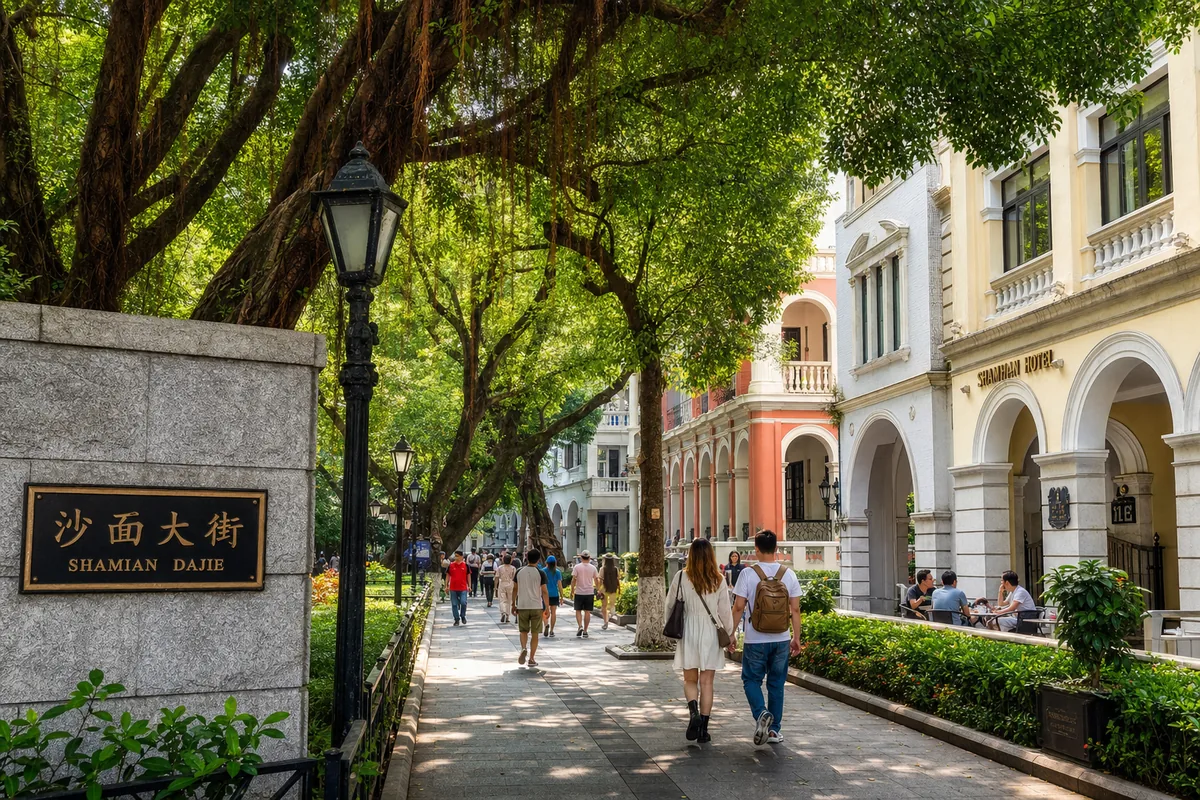
Shamian Island (沙面岛, Shāmiàn Dǎo) is a small sandbar in the Pearl River that became a foreign concession in the 19th century, divided between British and French control. The result today is a quiet, tree-lined enclave of European-style mansions, churches, and old trading houses — a complete contrast to the city around it. There are no high-rises, traffic is minimal, and the streets are made for walking.
It's a genuinely pleasant couple of hours: granite buildings in faded pastels, banyan trees, cafés in restored colonial houses, and a Catholic and a Protestant church both still standing. Photographers and couples love it; it's a common spot for wedding photos. Combine it with the nearby Qingping Market and the riverside, and you've got a relaxed half-day in old Guangzhou.
Beyond the Headliners
A few more places worth your time in Guangzhou:
- Chen Clan Ancestral Hall (陈家祠, Chénjiācí) — a stunning 19th-century complex covered in intricate wood, brick, and ceramic carvings, now a folk-art museum. The roof ridges alone are worth the trip.
- Yuexiu Park & the Five Rams Statue — the city's largest park and its founding symbol; Guangzhou's nickname is "City of Rams."
- Sacred Heart Cathedral (石室圣心大教堂) — an all-granite Gothic cathedral, one of the few in the world built entirely of stone, finished in the 1880s.
- Beijing Road & Shangxiajiu — pedestrian shopping streets, the latter lined with old arcade buildings (骑楼, qílóu).
Guangzhou Food Guide
If you eat one great meal on your whole China trip, there's a strong argument it should be in Guangzhou. Cantonese cuisine is built on freshness and restraint — the idea is to taste the ingredient, not bury it in sauce — and this is its capital city.
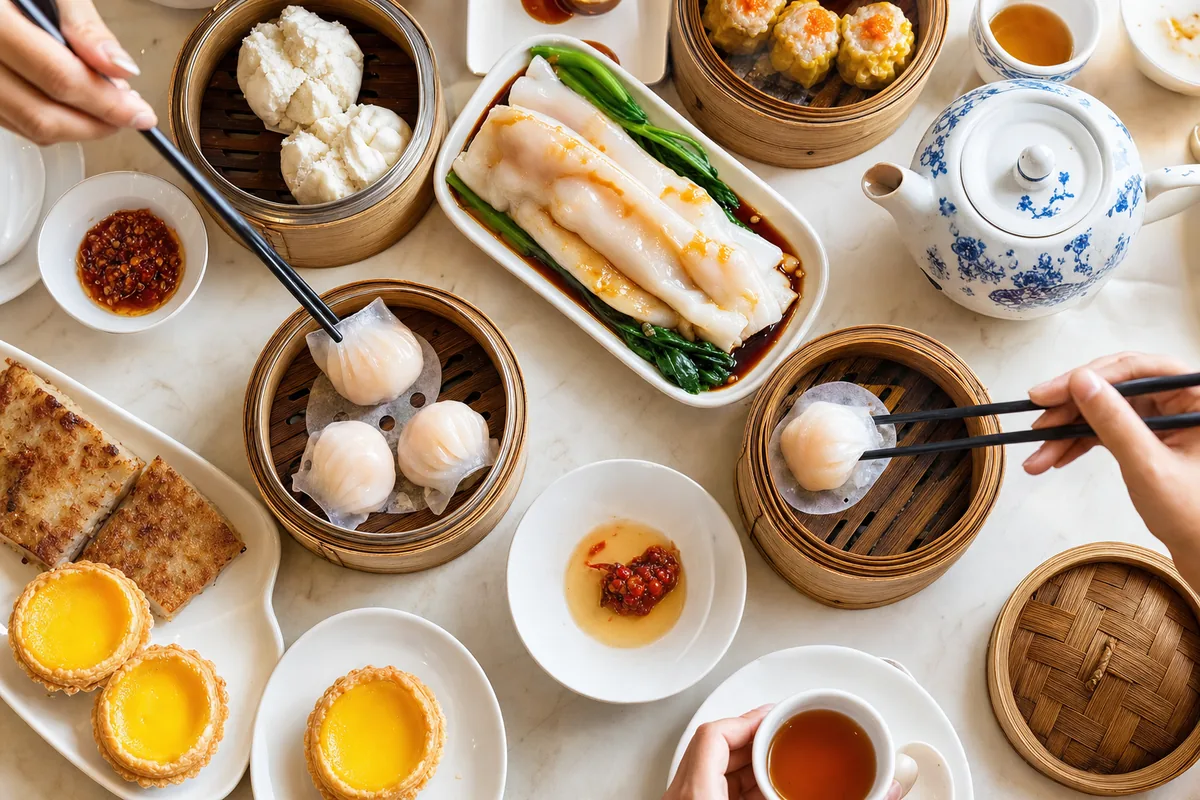
Dim sum and morning tea (早茶, zǎochá) is the ritual to prioritize. Locals gather at teahouses in the morning, drink pots of tea, and order small plates off carts or checklists: shrimp dumplings (虾饺, hāgáau), pork buns (叉烧包, chāshāo bāo), egg tarts, rice noodle rolls (肠粉, chángfěn), and dozens more. Order more than you think you need; everything is small. Famous spots include Guangzhou Restaurant (广州酒家) and Tao Tao Ju (陶陶居), both institutions, though any busy teahouse will serve you well.
Other things to seek out:
- Roast goose and char siu — Cantonese barbecue, hung in the window, chopped to order over rice.
- Wonton noodles (云吞面) — springy thin noodles, shrimp wontons, clear broth.
- Congee (粥) — silky rice porridge, often with fish or preserved egg.
- Double-steamed soups (老火靓汤) — the Cantonese take medicinal slow-simmered soups very seriously.
- Sweet soups (糖水) — end the night with a bowl of mango sago or black sesame.
Things to Do in Shenzhen
Shenzhen rewards a different kind of visit. It's where you go for theme parks, modern design, electronics megamalls, and an art village that surprises everyone.
Window of the World
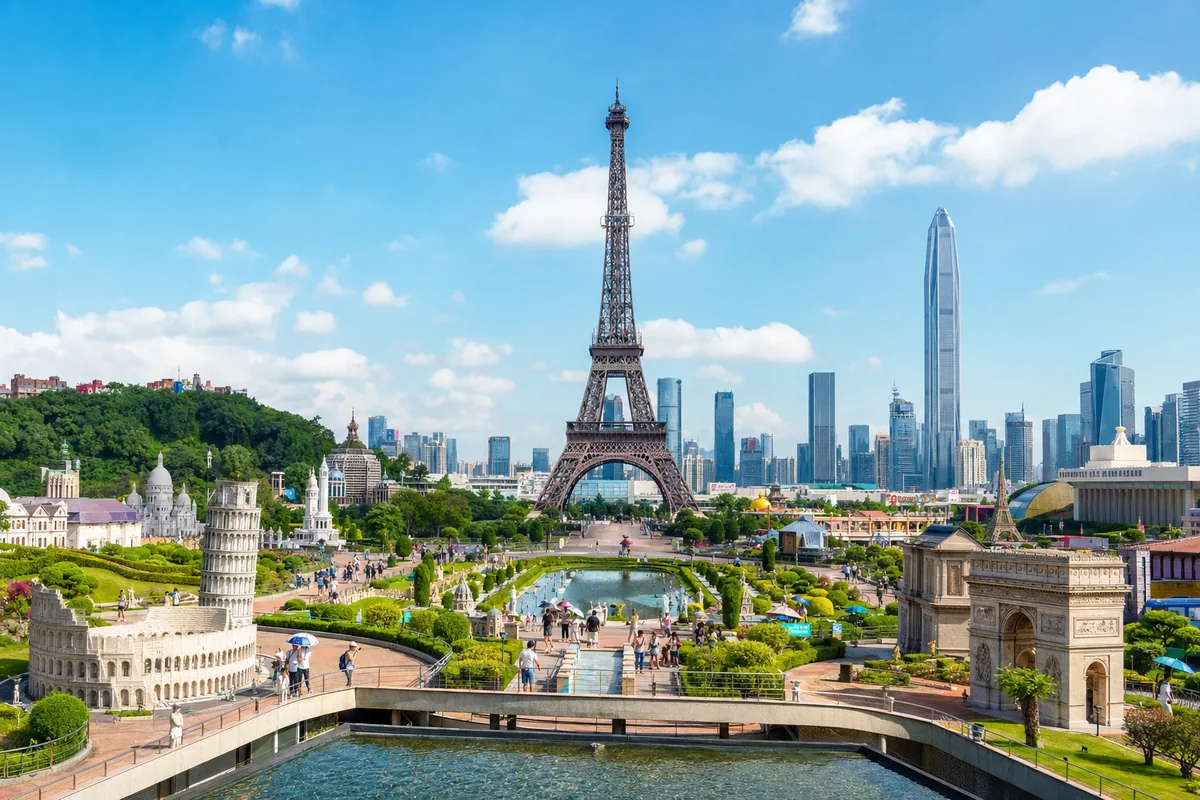
Window of the World (世界之窗, Shìjiè zhī Chuāng) is exactly what it sounds like: a theme park of miniature world landmarks, from a scaled-down Eiffel Tower (about 108m, still tall enough to ride up) to the pyramids, Taj Mahal, Niagara Falls, and the Colosseum. It sounds kitschy, and it is — but it's also genuinely fun, hugely popular with Chinese families, and a window into how China likes to package the world for a day out. Evenings bring stage shows and parades. It's a full half-day, easily reached by metro.
Dafen Oil Painting Village
Dafen Oil Painting Village (大芬油画村, Dàfēn Yóuhuà Cūn) is one of the most unusual places in either city. For decades, this single neighborhood produced a huge share of the world's reproduction oil paintings — replica Van Goghs and Monets churned out by hand for export, hung in hotels and homes around the globe. Walk the lanes and you'll see painters working in open studios, canvases stacked everywhere, the smell of oil paint in the air.
In recent years the village has shifted toward original work, and you'll find genuine local artists alongside the copyists. You can commission a custom painting (a portrait from a photo, a copy of any image you like), buy finished work cheaply, or just wander and watch people paint. It's free to enter and unlike anything else you'll see in China.
More in Shenzhen
- OCT-LOFT & Shenzhen's design districts — converted factories full of cafés, galleries, and design shops; the creative side of the tech city.
- Huaqiangbei (华强北) — the world's largest electronics market, floors upon floors of components, gadgets, phones, and repair stalls. A pilgrimage for anyone into tech.
- Lianhuashan Park — climb the hill for the best free skyline view over the new central business district.
- Splendid China & Folk Culture Village — miniatures and ethnic-culture performances, next to Window of the World.
Getting Around and Between the Cities
Both cities have excellent, cheap, English-signed metro systems — this is the easiest way to get around either one. Single rides cost a few yuan, and you tap in with your phone or buy a token. Set up mobile payment before you arrive and you can ride everything seamlessly; see our guides on metro systems and taxis and ride-hailing.
Guangzhou ↔ Shenzhen
This is one of the busiest rail corridors in the world. High-speed trains run from Guangzhou South (广州南) to Shenzhen North (深圳北) in around 30–35 minutes, with departures every few minutes through the day. There's also intercity rail to Shenzhen's other stations. Tickets are inexpensive and rarely sell out, but booking ahead saves time queuing. You can reserve through the official 12306 platform or an English-friendly service like Trip Com Train, which handles seat selection and e-tickets in English.
Bring your passport — it's your ticket ID, and you'll need it to pass the station gates and security.
Connecting to Hong Kong, Macau, and Zhuhai
This corner of China is unusually well connected. Here's how the day-trip math works out:
| Destination | From | Mode | Time |
|---|---|---|---|
| Hong Kong | Shenzhen | Metro to border, walk across, then HK MTR | ~1 hr total |
| Hong Kong | Guangzhou / Shenzhen | High-speed rail to Hong Kong West Kowloon | ~48 min from GZ, ~19 min from SZ |
| Macau | Zhuhai | Walk across Gongbei border crossing | Minutes once at the border |
| Zhuhai | Guangzhou | High-speed / intercity rail | ~1 hr |
| Hong Kong / Macau | Shenzhen | Ferry | ~1–1.5 hrs |
The Shenzhen–Hong Kong day trip is the classic move: take the metro to a border crossing like Futian or Luohu, clear immigration on foot, and you're on the Hong Kong MTR within an hour. For the full picture of those two, see our Hong Kong & Macau guide.
Where to Stay
In Guangzhou, base yourself by the metro and you can reach everything. Three areas stand out:
- Zhujiang New Town (珠江新城) — modern, central, near Canton Tower and the financial district; the best base for first-timers and business travelers.
- Beijing Road / Yuexiu — older, central, walkable to historic sights and shopping streets.
- Near Guangzhou South Station — practical if you're train-hopping to Shenzhen or Hong Kong, but far from the sights.
In Shenzhen, Futian is the central, well-connected choice (close to the Hong Kong border and the convention district), while Nanshan suits tech and theme-park visitors. If your main goal is Hong Kong, staying near Futian or Luohu border crossings makes the crossing painless.
Both cities run the full range from hostels to international five-stars, and rates are generally lower than Hong Kong's. Booking platforms like Booking Com Hotel list most options with English support and free cancellation; reserve early during major trade fairs (especially the Canton Fair in Guangzhou), when hotels fill up and prices jump. Note that all hotels must register foreign guests with the police at check-in — see booking hotels and registration rules for how that works.
Shopping
These two cities are among the best places in China to shop, for very different things. Guangzhou is a wholesale powerhouse — markets for fabric, tea, jewelry, leather, and just about everything else, plus polished malls in Tianhe. The pedestrian streets of Beijing Road and Shangxiajiu are good for browsing and street snacks.
Shenzhen is the place for electronics. Huaqiangbei is overwhelming in the best way — if a gadget exists, someone here sells it or can build it. Bargain hard, check that things actually work before paying, and be realistic about counterfeits. For broader tips on haggling, returns, and avoiding fakes, see our shopping in China guide.
Suggested 3–4 Day Itinerary
Here's a clean way to combine both cities:
- Day 1 (Guangzhou): Morning dim sum, then Shamian Island and the Qingping area. Afternoon at Chen Clan Ancestral Hall. Evening at the Canton Tower / riverfront and a Pearl River night cruise.
- Day 2 (Guangzhou): Yuexiu Park, Sacred Heart Cathedral, Beijing Road. Big Cantonese lunch. Afternoon train to Shenzhen (30 min).
- Day 3 (Shenzhen): Window of the World in the morning, Dafen Oil Painting Village in the afternoon, or swap in Huaqiangbei if you're into electronics. Evening at OCT-LOFT.
- Day 4 (optional): Day trip across the border to Hong Kong, or to Macau via Zhuhai — or a slower day shopping and eating before flying out.
Final Thoughts
Guangzhou and Shenzhen work best as a pair: one gives you history, temples, and arguably the finest everyday food in China; the other gives you the speed and shine of modern China, plus the easiest gateway to Hong Kong and Macau. Three days covers the essentials, four lets you add a cross-border day trip without rushing. Set up mobile payments and a translation app before you arrive, travel in the cooler months if you can, and keep your passport on you for trains and borders. From here, the rest of the Pearl River Delta — and southern China beyond — is an easy ride away.
Related Reading
- Hong Kong & Macau Guide
- Guilin / Yangshuo Guide
- Visa-Free & Transit Policies
- How to Book Train Tickets
- Guide to Chinese Cuisine by Region
Last updated: June 2026
Read in other languages
Getting to the sights by metro
Canton Tower
600m twisted tower with observation deck — Guangzhou's iconic skyline.
- Canton Tower
Shamian Island
European-style colonial concession island with cafes and Banyan trees.
- Huangsha
- Cultural Park
Chen Clan Ancestral Hall
Qing-era clan hall with intricate wood, stone, and ceramic carvings.
- Chen Clan Academy
Beijing Road Pedestrian Street
1000-year-old commercial street with exposed Tang-Song road remains under glass.
- Gongyuanqian
- Beijing Lu
- Haizhu Square
Huacheng Square & Pearl River
Central axis lined with twin towers; Pearl River cruises depart at dusk.
- Zhujiang New Town
- Tianhe Sports Center
Shangxiajiu Pedestrian Street
Historic Qing-era arcade street with old shops and dim sum houses.
- Changshou Lu
- Huangsha
Yuexiu Park
Largest urban park with the Five-Ram Statue, Guangzhou's emblem.
- Yuexiu Park
- Sun Yat-Sen Memorial Hall
Sun Yat-sen Memorial Hall
Octagonal memorial built in 1931 honoring Republic of China's founder.
- Sun Yat-Sen Memorial Hall
Chimelong Tourist Resort
Theme park complex: safari, water park, circus — top family destination.
- Hanxi Changlong
Sacred Heart Cathedral
1888 all-stone Gothic Catholic cathedral, one of four such in the world.
- Haizhu Square
- Gongyuanqian
Mausoleum of the Nanyue King
Western Han royal tomb (137 BC) with jade burial suit and bronze relics.
- Yuexiu Park
- Sun Yat-Sen Memorial Hall
Liwan Lake & Cultural Park
Quiet Lingnan-style lake park near Shamian, with traditional pavilions.
- Cultural Park
- Changshou Lu
Guangzhou Baiyun International Airport
Southern China's main international airport (CAN), one of mainland China's three megahubs.
- Airport North
- Airport South
Guangzhou South Railway Station
Guangzhou's main HSR station; eastern terminus of the Beijing–Guangzhou high-speed line and gateway to Hong Kong.
- Guangzhou South Railway
Guangzhou East Railway Station
Guangzhou's central rail station for Hong Kong through-trains and selected high-speed services.
- Guangzhou East Railway
Guangzhou metro: last train times by station
Every line and station, checked by hand — the same data behind our offline route planner.
Get the WaysChina App
Offline guides, currency converter, essential phrases, and more — all in your pocket.

Related Articles
Hong Kong Food Guide
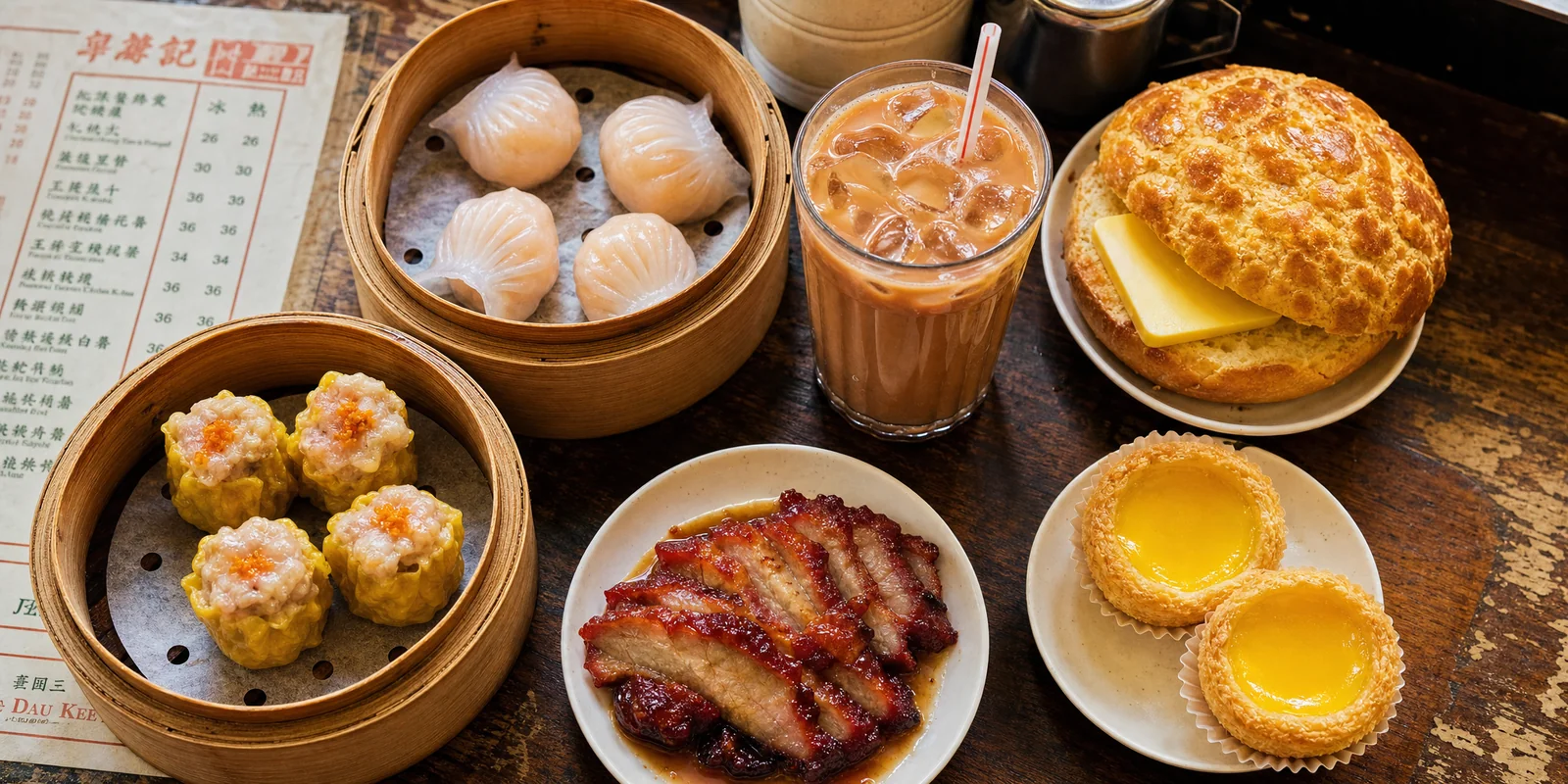
From the world's cheapest Michelin dim sum to Temple Street night market stalls and cha chaan teng milk tea — here's...
Hong Kong Shopping Guide
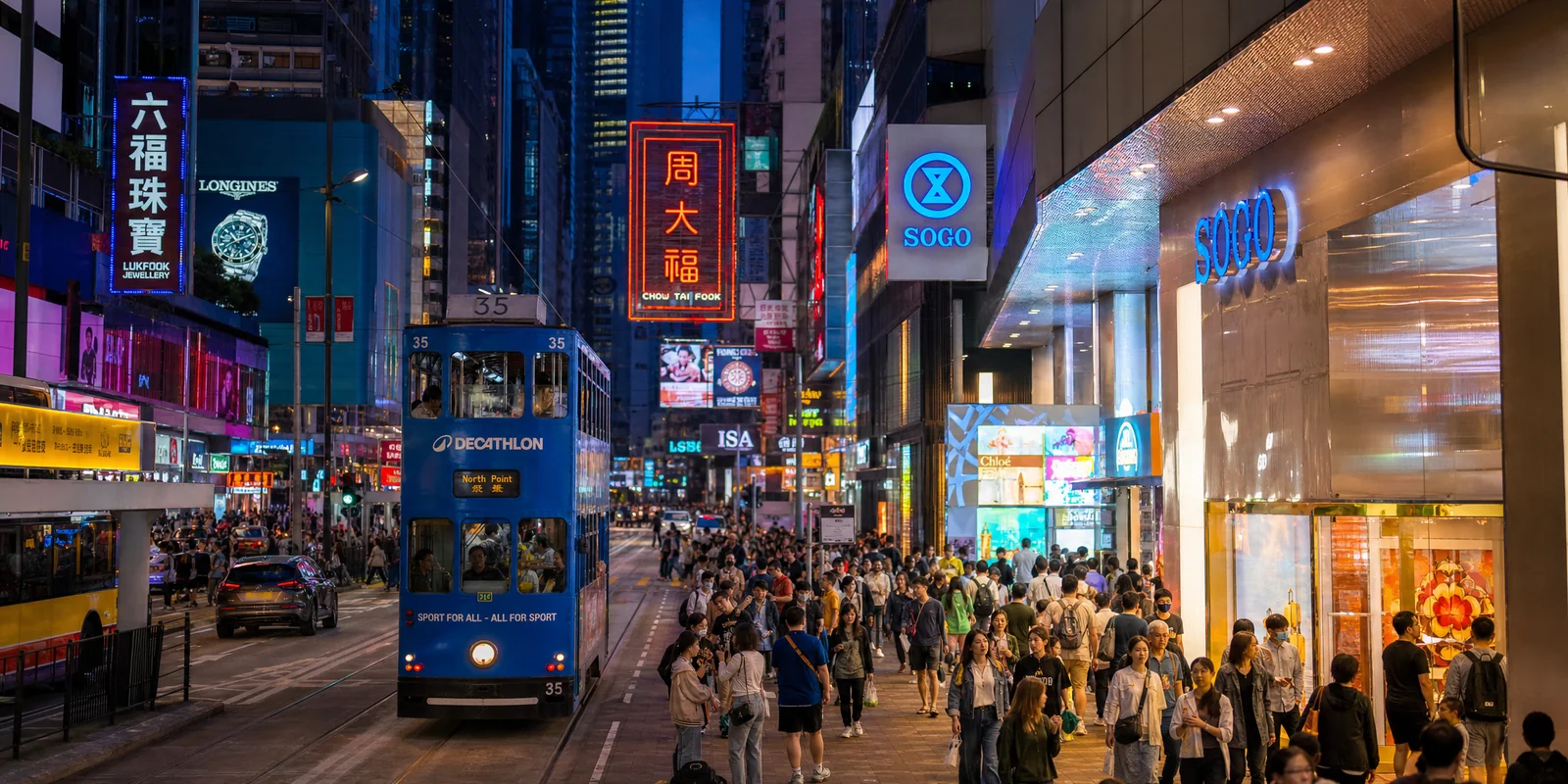
From Causeway Bay's luxury malls to the haggling stalls of Ladies' Market and budget streetwear in Sham Shui Po,...
Sanya Beach Resort Guide
Sanya is China's only tropical beach destination, sitting at the southern tip of Hainan Island. Here's how to pick...
Guilin & Yangshuo Travel Guide: Li River, Karst Peaks & Rice Terraces
Everything you need to plan a Guilin and Yangshuo trip: the Li River cruise, karst mountain scenery, Longji rice...