
This article contains affiliate links. If you make a purchase through these links, we may earn a small commission at no extra cost to you. This helps support our work in creating free travel guides.
Guilin sits in northeastern Guangxi, and its draw is simple: thousands of limestone karst peaks rising straight out of flat rice paddies and a winding green river. This is the scenery printed on the back of the 20 yuan note, and the centerpiece of any visit is the Li River cruise between Guilin and Yangshuo. Most travelers spend 3 to 4 days here, splitting time between Guilin city, the riverside town of Yangshuo, and the terraced rice fields of Longji a couple of hours north.
This guide covers how to get here, what to actually do, where to eat and sleep, and how to fit it all into a realistic itinerary. The short version: base yourself in Yangshuo for the scenery, use Guilin as a transport hub, and do the river by boat at least once.

When to Go
Spring (March–May) and autumn (September–November) are the best windows. You get comfortable temperatures, manageable crowds, and the rice terraces are at their most photogenic — green and flooded in late spring, golden before the autumn harvest. Summer is hot, humid, and brings the heaviest rain, though the river runs full and the mist over the peaks can be dramatic. Winter is cool (rarely freezing) and quiet, but skies are often gray and water levels drop, which sometimes shortens the cruise route.
Getting to Guilin
Guilin is well connected by air and high-speed rail. Most international visitors arrive via a domestic connection.
- By air: Guilin Liangjiang International Airport (KWL) has direct domestic flights from Beijing, Shanghai, Guangzhou, Chengdu, and other major hubs, plus some regional international routes. The airport is about 30 km west of the city; an airport shuttle bus runs to downtown for around 20 yuan, or a taxi/ride-hail costs roughly 100–130 yuan.
- By high-speed rail: Guilin has two main stations — Guilin Station and Guilin West Station. High-speed trains (高铁, gāotiě) connect to Guangzhou (about 2.5–3 hours), Nanning (about 1.5–2 hours), Changsha (about 2.5–3 hours), and even direct services from Shenzhen and Hong Kong West Kowloon.
You can book train tickets through the official 12306 platform or an English-language reseller. For travelers who'd rather not deal with the Chinese-language booking flow, our train ticket booking guide walks through both options, and Trip.com handles tickets in English with passport-based booking.
Connecting cities at a glance
| From | Mode | Approx. time |
|---|---|---|
| Guangzhou | High-speed rail | 2.5–3 hrs |
| Nanning | High-speed rail | 1.5–2 hrs |
| Changsha | High-speed rail | 2.5–3 hrs |
| Hong Kong | High-speed rail (direct) | ~3.5 hrs |
Getting Around Guilin and Yangshuo
Guilin city is compact and walkable around the central lakes and Two Rivers area. For longer hops, use Didi (the local ride-hailing app) or city buses. The most important journey you'll make is between Guilin and Yangshuo — about 65 km — and you have three ways to do it:
- Li River cruise: the scenic option, roughly 4 hours downstream (covered in detail below).
- High-speed train: Guilin to Yangshuo Station in about 25 minutes, but the station is around 25 km from Yangshuo town center, so factor in a 30-minute taxi.
- Bus/car: direct buses and ride-hails take roughly 1.5 hours by road.
The Li River Cruise
This is the experience people come to Guilin for. The river winds through a corridor of karst peaks, bamboo groves, water buffalo in the shallows, and farmers working the banks. The classic cruise runs from Zhujiang/Mopanshan Pier (south of Guilin city — the in-city piers closed years ago) down to Yangshuo, covering about 83 km in roughly 4 hours.
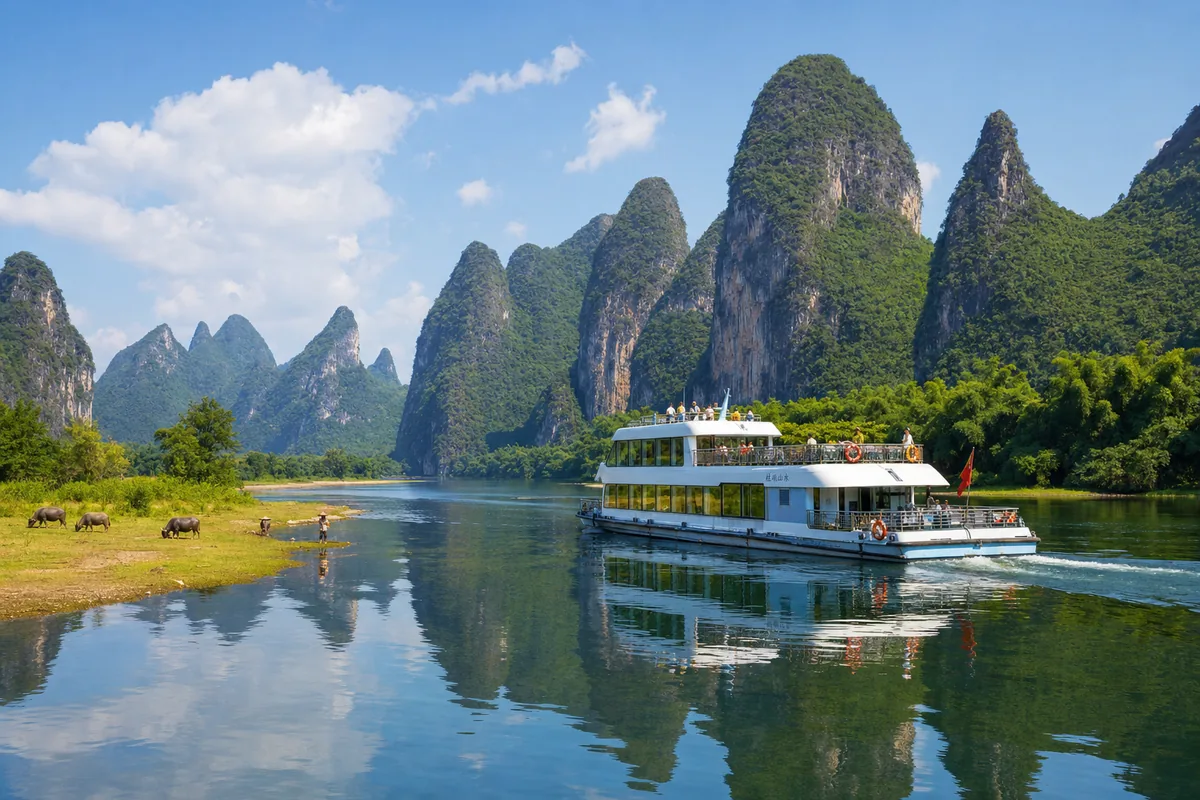
There are two broad ways to do the river:
1. Full-day large boat cruise (Guilin → Yangshuo)
These are the big tour boats with an enclosed lower deck, open top deck, and a buffet lunch on board. The fare typically runs 250–450 yuan depending on the boat class, and includes the transfer to the departure pier. You drift past the most famous stretches — including the scene printed on the 20 yuan note near Xingping — and disembark in Yangshuo. It's relaxed, comfortable, and the standard choice for most visitors.
2. Bamboo raft on the Yulong River or shorter Li River sections
If you're already in Yangshuo, a motorized "bamboo raft" (now usually PVC pontoons) on the quieter Yulong River is cheaper, shorter, and more intimate — you sit low on the water surrounded by peaks, often for 30–60 minutes. The stretch near Xingping on the Li River itself is also stunning and less commercialized than the main tourist flow.
You can arrange the cruise through your hotel, at the pier (riskier in high season), or pre-book online. Klook sells the Guilin–Yangshuo cruise with pier transfers included, which saves the hassle of getting to Mopanshan on your own.
Yangshuo: What to Do
Yangshuo is the laid-back counterpoint to Guilin city — a small riverside town surrounded by peaks, rice fields, and rivers, with a long-running backpacker scene that's grown into a full tourism hub. It's the best base for outdoor activities.
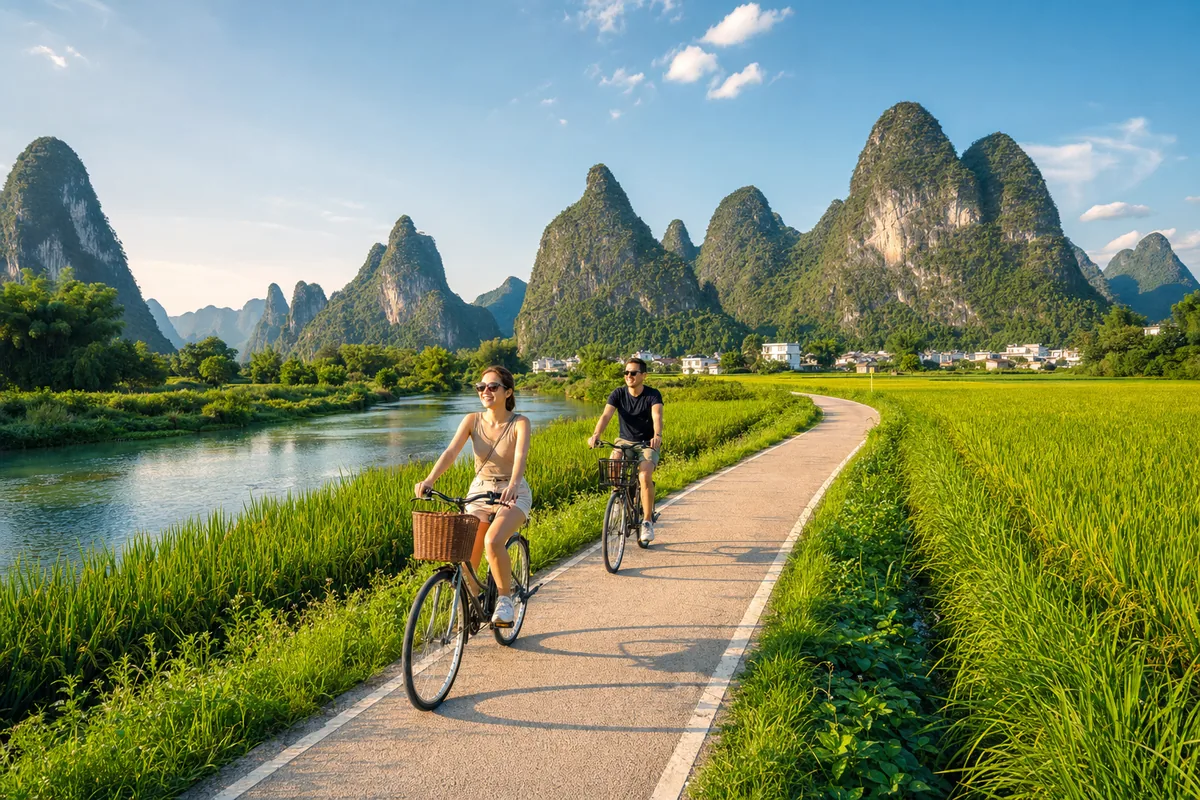
- Cycle or e-bike through the countryside: Rent a bike and ride the flat paths along the Yulong River, past villages and paddies. This is the single best way to see the scenery up close, and you can stop for raft rides along the way.
- Climb to a viewpoint: Xianggong Mountain (across the river near Xingping) and the TV Tower hill above town both give you that classic overhead view of the river bending through endless peaks.
- West Street (西街, Xī Jiē): the central pedestrian strip — touristy and loud at night, but good for a wander, a drink, and people-watching.
- Impression Sanjie Liu: a large-scale outdoor night show directed by Zhang Yimou, staged on the river itself with the karst peaks as a backdrop and hundreds of performers on bamboo rafts. Tickets roughly 200–700 yuan by seating.
- Rock climbing: Yangshuo is one of Asia's best-known climbing destinations, with well-bolted limestone routes for all levels and local outfitters offering gear and guides.
Guided countryside cycling tours, cooking classes, and the Impression show can all be booked through platforms like Getyourguide if you'd rather have it organized in advance.
Longji Rice Terraces
The Longji (Longsheng) Rice Terraces, often called the "Dragon's Backbone," are about 2–2.5 hours by road north of Guilin. Generations of Zhuang and Yao farmers carved these terraces into steep mountainsides over centuries, and the layered fields curving around the slopes are one of the region's signature sights.
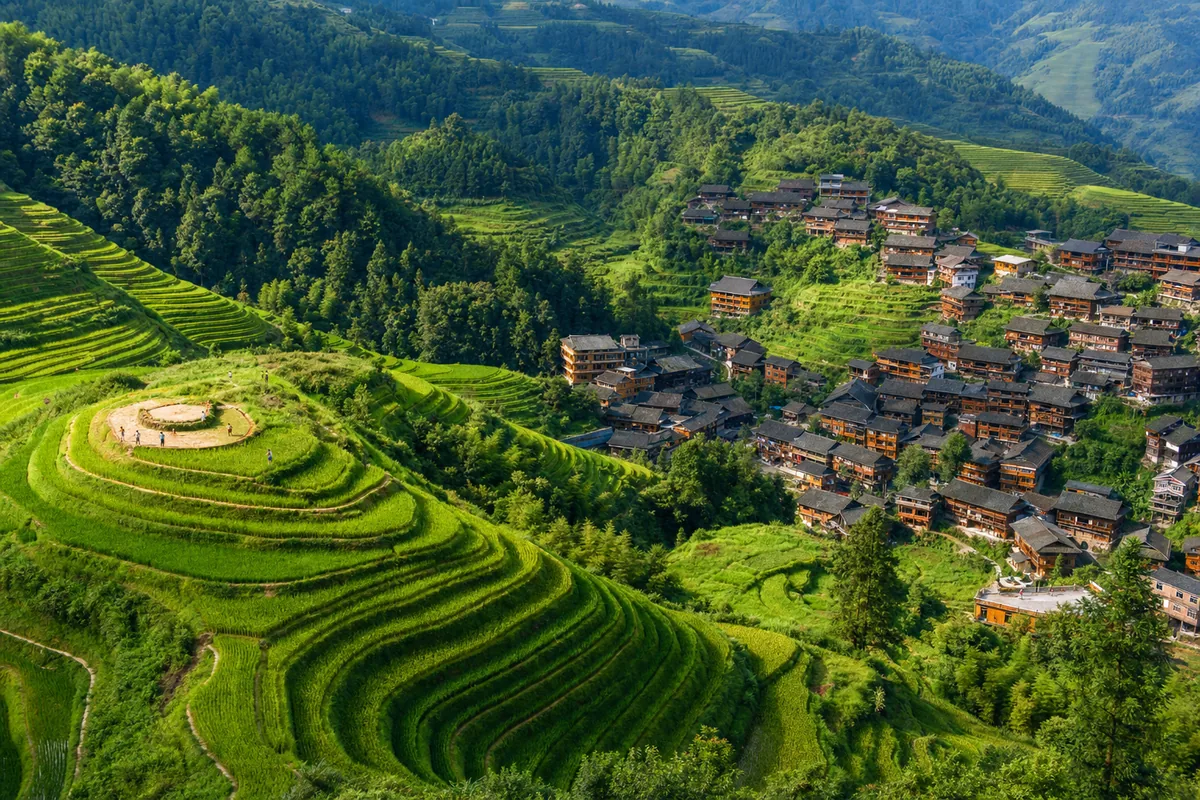
There are two main villages/viewing areas:
- Ping'an (Zhuang village): easier to reach, more developed, good for a first visit and a shorter walk to viewpoints.
- Jinkeng / Dazhai (Yao village): larger, more dramatic, with a cable car option and more hiking between viewpoints.
The terraces look completely different by season: mirror-like flooded fields reflecting the sky in late spring, deep green through summer, and gold just before the autumn harvest. The entrance fee is around 80 yuan, plus optional cable car.
Reed Flute Cave
In Guilin city itself, Reed Flute Cave (芦笛岩, Lúdí Yán) is a large limestone cave filled with stalactites and stalagmites, lit with colored lighting that turns the formations purple, green, and red. It's been a sightseeing spot for over a thousand years — you can still see ink inscriptions on the walls left by ancient visitors. The guided walk through takes about 40 minutes; entry is roughly 110 yuan.
It's a good rainy-day option and an easy half-day from the city. Other in-city sights worth an hour or two include the Two Rivers and Four Lakes area (pleasant to walk, lit up at night, with the Sun and Moon Pagodas), Elephant Trunk Hill (the symbol of Guilin, a rock formation resembling an elephant drinking from the river), and Seven Star Park.
Food in Guilin and Yangshuo
Guangxi cuisine leans on rice noodles, river fish, and a mix of savory and sour flavors. A few things to seek out:
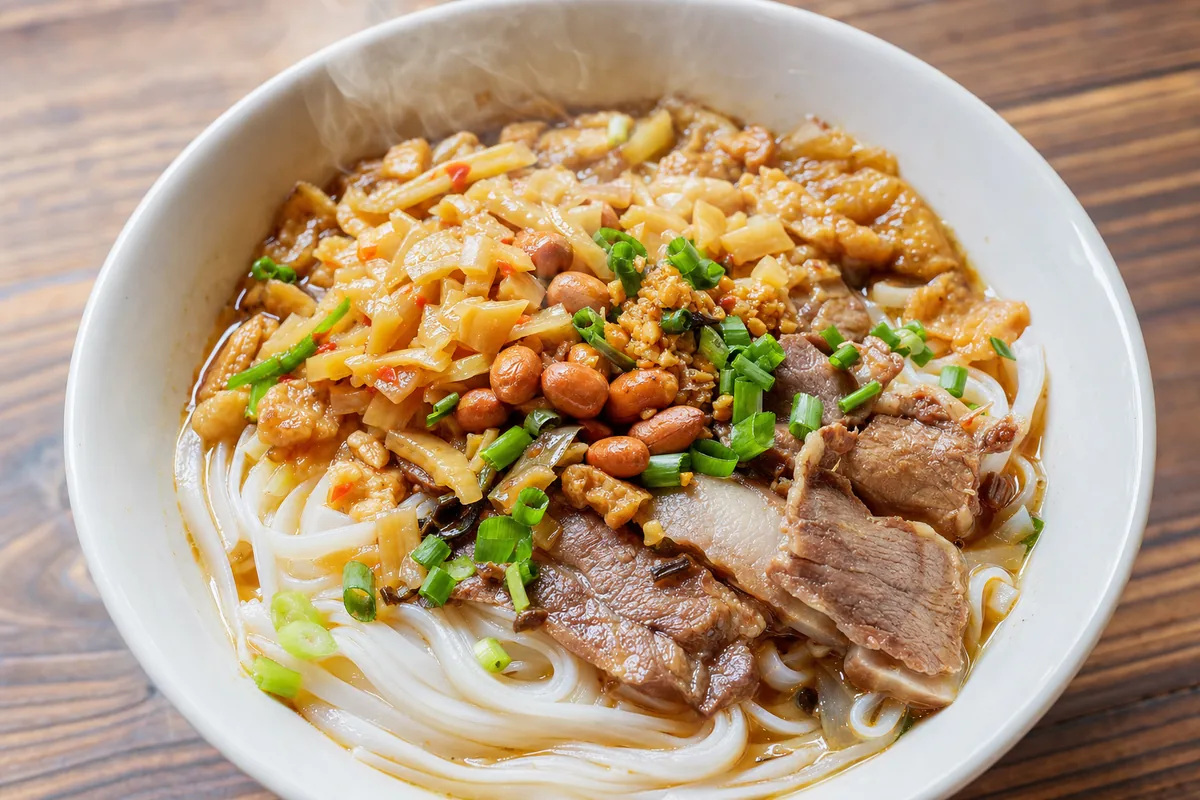
- Guilin rice noodles (桂林米粉, Guìlín mǐfěn): the local staple and a must. Round rice noodles served with savory braised gravy, pickled vegetables, peanuts, and your choice of toppings — fried, fresh, or in soup. Cheap, fast, and everywhere; a bowl runs 8–15 yuan.
- Beer fish (啤酒鱼, píjiǔ yú): Yangshuo's signature dish — fresh river fish braised with beer, tomatoes, chili, and garlic. Order it at a riverside restaurant.
- Stuffed Li River snails (酿田螺): snail meat minced with pork and spices, stuffed back into the shell.
- Oil tea (油茶, yóu chá): a savory tea-soup from the mountain villages around Longji, made by pounding tea leaves with ginger and frying them, served with puffed rice and crunchy bits.
- Taro and pork (荔浦芋扣肉): layered slices of taro and braised pork belly, a regional specialty.
For ordering when you don't read Chinese, pointing at photos works fine at noodle shops, and most tourist-area restaurants have picture menus. See how to order food with zero Chinese for more on this.
Where to Stay
Your choice of base shapes the whole trip:
Guilin city
Best for transport convenience — close to the airport, train stations, and connections to Longji. Stay here if you're arriving late, leaving early, or doing Longji as a day trip. The central lakes area is the most pleasant zone, with a range from hostels to international-brand hotels.
Yangshuo
Best for scenery and atmosphere. You can stay in Yangshuo town near West Street, or — better, in our experience — in a countryside guesthouse along the Yulong River, where you wake up surrounded by peaks and paddies. These rural boutique stays are one of the highlights of the region.
Longji villages
Wooden guesthouses in Ping'an or Dazhai for a night, if you want sunrise over the terraces.
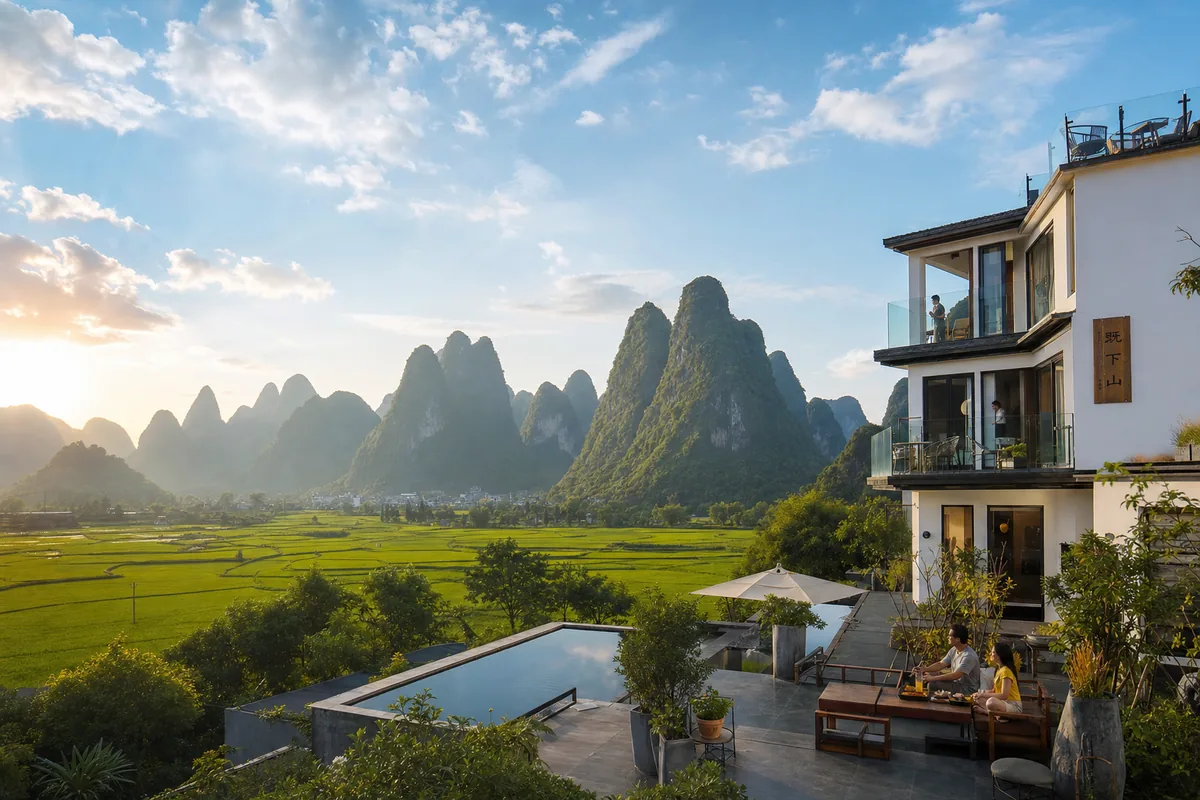
You'll find the widest selection of countryside guesthouses, town hotels, and Longji stays on Booking Com. Note that all hotels in China register foreign guests' passport details at check-in (住宿登记, zhùsù dēngjì) — this is routine; see booking hotels and registration rules for details.
Suggested 3–4 Day Itinerary
This plan minimizes backtracking and puts the scenery front and center.
- Day 1 — Guilin: Arrive, settle in. Walk the Two Rivers and Four Lakes, see Elephant Trunk Hill, and visit Reed Flute Cave if you have a half-day. Try Guilin rice noodles for lunch.
- Day 2 — Li River cruise to Yangshuo: Transfer to Mopanshan Pier in the morning, cruise ~4 hours to Yangshuo, check into your guesthouse. Evening on West Street or the Impression Sanjie Liu show.
- Day 3 — Yangshuo countryside: Cycle or e-bike along the Yulong River, take a bamboo raft, climb a viewpoint at sunset. Beer fish for dinner.
- Day 4 — Longji (optional) or return: Either head back toward Guilin and out to Longji for the terraces (best with an overnight), or return to Guilin to catch your onward train/flight.
Practical Notes
- Payments: Mobile payment (Alipay/WeChat Pay) is dominant even at small noodle shops and village stalls. Set up Alipay before you arrive and carry some cash as backup for rural areas.
- Karst region weather: humid year-round; bring mosquito repellent in warmer months and sturdy shoes for the terraces and viewpoints.
- Ticket reservations: Major sights and the cruise may require advance booking with your passport, especially during the spring and autumn peaks and Chinese public holidays.
For broader trip-timing advice across the country, our best time to visit China guide puts Guilin's seasons in context, and the natural wonders roundup covers other landscapes worth pairing with this trip.
The Bottom Line
Guilin and Yangshuo are about landscape above all — the karst peaks, the green river, and the terraced mountains. Build your trip around the Li River cruise from Guilin to Yangshuo, base yourself in the Yangshuo countryside for the scenery, and add Longji if you have a fourth or fifth day. Visit in spring or autumn if you can, but don't write off a misty, rainy day — that soft, layered light is exactly what made this place famous. Book the cruise and any rural guesthouses ahead in peak season, set up mobile payments before you go, and you're set.
Last updated: June 2026
Read in other languages
Last train times for 10 Chinese metro systems
Every line and station, checked by hand — the same data behind our offline route planner.
Get the WaysChina App
Offline guides, currency converter, essential phrases, and more — all in your pocket.

Related Articles
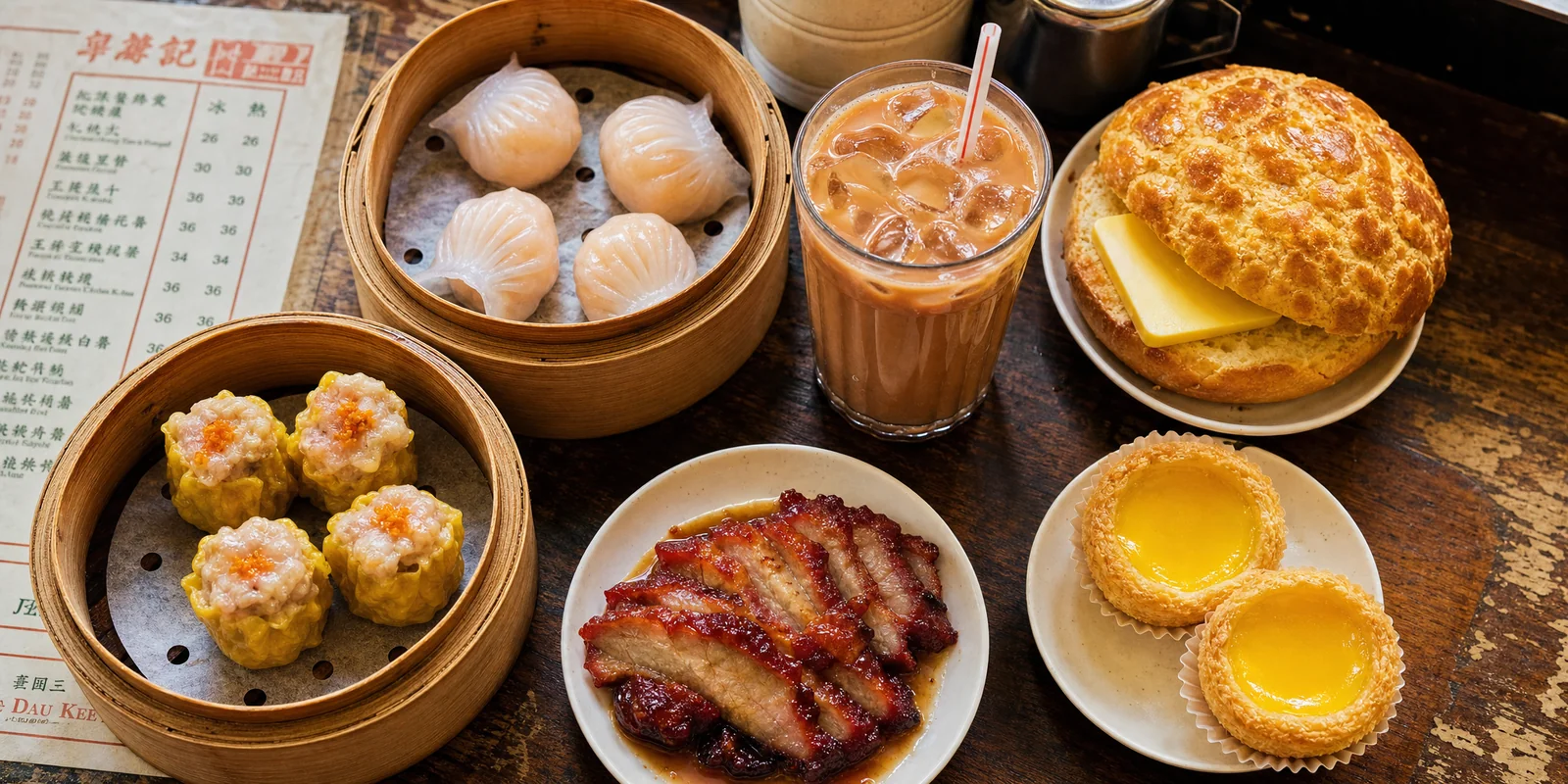
Hong Kong Food Guide
From the world's cheapest Michelin dim sum to Temple Street night market stalls and cha chaan teng milk tea — here's...
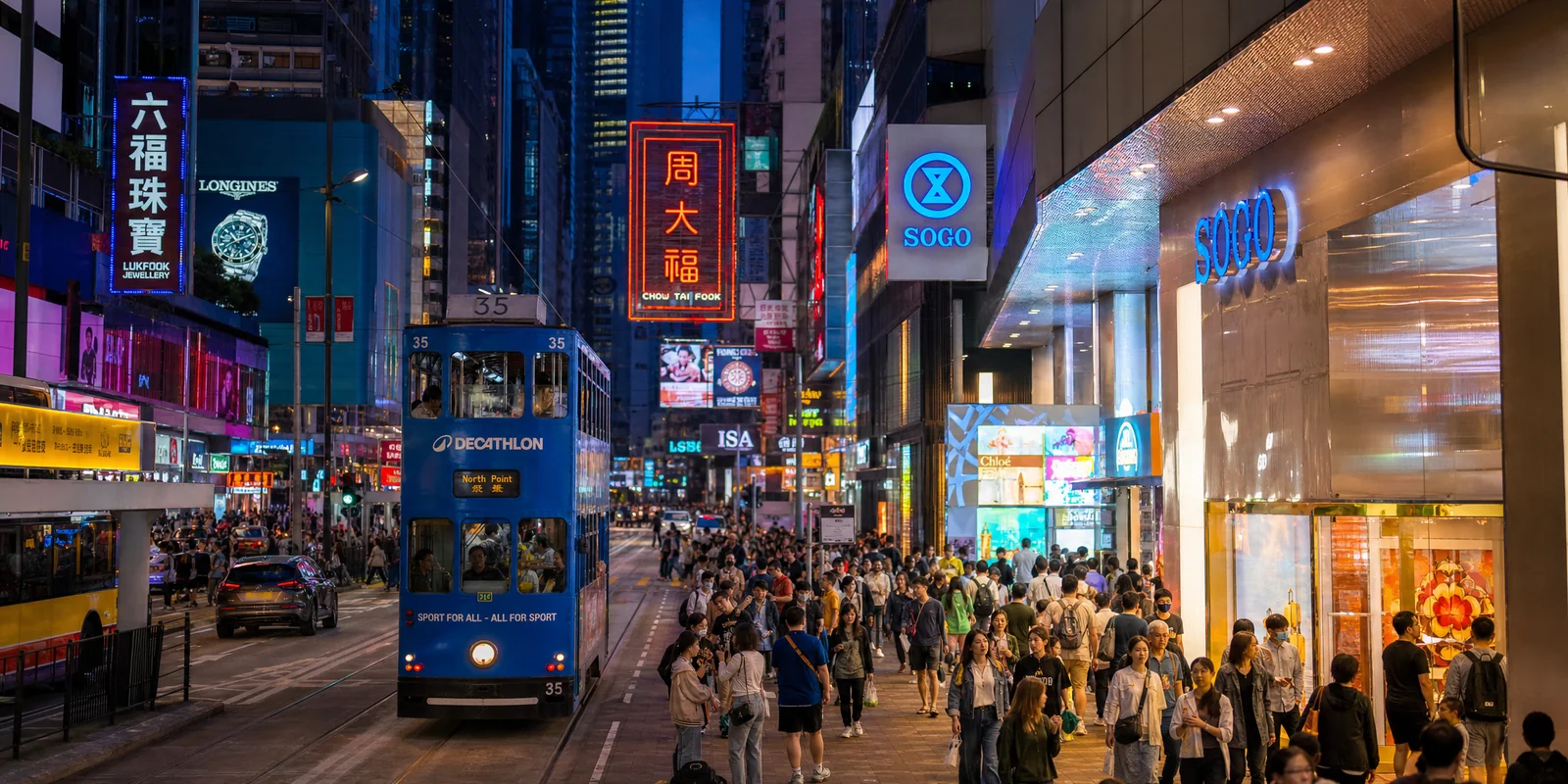
Hong Kong Shopping Guide
From Causeway Bay's luxury malls to the haggling stalls of Ladies' Market and budget streetwear in Sham Shui Po,...
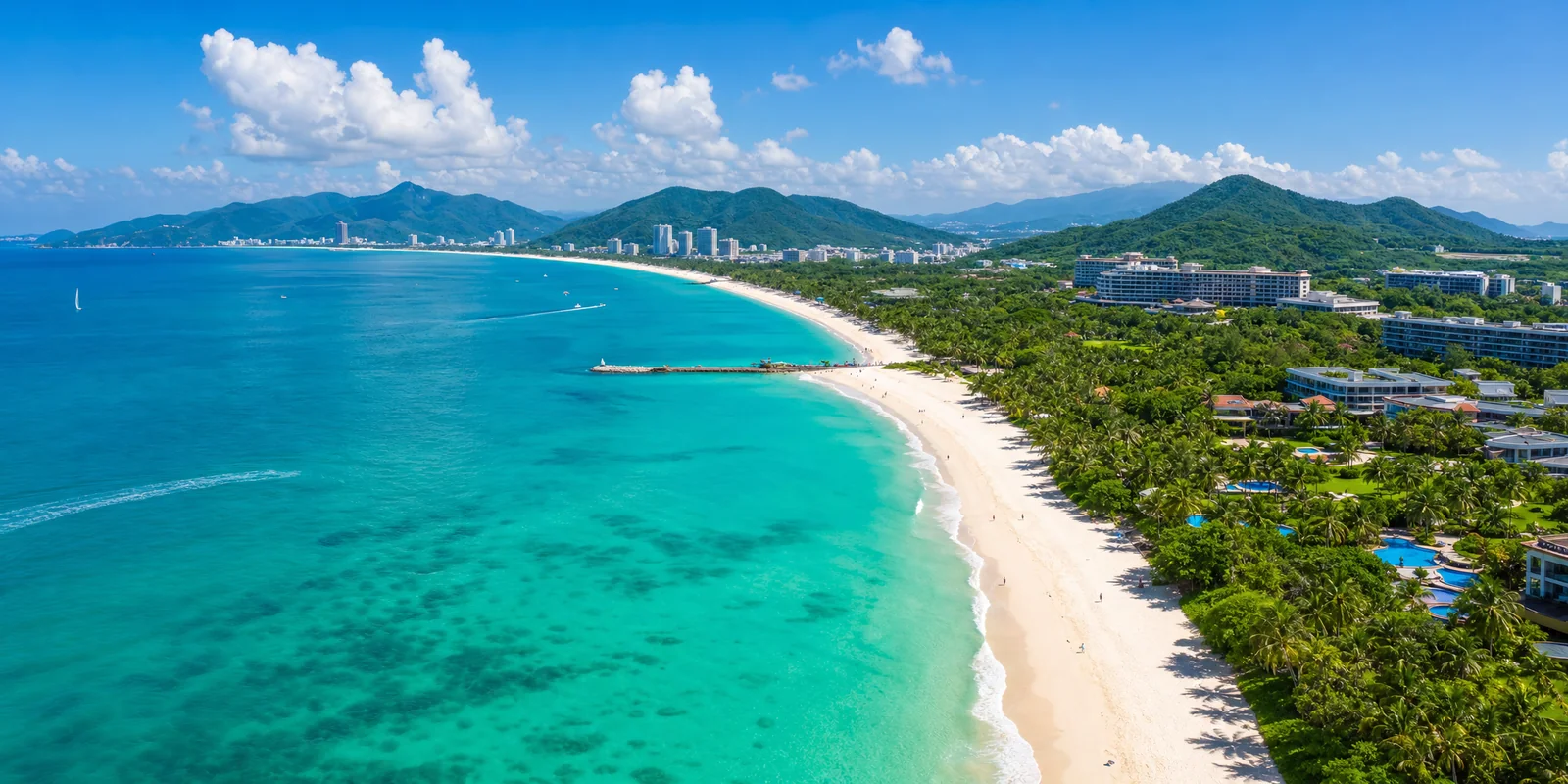
Sanya Beach Resort Guide
Sanya is China's only tropical beach destination, sitting at the southern tip of Hainan Island. Here's how to pick...
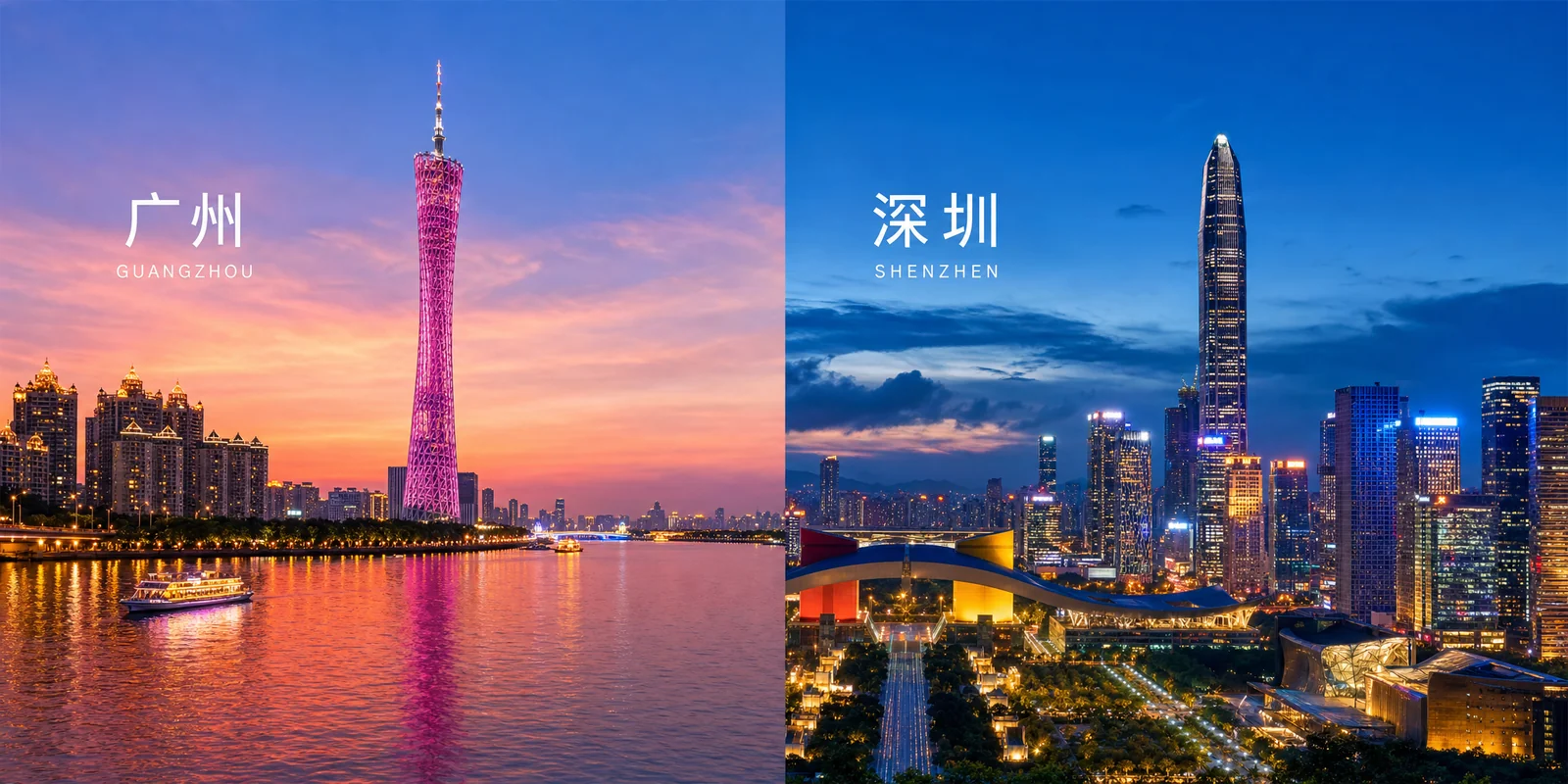
Guangzhou & Shenzhen Guide
Two cities, one trip. Guangzhou brings 2,000 years of trade history and some of China's best food; Shenzhen is the...