
This article contains affiliate links. If you make a purchase through these links, we may earn a small commission at no extra cost to you. This helps support our work in creating free travel guides.
Sanya sits at the southern tip of Hainan Island (海南, Hǎinán), at roughly the same latitude as Hawaii, and it's the only place in China where you can swim in warm tropical water in the middle of winter. While most of the country is freezing in January, Sanya stays around 25°C (77°F). That single fact explains why it's packed with resorts, domestic honeymooners, and Russian and Korean tour groups every winter.
This guide covers the four bays you'll actually choose between, how to get there and around, what to eat, where to stay, and the duty-free shopping that makes Sanya different from a beach holiday in Thailand or the Philippines. Plan on 4–5 days to do it without rushing.
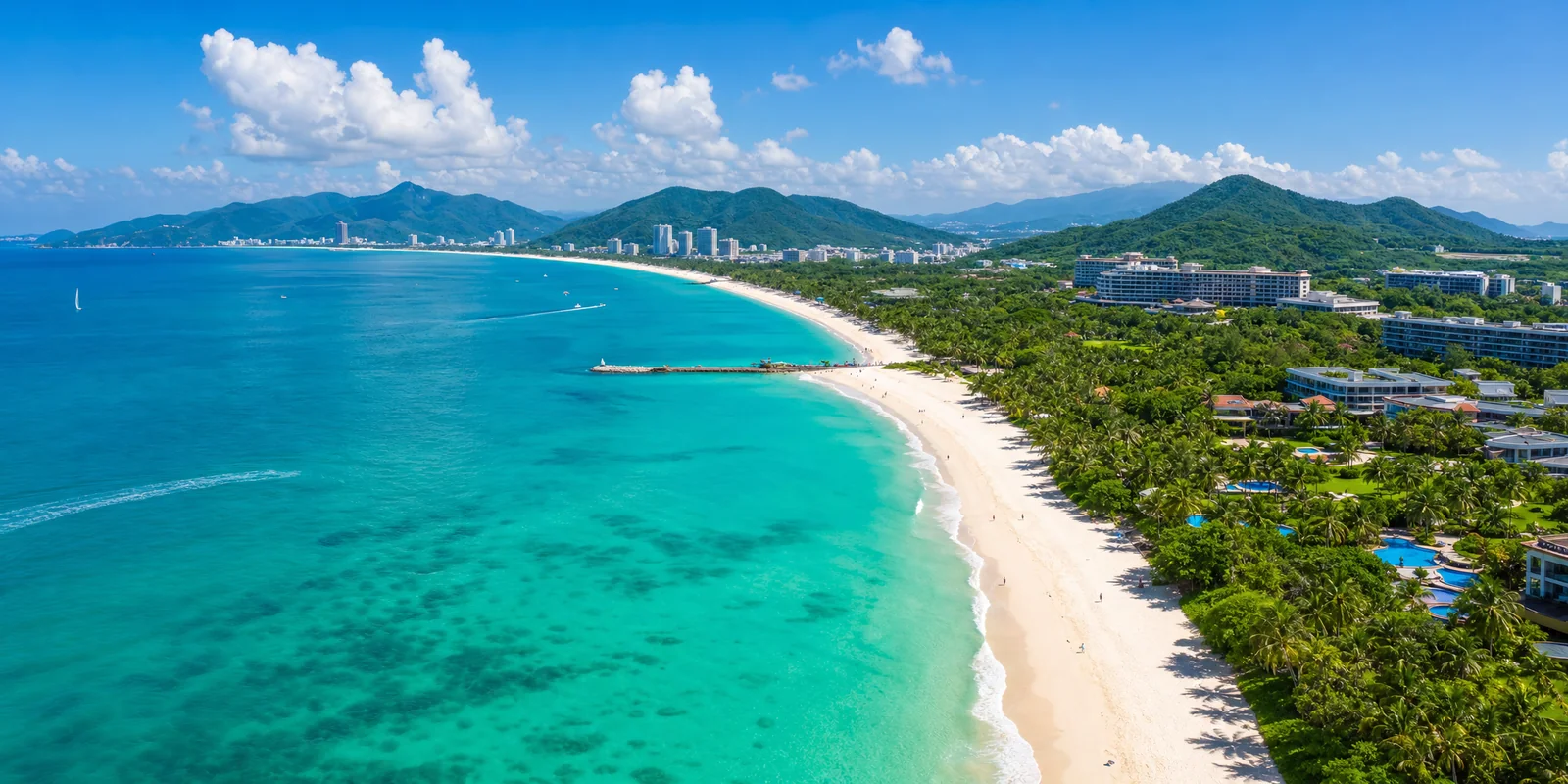
Sanya Overview: What to Expect
Sanya is a resort city, not a cultural one. People come for the beaches, the warm sea, and the hotels — not for temples and museums (though there are a couple worth seeing). The city is spread out along the coast in a series of bays, each with its own character, and where you stay matters more here than in most Chinese cities.
A few things that surprise first-timers:
- It's a domestic destination first. Most visitors are Chinese tourists from the mainland escaping winter. English is less common than in Beijing or Shanghai, so a translation app helps.
- Prices spike in winter. December through February (especially around Chinese New Year) is peak season. Hotel rates can double or triple. Shoulder seasons — March to May and October to November — are cheaper and still warm.
- Summer is hot, humid, and is typhoon season. June to September brings heat above 33°C and occasional typhoons that can ground flights. It's the low season for a reason.
- Duty-free shopping is a real draw. Hainan has an offshore duty-free policy with generous annual allowances, and the malls are massive. More on that below.
The Bays: Where to Base Yourself
Sanya isn't one beach — it's several bays strung along the coast, 10 to 30 km apart. Choosing the right one is the single most important decision you'll make. Here's the honest breakdown.
Yalong Bay (亚龙湾, Yàlóng Wān)
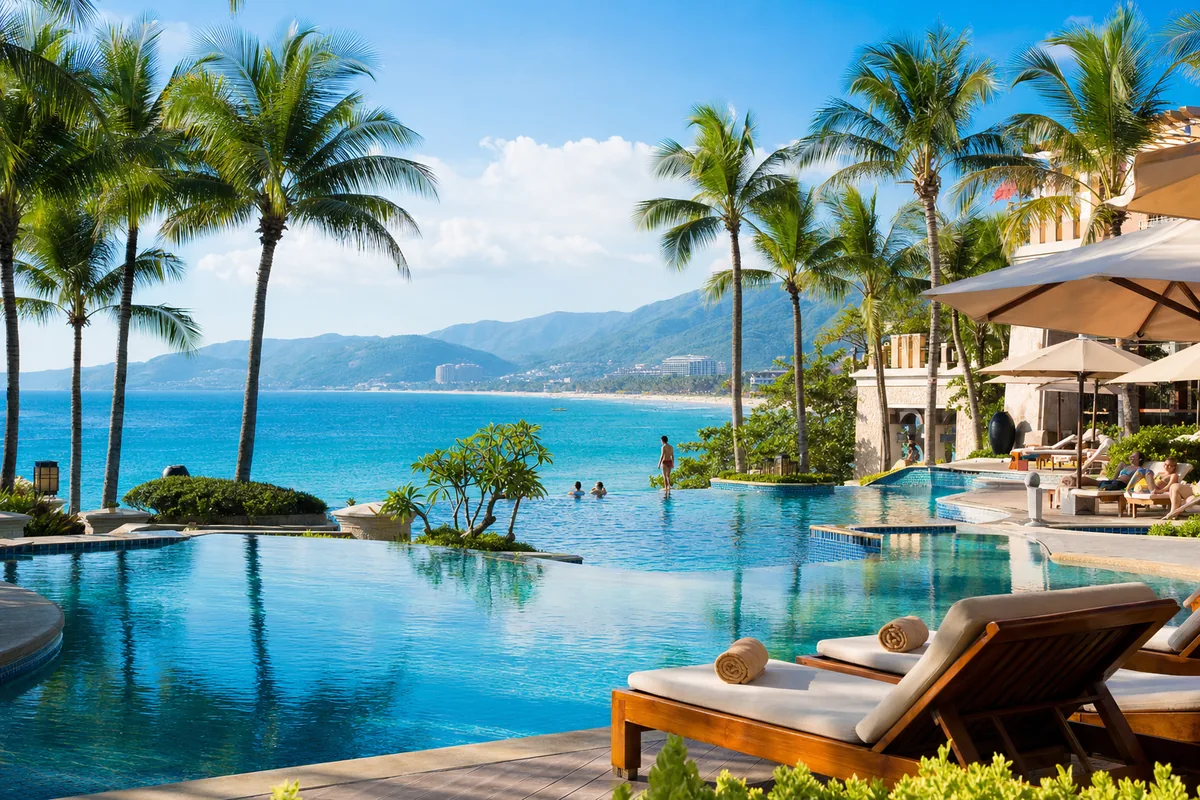
This is the postcard bay: a long crescent of soft white sand and clear, calm turquoise water about 25 km east of the city center. It's lined with international five-star resorts — Ritz-Carlton, Hilton, St. Regis, Marriott — set back behind landscaped gardens. The water is the best of the four bays for swimming, and the beach slopes gently, which makes it good for families.
The trade-off: it's a resort bubble. There's no real neighborhood to walk into, few independent restaurants, and you're somewhat captive to hotel dining and prices. If your idea of a holiday is parking yourself at a beautiful beach and a good pool for a few days, Yalong Bay is the answer. If you want to wander and eat cheaply, it's not.
Sanya Bay (三亚湾, Sānyà Wān)
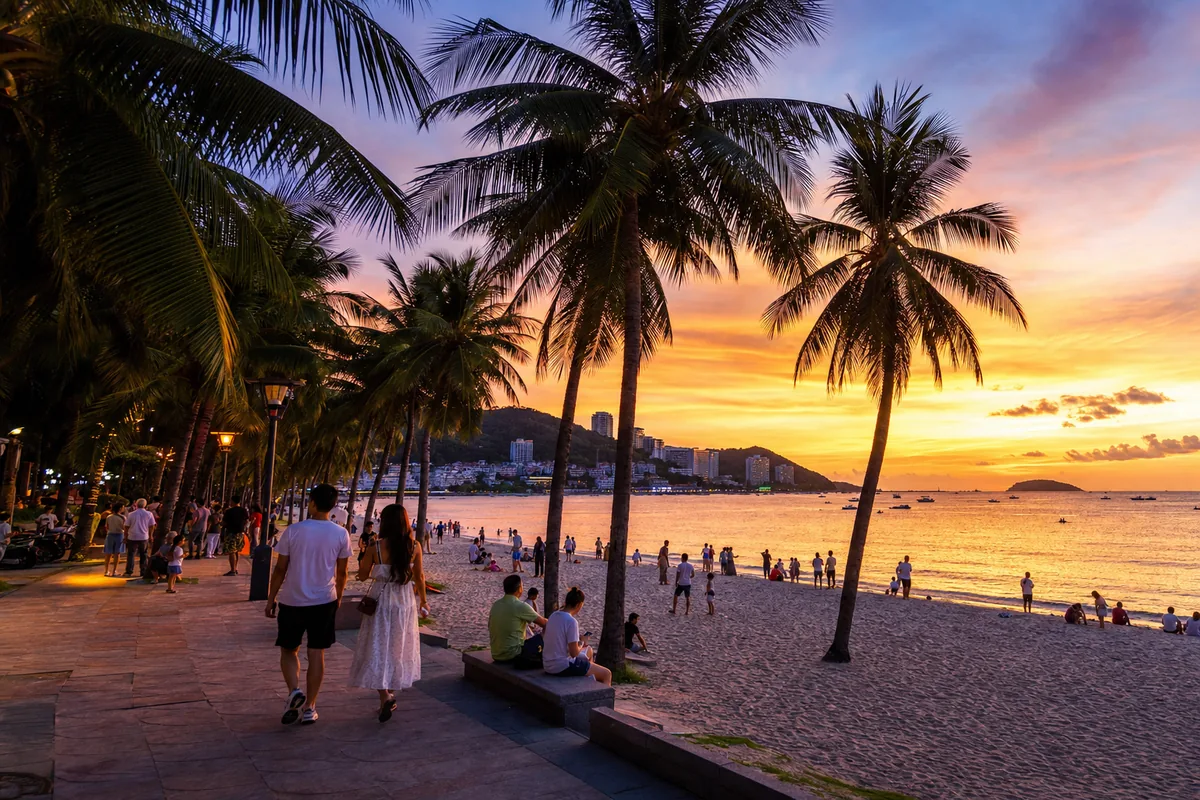
The long city beach, running right along the edge of downtown for over 20 km, lined with coconut palms. It's the most convenient and the cheapest place to stay — close to restaurants, markets, and the airport. The catch is that the water and sand aren't as clean as Yalong Bay because it's an urban beach, and the busy road runs right behind it. Good for budget travelers and people who want to be in the city, not for pristine swimming.
Dadonghai (大东海, Dàdōnghǎi)
A compact, lively bay between downtown and Yalong Bay. It's the most walkable beach area — packed with mid-range hotels, hostels, dive shops, restaurants, and nightlife within a few blocks of the sand. The beach itself is decent and the swimming is fine. This is the sweet spot for independent travelers who want beach access plus the ability to walk to dinner. It's also where you'll find the most English-friendly businesses.
Haitang Bay (海棠湾, Hǎitáng Wān)
The newest and most upscale strip, about 30 km northeast of downtown. This is where the giant integrated resorts cluster — Atlantis Sanya with its waterpark and aquarium, plus the enormous CDF Mall (the world's largest duty-free complex). It's polished, expensive, and somewhat sterile. Good if you're combining a luxury resort stay with serious duty-free shopping; less good if you want local flavor.
Things to Do and Top Attractions
Beyond lying on the sand, Sanya has a handful of genuine sights. None of them will fill a whole day, but a couple are worth the trip.
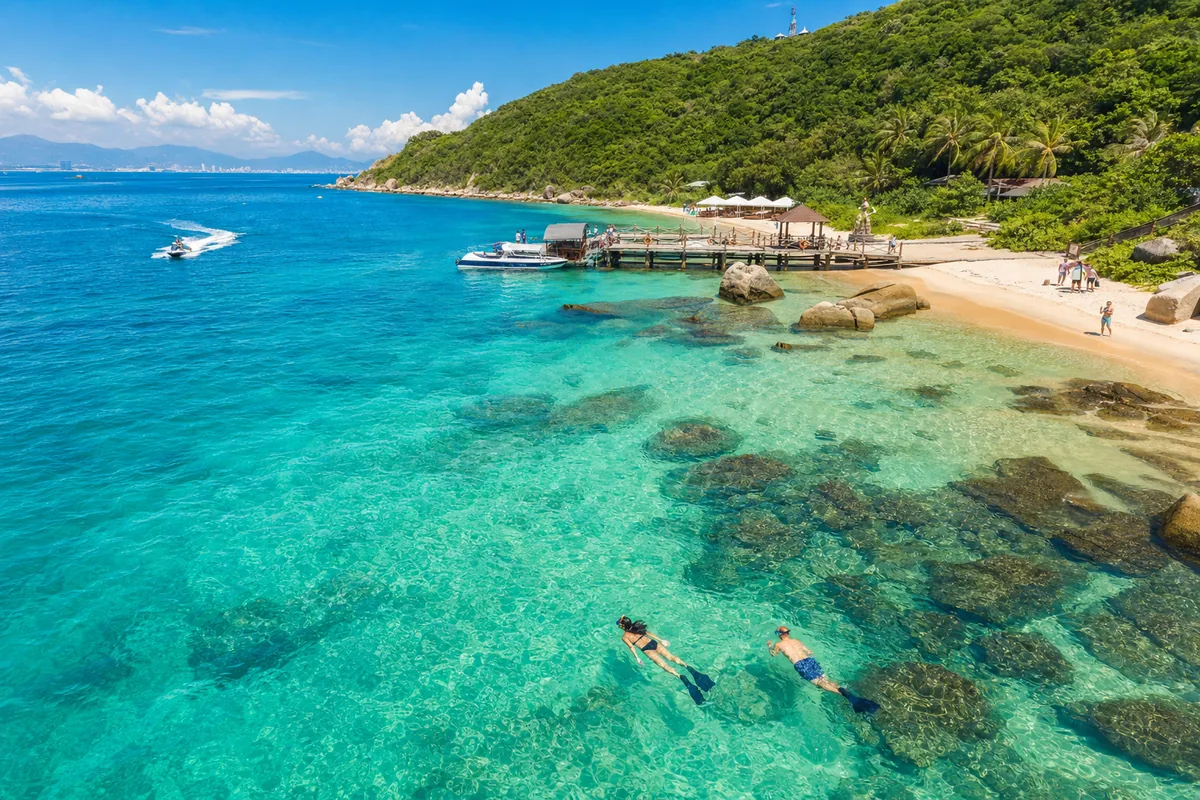
Wuzhizhou Island (蜈支洲岛, Wúzhīzhōu Dǎo)
A small island off the coast near Haitang Bay, and the best place near Sanya for clear water and snorkeling. The visibility is far better than at the mainland beaches, and the island has good spots for diving, snorkeling, and water sports like jet skis and parasailing. You reach it by ferry from the Wuzhizhou pier (about 15 minutes). Go early — it gets crowded with tour groups by mid-morning, and the ferry queues build up.
Entry plus the round-trip ferry is bundled into one ticket; water activities cost extra and add up fast. It's the most worthwhile day trip from the beach if you care about being in the water rather than just beside it.
Nanshan Temple (南山寺, Nánshān Sì)
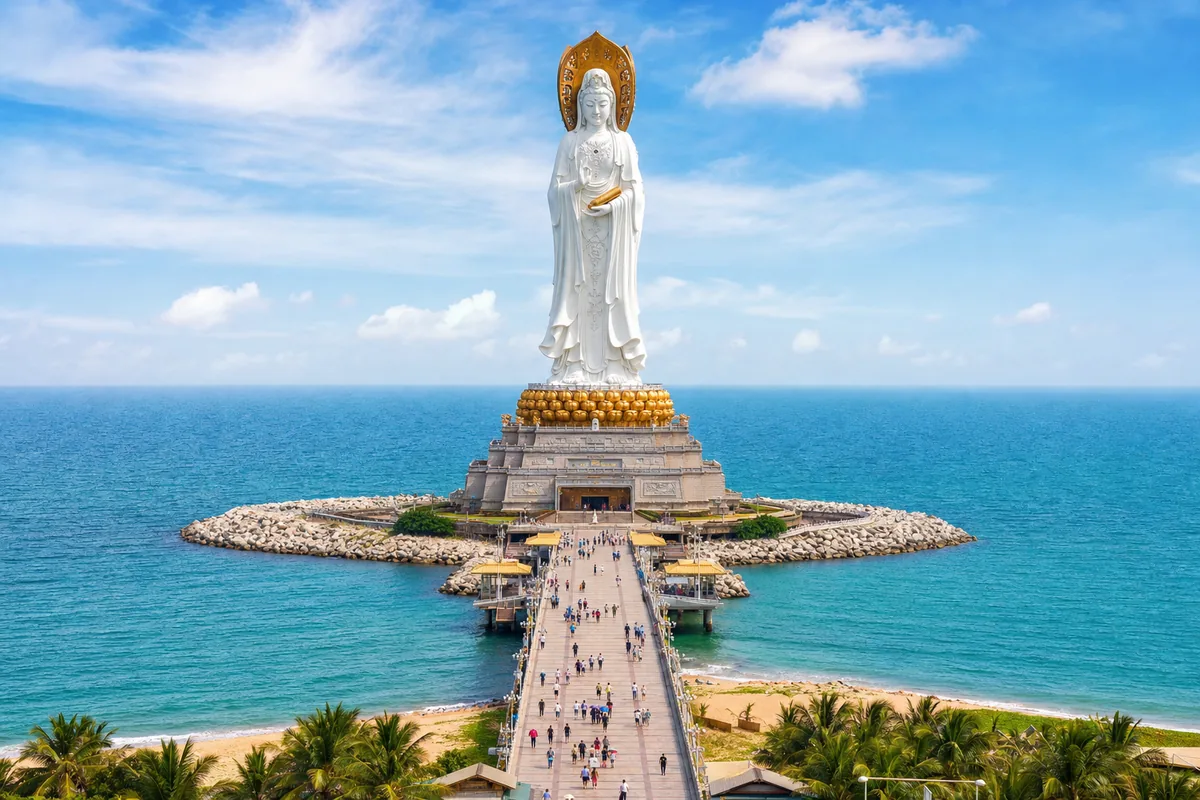
A large Buddhist cultural park about 40 km west of the city, built around Buddhist themes. The headline sight is the Guanyin of the South Sea (南海观音, Nánhǎi Guānyīn) — a 108-meter statue of the bodhisattva of compassion standing on a lotus platform out in the sea, connected to land by a causeway. It's one of the tallest statues in the world and genuinely impressive up close. The park is big; allow half a day and wear sun protection, as there's little shade. A shuttle runs between the entrance and the main sights, which you'll want given the distances.
Tianya Haijiao (天涯海角, Tiānyá Hǎijiǎo)
The name translates to "the edge of the sky, the corner of the sea," and the site is essentially a coastal park famous for two large inscribed boulders by the water. For Chinese visitors it carries real cultural weight — historically this was considered the remote end of the empire, a place of exile, and the phrase "tiānyá hǎijiǎo" appears in classical poetry to mean the ends of the earth. For foreign visitors without that context, it's a pleasant seaside walk with photogenic rocks. Manage your expectations: it's more meaningful than spectacular. Combine it with Nanshan Temple since they're on the same side of the city.
Other options
- Yanoda Rainforest Park — a tropical rainforest park inland with canopy walks and a river-tubing activity, good for a half-day if you want greenery over beach.
- Luhuitou Park — a hilltop viewpoint above the city with a deer statue and sunset views over the bays.
- Atlantis Sanya — the waterpark and aquarium at Haitang Bay, a reliable hit if you're traveling with kids.
Food in Sanya
Hainan cuisine is light, fresh, and seafood-heavy — a noticeable change from the oilier, spicier food on much of the mainland. A few things to seek out:
- Wenchang chicken (文昌鸡, Wénchāng jī) — Hainan's signature dish, a poached free-range chicken served cold with a ginger-garlic dipping sauce. Yes, this is the ancestor of Singaporean and Malaysian "Hainanese chicken rice." Clean, simple, and excellent when done well.
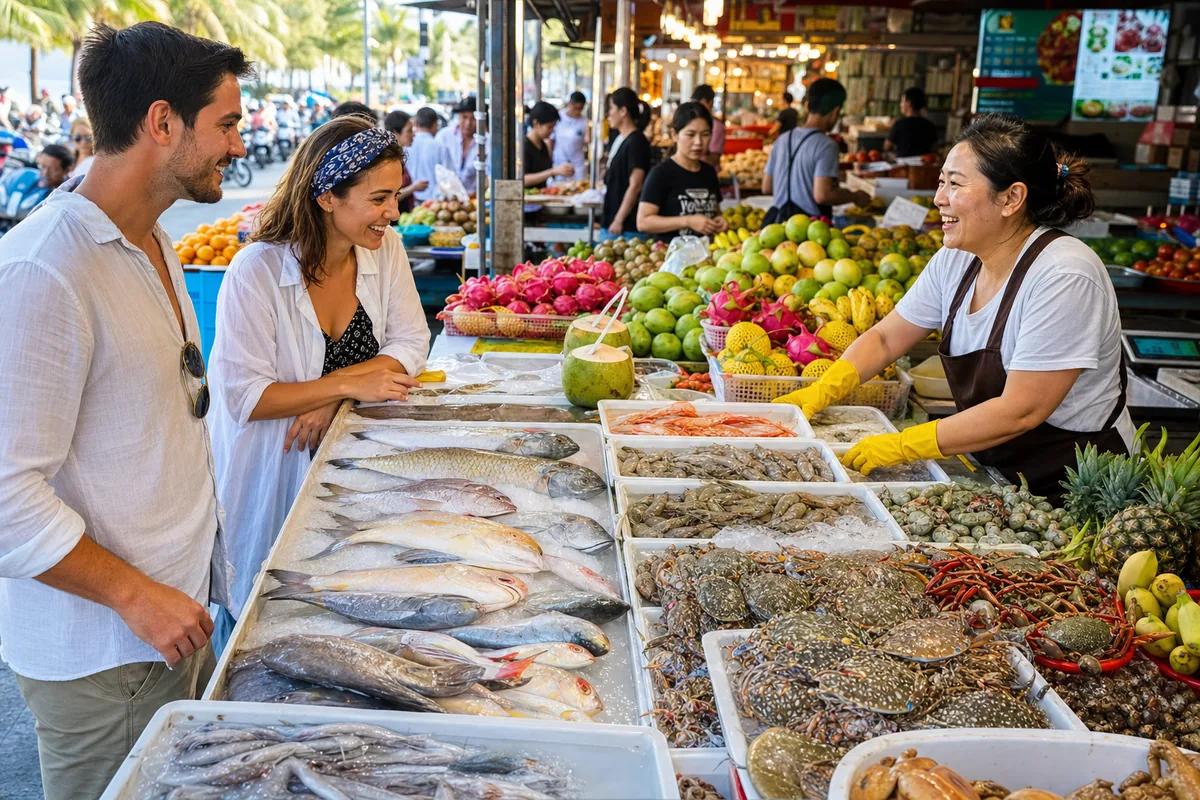
- Seafood — the obvious draw. The classic experience is a seafood market where you buy fresh catch by weight and a nearby restaurant cooks it for a fee. The First Market (第一市场, Dìyī Shìchǎng) area downtown is the famous spot for this.
- Tropical fruit — Hainan grows mango, dragon fruit, mangosteen, rambutan, coconut, and more. Fruit stalls are everywhere and cheap. Coconut rice and coconut-based dishes are local specialties.
- Hainan rice noodles (海南粉, Hǎinán fěn) — a common breakfast: rice noodles with various toppings and broth.
For navigating menus when no English is available, see our guide on how to order food with zero Chinese — useful at the seafood markets in particular.
Duty-Free Shopping: Sanya's Secret Weapon
This is what sets Sanya apart from any Southeast Asian beach destination. Hainan operates an offshore duty-free (离岛免税, lídǎo miǎnshuì) policy with a generous annual allowance per person for travelers leaving the island by plane, train, or ship. The savings on cosmetics, perfume, watches, and luxury goods can be significant compared to mainland or home-country prices.
The two big malls are:
- CDF Mall, Haitang Bay — the world's largest single duty-free store, an enormous complex with hundreds of brands.
- Sanya International Duty-Free City — the original, closer to the city center.
How it works: you shop and pay in the store, then collect your goods at a designated counter at the airport (or other departure point) when you leave Hainan. Bring your passport and your departure ticket details. Policies and allowances change, so check the current rules before you plan a big shopping trip. See our broader shopping in China guide for context on what's worth buying.
Getting There and Getting Around
Getting to Sanya
Almost everyone flies. Sanya Phoenix International Airport (SYX) has direct flights from most major Chinese cities (Beijing, Shanghai, Guangzhou, Chengdu — usually 2.5 to 4 hours) and a number of international routes from Hong Kong, Seoul, Singapore, and elsewhere. The airport is close to the city — about 20 minutes to Sanya Bay by taxi.
For comparing fares and routes into Sanya, you can check Trip.com or a metasearch tool before booking. For more on flying within China, see our domestic flights guide.
Getting around Sanya
The bays are spread out, so you'll need transport between them:
- Didi (滴滴, Dīdī) — China's ride-hailing app, the easiest way to get around. A ride from downtown to Yalong Bay runs cheaper than a taxi and you avoid haggling. Set it up before you arrive.
- Taxis — available but insist on the meter; some drivers quote flat fares for tourists.
- Buses — public buses connect the bays and are very cheap, but slow and crowded. Fine for the budget-minded.
- The Hainan high-speed rail has a Sanya station useful for day trips elsewhere on the island.
For setting up ride-hailing, see our Didi guide and the overview of taxis and ride-hailing in China.
Where to Stay
Match your hotel to the bay, since the bay determines your whole experience. Here's a quick comparison:
| Bay | Best for | Vibe | Price level |
|---|---|---|---|
| Yalong Bay | Best beach, families, resort relaxation | Luxury resort bubble | $$$–$$$$ |
| Haitang Bay | Luxury + duty-free shopping | New, upscale, sterile | $$$$ |
| Dadonghai | Independent travelers, walkability | Lively, compact, English-friendly | $$–$$$ |
| Sanya Bay | Budget, city convenience | Urban beach, busy road | $–$$ |
Sanya has one of China's deepest collections of international five-star resorts, concentrated in Yalong Bay and Haitang Bay. If a beachfront resort is the point of the trip, this is a good place to splurge. You can compare beachfront resort options and rates on Booking.com — filter by bay to keep the location straight, since "Sanya" covers a lot of ground.
A Suggested 4–5 Day Itinerary
This balances beach time, the main sights, and shopping without overpacking the days.
- Day 1 — Arrive and settle in. Check into your bay, get your bearings, swim, and have a seafood dinner. If you're in Dadonghai or Sanya Bay, walk the beach promenade at sunset.
- Day 2 — Beach day at Yalong Bay. If you're not staying there, take a day to enjoy the best swimming beach. Pool, sand, and a relaxed afternoon.
- Day 3 — Wuzhizhou Island. Go early for snorkeling and water activities before the crowds. Back to the mainland in the afternoon.
- Day 4 — Culture and the west coast. Nanshan Temple and the giant Guanyin statue in the morning, Tianya Haijiao on the way back. Evening duty-free shopping.
- Day 5 (optional) — Slow morning and shopping. A final beach morning, then the CDF Mall or International Duty-Free City before your flight. Remember to collect duty-free purchases at the airport counter.
Pairing Sanya with Haikou
If you have extra time and want to see more of Hainan, Haikou (海口), the provincial capital at the island's northern tip, makes an easy add-on. The Hainan high-speed rail connects the two cities in about 1.5–2 hours along the east coast. Haikou is less of a beach destination and more of a working city with old colonial-era arcade streets (骑楼, qílóu), good local food, and a more authentic, less touristy feel than Sanya. A day or two there shows you a different side of the island. You can also fly between the two in under an hour, but the train is more pleasant for such a short hop.
Final Tips Before You Go
Sanya is the closest thing China has to a tropical island getaway, and it earns its reputation in winter when it's the warmest place in the country. Pick your bay deliberately — Yalong for the best beach, Dadonghai for walkability, Haitang for luxury and shopping, Sanya Bay for budget and convenience. Set up Didi and a translation app before you arrive, agree on seafood prices before anything gets cooked, and build in time for the duty-free malls if you want the savings. Check current weather and typhoon forecasts if you're traveling in summer, and confirm duty-free allowances before a big shopping trip, since the rules change.
Four to five days is enough to do it properly without rushing. Come for the beach, stay for the warm sea in January.
Related Reading
- Winter Travel in China — why Sanya is the country's go-to winter escape and where else stays warm.
- Guangzhou & Shenzhen Guide — common gateway cities with direct flights to Sanya.
- Couples & Honeymoon Travel in China — Sanya is China's top honeymoon spot for a reason.
- Food Safety & Dietary Restrictions — useful before diving into the seafood markets.
Last updated: June 2026
Read in other languages
Last train times for 10 Chinese metro systems
Every line and station, checked by hand — the same data behind our offline route planner.
Get the WaysChina App
Offline guides, currency converter, essential phrases, and more — all in your pocket.

Related Articles
Hong Kong Food Guide
From the world's cheapest Michelin dim sum to Temple Street night market stalls and cha chaan teng milk tea — here's...
Hong Kong Shopping Guide
From Causeway Bay's luxury malls to the haggling stalls of Ladies' Market and budget streetwear in Sham Shui Po,...
Guangzhou & Shenzhen Guide
Two cities, one trip. Guangzhou brings 2,000 years of trade history and some of China's best food; Shenzhen is the...
Guilin & Yangshuo Travel Guide: Li River, Karst Peaks & Rice Terraces
Everything you need to plan a Guilin and Yangshuo trip: the Li River cruise, karst mountain scenery, Longji rice...