
This article contains affiliate links. If you make a purchase through these links, we may earn a small commission at no extra cost to you. This helps support our work in creating free travel guides.
China consistently ranks as one of the safer countries in the world for women traveling alone. Violent crime against tourists is rare, cities are well-lit and busy late into the night, and the public transport system is reliable and easy to use once you've set up a couple of apps. That doesn't mean you can switch your guard off entirely — petty scams, awkward staring, and the usual logistics of solo travel all still apply. This guide covers what's genuinely worth knowing: how safe it really is, the cultural quirks that catch women off guard, practical safety habits, and how to handle accommodation, transport, and the occasional uncomfortable moment.

Is China Safe for Solo Female Travelers?
Short answer: yes, and more so than most first-time visitors expect. The combination of heavy public surveillance, a strong police presence, and a culture where street harassment is uncommon makes walking alone — even at night in major cities — feel normal. Many solo female travelers say they feel safer walking through Beijing, Shanghai, or Chengdu at 11pm than in parts of their home cities.
This isn't about cameras making you comfortable so much as the practical reality on the ground: streets stay busy, convenience stores (便利店, biànlìdiàn) are open 24 hours, and people generally mind their own business. The risks you're more likely to encounter are non-violent — overcharging, taxi scams, the "tea house" scam, and persistent staring or unsolicited photos, especially if you have features that stand out in smaller cities.
The US State Department and most national travel advisories list China at their standard "exercise increased caution" tier, which is the same level applied to many popular European destinations — the caution relates mostly to legal and political matters, not street safety for tourists.
Before You Go: The Non-Negotiable Setup
A smooth solo trip in China depends on getting a few things ready before you land. None of this is about danger — it's about not being stranded with no way to pay, call a car, or read a sign.
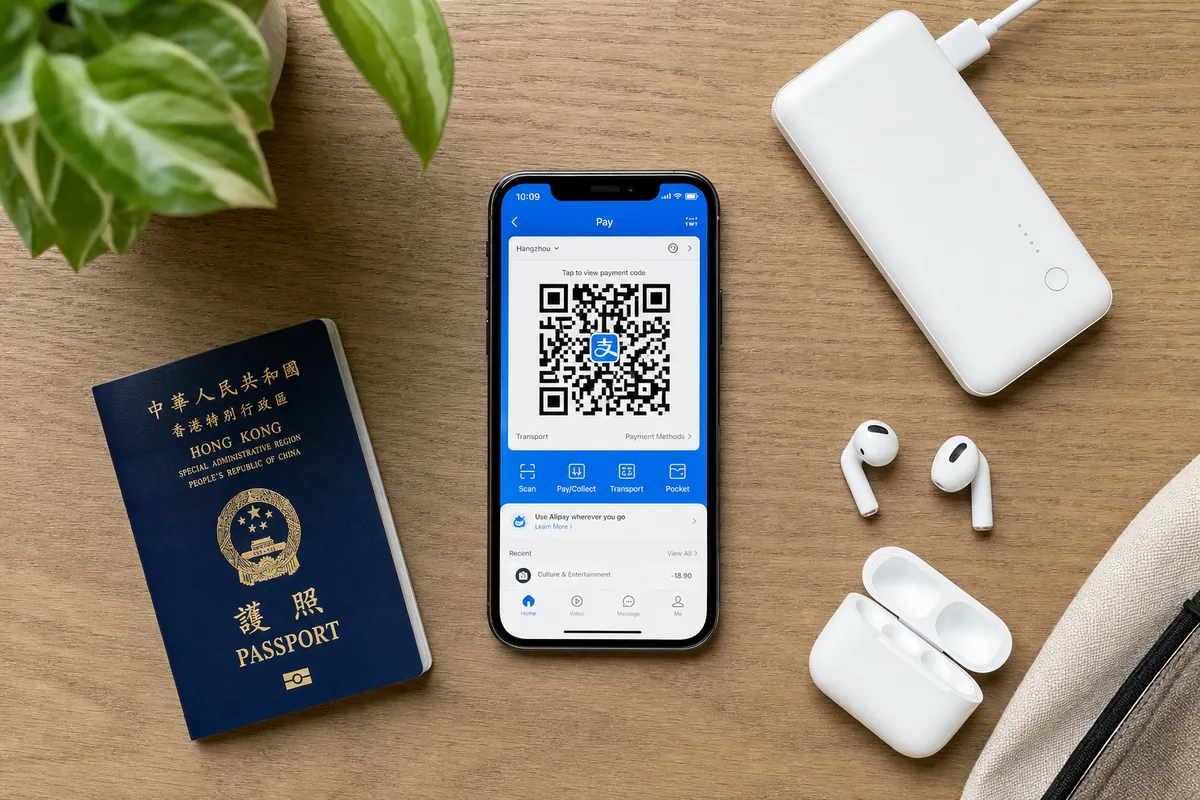
- Mobile payments. Set up Alipay (支付宝, Zhīfùbǎo) or WeChat Pay (微信支付, Wēixìn zhīfù) with your foreign card before the trip. Almost everything runs on QR codes — taxis, street food, metro gates. Being able to pay yourself means you never have to rely on a stranger.
- A working internet connection. Many Western apps (Google Maps, WhatsApp, Instagram) are blocked. Get a China eSIM or a VPN sorted in advance so your maps and messaging keep working.
- Maps and translation apps. Download offline maps and a translation app. Being able to show a driver your destination in Chinese, or read a menu, removes most of the friction of being alone.
- Travel insurance. Solo travelers carry their own risk — a sprained ankle on a hike or a stomach bug far from home is your problem alone to manage. We recommend sorting cover before you go. SafetyWing offers flexible policies that suit longer or open-ended trips, which works well for backpacking itineraries.
Cultural Notes Women Should Know
China is broadly conservative in some ways and surprisingly relaxed in others, and the contrast can confuse first-timers.
Staring and photos
In big cities this is rare. In smaller towns and rural areas, people may stare openly or ask to take a photo with you — particularly if you have blonde hair, are tall, or otherwise look distinctly foreign. It's almost always curiosity, not threat. A polite smile and a firm "bù" (不, no) if you don't want a photo is completely acceptable. You don't owe anyone a picture.
Dress code
There's no strict dress code for women in most of China. Shorts, dresses, and sleeveless tops are all fine in cities. The exceptions are religious sites — temples and mosques expect covered shoulders and knees — and parts of Xinjiang and Tibet where modest dress is more respectful. Beyond that, you'll see local women dressed in everything from full streetwear to elegant minimalism.
Personal space and directness
Queues can be loose, crowds press closer than you may be used to, and people may speak to you bluntly. This is normal cultural style, not aggression or harassment. On packed metros, crowding is just crowding.
Drinking culture
If you're invited to a meal involving baijiu (白酒, báijiǔ, a strong grain liquor), there can be social pressure to toast repeatedly. It's perfectly fine to decline — say you don't drink, or nurse one glass. Solo women should be cautious accepting repeated drinks from strangers, the same as anywhere.
Choosing and Booking Safe Accommodation
Accommodation in China is generally safe, and standards in the mid-range and up are high. A few things specific to solo women are worth keeping in mind.
- Pick places that accept foreigners. Not every hotel is licensed to register foreign guests. Filtering on international booking platforms automatically screens these out, which saves you the experience of being turned away at midnight. Booking.com lets you filter by guest rating and read reviews from other solo travelers, which is the most reliable way to gauge whether a place feels comfortable for a woman alone.
- Female-only dorms. If you're on a budget and using hostels, most reputable ones offer women-only dorm rooms. Worth booking for both comfort and security of belongings.
- Location over price. Pay a little more to stay near a metro station or in a central, well-lit district. It pays off every time you come back after dark.
- Police registration. Hotels register you automatically at check-in (住宿登记, zhùsù dēngjì). If you stay in a private rental or with a friend, you're legally required to register at the local police station within 24 hours.
Getting Around Alone
Solo transport in China is one of the easier parts of the trip, which is good news when you don't have a travel companion to split logistics with.
Taxis and ride-hailing
Use DiDi (滴滴, the dominant ride-hailing app) rather than flagging cars on the street. The app logs your route, driver details, and lets you share your trip in real time — a meaningful safety advantage when traveling alone at night. For street taxis, insist on the meter and avoid unlicensed drivers who approach you at stations and airports.
Metro and high-speed rail
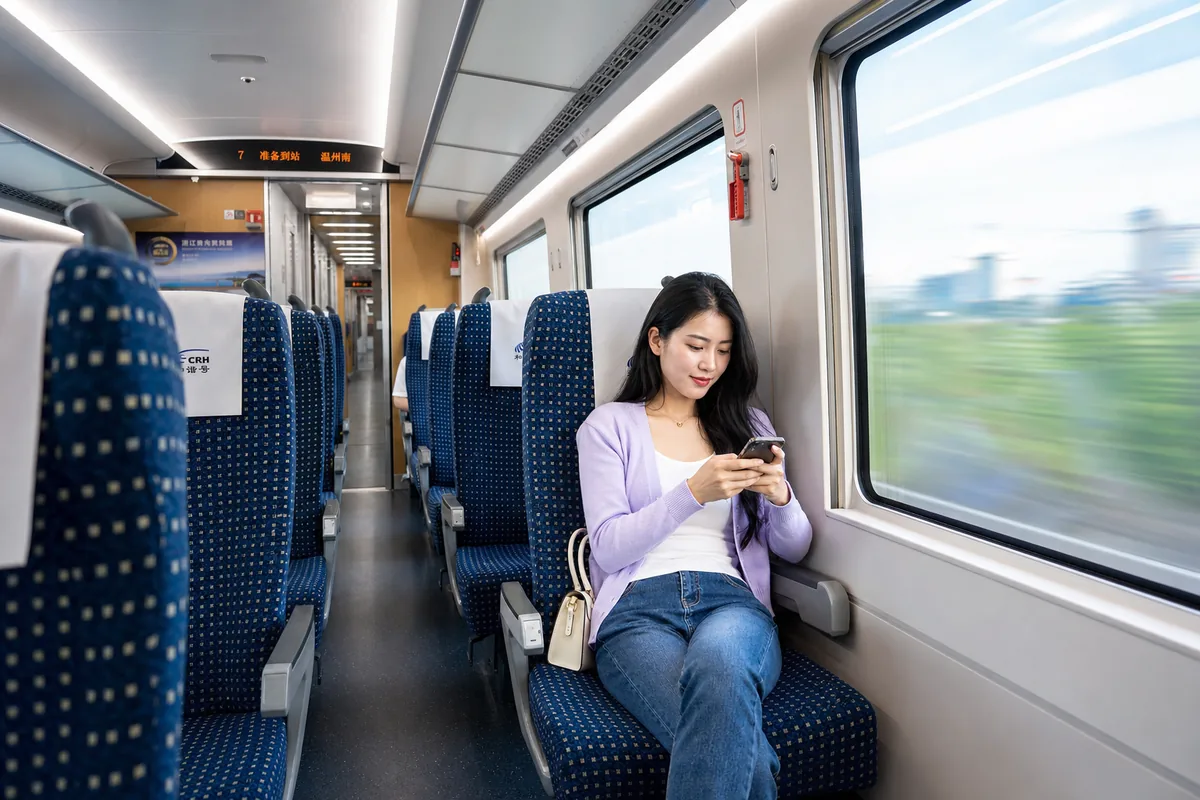
City metros are clean, cheap, and run until roughly 11pm. High-speed trains (高铁, gāotiě) connect almost every major city and are extremely safe for solo travel — assigned seats, security screening at stations, and staff on board. For booking metro routes and planning day-by-day itineraries across major cities, the WaysChina app has offline metro maps and a built-in trip planner, which is handy when your data drops underground.
Night arrivals
Try to schedule long-distance arrivals for daylight where you can. If you do land late, pre-book a DiDi or an airport transfer rather than improvising a way into the city at 1am in an unfamiliar place.
Practical Safety Habits
These are the same sensible habits that serve solo women anywhere, adapted to China.
- Keep a power bank. Your phone is your map, wallet, translator, and lifeline. Running out of battery is the single most common way solo travelers get genuinely stuck in China. Carry a charged power bank at all times.
- Share your location. Use your phone's location sharing with someone back home, especially on travel days and hikes.
- Trust the discomfort signal. If a situation, a person, or a "too friendly" approach feels off, leave. You don't owe politeness to anyone who makes you uneasy.
- Carry small cash as backup. A few hundred yuan in your bag covers you if your phone dies or a payment fails at a small vendor.
- Drink awareness in bars. Big-city nightlife is generally safe, but the standard rule applies: keep an eye on your drink and don't leave it unattended.
Health, Periods, and Pharmacies
A few practical women's-health notes that come up often. Tampons can be hard to find outside major cities and large supermarkets — pads are everywhere, but bring your preferred tampons or a menstrual cup if you rely on them. Pharmacies (药店, yàodiàn) are common and stock most basics; the staff usually don't speak English, so a translation app helps. Contraception and over-the-counter painkillers are widely available. For anything more serious, larger cities have international clinics and hospitals with English-speaking staff.
Useful Phrases and Emergency Numbers
You don't need fluent Chinese, but a handful of phrases buys you a lot of confidence when you're on your own.
| English | Pinyin | Chinese |
|---|---|---|
| No / I'm not interested | bù yào | 不要 |
| Help! | jiùmìng | 救命 |
| Where is the toilet? | cèsuǒ zài nǎlǐ | 厕所在哪里 |
| I don't understand | wǒ tīng bù dǒng | 我听不懂 |
| Please use the meter | qǐng dǎ biǎo | 请打表 |
Save the key emergency numbers: 110 for police, 120 for ambulance, 119 for fire. Operators may not speak English, so a translation app or a Chinese-speaking contact helps. For broader guidance, the US State Department travel advisory page and your own country's foreign ministry keep up-to-date country information worth checking before you travel.
Frequently Asked Questions
Is it safe to walk alone at night in Chinese cities?
In major cities, generally yes. Streets stay busy and well-lit late, and street harassment is uncommon. As anywhere, stick to populated areas and trust your instincts.
Will I get unwanted attention as a foreign woman?
Possibly staring or photo requests in smaller cities, driven by curiosity rather than threat. A firm "no" is fine and respected.
Is solo female backpacking in China realistic?
Yes. The transport network, cheap accommodation, women-only dorms, and overall safety make it one of Asia's more manageable destinations for solo backpacking, once your apps are set up.
Do I need to dress conservatively?
Not in cities — normal Western clothing is fine. Cover shoulders and knees at temples and mosques, and dress more modestly in Xinjiang and Tibet.
The Bottom Line
China rewards solo female travelers who prepare well. The country is genuinely safe by global standards, the real challenges are logistical — payments, language, and connectivity — rather than danger. Get your apps set up before you arrive, book accommodation that's licensed for foreigners and well-located, use DiDi over street taxis at night, and carry a charged power bank. Stay alert to the handful of tourist scams, and trust your gut when something feels off. Do that, and traveling China alone as a woman is not just doable — it's one of the more rewarding ways to see the country at your own pace.
Next steps: sort your payment apps and connectivity, then read up on the specific scams to watch for and the broader safety basics before you go.
Last updated: June 2026
Read in other languages
Last train times for 10 Chinese metro systems
Every line and station, checked by hand — the same data behind our offline route planner.
Get the WaysChina App
Offline guides, currency converter, essential phrases, and more — all in your pocket.

Related Articles
Accessible Travel in China
An honest look at wheelchair travel in China: what works, what doesn't, and how to plan around the gaps. Covers...

Business Travel in China
A practical guide to business travel in China: visas, etiquette for meetings and dinners, business card customs,...

Couples & Honeymoon Travel in China
A practical guide to romantic travel in China — where to go for couples and honeymoons, how to plan the route, and...
Digital Nomad Guide to China
Working remotely from China is very doable once you sort out three things: your visa, your internet setup, and your...