
This article contains affiliate links. If you make a purchase through these links, we may earn a small commission at no extra cost to you. This helps support our work in creating free travel guides.
If this is your first trip to China and you have 7 to 10 days, the classic Beijing–Xi'an–Shanghai loop is the route most first-timers should book. It covers the country's three biggest hits — the Great Wall and imperial Beijing, the Terracotta Army in Xi'an, and modern Shanghai — and they're all linked by fast, reliable high-speed rail. You see ancient history, dynastic capitals, and a 21st-century megacity without backtracking or wasting days in transit.
This guide lays out the full itinerary day by day, explains how to get between cities, gives realistic budget numbers, and covers the prep that trips up most first-timers — payments, internet, and a few cultural things worth knowing before you land.
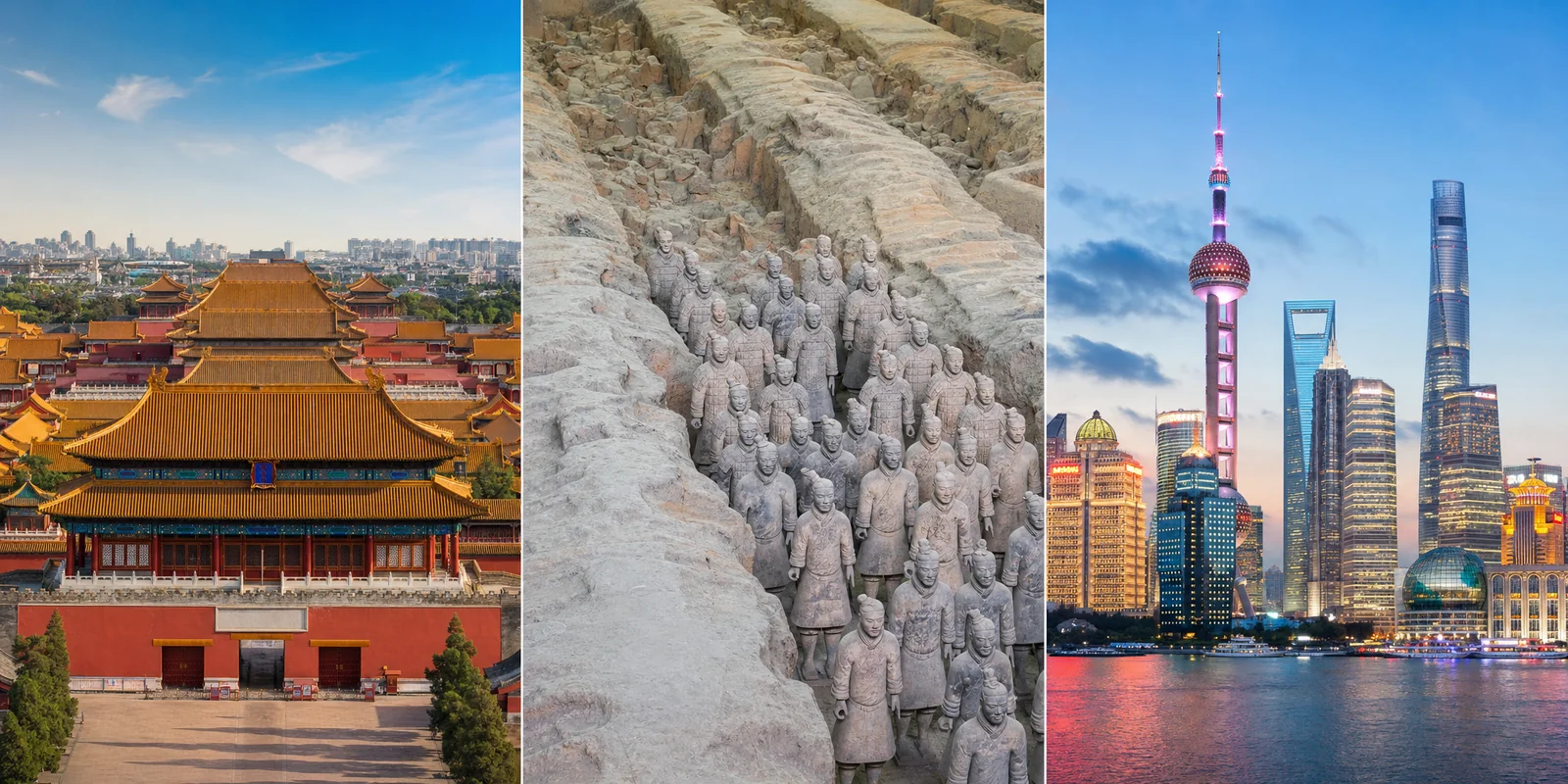
Before You Go: What First-Timers Get Wrong
Three things catch nearly every first-time visitor off guard. Sort them out before your flight and the trip gets dramatically smoother.
Payments. Almost everything in China runs on QR-code mobile payments — restaurants, taxis, convenience stores, even temple donation boxes. Foreign credit cards are accepted at major hotels and some big stores, but for everyday spending you want Alipay (支付宝, Zhīfùbǎo) or WeChat Pay (微信支付, Wēixìn zhīfù) linked to your foreign card. Both now support international Visa and Mastercard. Set this up before you arrive — it takes about 10-15 minutes and saves a lot of friction on day one.
Internet. Google, Instagram, WhatsApp, and most Western apps are blocked inside China. You'll need a VPN installed before you arrive (you can't easily download one once you're there), or a travel eSIM that routes through an international network. Many travelers use both — a China SIM for local apps and an eSIM or roaming for the apps they're used to.
Language. English is limited outside major hotels and tourist sites. A translation app with camera and voice features is genuinely essential for menus, signs, and conversations with drivers.
Itinerary at a Glance
The route is linear: fly into Beijing, take the high-speed train south to Xi'an, then continue east to Shanghai and fly home. No backtracking.
| Days | City | Highlights |
|---|---|---|
| 1-3 | Beijing | Forbidden City, Great Wall, Temple of Heaven, hutongs |
| 4-5 | Xi'an | Terracotta Army, city wall, Muslim Quarter |
| 6-8 | Shanghai | The Bund, Yu Garden, French Concession, day trip option |
| 9-10 | Buffer / extension | Extra Shanghai day, or a day trip to Suzhou or Hangzhou |
A tight 7-day version drops the buffer days and gives you 3 nights Beijing, 2 nights Xi'an, 2 nights Shanghai. With 10 days you get breathing room, a day trip, and less rushing. For a slightly different pacing, see our 7-Day China Itinerary and the Beijing-Xian-Shanghai Classic Route, which goes deeper on each stop.
Days 1-3: Beijing
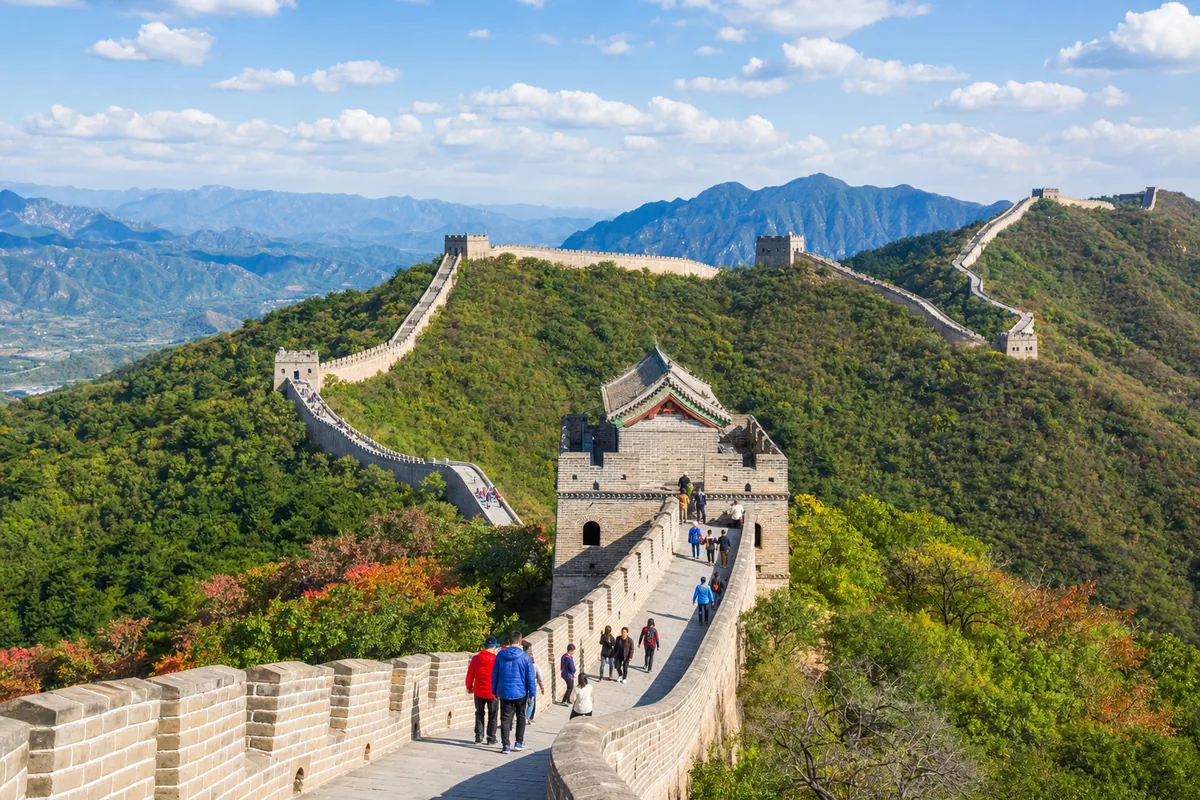
Beijing is where China's imperial history is most visible. Three days is enough to see the essentials without exhausting yourself, though you could easily spend a week here.
Day 1: Tiananmen, Forbidden City, Jingshan
Start at Tiananmen Square, then walk north into the Forbidden City (故宫, Gùgōng), the imperial palace that housed 24 emperors. Book tickets online in advance — entry requires your passport and tickets often sell out, especially in peak season. Give it 3-4 hours. Exit the north gate and climb Jingshan Park across the street for the classic view back over the palace's golden rooftops.
In the afternoon, wander the hutongs (胡同) — the narrow lanes of old courtyard houses around Nanluoguxiang and Houhai Lake. This is the older, lower-rise Beijing that survives between the highrises.
Day 2: The Great Wall
Set aside a full day. The Mutianyu section is the best choice for most first-timers — restored, scenic, less crowded than Badaling, and with a cable car and a toboggan ride down. It's about 1.5-2 hours from central Beijing. You can take a private driver, a day tour, or public transport (bus to Mutianyu). The wall ridge runs along the mountains here, and on a clear day you can see watchtowers stretching out in both directions.
Day 3: Temple of Heaven, Summer Palace
Morning at the Temple of Heaven (天坛, Tiāntán), where emperors prayed for good harvests — the surrounding park fills with locals doing tai chi, dancing, and playing cards early in the day. In the afternoon, head to the Summer Palace (颐和园, Yíhéyuán), a lakeside imperial garden on the city's northwest edge. If you'd rather slow down, swap one of these for a museum or more hutong time.
For a deeper breakdown of the city, our Beijing Complete Guide and 3-Day Beijing Itinerary cover neighborhoods, food, and timing in detail.
Days 4-5: Xi'an
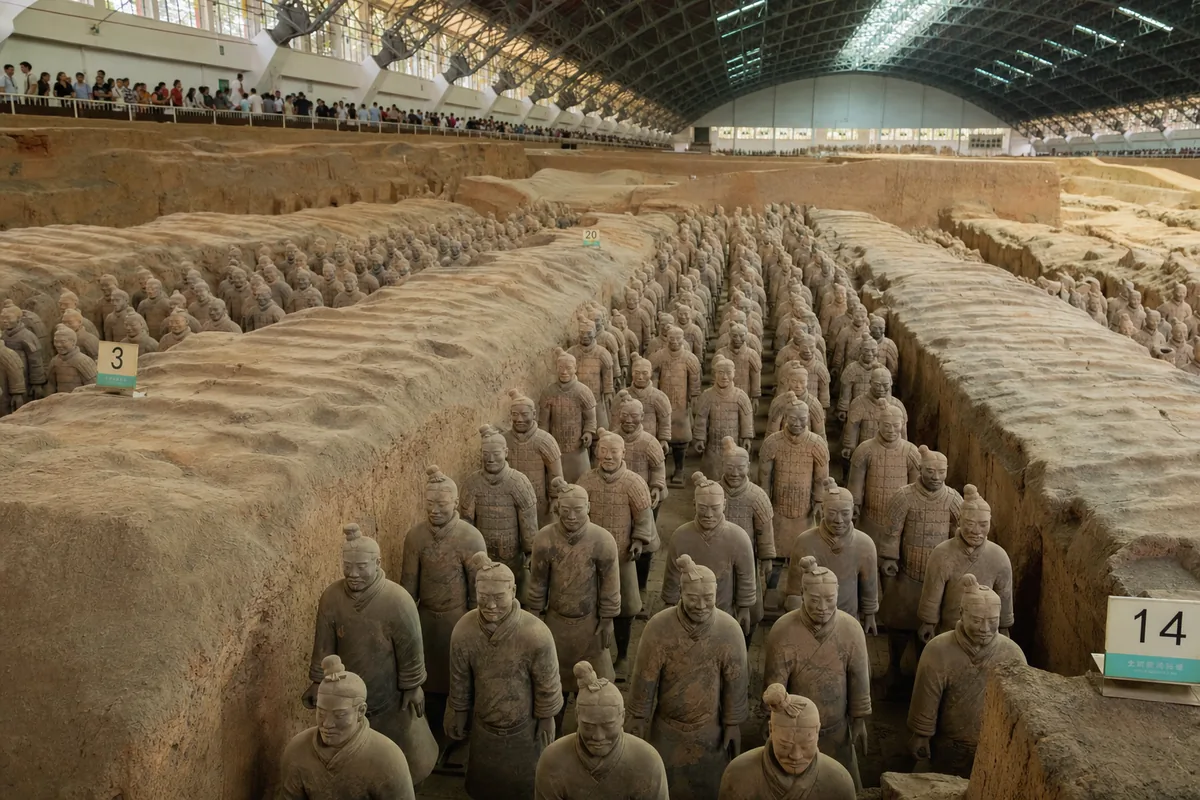
Take a morning high-speed train from Beijing to Xi'an (about 4.5-6 hours depending on the service). Xi'an was the capital of several dynasties and the eastern end of the Silk Road, and two nights is the right amount of time.
Day 4: Terracotta Army
The Terracotta Army (兵马俑, Bīngmǎyǒng) sits about an hour east of the city. These are the thousands of life-size clay soldiers buried with China's first emperor over 2,000 years ago — each face is different. Three pits are open; Pit 1 is the largest and most impressive. Go in the morning before tour buses fill the site. A guide (in person or audio) makes a big difference here, since the warriors mean little without the context.
Day 5: City Wall and Muslim Quarter
Spend the morning on the Xi'an City Wall (西安城墙) — the most complete ancient city wall in China. You can rent a bike and ride the full 14km loop on top, which takes about 1.5-2 hours and gives you a slow look at the city. In the evening, eat your way through the Muslim Quarter (回民街, Huímín Jiē): hand-pulled noodles, lamb skewers, and roujiamo (肉夹馍), often called a Chinese hamburger. It's busy and touristy but the food is genuinely good.
Our Xi'an Complete Guide and Xi'an Food Guide go further if you have an extra half-day.
Days 6-8: Shanghai
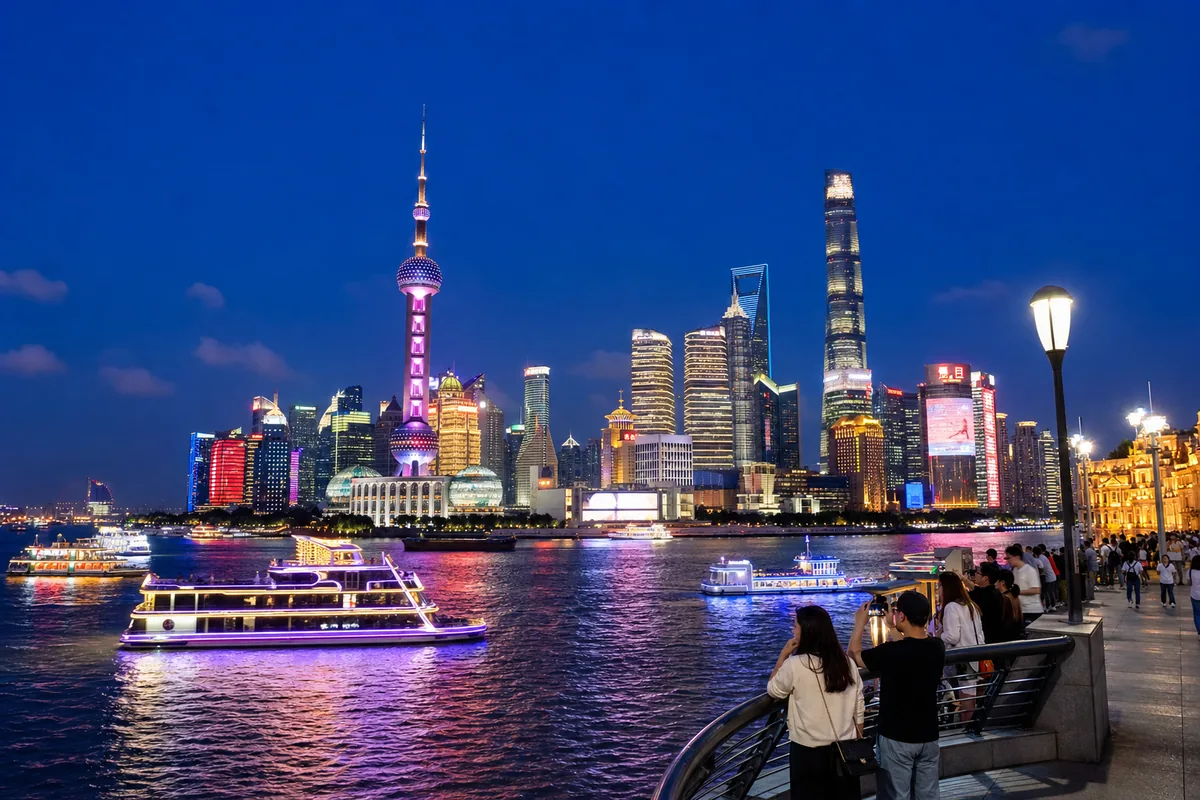
From Xi'an, the high-speed train to Shanghai takes about 6-7 hours, so this is the one leg where a domestic flight (roughly 2.5 hours) is worth considering to save half a day. Shanghai is the modern counterweight to Beijing and Xi'an — fast, international, and built around a skyline rather than a palace.
Day 6: The Bund and Pudong
Walk the Bund (外滩, Wàitān) along the Huangpu River. On one bank stand the 1920s European-style buildings of old Shanghai; directly across the water rises the Pudong skyline, including the Shanghai Tower (the second-tallest building in the world). Come back after dark — both sides light up, and the contrast across the river is the city's defining image. Go up one of the towers for the view if the weather's clear.
Day 7: Old City and French Concession
Morning at Yu Garden (豫园, Yùyuán), a classical Ming-dynasty garden in the old town, surrounded by a bazaar of teahouses and snack stalls. In the afternoon, walk the tree-lined streets of the former French Concession — low villas, cafes, and independent shops. This is the best part of the city for slow wandering, and it shows a completely different side of Shanghai from the Bund.
Day 8: Day trip or city deep-dive
With a third Shanghai day, take a day trip. Suzhou (classical gardens and canals) and Hangzhou (West Lake) are both 30-90 minutes away by high-speed train and make excellent contrasts to the city. Or stay in Shanghai for museums, shopping, and food. See our Shanghai Day Trips and 3-Day Shanghai Itinerary for options.
Days 9-10: Buffer and Extension
If you have the full 10 days, use the extra time to slow down rather than cram in another city. A relaxed extra day in Shanghai, a second day trip, or simply not rushing through the earlier stops all make the trip better. First-timers consistently report wishing they'd moved slower, not faster.
Getting Between Cities
This route is built around high-speed rail (高铁, gāotiě), which is the best way to travel between these three cities. Trains are fast, frequent, comfortable, and almost always on time. You ride from city center to city center, with none of the airport overhead.
| Route | High-speed train | Flight (in-air) | Recommendation |
|---|---|---|---|
| Beijing → Xi'an | ~4.5-6 hrs | ~2 hrs | Train |
| Xi'an → Shanghai | ~6-7 hrs | ~2.5 hrs | Train or flight |
Book train tickets through the official China Railway 12306 platform or a trusted booking app. You'll need your passport to buy and to board — it functions as your ticket at the gate. Reserve a few days ahead in peak season. Our How to Book Train Tickets and High-Speed Train Complete Guide walk through the whole process.
Getting around within cities
All three cities have excellent, cheap metro systems with English signage and English-language ticket machines. A single ride costs about ¥3-7. For door-to-door trips, Didi (滴滴) — China's main ride-hailing app — works inside Alipay or as a standalone app and is cheap and reliable. Taxis are fine too but drivers rarely speak English, so have your destination written in Chinese.
Budget Reference
China can be done on a wide range of budgets. Below are realistic per-person daily estimates excluding international flights, for a 7-10 day trip. The biggest variables are accommodation and whether you take guided tours.
| Style | Per day (per person) | What it looks like |
|---|---|---|
| Budget | ¥350-550 | Hostels/budget hotels, street food and local restaurants, metro, self-guided sights |
| Mid-range | ¥700-1,200 | 3-4 star hotels, mix of restaurants, occasional guided tours and Didi |
| Comfortable | ¥1,500+ | 4-5 star hotels, private guides and drivers, nicer dining |
Major fixed costs to budget separately: the two high-speed train legs (roughly ¥500-900 each in second class) and big attraction tickets (Forbidden City ~¥60, Terracotta Army ~¥120, Great Wall around ¥40-100 with cable car). Our China Travel Budget Guide breaks costs down by category.
Practical Prep and Common Mistakes
Visa and entry
Most visitors need a tourist visa (L visa), though China has expanded visa-free transit and short-stay policies for many nationalities — check whether you qualify before assuming you need one. The National Immigration Administration publishes current rules, and our Visa-Free & Transit Policies guide covers who's eligible.
Travel insurance
Healthcare in China is generally good in big-city hospitals, but you'll pay upfront and Western insurance may not be accepted directly. Travel insurance that covers medical care and trip disruption is worth having for a first trip. Providers like SafetyWing offer plans aimed at travelers; whatever you choose, confirm it covers China and medical evacuation.
Common first-timer mistakes
- Trying to see too much. Three cities in 7-10 days is already a good pace. Adding more means spending your trip in transit.
- Not booking the Forbidden City and Terracotta Army in advance. Both can sell out, and entry requires your passport.
- Forgetting to carry your passport. You need it for train travel, hotel check-in, and attraction entry — keep it on you.
- Assuming cards work everywhere. Set up mobile payments; carry some cash as backup.
- Underestimating distances. Beijing and Shanghai are huge. Build metro time into your daily plan.
Summary and Next Steps
For a first trip to China with 7-10 days, the Beijing–Xi'an–Shanghai route gives you the best mix of history, culture, and modern life with minimal backtracking. Spend three days in Beijing, two in Xi'an, and two to three in Shanghai, connect them by high-speed rail, and use any extra days to slow down rather than add stops.
Before you fly, do the three things that matter most: set up Alipay or WeChat Pay, sort out your internet (VPN and/or eSIM), and download an offline translation and map app. Then book your Forbidden City and Terracotta Army tickets and your train seats in advance. Do that, and the rest of the trip is genuinely easy.
Related Reading
- Beijing-Xian-Shanghai Classic Route — a deeper dive into this exact route
- 10-Day China Trip Plan — if you want to add a fourth destination
- Understanding Chinese Payment Systems — set up payments before you go
- Internet & VPN Guide — staying connected in China
- Must-Have Apps Before You Go — the apps that make travel here easy
Last updated: June 2026
Read in other languages
Last train times for 10 Chinese metro systems
Every line and station, checked by hand — the same data behind our offline route planner.
Get the WaysChina App
Offline guides, currency converter, essential phrases, and more — all in your pocket.

Related Articles
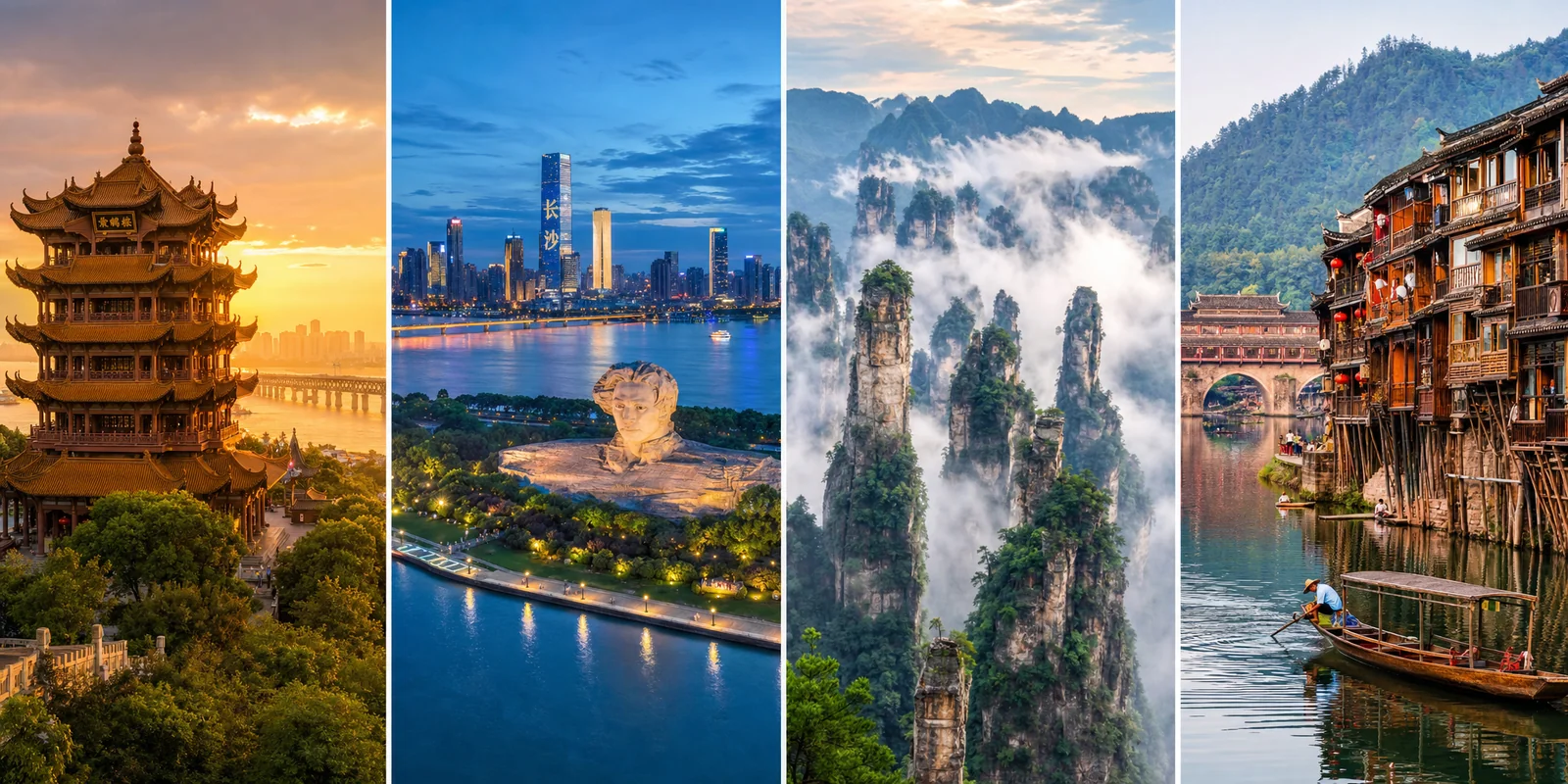
Central China Route: Wuhan-Changsha-Zhangjiajie
A practical 7-8 day Central China itinerary linking Wuhan, Changsha, Zhangjiajie, and Fenghuang by high-speed rail,...

Northeast China Route: Harbin-Changbaishan-Dalian
A 7-8 day route through Northeast China linking Harbin, Changbaishan, and Dalian, with separate winter and summer...

Jiangnan Water Towns Route: Shanghai, Suzhou, Wuzhen and Hangzhou in 5 to 7 Days
Shanghai → Suzhou → a night in Wuzhen or Xitang → Hangzhou: the order, nights per stop, which water town to pick,...
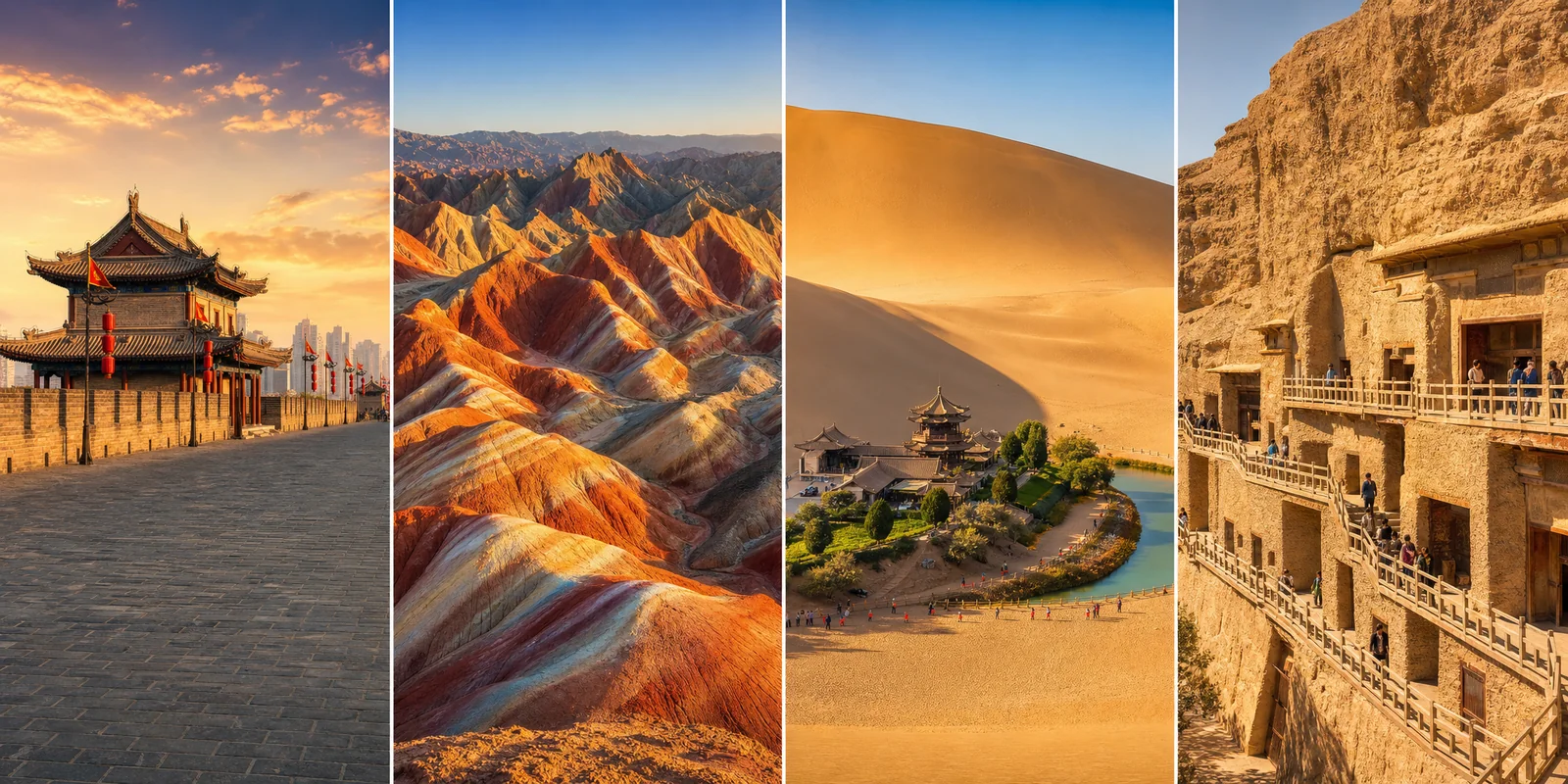
Silk Road Route: Xi'an to Dunhuang
A practical 7-8 day Silk Road itinerary from Xi'an through Lanzhou and Zhangye to Dunhuang, with day-by-day plans,...