
This article contains affiliate links. If you make a purchase through these links, we may earn a small commission at no extra cost to you. This helps support our work in creating free travel guides.
If you only have one trip to China and want to see the headline sights, this is the route people end up doing. Beijing for the imperial history and the Great Wall, Xi'an for the Terracotta Army and the old Silk Road capital, Shanghai for the modern skyline and a taste of where China is heading. The three cities sit roughly in a line, and high-speed trains connect them in a few hours each. People sometimes call it China's "golden triangle," though it's really a straight shot rather than a loop.
This guide breaks down a realistic 7-10 day plan: how many days each city deserves, how to handle the train connections, what it costs, and how to adjust if you have more or less time.
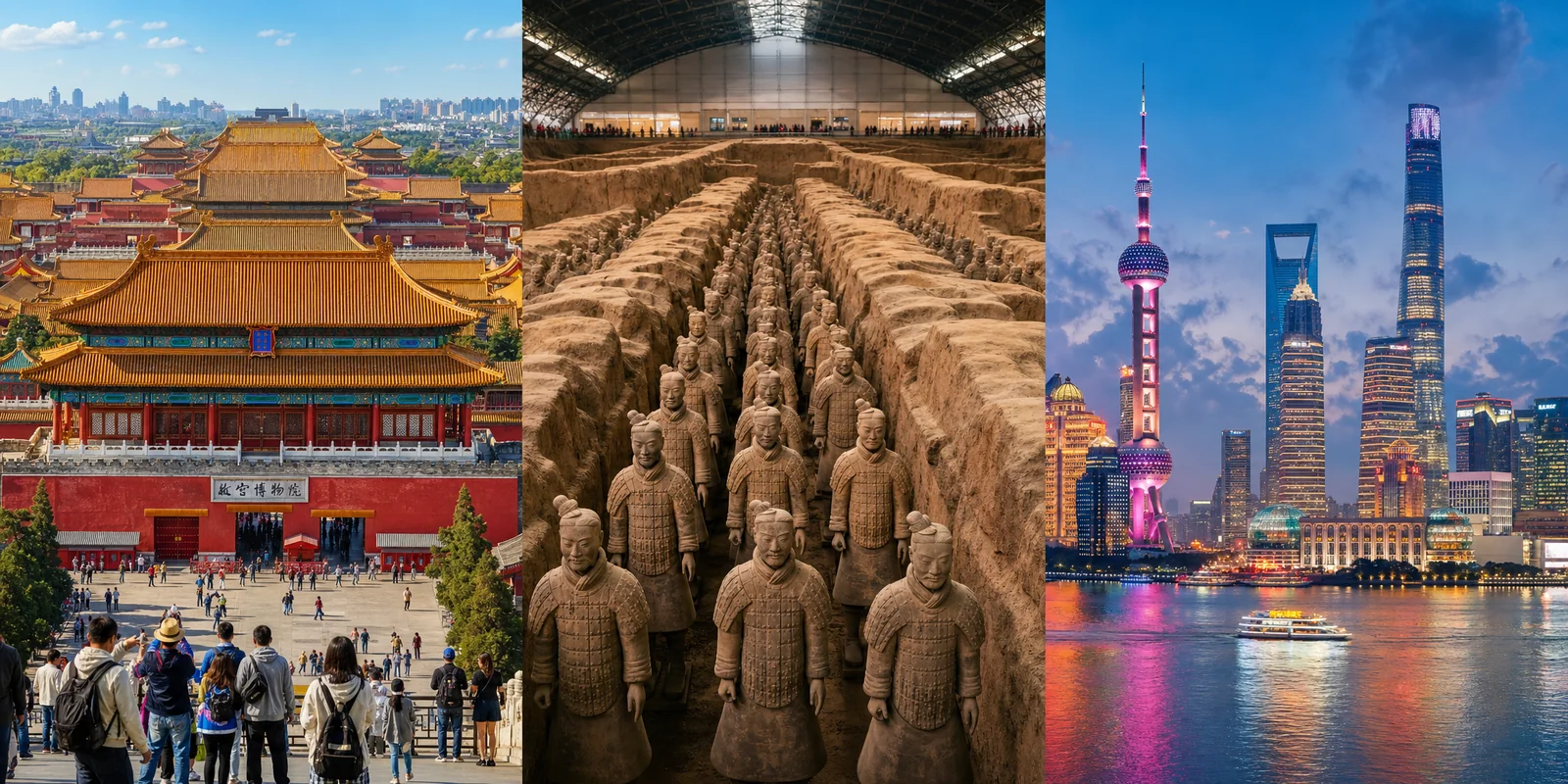
Route Overview: Why These Three Cities
The logic is simple. Beijing and Shanghai are the two main international gateways, so you'll likely fly into one and out of the other. Xi'an sits between them, both geographically and in the rail network, which makes it a natural middle stop instead of a backtrack.
The standard direction is Beijing → Xi'an → Shanghai, but it works just as well in reverse depending on your flights. Booking an "open-jaw" ticket (into Beijing, out of Shanghai, or vice versa) saves you from doubling back.
| City | Suggested Stay | Known For |
|---|---|---|
| Beijing | 3 days | Forbidden City, Great Wall, Temple of Heaven, hutongs |
| Xi'an | 2 days | Terracotta Army, city wall, Muslim Quarter |
| Shanghai | 2-3 days | The Bund, skyline, French Concession, day trips |
That adds up to 7-8 days of sightseeing. Add a buffer day for travel and jet lag and you land at 8-10 days, which is why this route fits most first-time China trips. If you want a lighter version, see our 7-Day China Itinerary; if this is your very first trip and you want more hand-holding, the First Time China Itinerary covers the basics in more depth.
Days 1-3: Beijing
Beijing is big and the sights are spread out, so three full days is the minimum to see the essentials without rushing.
Day 1: City Center
Start at Tiananmen Square and walk north into the Forbidden City (故宫, Gùgōng), the imperial palace complex. Give it at least three hours. Tickets must be booked online in advance through the official platform, and they sell out in peak season, so don't leave it to the day. In the afternoon, head to Jingshan Park directly behind the palace for the classic rooftop view, then explore the nearby hutongs (胡同, hútòng), the old alleyway neighborhoods around Houhai lake.
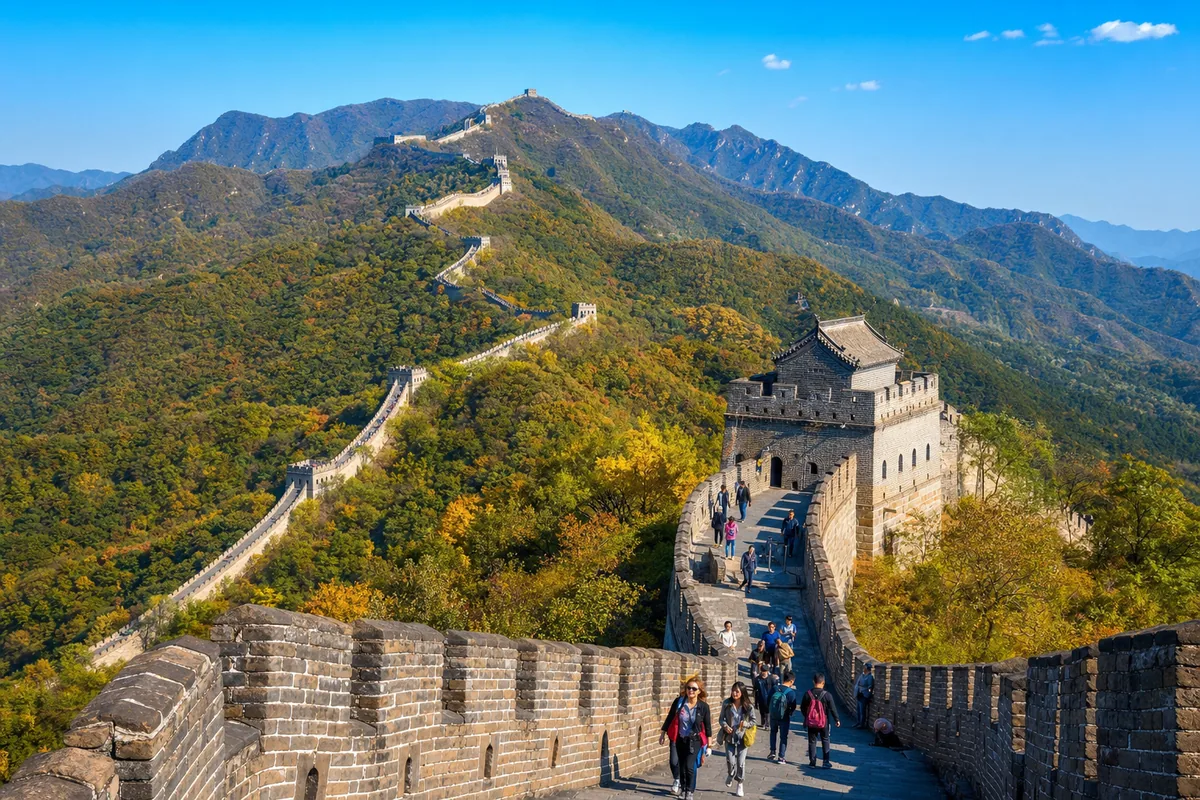
Day 2: The Great Wall
This is the day most people remember. The Mutianyu section is the usual choice for a first visit: restored, less crowded than Badaling, and about 1.5-2 hours from the city. You can take a cable car up and a toboggan down. Going independently means a taxi or chartered car; many visitors book a small-group day tour to skip the logistics. Platforms like Klook list Mutianyu day trips with hotel pickup, which is worth it if you'd rather not arrange transport yourself.
Day 3: Temple of Heaven & Summer Palace
Morning at the Temple of Heaven (天坛, Tiāntán), where locals practice tai chi and play cards in the surrounding park. Afternoon at the Summer Palace (颐和园, Yíhéyuán), a lakeside imperial garden on the city's northwest edge. If you're short on energy, pick one. For a more detailed breakdown, our 3-Day Beijing Itinerary maps out timings and metro routes.
Days 4-5: Xi'an
Getting from Beijing to Xi'an
Take the high-speed train (高铁, gāotiě). The Beijing-Xi'an line runs in about 4.5-6 hours depending on the service, covering roughly 1,100 km. Trains leave from Beijing West Station. A second-class seat costs around ¥515-575. It's a far better experience than flying once you factor in airport transfers and security lines, and the scenery shifts from the North China plain into more rugged country as you approach Xi'an.
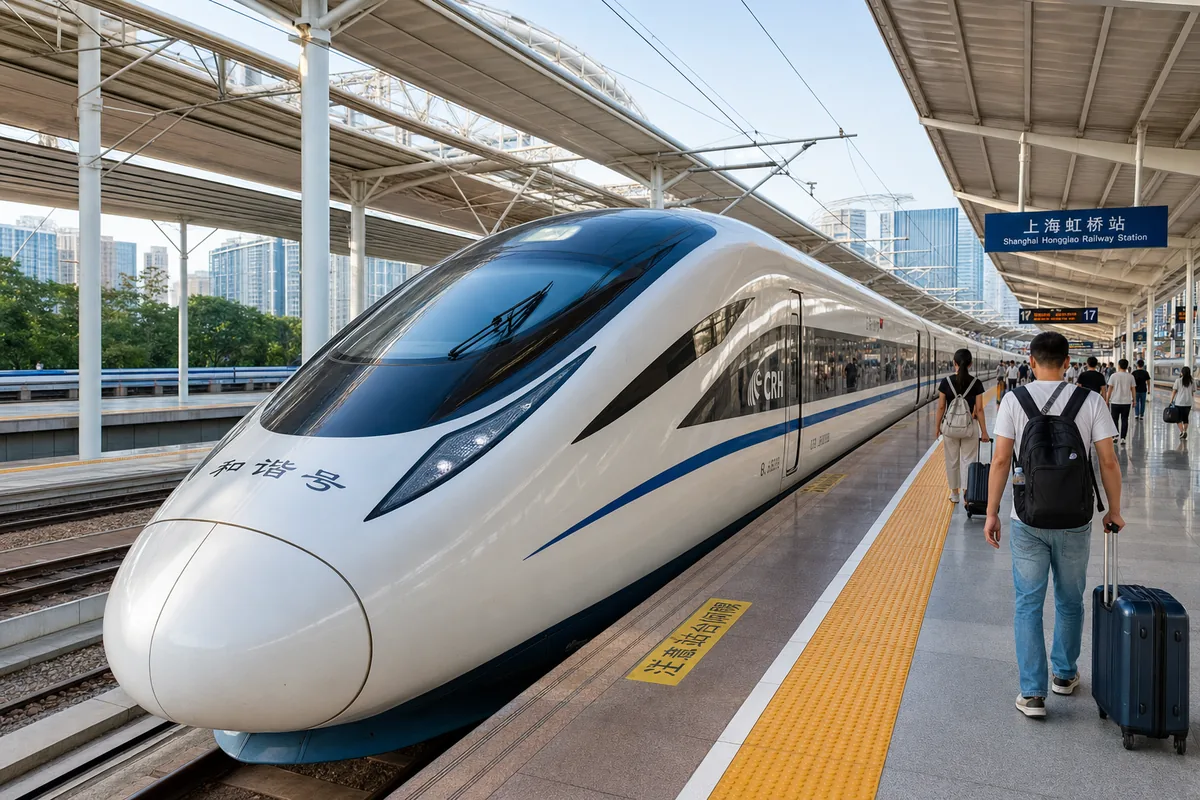
You can book through the official 12306 system or an English-language platform. For foreign travelers who'd rather avoid the 12306 interface, Trip.com handles booking with English support and sends you a QR code or collection number. Either way, bring your passport: it's your ticket and ID at the gates. Our guide to booking train tickets walks through both methods.
Day 4: Terracotta Army
The Terracotta Army (兵马俑, Bīngmǎyǒng) is about an hour east of the city. These are the thousands of life-sized clay soldiers buried with China's first emperor over 2,000 years ago, and no photo really prepares you for the scale of Pit 1. Go early to beat tour groups. You can reach it by public bus (line 游5/306 from Xi'an Railway Station) or a tour. Plan a half to full day including travel.
The UNESCO World Heritage listing has solid background if you want context before you go; see the UNESCO World Heritage entry for the Mausoleum of the First Qin Emperor.
Day 5: Old City
Spend the morning cycling the Xi'an City Wall (西安城墙), one of the most complete ancient walls in China; the full loop is about 14 km and rental bikes are available on top. Then wander the Muslim Quarter (回民街, Huímín Jiē) for street food: hand-pulled noodles, roujiamo (the local "Chinese hamburger"), and persimmon cakes. The Bell Tower and Great Mosque are nearby. If you have an extra half-day, the 2-Day Xi'an Itinerary adds options like the Big Wild Goose Pagoda.
Days 6-8: Shanghai
Getting from Xi'an to Shanghai
This is the longest leg: high-speed trains take 6-7 hours over roughly 1,500 km. There are direct services, but they're limited, so check times when you book. A second-class seat runs around ¥670-680. If the train timing doesn't suit you, this is the one leg where a flight (about 2.5 hours) genuinely makes sense, especially if you're tight on days. Compare both before deciding.
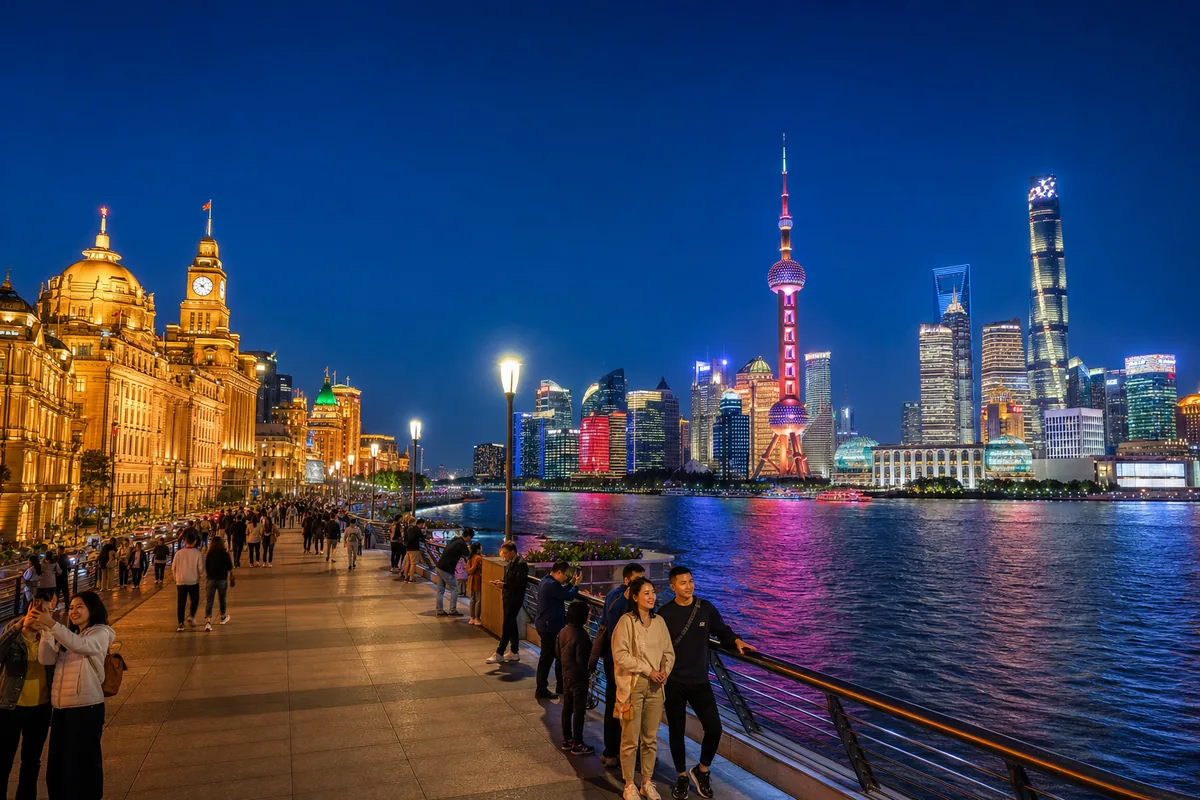
Day 6: The Bund & Pudong
Start along the Bund (外滩, Wàitān), the waterfront strip of 1920s colonial-era buildings, then look across the river at the Pudong skyline. Go up one of the towers (the Shanghai Tower observation deck is the tallest) or just enjoy the view at night when everything lights up. Walk Nanjing Road back toward People's Square if you want the shopping-street energy.
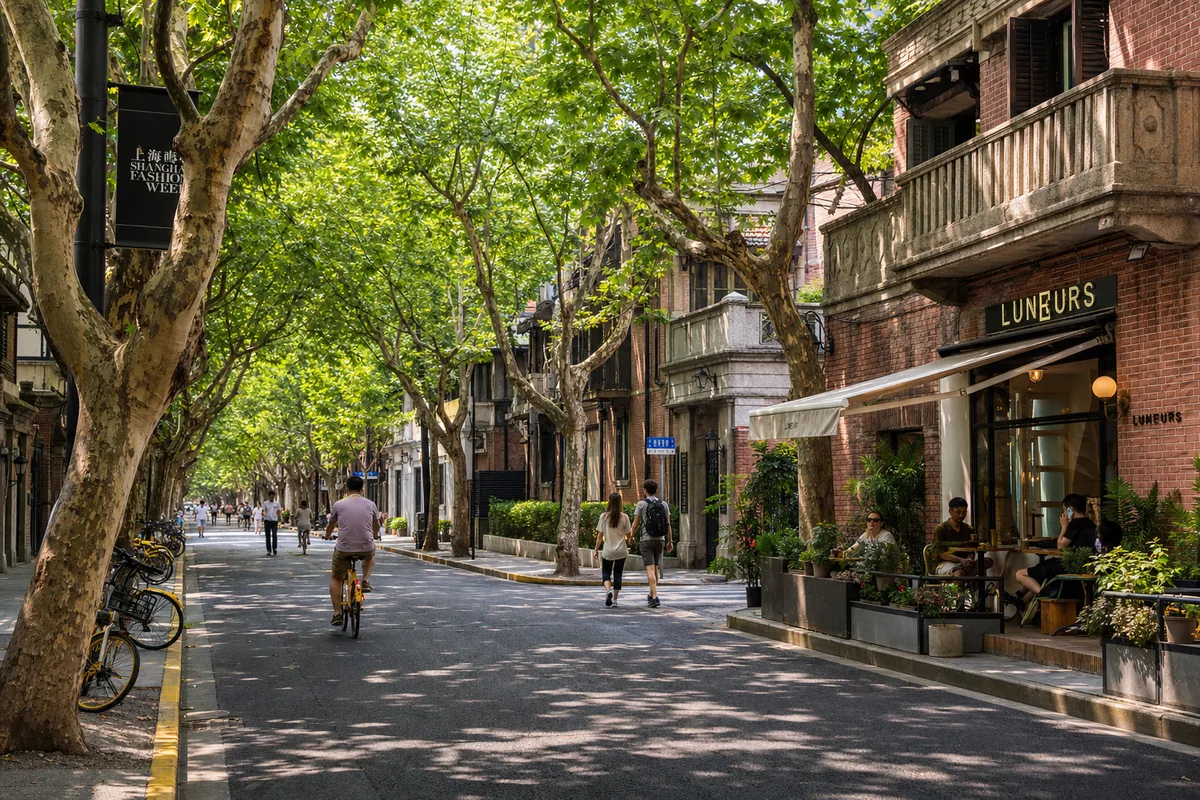
Day 7: French Concession & Old Town
The former French Concession is the most pleasant area to walk: tree-lined streets, cafés, boutiques, and converted lane houses around Tianzifang and Wukang Road. In the afternoon, see Yu Garden (豫园, Yùyuán) and the surrounding old bazaar, then the nearby Shanghai Museum if bronzes and ceramics interest you. Our 3-Day Shanghai Itinerary has more detail and food picks.
Day 8: Day Trip or Slow Down
With a spare day, take a day trip to a water town. Zhujiajiao is the closest (about an hour), or go further to Suzhou (25 minutes by high-speed train) for its classical gardens. Both make a nice change of pace from the city. See our Shanghai day trips guide for options. If you'd rather not move, the French Concession and the museums easily fill another relaxed day before your flight home.
Transport Summary
| Leg | Mode | Time | 2nd-Class Fare (approx.) |
|---|---|---|---|
| Beijing → Xi'an | High-speed rail | 4.5-6 hrs | ¥515-575 |
| Xi'an → Shanghai | High-speed rail | 6-7 hrs | ¥670-680 |
| Xi'an → Shanghai (alt.) | Flight | ~2.5 hrs | ¥600-1,200 (varies) |
Prices shift with season and class; first-class and business seats cost more but the second-class seats on China's high-speed trains are already spacious and comfortable. Book a few days ahead in peak season, as popular trains sell out. For the broader picture, see our complete high-speed rail guide.
Budget Reference
Costs vary enormously with your travel style, but here's a rough per-person estimate for the 8-day route, excluding international flights.
| Category | Budget | Mid-range |
|---|---|---|
| Accommodation (7 nights) | ¥1,050-1,750 | ¥2,800-5,600 |
| Intercity trains | ¥1,200-1,300 | ¥1,200-2,000 |
| Attractions & tours | ¥600-900 | ¥900-1,500 |
| Food | ¥700-1,000 | ¥1,400-2,800 |
| Local transport | ¥150-250 | ¥250-500 |
| Total (8 days) | ~¥3,700-5,200 | ~¥6,500-12,400 |
That's roughly USD 510-720 for budget and USD 900-1,700 for mid-range, per person. For a fuller breakdown, see our China travel budget guide.
Where to Stay
In all three cities, base yourself near a metro line and a central area: around Wangfujing or Qianmen in Beijing, inside or near the city wall in Xi'an, and around the Bund, People's Square, or the French Concession in Shanghai. Booking ahead matters in peak season. You'll find everything from hostels to international chains; platforms like Booking.com list properties that handle foreigner registration, which saves a headache at check-in. Our hotel booking and registration guide explains the rules.
How to Adjust the Route
If you have less time (5-6 days)
Drop Xi'an and do just Beijing and Shanghai, connected by a single high-speed train (4.5-6 hours) or a short flight. You lose the Terracotta Army but keep the two anchor cities. Alternatively, cut Beijing or Shanghai to two days each.
If you have more time (10-14 days)
Add a stop. Common extensions include Chengdu for pandas and food, Guilin/Yangshuo for the karst landscapes, or the water towns and gardens of the Jiangnan region near Shanghai. From Xi'an, you can also head west along the Silk Road toward Dunhuang.
Before you go
Set up mobile payments (Alipay or WeChat Pay linked to a foreign card) before you arrive, since cash is rarely used day to day. Download a map app and translation app, and sort out internet access. Check current visa and entry rules with the National Immigration Administration before booking, as transit visa-free policies and entry requirements change.
The Short Version
Fly into Beijing (or Shanghai), spend three days on the imperial sights and the Great Wall, take the high-speed train to Xi'an for two days centered on the Terracotta Army and the old city, then continue by train to Shanghai for two or three days of skyline, gardens, and a water-town day trip. Fly out from whichever end you didn't arrive at. Book trains and Forbidden City tickets a few days ahead, carry your passport on travel days, and aim for spring or autumn. Eight days is the sweet spot; trim Xi'an if you have less, add Chengdu or Guilin if you have more.
Next steps: lock in your open-jaw flights, then book the two train legs and your first night's hotel in each city. Everything else you can sort as you go.
Last updated: June 2026
Read in other languages
Last train times for 10 Chinese metro systems
Every line and station, checked by hand — the same data behind our offline route planner.
Get the WaysChina App
Offline guides, currency converter, essential phrases, and more — all in your pocket.

Related Articles
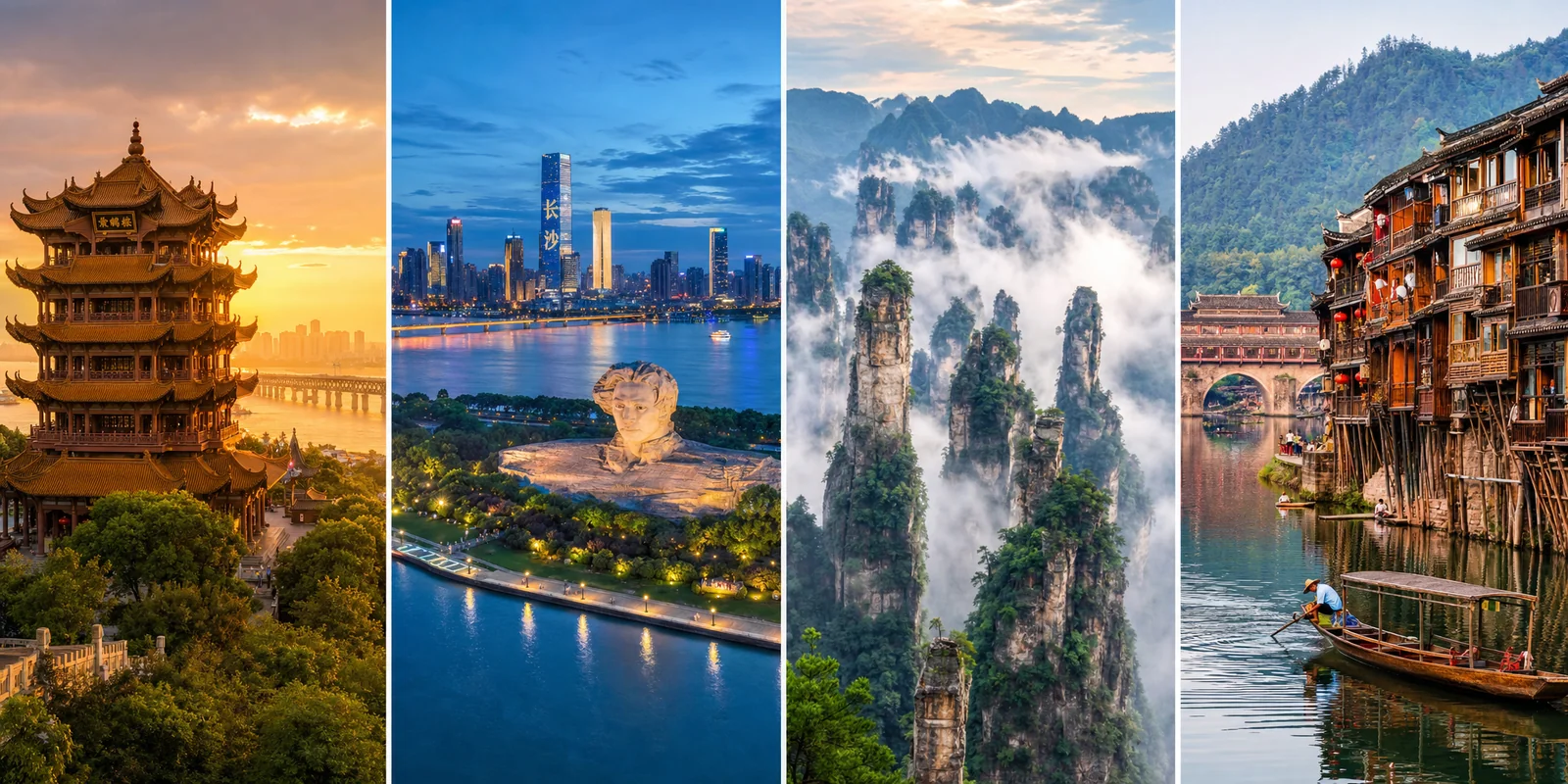
Central China Route: Wuhan-Changsha-Zhangjiajie
A practical 7-8 day Central China itinerary linking Wuhan, Changsha, Zhangjiajie, and Fenghuang by high-speed rail,...

Northeast China Route: Harbin-Changbaishan-Dalian
A 7-8 day route through Northeast China linking Harbin, Changbaishan, and Dalian, with separate winter and summer...

Jiangnan Water Towns Route: Shanghai, Suzhou, Wuzhen and Hangzhou in 5 to 7 Days
Shanghai → Suzhou → a night in Wuzhen or Xitang → Hangzhou: the order, nights per stop, which water town to pick,...
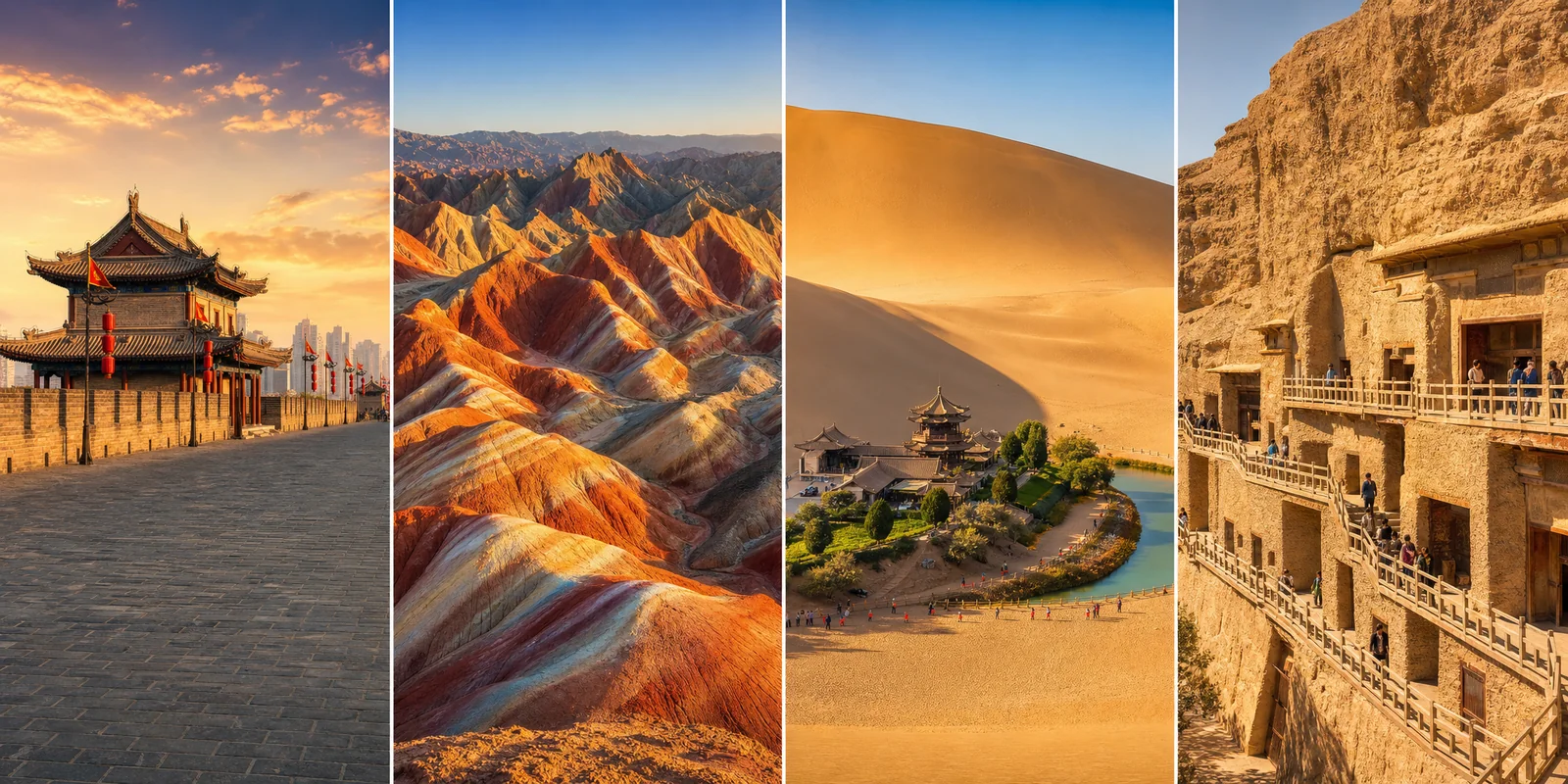
Silk Road Route: Xi'an to Dunhuang
A practical 7-8 day Silk Road itinerary from Xi'an through Lanzhou and Zhangye to Dunhuang, with day-by-day plans,...