
This article contains affiliate links. If you make a purchase through these links, we may earn a small commission at no extra cost to you. This helps support our work in creating free travel guides.
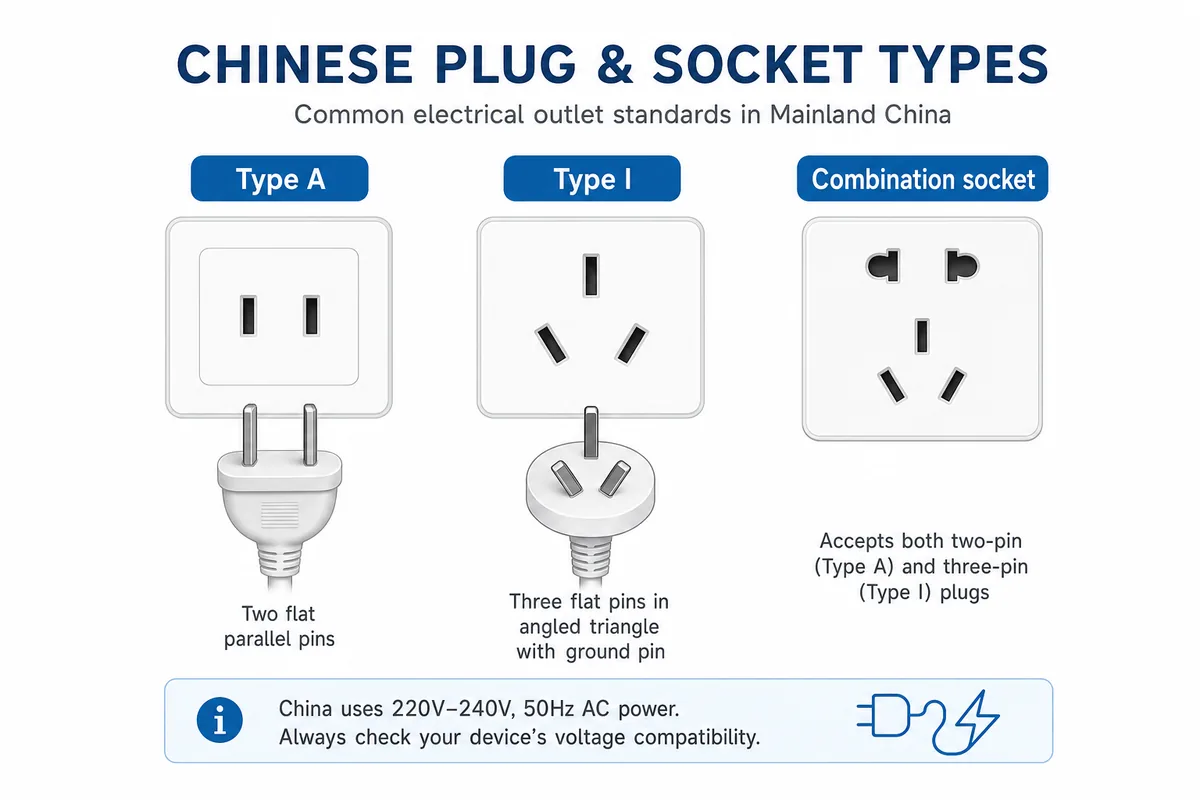
Mainland China runs on 220 volts, 50 Hz, and the most common sockets you'll see are Type A (two flat pins, no ground) and Type I (three flat pins in an angled triangle, with a ground). If you're coming from the US, Japan, the UK, or most of Europe, your plugs won't fit without an adapter — and a few of your devices may need more than that. This checklist covers what to bring, what's optional, and one rule that trips up a lot of travelers: as of mid-2025, China enforces a certification requirement on power banks at airports that international safety marks won't satisfy. Read that section before you fly.
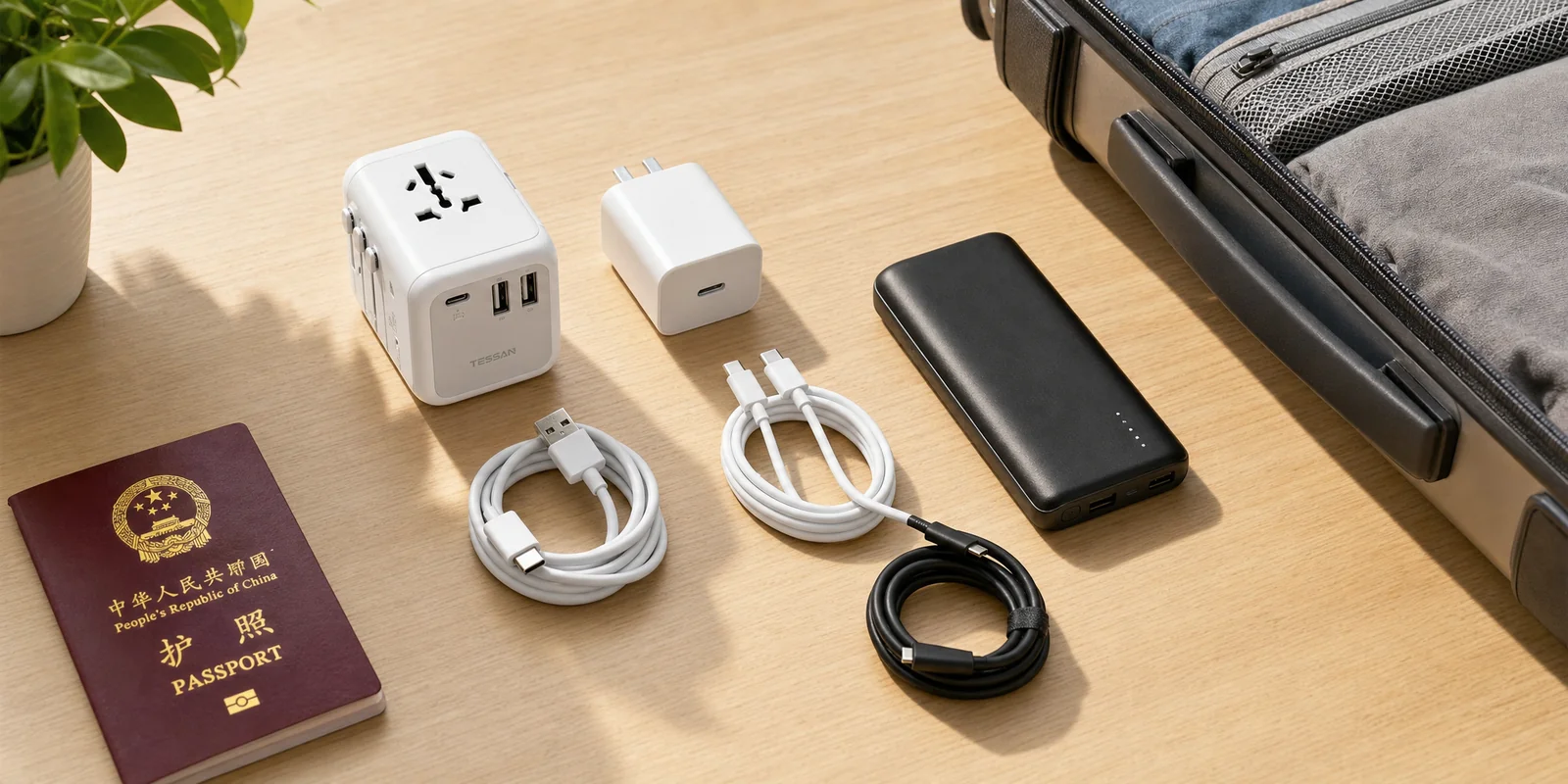
The Quick Answer: Do You Need an Adapter for China?
Almost certainly yes for the plug, and possibly a voltage converter for a few specific devices. Here's the short version:
- Plug adapter: Yes, unless your devices already use Type A or Type I plugs. A simple plug adapter changes the physical shape so your plug fits the wall.
- Voltage converter: Only for single-voltage devices rated 110/120V (common from the US, Japan, Taiwan). Most phone and laptop chargers are dual-voltage and need no converter.
A plug adapter and a voltage converter are not the same thing. An adapter only changes the plug shape. A converter changes the actual voltage. Plugging a 110V-only hair dryer into a Chinese 220V outlet with just a shape adapter will damage it — sometimes dramatically.
China Plug & Outlet Types Explained
Mainland China standardized its plugs and sockets under national standards GB 2099.1 and GB 1002. Compliant plugs carry the mandatory CCC (3C) certification mark. In practice, you'll encounter these types:
| Type | Description | Status in China |
|---|---|---|
| Type A | Two flat parallel pins, no ground. Same shape as US/Japan plugs. | In wide use for Class II (ungrounded) devices. |
| Type I | Three flat pins in an angled triangle, with ground. Rated 10A or 16A, 250V. | The standard grounded plug for Class I devices. |
| Type C | Two round pins (European style). | No longer meets the national standard since GB/T 1002-2021; you'll still see it in older buildings. |
One thing worth knowing: many existing Chinese outlets are combination sockets with two openings — an upper slot that accepts Type A and Type C plugs, and a lower three-pin opening for Type I. The 2021 standard revision no longer permits installing these dual sockets, but enormous numbers of them are still in service, so you'll keep running into them in hotels and apartments.
China also uses US/Japanese-style NEMA 1-15 sockets for Class II devices, but it does not accept polarized plugs where one pin is wider than the other. If your US plug has one fat prong and one thin one, it may not slide in. A cheap universal adapter solves this instantly.
For the technical standards, the Wikipedia reference on AC power plugs and sockets documents the GB 2099.1 and GB 1002 specifications in detail.
Voltage: When You Need a Converter (and When You Don't)
This is where devices get damaged, so it's worth two minutes. Look at the small print on your charger or device — usually near the plug or on the power brick. You'll see an INPUT rating.
- INPUT: 100–240V (or 110–240V): This is a dual-voltage device. China's 220V falls inside that range, so you only need a plug adapter — no converter. Almost all phone chargers, laptop chargers, camera battery chargers, and tablet chargers are dual-voltage.
- INPUT: 110V or 120V only: This is a single-voltage device. On China's 220V it will overheat or burn out. You need a step-down voltage converter, or just leave it home.
The usual culprits are hair dryers, hair straighteners, curling irons, and some electric shavers bought in the US, Canada, Japan, or Taiwan. According to Electrical Safety First, a travel plug adapter changes neither voltage nor frequency — so the input rating is the only thing that matters.
The Power Bank Rule You Cannot Ignore
This is the single most important thing in this article if you're flying within China. As of June 28, 2025, China bans passengers from carrying power banks on domestic flights if the power bank lacks a clear 3C (CCC) certification mark, has an unreadable 3C mark, or belongs to a recalled model or batch.
The catch for foreign travelers: international safety certifications like UL are not accepted as a substitute for 3C. A power bank you bought abroad — even a well-known brand — almost certainly does not carry a Chinese 3C label, which means it can be stopped at airport security before a domestic flight.
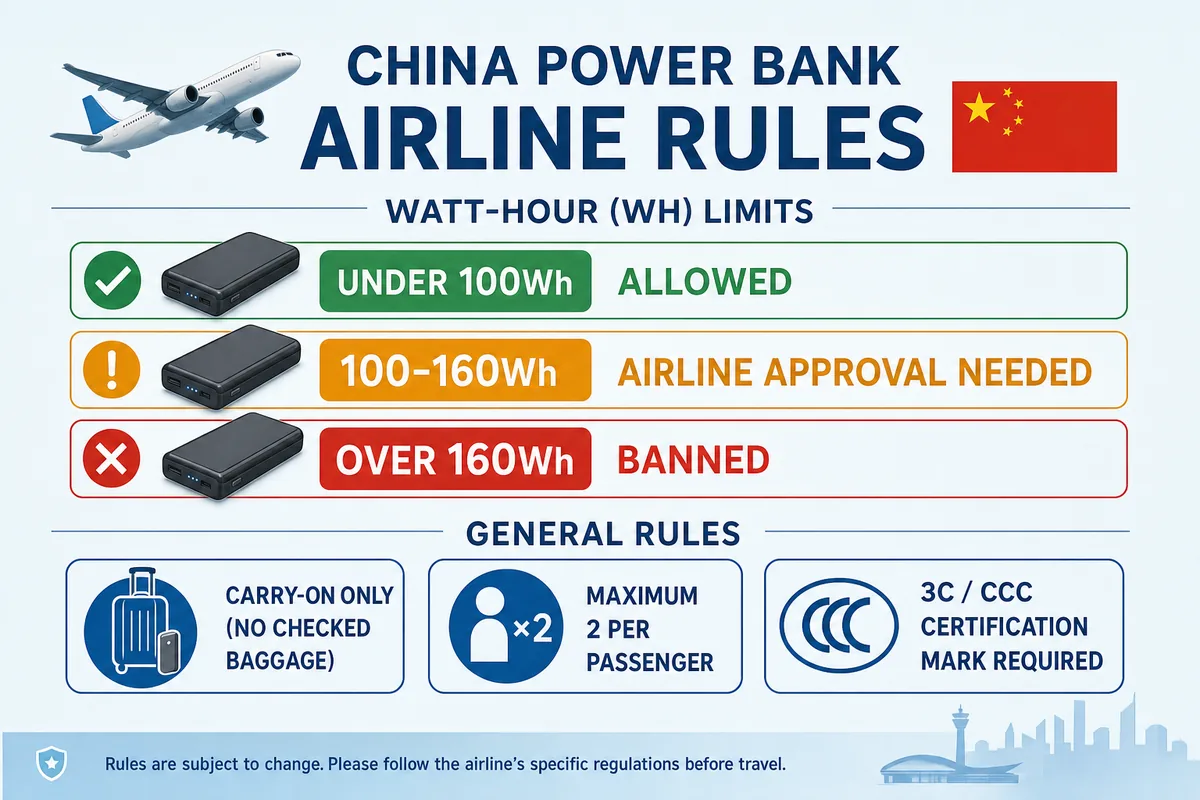
The official rules on power banks, published via China's civil aviation authority, also set these limits:
- Rated energy ≤ 100Wh: Allowed without airline approval.
- 100Wh to ≤ 160Wh: Allowed only with prior airline approval.
- Over 160Wh: Banned from the aircraft entirely.
- Power banks must be for personal use, carried in the cabin or on your person — never in checked baggage.
- No more than two power banks per passenger.
You can read the official guidance from China's aviation authority via this civil aviation power bank notice and Beijing's market regulator summary of the "three musts, three prohibitions" for power banks.
What this means in practice:
- If your trip includes domestic flights, your foreign power bank may not pass security. Many travelers report that enforcement is strictest on domestic departures, while laptops, phones, tablets, and cameras are generally not subject to this 3C requirement.
- A practical workaround a lot of people use: buy a 3C-certified power bank locally in China after you arrive. They're sold everywhere — convenience stores, electronics shops, and online. Buy it before your first domestic flight, not after.
- The rules apply to mainland Chinese airports, especially domestic flights. International segments are handled less consistently airport to airport, so don't assume a foreign power bank is safe just because it cleared on the way in.
The certification details are explained well in this breakdown of the China 3C power bank rule. If you want to buy a compliant power bank before you go and only fly internationally, a standard sub-100Wh model like those available Power Bank is fine for international flights — but for domestic flights inside China, get a 3C-marked one locally.
The Complete Packing Checklist
Here's what to actually bring, sorted by how essential it is.
Essential
- Universal travel adapter — one good one covers all socket types you'll meet. A model with built-in USB-A and USB-C ports lets you charge several devices from one wall socket. You can find well-reviewed options Tech Accessories.
- Phone charger + cable — dual-voltage, so just needs the adapter.
- Laptop charger — also dual-voltage in nearly all cases.
Highly Recommended
- Power bank (3C-certified if flying domestically — buy locally) — China is heavily QR-code and app-based; a dead phone is a real problem when you can't pay, navigate, or scan a metro code.
- Multi-port USB charger — reduces how many adapters you need.
- Short multi-socket power strip (from home) — plug the strip into one adapter and charge everything else off it. Saves buying multiple adapters.
Situational
- Step-down voltage converter — only if you must bring a 110V-only device.
- Dual-voltage travel hair dryer/straightener — if you don't want to rely on hotel equipment.
- Camera batteries + charger — chargers are dual-voltage; spare lithium batteries follow the same carry-on-only rules as power banks.
Hong Kong, Macau & Taiwan: Different Rules
If your trip crosses into Hong Kong, Macau, or Taiwan, your mainland adapter won't fully cover you:
| Region | Voltage | Socket Type | Need a different adapter from the mainland? |
|---|---|---|---|
| Mainland China | 220V / 50Hz | Type A, Type I | — |
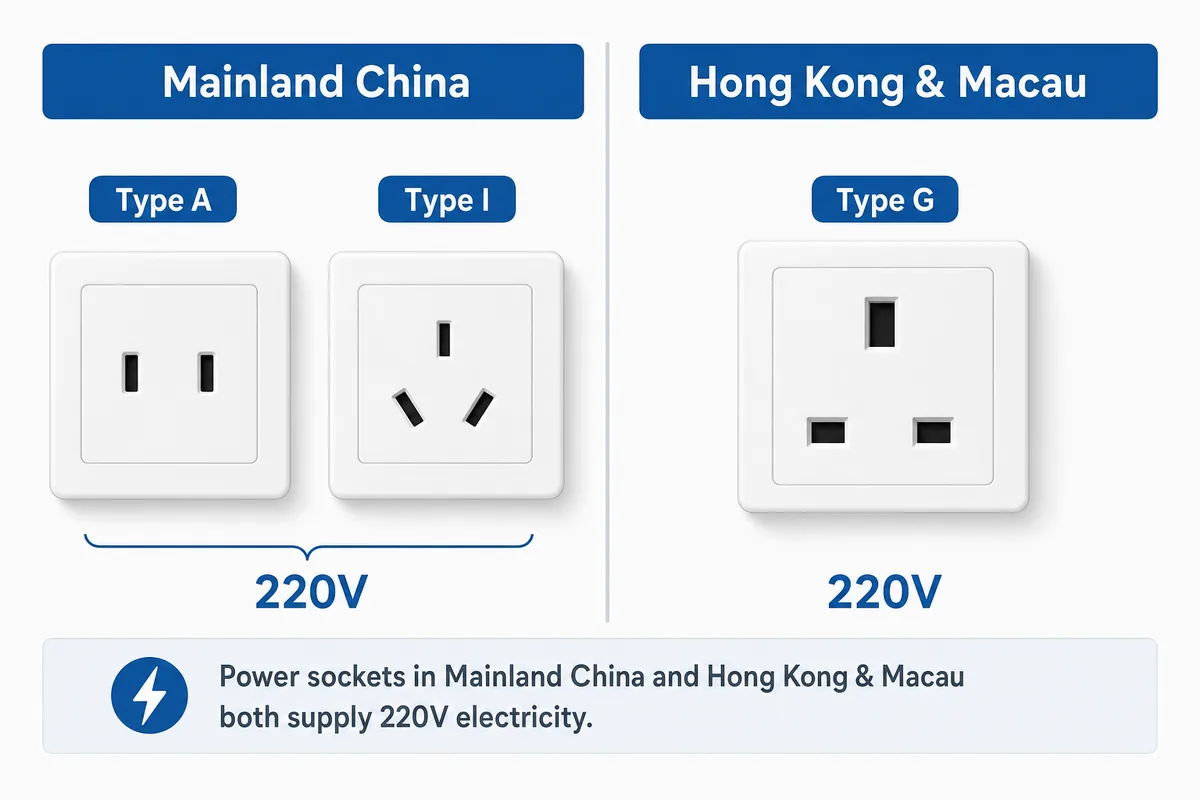
| Hong Kong | 220V / 50Hz | Type G (UK three rectangular pins) | Yes — bring a UK-style adapter |
| Macau | 220V / 50Hz | Mostly Type G | Yes — UK-style adapter |
| Taiwan | 110V / 60Hz | Type A, Type B | Voltage differs — check single-voltage devices |
Hong Kong and Macau use the British Type G plug (three chunky rectangular pins), so going from the mainland to Hong Kong means packing a separate adapter. Voltage is the same 220V/50Hz, so no converter is needed. Taiwan is the outlier — it runs on 110V/60Hz like the US and Japan, which means your dual-voltage devices are fine but any 220V-only equipment becomes the problem in reverse. A good universal adapter usually handles all of these in one unit.
Pre-Departure Checklist
Run through this before you zip the bag:
- ☐ Checked every charger for INPUT: 100–240V (dual-voltage = adapter only)
- ☐ Identified any 110V-only devices (hair dryer, etc.) — leave home or bring a converter
- ☐ Packed at least one universal travel adapter, ideally with USB ports
- ☐ Plan for power banks: if flying domestically, plan to buy a 3C-certified one in China
- ☐ Power banks and spare lithium batteries go in carry-on only, max two power banks
- ☐ Separate Type G adapter if Hong Kong or Macau is on the route
- ☐ A small power strip if you have several devices and want fewer adapters
Bottom Line
For mainland China, the essentials are simple: a universal travel adapter handles the Type A and Type I sockets, and almost all your modern electronics are dual-voltage so they work on 220V without a converter. The only devices that need real attention are single-voltage 110V appliances like some hair dryers. The one thing not to overlook is the power bank rule — if you're taking domestic flights, plan to buy a 3C-certified power bank locally rather than risk losing yours at security. Confirm the latest power bank regulations before you travel, since aviation rules change. Pack one solid adapter, check your chargers' input ratings, sort out your power bank plan, and your tech side of the trip is basically done.
Related Reading
- Essential Items Checklist — the full packing rundown beyond electronics.
- Luggage Rules in China — carry-on and checked baggage rules, including batteries.
- China SIM Card & eSIM Guide — getting your phone connected once you land.
- Internet & VPN Guide — what works online in China and what you'll need to set up first.
- Understanding Chinese Payment Systems — why a charged phone matters so much here.
Read in other languages
Last train times for 10 Chinese metro systems
Every line and station, checked by hand — the same data behind our offline route planner.
Get the WaysChina App
Offline guides, currency converter, essential phrases, and more — all in your pocket.

Related Articles

Clothing by Season
What to wear in China depends heavily on when and where you go. This season-by-season packing guide covers summer...
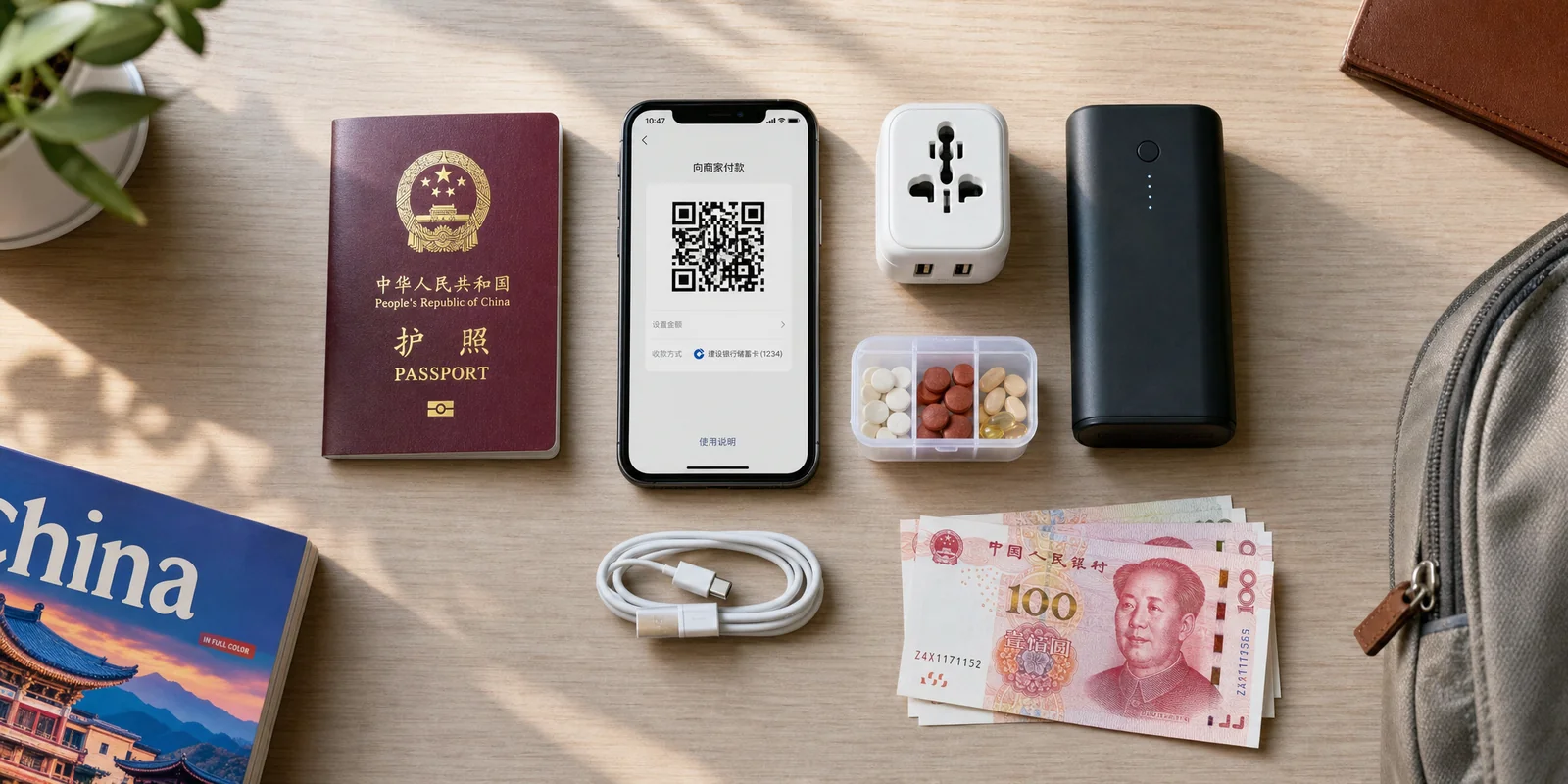
Essential Items Checklist for China
A practical, category-by-category packing checklist for China — documents, payments, phone setup, plugs, medication,...
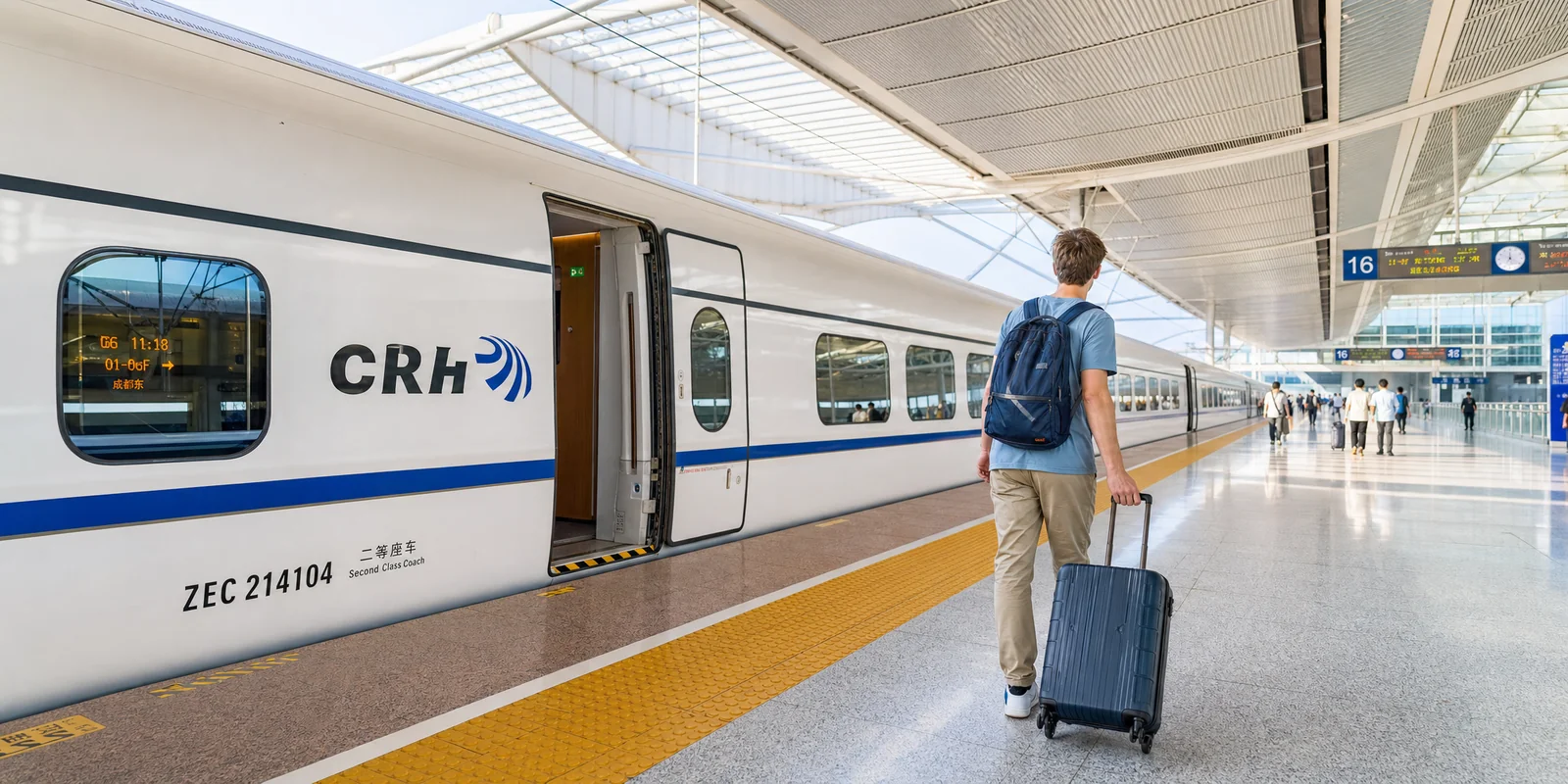
Luggage Rules in China
What you can carry on China's high-speed trains, domestic flights, and metro systems, plus prohibited items, weight...
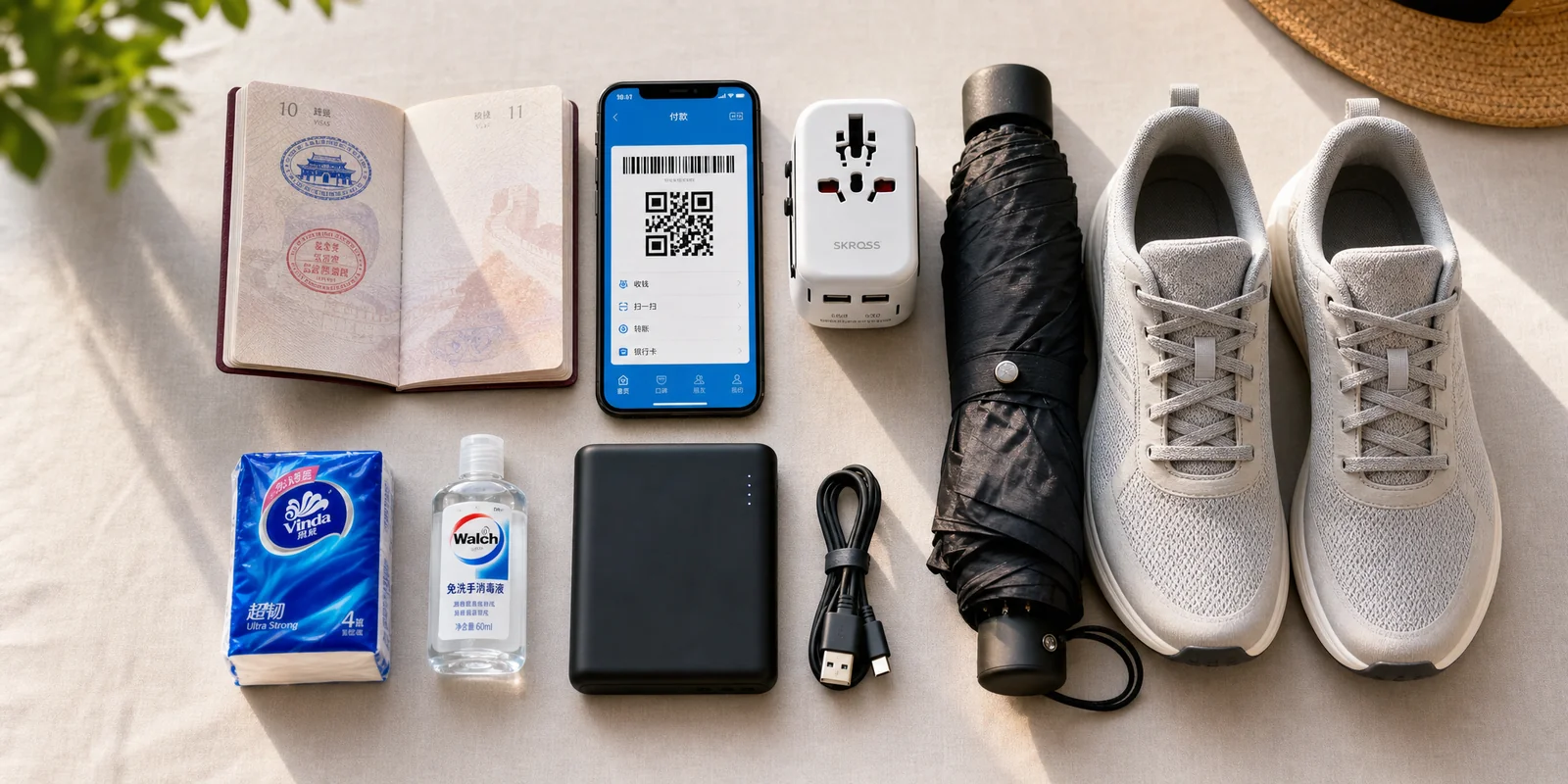
What to Pack for China: A Complete Packing Guide
What to pack for a China trip comes down to a few essentials most travelers overlook: a working VPN, mobile payments...