
This article contains affiliate links. If you make a purchase through these links, we may earn a small commission at no extra cost to you. This helps support our work in creating free travel guides.
Packing for China is a little different from packing for most other destinations, and it's not about clothes. The things that trip people up are the documents, the phone setup, and the payment apps — get those wrong and your first day is frustrating; get them right and the rest of the trip is smooth. This checklist covers everything you actually need, organized so you can tick items off before you leave home. There's also a printable PDF at the bottom if you'd rather work from paper.
Two things have changed recently that affect what you carry: most travelers from visa-free countries no longer need a paper visa, and from late 2025 you can fill out your arrival card online before you fly. Both are covered below.
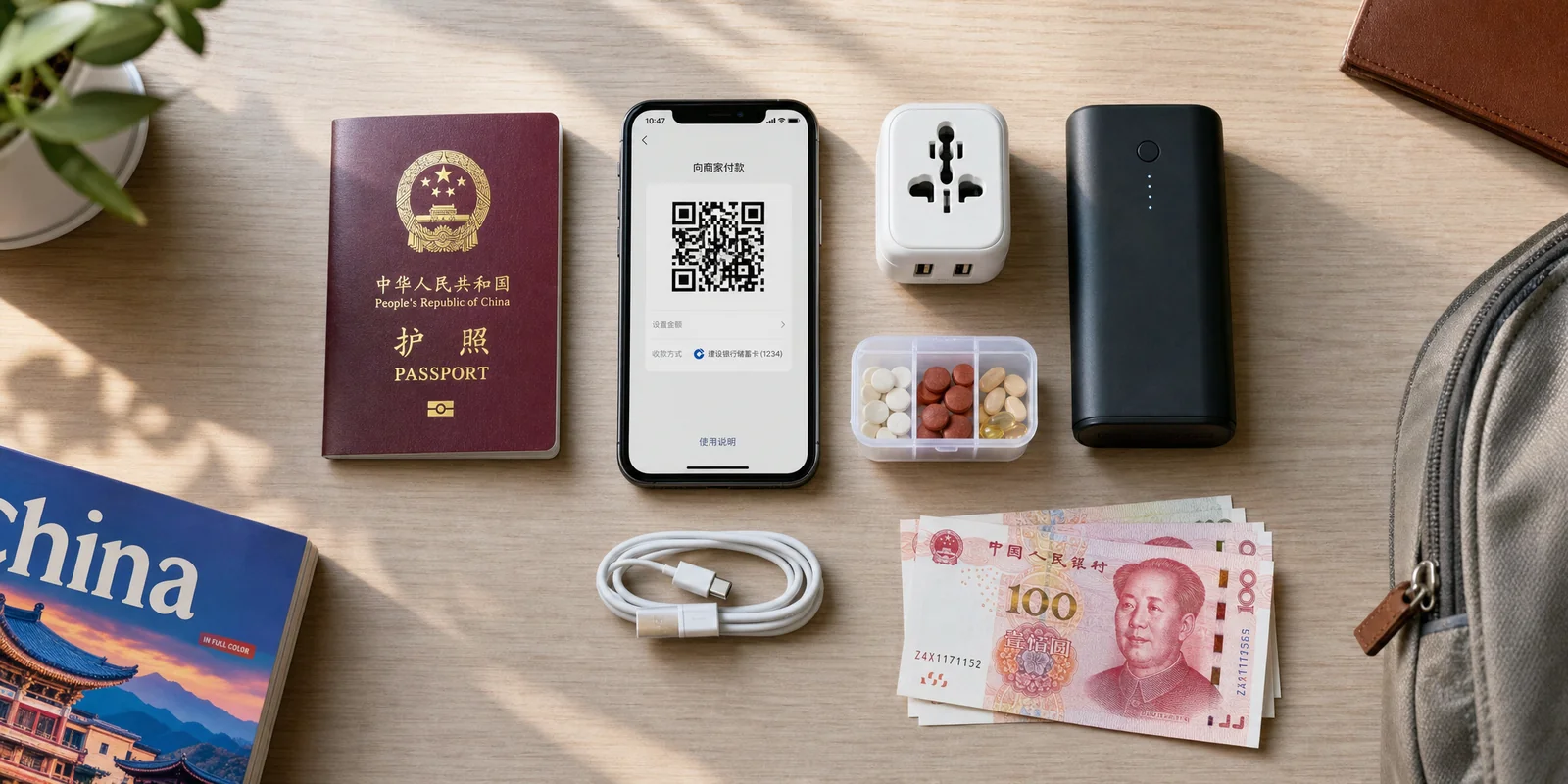
The Non-Negotiables: Documents
If you forget any of these, you don't get on the plane or you don't clear immigration. Everything else on this list is recoverable in China — these are not.
- Passport — valid for at least 6 months beyond your travel dates, with blank pages for stamps.
- Visa or proof of visa-free eligibility — if you're from one of the 40+ countries under unilateral visa-free entry (extended through the end of 2026), you need nothing extra; if you're transiting under the 240-hour transit policy, you need your onward ticket to a third country.
- Onward/return flight confirmation — required for transit visa-free entry, and immigration may ask for it regardless.
- Hotel bookings / address of where you're staying — you'll need an address on your arrival card and for accommodation registration.
- Printed train tickets are not issued anymore, but bring a printout or screenshot of any pre-booked transport confirmations.
The visa-free rules are detailed and depend on your nationality and entry point. The National Immigration Administration is the authoritative source — check it against your specific situation before you travel. We've broken the policies down in our Visa-Free & Transit Policies guide.
The Arrival Card (新变化 — Now Online)
Since 20 November 2025, you can fill out your China arrival card (入境卡, rùjìng kǎ) online up to about six days before you land, through the National Immigration Administration website, the 'NIA 12367' app, or a WeChat/Alipay mini-program. Doing it in advance means you skip filling out a paper form in the immigration hall. If you don't do it online, you can still complete it at the airport on a kiosk or on paper.
Note that the old health declaration card was scrapped back in November 2023 — you no longer fill one out unless you have symptoms of a communicable disease, in which case you should declare to customs voluntarily.
Money: Apps First, Cash Second
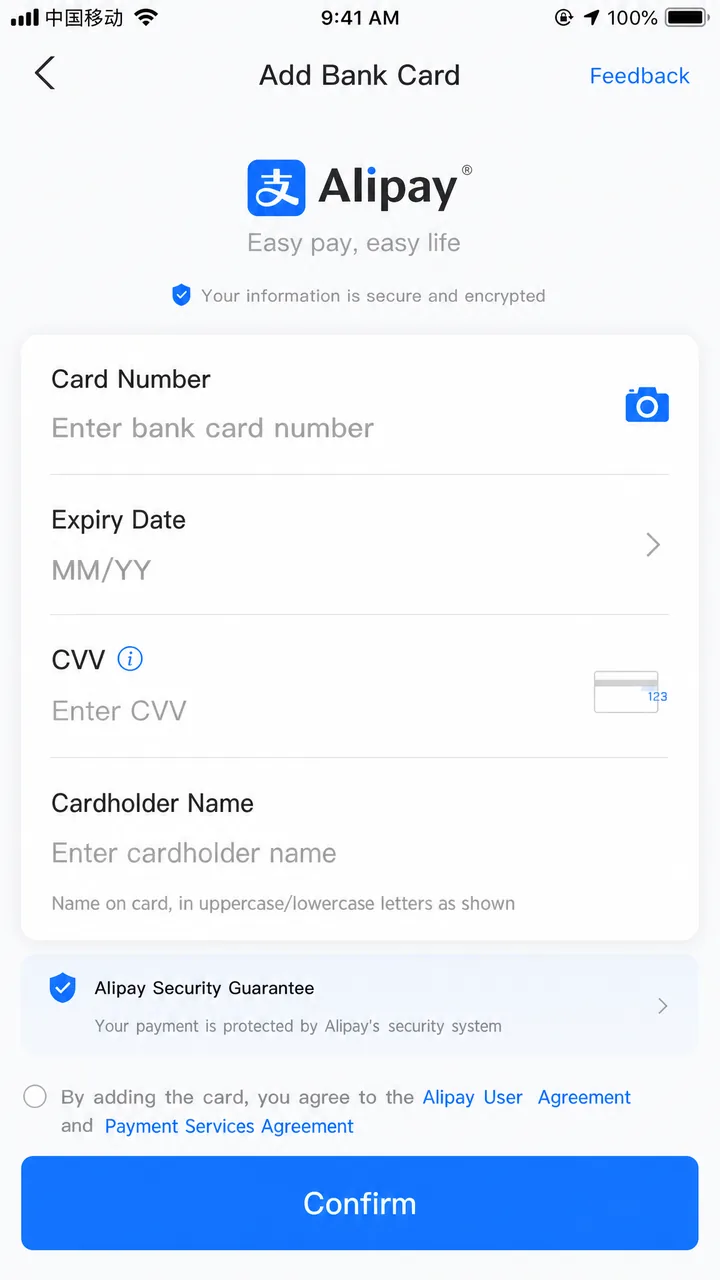
China runs on QR-code mobile payments. Street stalls, taxis, convenience stores, and vending machines all expect you to scan. The single most useful thing you can do before your trip is set up Alipay (支付宝, Zhīfùbǎo) and link an international credit card. You don't need a Chinese bank account — just your passport and a Visa/Mastercard. It takes about ten minutes.
- Alipay with a foreign card linked — generally the easier of the two apps for short-term visitors. Single transactions are capped at around ¥3,000.
- WeChat Pay (微信支付, Wēixìn zhīfù) — also accepts foreign cards now, with a higher single-transaction cap (around ¥6,000), but linking is a bit more fiddly. Useful as a backup.
- Some cash — still works at hotels and larger shops, and handy for small vendors who occasionally have scanning issues. Bring a modest amount.
- Your physical credit/debit card — accepted at international hotels and increasingly on the Beijing and Shanghai metros via contactless. Don't rely on it for everyday spending.
On cash limits: you can carry up to ¥20,000 in RMB in or out of the country per person, and amounts of foreign currency cash over the equivalent of US$5,000 must be declared to customs in writing. The General Administration of Customs publishes the full rules.
For step-by-step setup, see How to Use Alipay with Foreign Cards and our overview of Chinese Payment Systems.
Connectivity: Getting Online
A lot of the apps you use daily are blocked on the Chinese mainland — Google (including Maps and Gmail), Facebook, Instagram, WhatsApp, YouTube, X, and others sit behind the firewall. Apple services, Microsoft, Netflix's app, Spotify, and Zoom generally work. Plan for this before you arrive, not after.
SIM Card or eSIM
You have two practical routes:
- A Chinese SIM card — China Unicom is often recommended for foreign visitors because of better compatibility with overseas phones. Buying requires real-name registration with your passport (6+ months validity recommended). City-center stores are more likely to handle foreign-passport registration than small kiosks. As a rough guide, a 30-day Unicom tourist plan runs around ¥200 for ~20GB of data; prices vary, so confirm in store.
- A travel eSIM bought before you fly — many of these route your data through servers outside the mainland, which means popular apps work without extra steps. Convenient, though usually pricier per GB.
Whatever you choose, install the China-friendly apps you'll need before you land, because the app stores you use to download them may be the very ones that are blocked. Our China SIM Card & eSIM Guide goes deeper, and the Must-Have Apps list tells you exactly what to install.
Electronics and Power
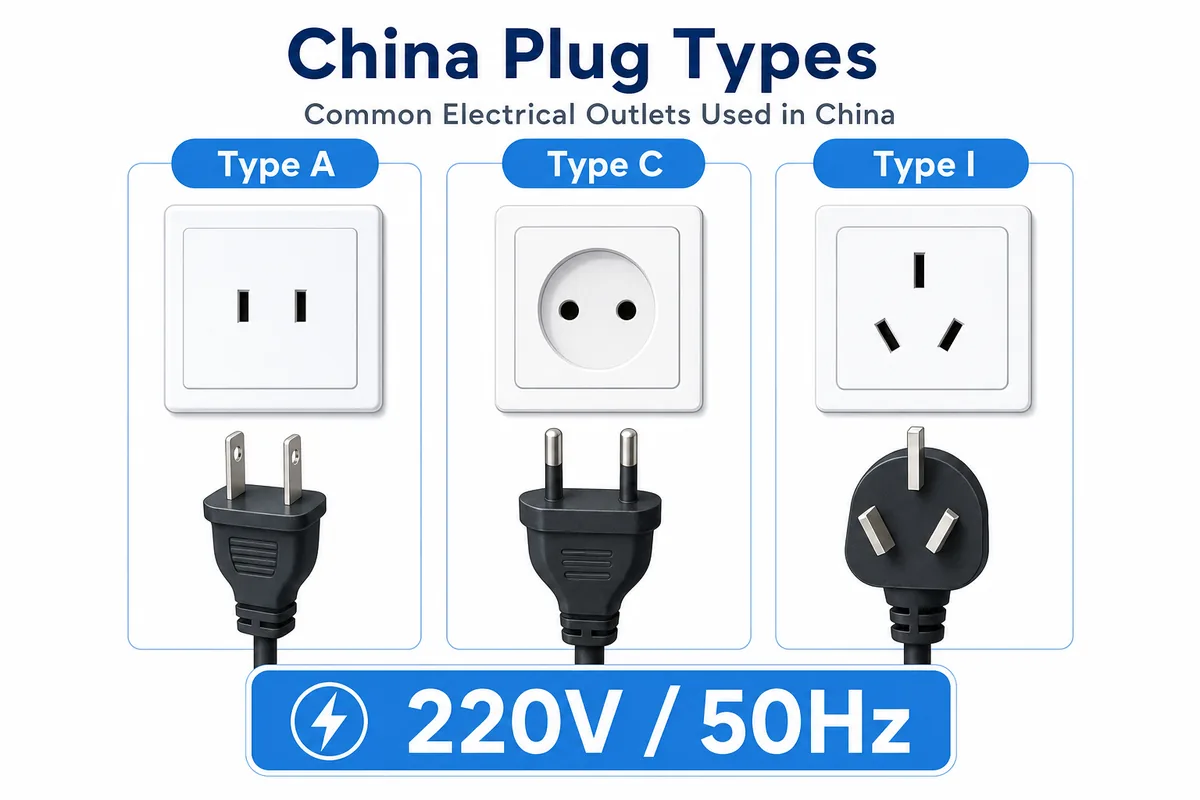
China uses 220V at 50Hz. The common sockets are Type A (two flat pins), Type C (two round pins), and Type I (three flat pins in a triangle). Most modern phone, laptop, and camera chargers are labelled 100–240V, which means they work on Chinese voltage — you only need a plug adapter, not a voltage converter. Check the small print on your charger; if it says 100–240V, you're fine.
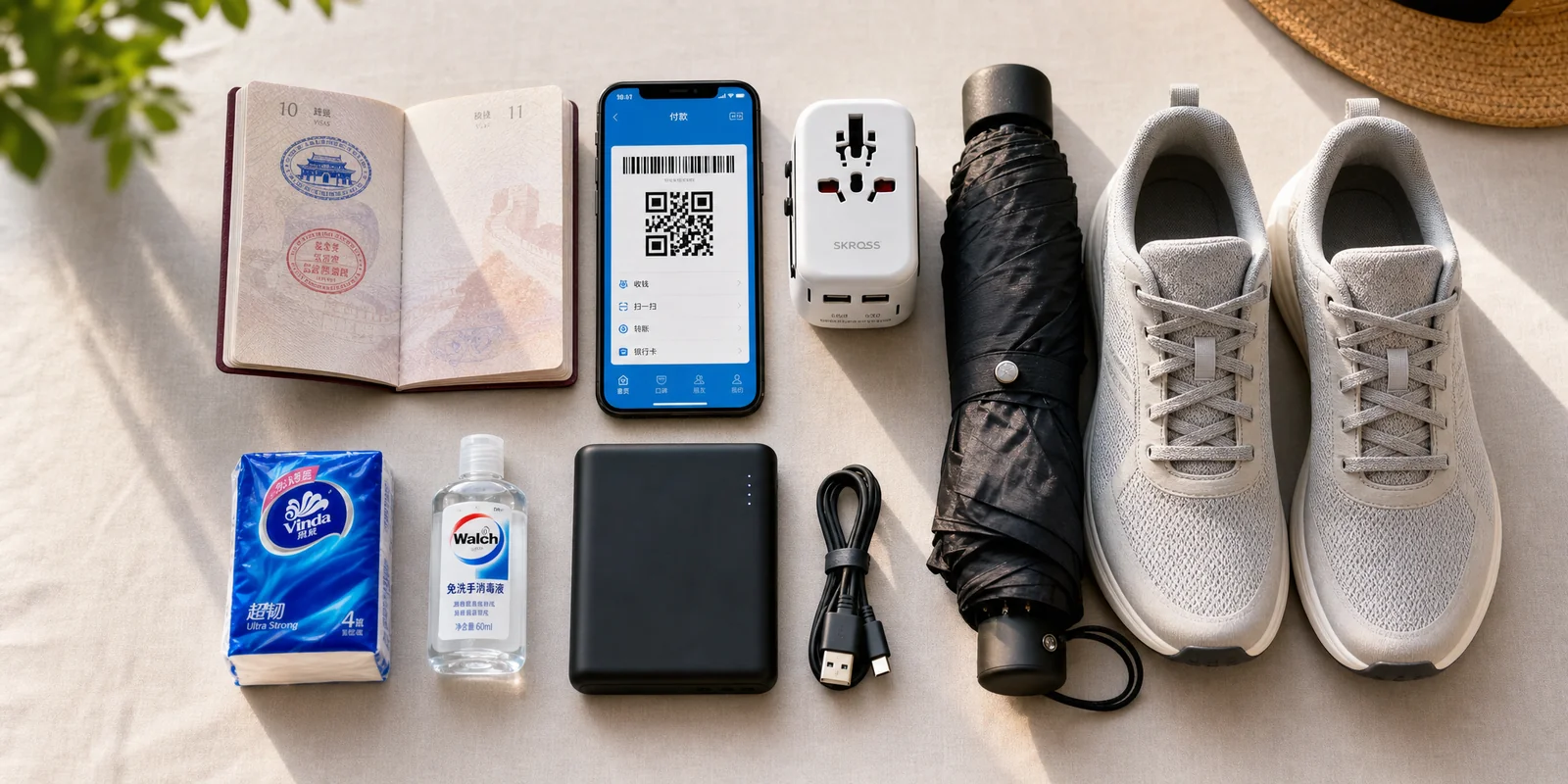
- Universal travel adapter covering Type A/C/I — one good adapter beats a handful of cheap single-type ones.
- Power bank — you'll lean on your phone for maps, payments, and translation all day. Keep it under 100Wh for airline carry-on rules.
- Charging cables and a multi-port wall charger — hotel sockets are sometimes scarce.
- Headphones and, if you photograph a lot, spare memory cards.
A reliable universal adapter and a decent power bank are the two pieces of kit most worth getting before you go — you can find solid options on Amazon Adapter. For a fuller rundown of devices and what's worth packing, see Tech & Adapters.
Medication and a Small Health Kit
You can bring a reasonable personal-use quantity of medication into China. The key rules:
- Keep prescription medication in your carry-on, in its original packaging with the pharmacy label. Bring the prescription itself, and ask your doctor for the generic (international) name of the drug in case you need to restock in China.
- Medications containing narcotic or psychotropic ingredients require a doctor's diagnosis certificate or prescription plus your passport, shown to customs.
- A small OTC kit — pain relievers, anti-diarrheal, motion-sickness tablets, plasters, any allergy medication you rely on. You can buy equivalents in Chinese pharmacies, but brand names and labelling will be unfamiliar, so packing your own saves hassle.
The Shanghai government publishes a clear summary of the rules on bringing medication into China. If you take anything unusual, check it before you travel.
Customs: What You Can and Can't Bring
For non-resident travelers, duty-free personal items are capped at a total value of ¥2,000; anything above that may be taxed. Tobacco and alcohol allowances are:
| Item | Duty-free allowance (non-Hong Kong/Macau routes) |
|---|---|
| Alcohol (over 12% ABV) | 1,500 ml |
| Cigarettes | 400 cigarettes |
| Cigars | 100 cigars |
| Tobacco | 500 grams |
Travelers under 16 may not bring in tobacco or alcohol. Allowances are halved for journeys to and from Hong Kong and Macau. These figures come from official customs guidance, but exact thresholds can change — confirm the latest before you pack anything close to the limit.
Clothing and Practical Extras
What you wear depends entirely on the season and region — China spans subarctic Harbin to tropical Sanya. We cover that fully in Clothing by Season. The non-clothing extras most travelers are glad they packed:
- Comfortable walking shoes — sightseeing days easily hit 15,000+ steps.
- A foldable day bag for daytrips.
- Tissues / pocket pack and hand sanitizer — public restrooms don't always stock paper, and some are squat-style.
- A refillable water bottle — many stations, airports, and hotels have hot and cold water dispensers. Tap water is generally not drunk straight; stick to bottled or boiled.
- A printed card with your hotel name and address in Chinese — invaluable for taxi drivers and if your phone dies.
Accommodation Registration — Know Before You Arrive
Every foreign visitor must complete accommodation registration (住宿登记, zhùsù dēngjì). If you stay in a hotel, the front desk does it for you automatically at check-in — keep your passport handy. If you stay somewhere private (a friend's home, some short-term rentals), you must register at the local police station within 24 hours. Several cities, including Beijing and Shanghai, now offer online self-registration. The official government guidance explains the requirement. More detail in our Hotels & Registration guide.
Useful Numbers to Save
Save the National Immigration Administration's 12367 hotline in your phone before you go. It offers 24/7 multilingual support — Chinese, English, Russian, Japanese, and Korean — for immigration and entry questions. Dial +86-12367 from abroad, or use the 'NIA 12367' app. The official 12367 service guide has the details. For a full set of emergency numbers, see our Emergency Contacts list.

The Quick Pre-Departure Checklist
Run through this the day before you fly:
- Passport valid 6+ months, visa or visa-free eligibility confirmed
- Onward/return ticket and hotel address printed or saved offline
- Arrival card filled out online (optional but saves time)
- Alipay set up with foreign card linked; WeChat Pay as backup
- SIM/eSIM sorted, or plan to buy on arrival
- Maps (Amap), translation, and DiDi apps installed and tested at home
- Universal adapter and power bank packed
- Prescription meds in carry-on with documentation
- Hotel name/address card in Chinese
- Copies of passport and key documents emailed to yourself
- 12367 hotline saved
Summary
If you only fix three things before flying to China, make them documents, payments, and connectivity: a valid passport with the right visa status, Alipay linked to a foreign card, and a working data plan with the right apps installed. Those three solve about 90% of the friction first-time visitors run into. Everything else — adapters, medication, a hotel-address card — is straightforward once you know to pack it.
Download the printable PDF version of this checklist to tick off as you pack. Then, if you haven't already, read up on the visa-free rules for your nationality and get your payment apps set up — those take the longest and are best done well before departure.
Related Reading
- What to Pack — the big-picture packing overview
- Arriving in China: Immigration & Customs
- Must-Have Apps Before You Go
- How to Use Alipay with Foreign Cards
- Internet & VPN Guide
Last updated: June 2026
Read in other languages
Last train times for 10 Chinese metro systems
Every line and station, checked by hand — the same data behind our offline route planner.
Get the WaysChina App
Offline guides, currency converter, essential phrases, and more — all in your pocket.

Related Articles

Clothing by Season
What to wear in China depends heavily on when and where you go. This season-by-season packing guide covers summer...

Luggage Rules in China
What you can carry on China's high-speed trains, domestic flights, and metro systems, plus prohibited items, weight...
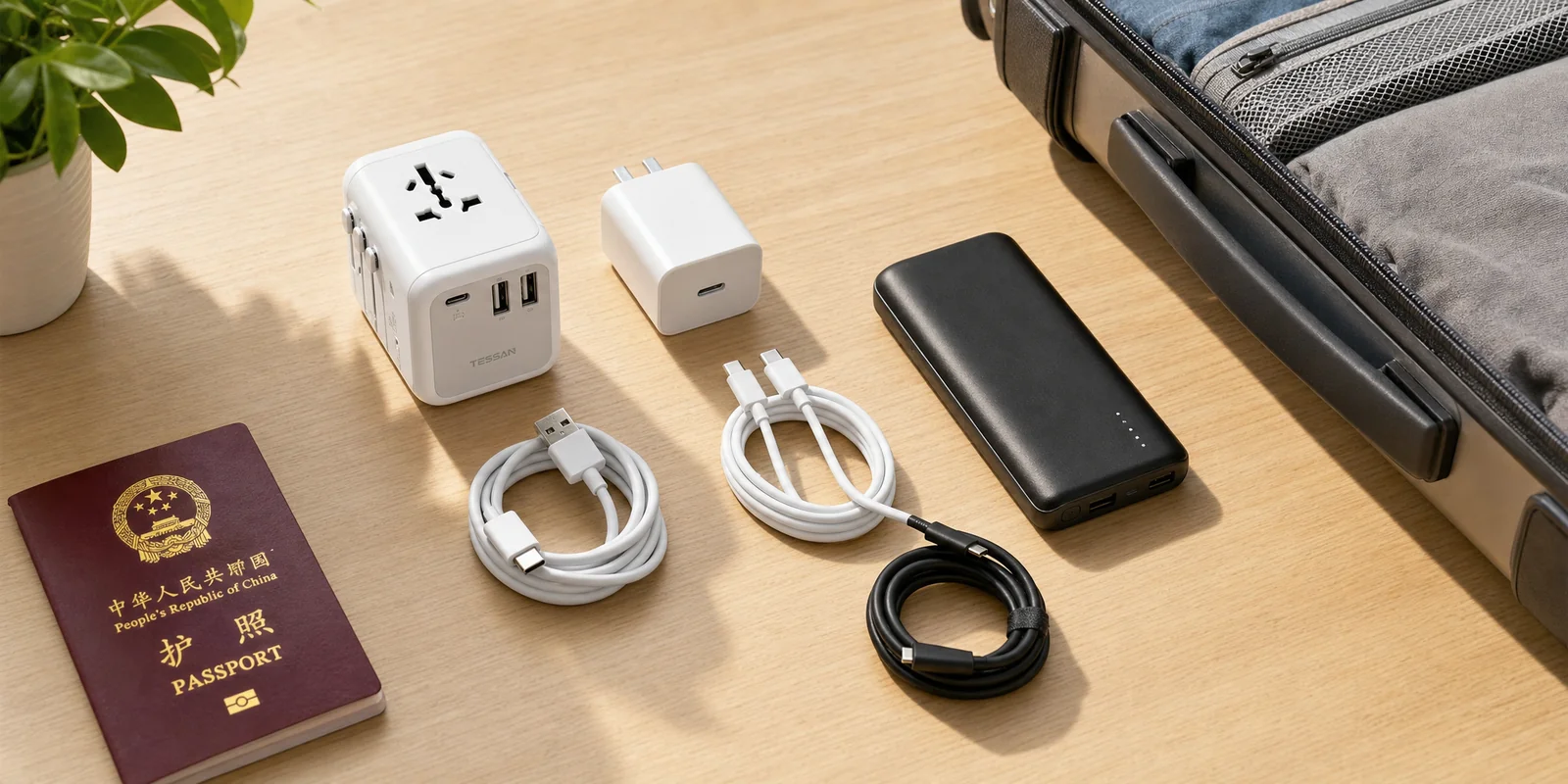
Tech & Adapters: What Electronics to Pack for China
Mainland China runs on 220V, 50Hz with Type A and Type I sockets. Here's exactly what adapters, chargers, and power...
What to Pack for China: A Complete Packing Guide
What to pack for a China trip comes down to a few essentials most travelers overlook: a working VPN, mobile payments...